



Chewy Mochi Donuts Recipe
Ingredients
Method
- Combine 150g milk, 1/3 cup granulated sugar, 2 tablespoons vegetable oil, and 1 large egg in a bowl and set aside.
- Whisk together 150g glutinous rice flour, 115g tapioca starch, 1 3/4 teaspoons baking powder, and 1/2 teaspoon table salt.
- Mix the wet ingredients into the dry ingredients with a spoon and let the dough sit for one minute to thicken to a pipeable consistency.
- Transfer the dough into a piping bag fitted with a large round tip.
- Heat at least 2 inches of vegetable oil in a saucepan or Dutch oven until it reaches 350°F.
- Cut eight 5-inch parchment paper squares and prepare a 3-inch circle guide to place underneath the squares while piping.
- Pipe eight touching dough balls in a circle on the parchment paper using the guide, starting at the 12, 6, 3, and 9 o'clock positions.
- Carefully place the parchment paper and dough circle into the hot oil with the paper side facing down.
- Remove the parchment paper with tongs after 45 seconds, gently flipping the paper over if the donut does not slide off easily.
- Fry the donut for 3 to 3.5 minutes, flipping several times to ensure even browning.
- Remove the donut with a slotted spoon or spider skimmer, drain the excess oil, and let it cool on a wire rack.
- Repeat the process for the remaining donuts, cooking one or two at a time depending on the size of the pot.
- Microwave 1/4 cup of heavy cream in a microwave-safe cup for 30 seconds until steaming.
- Pour most of the hot cream over 4oz of white chocolate chips, let sit for two minutes, and stir until melted, reheating briefly if needed.
- Mix the reserved hot cream with 1-2 teaspoons of matcha powder to create a smooth, clump-free paste.
- Stir the matcha paste into the melted white chocolate until the mixture is fully combined.
- Microwave another 1/4 cup of heavy cream for 30 seconds until steaming.
- Pour the hot cream over 4oz of dark chocolate, let sit for two minutes, and stir until smooth, reheating in 5-10 second intervals if necessary.
- Melt 4oz of white chocolate in the microwave using short 10-30 second intervals and stirring frequently to avoid overheating.
- Use a hand blender to incorporate 2oz of clean, dry strawberries into the melted white chocolate.
- Add a drop or two of red food coloring to the strawberry mixture if a more intense pink color is desired.
- Place 1 cup of powdered sugar into a mixing bowl.
- Stir 1 tablespoon of milk into the powdered sugar.
- Gradually stir in milk one teaspoon at a time until the glaze reaches a thick consistency that will not run off the donut.
- Add food coloring to the glaze to achieve the desired shade.
- Ensure the glaze or ganache has cooled enough to cling to a spoon rather than dripping off immediately.
- Submerge a cooled donut halfway into the glaze, wiggle it to coat, and lift it out while allowing excess to drip off.
- Flip the donut over and place it on a cooling rack or plate.
- Garnish the donut with toppings such as cookie crumbs, sprinkles, or piped melted chocolate.
- Allow the glaze to set completely before serving.
Notes
- Glutinous rice flour is also known as sweet rice flour. These can be used interchangeably. However, if your bag of flour is just called “rice flour” that is different and won’t work in this recipe.
- Glutinous rice flour does not contain gluten and is safe to eat for gluten-free diets
- Matcha powder is sold in two different grades. Ceremonial Grade which is best used for drinking matcha tea, and Culinary Grade, which is good for cooking and baking with. I used Culinary grade in this recipe and was very happy with the results.
- Corn syrup adds a slight sheen to chocolate ganache once it sets. It is not the same thing as high fructose corn syrup which many people try to avoid for health reasons.
- The hot oil should easily come over the parchment paper and begin frying the donut, but if it is floating and the oil is not getting to the donut you can push the parchment paper down gently with tongs or a spoon until the hot oil can access the donut. Just be gentle as you don’t want to disturb the donut too much before the balls fuse together through cooking.
- The mochi donuts cook best at 350F but the oil will begin cooling when the donuts are added. It is a good practice to keep checking the temperature with a thermometer during the cooking process and adjusting the heat as necessary. If too low the donut won’t brown nicely and may take on extra oil in the final product. It it’s too hot, you may end up with an overly brown donut that’s not cooked in the middle.
- When making chocolate ganache you don’t want to heat the chocolate up too high or it will seize. When this happens you end up with a grainy unpleasant texture. So it is best to heat slowly, err on the side of caution. White and milk chocolate or more sensitive than dark chocolate to temperature.
The Secret to the Perfect Bounce
I remember Nonna Giulia making me feel the pasta dough every time we cooked together. Not just once. Every single time. “Your hands forget,” she would say. She was teaching me that consistency comes from sense memory, not just from reading a page. I still close my eyes when I’m checking dough today. That exact sense memory is what you need to master this mochi donuts recipe. The first time I bit into a proper Japanese pon de ring, the texture completely threw me. It wasn’t just soft. It was bouncy.
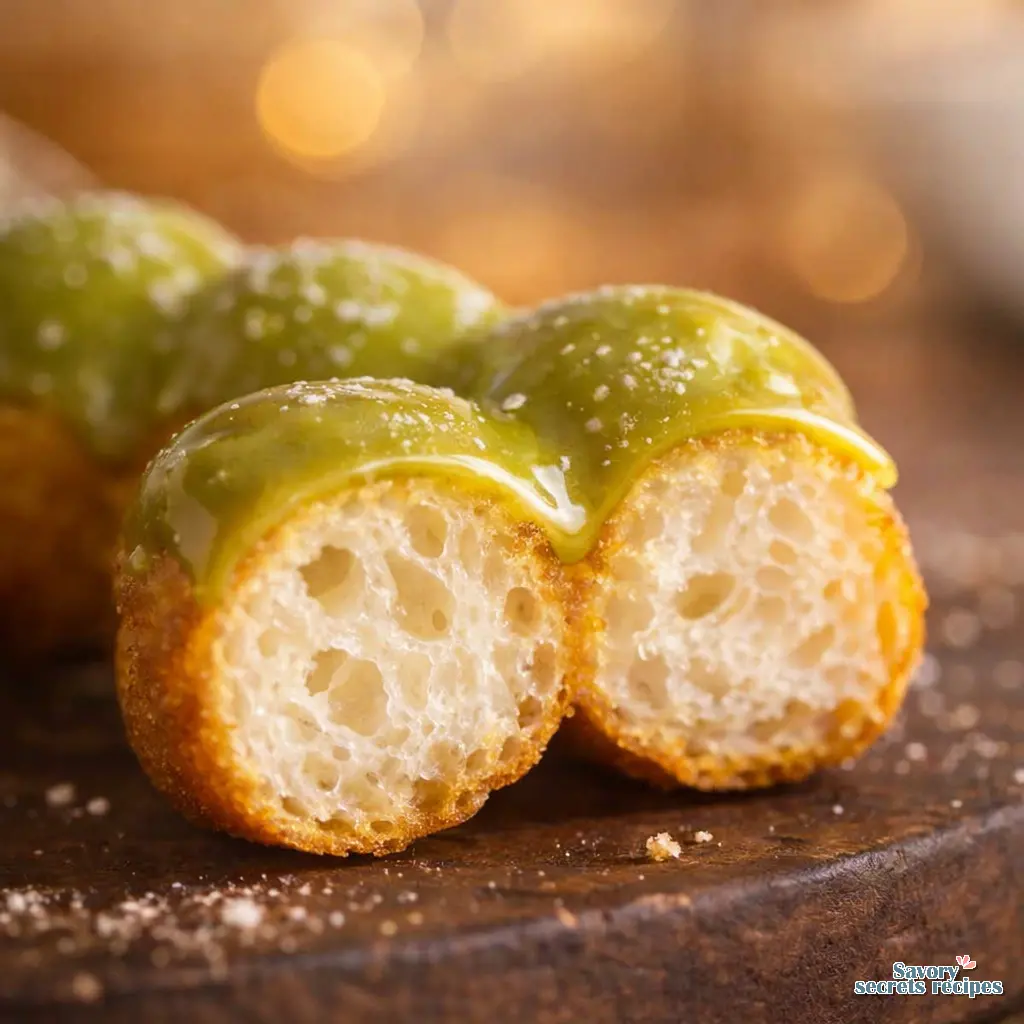
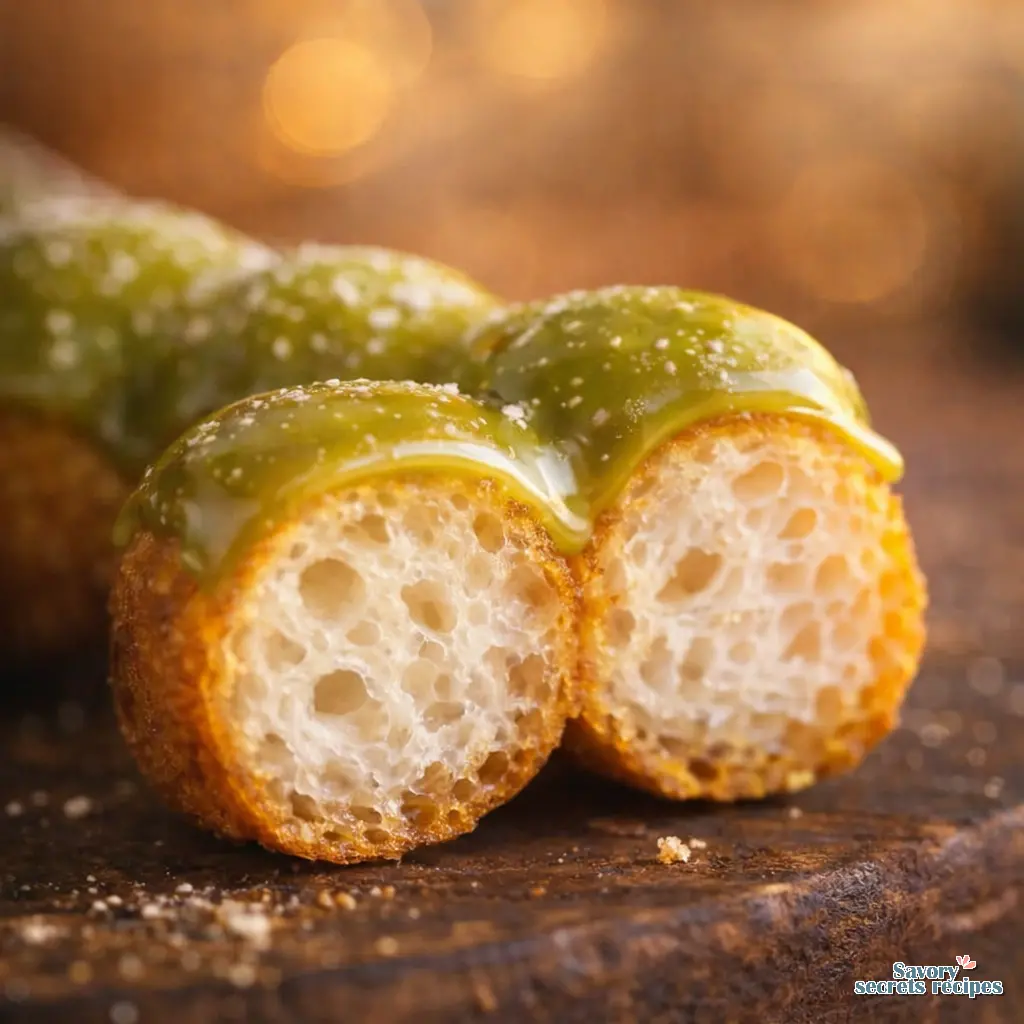
The Taiwanese call this specific mouthfeel ‘QQ’ texture. A flawless mochi donuts recipe gives you that signature pull-apart shape with a slight exterior crunch and a chewy, mochi-mochi center. If you’ve been sitting in Los Angeles traffic driving to specialty shops just to get your fix, let me walk that back. You can make this viral food trend right in your own kitchen. It’s easier than you think once you understand the hydration of the dough. We’re going to build a foolproof foundation together.
The Science of ‘QQ’ Texture: Flours and Hydration
Here’s what I’m seeing when home cooks struggle with a chewy donuts recipe. They grab the wrong flour. Is mochiko the same as glutinous rice flour? Yes and no. Mochiko is milled from short-grain sweet rice. Standard glutinous rice flour is often long-grain, like the Thai varieties you’ll easily find at Ralphs or Trader Joe’s. You specifically want Mochiko for this. It provides that undeniable bounce. We also blend in tapioca starch to give the dough structure and balance the chew.
I prefer weight measurements for anything that matters. A cup of flour can vary by 30 percent depending on how you scoop it. That’s not a recipe, that’s a suggestion. Grab your kitchen scale. To get the hydration right, cream the sugar and shortening first for easier liquid mixing. Then, add only two-thirds of the milk initially to adjust the dough consistency as you go. Sift your dry ingredients in batches for even incorporation. What is the difference between making mochi donuts with silken tofu vs without it? Silken tofu adds incredible moisture without making the crumb heavy. If you skip it, you risk a dense pastry.
Mastering the Pon de Ring Shape
How do you get the signature pon de ring shape for Japanese mochi donuts? You absolutely don’t pipe it directly into a pot of hot oil. That’s a disaster waiting to happen. We use the parchment paper frying hack. Cut standard parchment paper into four-inch squares. You’ll pipe eight small spheres in a tight circle directly onto the paper. Pipe the circles so they are slightly touching to ensure they join but remain distinct rings.
Your batter should have a drop batter consistency. It needs to be thick enough to hold its shape on a spatula without running off. If your dough is sticking to the piping bag tip, just dip your finger in water to smooth the tops of the dough balls. I always use a paring knife to slice the dough cleanly from the piping bag for perfect spheres. Once piped, let the process do the work. Rest the batter for 5 to 30 minutes to hydrate the flours fully and prevent any graininess in the final bite.
Frying Dynamics and Oil Temperature
Your pan’s not hot enough yet. Or maybe it’s too hot. Oil temperature management is everything in this mochi donuts recipe. Maintain your oil strictly between 320 and 350 degrees Fahrenheit. If it drops below 320, the dough absorbs the oil and becomes heavy and greasy. If it spikes above 350, the outside burns to a bitter crisp before the center cooks through. Neutral oils with high smoke points like canola or avocado oil are your best friends here.
Drop the entire parchment paper square, dough side up, directly into the oil. The paper will naturally release and float away after about a minute. Just pull it out with kitchen tongs. Avoid over-cooking these. Remove them once the edges are a beautiful golden brown to prevent denseness. They should look like the color of toasted almonds. Let the donuts cool on a wire rack for a few minutes to increase that signature chewiness. Fry the batter the same day it is mixed for the absolute best texture.
The Modern Method: Air Fryer Instructions
Can I bake these instead of frying? I’m still working through this, but my sense is that traditional frying is mandatory for the authentic bouncy texture. However, air fryer instructions are a massive gap I see in most guides. For a lighter mochi donuts recipe, preheat your air fryer to 350 degrees Fahrenheit. Spray your parchment paper and the dough rings generously with a neutral oil spray.
Air fry them for 5 to 7 minutes until puffed and golden. Look, I’ll be honest. They won’t be as perfectly round or possess that deep, shatter-crisp exterior of the fried version. I’d need to test this further before saying it replaces the deep fryer definitively. But for a quick weeknight dessert when you don’t want to heat up a pot of oil, it’s a remarkably solid option.
Glaze Recipes and The Perfect Snap
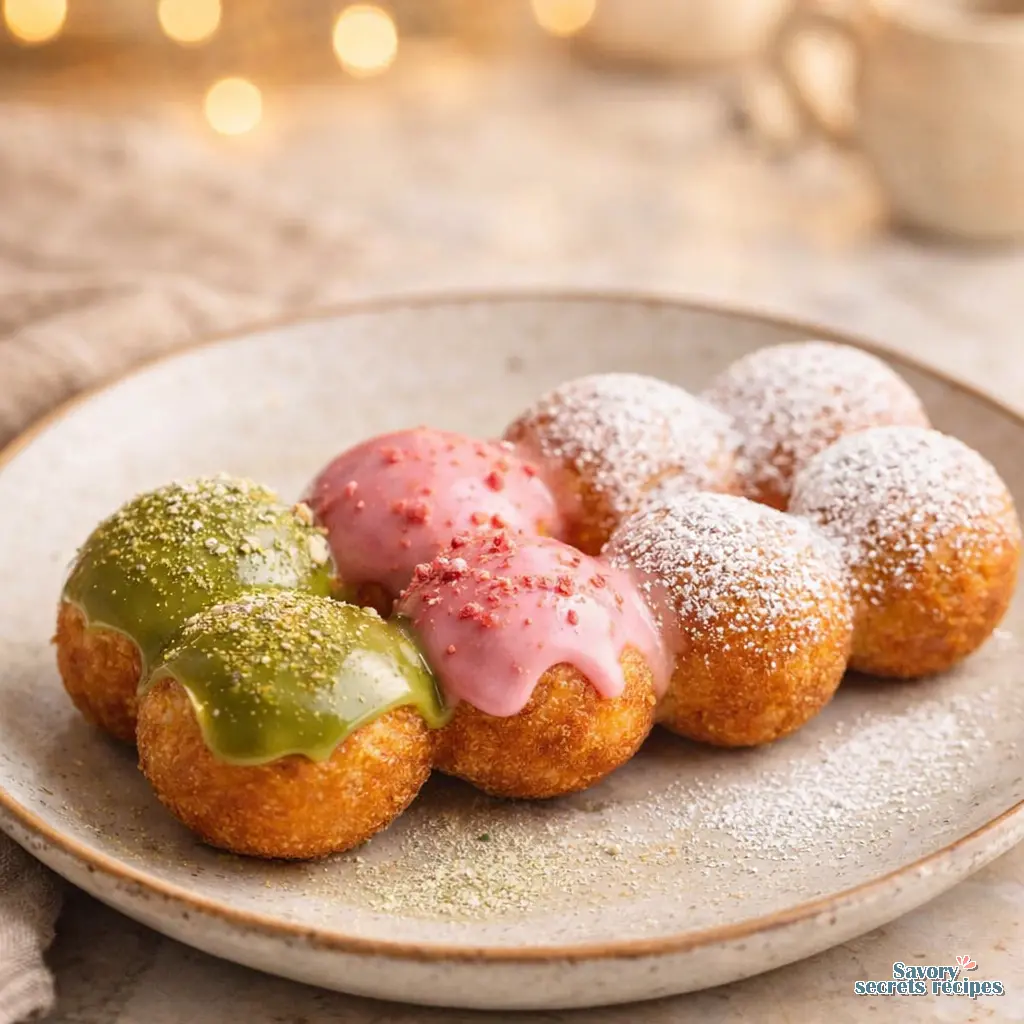
Let’s talk about the finish. You want the distinct snap of the glaze contrasting directly with the deep chew of the donut. Cool the donuts completely before glazing to prevent the icing from melting and dripping right off. For a classic matcha white chocolate glaze, use ceremonial grade matcha powder. Taste it, really taste it. It should smell earthy and taste slightly bitter to perfectly cut the sweet white chocolate.
For a vibrant strawberry glaze, I use freeze-dried strawberry powder whisked into icing sugar and milk. The color is incredible, and it packs a tart punch. If you want to push the boundaries of your mochi donuts recipe, try an ube cream swirl using ube halaya, a black sesame glaze with toasted ground seeds, or a passionfruit drizzle. Even a traditional granulated sugar coating, Mochisada style, is fantastic when they are still slightly warm.
Common Mistakes & Fixes
Mistake: Overmixing the batter.
Solution: This leads to tough, dense donuts. Mix just until the wet and dry ingredients are combined. Treat it gently.
Mistake: Incorrect oil temperature.
Solution: Too low makes them greasy. Too high burns the outside. Keep a frying thermometer clipped to your pot and adjust your heat constantly.
Mistake: Deflating donuts.
Solution: You likely removed them from the fryer too early. Give it another minute. They need enough structural integrity to hold their shape as they cool.
Storage and Reheating for the Best Texture
How do you store leftover donuts to ensure they keep their chewy texture? That’s the most common question I get in the test kitchen. Store them at room temperature in an airtight container for 2 to 3 days. Can you refrigerate or freeze mochi donuts? I don’t recommend the fridge because the cold temperature changes the starch structure and makes them incredibly dense.
You can, however, freeze fully glazed donuts in heavy-duty ziplock bags for up to 6 months. To bring them back to life, let them thaw at room temperature. If you have unglazed leftovers that have gone a bit soft, pop them in a 300-degree Fahrenheit oven for 3 to 5 minutes. If they don’t have a sugar coating, you can even re-fry them briefly in hot oil to completely restore that beautiful exterior crunch. Serve them immediately while fresh, maybe paired with a hot jasmine tea.
Frequently Asked Questions
Bringing the Bakery Home
There’s nothing quite like watching someone nail a technique they’ve been intimidated by. That moment when you pull that first golden ring out of the oil, let it cool, and pull it apart to see that perfect, stretchy crumb, that’s exactly why I do this job. This mochi donuts recipe takes a bit of precision with the temperature and the shaping, but the reward is a bakery-level treat right in your own kitchen. I know you’ll crush it. For more inspiration, check out my Pinterest boards where I save all my favorite glaze variations. Happy frying.
Reference: Original Source
Is the secret to a chewy mochi donuts recipe really just the flour?
It’s the combination of Mochiko (short-grain sweet rice flour) and tapioca starch. The Mochiko provides the sweet, bouncy chew, while the tapioca starch gives the dough enough structural integrity to hold that classic ring shape while frying.
Is this gluten free mochi donuts recipe safe for people with gluten sensitivities?
Yes, as long as you use 100% Mochiko and pure tapioca starch, this recipe is naturally gluten-free. Always double-check your specific brand labels for cross-contamination warnings if you have severe sensitivities or celiac disease.
Why is my mochi donuts recipe dough so sticky?
Sticky dough usually means the hydration is slightly off or the flours haven’t hydrated fully. Let the batter rest for 15 minutes. If it’s still unmanageable, wet your fingers slightly when shaping, rather than adding more flour which makes them dense.
Can I make the dough in advance?
I wouldn’t recommend it. For the absolute best texture, you should mix, pipe, and fry the batter on the same day. Leaving the dough overnight changes the moisture distribution, often resulting in a heavier, less bouncy crumb.
What type of oil should I use for frying?
You need a neutral oil with a high smoke point. Canola, vegetable, or avocado oil are my top choices. They can easily handle the 350-degree Fahrenheit temperatures required without imparting any savory flavors into your sweet pastry.
Can I bake these donuts instead of frying?
You can bake them at 350 degrees Fahrenheit for about 12-15 minutes, but I’ll be honest, the texture changes entirely. They become more like a dense muffin rather than achieving that crisp-chewy contrast that makes the fried version famous.
How do I get the glaze to stick properly?
Patience is key here. You must let the donuts cool completely on a wire rack before dipping them. If the pastry is even slightly warm, the heat will melt the sugars in the glaze, causing it to slide right off.
Can I substitute regular milk for a dairy-free option?
Absolutely. Oat milk or almond milk work beautifully in this batter. Just ensure you’re using an unsweetened variety so you don’t throw off the sugar balance of the dough, which can cause them to burn faster in the fryer.