



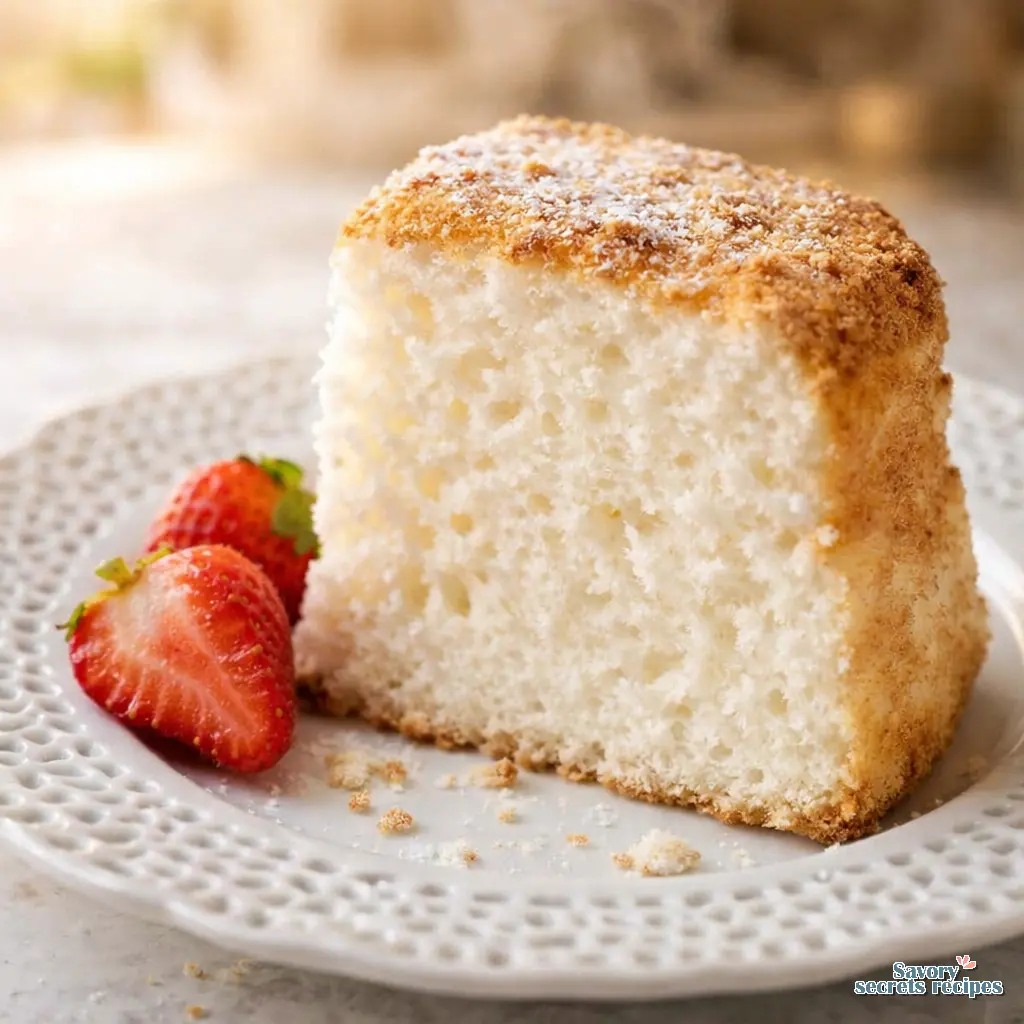
Fluffy Gluten Free Angel Food Cake Recipe
Ingredients
Method
- Separate the egg whites and let them sit at room temperature for at least 30 minutes.
- Preheat the oven to 350°F. Process the gluten-free flour, cornstarch, and powdered sugar in a food processor or blender for about 30 seconds until smooth, then transfer to a bowl and set aside.
- Pulse the granulated sugar in the food processor or blender 5 to 7 times until slightly fine, ensuring it does not become powder, and set aside.
- Beat the egg whites on high speed in a stand mixer with a whisk attachment or using a hand mixer until foamy, then add the salt and cream of tartar.
- Add the vanilla and almond extracts and continue whipping on high speed.
- Gradually add the granulated sugar one tablespoon at a time while mixing on high until the mixture is glossy and forms soft peaks.
- Gently fold the flour mixture into the egg whites one-third at a time using a rubber spatula, taking care not to deflate the mixture, then scoop into an ungreased 10-inch round pan.
- Bake for 35 to 40 minutes until the cake is lightly golden.
- Remove the cake from the oven, immediately invert it onto a wire rack, and allow it to cool completely.
- Run a thin knife around the edge of the cooled cake, tap the pan on the counter to release it, and slice with a sharp serrated knife to serve.
Nutrition
Notes
The Gluten Free Angel Food Cake Recipe You Can Actually Trust
I remember my ajji letting me pour dosa batter onto the cast iron tawa when I was seven. She guided my hand in that specific circular motion. She never measured anything. She just knew by the consistency when the batter was right. Now I’m the one writing down exact ratios so other people can recreate classic recipes safely. It feels incredibly useful, even if I sometimes miss her intuitive measuring style.
If you’ve been eating a celiac friendly diet for a while, you know the heartbreak of dry, gritty baked goods. You see a beautiful picture, you spend twenty dollars on specialty flours at Ralphs or Whole Foods, and it tastes like sweet sand. I’ve been there. I tested this gluten free angel food cake recipe ten times because I refused to publish something mediocre. With Passover approaching, this is also a brilliant dessert option since it relies entirely on an egg white foam rather than yeast or baking powder. Just swap the cornstarch for potato starch.
You won’t believe it’s gluten-free. I’m completely serious. The “squish” factor is incredible. It bounces back when you press it. It smells like toasted sugar and vanilla bean paste. Let me walk you through exactly how we get that perfect, non-gummy texture every single time.
Why Your Gluten Free Baking Blend Matters Here
Here is what I’ve found works. You can’t just grab a standard cup-for-cup gluten free baking blend for this. Most of those blends rely heavily on brown rice flour and xanthan gum. Xanthan gum is great for bread, but it creates a heavy, gummy texture in delicate sponge cakes.
We need a xanthan gum free approach. The secret is blending superfine rice flour with pure starches. I prefer a mix of superfine white rice flour, cornstarch, and tapioca flour. The superfine grind is absolutely non-negotiable. If you use regular rice flour, your cake will be gritty. I buy my superfine flour online or at specialty markets here in Los Angeles, but you can sometimes find it at well-stocked standard grocery stores.
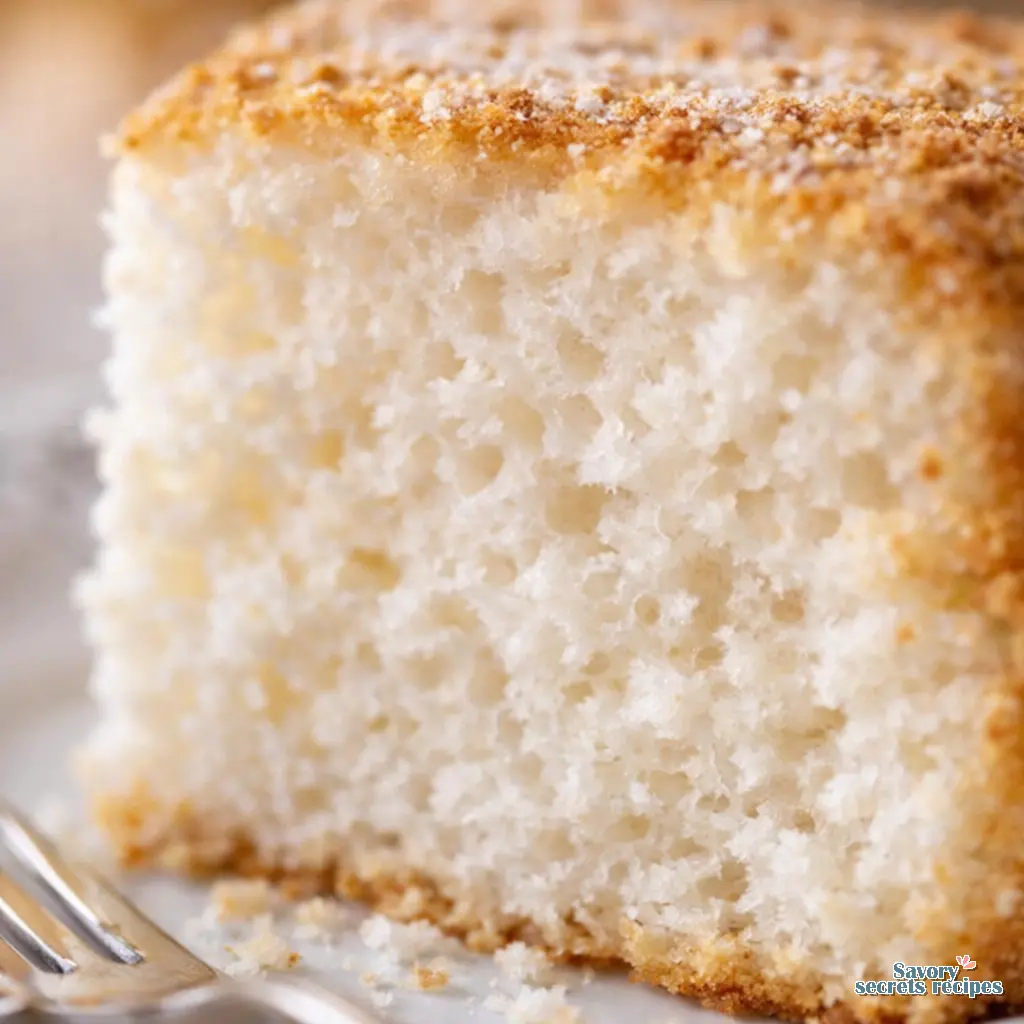
This specific starch ratio gives the cake its airy crumb. It mimics the low-protein structure of traditional cake flour. I know buying individual flours feels fussy. I thought it was too much extra work at first. Now I understand that the extra work is the point. It’s the difference between a cake that crumbles and a cake that stretches.
The Golden “No-Grease” Rule for Your Pan
Please, whatever you do, don’t grease your pan. I know every instinct you have as a baker is screaming at you to butter that pan. Ignore it. A gluten free angel food cake recipe needs friction. As the egg whites expand in the oven, the batter literally climbs the ungreased walls of the pan to reach its full height.
If you spray it with oil, the batter slides right back down. You’ll end up with a dense, sad little disk. You need a standard 10-inch aluminum tube pan with a removable bottom. Don’t try to use a non-stick Bundt pan. Bundt pans have too much surface area, they’re usually coated with non-stick materials, and they don’t have the little “feet” required for cooling.
Speaking of cooling, you must invert the pan immediately after taking it out of the oven. Gravity is your friend here. Hanging the cake upside down prevents the delicate structure from collapsing under its own weight while the starches set.
Mastering the Meringue Base
Your meringue base is the entire lifting force of this cake. There is no baking powder here. We rely completely on trapped air. First, separate your eggs while they’re cold. Cold yolks are firmer and less likely to break. Even a microscopic drop of fat from a yolk will prevent your whites from whipping properly. To be safe, I crack each white into a small bowl before adding it to the main mixing bowl. That way, if a yolk breaks on egg number eleven, I haven’t ruined the whole batch.
Once separated, let the whites sit on the counter for about thirty minutes. Room temperature whites whip up much fluffier than cold ones. Add your cream of tartar and salt, then start whipping. The cream of tartar is an acid that stabilizes the egg white foam.
You’re looking for soft peaks, not stiff peaks. This is the part that matters most. When you lift your whisk, the peak should flop over gently like a soft serve ice cream cone. If you whip them to stiff, rigid peaks, the proteins lose their elasticity. They won’t be able to expand in the oven, and your cake will collapse. If it looks too wet at this stage, that is normal.
The Sifting Technique and Gentle Folding
Gluten-free flours love to clump. You must sift your dry ingredients. I actually sift my superfine rice flour, powdered sugar, and starches three times. It aerates the mixture and ensures you don’t find a pocket of dry starch in your baked cake.
When it’s time to combine, add the flour mixture in tiny increments. I use exactly a quarter cup at a time. Sprinkle it evenly over the whipped egg whites. Use a large balloon whisk or a flexible silicone spatula to fold it in. Slice down the middle, scrape the bottom, and gently fold the batter over itself. Don’t stir. Stirring deflates the air you just spent ten minutes whipping into those eggs.
Bake it until the top is deeply golden brown and cracked. Test it at the 35-minute mark. You’ll know it’s ready when you press gently on the cracks and they spring right back. If your finger leaves an indent, it needs another few minutes.
Common Gluten Free Angel Food Cake Recipe Mistakes
Mistake: The cake collapsed while cooling.
Solution: You likely over-whipped the egg whites to stiff peaks, or you didn’t invert the pan immediately after baking. Always stop whipping at soft, floppy peaks.
Mistake: The texture is gritty like sand.
Solution: You used standard rice flour instead of superfine rice flour. The superfine grind is absolutely essential for a smooth, traditional mouthfeel.
Mistake: The cake didn’t rise and feels dense.
Solution: Several culprits here. You might have greased the pan, gotten a speck of yolk in the whites, or folded the flour in too aggressively and deflated the batter.
Storing Your Gluten Free Angel Food Cake Recipe
I genuinely love the problem-solving part of this work. Figuring out how to keep gluten-free cakes moist is always a fun challenge. Because this cake has zero fat, it dries out very quickly if exposed to air. Once it’s completely cool, you must store it in an airtight container at room temperature. It keeps beautifully for about two days.
If you aren’t going to finish it within 48 hours, freeze it. I wrap individual slices tightly in plastic wrap, then place them in a freezer-safe zip-top bag. They freeze perfectly for up to four months. When my daughter Priya wants a piece, I just pull one out and let it thaw on the counter for an hour. It tastes exactly like it was freshly baked.
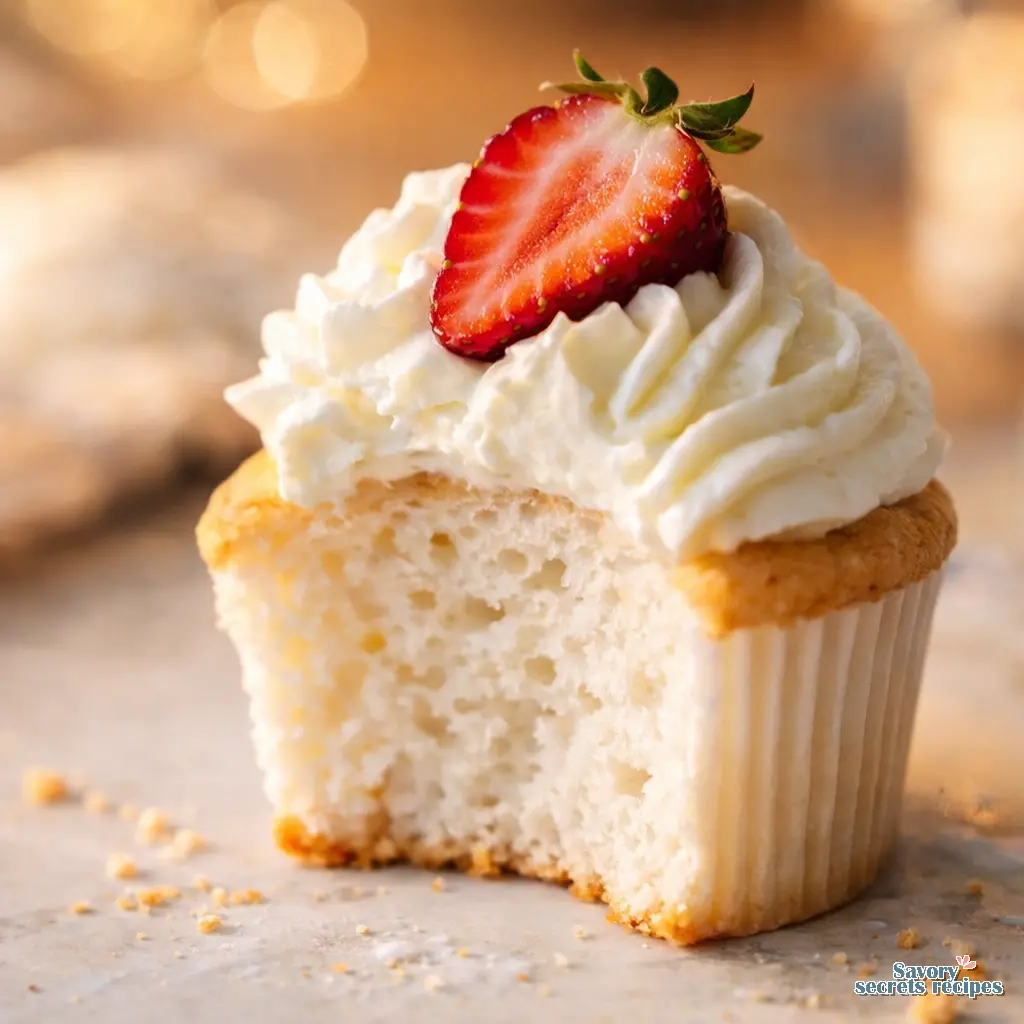
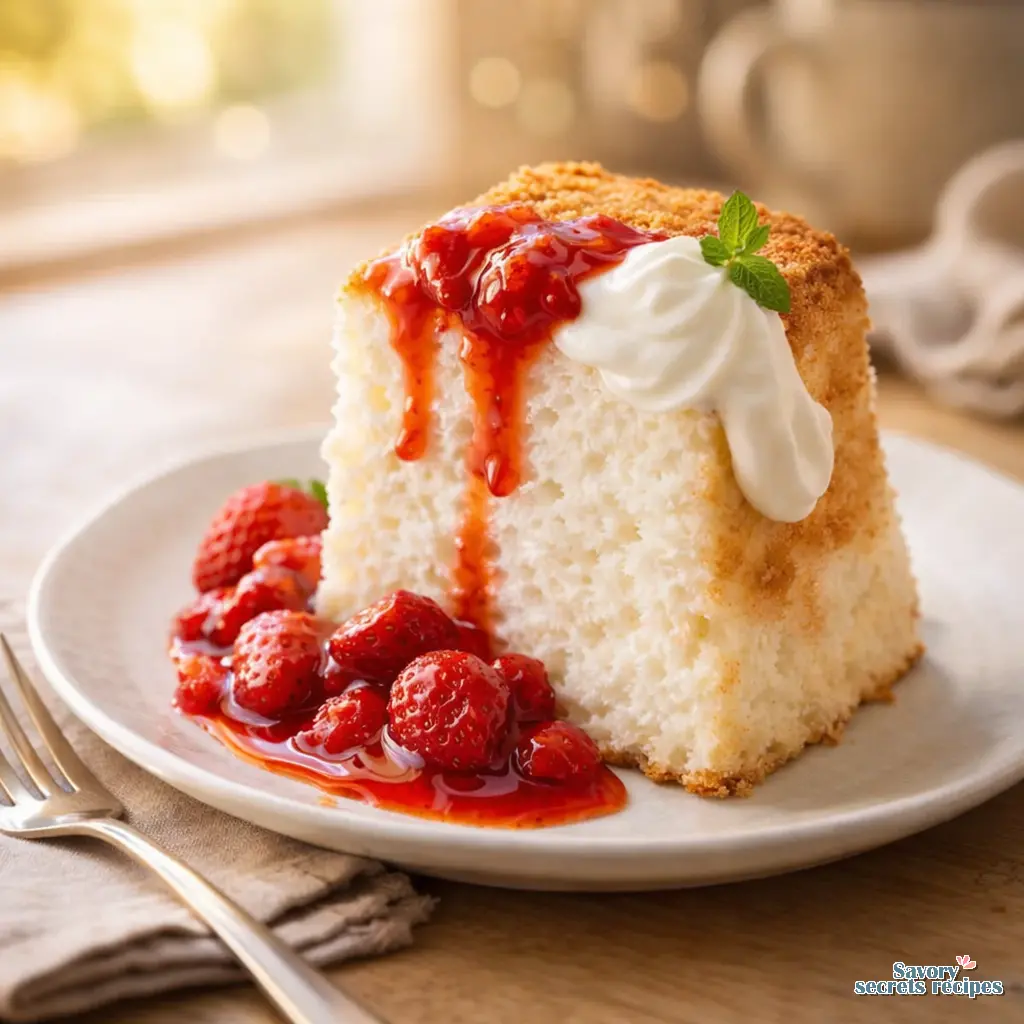
I love serving this with fresh California strawberries from the farmers market, macerated in a little sugar until they release their juices. Add a dollop of softly whipped cream, and it’s absolute heaven.
Frequently Asked Questions
Final Thoughts on Reclaiming Classics
There is something deeply satisfying about a substitution that actually works on the first try. I want you to feel that success in your own kitchen. You shouldn’t have to miss out on light, airy spring desserts just because you avoid gluten. This gluten free angel food cake recipe gives you back that classic texture, without any of the sandy grit.
Top it with a bright berry compote, share it with your family, and watch them be completely surprised when you tell them it’s safe for everyone to eat. I share tons of variations on my Pinterest boards if you want more ideas for seasonal toppings. Happy baking, and trust the process.
Reference: Original Source
What is the best gluten free flour for angel food cake to ensure a light and airy texture?
I’ve found the absolute best base is superfine white rice flour mixed with cornstarch and tapioca flour. Avoid cup-for-cup blends containing xanthan gum, as they make the crumb heavy. The superfine grind is critical to prevent any gritty mouthfeel in your finished dessert.
Why is my gluten free angel food cake gummy or dense instead of fluffy?
A gummy texture usually means your flour blend had too much xanthan gum or you underbaked it slightly. If it’s dense, you likely over-whipped the egg whites past soft peaks, greased your tube pan, or folded the dry ingredients too aggressively, which deflated the batter.
Is it better to make a gluten free angel food cake recipe from scratch or use a boxed mix?
Making this gluten free angel food cake recipe from scratch yields vastly superior results. Boxed mixes often contain stabilizers that compromise the authentic springy texture. Scratch baking allows you to control the exact starch ratios and whip the fresh egg whites to the perfect soft peak stage.
How do I store a gf angel food cake to keep it from drying out?
Because it contains no fat, it dries out incredibly fast. Keep it in a tightly sealed airtight container at room temperature for up to two days. For longer storage, wrap individual slices in plastic wrap and freeze them for up to four months. Thaw at room temperature.
What is the difference between a gf angel food cake and a traditional gluten free sponge cake?
A traditional sponge cake uses both egg yolks and egg whites, and often includes a fat like butter or oil. An angel food cake is entirely fat-free, relying strictly on an egg white foam for its structure, resulting in a much whiter, lighter, and chewier texture.