



Spicy Korean Rice Paper Dumplings Recipe
Ingredients
Method
- Whisk rice vinegar and gochujang in a medium bowl until combined. Stir in soy sauce and toasted sesame oil, then set aside. Alternatively, combine all ingredients in a small jar and shake until emulsified.
- Heat oil in a medium nonstick skillet over medium heat. Sauté garlic, ginger, scallion whites, and gochugaru for 60 to 90 seconds until fragrant. Add cabbage, carrot, mushrooms, and kimchi, then cook for 5 to 7 minutes until the cabbage is translucent and reduced.
- Transfer the mixture to a bowl and stir in grated tofu, scallion greens, soy sauce, and sesame oil. Mix thoroughly while breaking up the tofu with a spatula. Chill the filling in the refrigerator for 10 minutes if it is too hot to handle.
- Prepare a workstation with a bowl of warm water, a wooden cutting board, and a lightly oiled baking sheet. Soften one rice paper sheet in the water for 5 to 10 seconds. Place 3 tablespoons of filling in the center of the paper and fold the sides, top, and bottom inward like an envelope.
- Soften a second rice paper sheet and place the dumpling seam-side-down in the center. Wrap it again so the second seam is on the opposite side. Place on the baking sheet and repeat the process for all remaining ingredients.
- Heat a thin layer of oil in a nonstick pan over medium-high heat. Pan-fry the dumplings in batches for 2 to 3 minutes per side until lightly browned. Transfer to the baking tray and pat with a paper towel to remove excess oil, ensuring they do not rest directly on the towel.
- Coat both sides of the dumplings with oil spray and arrange them in the air fryer basket without touching. Air fry at 375°F for 8 to 10 minutes, flipping halfway through.
- Serve the dumplings warm with the prepared dipping sauce. Store leftovers in the refrigerator for up to 3 days and reheat on the stove or in the air fryer to restore crispness.
Nutrition
Notes
- Gluten-Free: Use gluten-free soy sauce or tamari and gluten-free gochujang to make this recipe gluten-free. Some kimchi is not gluten-free, so be sure to check your kimchi ingredients as well.
- Rice Paper: I found small rice paper wraps at my local Asian grocery store. If you can only find medium or larger wraps you can simply increase the filling and make larger dumplings. I was able to fit 1/2 cup of filling into larger (22 cm) rice paper wrappers. If using large wrappers, this recipe will use 8 sheets of rice paper to make 4 large dumplings.
- Nutrition estimates are an estimate and do not include frying oil.
Why You’ll Love Crispy Kimchi Rice Paper Dumplings
I remember my mom making fresh paneer every Sunday. My job was to squeeze the cheesecloth while she held the colander over the sink. I loved watching the whey drip out. Clear at first, then cloudy. I didn’t realize until my PhD that I was basically observing protein coagulation and whey separation in real time. That exact same mechanical pressing is the secret to making perfect crispy kimchi rice paper dumplings.
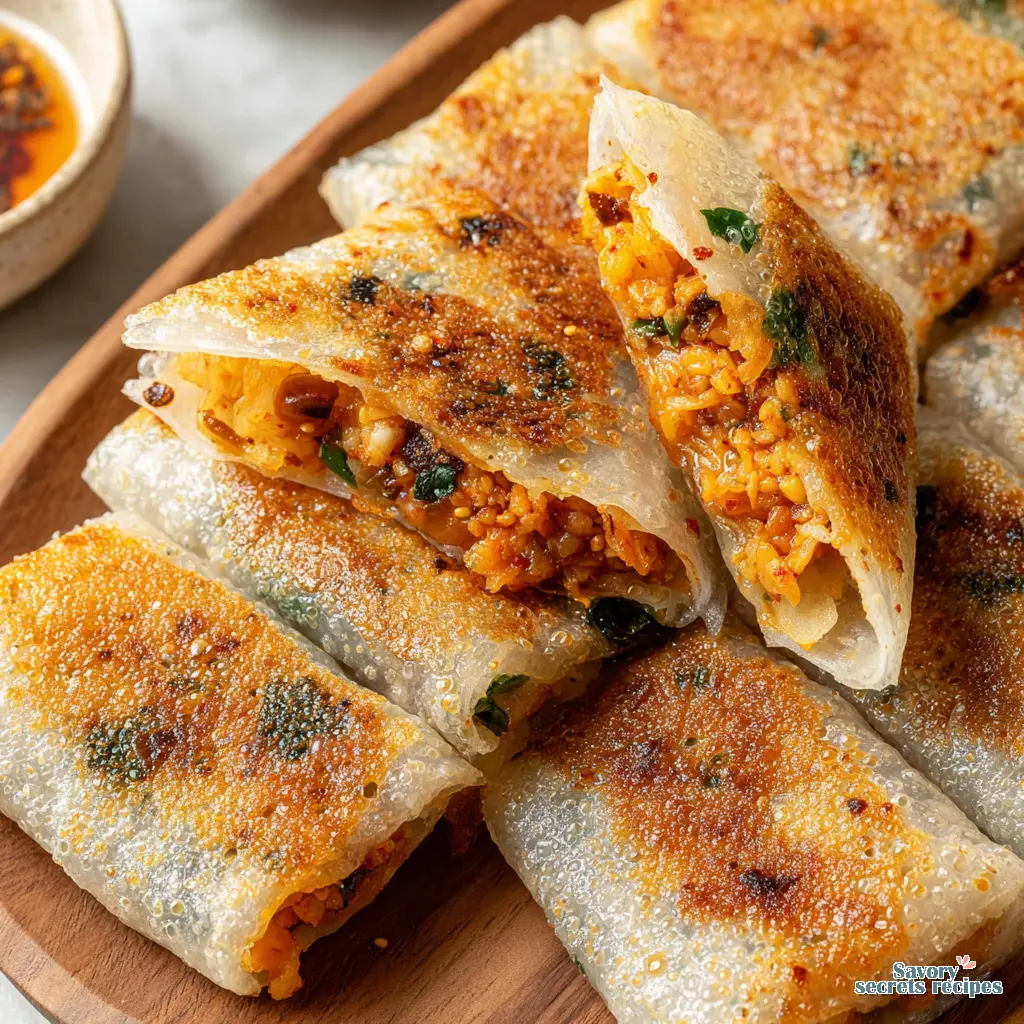
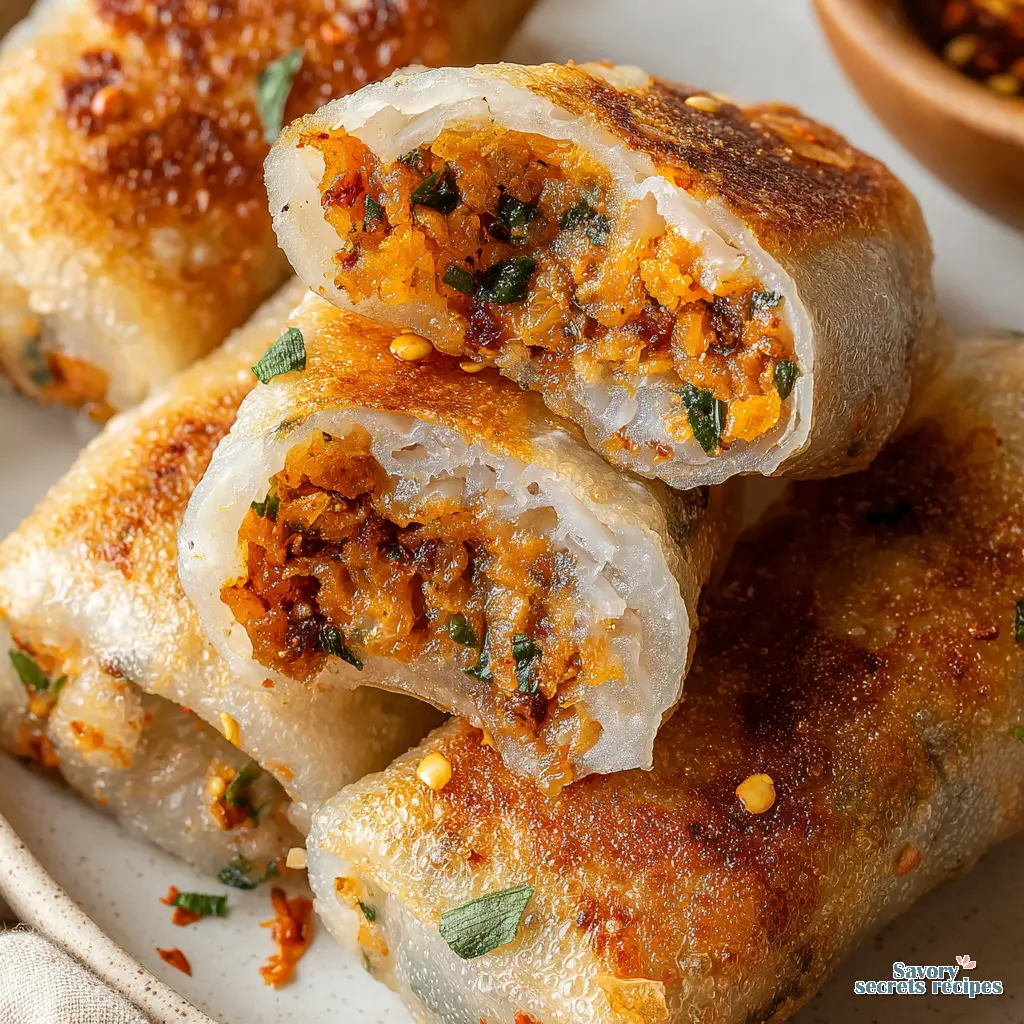
If you don’t squeeze the moisture out of your ingredients, your wrappers will tear. It’s just basic food physics. But once you nail that step, you get something incredible. The exterior shatters when you bite into it, giving way to a slightly chewy layer of hydrated rice paper, followed by a warm, deeply savory filling. The vibrant red color of the filling pushing through the clear wrapper is visually stunning.
This is genuinely interesting from a textural perspective. We are taking a viral trend and applying proper Korean fusion flavor profiles to it. You get the tangy, funky notes of fermented cabbage balanced with the neutral creaminess of tofu. Perfect.
The Science of Ingredients for Crispy Kimchi Dumplings
The data on this is actually quite clear. Moisture is the enemy of a crispy pan-fry. That’s why you need extra-firm or super-firm tofu for the best meaty texture. Silken tofu contains too much water and will turn your filling to mush. If you can only find firm tofu, you’ll need to press it heavily.
For the flavor base, you want well-fermented vegan kimchi. Older kimchi has a higher concentration of lactic acid, which gives you that zesty, bold punch you need to cut through the starch of the wrapper. You’ll also need gochugaru (Korean chili flakes) for that signature heat, plus fresh garlic, ginger, and scallions to build the aromatics.
We round it out with toasted sesame oil and soy sauce. I prefer cooking with whole ingredients and balancing the acid and fat myself. Taste and adjust as you go. The filling should taste slightly too salty on its own, because the rice paper wrapper is completely unseasoned.
Step-by-Step Method for the Perfect Crunch
Let’s talk about building the filling. You want to cook off the aromatics first. Once the garlic and ginger hit the hot oil, wait until the raw smell cooks off. Then you add your finely diced shiitake mushrooms and cabbage. You need to cook this mixture down until the water evaporates.
Here is the most critical part. You have to squeeze the juice out of the kimchi before chopping it. Save that vibrant red juice for a dipping sauce or soup later, but keep it out of the dumpling. Mix the dry kimchi with your crumbled tofu and the cooled mushroom mixture.
I highly recommend the double-wrap method for these crispy kimchi rice paper dumplings. Rice paper is fragile. By using two wrappers per dumpling, you create a thicker barrier that traps the filling securely and provides double the crunch when fried. It’s a structural insurance policy.
How to Handle Rice Paper Without Tearing
The evidence here is mixed regarding water temperature. Many packages say to use warm water. I’m not entirely convinced that warm water is best for beginners. In practical terms, using cool or room-temperature water gives you much more working time. The paper will feel slightly stiff when you pull it out, but it continues to soften as it sits on the board.
Always assemble on a wooden cutting board to prevent the rice paper from sticking. Do not rest wet dumplings on a paper towel or a regular cloth towel. They will glue themselves to the fabric, and you will tear them trying to get them off. That tracks with what I’ve seen in countless kitchen failures.
Adjust your filling amount based on the wrapper size. Use about a quarter cup for medium wrappers and a half cup for large ones. Overfilling is the fastest way to cause a blowout in the pan.
Tips for Maximum Crispiness
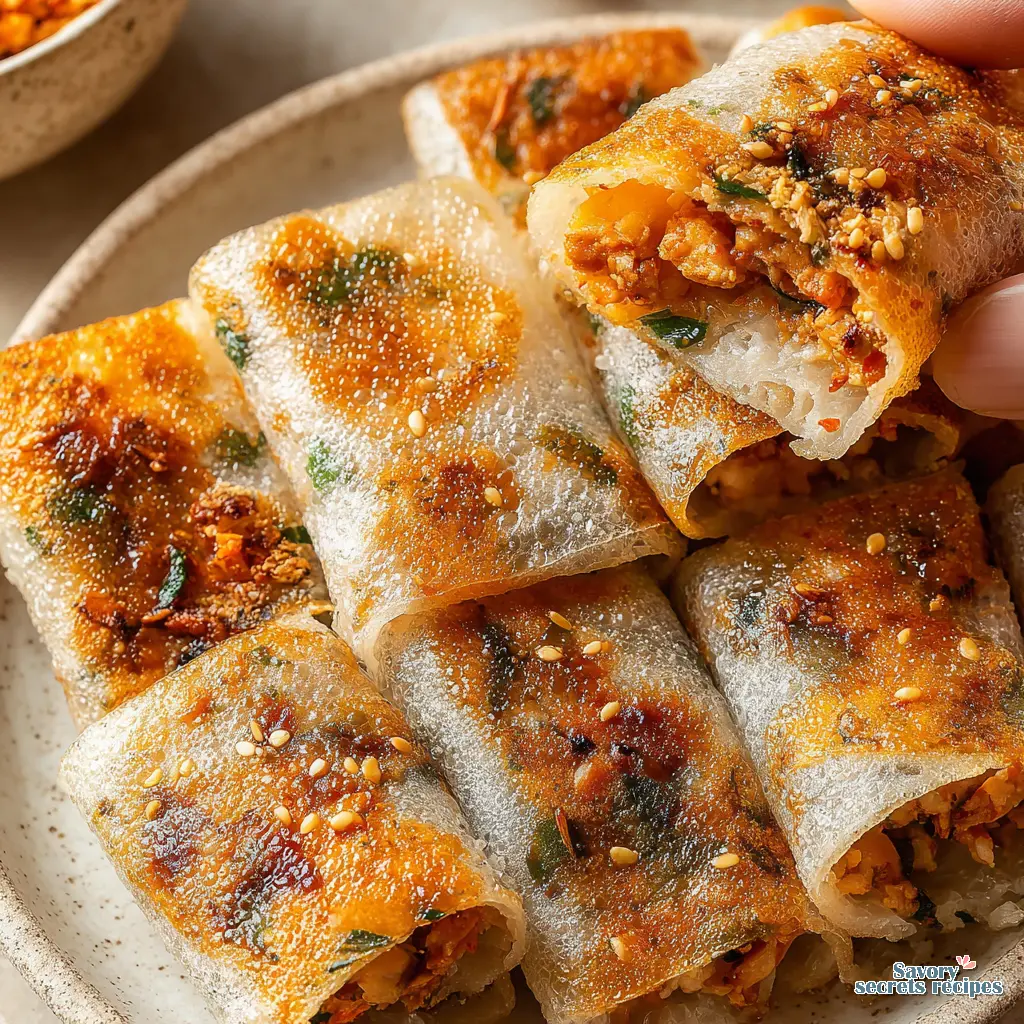
If you want truly crispy rice paper dumplings korean style, moisture management continues right up until they hit the pan. Lightly pat assembled dumplings with a paper towel right before frying to remove excess surface moisture. Water plus hot oil equals dangerous splattering and a soggy crust. Alternatively, you can achieve a similar crunch by making oven baked rice paper dumplings to reduce the amount of oil used.
Use a nonstick pan with a generous coating of neutral oil. Wait until the oil shimmers. You want to hear that sizzle immediately when the dumpling hits the pan. Let it develop some fond on the bottom before you even think about moving it. If you try to flip it too early, the sticky rice paper will tear.
Only assemble and fry the amount you plan to eat immediately for maximum crispiness. Rice paper does not hold its crunch for long. Once it cools, it reverts to a chewy state.
Common Mistakes & Visual Troubleshooting
Mistake: The dumplings are sticking together in the pan.
Solution: Rice paper is incredibly sticky when hydrated. Leave at least an inch of space between each dumpling in the pan. If they touch, they will fuse together permanently.
Mistake: The wrapper tore while rolling.
Solution: This usually means your water was too hot or your filling was too wet. If you get a small tear, simply patch it with a small scrap of wet rice paper, or rely on the double-wrap method to cover the hole.
Mistake: The filling tastes bland after frying.
Solution: You likely under-seasoned the filling. The wrapper mutes the interior flavors. Always over-season your kimchi and tofu mixture slightly before wrapping.
Recipe Variations and Substitutions
This is where it gets complicated if you have specific dietary needs, but we can easily adapt. For a gluten-free version, use tamari instead of soy sauce and verify your kimchi is certified wheat-free. Most traditional kimchi uses rice flour for the paste, but commercial brands sometimes sneak in wheat. If you are looking for a more savory meat-based option, these crispy beef rice paper dumplings offer a rich and hearty alternative.
If you aren’t a fan of tofu, crumbled tempeh is a fantastic substitute. It provides a nutty, fermented flavor that pairs beautifully with the tangy kimchi. You can also add soaked glass noodles to the filling for an authentic Korean texture, just be sure to chop them finely so they don’t poke through the delicate wrapper. Those who prefer poultry can easily swap the tofu for ground meat to create crispy chicken rice paper dumplings.
If you can’t find gochugaru, standard red chili flakes will work in a pinch, though they lack the smoky depth of the Korean pepper. Taste carefully, as standard chili flakes are often much spicier.
Best Dipping Sauces for Serving
A spicy korean rice paper dumplings recipe needs a sauce that cuts through the pan-fried richness. I prefer a simple gochujang dipping sauce. Whisk together rice vinegar, a small dollop of gochujang, soy sauce, and a few drops of toasted sesame oil. The acid from the vinegar wakes up the palate. This sauce also pairs exceptionally well with crispy shrimp rice paper dumplings if you decide to try a seafood-based version.
If you want a creamy contrast, a spicy mayo made with vegan mayonnaise and sriracha works beautifully. Sometimes my daughter refuses anything too spicy, so I’ll make a mild sweet chili sauce for her. It makes good sense when you think about it. You need a liquid element to balance the heavy crunch of the dumpling.
How to Store and Reheat Leftovers
Storing assembled but unfried dumplings is a mistake. They will absorb moisture from the filling and turn into a soggy, tearing mess in the fridge. If you want to meal prep, make the kimchi and tofu filling ahead of time and store it in an airtight container for up to 3 days. Wrap and fry fresh when you are ready to eat.
If you have leftover cooked dumplings, store them in the refrigerator. To reheat, skip the microwave entirely. It will turn the rice paper rubbery. Instead, drop them in an air fryer at 375°F for 3-5 minutes. The circulating dry heat will restore that beautiful shattered crust.
For long-term storage, you can freeze them. I’d want to see more research before recommending freezing them raw. In my testing, freezing them after they are fully pan-fried yields much better results. Just let them cool completely, freeze them on a baking sheet so they don’t touch, and then transfer to a bag. Reheat directly from frozen in the air fryer.
Frequently Asked Questions
Final Thoughts on This Korean Fusion Snack
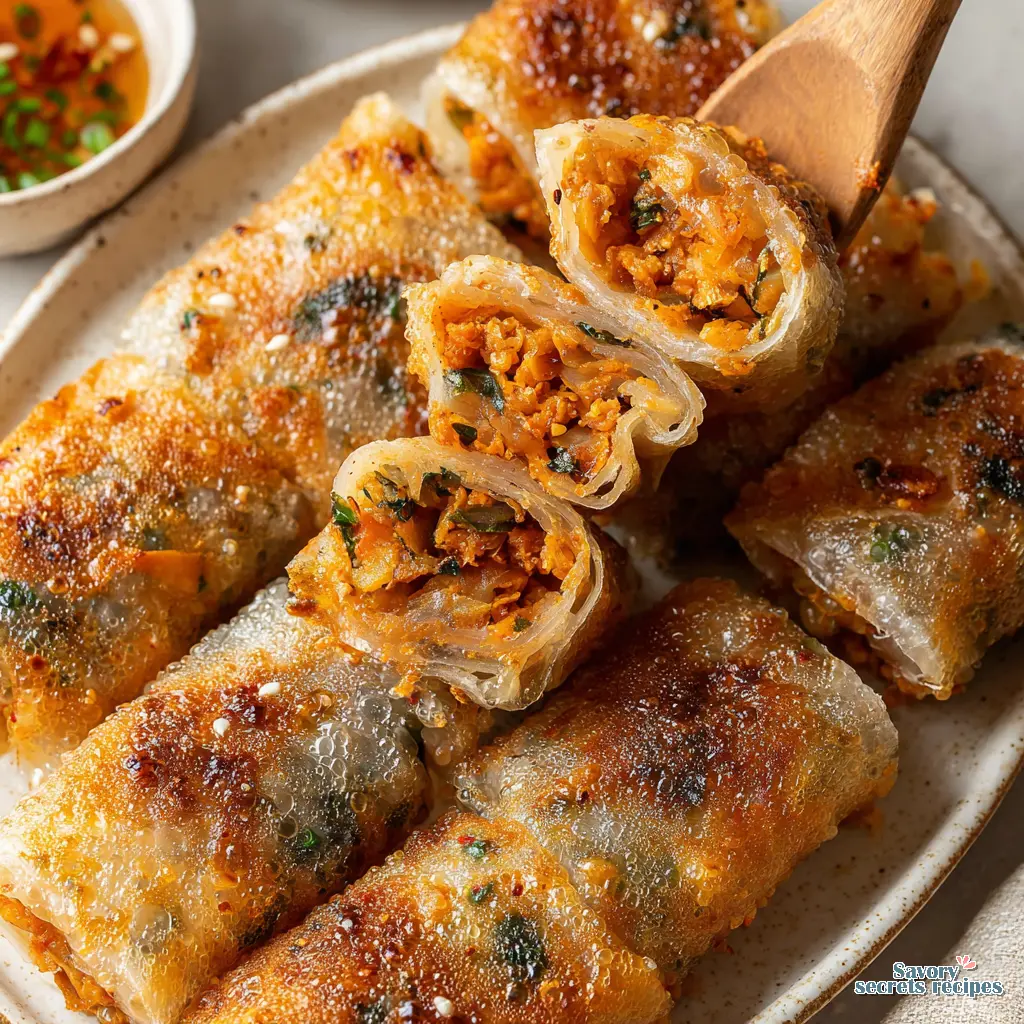
Mastering these crispy kimchi rice paper dumplings takes a little practice with the wrappers, but the payoff is incredible. That first crunchy bite into the vibrant, spicy filling is deeply satisfying. It’s a fantastic way to enjoy the health benefits of fermented foods wrapped up in a fun, modern technique.
I hope you try the double-wrap method and let the pan build that beautiful golden crust. For more inspiration and variations on this technique, check out my Pinterest boards where I save all my favorite fusion recipes.
Source: Nutritional Information
Can I make crispy kimchi rice paper dumplings ahead of time?
I don’t recommend wrapping them ahead of time. The rice paper will absorb moisture from the kimchi and turn soggy. Instead, prep your kimchi and tofu filling up to three days in advance. When you’re ready to eat, simply wrap them and pan-fry immediately for the best texture.
How do I prevent rice paper from sticking to the pan?
That tracks with the most common issue I see. You must use a good nonstick pan and enough oil to coat the bottom. Most importantly, leave plenty of space between the crispy kimchi rice paper dumplings. If they touch while cooking, they will fuse together and tear when separated.
What is a good substitute for gochugaru in the filling?
If you can’t find Korean gochugaru, standard red pepper flakes work, but use half the amount since they are spicier and lack the smoky sweetness. A mix of sweet paprika and a tiny pinch of cayenne is actually a closer flavor match for how to make kimchi filling for rice paper dumplings.