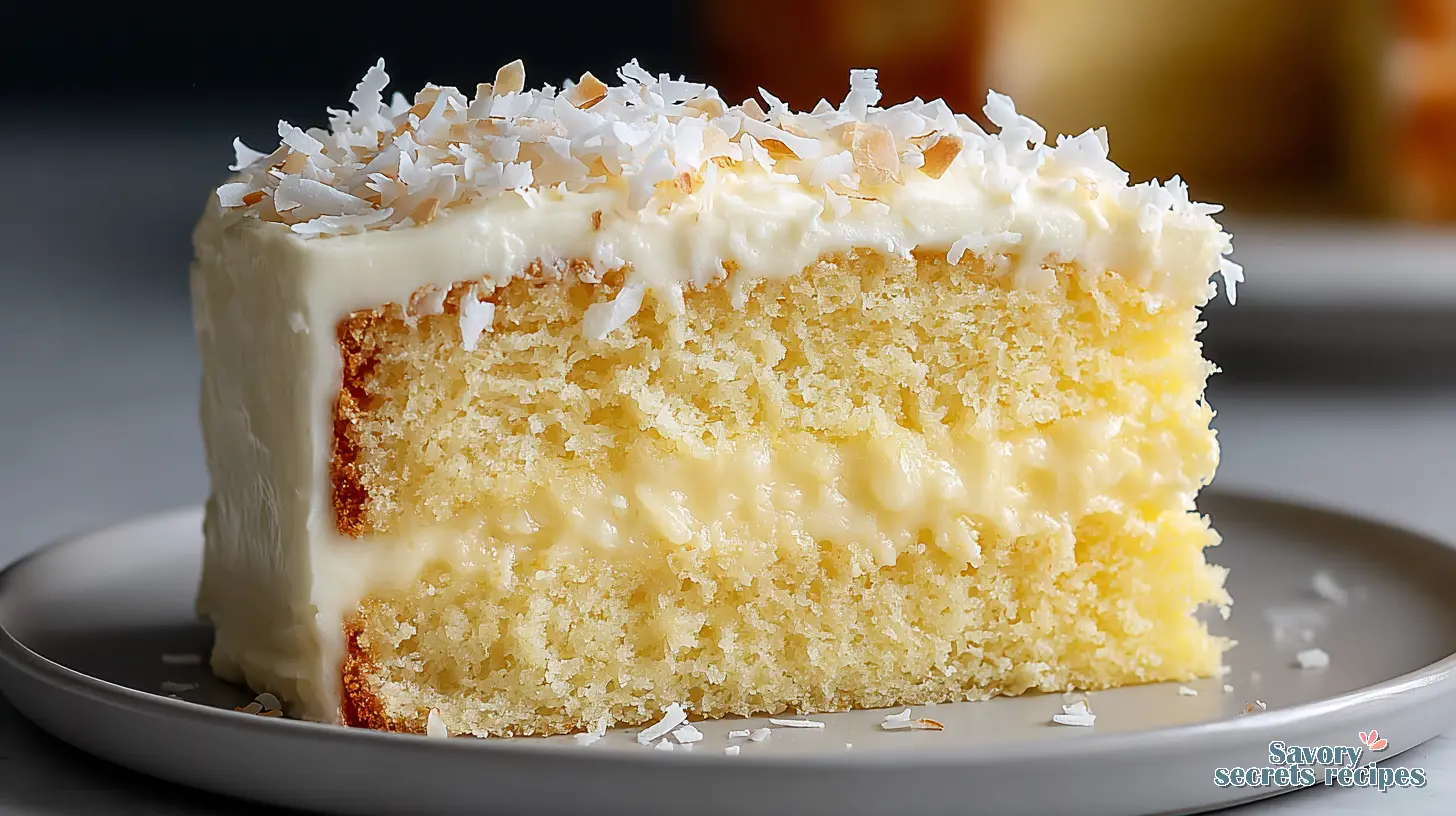
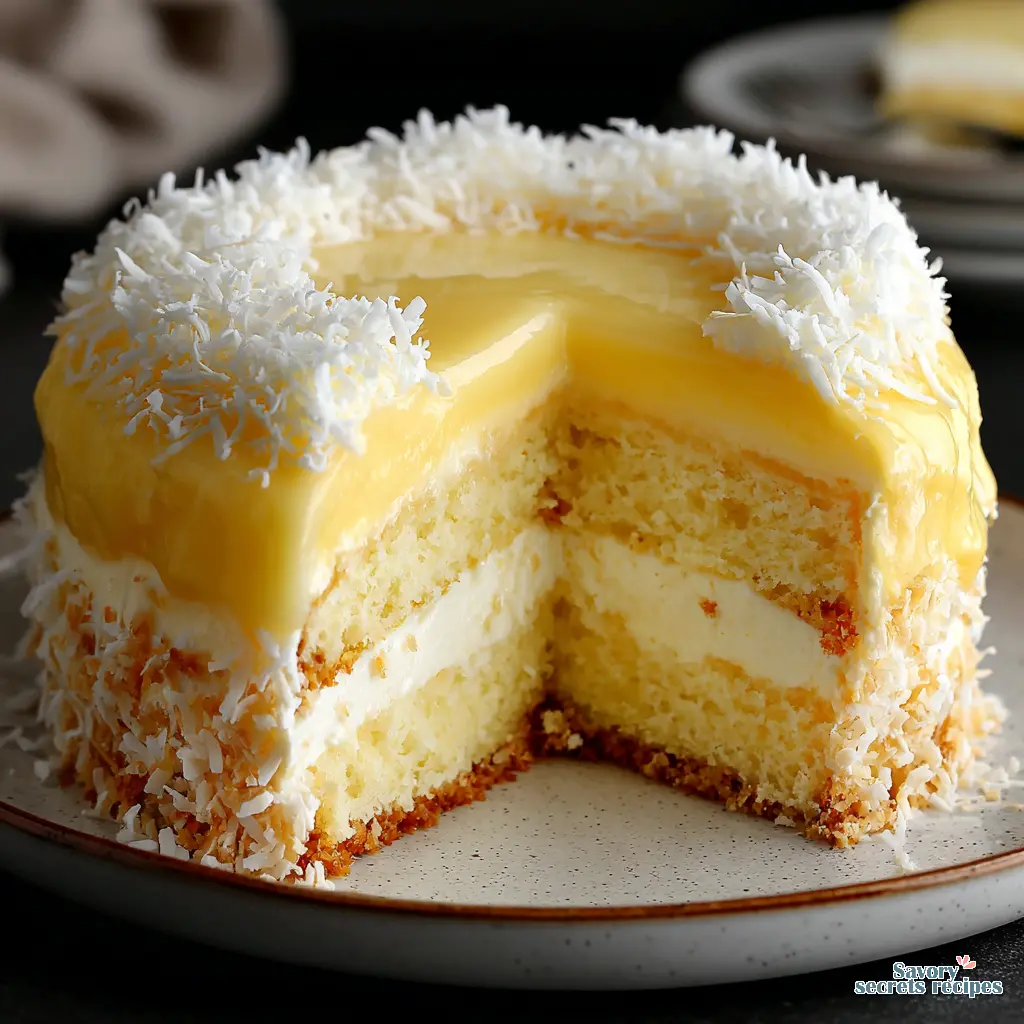
Tropical Lemon Coconut Cream Cake
Ingredients
Method
- Preheat the oven to 350°F (175°C). Grease and line an 8-inch round cake pan with parchment paper.
- In a large mixing bowl, combine the almond flour, erythritol sweetener, baking powder, and salt. Mix well.
- In a separate bowl, whisk together the eggs, lemon zest, lemon juice, and melted butter until well combined.
- Bake in the preheated oven for 25-30 minutes, or until a toothpick inserted in the center comes out clean.
- While the cake bakes, prepare the frosting by whipping the coconut cream until light and fluffy.
- Once the cake is completely cooled, generously spread the whipped coconut cream on top of the cake.
- Sprinkle the unsweetened shredded coconut over the frosting for decoration.
- Slice, serve, and enjoy your delicious keto lemon cake!
Nutrition
Notes
Why You’ll Love This Lemon Coconut Cream Cake
You know, there are some desserts that just sing. They hit all the right notes: light, refreshing, and just decadent enough to feel like a real treat. And honestly, for a long time, I thought a show-stopping layer cake like a Lemon Coconut Cream Cake was squarely in the “too much effort for a weeknight” category. Or even a weekend category, if I’m being real.
But here’s what I’ve found works: when you break it down, it’s actually quite achievable. This isn’t one of those recipes that asks you to spend a whole day in the kitchen. It’s a gorgeous, tangy, and subtly sweet lemon coconut dessert that feels fancy without the fuss. It’s perfect for those spring gatherings, maybe a Mother’s Day brunch, or just because you’re craving something bright and beautiful after a long week.
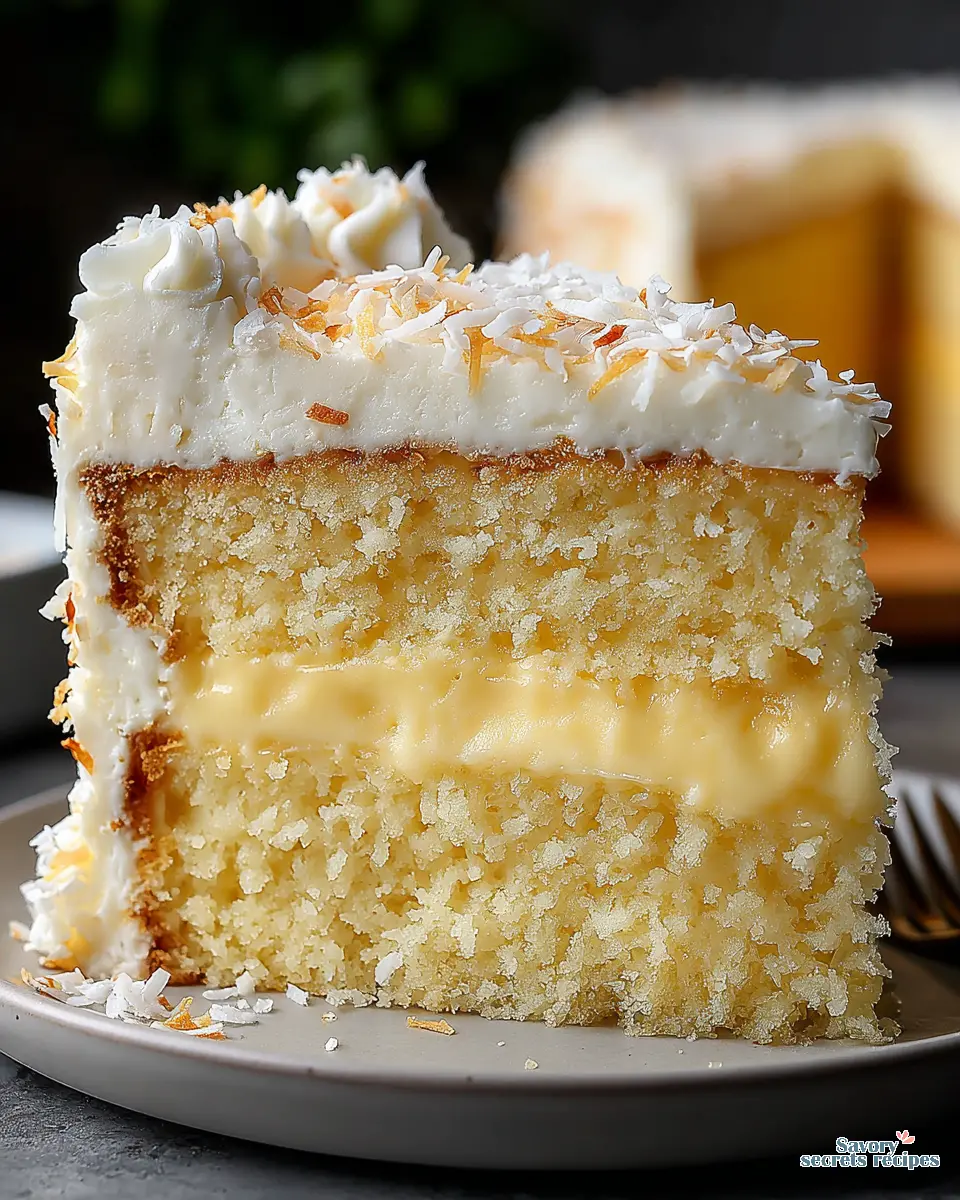
I mean, who doesn’t love the idea of a soft coconut cream cake that’s perfectly moist, with that vibrant citrus kick? This recipe for Lemon Coconut Cream Cake is designed to give you that impressive, homemade lemon cake experience, without the usual stress. You’ll get a fluffy sponge cake that holds its shape, layered with a dreamy, tangy coconut cream frosting. Trust me, it’s worth it.
Ingredients for Your Dream Cake
Getting the right ingredients is half the battle, especially when you’re aiming for a truly exceptional Lemon Coconut Cream Cake. It depends on what you’re going for, but for this recipe, quality really matters. We’re using specific items to get that light, moist, and perfectly balanced flavor.
Cake Ingredients
For the cake layers, we’re building a foundation that’s both light and flavorful. The almond flour is key here, giving us that lovely tender crumb that’s also naturally low-carb. Erythritol sweetener keeps things sweet without the sugar, and baking powder ensures our cake rises beautifully. Large eggs, of course, are essential for structure and richness.
You’ll also need unsalted butter, softened to room temperature. This is one of those small details that makes a big difference in how your batter comes together. And salt, just a pinch, to balance all that sweetness and bring out the flavors. Don’t forget the unsweetened shredded coconut for texture and that distinct tropical dessert vibe.
Lemon Coconut Buttercream Ingredients
Now, for the star of the show: the lemon coconut buttercream. You’ll need more unsalted butter, softened again, and more erythritol sweetener. The magic really happens with the coconut cream. Make sure you’re using canned unsweetened coconut milk, and definitely shake the can before opening to ensure both the water and solids are used together. This isn’t the coconut cream from a tub or a beverage carton; it’s the full-fat, creamy stuff.
Fresh Meyer lemons are non-negotiable here. Their juice and zest provide that unmistakable tangy coconut flavor that just brightens everything up. I mean, you could use regular lemons, but Meyer lemons have this lovely, slightly sweeter, more floral note that I’m genuinely excited about for this refreshing cake. A little salt helps too, to really make those citrus notes pop.
How to Toast Coconut Flakes
Toasted coconut flakes are such a simple garnish, but they add so much to the final presentation and flavor of your Lemon Coconut Cream Cake. Here’s what I’ve found works for getting them just right: spread your unsweetened shredded coconut flakes in a single layer on a baking sheet. Pop them into a 350°F (175°C) oven.
You’ll need to watch them closely, stirring every 2-3 minutes. Look for the color change that’s your signal. They’ll go from bright white to a beautiful golden brown in about 3-4 minutes, or up to 10 minutes depending on your oven. Pull them out just before you think they’re done, because they’ll continue to toast slightly from residual heat.
Step-by-Step Baking Instructions
Okay, let’s get into the nitty-gritty of making this incredible Lemon Coconut Cream Cake. I know layer cakes can seem daunting, but we’re going to take it one step at a time. This is exactly the sort of thing I love to dig into, showing how simple techniques build something truly spectacular.
Preparing the Cake Batter
First things first, make sure your unsalted butter and large eggs are at room temperature. This isn’t being fussy, it’s the difference between a smooth, emulsified batter and one that’s a bit lumpy or uneven. I usually set them out on the counter the night before if I’m planning a morning bake. This is a high-value tip, actually.
We’re going to use a method called “reverse creaming” for this cake. It sounds fancy, but it just means you’ll combine the dry ingredients (almond flour, erythritol sweetener, baking powder, salt) first, then gradually add the softened butter. This coats the flour particles, which helps minimize gluten development (even with almond flour, it impacts texture) and gives you an incredibly tender, soft coconut cream cake crumb.
After the butter is incorporated, you’ll slowly add the eggs and finally the coconut cream and fresh Meyer lemon juice. Be careful not to overmix the batter; mix until just combined. Overmixing can sometimes lead to a tougher cake, even with alternative flours. Then, gently fold in your unsweetened shredded coconut. The ingredient does most of the work if you let it.
Baking & Cooling the Layers
Divide your batter evenly between your prepared cake pans. I recommend using three 8-inch round pans for taller, thicker layers, or two 9-inch pans for wider, slightly shorter layers. Don’t forget to line cake pans with parchment paper to prevent sticking. This is a simple step, but it’ll save you a lot of frustration later.
Bake them until a wooden skewer inserted into the center comes out clean. This is your visual cue for doneness. Don’t over-bake your cakes, otherwise they will dry out along the edges, and we’re definitely going for a moist lemon cake here. Once they’re baked, let them cool in the pans for about 10-15 minutes before inverting them onto a wire rack to cool completely. This is a critical step; wait for the cakes to cool completely before adding buttercream to prevent sliding and melting.
Crafting the Lemon Coconut Buttercream
Now, let’s make that dreamy lemon coconut buttercream. Again, room temperature butter is essential for a smooth, creamy frosting. Beat the softened unsalted butter with your stand mixer until it’s light and fluffy. Then, gradually add the erythritol sweetener, beating until it’s well combined and airy. This might take a few minutes, so give it time to bloom.
Next, slowly beat in the coconut cream, fresh Meyer lemon juice, and a pinch of salt. If your frosting seems a little thin, don’t worry. Sometimes the consistency of coconut cream can vary. You can pop it in the fridge for 10-15 minutes to firm up slightly, then re-whip it. If you want to increase the coconut flavor, you could add a half teaspoon of coconut extract here, though it’s not strictly part of the base recipe. Fair enough, right?
Assembling Your Cream Cake
This is where your Lemon Coconut Cream Cake really comes to life. First, make sure your cake layers are completely cool. In my experience, chilled cake layers are much easier to work with before assembly. If you’re making this a 2-day baking project, which I highly recommend, you can wrap your cooled layers tightly in plastic wrap and chill them overnight.
Place your first cake layer on your serving plate or cake stand. Spread an even layer of your lemon coconut buttercream over the top, using an offset spatula for a smooth finish. Repeat with the remaining layers. Once stacked, apply a thin “crumb coat” of frosting all over the cake. This traps any loose crumbs. Pop the cake in the fridge for 20-30 minutes to let that crumb coat firm up. Then, you can apply your final, thicker layer of frosting. This helps ensure a beautifully assembled and frosted cake that looks impressive and professional.
Expert Tips for Success
Baking, especially a layer cake, often comes down to a few key insights. Here are some expert tips for making your Lemon Coconut Cream Cake absolutely perfect. These are the lessons I’ve picked up over the years, the kind of things my grandmother Fatoumata would have scribbled in her notebook.
- Plan Ahead for Room Temperature Ingredients: This is a high-value tip I can’t stress enough. Set your butter and eggs on the counter the night before. This ensures they’re properly softened and incorporate smoothly into your batter and frosting, giving you a much better texture.
- Fresh Meyer Lemons are Key: For that bright, non-artificial lemon taste in your cake and icing, always use fresh Meyer lemons. The zest carries so much of the flavor, so don’t skip it.
- Toast Your Coconut Perfectly: If you’re garnishing with toasted coconut, bake flakes for about 10 minutes at 350 degrees Fahrenheit (175°C), stirring every 2-3 minutes until golden brown. It adds a lovely depth of flavor and visual appeal.
- Avoid Over-Baking: This is probably the most common mistake. Don’t over-bake your cakes, otherwise they will dry out along the edges. Keep an eye on them, and pull them out as soon as a skewer comes out clean.
- Chill Your Cake Layers: I truly recommend making this a 2-day baking project. Chilled cake layers are infinitely easier to work with before assembly. They’re firmer and less likely to tear or crumble.
- Use the Right Coconut Milk: This recipe uses about one 13.5-ounce can of unsweetened full-fat coconut milk. Do not use ‘coconut cream’ from a tub or coconut milk beverage from a carton, as these have different consistencies and fat content. Shake the can well before opening to ensure everything is combined.
- Consider Pan Size: You can bake this cake in 8 or 9-inch pans. Eight-inch pans will give you taller, thicker layers (I recommend three layers for a really impressive look). Nine-inch pans will result in wider, shorter layers (either two or three will work). Adjust baking time slightly if needed.
- Don’t Rush the Cooling: Seriously, wait for the cakes to cool completely before adding buttercream to prevent sliding. Warm cake and buttercream are a recipe for a messy disaster.
- Use Brick-Style Cream Cheese (if making a cream cheese frosting variation): If you decide to adapt this to a cream cheese frosting, always use full-fat, brick-style cream cheese, not the tub spread. It has a much firmer consistency that’s crucial for a stable frosting.
- No Ingredient Substitutions (Unless You Know the Science): Look, I’ll be honest. In short, no ingredient substitutions for best results. This cake’s wonderful texture and flavor will change. I sometimes worry that my focus on proper terminology and accurate naming comes across as prescriptive, but it’s because I want you to succeed.
- Softened Butter for Reverse Creaming: When using the reverse creaming method, make sure your butter is properly softened. Too hard butter will create lumps and won’t incorporate evenly into the dry ingredients.
- Cake Flour vs. Almond Flour: This recipe specifically uses almond flour for a keto-friendly, lighter crumb. Do not replace it with all-purpose flour; the cake will be dense, solid, and heavy.
- Emphasize Zest: The zest of Meyer lemons is incredibly aromatic. Zest before you juice to get the most out of your lemons.
- Stand Mixer Helper: A stand mixer really makes light work of both the cake batter and the buttercream, ensuring everything is properly aerated and smooth.
- Offset Spatula for Frosting: An offset spatula is your best friend for achieving those smooth, professional-looking layers of frosting.
Delicious Variations to Try
One of the things I love about baking is how you can take a core recipe, like this Lemon Coconut Cream Cake, and adapt it to different tastes or occasions. It depends on what you’re going for, but here are a few ideas to get you started.
- Boost the Lemon: If you’re a real citrus enthusiast, you can add the zest of one extra Meyer lemon to the cake batter. This will definitely make the lemon flavor more prominent, though it might slightly reduce the subtle coconut notes. You can also beat the zest from another lemon into the buttercream for an extra tangy kick.
- More Coconut, Please: To really dial up the coconut flavor, you could add 1/2 teaspoon of coconut extract to the buttercream, and even a tiny bit to the cake batter if you’re feeling adventurous. Desiccated coconut will work too if you prefer a shorter strand and a more intense coconut texture in the cake itself.
- Lemon Curd Layer: Now we’re talking. A layer of homemade lemon curd in the middle of the cake, right on top of the buttercream, would be divine. That’s a good question, actually, and the answer is a resounding yes. It adds another dimension of tangy sweetness.
- Different Pan Sizes: This versatile batter makes a perfect sheet cake if you spread it into a 9×13 inch pan (bake for around 20 minutes). It also works beautifully as a bundt cake (bake for about 40-45 minutes). You can even make three 6-inch round cakes for a super tall, elegant dessert. Baking temperature and times will be around the same; just check all at the 30-minute mark.
- Cupcake Conversion: If you’re looking for individual portions, this batter makes fantastic cupcakes! Bake them for about 20 minutes at 350 degrees Fahrenheit (175°C), or until the tops bounce back when lightly touched.
Storing Your Lemon Coconut Cake
Once you’ve gone to the effort of baking this beautiful Lemon Coconut Cream Cake, you’ll want to make sure it stays fresh for as long as possible. Here’s what I’ve found works, so you can enjoy every slice.
For leftovers, your Lemon Coconut Cream Cake will stay fresh in the fridge for about 5 days, though honestly, it’s best within the first 1-2 days when the flavors are brightest and the cake is at its most moist. Make sure to cover it well with plastic wrap or in an airtight container to prevent it from drying out or absorbing fridge odors. Bring it to room temperature first before serving; that really lets the flavors open up.
If you’re making components ahead, unfrosted cake layers can be covered tightly with plastic wrap and left at room temperature overnight, or frozen individually for up to 3 months. The buttercream can also be prepared, covered, and refrigerated overnight, then re-whipped before use. A frosted cake can be frozen for up to 2 months. To thaw, just place it in the refrigerator overnight, then let it come to room temperature before enjoying. This is a make-ahead dessert dream, if you ask me.
Common Questions (FAQ)
I get a lot of questions about specific ingredients and techniques, especially when it comes to a somewhat specialized Lemon Coconut Cream Cake. That’s a good question, actually, and I’m happy to clear things up.
Troubleshooting Baking Issues
Look, we’ve all been there. Baking can be a little finicky sometimes, and even with the best intentions, things don’t always go perfectly. The thing is, most common issues have pretty simple fixes. Here are some common mistakes I’ve seen, and how to solve them, so your homemade lemon cake turns out beautifully.
Common Mistakes & Fixes for Lemon Coconut Cream Cake
Mistake: Your cake layers are dry.
Solution: You probably over-baked them. Keep a close eye on your oven and pull the cakes as soon as a skewer comes out clean. Ovens vary, so the recipe’s time is just a guide. Don’t over-bake your Lemon Coconut Cream Cakes.
Mistake: The buttercream looks curdled or won’t come together.
Solution: This usually happens if your butter wasn’t at true room temperature, or if your coconut cream was too cold. Make sure all your ingredients are properly softened and at the same temperature before mixing. You can try gently warming the bowl over a hot water bath for a few seconds, then re-whip.
Mistake: The cake layers stuck to the pan.
Solution: Forgetting to line cake pans with parchment paper is a classic. Always grease and flour your pans, then line the bottoms with parchment paper. It’s a small step that prevents a big headache.
Mistake: The cake tastes bland, not enough lemon.
Solution: You might have skipped the lemon zest, or used bottled lemon juice. Always use fresh Meyer lemons and zest them before juicing. That’s where a lot of the vibrant, tangy coconut flavor comes from.
Mistake: The cake is dense and heavy.
Solution: This is often a result of using all-purpose flour instead of almond flour, or overmixing the batter. This recipe is designed around almond flour for a fluffy sponge cake. Mix only until ingredients are just combined.
Mistake: The frosting is sliding off the cake.
Solution: You’re trying to frost a warm cake. This is a common issue! Wait for the cakes to cool completely. Better yet, chill them. Warm cake and buttercream just don’t mix.
Mistake: Your coconut milk separated and you only got watery liquid.
Solution: You forgot to shake the can! Unsweetened canned coconut milk often separates. Give it a good shake before opening to ensure you get a creamy, consistent product for your coconut cream frosting.
Final Slice: Enjoy Your Lemon Coconut Cream Cake
When you present this beautiful Lemon Coconut Cream Cake, you’ll feel such a rush of pride. I’m genuinely excited about this one, because it truly delivers on that promise of a light tropical cream cake that’s both impressive and achievable. That bright citrus dessert flavor, perfectly balanced with the creamy coconut, is just perfection.
You’ve got this. Whether it’s for a spring celebration cake, a special occasion, or just because you want a refreshing cake, this recipe is going to be a crowd-pleaser. So go ahead, grab those Meyer lemons and that unsweetened shredded coconut on your next trip to Ralphs or Trader Joe’s. I’d love to hear how your Lemon Coconut Cream Cake turns out in the comments below! For more inspiration, check out my Pinterest boards.
Source: Nutritional Information
Can I use coconut milk instead of coconut cream in this Lemon Coconut Cream Cake?
Yes, you can. Both full-fat coconut milk and coconut cream work well here. Just remember to shake the can thoroughly before opening to ensure the solids and liquid are fully combined for consistent results in your soft coconut cream cake.
Can I add lemon curd to my Lemon Coconut Cream Cake?
Absolutely! A layer of tangy lemon curd in the middle of your Lemon Coconut Cream Cake, nestled between the buttercream layers, would be a divine addition. It really amps up that fresh lemon coconut sponge experience. Your mileage may vary depending on how much you love lemon.
Can I use coconut extract to boost the coconut flavor?
Yes, you certainly can. If you want to increase the coconut flavor significantly in your Lemon Coconut Cream Cake, you can add 1/2 teaspoon of coconut extract to the buttercream or even a tiny amount to the cake batter. This is just based on my own testing, and it really depends on what you’re going for.
Can I make this Lemon Coconut Cream Cake recipe into a sheet cake?
Yes, you totally can! This easy layer cake batter adapts beautifully to a sheet cake. Just spread it into a 9×13 inch pan and bake for around 20 minutes, or until a skewer comes out clean. It’s a great option if you’re serving a crowd or doing meal prep.