




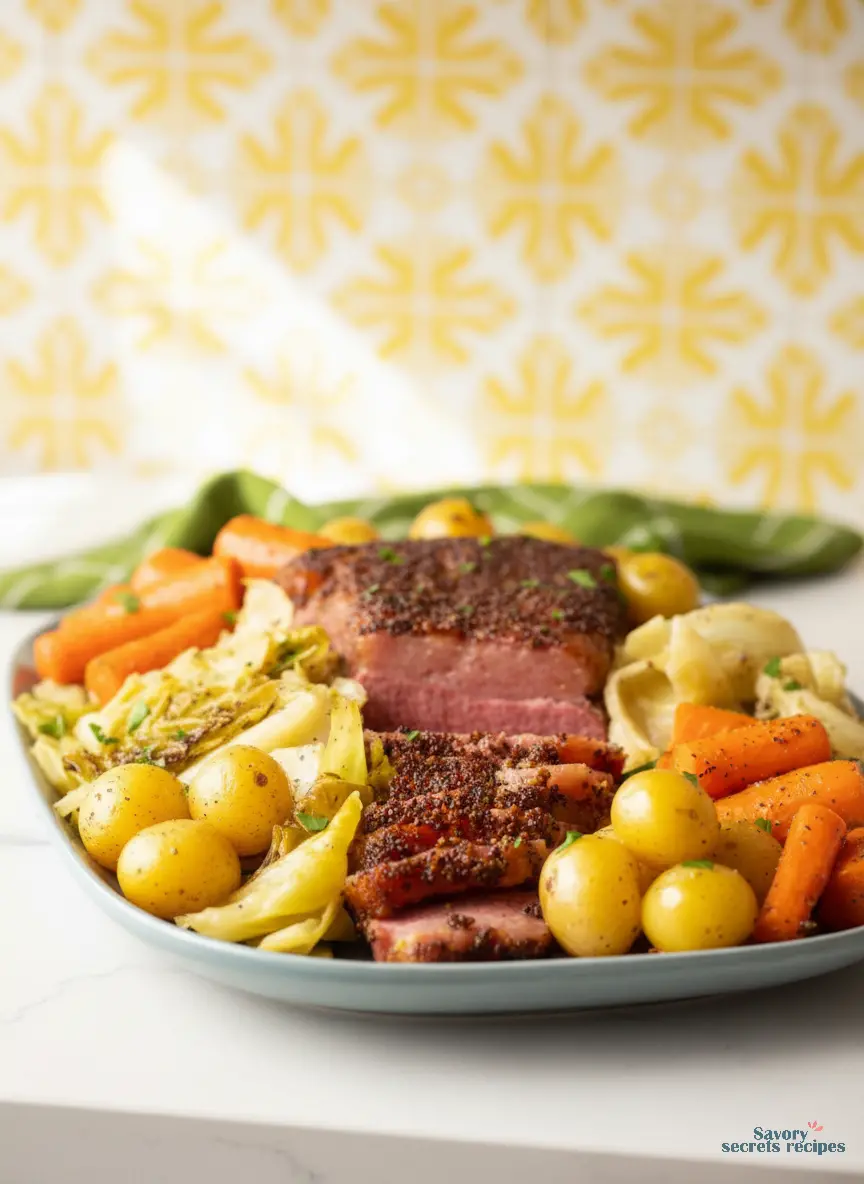
Oven-Baked Corned Beef with Separate Cabbage
Ingredients
Method
- Preheat your oven to 325 degrees Fahrenheit. Place a large roasting pan on your work surface. Rinse the corned beef brisket thoroughly with cold water and pat it completely dry. Transfer the brisket to the prepared roasting pan.
- Combine whole grain mustard, brown sugar, and black pepper in a small bowl. Rub this mixture over the fatty side of the brisket.
- Sprinkle the seasoning packet into the bottom of the roasting pan. Carefully pour four cups of water into the pan, avoiding the mustard coating on the brisket. Tightly cover the pan with foil. Bake for two hours.
- Cut the cabbage in half and remove the core. Slice each half into four wedges. Peel the onion and cut it into wedges. Trim and peel the carrots, then cut them into 2-3 inch segments.
- Remove the corned beef from the oven and set the temperature to 350°F. Add the garlic cloves to the pan juices. Arrange the cabbage, onion, carrots, and potatoes around the brisket.
- Spoon pan juices over the vegetables. Cover and return to the oven to bake for 30 minutes. Then, spoon additional broth over the vegetables and bake uncovered for another 30-45 minutes, or until the largest carrots and potatoes are fork-tender.
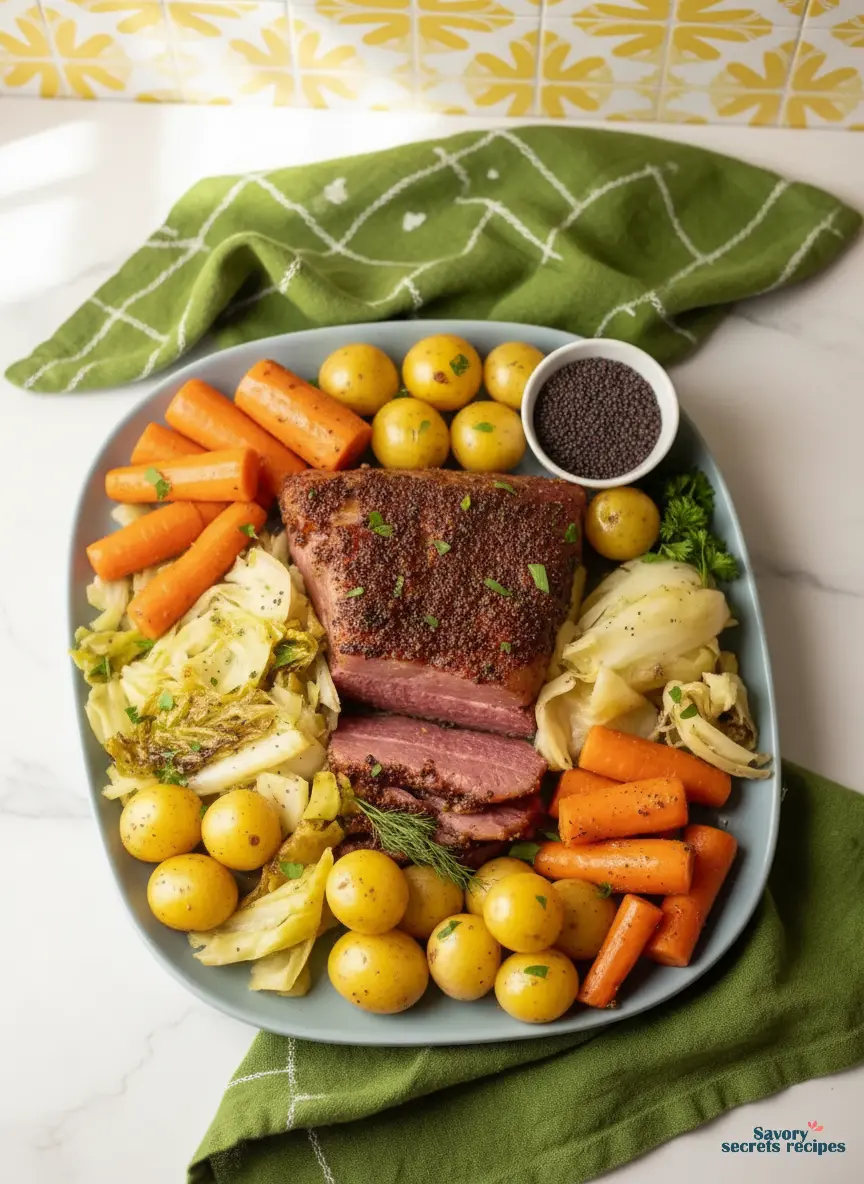
- Slice the corned beef brisket into thin strips with a serrated knife. Arrange the corned beef and vegetables on a platter and serve warm.
Nutrition
Notes
That Mushy Cabbage Problem? I’ve Been There
You know the scene. You’ve spent hours braising that beautiful corned beef brisket. The whole house smells incredible, like a warm, savory hug. You pull it out, it’s fork-tender, perfect. Then you lift the lid on the pot of cabbage you cooked right alongside it, and your heart sinks. It’s a sad, gray, waterlogged mess. It’s turned to mush, leaching all its flavor into the broth and leaving you with a texture that’s, well, let’s be realistic here, just plain unpleasant.
I’ve ruined more St. Patrick’s Day dinners with that exact mistake than I care to admit. My father used to buy a massive corned beef every March because it was on sale, and we’d eat it five different ways before the week was out. I complained about the soggy cabbage every single year. Now I do the exact same bulk-buying thing, and my husband just laughs at me. But I finally cracked the code. The secret, the absolute game-changer for a perfect corned beef and cabbage dish, is cooking cabbage separately for corned beef. It’s not a fussy chef trick. It’s the simplest fix for the most common problem, and it makes all the difference between a good meal and a great one. That’s the thing, though—once you start cooking cabbage separately for corned beef, you’ll never go back to the one-pot sog.
Why Cooking Cabbage Separately For Corned Beef Works
Here’s what actually works. Cabbage and corned beef brisket are culinary frenemies. They taste amazing together, but they cook on completely different schedules. Your beef needs a long, slow, gentle braise to break down all that connective tissue and become tender. Cabbage? It’s done in minutes. Toss it into that braising liquid for the last hour, and its delicate cell structure just collapses. It turns to mush, and worse, it can make the whole pot taste a bit, well, cabbage-y and bitter.
When you’re cooking cabbage separately for corned beef, you give each component the respect it deserves. The beef gets its long bath. The cabbage gets a quick roast or steam, just until it’s tender-crisp and sweet, with those beautiful edges that caramelize in the oven. You control the texture perfectly. No more guessing. No more disappointment. It’s about treating the cabbage like the star it is, not an afterthought. This method is the secret to the best corned beef dinner you’ll ever make, and honestly, it’s brilliant.
Your Game Plan: Oven vs. Stovetop
You’ve got options, and that’s a good thing. No harm in trying the method that fits your kitchen rhythm. I’m partial to the oven method for cooking cabbage separately for corned beef—you throw the beef in, set a timer, and walk away. Let it do its work. But if your oven’s busy or you just prefer the stovetop, that’ll do it too.
The Set-It-And-Forget-It Oven Method
This is the one for busy weeknights or when you’re prepping other parts of the meal. Start your corned beef in a deep roasting pan, fat side up. Rinse it first—this is non-negotiable to wash off some of that excess curing salt. Sprinkle the little seasoning packet right into the water in the pan. Pour in just enough water to cover the bottom by about an eighth of an inch. Cover that pan tight with heavy-duty foil and let it roast low and slow at 300°F. You’re looking at about 3 hours for a 3-pound brisket. The internal temp should hit at least 145°F for safety, but for that fall-apart tenderness, aim for 180-190°F. That’s the sweet spot for me.
While that’s going, prep your veggies. Cut the cabbage into wedges, keep the core intact so they hold together. Toss them with a little oil, salt, and pepper on a rimmed baking sheet. About 30-45 minutes before the beef is done, pop that sheet into the oven. The high, dry heat of the oven roasts the cabbage, giving it those delicious browned edges and keeping its structure intact. That’s the magic of cooking cabbage separately for corned beef in the oven.
The Quick Stovetop Steam
No oven? No problem. Fair enough. Once your corned beef is resting, bring a separate pot of water to a boil. Add a big pinch of salt. Here’s a chef trick: add a splash of vinegar to the water. Just a tablespoon. It helps keep the cabbage bright green and adds a subtle tang that cuts through the richness. Gently lower your cabbage wedges in and simmer for just 8-12 minutes. You want them fork-tender but still with a bite. Al dente, as they say. Drain it well. That’s it. This method for cooking cabbage separately for corned beef is lightning fast and gives you perfect control.
Tips for Perfect Cooking Cabbage Separately For Corned Beef
These aren’t just random ideas. They’re lessons learned from my own disasters and triumphs in the kitchen. Use what you’ve got, and let’s be realistic here about what matters.
Preparation Tips
First, always rinse your corned beef. I know the package doesn’t always say to, but trust me. It’s so salty on its own, and rinsing removes the excess surface salt. If you’re really sensitive to sodium, you can even soak it in a bowl of cold water for an hour in the fridge. For the cabbage, cut it into wedges, but leave a bit of the core attached at the base. That’s what keeps the leaves from flying apart when you cook them. A sharp knife is your best friend here.
Cooking Tips
Don’t add extra salt to your vegetables. Seriously. The juices from the corned beef will season them as they cook, and the beef itself is plenty salty. When you’re cooking cabbage separately for corned beef in the oven, don’t line the baking sheet with foil if you’re doing potatoes too—they’ll stick like glue. Just give the pan a light spray. And keep the vegetable types in their own little sections on the sheet. If you stir them all together, the potatoes won’t crisp up and the carrots will cook unevenly.
The Final Carve
This might be the most important tip of all. When the beef is done and rested, you must cut it against the grain. Look at the meat. See those lines running through it? Those are muscle fibers. Cutting against them means slicing perpendicular to those lines. It makes each piece much more tender and easier to chew. Brisket is a tough cut, and this step is non-negotiable for good texture.
Common Mistakes to Avoid
I’ve made most of these. Your mileage may vary, but let’s save you the trouble.
❌ Mistake: Throwing the cabbage into the pot with the beef for the entire cook time.
✅ Solution: That’s the whole point! Commit to cooking cabbage separately for corned beef, either in the oven or in a separate pot on the stove, and add it only at the very end.
❌ Mistake: Skipping the rinse on the corned beef brisket.
✅ Solution: Always give it a quick cold water shower. It prevents the whole dish from being inedibly salty.
❌ Mistake: Cutting the meat with the grain, which makes it stringy and tough.
✅ Solution: Identify the grain (those parallel lines) and slice straight across them. You’ll get shorter, tender fibers.
❌ Mistake: Leaving the corned beef uncovered in the oven.
✅ Solution: Keep it covered with foil while it braises. This keeps the moisture in and prevents the top from drying out and getting leathery.
How to Store and Serve Your Masterpiece
Let’s talk leftovers, because this meal has good bones for later. Keep cooled leftovers in airtight containers in the fridge for 3-4 days. The corned beef itself can actually be roasted up to 3 days ahead and reheated gently in a covered dish with a splash of water. But for the best texture, roast or steam the cabbage just before serving so it stays crisp. The horseradish cream sauce from the recipe? Make that up to 2 days ahead.
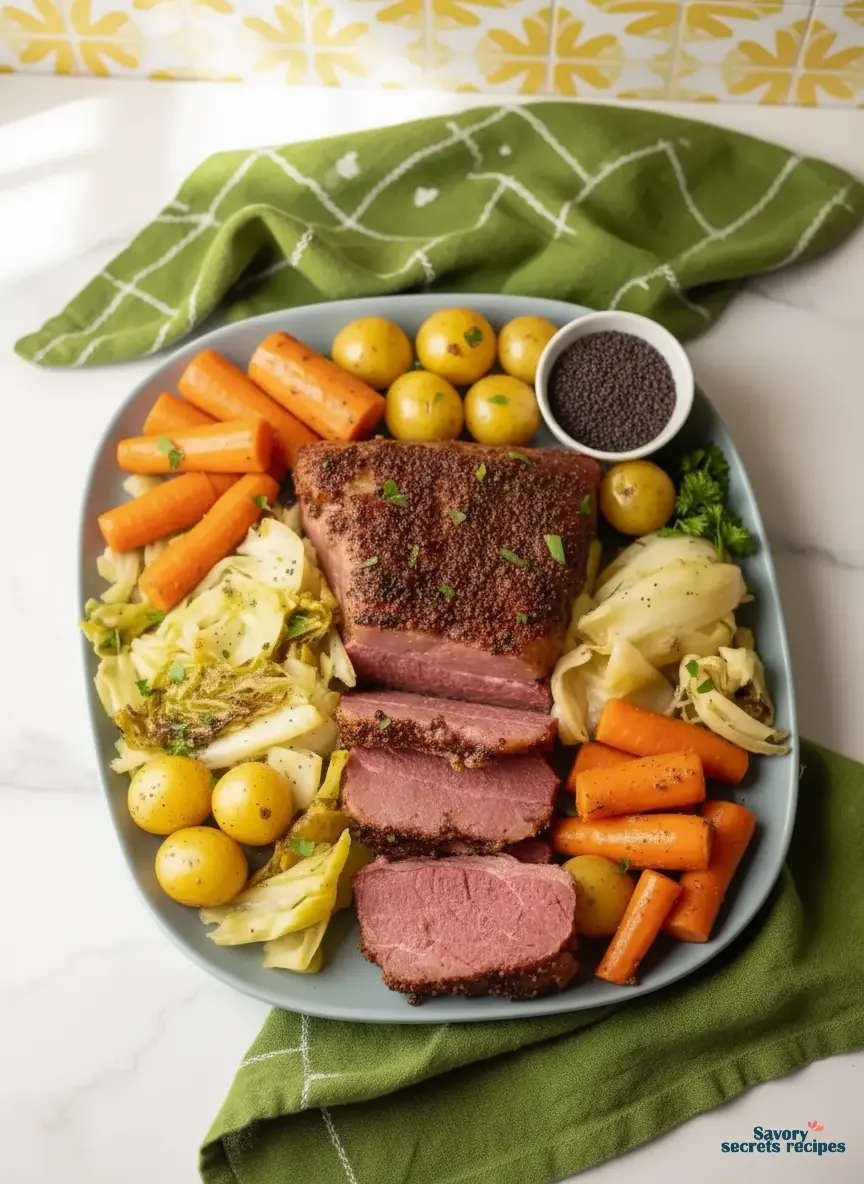
When you serve, arrange the sliced corned beef and those beautiful, distinct vegetables on a big platter. Spoon some of the warm pan juices over everything. It smells exactly like my mother’s kitchen on a Saturday—steamy and rich. Serve it family-style, with that tangy sauce on the side for dipping. Now we’re talking.
Frequently Asked Questions
You’ve Got This
When you pull this off—and you will—you’ll understand why cooking cabbage separately for corned beef is worth every penny of effort. It transforms a potentially disappointing, one-note meal into something special. You’ll have tender, flavorful beef and crisp, sweet cabbage on the same plate. It’s the kind of dinner that feels like a triumph, the kind you’ll want to make every March, or honestly, any chilly weeknight that needs a hearty hug. Grab that brisket on your next Costco run, and give this method a shot. I could eat this weekly. You’ve got this.












5 Responses
I’m not usually a cabbage fan, but roasting it separately with a little olive oil and garlic made all the difference. Actually enjoyed it for once! The beef was perfectly tender.
I used a spicy whole grain mustard and it added a nice kick. My family loved it, but I found the carrots were a bit too soft after the full baking time. Next time I’ll add them later.
Made this for St. Patrick’s Day and it was a huge hit! The separate cabbage cooking method is genius—no more mush. The mustard and brown sugar glaze gave the beef amazing flavor.
The recipe was easy to follow, but my corned beef turned out a bit dry. I used a 4-pound flat cut. Should I have added more liquid to the roasting pan or covered it with foil?
I’d recommend covering it with foil next time, Kevin—that helps trap steam and keep it moist. A flat cut can be leaner, so a little extra liquid in the pan wouldn’t hurt either.