




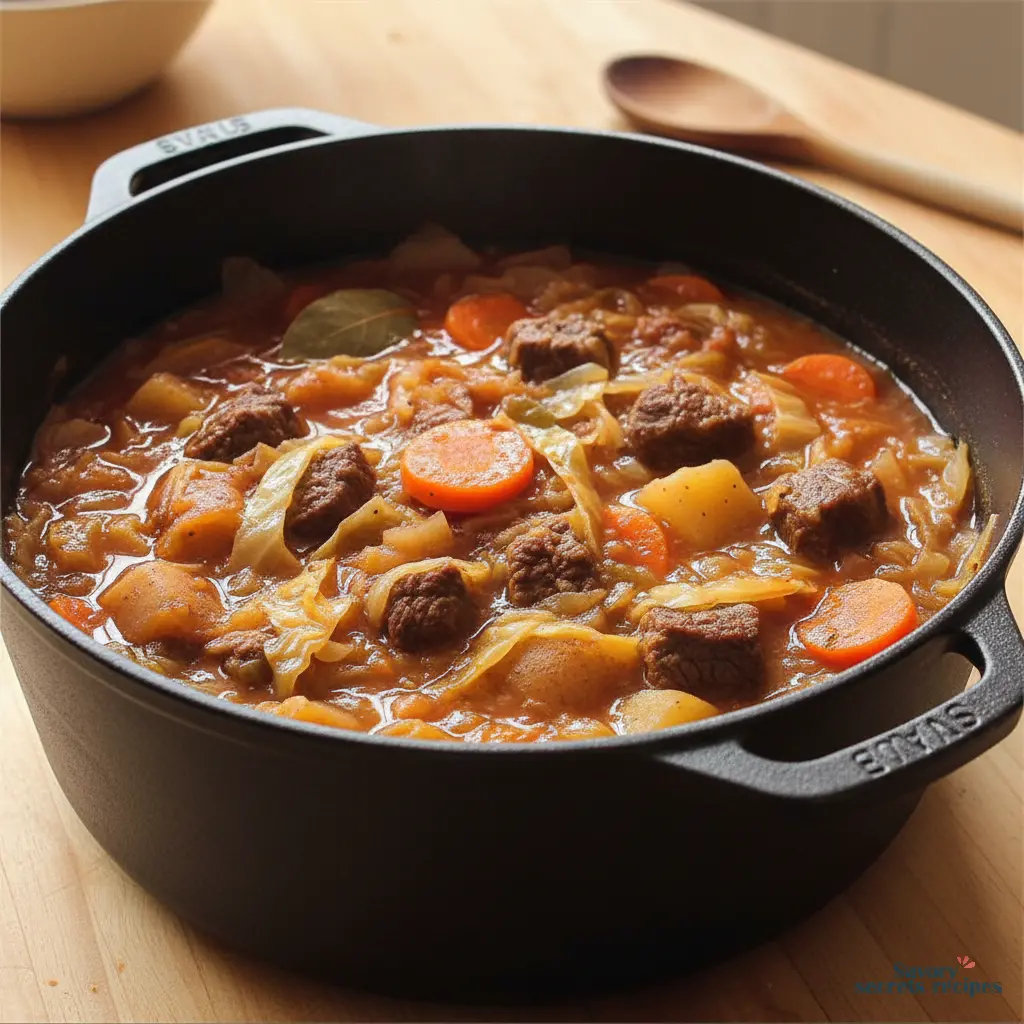
Hearty Cabbage Stew Recipe
Ingredients
Method
- Brown the stew meat in a large saucepan or Dutch oven over medium heat for 10 to 15 minutes, stirring occasionally. Drain off any excess grease.
- Dissolve the beef bouillon in the bowl of beef broth. Pour this mixture over the stew meat. Add the onion, black pepper, and bay leaf. Cover and simmer until the meat is very tender, for at least two hours.
- Add the cabbage, potatoes, celery, and carrot. Cover and simmer for 30 to 45 more minutes, or until the potatoes are tender.
- Stir the tomato sauce and salt into the stew. Simmer uncovered for 15 to 20 minutes, until the sauce is fully incorporated and the flavors have melded.
Nutrition
Notes
When Your Kitchen Needs a Hug
You know that feeling. It’s a Tuesday, maybe a Thursday. You’ve been out in the Minneapolis cold, the kind that makes your bones ache, and you walk into a dark, quiet house. The last thing you want is to figure out dinner. I’m not going to lie, I’ve stood in my own kitchen, coat still on, and just stared into the fridge. That’s when you need a cabbage stew. It’s not fancy. It’s a hug in a pot. It’s the meal my grandma Evelyn would have pulled from her garage freezer, the Sharpie label faded but the promise inside still perfect. This cabbage stew recipe is that promise. It’s for those nights when you need warmth without the work, when you need comfort to be totally doable.
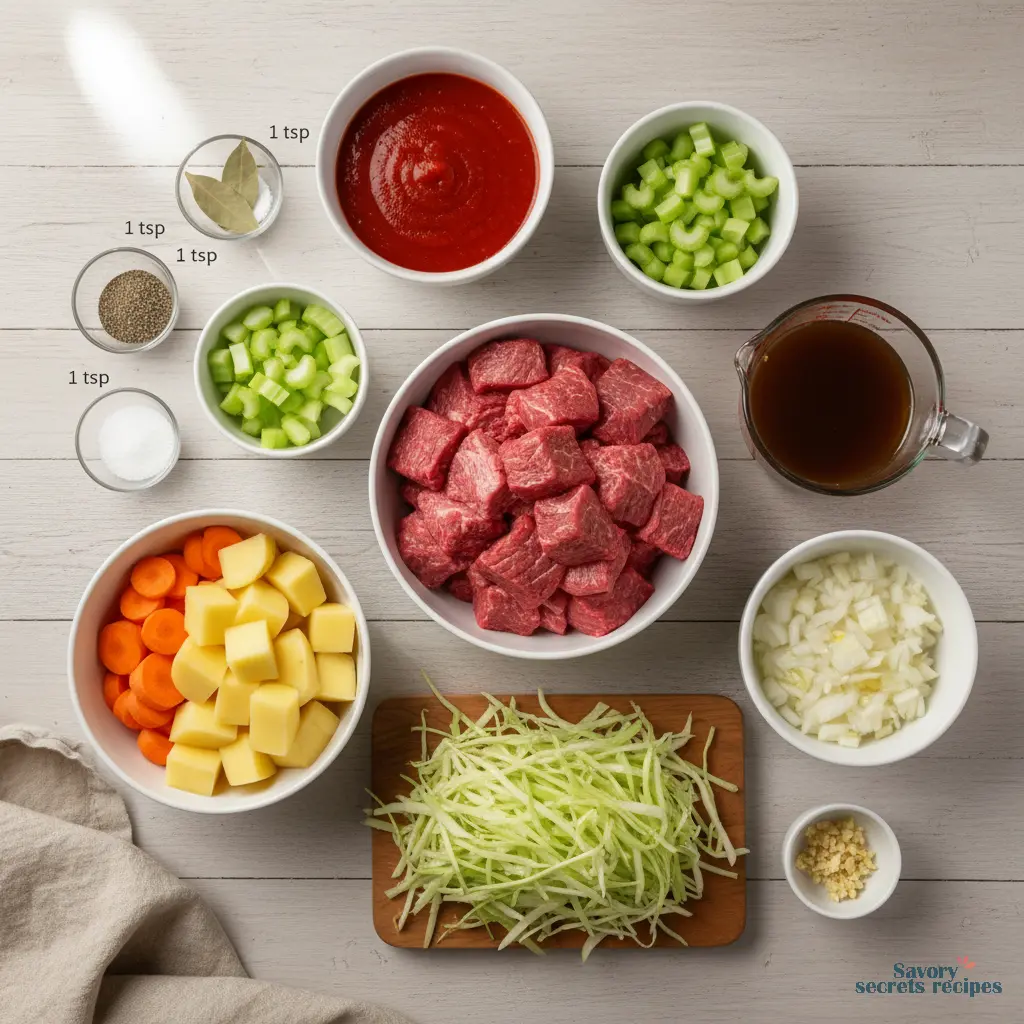
Why This Cabbage Stew Works
Here’s the thing about a good cabbage stew. It’s not about one flashy ingredient. It’s about how humble things come together and become more than the sum of their parts. The cabbage melts down into this sweet, silky base. The potatoes soak up all that savory flavor from the beef broth. And the long, slow simmer? That’s where the magic happens. It turns a pot of chopped vegetables and meat into a proper, hearty stew. This recipe works because it respects that process. It gives you a clear path from “I have no idea what’s for dinner” to “dinner’s already halfway done.” For a busy parent, that’s the real goal. It’s a one-pot meal that reheats like a dream, and future you will absolutely thank you.
Building Your Stew, Step by Comforting Step
Don’t worry about perfect knife skills. Seriously. For this cabbage stew, rough chops are just fine. I like to start by getting my beef stew meat browned in the pot. That fond—the little browned bits at the bottom—is pure flavor gold. Then in go the onions and garlic. That smell, hitting the warm pot? That’s when you know you’re cooking.
The key with the cabbage is to not be shy. It looks like a mountain when you first pile it in, but it wilts down so much. Just give it a few minutes with a lid on. Once everything else is in—the carrots, potatoes, that tomato sauce and beef broth—you just let it be. A gentle simmer, not a rolling boil, for about an hour. You’ll know it’s done when the potatoes are tender and the whole kitchen smells like a safe place.
Tips for the Best Cabbage Stew
Real talk: a few small moves make a big difference here.
Preparation Tips
Chopping everything first is a Sunday job, but it makes Wednesday a breeze. You can absolutely chop your onion, carrots, celery, and potatoes ahead of time. Store them in containers in the fridge. The cabbage I’d do day-of, just so it stays crisp. And that 2-hour simmering step for the beef? Totally doable the day before. Just cool it and stash it in the fridge. Dinner’s already halfway done.
Cooking Tips
That track. Don’t rush the browning of the meat. You want color, not gray steam. And when you add the broth, scrape up all those browned bits! That’s free flavor. If your stew seems a bit thin at the end, just take the lid off and let it simmer for another 10-15 minutes. It’ll thicken right up.
Storage & Make-Ahead Magic
This is where the meal-prep mindset shines. This stew freezes well in resealable bags for a quick meal so I normally double the recipe. Let it cool completely, then portion it into freezer bags. Lay them flat to freeze—they stack like books in your freezer. Label them with masking tape and a Sharpie, just like my grandma. “Cabbage stew, Jan, stovetop med-low.” When you’re ready, just thaw it overnight in the fridge or run the bag under warm water. It reheats like a dream. If you’re looking for more hearty, make-ahead meals, our collection of cabbage casserole recipes is perfect for batch cooking.
Variations & Substitutions
This recipe is a fantastic template. Feel free to make it yours.
Dietary Adaptations
Want to make a vegetarian cabbage stew? Fair enough. Leave out the beef stew meat and use a rich mushroom or vegetable broth. You could add a can of drained white beans or chickpeas for heartiness. It’s still incredibly satisfying.
Ingredient Substitutions
No beef broth? Chicken broth works in a pinch. We use green cabbage for this recipe, but you could use regular cabbage, or even collard greens or dinosaur kale for a different twist. Just adjust the cooking time for tougher greens. No fresh potatoes? A can of drained white beans adds similar starchiness.
Flavor Variations
Sometimes I’ll add a teaspoon of smoked paprika with the garlic for a deeper, smoky note. A splash of apple cider vinegar at the very end can brighten the whole pot. It might just be me, but I love that little tang against the rich stew. For a different flavor profile, you might enjoy our German-style cabbage dishes, which often feature similar tangy notes.
Common Cabbage Stew Mistakes to Avoid
I’ve made a few of these myself, so learn from my kitchen!
❌ Mistake: Adding the cabbage at the very beginning with the potatoes and carrots.
✅ Solution: Cabbage cooks faster than root veggies. Add it after the onions have softened, let it wilt down, *then* add the potatoes and carrots. This keeps everything perfectly tender, not mushy.
❌ Mistake: Cranking the heat to get it to boil faster.
✅ Solution: A gentle simmer is your friend. A raging boil will make the meat tough and the vegetables fall apart. Patience here is key for a savory flavor.
❌ Mistake: Skipping the browning step for the stew meat.
✅ Solution: Take the five minutes to get good color on the beef. This is what gives stew a good flavor. It’s the foundation. Don’t rush it.
Frequently Asked Questions
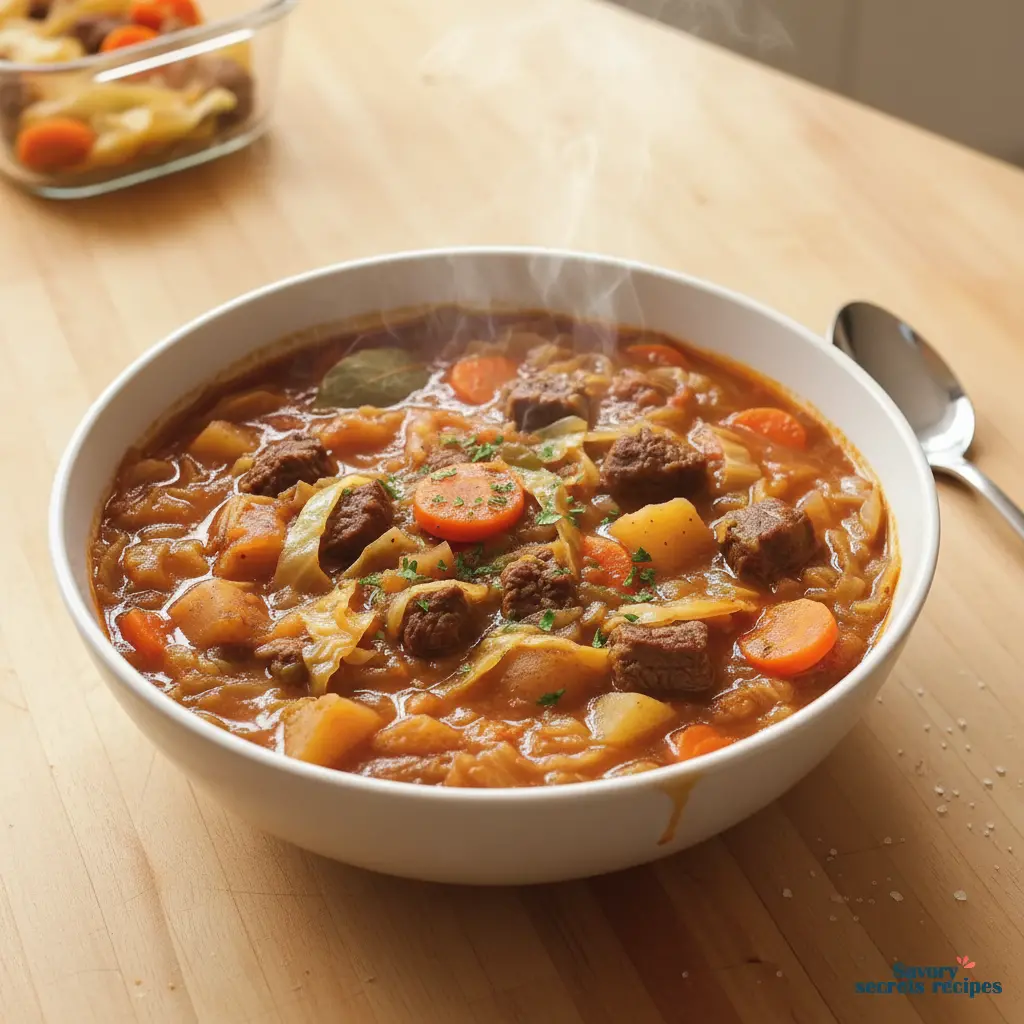
How to Store and Serve Your Stew
This cabbage stew is maybe even better the next day, after the flavors have really gotten to know each other. In the fridge, it’s good for 4-5 days in a sealed container. To reheat, I prefer the stovetop on medium-low, stirring occasionally until it’s bubbling gently. The microwave works too—just cover it and stir every minute to avoid hot spots. Serve it as is, or over a scoop of mashed potatoes or white rice to stretch it even further. A hunk of crusty bread for dipping is non-negotiable, in my opinion.
Your Turn to Get Cozy
When you make this cabbage stew, your kitchen will fill with that incredible, comforting smell. Your family will gather around, drawn in by the promise of something warm and good. It’s more than just dinner. It’s a little bit of peace at the end of a long day. So grab your pot, chop that cabbage, and get simmering. Let me know how it goes—I’d love to hear if it becomes a regular in your rotation like it is in mine. Stay warm and well-fed, friends.
Is cabbage good in stew?
Absolutely. It’s honestly kind of genius. Cabbage becomes sweet and tender when simmered, adding body and a subtle sweetness that balances the savory broth. It makes the whole cabbage stew feel heartier and more substantial.
What kind of cabbage is best for stew?
For a traditional cabbage stew, a standard green cabbage is perfect. It holds up well to cooking. Savoy cabbage is also great—it’s more tender with crinkly leaves. I’d avoid red cabbage for this, as it can turn the broth a funny blue-gray color.
What spices are good in cabbage stew?
Bay leaf is classic. Beyond that, I love thyme, a pinch of caraway seeds (it’s a Polish thing), or some smoked paprika. Black pepper is essential. Start simple, then experiment. The beef, broth, and vegetables provide a ton of flavor on their own.
How do I store leftover cabbage stew?
Let it cool completely, then transfer to airtight containers. It’ll keep in the fridge for 4-5 days. For freezing, use those resealable bags I mentioned. It freezes beautifully for up to 3 months. Just leave a little space at the top for expansion.