




Hearty Ground Beef and Vegetable Soup
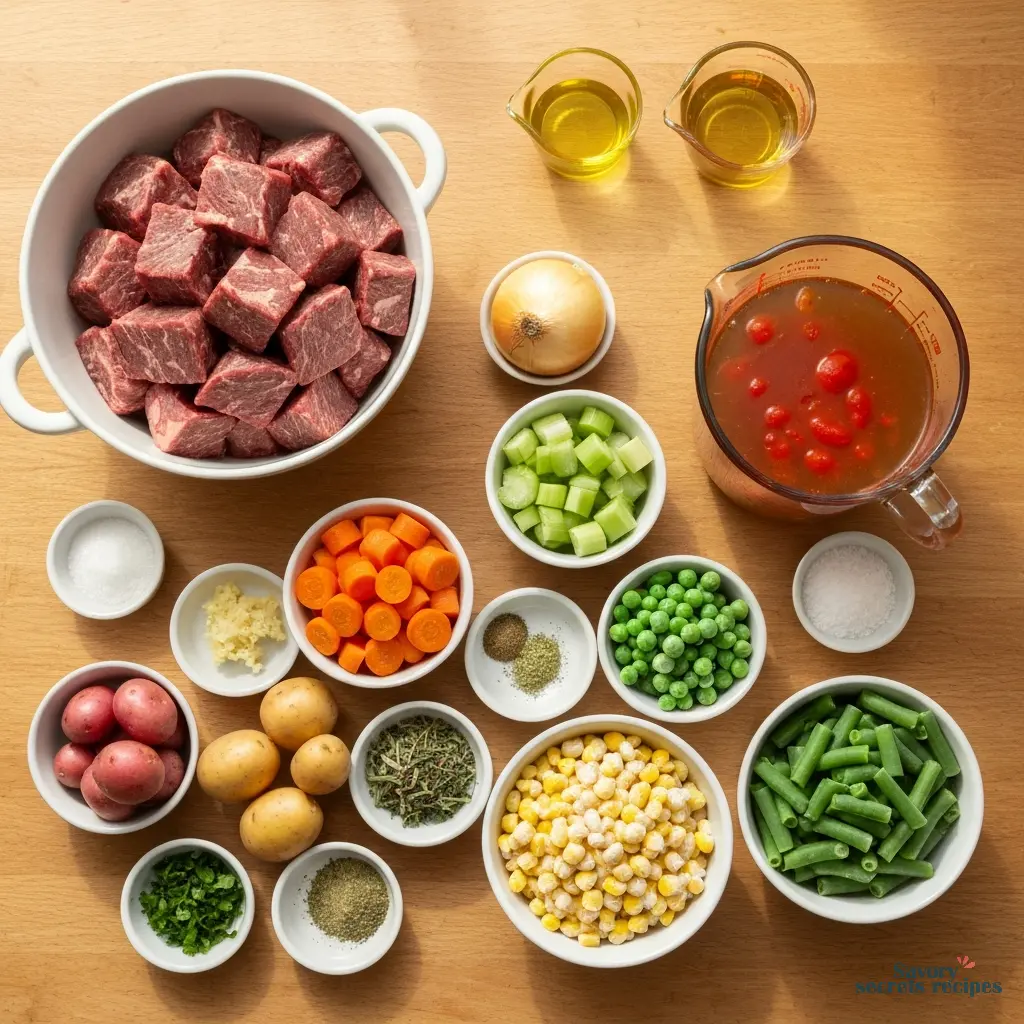
Ingredients
Method
- Heat one tablespoon of olive oil in a large pot over medium-high heat.
- Pat the beef dry with paper towels, season it with salt and pepper, then place half of the beef in the pot and brown for about 4 minutes, turning once.
- Transfer the beef to a plate. Add another 1/2 tablespoon of oil to the pot and repeat the process with the remaining beef.
- Add another tablespoon of oil to the now-empty pot. Add the onions, carrots, and celery and sauté for three minutes. Add the garlic and sauté for one minute more.
- Add the broth, tomatoes, browned beef, basil, oregano, and thyme. Season with salt and pepper. Bring to a boil, then reduce the heat to low. Cover and simmer for 30 minutes, stirring once or twice.
- Add the potatoes, cover, and simmer for 20 minutes. For very soft green beans, add them with the potatoes.
- Add the green beans and continue simmering for 15 more minutes, or until the vegetables and beef are tender.
- Add the corn and peas. Simmer for about 5 minutes, or until heated through. Stir in the parsley and serve warm.
- Combine the flour, baking powder, and salt in a bowl.
Nutrition
Notes
You Need This Soup In Your Life
Real talk. It was last Tuesday, and I’d just gotten back from picking up my youngest from basketball practice. The wind was cutting right through my jacket, the kind of cold that makes you want to hibernate. I walked into a dark, quiet house and my first thought wasn’t “what’s for dinner?” It was “I need a hug from a bowl.” That’s this beef soup.
I’m not gonna lie, I grew up on this stuff. My Grandma Jean’s Sunday pot roast was basically a religion, and the leftover broth with whatever veggies were left in the fridge became Monday’s beef soup. It smelled like comfort and safety. That’s the feeling I’m after on a random Tuesday in January, you know? This recipe is my shortcut to that. It’s a hearty, savory beef soup that comes together without a fuss, using mostly pantry staples. It’s the answer to “how do you make beef soup” when you’re cold, tired, and just want something good.
Why This Beef Soup Recipe Works
Here’s the thing. A lot of beef soup recipes are either bland or they take all day. This one? It hits that sweet spot. It’s deeply flavorful without being complicated. The secret isn’t one magic ingredient, it’s a couple of simple steps that build layers. Browning that stew meat first? Non-negotiable. It creates those little browned bits in the pot that make the broth taste like something. That’s how you make beef soup more flavorful, full stop.
And I love that it’s a one-pot situation. You start with your Dutch oven, brown the beef, soften the onions and carrots right in those tasty drippings, and then basically just let it all hang out and simmer. It’s forgiving. At the end of the day, you get a pot of homemade vegetable beef soup that feels like a lot more work than it actually was. Honestly brilliant for a weeknight.
The Simple Science of a Great Soup
I want to talk about why we do what we do. Browning the beef isn’t just for color. It’s a chemical reaction called the Maillard reaction. Sounds fancy, but it just means the sugars and proteins in the meat are creating hundreds of new flavor compounds. That’s the foundation of your soup’s flavor. When you deglaze the pot with a bit of the broth, you’re scraping up all that flavor and putting it right back into your beef soup.
Then there’s the simmer. A gentle bubble, not a rolling boil. This slowly breaks down the tough connective tissues in the beef chuck, turning it melt-in-your-mouth tender. It also gives time for the vegetables to release their sweetness into the broth. Rushing this step is the main difference between a good soup and a great one. Your patience gets rewarded.
Tips for Perfect Beef Soup Every Time
Nobody’s grading this, but a few pointers can make it even easier.
Picking Your Beef
Look for a fatty, marbled batch of beef stew meat. That fat equals flavor and tenderness. If the chunks are huge, just dice them down to bite-size. Fair enough? You could also use a chuck roast cut into pieces if that’s on sale. That’s the “poor man’s cut” but it’s perfect for soup.
Broth Management
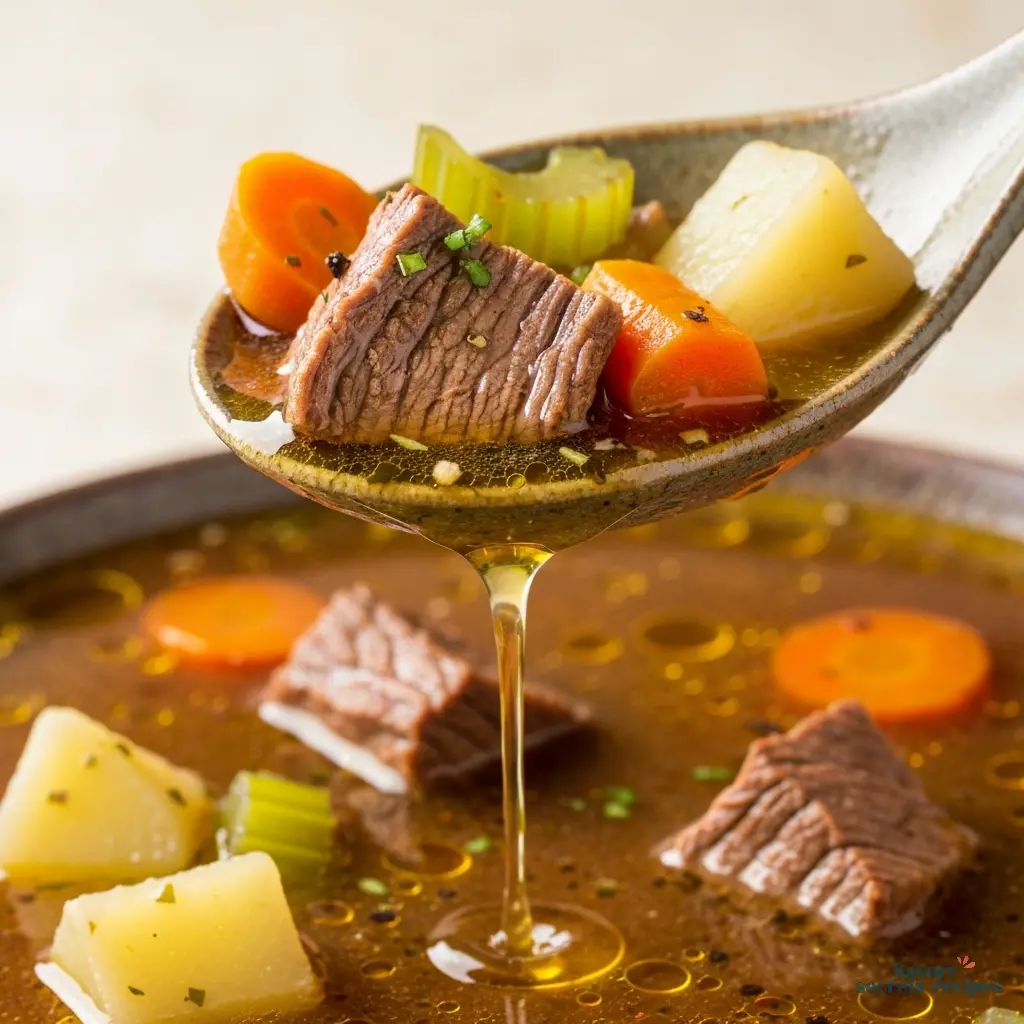
I like a brothy soup, but photos can be tricky. The soup in my pictures might look a little less brothy because I sometimes remove a cup or two so you can see all the good stuff. Your mileage may vary. If you want a thicker beef veggie soup, you can simmer it uncovered for the last 20 minutes. Just go easy on the salt until the end, since the liquid will reduce.
The Herb Shortcut
Don’t have individual dried basil, oregano, and thyme? No worries. One tablespoon of dried Italian seasoning works as a totally fine swap. Use what you’ve got.
Fresh vs. Frozen
The recipe calls for frozen corn and peas for convenience, and they’re great. But if you have fresh corn or fresh peas? Absolutely use them. Just add them when you’d add the green beans near the end so they stay bright and don’t get mushy.
Your Beef Soup, Your Way: Variations & Substitutions
This is such a versatile recipe. Honestly, though, the best beef soup is the one you actually make with what’s in your fridge.
Different Proteins
You can even use ground beef here. Brown it like you would the stew meat. If you go that route, you won’t need to simmer for that first 30 minutes to tenderize the meat. Just jump right to adding the potatoes. Makes for a quicker vegetable soup with ground beef.
Slow Cooker Method
Need a hands-off approach? You can make this beef soup in a slow cooker. You’ll still want to brown the beef and sauté the carrots, onions, celery, and garlic on the stove first for that flavor base. Then dump everything (except the frozen veggies) into a large slow cooker. Cook on low for 6-7 hours until the beef and potatoes are tender. Stir in the frozen peas and corn at the end to heat through.
More Veggie Ideas
Got a half-head of cabbage? Chop it and add it with the potatoes. Celery root or parsnips add a wonderful sweetness. A handful of chopped kale stirred in at the very end is fantastic. Or try a handful of barley just know you’ll need to add an extra cup or two of broth for it to cook properly.
Common Mistakes to Avoid
We’ve all been there. Here’s how to sidestep the usual pitfalls.
❌ Mistake: Boiling the soup aggressively after adding the beef.
✅ Solution: Keep it at a gentle simmer. A hard boil will make the beef tough and chewy, no matter how long you cook it. A low bubble is the key to tender meat in your homemade vegetable beef soup.
❌ Mistake: Adding all the vegetables at the same time.
✅ Solution: Stagger them. Potatoes and carrots need time. Peas and corn do not. Adding the quick-cooking veggies at the end keeps their color bright and texture perfect.
❌ Mistake: Skipping the taste test before serving.
✅ Solution: Always, always taste your beef soup right before you ladle it. Simmering can mellow flavors. It might need another pinch of salt or a crack of black pepper. This is the secret to making good soup, overall.
Frequently Asked Questions
How to Store and Serve Your Soup
Let any leftovers cool completely before tucking them into airtight containers. They’ll keep in the fridge for 3-4 days. You can also freeze this beef soup for up to 3 months. I like to use quart-sized freezer bags laid flat. Just know the veggies will be softer after thawing still tasty, just softer.
To reheat, thaw overnight in the fridge if frozen. Warm it gently on the stove over medium-low heat, stirring often. A microwave works in a pinch, just stir it every minute.
I serve it with a little extra chopped parsley on top for color, and I always, always add another grind of black pepper to each bowl. It just wakes everything up. Grab some bread for dipping, and dinner is served.
Go Make Some Comfort
So there you have it. My go-to, no-fuss, hug-in-a-bowl beef soup. When you make this, your kitchen is going to smell amazing. That rich, savory aroma is half the comfort. I’m here for this kind of cooking it’s practical, it’s delicious, and it makes everyone around the table happy.
This is the beef soup recipe I make when I need a win. I hope it becomes one of yours, too. Let me know how it turns out. Tag me if you share a photo, or just come back and leave a comment. Stay cozy, friends, and enjoy every single spoonful.
What meat is best for beef soup?
Beef chuck or a well-marbled “beef stew meat” blend is perfect. These cuts have connective tissue that breaks down during long, slow cooking, making the meat incredibly tender and flavorful for your beef soup. Avoid lean cuts like sirloin; they’ll get tough.
Do you cook beef before adding it to soup?
Yes, and it’s the most important step! Browning the beef first creates a deep, savory fond (those browned bits) on the bottom of the pot. That fond is pure flavor gold for your beef soup broth. Don’t skip it.
Is there a difference between beef stew and beef soup?
Kind of, but it’s blurry. Stew is usually thicker, with less liquid, and often uses a flour slurry to thicken the gravy. Soup is brothier. This recipe is a hearty beef soup, but if you simmer it uncovered to reduce the broth, it edges into stew territory. No wrong answers here.
How do I make my beef soup more flavorful?
Beyond browning the meat, don’t rush the step where you cook the onions, carrots, and celery. Let them soften and sweeten for a good 8-10 minutes. Also, using a good quality, low-sodium beef broth gives you control over the salt. A splash of vinegar or a squeeze of lemon at the end can brighten the whole pot.
Can I make beef soup ahead of time?
It’s actually better the next day! The flavors have time to meld. Let it cool completely, then store it in airtight containers in the fridge. This beef soup is a meal prep superstar. Just reheat gently on the stove.
What goes with vegetable beef soup?
A thick slice of crusty sourdough for dipping is classic. A simple green salad with a tangy vinaigrette cuts the richness nicely. For a heartier meal, a grilled cheese sandwich on the side turns it into the ultimate comfort food plate.