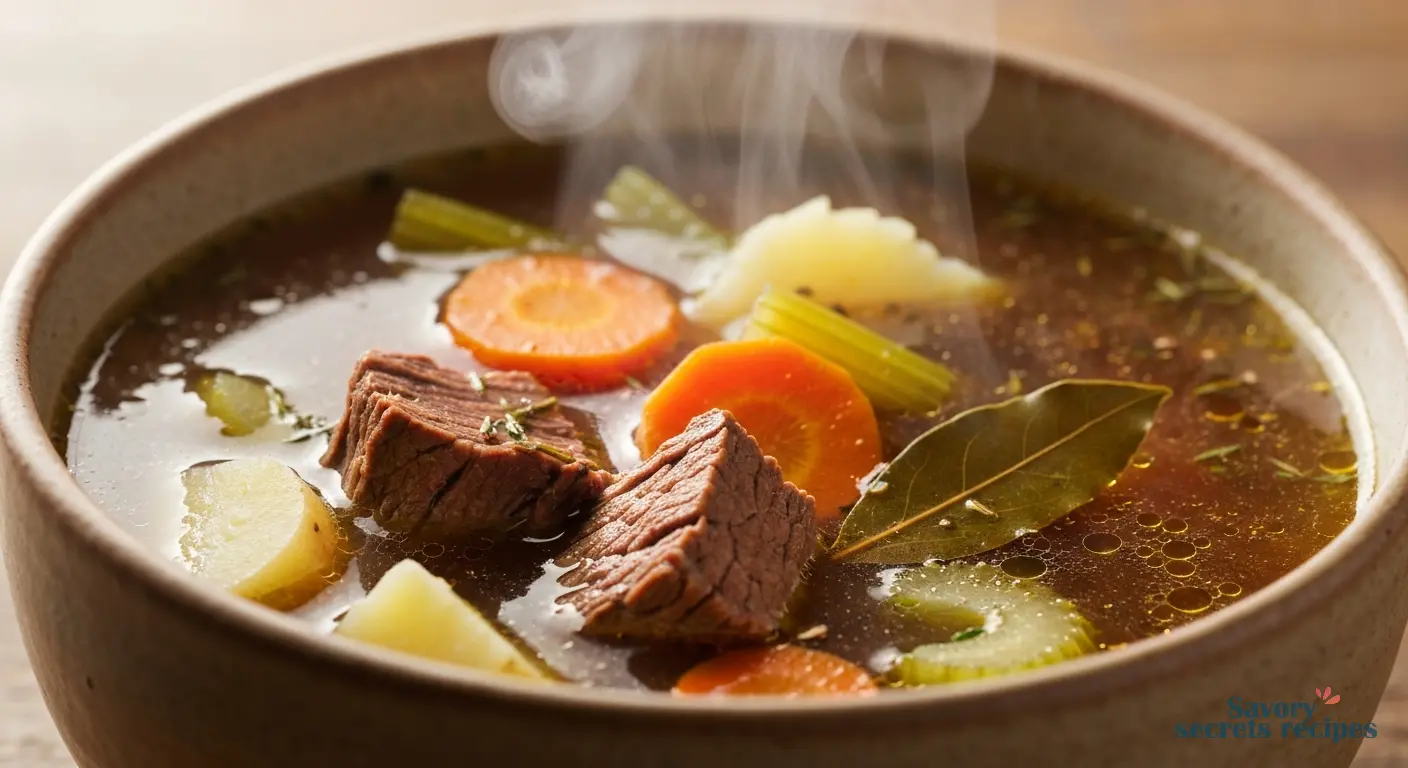
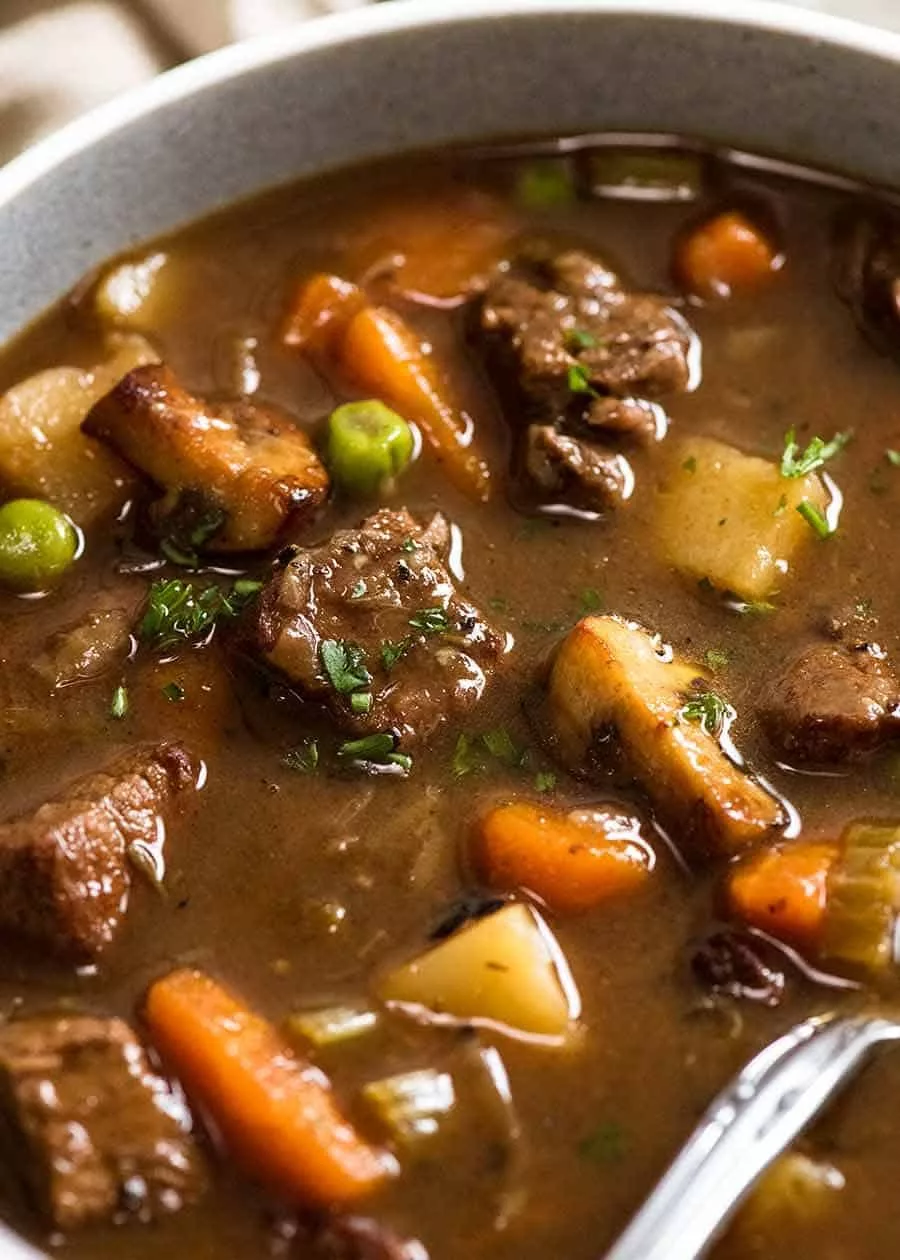
Hearty Beef Bouillon Soup with Tender Meat
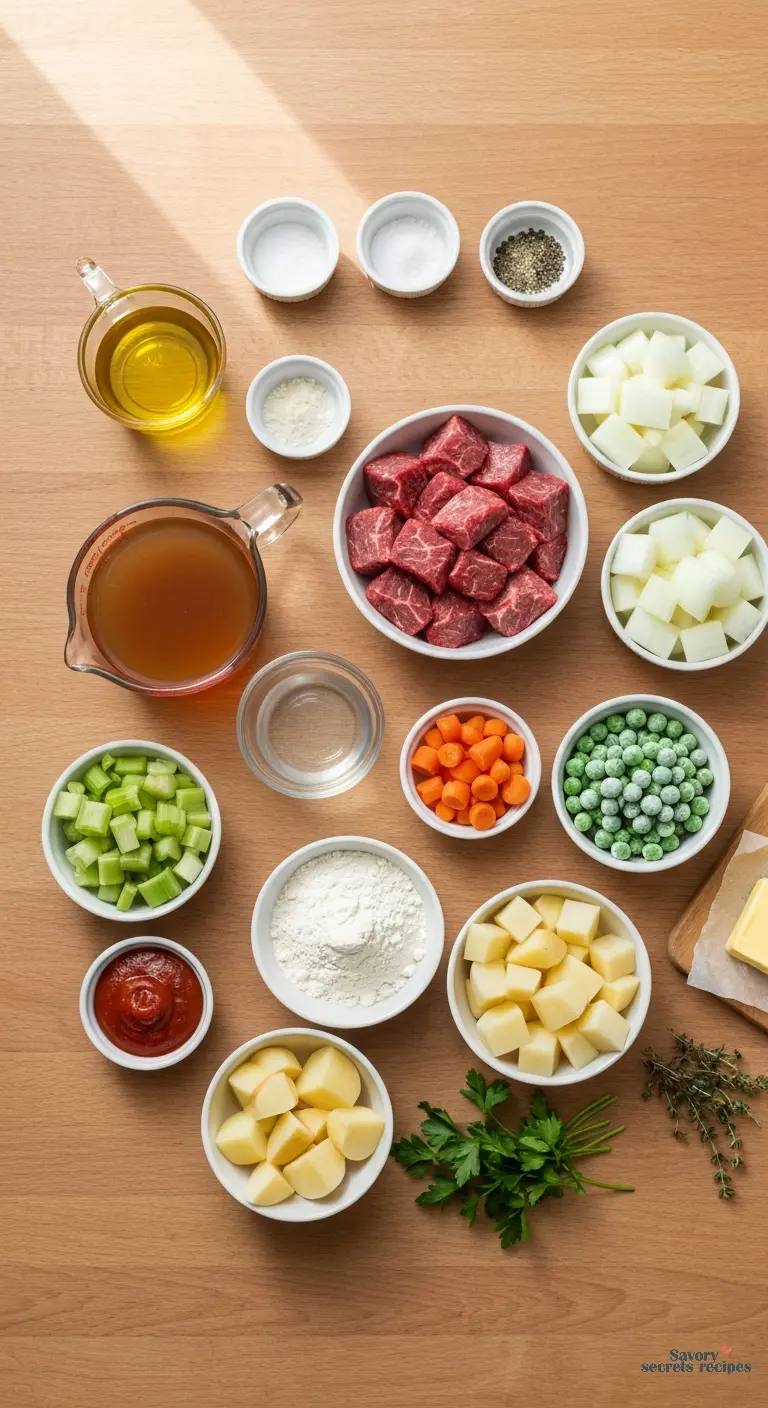
Ingredients
Method
- Heat one tablespoon of oil in a large, heavy pot over high heat until it is very hot.
- Pat the beef dry using paper towels and season it with salt and pepper.
- Brown the beef in two or three batches, using high heat. Add more oil as necessary. Transfer the browned beef to a bowl.
- Add a touch more oil if the pot looks dry.
- Cook the garlic and onion for two minutes.
- Add the carrot and celery, and cook for two minutes or until the onion becomes translucent.
- Stir in the flour, then gradually pour in the beef broth while stirring continuously.
- Pour in the beer, water, and tomato paste. Add the bay leaves and thyme, stirring well. Return the beef to the pot.
- Cover the pot, reduce the heat to medium-low for a gentle simmer, and cook for 1 hour and 15 minutes or until the beef is quite tender.
- Add the potatoes and peas. Simmer uncovered for 20 more minutes. Stir in the cooked mushrooms during the final 5 minutes.
- Cook the potatoes until tender and the beef until very soft to finish the soup.
- Season generously with salt and pepper to taste.
- Ladle the soup into bowls. Top with parsley and serve with crusty bread on the side, such as quick Cheesy Garlic Bread or super easy Irish Soda Bread.
- Melt the butter in a large skillet over medium-high heat. Add the mushrooms and cook for five minutes until they brown. Season with salt and pepper.
Nutrition
Notes
- Red wine – any dry, full bodied red wine. Cab Sauv and Merlots are ideal.
- Guinness Beer and Stout are dark beers, labelled as such on the cans. You should find these at most liquor stores. Use some, drink some – or tip the whole can in an simmer for longer with the lid off!
- Non alcoholic sub – add 400g/14 oz can of crushed tomato, 2 tsp Worcestershire sauce. This will add alternative flavour to compensate.
That Deep, Savory Craving
You know the feeling, I think. It hits around four o’clock on a grey Philadelphia afternoon, when the light’s already fading and the chill from the window feels a little more insistent. It’s not just hunger. It’s a specific, bone-deep need for something warm and savory, something that feels like it’s rebuilding you from the inside out. That’s the moment for a proper beef bouillon soup.
I remember standing on a step stool next to my grandmother’s stove when I was maybe seven, watching her make a pan sauce from the chicken drippings. She had me smell the shallots at every stage. I got impatient and said they all smelled the same. She made me start over. I can still smell the difference now without thinking about it. That lesson, about building flavor in stages, is the entire foundation of a great beef bouillon soup. It’s about layering, about patience, even when you’re using a convenient shortcut like bouillon cubes. Honestly, they’re a perfectly respectable starting point. Let me think on that. In my experience, a good homemade beef bouillon soup bridges that gap between a hectic weeknight and the profound comfort of a long-simmered stew.
Why This Beef Bouillon Soup Works
This recipe works because it respects the process. To be clear, using bouillon cubes or a prepared soup base isn’t a compromise. It’s a smart start. The key checkpoint here is what you do with them. You’re not just dissolving a cube in water. You’re building a foundation with browned beef and vegetables, then using the bouillon to deglaze and create a rich, layered broth. That tracks with how my grandmother taught me. The flour helps thicken it slightly, giving the soup body, while the tomato paste adds a subtle acidity that brightens the deep beef flavor. It’s a one pot soup that delivers the complexity of something that simmered for hours, in a fraction of the time. Perfect for a weeknight meal.
Building Your Soup Base: The Foundation
All good soups start with a good base. For a beef bouillon soup, that means developing flavor right from the first step. You’ll want a heavy pot, like a Dutch oven. Heat your oil until it shimmers. This is where most people rush it. Don’t. Pat your beef cubes very dry with paper towels. In my experience, wet meat steams instead of browns. You want a proper sear, a dark crust on at least two sides of each piece. That fond, those browned bits stuck to the bottom of the pot, are non-negotiable. They’re pure flavor. As a general rule, work in batches if you have to. Crowding the pan drops the temperature and you’ll end up boiling the beef in its own juice. Not what we want.
Once the beef is browned and set aside, you add your onions, carrots, and celery. Cook them until the onions are translucent and soft. This can take a good eight to ten minutes. You’re sweating them, not frying them. Then the garlic goes in for just a minute until fragrant. Here’s where it gets interesting. Sprinkle the flour over the vegetables and stir. You’re making a quick roux, which will help thicken your beef bouillon soup and give the broth a lovely, silky texture. Cook the flour for a minute or two to get rid of the raw taste.
The Simmer: Where Magic Happens
Now, pour in your beef broth and water. This is the good part. As you pour, use your wooden spoon to scrape up all that glorious fond from the bottom of the pot. That’s where the soul of your homemade beef soup lives. Add the tomato paste, the bay leaves, the thyme, and return the beef to the pot. Bring it just to a boil, then immediately reduce the heat to the lowest possible simmer.
Watch for the moment when the bubbles become small and lazy. That’s your target. A vigorous boil will make the beef tough and cloud the broth. A gentle simmer coaxes the flavors together. Let it go for about 45 minutes. This is where most people rush it, but trust the process on this one. The beef needs this time to become tender. About 15 minutes before the end, add your cubed potatoes. They’ll cook through and start to soften, thickening the soup a bit more as they release their starch.
Finishing Touches and Adjustments
While the soup simmers, you can quickly sauté the mushrooms in a separate pan with the butter. Worth the extra step. It concentrates their flavor and gives them a better texture than if you just boiled them in the soup. Stir them in during the last five minutes, along with the frozen peas. They just need to heat through.
Now, taste. This is the key checkpoint. Your beef bouillon soup base might have been salty. The reduced liquid will be more concentrated. Season carefully with additional salt and pepper at the end. If it needs more depth, a teaspoon of Worcestershire sauce can work wonders. If it’s too thin, you can mash a few of the potato pieces against the side of the pot to thicken it. If it’s too thick, add a splash of water or more broth.
Tips for Perfect Beef Bouillon Soup
Fair enough, you want this to work on the first try. Here’s what I wish someone had told me early on.
Preparation Tips
Cut your vegetables roughly the same size so they cook evenly. I tend to think a slightly larger dice for a hearty soup like this works better than a fine chop. It gives you something to sink your teeth into. Dry your beef thoroughly. I can’t stress this enough. And have all your ingredients measured and ready before you heat the oil. It makes the process calm, not chaotic.
Cooking Tips
Don’t skip the browning step for the beef. It’s the single biggest flavor builder in this easy soup recipe. When you add the flour, let it cook for a full minute, stirring constantly. You want it to smell a bit nutty, not like raw flour. And control your simmer. A bare bubble is what you’re after. A rolling boil will ruin the texture of everything.
Storage Tips
This soup keeps beautifully. Let it cool completely before storing. In my experience, it tastes even better the next day. Worth noting, the potatoes will continue to absorb liquid, so you may need to add a little broth or water when you reheat it.
Variations & Substitutions
The framework of a good beef bouillon soup is wonderfully adaptable. This is where you can make it your own.
Ingredient Substitutions
No fresh mushrooms? Use a drained can of sliced mushrooms, adding them at the very end just to heat. Out of peas? Green beans or corn work nicely. For a richer, deeper flavor in place of the non-alcoholic substitution mentioned, add a 14-ounce can of crushed tomatoes and two teaspoons of Worcestershire sauce when you add the broth. It changes things in a really good way.
Flavor Variations
For a different herb profile, try a teaspoon of dried rosemary or oregano instead of thyme. A parmesan rind added during the simmer adds incredible umami depth. Just remember to fish it out before serving. You could also add a cup of small pasta like ditalini or elbow macaroni during the last ten minutes of cooking for a heartier, noodle-filled version.
Common Mistakes to Avoid
❌ Mistake: Adding cold beef broth to a hot roux. This can cause the flour to clump up instantly.
✅ Solution: Have your broth at room temperature, or add it in a slow, steady stream while whisking constantly.
❌ Mistake: Boiling the soup aggressively after adding the beef back in.
✅ Solution: Maintain the gentlest possible simmer. You should just barely see movement on the surface.
❌ Mistake: Overcrowding the pot when browning the beef.
✅ Solution: Brown in two or even three batches. It feels like more work, but it’s the only way to get proper caramelization, which is essential for a flavorful beef bouillon soup.
❌ Mistake: Underseasoning at the end.
✅ Solution: Bouillon bases vary in saltiness. Always taste your soup after it’s finished simmering and adjust with salt and pepper then. You can add, but you can’t take away.
Frequently Asked Questions
Is beef bouillon soup the same as beef broth?
Not exactly. Broth is the liquid. Beef bouillon soup is the complete, finished dish made using bouillon (cubes, paste, or granules) as the primary seasoning and flavor base for the broth, along with vegetables, meat, and other ingredients.
Can you use bouillon for soup?
Absolutely. That’s its primary purpose. Bouillon is a concentrated flavor paste, cube, or powder designed to be dissolved in water to create a broth, which forms the foundation for soups, stews, and sauces.
Can you use beef bouillon instead of broth?
Yes, and I do it often. Generally speaking, one bouillon cube or one teaspoon of paste dissolved in one cup of hot water is the standard substitution for one cup of prepared beef broth in any recipe.
How many bouillon cubes should you add to soup?
Follow the package instructions for the water-to-cube ratio. For this beef bouillon soup recipe, which uses 4 cups of broth, you’d typically use 4 cubes dissolved in 4 cups of hot water. Always taste at the end, as brands vary in saltiness.
What’s the difference between beef broth and beef bouillon?
Beef broth is the prepared, liquid stock. Beef bouillon is the concentrated, shelf-stable product (cube, paste, granule) used to make the broth. Think of bouillon as the “instant” version you control. Broth is the ready-to-use liquid.
Which is healthier, bouillon or broth?
It depends. Boxed broths can be low in sodium, but some have additives. Bouillon cubes are often very high in sodium. For a healthier beef bouillon soup, look for low-sodium or no-MSG bouillon options and control the salt you add yourself.
Can I make beef broth out of beef bouillon?
That’s exactly what bouillon is for. Dissolve the recommended amount in hot water, and you have a serviceable broth. For a richer homemade beef soup base, you then build on it by browning meat and vegetables, as we do in this recipe.
How to Store and Serve Beef Bouillon Soup
Let the soup cool to room temperature before transferring it to airtight containers. It will keep in the refrigerator for 4 to 5 days. It also freezes perfectly for up to 3 months. Thaw overnight in the fridge. To reheat, warm it gently on the stovetop over medium-low heat, stirring occasionally. You may need to add a splash of water or broth to adjust the consistency. Serve it ladled into deep bowls, sprinkled with fresh parsley, and with a chunk of crusty bread on the side for dipping. It’s the ultimate comfort food.
A Bowl of Patience and Warmth
When you make this beef bouillon soup, your kitchen will fill with an aroma that promises comfort. It’s the smell of patience, of simple ingredients treated with care. This recipe proves that a deeply satisfying, homemade-tasting beef bouillon soup doesn’t require a whole day at the stove, just an understanding of how to layer flavors. I hope it becomes your go-to for those chilly evenings when you need a hug in a bowl. Give it a try, and let me know how it turns out. You’ve just mastered a fundamental kind of winter comfort.