



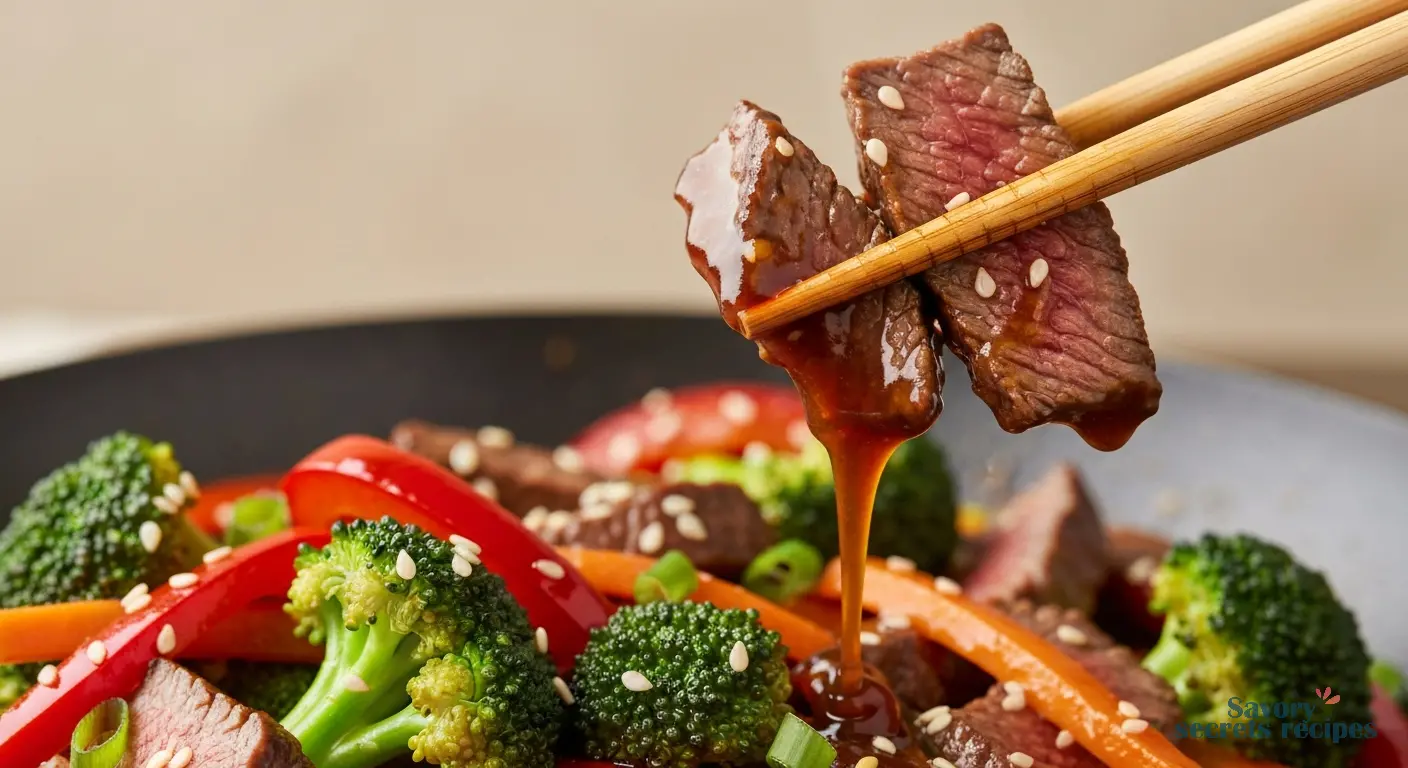
Easy Asian Beef and Vegetable Stir Fry
Ingredients
Method
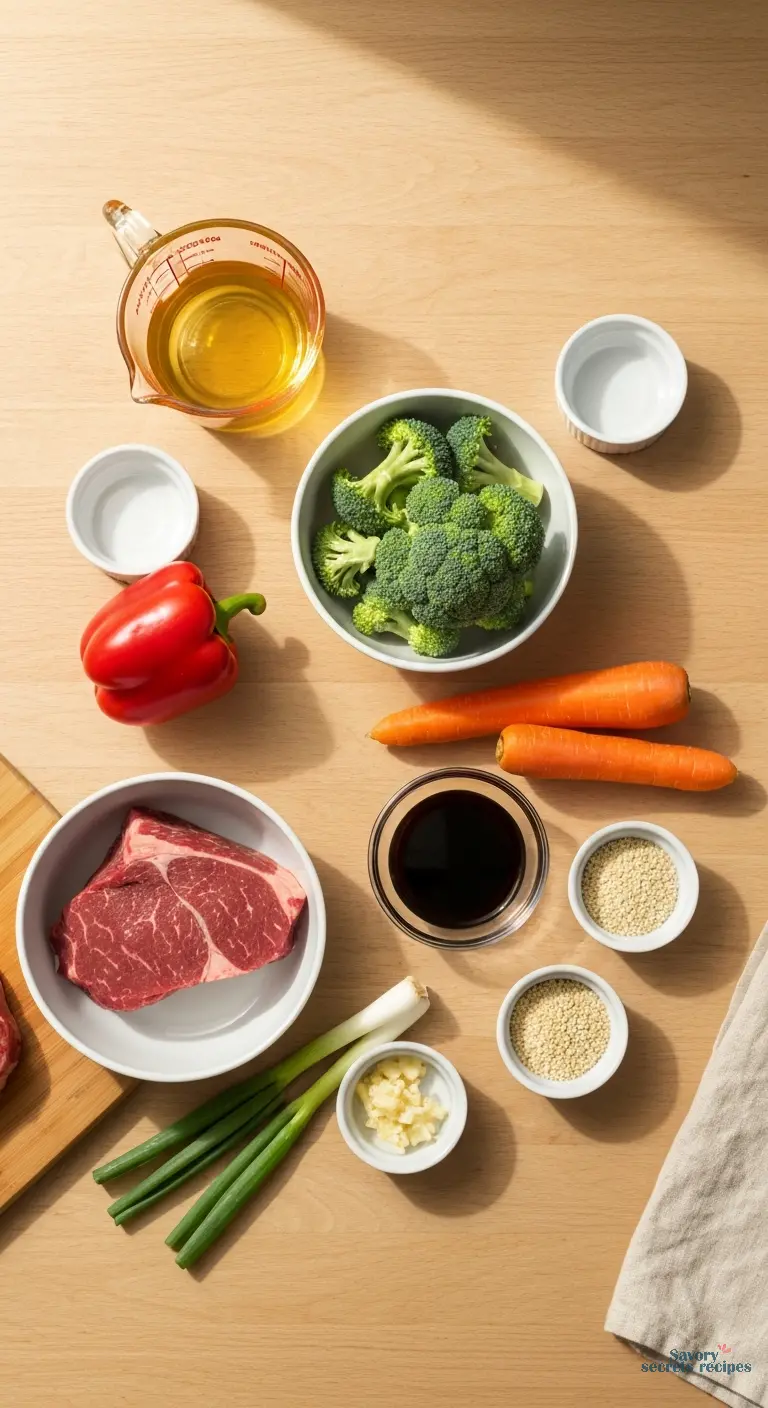
- Collect all ingredients.
- Heat vegetable oil in a large wok or skillet over medium-high heat. Add the beef and stir-fry until browned, about 3 to 4 minutes.
- Push the beef to the wok's side. Add broccoli, bell pepper, carrots, green onion, and garlic to the center. Stir-fry the vegetables for two minutes.
- Stir the beef into the vegetables. Season with soy sauce and sesame seeds. Cook and stir for about 2 more minutes, until the vegetables are tender.
- Serve immediately while hot.
Nutrition
Notes
Wednesday Night, 6:15 PM
You know the feeling. You’re home, you’re tired, and the dreaded question hangs in the air: what’s for dinner? I’ve been there more times than I can count, especially during these cooler LA winter evenings when you just want something warm and satisfying without a huge production. That’s exactly why this recipe for asian beef and vegetables has become my weeknight hero. It’s the answer to that frantic, hungry moment, promising a meal that feels like a treat but comes together in the time it takes to watch a sitcom.
Let me think about that for a second. I remember one particular Wednesday, racing home from my daughter’s soccer practice. The fridge held the usual suspects some broccoli, a lonely bell pepper, a package of beef from my last Costco run. The thought of takeout crossed my mind, but honestly, the traffic to get it felt more daunting than cooking. So I threw this together. The sizzle of the beef hitting the hot pan, the smell of garlic and soy sauce filling the kitchen… it transformed that chaotic evening into something actually pleasant. That’s the power of a good, quick asian beef and vegetables stir fry. It’s not just food; it’s a reset button for a hectic day.
Why This Asian Beef and Vegetables Works
Here’s what I’d do. I’d look at this recipe and see a framework, not a rigid set of rules. That’s why it works so well for a busy parent. The core idea is simple: tender beef, crisp veggies, a glossy sauce. Everything else is adaptable. You’re building layers of flavor quickly, using high heat to create that restaurant-style sear we all love. The sauce comes together from pantry staples you probably already have. And the whole thing cooks in one pan. I mean, the cleanup alone makes it a winner for a weeknight.
It addresses that anxiety about wasting ingredients, too. That red bell pepper looking a little soft? It’ll work. Got some snap peas instead of broccoli? Go for it. This recipe for asian beef and vegetables is forgiving. It’s about the technique more than the exact components. You’re learning how to stir-fry, which is a skill you’ll use forever. Once you get the rhythm down hot pan, don’t crowd it, sauce at the end you can make a million variations. That’s real kitchen confidence.
The Recipe Science: Why We Do What We Do
Okay, let’s talk about why certain steps are non-negotiable for the best asian beef and vegetables. It’s not just about following directions; it’s about understanding what’s happening in the pan. That way, even if you tweak things, you know what to protect.
Slicing Against the Grain
This is the single biggest tip for tender beef. See those lines running along the steak? That’s the grain, like muscle fibers. If you slice with them, you get long, tough strands. Slicing against them across those lines shortens the fibers. Think of it like cutting a bundle of strings. Shorter pieces are easier to chew. I sometimes pop the beef in the freezer for 15 minutes first. It firms up just enough to make super thin slicing a breeze.
The Cornstarch Magic
Tossing the beef in a little cornstarch before cooking seems like an extra step. Trust me, it’s the move right there. It does two things. First, it creates a velvety coating that protects the beef from the intense heat, keeping it juicy. Second, it gives the glossy sauce something to cling to later. Without it, the sauce can slide right off. It’s the difference between beef *in* sauce and beef *with* sauce.
High Heat is Non-Negotiable
Stir-frying is a quick, dry-heat method. You need that blistering hot pan to sear the beef and vegetables fast. That sear equals flavor (the Maillard reaction, if you want to get technical) and it keeps the veggies crisp-tender. If your pan isn’t hot enough, you’ll end up steaming everything. The beef will turn gray and tough, the broccoli will get soggy. You want a loud sizzle the moment the food hits the oil. That’s the sound of success.
Tips for Perfect Asian Beef and Vegetables
These aren’t just tips; they’re the lessons I’ve learned from both success and, well, less-successful attempts. Integrate them into your process and you’ll nail this every time.
Preparation Tips
Prep everything before you even turn on the stove. I mean everything. Slice the beef against the grain, chop the veggies, mix the sauce in a little bowl. Stir-fries move fast, and there’s no time to mince garlic while your beef overcooks. I lay it all out on a plate or in little bowls, like my own cooking show. It feels fussy, but it’s the secret to a calm cooking experience. Also, cut your vegetables into similar-sized pieces. You want them to cook at the same rate so nothing is raw while something else is mush.
Cooking Tips
Use an oil with a high smoke point. Vegetable oil, canola, peanut oil they all work. Don’t use olive oil; it’ll burn and taste bitter. Heat your pan or wok until it’s seriously hot, then add the oil, let it get hot, then add the food. And please, don’t overcrowd the pan. If you dump all the beef in at once, the temperature plummets and you get steam. Cook in batches if you need to. It feels slower, but it’s actually faster because everything sears properly. Give the beef space to breathe, you know?
Storage & Make-Ahead Tips
The beauty of this asian beef and vegetables recipe is its flexibility for meal prep. You can slice the beef and veggies up to 48 hours ahead and keep them separate in airtight containers in the fridge. The sauce can be mixed and stored, too. When dinner time hits, you’re just minutes away. For leftovers, they’ll keep for 3-4 days. The veggies will soften a bit upon reheating, but the flavors will still be great. You can even freeze it, though I’d be honest and say the texture of the vegetables suffers. It’s better fresh, but frozen is better than wasted.
Variations & Substitutions
This is where you make the recipe your own. The framework is solid; the ingredients are flexible.
Dietary Adaptations
Need gluten-free? Swap the regular soy sauce for tamari or a certified gluten-free soy sauce. That’s it. The rest of the ingredients are naturally gluten-free. For a lower-sodium version, use low-sodium soy sauce and maybe add a tiny splash of rice vinegar at the end for brightness. It’s all about balancing flavors to your taste.
Ingredient Substitutions
No sirloin? Flank steak, skirt steak, even a cheaper cut like chuck roast sliced very thin will work. For the vegetables, use what you have. That’s the real secret. Mushrooms, zucchini, snap peas, cabbage, bok choy they’re all fantastic. I sometimes use a bag of frozen stir-fry mix from Trader Joe’s if I’m in a real pinch. Just thaw and pat it dry first. The sauce is adaptable too. No brown sugar? Honey or maple syrup works. No fresh garlic? A teaspoon of garlic powder in the sauce will do in a pinch.
Flavor Variations
Want more heat? Add a spoonful of chili-garlic sauce or some crushed red pepper flakes to the sauce. Prefer it sweeter? Add an extra tablespoon of brown sugar or a splash of orange juice. You could add a teaspoon of grated ginger with the garlic for more zing. This is the good stuff tweaking it until it’s exactly what your family loves.
Common Mistakes to Avoid
I’ve made most of these myself, so I’m speaking from experience. Here’s how to sidestep the common pitfalls with your asian beef and vegetables.
❌ Mistake: Adding everything to a cold or crowded pan.
✅ Solution: Heat your pan or wok over medium-high to high heat for a good minute or two before adding oil. Then, cook in batches. A single, uncrowded layer is what you want for that perfect sear.
❌ Mistake: Overcooking the beef until it’s tough and chewy.
✅ Solution: Stir-fry the beef just until it’s no longer pink on the outside, maybe 2-3 minutes. It will continue to cook a little from residual heat. Remember, you can always cook it a bit more, but you can’t undo toughness.
❌ Mistake: Adding the sauce too early and boiling the vegetables.
✅ Solution: Cook your vegetables until they’re just crisp-tender, *then* add the sauce. The sauce should just heat through and thicken, coating everything. If it boils for too long, the veggies lose their snap.
❌ Mistake: Not tasting and adjusting at the end.
✅ Solution: Give it a taste before you serve. Need more salt? A dash more soy sauce. Too salty? A tiny squeeze of lime or lemon can balance it. Too thick? A splash of water or broth. Cooking is about adjusting.
Frequently Asked Questions
What is the best cut of beef for an Asian beef and vegetable stir fry?
For a quick stir fry, you want something tender that cooks fast. Sirloin, flank steak, and skirt steak are my top picks. They have good flavor and, when sliced thinly against the grain, they stay tender. More expensive cuts like tenderloin work but aren’t necessary. The technique matters more than the exact cut.
How do you make the sauce for an Asian beef stir fry from scratch?
It’s simpler than you think. The base is soy sauce for saltiness, a sweetener like brown sugar, and a bit of cornstarch to thicken. From there, you build: garlic, maybe ginger, a touch of sesame oil at the end for aroma. Whisk it all together in a bowl before you start cooking. Taste as you go, adjust at the end.
Can I use different vegetables in this easy beef stir fry recipe?
Absolutely. That’s the best part. Broccoli, bell peppers, and carrots are classic, but snap peas, mushrooms, baby corn, bok choy, or even shredded cabbage are all fantastic. Just cut them to a similar size so they cook evenly. Use what’s in season or what’s in your fridge. Makes sense to me.
How long does leftover beef and vegetable stir fry last in the fridge?
Store it in an airtight container and it’ll be good for 3 to 4 days. The vegetables will soften a bit when reheated, but the flavors actually deepen. Reheat it gently in a skillet over medium heat with a tiny splash of water to loosen the sauce, or in the microwave in short bursts.
What’s the secret to getting tender beef in a stir fry?
Three things: slice it thin, slice it against the grain, and don’t overcook it. The cornstarch coating helps too, creating a barrier that keeps the juices in. And high heat is crucial a quick, hot sear locks in tenderness. If you do those things, your beef will be melt-in-your-mouth tender every time.
How to Store and Serve Your Stir Fry
Once you’ve made this delicious asian beef and vegetables, you’ll want to enjoy it right. For serving, it’s classic over a bed of steamed jasmine or brown rice. But it’s also incredible with noodles try udon or rice noodles. For a low-carb option, serve it over cauliflower rice. I like to finish it with an extra sprinkle of sesame seeds and some sliced green onions for freshness and color. It just makes it look and taste more complete.
For storage, cool the leftovers completely before transferring them to an airtight container. In the fridge, they’ll keep for several days. To reheat, I prefer the stovetop. A quick warm-up in a covered skillet over medium-low heat with a tiny splash of water keeps it from drying out. The microwave works in a pinch just use a lower power setting and stir halfway through. The goal is to warm it without turning the veggies to complete mush.
You’ve Got Dinner Handled
So there you have it. The next time that 6 PM panic hits, you know exactly what to do. This recipe for asian beef and vegetables is your toolkit for a fast, flavorful, and genuinely satisfying meal. It’s the kind of dish that makes you feel like a competent cook, even on your most tired days. When you serve this, with that glossy sauce and tender beef, your family isn’t going to see a quick fix. They’re going to see someone who cares, who can make something delicious from simple ingredients. And that’s a pretty great feeling. Give it a try this week. I think you’ll find it becomes a regular in your rotation, just like it is in mine.