



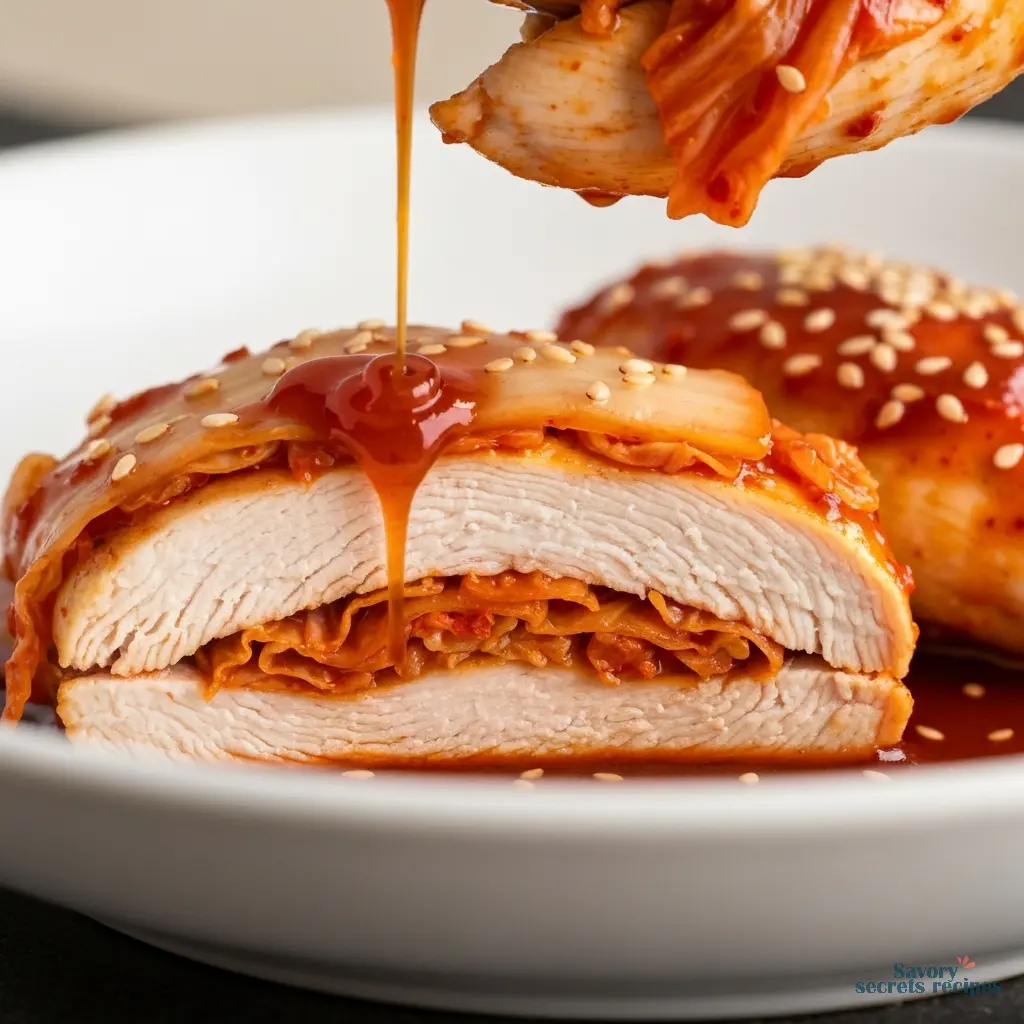
Spicy Kimchi Chicken Stir Fry
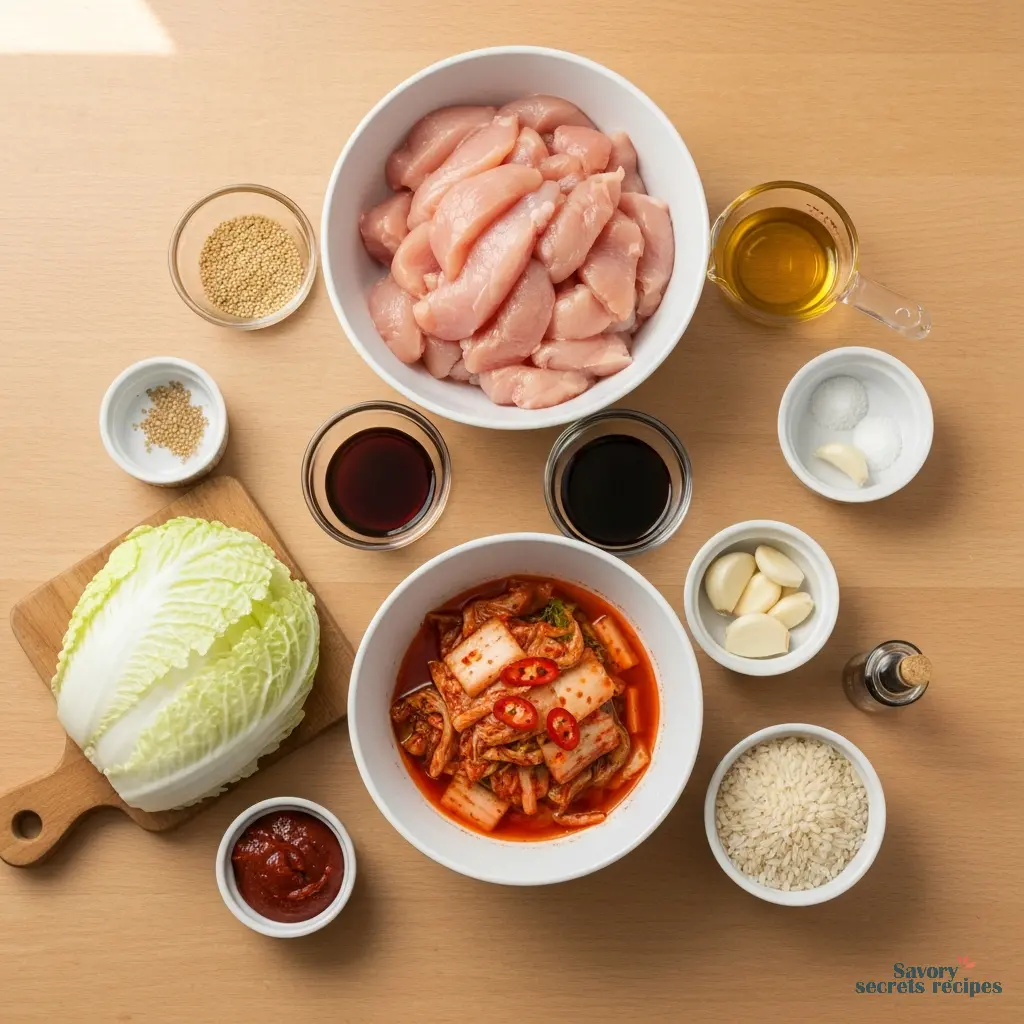
Ingredients
Method
- Toss the chicken with sesame oil, sesame seeds, one teaspoon of salt, and soy sauce. Set it aside. Heat vegetable oil in a wok or large skillet over medium heat until it shimmers. Add the garlic and cook while stirring until fragrant, about 30 seconds. Add the kimchi and heat it through. Add the chicken and cook until it is almost cooked through, approximately 2 to 3 minutes.
- Add the cabbage and cook for about 1 more minute, until it just begins to wilt. Season to taste with chili sauce and fish sauce. Serve immediately with rice.
Nutrition
Notes
You Know That 5:30 PM Panic? This Is The Answer.
It was a Wednesday. Dash needed his walk, my inbox was still blinking, and the only thing in the fridge was a sad-looking chicken breast and a jar of kimchi I’d bought on a whim at Trader Joe’s. Honestly, I was about to order takeout. But then I remembered my grandmother Elaine, arranging those apricots by color. It wasn’t about perfection, it was about using what you have to create something that makes your eye and your stomach know where to land. That’s exactly it with this chicken and kimchi recipe. It’s not a fussy project. It’s a 20-minute escape hatch from the weeknight dinner vortex.
I promise you, this kimchi chicken stir fry is the definition of a clean read. The colors hold. The flavors build in layers. And the best part? It all happens in one pan while you’re probably still unloading your day. If you’ve ever looked at kimchi and thought, “What do I even do with this?”, I get it. Let me see it for you.
Why This Chicken And Kimchi Recipe Actually Works
Good light today on this one. The magic isn’t a secret ingredient. It’s a principle. Kimchi’s fermented tang and spice aren’t just flavor. They’re a natural tenderizer. The acidity starts working on the chicken the second they hit the pan, keeping those thin strips juicy even on a high heat sear. You’re building in layers. Savory from the soy, nutty depth from the sesame oil, that fermented funk from the kimchi, and heat from the gochujang. It all comes together in a sauce that’s complex but not complicated. This might not work for everyone who hates any spice, but your mileage may vary. You can pull back a bit on the gochujang.
And the thin strips? That’s the one. Cutting the chicken into 1/4-inch strips is the difference between a quick, succulent stir fry and a dry, chewy disappointment. It ensures minimum cooking time and maximum flavor coating. Think of it like composing a shot. You want every element, every piece of chicken, to have equal access to the sauce. That’s how you get a balanced bite.
Let’s Talk About The Kimchi (It’s Easier Than You Think)
I know, I know. The kimchi aisle can be a bit overwhelming. You’ll find it in the refrigerated section, usually near the tofu or specialty vegetables at Ralphs or Whole Foods. Don’t stress about finding the “right” brand. Just grab one that looks good. The amount of gochujang and fish sauce you’ll need later totally depends on the strength of your kimchi. Some are super pungent and spicy, others are milder. Season to taste. That’s the key. Start with what the recipe says, then taste and adjust. Needs more acid? A tiny splash of rice vinegar. Needs more depth? Another half teaspoon of that fish sauce. Let it sit for a minute after you adjust, then taste again.
And about eating kimchi daily? I’m not totally sure, but I love the stuff. It’s packed with good probiotics. Just listen to your body. If your kimchi looks off or smells truly foul (beyond the normal funky fermentation smell), don’t eat it. But a properly refrigerated jar lasts ages. This is a perfect way to use it up.
The Step-By-Step Visual Guide (No Fancy Skills Needed)
Okay, pull back a bit from the ingredient anxiety. The process is simpler than the flavor suggests. Get your pan hot. Not warm, hot. You want that vegetable oil to shimmer. Add your chicken strips in a single layer. Don’t crowd them. Crowding steams the chicken. We want a sear. You’ll hear that sizzle. That’s your cue. Let them get some color on one side before you stir. This isn’t being fussy, it’s the difference between boiled chicken and caramelized, flavorful chicken.
Once the chicken is mostly cooked through, push it to the side. Add the garlic. The smell will hit you instantly. Butter and garlic, but earthier. Thirty seconds, just until fragrant. Then, the kimchi and fresh cabbage. This is where the color builds. The bright red of the kimchi against the pale green cabbage. Let it sit for a minute to warm through and soften slightly. Now, the sauce ingredients go right into the pan. The gochujang, soy, sesame oil. It’ll look muddy for a second. Then, as it heats and combines with the kimchi juices, it transforms into a glossy, incredible coating. Toss everything together until every strip is dressed in that deep red glaze. Finish with sesame seeds and green onions. Perfect contrast.
Common Kimchi Chicken Mistakes (And How To Fix Them)
I’ve learned this the hard way so you don’t have to. Here’s what usually goes wrong.
Cutting the chicken too thick. This results in dry meat because the outside overcooks waiting for the inside to be done. The solution? Really aim for those 1/4-inch strips. Use a sharp knife and slice against the grain. It’s worth the extra two minutes of prep.
Not serving immediately. The longer this dish sits, the more liquid will weep from the cabbage and collect at the bottom. It’s still tasty, but it’s saucier, less of a stir fry. Serve it right out of the pan over hot rice. Love that texture when it’s fresh.
Overcooking the chicken. If you’re using thighs, they’re more forgiving, but breasts dry out fast. The second they’re opaque and firm to the touch, they’re done. Get them out of the pan. They’ll carryover cook a bit more from residual heat.
Being afraid of the seasoning. This dish is bold. Taste as you go, especially after you add the sauce. Your kimchi might be saltier than mine. Your gochujang might be milder. Adjust. It’s your dinner.
Serving, Storing, and Making It Your Own
I love to serve this Korean chicken recipe with a simple bowl of white rice. It’s the perfect canvas. However, you can also serve it over steamed vegetables for a low carb kimchi dish, or even toss it with noodles. This one’s a keeper for meal prep, too.
You can make this chicken and kimchi recipe up to 2 days ahead. Let the chicken cool completely, cover it, and refrigerate. When you reheat, do it gently, covered, over low-medium heat with a tiny splash of water to loosen the sauce. It’ll last about 3 to 4 days in the fridge. You can freeze it for up to 2 months in an airtight container. Thaw overnight in the fridge before reheating.
For a vegetarian version? Cook the kimchi sauce for a few minutes, then add diced firm tofu or a bunch of mushrooms. Simmer for 5 minutes to let them soak up all that umami flavor. It’s a fantastic healthy chicken meal alternative, though obviously without the chicken.
Frequently Asked Questions
The Final Frame
This chicken and kimchi recipe is my go-to when the light is fading, time is short, and I need something that feels both nourishing and exciting. It reminds me of that magic of my mom’s Polaroids transforming simple, available ingredients into something vivid and memorable in almost no time. The sizzle, the color, the way the steam rises when you toss it all together. That’s the one.
When you serve this to your family tonight, watch their faces. It’s that moment of surprise, that comfort, that satisfaction. You pulled it off. And it took less time than waiting for delivery. You’ve got this. Now go warm up your winter.
Does kimchi go well with chicken?
Absolutely. It’s a perfect match. The kimchi’s tangy, spicy punch cuts through the richness of the chicken, and its acidity helps keep the meat tender. This chicken and kimchi recipe is designed to highlight that fantastic pairing.
Can you marinate chicken with kimchi?
You can, but for a quick stir fry, I don’t find it necessary. The kimchi marinade flavors penetrate quickly during cooking. If you do marinate, 30 minutes is plenty. Any longer and the acid can start to make the chicken mushy.
What pairs well with kimchi?
Besides chicken? Rice is classic. It also goes great with eggs, in fried rice, tofu, or even on a burger. It’s a versatile condiment. This kimchi chicken stir fry is just one easy weeknight dinner option.
What are common kimchi mistakes to avoid?
Using non-sterile jars, not pressing out air bubbles, and storing at room temperature too long. For cooking, the main mistake is overcooking it, which can make it lose its vibrant texture and turn soggy.
When should I not eat my kimchi?
If it develops an off-putting, rotten smell (different from the strong, funky fermentation smell), visible mold (not just bubbles), or a slimy texture beyond the normal brine, it’s time to toss it. Trust your senses.
What not to marinate chicken with?
Avoid super acidic marinades (like straight lemon juice) for more than a few hours, as they can toughen the protein. Also, don’t reuse marinade that touched raw chicken without boiling it first to kill bacteria.