




Gochujang Kimchi Recipe with Video
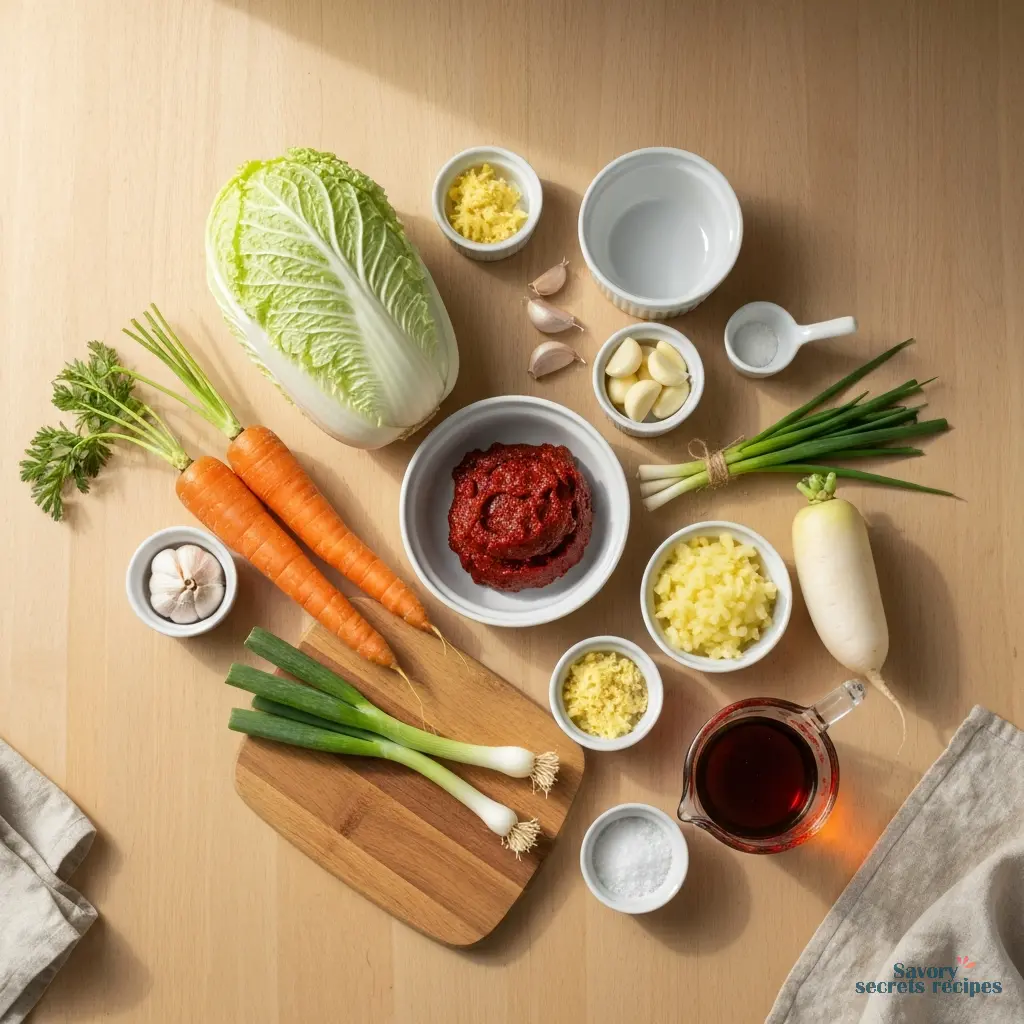
Ingredients
Method
- Remove the cabbage leaves individually, cut them into 2-inch pieces, and place them in a large bowl.
- Dissolve ¼ cup of salt in a small bowl of warm water. Pour the salt water over the cabbage leaves and mix thoroughly by hand, coating each piece completely.
- Place the cabbage in a bowl at room temperature for 3-4 hours. The salt will draw out water, forming a brine at the bottom of the bowl.
- Strain the cabbage in a colander. Optionally, rinse it quickly once or twice with water. Return the cabbage to the bowl.
- Add the grated carrot, daikon matchsticks, crushed garlic, grated ginger, garlic chives, and grated apple, then mix to combine.
- Measure ⅓ cup of gochujang and 2 tablespoons of fish sauce or soy sauce. Vigorously mix until fully combined. Wear disposable gloves to prevent pepper burns.
- Pack the kimchi tightly into glass jars, leaving a few inches of headspace. Seal the jars and let them sit in a cool, dark place for at least 48 hours; a longer fermentation increases sourness. Periodically open the jars to release built-up pressure. The appearance of bubbles is normal. Once ready, transfer the kimchi to the refrigerator, where it will keep for two months or longer.
Notes
Ever Wanted to Make Kimchi But Felt Intimidated?
Let me think about that for a second. I remember the first time I bought a jar of gochujang. It was at a little Korean market in Silver Spring, and I just stood there in the aisle, holding this heavy tub of deep red paste, completely unsure of what to do with it. I was curious, but honestly, a little scared. I took it home and made a mess, trying to replicate a kimchi recipe that called for a dozen ingredients I didn’t have. It was… not great. Too salty, weird texture, the whole thing. I almost gave up on the whole idea of homemade fermented foods right then.
What if I told you that same gochujang paste is actually the secret to a simpler, more approachable kimchi? That’s a good question, actually. This go chu jang kimchi recipe is the one I wish I’d found that day. It uses the paste as a flavor powerhouse, so you’re not juggling a bunch of separate seasonings. It’s about transforming a humble Napa cabbage into something alive, tangy, and packed with probiotic benefits, without the intimidation factor. I promise, it’s easier than you think.
Why This Go Chu Jang Kimchi Recipe Actually Works
In my experience, a lot of kimchi recipes can feel like a chemistry exam. This one is different. Here’s what I’ve found works: using gochujang paste as the base does most of the heavy lifting for you. That thick, fermented paste is already packed with deep, savory umami, a touch of sweetness, and that iconic Korean red pepper heat. You’re not just adding spice; you’re adding a whole layered flavor profile in one scoop. It’s the kind of ingredient that changes how you cook.
The other thing? We’re skipping the traditional porridge step. Some recipes use a flour or rice paste to help the seasoning stick. Fair enough, but it’s an extra pot to wash and a step that can intimidate beginners. Instead, the natural pectin from the grated apple and the sticky quality of the gochujang itself create a perfect, clingy paste for your vegetables. It depends on what you’re going for, but for a reliable, easy homemade kimchi, this method is genuinely foolproof.
Your Go Chu Jang Kimchi Toolkit: What You Really Need
You don’t need special equipment, but a few things make the process smoother. A large, non-reactive bowl for salting the cabbage is key. I use a big stainless steel mixing bowl I got from a restaurant supply store years ago. If your basin is too small, just mix the salted cabbage in batches. A good chef’s knife makes prepping the Napa cabbage and daikon radish a breeze, but honestly, a food processor with a grating attachment is a huge time-saver for the carrots and daikon. I’m not entirely sure it’s traditional, but here’s what I’d try if you’re short on time.
For fermentation, you need a clean jar. A wide-mouth glass quart jar is perfect. I like the ones with a clamp lid, but any large, clean jar with a lid will work. You’ll also want something to press the kimchi down under its brine. A smaller glass jar that fits inside the mouth works, or even a clean, food-safe weight. The goal is to keep the vegetables submerged. That’s it. No fancy crocks required.
The Heart of the Matter: Understanding Gochujang
Before we get our hands dirty, let’s talk about the star. What is gochujang, really? It’s a fermented Korean red pepper paste made from chili powder, glutinous rice, fermented soybeans, and salt. The “jang” part refers to fermented soybean paste. So, is gochujang fermented? Yes, and that’s what gives it such incredible depth. It’s savory, slightly sweet, spicy, and funky all at once.
Now, a common question: does gochujang taste like kimchi? Not exactly. Kimchi is the final product a tangy, fermented vegetable side dish. Gochujang is one of the key ingredients that gives many kimchi recipes their signature spicy, umami kick. Think of it as the concentrated flavor builder. And should you refrigerate go chu jang? Absolutely. After opening, keep it in the fridge to maintain its flavor and slow further fermentation.
Step-by-Step, Without the Stress
Okay, let’s make some go chu jang kimchi. The first step is salting the cabbage. Chop your Napa cabbage into small, bite-sized pieces. I aim for squares about 1-2 inches. This isn’t being fussy, it’s the difference between a condiment you can easily scoop onto rice and awkward, too-big leaves. Toss the pieces thoroughly with the sea salt. Here’s a tip I learned the hard way: make sure every piece gets some love. Don’t just sprinkle salt on top of a dry cabbage mound. That causes slow, uneven salting.
While the cabbage wilts and releases its water (this takes about 1-2 hours, give it a mix halfway), prep your other veggies. Grate the apple and daikon. Slice the carrots into matchsticks or grate them. Chop the green onions and garlic chives. Mince the garlic and ginger. This is the relaxing part. The ingredient does most of the work if you let it.
Mixing the Magic Paste
This is where the go chu jang kimchi comes together. In a large bowl, combine the gochujang paste, grated apple, fish sauce, and all that minced garlic and ginger. Use your hands. I know, it’s messy, but trust me on this. You need to feel the paste come together, to make sure the apple is fully incorporated and the gochujang is evenly distributed. It should be a thick, spreadable, vibrant red paste. If it seems too thick, a tablespoon of water is fine. Your mileage may vary depending on the brand of gochujang.
Now, rinse your salted cabbage very, very well under cold water. You need to wash off all that excess salt. I usually give it three good rinses, then squeeze handfuls to remove as much water as possible. This is crucial for the right final texture and salt level. Add the cabbage and all your other prepped vegetables to the bowl with the paste. And now, mix. Really get in there. Every piece of vegetable should be coated in that glorious red paste. Look for the color change that’s your signal. It should all be a uniform, deep red.
Packing and The Waiting Game (Fermentation, Explained Simply)
Pack your mixed go chu jang kimchi tightly into your clean jar. Press down firmly as you go to eliminate air pockets. You want the natural brine (the liquid released from the veggies) to rise and cover everything. If it doesn’t quite cover, you can add a tiny bit of filtered water. Leave about an inch of space at the top. Seal the jar.
Now, fermentation. This is the part that makes people nervous, but it’s alive, and that’s good! Here’s the real secret: warmer rooms ferment kimchi faster. In my kitchen in Maryland, which is pretty cool in winter, I leave it on the counter for 2-3 days. In a warmer LA apartment, it might only need 1-2 days. You’ll know it’s working when you see tiny bubbles rising and the lid might feel tight. That’s the good bacteria having a party. After a couple days, open it (over the sink, just in case it fizzes!), press the kimchi down again, taste it, and then store it in the fridge. The cold slows the fermentation way down, giving you that perfect tangy, crunchy condiment for weeks.
Navigating Common Go Chu Jang Kimchi Hiccups
Even with a simple recipe, things can go sideways. Let’s troubleshoot. First, if you see white stuff floating on top after a few days, don’t panic. It’s probably just kahm yeast, a harmless byproduct. Just skim it off with a clean spoon. The kimchi underneath is fine. If you see colorful mold (blue, green, black), that’s bad. Toss it.
What if your kimchi isn’t souring? It might just be too cold. Move the jar to a warmer spot in your kitchen for another day. And if it’s too salty? That’s tricky, but you can rinse a portion before eating, or use it in cooked dishes like kimchi fried rice where the salt will mellow. The most common mistake I see? Not pressing down the kimchi after each use. Always use a clean utensil to take what you need, then press the rest back under the brine. This prevents air exposure and mold.
Making It Your Own: Variations and Swaps
This recipe is wonderfully adaptable. For a vegan go chu jang kimchi, swap the fish sauce for an equal amount of soy sauce or even a tablespoon of miso paste thinned with water. It adds that essential savory note. If you can’t find daikon, use more carrots or even some sliced Korean radish. No garlic chives? Just use extra green onions.
Want to adjust the heat? The gochujang brings most of it. For milder kimchi, look for a “mild” gochujang brand at H Mart or even some well-stocked Ralphs or Whole Foods. For more fire, you can add a teaspoon of Korean red pepper flakes (gochugaru) to the paste. I prefer ingredients that can do multiple jobs, and this base recipe is a perfect canvas.
How to Store and Serve Your Homemade Kimchi
Once it’s fermented to your liking, store your go chu jang kimchi in the fridge. It’ll keep for months, honestly. The flavor will continue to deepen and sour slowly over time. I usually keep a large jar in the back of the fridge for cooking and a small one in the door for eating fresh.
Now, how to eat it? Obviously, as a side dish (banchan) with any Korean meal. But I’m genuinely excited about this one: chop it up and add it to chicken burgers for an incredible tangy crunch. Fold it into scrambled eggs. Make kimchi grilled cheese. Toss it with hot rice, a fried egg, and a drizzle of sesame oil for the easiest, most satisfying lunch. It’s exactly the sort of thing I love to dig into. For a delicious cooked application, try incorporating your kimchi into a savory chicken and kimchi recipe.
Frequently Asked Questions
The Final Taste: What You’re Working Towards
When your go chu jang kimchi is ready, you’ll know. Opening the jar releases this incredible, tangy aroma that’s somehow both spicy and inviting. The cabbage and daikon will have a firm-tender crunch, a satisfying snap that gives way to the flavorful paste. The taste? It’s a journey. First, you get the bright, lactic tang from fermentation, then the deep, savory umami punch from the gochujang, followed by a warm, lingering heat that’s not overwhelming. It’s complex, addictive, and completely yours.
You’ve just unlocked a world of flavor in your own kitchen. This go chu jang kimchi is more than a recipe; it’s a living ingredient you created. When it’s ready, you’ll love adding it to rice bowls, soups, or just eating it straight from the jar with a sense of real pride. Snap a pic and tag me I want to see your masterpiece. Now we’re talking.
What is gochujang kimchi?
It’s a style of kimchi that uses gochujang (Korean fermented red pepper paste) as the primary seasoning base, rather than just dry chili flakes. The paste adds a deeper, more complex umami and sweetness alongside the heat, making for a rich, flavorful, and often simpler homemade kimchi.
Can you eat go chu jang raw?
Yes, gochujang paste is a fermented condiment meant to be eaten without cooking. It’s fully edible straight from the tub. In this go chu jang kimchi recipe, it gets mixed in raw and then the whole jar ferments, developing its flavors further over time.
Is gochujang healthy or unhealthy?
In moderation, it’s a healthy fermented food. It contains probiotics, capsaicin from chilies (linked to metabolism), and is low in fat. However, it can be high in sodium and sugar. As with any potent condiment, the key is using it to flavor dishes, not eating it by the spoonful.
How hot is Go Chu Jang?
It varies by brand, but generally, gochujang is considered medium-hot. It’s less fiery than some pure chili pastes because the heat is balanced by sweet and savory notes. For this kimchi recipe, the heat mellows slightly during fermentation. You can always choose a mild or hot version to suit your taste.
Do I have to make a porridge for this go chu jang kimchi?
No, that’s the beauty of this method. The sticky consistency of the gochujang paste itself, combined with the natural pectin from the grated apple, creates a perfect adhesive for the spices. It clings to the vegetables beautifully without any extra steps or pots to wash.
My kimchi has white stuff on top. Is it bad?
Usually not. White, filmy substance is often harmless kahm yeast. Just skim it off with a clean spoon. The kimchi below is typically fine. Toss it only if you see fuzzy, colorful mold (green, blue, black). Always press your kimchi down after use to prevent air exposure.