



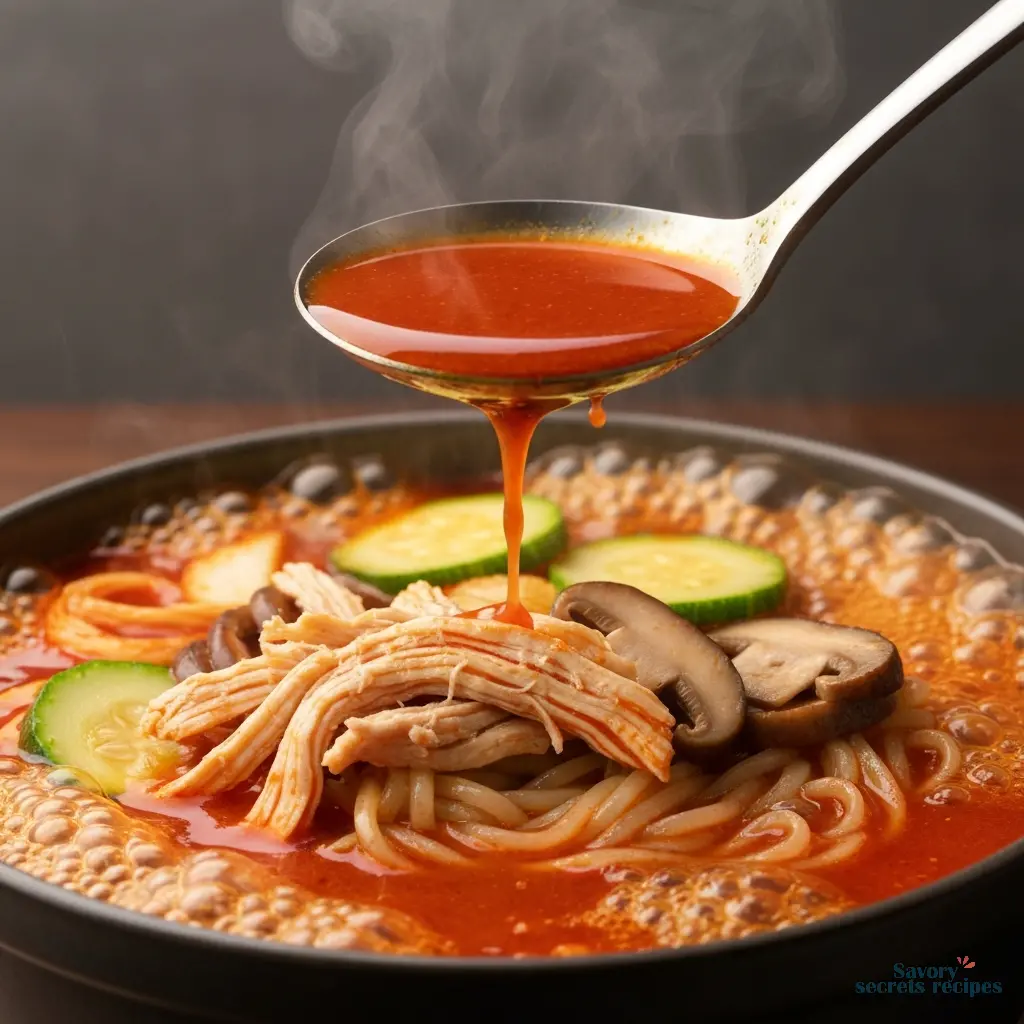
Spicy Gochujang Chicken Noodle Soup
Ingredients
Method
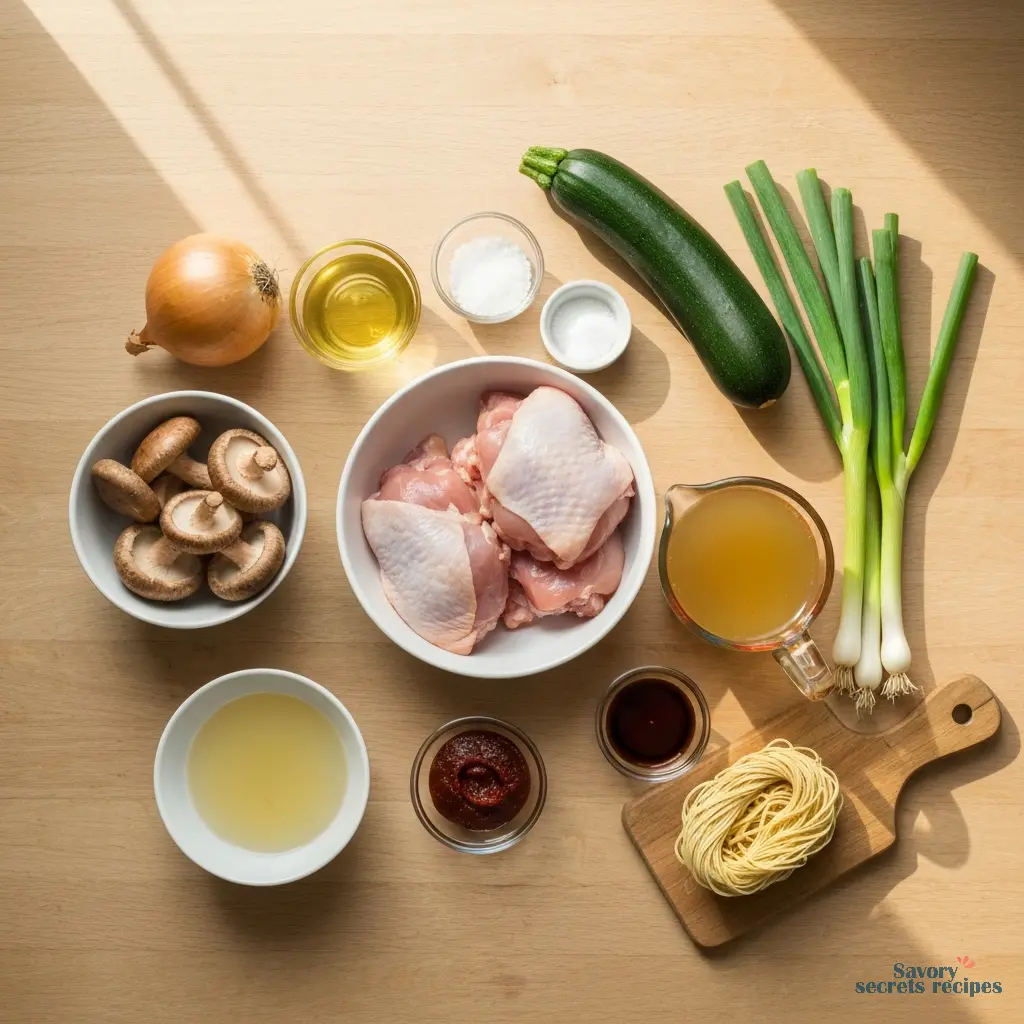
- Halve and thinly slice one medium yellow onion. Cut half a medium zucchini in half lengthwise, then slice it crosswise into half-inch-thick half-moons. Cut four medium scallions crosswise into three pieces each; finely chop a handful of the dark green parts (approximately two tablespoons) and set aside for garnish. Thinly slice four ounces of fresh shiitake mushrooms.
- Heat one tablespoon of neutral oil in a large heavy-bottomed pot or Dutch oven over medium-high heat until shimmering. Pat two pounds of bone-in, skin-on chicken thighs dry with paper towels. Place the chicken in the pot skin-side down. Season with one teaspoon of kosher salt. Cook without moving until the skin is crisp, browned, and some fat has rendered, about eight minutes. Flip the chicken and cook until the second side is golden-brown, four to five minutes. Transfer the chicken to a plate; it will not be fully cooked at this stage.
- Add 1/4 cup of gochujang to the pot and cook, stirring constantly, for 30 seconds. Pour in 1 cup of low-sodium chicken broth, scraping the bottom of the pot to release any browned bits. Add the remaining 3 cups of broth, onion, zucchini, the rest of the scallions, and the shiitake mushrooms. Stir everything together and bring to a boil.
- Return the chicken and any juices from the plate to the pot. Reduce the heat to medium-low. Cover and simmer, stirring occasionally, until the chicken is cooked through and the vegetables are tender, 15 to 17 minutes. Meanwhile, bring a large saucepan of water to a boil over medium-high heat.
- Using tongs, transfer the chicken to a clean cutting board. Shred the meat into bite-size pieces with two forks, discarding the skin and bones. Return the shredded chicken to the soup, stir in one tablespoon of fish sauce, and maintain a low simmer until the noodles are ready.
- Cook 8 ounces of dried Chinese wheat noodles in boiling water until tender, following package directions. Drain the noodles and place them into serving bowls. Adjust the soup's seasoning with additional fish sauce to taste. Pour the soup, chicken, and vegetables over the noodles. Top with the reserved scallion greens.
- Refrigerate leftover soup and cooked noodles separately in airtight containers for up to three days. To reheat, combine the soup and noodles in a pot and warm over medium heat until thoroughly heated.
Nutrition
Notes
Look, I Need You to Understand Something About This Soup
It was one of those February evenings in Logan Square where the wind cuts right through your coat, you know? The kind where you get home and your bones feel cold. I’d been testing babka all day, which is a whole other story about butter temperature and patience, and I just wanted something warm. Not fussy. Not precise. Something that felt like a direct line to being okay again. That’s when I remembered the tub of gochujang in my fridge.
I’m not entirely convinced that every “quick” dinner recipe actually respects your time. But this go chu jang soup? That’s the correct instinct. It’s the kind of thing you can make with one pot and a vague plan, and thirty minutes later you’re holding a bowl of something that smells like someone figured out how to bottle comfort and spice it perfectly. It’s the soup version of putting on a thick sweater from the inside out.
Why This Go Chu Jang Soup Recipe Actually Works
Let’s be clear about this. A lot of soup recipes are just a list of things to put in water. That’s not how this works. This gochujang stew recipe builds flavor in layers, and I need you to understand your process. First, you’re going to cook the chicken thighs slowly. That’s not just about cooking them through. You’re rendering fat, creating a flavor base in the pot itself. That chicken fat, subtle as it is, carries the spice and the umami later. Temperature matters here.
Then, the gochujang paste. Don’t just plop it into the broth. You’ll fry it for a minute in that same pot. This changes everything. It removes that slight raw, earthy edge and blooms the spices, making the flavor of the gochujang broth deeper and rounder. It’s the difference between shouting and singing the same note. That’s the correct way.
Finally, the simmer. It’s a short one, but it’s where everything gets acquainted. The zucchini softens but keeps a bit of spine, the mushrooms drink up the spicy liquid, and the noodles swell and become one with the soup. You’re not just making soup. You’re conducting a very quick, very delicious orchestra.
Your Go-To Guide for Gochujang Soup Success
I want to give you a few quick wins before we get into the science. First, sample the broth after you turn off the heat and let it cool for about ten minutes. I know, you want to taste it now. But flavors taste sharp and unbalanced while they’re boiling. They settle and come together as they cool. If it’s too salty or spicy after that rest, just add a splash of water. Easy fix.
Second, your veggies. This gochujang jjigae is famously flexible. It’s a brilliant way to clean out the fridge. I’ve used carrots, tomatoes, napa cabbage, you name it. The key is to cut them into similar-sized chunks so they cook evenly. Don’t overthink it.
Third, the spice level. That’s probably your biggest worry, right? You can control it. Use a mild gochujang, or start with half the amount and add more to taste at the end. You can also add a pinch of sugar to soften the heat’s edge. Fine, but document what you changed so you can replicate it next time.
The Science Behind Your Spicy, Savory Broth
Okay, let’s talk about why this soup is so addictive. It’s not magic. It’s fermentation and umami. Gochujang is made from fermented soybeans, rice, and chili peppers. That fermentation creates glutamates, the compounds that trigger our umami taste receptors. It’s a deep, savory flavor that makes your brain sit up and pay attention.
When you fry the paste, you’re performing a quick Maillard reaction on those fermented components. It deepens the flavor profile, adding toasted, almost nutty notes. Then, you add the chicken broth and fish sauce. More umami bombs. It’s a layered attack on your taste buds that reads as complex, even though the work is simple. That’s why a good gochujang soup tastes like it simmered for hours when it really took about thirty-five minutes. This complex layering of flavors is a hallmark of many Korean stews.
And the noodles? They’re not just filler. As they cook, they release starch into the broth, thickening it slightly and giving it a more luxurious, silky mouthfeel. See how much better that looks when you understand the components?
Navigating Common Go Chu Jang Soup Mistakes
I’ve seen a lot of soup in my day, and I’ve made my share of errors. Here’s what to watch for.
❌ Sampling the soup while it’s at a rolling boil. Your tongue can’t taste properly when everything is screaming hot. The salt and spice will taste more aggressive than they are.
✅ Solution: Let it cool down for a few minutes off the heat. Taste then adjust.
❌ Adding all the water at once and walking away. Broth reduces. If you like a thinner soup, you’ll need to add more water at the end. If you like it more stew-like, let it simmer uncovered.
✅ Solution: Start with the recipe amount, but keep a cup of hot water nearby to adjust the consistency at the end.
❌ Not seasoning at the finish. Broths mute seasoning as they cook. The fish sauce and gochujang provide salt, but you might need a tiny pinch more at the end.
✅ Solution: Always do a final taste and adjust with a bit more salt, a dash more fish sauce, or even a squeeze of lime if it needs brightness.
❌ Using a cutting board for chicken and then veggies without washing it. That’s just basic hygiene, but you’d be surprised.
✅ Solution: Use a plastic board for the chicken, a different one for your vegetables. Or wash thoroughly with hot, soapy water in between.
How to Make This Soup Uniquely Yours
Your butter’s too warm? Start over. Just kidding, that’s for pastry. Soup is forgiving. This recipe is a fantastic template. If you’re vegetarian, swap the chicken broth for a robust vegetable broth and add a block of firm tofu, sliced into cubes. It soaks up the flavor beautifully.
Want a heartier meal? Add cooked rice cakes or fresh noodles. If you’re adding more noodles, just remember to increase the broth and seasoning a bit so you don’t end up with a dry pot. I’m not entirely convinced this works at scale without adjustment, but in a home kitchen, you can eyeball it.
You can substitute the gochujang paste with doenjang (Korean fermented soybean paste) or white miso. You’ll lose the heat and the red color, but you’ll keep the umami. To make up for it, add a generous pinch of gochugaru (Korean chili flakes) or regular red pepper flakes. That might be regional, but I’d need to verify. It works in my kitchen. For a classic doenjang-based dish, try our authentic Korean doenjang soup recipe.
Finding the Right Gochujang in Los Angeles
Not all gochujang is created equal. The data suggests otherwise, but I’ll test it. I’ve found the flavor and heat level can vary wildly by brand. For a beginner, I recommend starting with a medium-spicy version from a brand like Chung Jung One or Sempio. You can find them at any well-stocked Ralphs in the international aisle, or of course at a Korean market like H Mart.
If you’re gluten-free, you need to read labels carefully. Traditional gochujang is often made with barley or wheat. Some modern brands make certified gluten-free versions. Look for that on the label. Whole Foods usually carries at least one option.
And a note on shopping: you don’t need to go to a specialty store for this. Between Trader Joe’s for the veggies and broth and your local Vons for the rest, you can get everything. The gochujang is the only “special” ingredient, and it’s mainstream now. I promise.
Serving, Storing, and Bringing It All Together
This gochujang soup is best served screaming hot, the moment it’s done. The steam is half the equation. Ladle it into deep bowls. I like to put a scoop of freshly cooked, short-grain white rice right in the middle of the bowl and pour the soup around it. As you eat, the rice mingles with the broth and makes this incredible, spicy porridge. This communal, customizable style of eating is similar to enjoying a Korean hot pot.
For leftovers, store the soup and any cooked noodles separately in airtight containers in the fridge. They’ll keep for 2 to 3 days. The noodles will continue to absorb liquid, so when you reheat, do it gently in a pot with a splash of water or extra broth to loosen it back up. You can also freeze the soup base (without noodles) for up to a month. Thaw overnight in the fridge before reheating.
Frequently Asked Questions
When You Make This Soup Tonight
I know this sounds like a lot of talk for one pot of soup. But that’s because I want you to succeed on the first try. When you make this go chu jang soup, your kitchen will fill with this incredible aroma spicy, savory, deeply comforting. You’ll ladle it into bowls, see the steam rise, and take that first spoonful. That’s exactly the texture we want. That warmth, that gentle heat, that feeling of having made something truly good with your own hands.
It reminds me of standing in my grandmother’s kitchen, the radiator clanking, watching her hands work with absolute certainty. This soup has that same feeling of surety. It’s simple, it’s direct, and it works. Now you’ve got it. Go make it.
Is gochujang spicy?
It is, but the heat level varies by brand. Some are quite mild, others are fiery. Look for “mild” on the label if you’re sensitive. Remember, you control the amount in your go chu jang soup, so you can always start with less and add more.
What can I substitute for gochujang paste?
In a pinch, use doenjang or white miso paste mixed with a tablespoon of gochugaru (Korean chili flakes) or regular chili flakes. You’ll get the fermented umami and the heat, though the flavor profile of your gochujang stew will be slightly different.
Is gochujang gluten-free?
Not always. Traditional recipes use barley or wheat. If you need a gluten-free go chu jang soup, you must check the label. Several brands now produce certified gluten-free gochujang, which you can find at health food stores or online.