



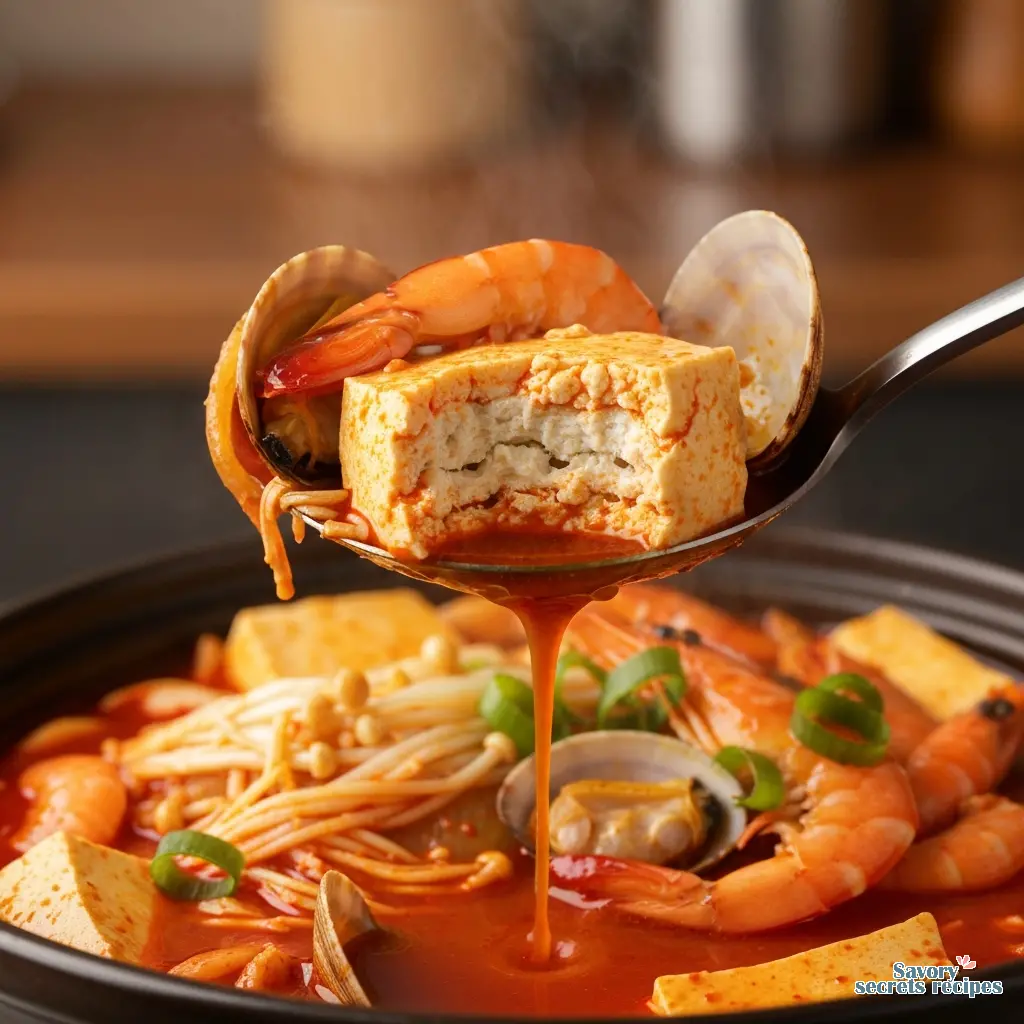
Spicy Soft Tofu Korean Stew Recipe for Your Winter Table
Ingredients
Method
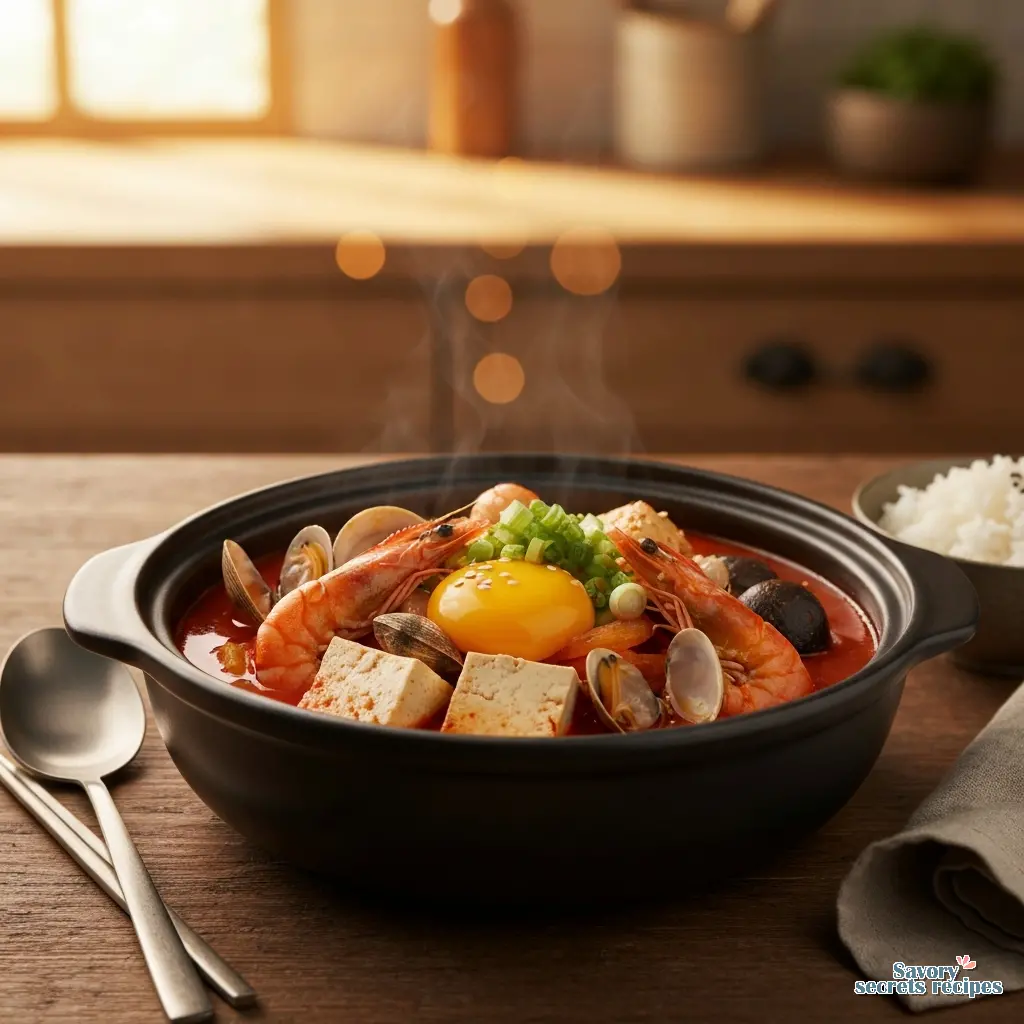
- Heat a pot over medium-low heat and add chili oil, chili powder, and garlic. Stir for 1 minute, taking care not to burn the chili powder.
- Add clams and shrimp, stirring quickly to coat with the chili sauce. Pour in fish sauce and soy sauce, then stir.
- Add dried kelp and anchovy stock. Boil over medium-high heat until the liquid reaches a rapid boil, about 2 to 3 minutes.
- Add tofu, mushrooms, and egg. Cook for 2 to 3 minutes. Season with salt if needed.
- Top with green onion, black pepper, and sesame oil. Serve hot with Korean rice and side dishes (banchan).
Nutrition
Notes
- 1 Tbsp = 15 ml
- If you want to learn more about Korean ingredients, check my essential Korean cooking ingredients list!
Why This Korean Casserole is Your New Winter Staple
I remember standing on a step stool next to my grandmother in her tiny Taipei kitchen, watching her pinch the thickness of dumpling skins between her fingers. She taught me that food isn’t just about sustenance. It is about warmth. And let’s be honest, when the temperature drops here in Oakland and the fog rolls in off the bay, I crave that bone-deep warmth you only get from a bubbling, spicy pot. That is exactly where this Korean casserole comes in.
You might know it as a stew, or specifically jjigae, but in many American households, we categorize these hearty, one-pot wonders as casseroles because they tick all the same boxes. They are communal, comforting, and incredibly forgiving. This isn’t just a recipe. It’s a survival strategy for busy weeknights when you need something that tastes like it simmered for hours but actually comes together in about 35 minutes.
I’m still working this out, but I think the magic lies in the balance. You have the soft, yielding texture of the tofu against the chew of mushrooms and the brace of the spicy broth. It reminds me of the smell of my grandmother’s kitchen in summer, that specific combination of soy sauce and fermentation that feels like home. Whether you are meal-prepping for a busy week or just trying to get dinner on the table before a meltdown (yours or the kids’), this Korean casserole delivers.
The Great Debate: Stew vs. Casserole
To be honest, the terminology can get a little confusing. In Korea, this dish is a jjigae (stew) or sometimes a jeongol (hot pot/casserole), depending on how it is served. In the US, we tend to call anything baked or simmered in a single vessel a casserole. So, does it matter? Not really. What matters is the texture.
A traditional Western stew often relies on flour or cornstarch to thicken the liquid. This Korean casserole is different. The broth stays relatively thin but becomes rich and robust through the breakdown of ingredients and the starch from the rice you serve alongside it. It is lighter than a beef bourguignon but significantly more flavorful than a standard vegetable soup.
Here is what I am seeing in the nutrition world: we are moving away from heavy cream-based casseroles toward broth-based ones. They offer that same “hug in a bowl” feeling without the post-meal heaviness. Plus, the fermentation in the ingredients adds a depth of umami that you just can’t get from cream of mushroom soup.
Essential Equipment: avoiding the Boil-Over
I learned this the hard way. I once tried to make a similar dish in a standard 1.5-quart saucepan. As soon as I added the tofu, the liquid displacement caused a volcanic eruption of red chili broth all over my stove. My husband tried one bite and very gently suggested we order pizza while I scrubbed the burner.
For this Korean casserole, you need the right vessel. The Sweet Spot: Use a shallow pot or Dutch oven that is at least 12 inches wide or holds about 1.7 to 2 liters. The shallow shape is crucial. It allows for faster evaporation, concentrating the flavors, and makes it easier for everyone to reach in if you are serving it family-style.
If you want to go authentic, a coarse earthenware pot called a ttukbaegi is fantastic because it retains heat like a champion. But for most of us cooking in a standard American kitchen, a stainless steel shallow pot or an enameled cast iron Dutch oven works perfectly. Also, if you have a portable butane burner, put it on the dining table. Keeping the Korean casserole bubbling while you eat is a game-changer for the experience.
Ingredient Deep Dive: Tofu and Spice
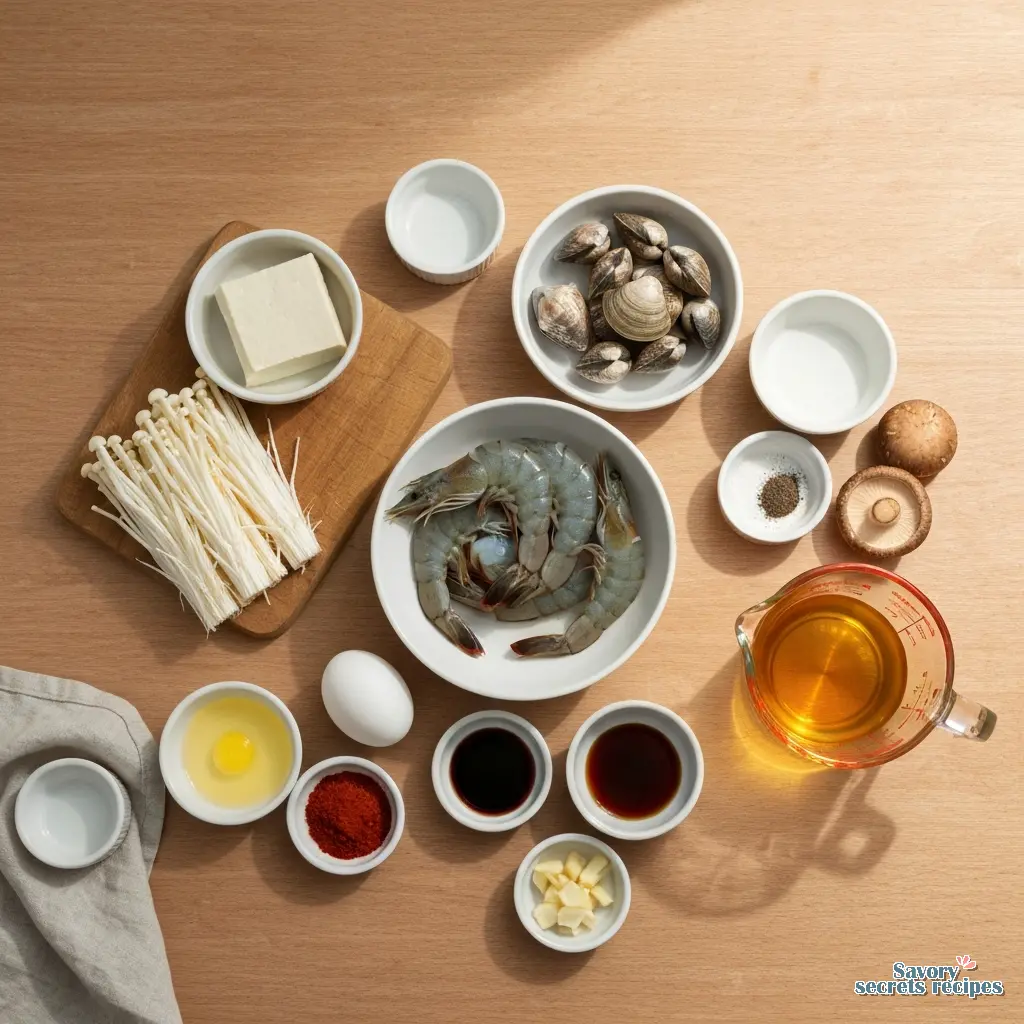
Let’s talk ingredients because this is where a Korean casserole succeeds or fails. I’m not convinced yet that you can substitute just anything and get the same result. The texture is everything here.
The Tofu
You’ll see “soft tofu” and “silken tofu” at the store. For this recipe, look for the soft tofu that comes in a tube. It is often labeled as “sundubu.” It is incredibly custardy and delicate. If you can’t find the tube version, a block of silken tofu works, but handle it gently. I prefer the tube because you can just slice it right into the pot. It’s a small thing, but it saves a messy step.
The Heat Source
We are using Gochugaru (Korean chili powder). Please don’t use the crushed red pepper flakes you put on pizza. They are totally different. Gochugaru has a sweet, smoky, sun-dried flavor that isn’t just about heat. Pro Tip: There are two types: coarse and fine. For a Korean casserole, I mix them if I have both, but if you only buy one, go for the fine powder. It dissolves better into the broth, giving you that vibrant, appetizing red color without a gritty texture. If you use coarse flakes, your broth might look a bit clear with floating specks, which isn’t quite the aesthetic we are going for.
The Umami Base (No Pork Needed)
Many traditional recipes use pork belly for fat and flavor. But honestly, you don’t need it. I prefer a seafood base or a rich vegetable broth. The secret weapon here is the stock. Traditionally, we use a dried anchovy and kelp stock. It sounds intense, but it provides a clean, savory backbone that beef stock just can’t match. If you are in a rush, store-bought chicken stock is a decent substitute, but try to find a low-sodium one so you can control the saltiness with fish sauce instead.
Building the Flavor Layers
Cooking this Korean casserole is less about strict technique and more about layering. I like recipes that give you a framework and then trust you to adjust based on what you’re tasting. Start by making your aromatic oil. Sizzle the scallions and garlic in the sesame oil and chili oil first. This “blooms” the spices and creates a flavor base that permeates the whole dish.
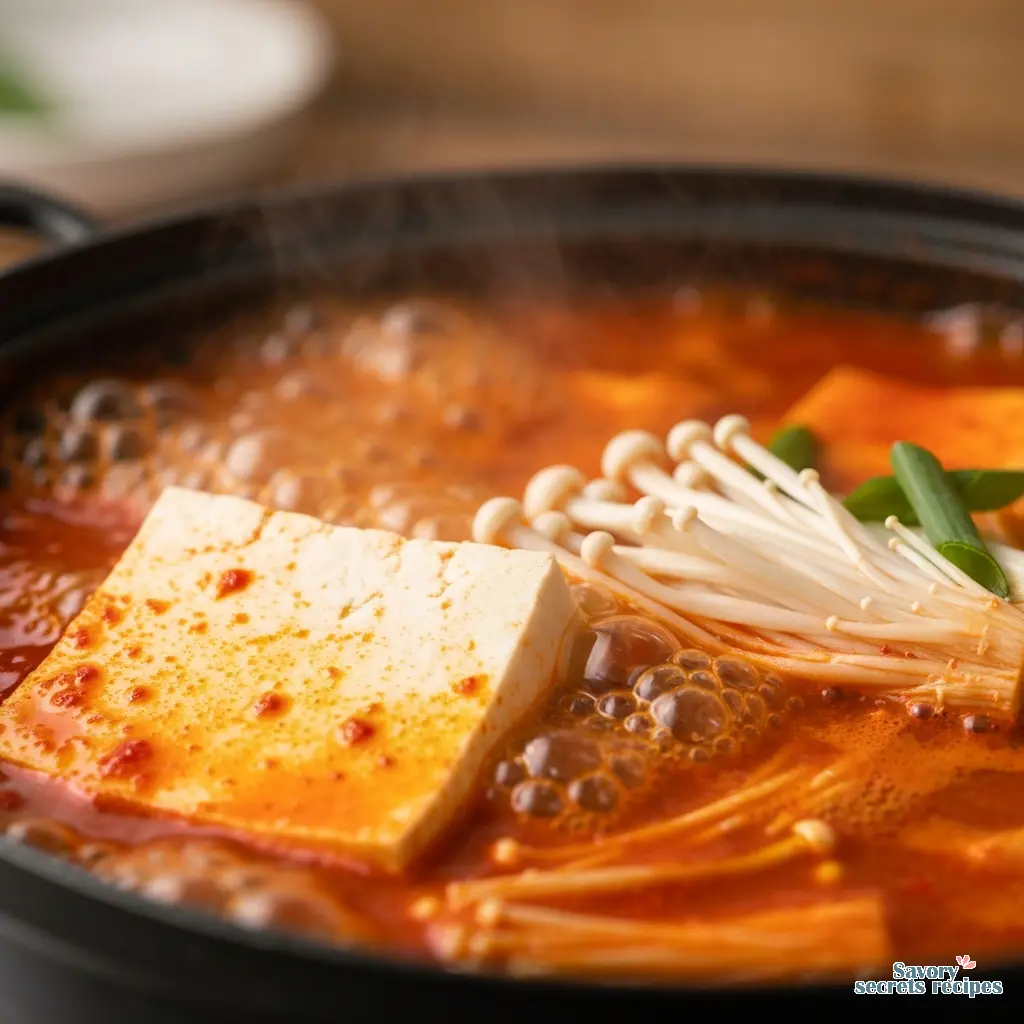
Once you add your stock and bring it to a boil, you are essentially just warming things through. The seafood and tofu cook in minutes. A note on the egg: Cracking a raw egg into the bubbling stew right before serving is traditional. It poaches in the residual heat. I remember my daughter was terrified of this step at first, thinking the egg would be raw. But if your pot is hot enough, the white sets beautifully while the yolk stays jammy. Stirring it in makes the broth creamy and rich.
Variations and Substitutions
One of the reasons I love this Korean casserole is its versatility. You can really make it your own based on what is in your fridge.
Vegetarian / Vegan
If you are plant-based, skip the fish sauce and anchovy stock. Instead, make a “super-stock” using dried shiitake mushrooms and dried kelp (kombu). Soak them in water for 30 minutes. The liquid becomes incredibly savory. Swap the seafood for more mushrooms King Oyster mushrooms sliced into rounds mimic the texture of scallops surprisingly well. That tracks with how I cook at home; vegetables should be the star, not just a filler.
Beef Version
If you prefer meat, thinly sliced beef brisket or ribeye (like what you use for bulgogi) is excellent. Add the beef early on with the garlic and chili oil to brown it slightly before adding the liquid. Trust the browning process; that fond on the bottom of the pot adds deep flavor.
Spice Level
I know spice tolerance varies. If you are feeding kids or sensitive eaters, cut the Gochugaru in half and omit the chili oil. You can always add a drizzle of chili oil to your own bowl at the table. I’ve done this for my daughter, calling the non-spicy version “sunset soup” instead of spicy stew, and she ate it without complaint. Small victories.
Troubleshooting Common Mistakes
Even simple recipes have pitfalls. Here is what I usually see go wrong.
❌ Mistake: The stew is too watery and bland.
✅ Solution: This usually happens because the vegetables released too much water, or you used too much stock. Remember, tofu is mostly water. Use less stock than you think you need. If it’s already too thin, let it simmer vigorously for 5 more minutes to reduce. Season with salt or fish sauce at the very end.
❌ Mistake: The tofu fell apart completely.
✅ Solution: Soft tofu is fragile. Don’t stir the Korean casserole aggressively once the tofu is in. Gently spoon the hot broth over the tofu to heat it through. Let it do its thing.
❌ Mistake: It tastes bitter.
✅ Solution: You likely burned the garlic or the chili powder during the initial sauté. Chili powder burns in seconds. Have your liquid ready to pour immediately, or sauté on medium-low heat. If it burns, honestly, just start over. You can’t fix that burnt taste.
Storage and Reheating
This is one of those dishes that tastes even better the next day with one caveat. If you are using seafood, you need to be careful.
Refrigeration: Store leftovers in an airtight container in the fridge for up to 2 days if it contains seafood, or 3-4 days for beef or vegetarian versions. The flavors of the garlic and chili will meld and deepen.
Freezing: I generally don’t recommend freezing this korean casserole if it contains soft tofu. The texture of the tofu changes completely when frozen, becoming spongy and chewy (and not in a good way). If you want to meal prep, make the base broth (the “soup base”) with the onions, garlic, and spices, and freeze that. Then, just add fresh tofu and seafood when you reheat it.
Reheating: Reheat on the stovetop over medium heat. I advise against the microwave for this one because the soft tofu tends to pop and explode, leaving you with a messy microwave and no dinner. Add a splash of water or stock if it looks too thick.
Frequently Asked Questions
Warm Up Your Winter
When you pull this bubbling korean casserole off the stove, the aroma alone is enough to chase away the chill of a damp February evening. It is spicy, savory, and incredibly comforting. I hope you give this a try, even if you have never cooked with gochugaru before. It is easier than you think, and the payoff is huge.
For more inspiration and visual guides on how to organize your pantry for Asian cooking, check out my Pinterest boards where I save all my favorite weeknight wins.
Tag me on social media if you make it I’d love to see your variations. Warm up your winter, one bite at a time. You’ve got this!
Reference: Original Source
What is the difference between kimchi soup and kimchi stew?
It comes down to liquid ratio and intensity. Kimchi soup (guk) is lighter, has more broth, and is served individually. Kimchi stew (jjigae), like this korean casserole, is thicker, saltier, more concentrated, and traditionally served in a communal pot for sharing.
What is the meaning of ‘Budae’ and ‘Jjigae’?
“Jjigae” simply means stew. “Budae” means army base. So Budae Jjigae is “Army Base Stew,” a famous fusion korean casserole created after the Korean War using surplus US army rations like spam, hot dogs, and baked beans mixed with traditional spices.
Which Korean cookbook is best for beginners?
I highly recommend Maangchi’s Real Korean Cooking. She breaks down complex flavors into manageable steps. For a modern, visual approach to dishes like korean casserole, “Cook Korean!” by Robin Ha is a fantastic graphic novel-style cookbook that makes the ingredients less intimidating.