



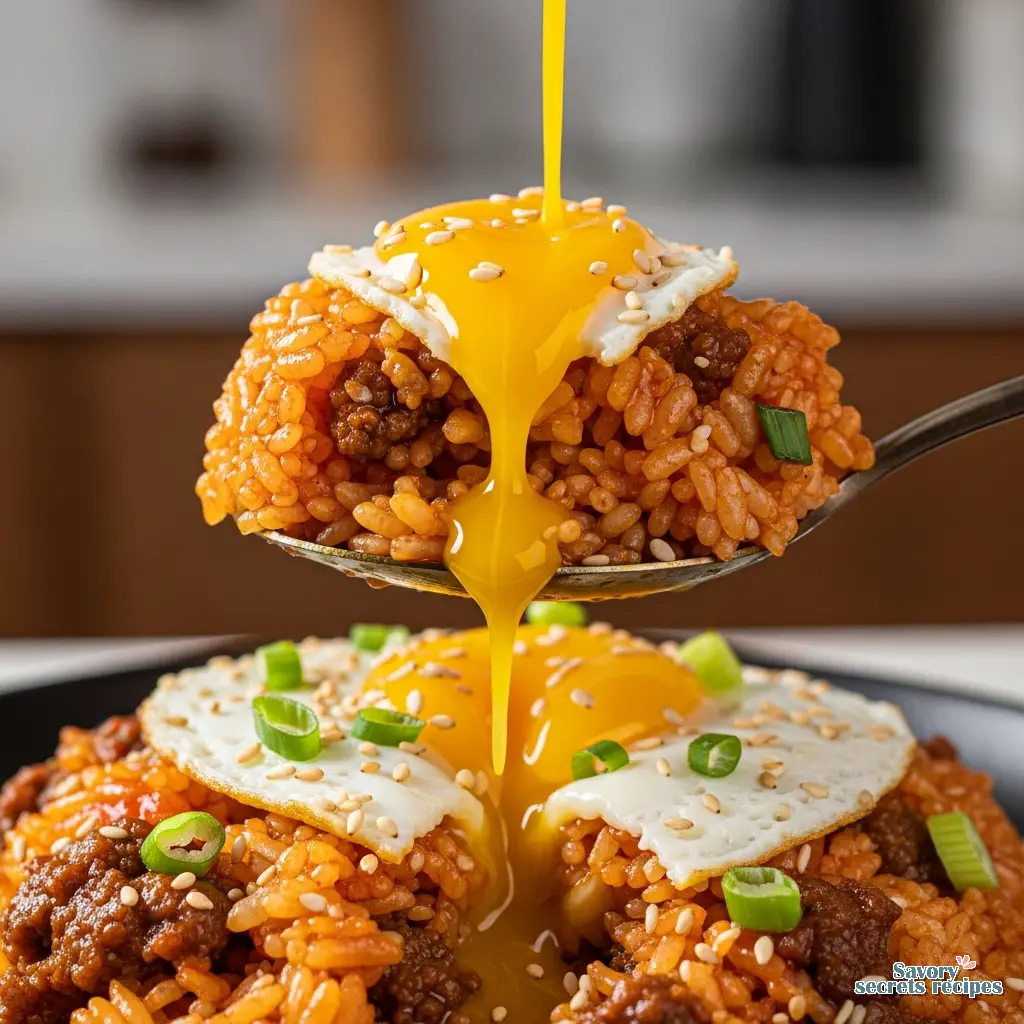
Easy Ground Beef Fried Rice Korean Recipe
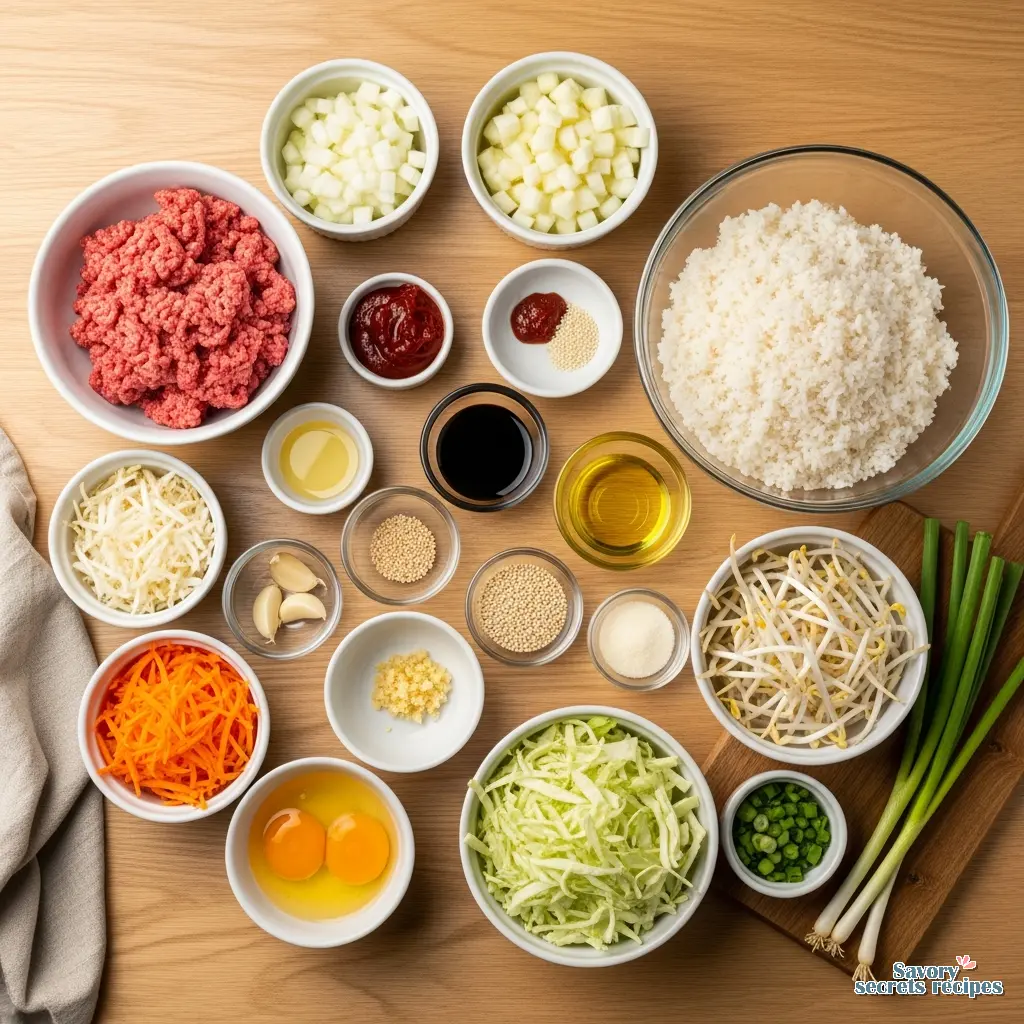
Ingredients
Method
- Combine gochujang, soy sauce, sesame oil, and 2 teaspoons of sesame seeds in a bowl.
- Mix 3 tablespoons of the gochujang mixture with the beef and set the remaining sauce aside.
- Heat 1 tablespoon of oil in a wok or large skillet over medium-high heat. Add the egg, swirl to form an omelette, and cook for 1 minute until set. Flip and cook for 30 seconds more, then transfer to a cutting board and roughly chop.
- Heat the remaining 2 tablespoons of oil in the wok over high heat. Stir-fry garlic and onion for 30 seconds, then add beef and stir-fry until cooked through. Add cabbage and stir-fry for 1 minute, then add carrots and bean shoots for 30 seconds. Mix in the rice and remaining gochujang sauce, stir-frying until coated. Toss with the omelette and spring onions, then serve topped with extra spring onions and sesame seeds.
Notes
Why This Ground Beef Fried Rice Korean Recipe Saves My Weeknights
I remember standing on a step stool in my teta’s kitchen in Dearborn, watching her throw ingredients into a pot without ever looking at a measuring cup. She had this instinct for when a dish needed “more life,” which usually meant more spice or a hit of lemon. While I didn’t inherit her ability to cook completely by feel I’m a test kitchen editor, after all, and I need to write things down I did inherit her appreciation for meals that come together from seemingly nothing. That is exactly where this ground beef fried rice korean recipe fits into my life.
It usually happens on a Wednesday. I get home late, the fridge looks sad, and I have zero energy to start a complex braise. But I almost always have a pound of ground beef in the freezer and some leftover rice. This dish transforms those humble staples into something that tastes like you ordered it from a restaurant, but without the delivery fee or the wait. It is fast, it is savory, and it hits that specific craving for something spicy and comforting. It offers a similar flavor profile to a classic [korean bbq rice] bowl but in a convenient one-pan format.
Here is the thing about making fried rice at home: it is deceptively simple, but the technique matters. I have tested this recipe probably a dozen times to get the ratios right so you do not end up with a soggy mess. We are going for distinct, chewy grains of rice, crispy bits of beef, and a sauce that coats everything without drowning it. Let me walk you through how to get that texture perfect every single time.
The ‘Day-Old Rice’ Rule (And How to Cheat It)
If you take nothing else away from this article, let it be this: fresh, hot rice is the enemy of good fried rice. I know, it sounds dramatic. But fresh rice is full of moisture. When you throw it into a hot pan with sauce, it steams instead of frying, and you end up with a gummy, sticky texture that is just… disappointing. That tracks with my experience in the test kitchen every time I tried to rush it with fresh rice, the texture suffered.
The gold standard is day-old rice that has been sitting in the fridge. The cold air dehydrates the grains slightly, firming them up so they can separate easily in the pan. This allows them to get that nice sear and absorb the sauce without falling apart.
The Emergency Drying Method
But let’s be real. Sometimes you want ground beef fried rice korean now, and you do not have a time machine to go back and cook rice yesterday. I have been there. Here is the hack I use: cook your rice, spread it out in a thin layer on a baking sheet, and pop it in the fridge (uncovered) for about 30 to 60 minutes. Ideally, put it near the fan in the back. It is not quite as good as the overnight version, but it gets you 90% of the way there. It dries the surface enough to prevent the dreaded mush.
The Science of Searing: Getting That Restaurant Crisp
You know that slightly smoky, charred flavor you get from a good takeout stir-fry? That is called wok hei, or “breath of the wok.” Achieving that at home on a standard stove is tricky, but not impossible. The secret is heat management and surface area.
First, use the biggest pan you have. A wok is great if you have a gas stove that can cradle it, but honestly? A large, heavy-bottomed skillet or a cast-iron pan works wonders. I actually prefer my 12-inch cast iron for this because it holds heat so well. You want the pan screaming hot before the oil touches it.
Second, do not overcrowd the pan. If you dump a pound of beef and four cups of rice in at once, the temperature of the pan drops instantly. Everything steams in its own juices. Gross. I cook the beef first, get it nice and crispy, then remove it. Then I do the veggies. Then the rice gets its own moment in the hot oil to crisp up before I mix everything back together. It takes a few extra minutes, but the texture difference is night and day. Trust the process here.
Ground Beef Fat Ratio: What Works Best
When I am shopping at Kroger or Trader Joe’s, I usually grab 80/20 ground beef (80% lean, 20% fat). For fried rice, you want that fat. It renders out and flavors the rice, meaning you need less added oil later. If you use 90/10 or leaner, the meat can get dry and crumbly in a bad way, like gravel. We want juicy bits of beef.
If you only have lean beef, that is fine, but you might need to add a little extra sesame or vegetable oil when you start frying the rice. On the flip side, if you use 80/20, you might have a pool of grease after browning the meat. I usually drain off all but about a tablespoon of that rendered fat. That leftover fat is liquid gold for frying your aromatics like garlic and onion.
Gochujang & Kimchi: The Flavor Powerhouses
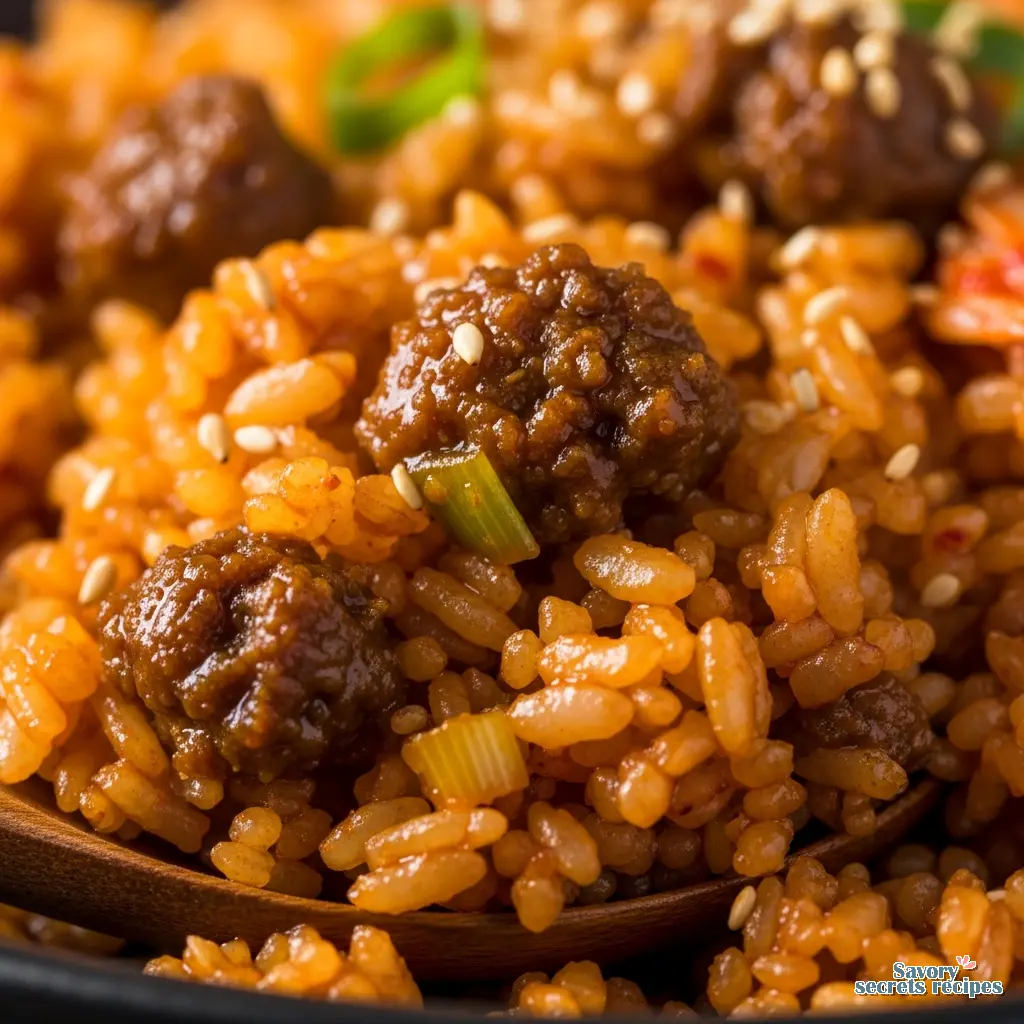
The “Korean” in this ground beef fried rice korean comes primarily from Gochujang. If you haven’t used it before, it is a fermented chili paste that is savory, sweet, and spicy all at once. It is thick and sticky. You cannot just drop a dollop into the rice and hope it mixes in; you will end up with a spicy red clump in one bite and bland rice in the next. I always thin it out with the soy sauce and sesame oil first to make a pourable sauce.
A Note on Kimchi
While not strictly mandatory, adding kimchi takes this dish to another level. It adds crunch and a funky acidity that cuts through the richness of the beef. If you use it, chop it up small. And do not throw away the juice! A splash of kimchi brine in the sauce is my secret weapon. Just be aware that kimchi varies wildly in spice levels. My daughter Layla loves the mild stuff, but I have bought jars that nearly blew my head off. Taste it before you commit.
Step-by-Step Cooking Tips
Let’s troubleshoot the actual cooking process. Stir-frying is fast. Once the heat is on, you do not have time to be chopping scallions or measuring sauce. You need everything prepped and next to the stove. This is your mise en place. It sounds fancy, but it just means “everything in its place.”
1. Prep is 80% of the Work
Mix your sauce (gochujang, soy sauce, sesame oil, sugar) in a small bowl until smooth. Chop your veggies. Have your rice ready. Crack your eggs into a bowl and beat them lightly. Once you start cooking, it is a sprint.
2. The Beef First
Get your pan hot. Add the beef. Break it up with a spatula. I like to let it sit undisturbed for a minute or two to get a hard sear on one side before flipping. We want browning, not steaming. Once it is cooked through and crispy, take it out. Leaving it in while you cook everything else just makes it tough.
3. The Egg Technique
There are two schools of thought here. Some people scramble the egg separately and add it back at the end. I prefer the “push aside” method. Once my veggies are soft, I push them to the perimeter of the pan, add a drop of oil in the center, and pour in the eggs. I scramble them right there in the middle until they are about 75% done, then mix them into the veggies. It saves a dirty dish.
4. The Rice & Sauce Finale
Add the cold rice. Break up clumps with your spatula. Toss it with the veg and egg. Then and this is key pour the sauce around the edges of the pan, not directly onto the rice. The heat of the pan caramelizes the sauce slightly before it hits the rice. Toss everything together, add the beef back in, and let it sit for 30 seconds without moving to get those crispy bits on the bottom.
Visual Troubleshooting: Is My Rice Right?
I get a lot of questions about texture. Here is what I look for when I am testing:
Too Wet? If your rice looks clumpy and mushy, you likely used hot rice or too much sauce. Spread the rice out in the pan and let it cook on medium-high heat without stirring for a minute or two to drive off moisture.
Too Dry? If the grains are hard and bouncing out of the pan, your rice might have been too old or dried out. Add a tablespoon of water or broth, cover the pan for 30 seconds to steam it slightly, then uncover and keep frying.
Variations & Substitutions
One of the reasons I love this ground beef fried rice korean recipe is how adaptable it is. You can really make it your own.
Make it Spicy (or Mild)
If you want to clear your sinuses, add a tablespoon of gochugaru (Korean red pepper flakes) along with the gochujang. If you are cooking for kids or someone who thinks black pepper is spicy, reduce the gochujang by half and sub in a little extra soy sauce or even ketchup (don’t judge, it adds a nice sweetness and color).
Vegetable Swaps
I used carrots and spinach here, but use what you have. Frozen peas and carrots are classic for a reason. Zucchini works great, just dice it small. Mushrooms add a lovely meatiness shiitake are especially good here. For those looking for a vegetarian side, [braised tofu] pairs perfectly with these savory flavors.
Dietary Swaps
For a gluten-free version, use Tamari or coconut aminos instead of soy sauce. Most gochujang contains wheat, so you will need to find a certified gluten-free brand or make a quick substitute with miso and chili powder (though the flavor will be different).
Common Mistakes & Fixes
Mistake: The rice turns to mush.
Solution: You likely used fresh, hot rice or overcrowded the pan. Use cold, day-old rice and cook in batches if your pan is small.
Mistake: The dish lacks flavor.
Solution: You might have been too shy with the salt or soy sauce. Rice absorbs a lot of seasoning. Taste it at the end and add a splash more soy sauce or a pinch of salt if it feels flat.
Mistake: The beef is dry and tough.
Solution: You probably overcooked it by leaving it in the pan the whole time. Cook the beef first, remove it, and add it back only at the very end to warm through.
Storage & Reheating: The Next Day Lunch
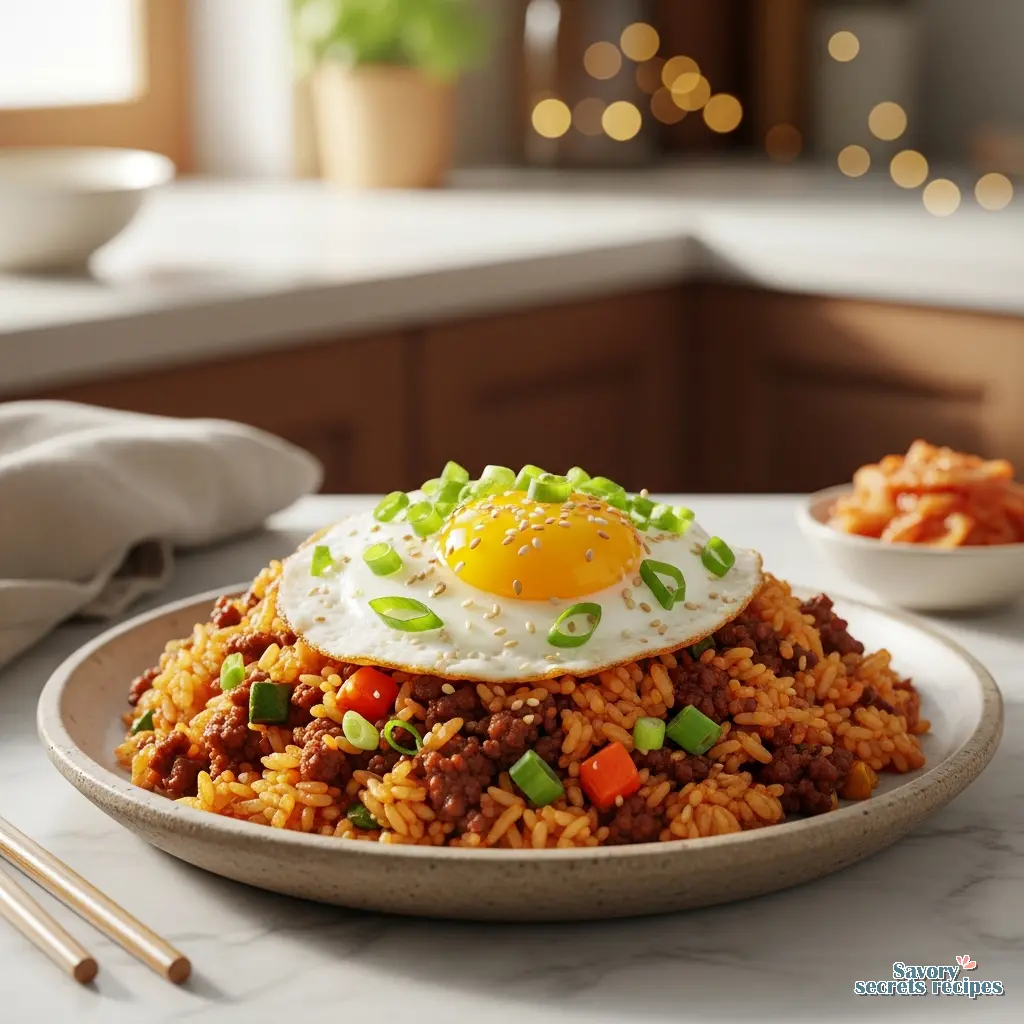
If you are lucky enough to have leftovers, this stores beautifully. In fact, I sometimes think it tastes better the next day after the flavors have had time to meld. Store it in an airtight container in the fridge for up to 3 days. I do not recommend freezing it, as the texture of the rice can get grainy when thawed.
To reheat, the microwave works fine just sprinkle a few drops of water over the rice and cover it with a damp paper towel to create steam. This brings the moisture back to the grains. If you have time, tossing it back in a hot pan for 2-3 minutes is even better to revive that crispiness.
Frequently Asked Questions
When you finally serve this, I hope it gives you that same feeling of relief and satisfaction it gives me on a hectic Wednesday. It is comfort food that does not feel heavy, and it is complex enough to feel special. Plus, your kitchen is going to smell amazing.
If you give this a try, let me know how it went! Did you add extra spice? Did you use the baking sheet hack? I love hearing how you make these recipes work for your real life. For more inspiration, check out my Pinterest boards where I save all my weeknight dinner wins. Go conquer dinner!
Reference: Original Source