




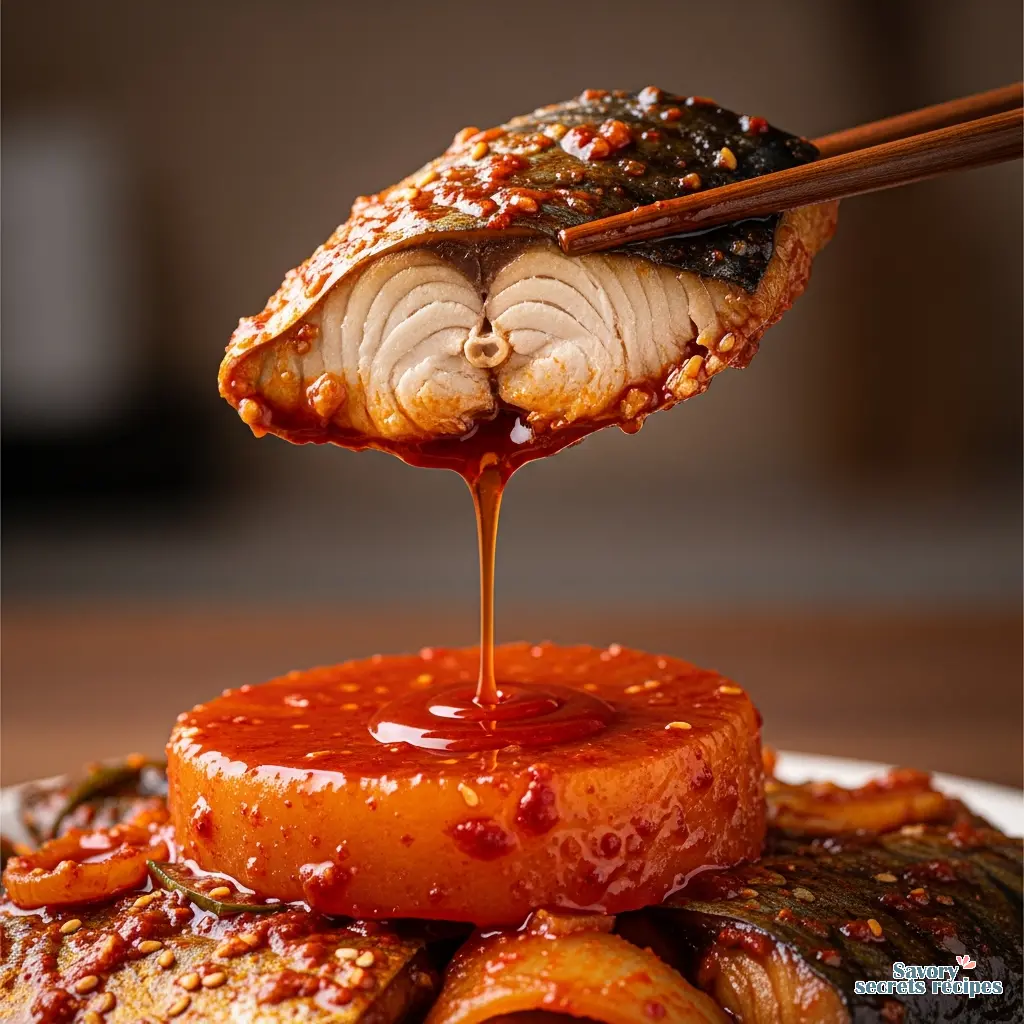
Cook Your Korean Mackerel Stew with Radish
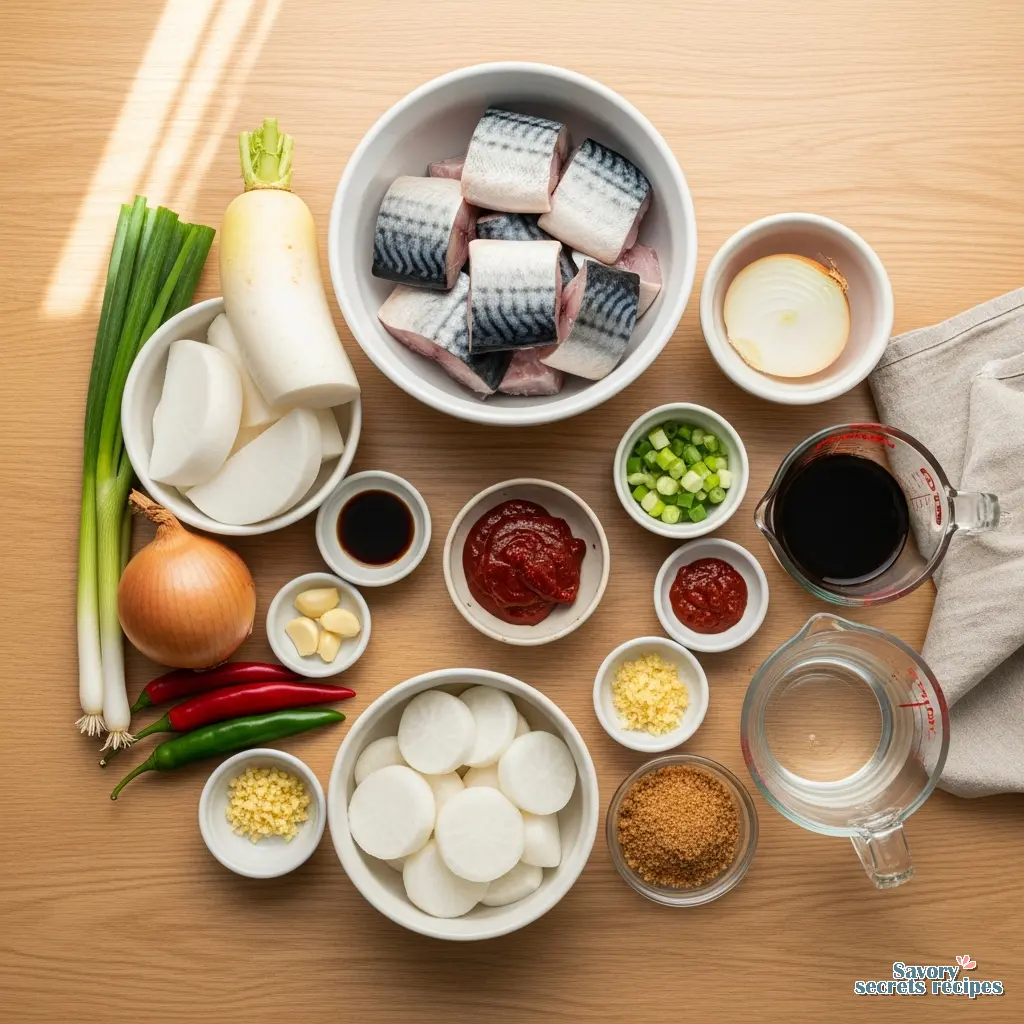
Ingredients
Method
- Mix the red and green chile peppers, cooking wine, gochugaru, gochujang, soy sauce, brown sugar, garlic, and ginger in a small bowl until well combined to create the sauce.
- Combine water and daikon radish in a large pot. Bring the mixture to a boil and cook until the radish is tender, approximately 5 minutes.
- Add mackerel pieces to the pot and pour the sauce over them. Cook over high heat for about 10 minutes until the liquid reduces by half, occasionally spooning the sauce over the fish without stirring. Reduce the heat and simmer, partially covered, for 15 minutes until the sauce thickens.
- Garnish the mackerel with green onions before serving.
Nutrition
Notes
Why You Need This Stew in Your Rotation
I remember my grandfather bringing home sardines still cold from the morning catch in Essaouira. He taught me early on that fish is meant to be comfort food, not just something you sear quickly in a pan. But I’ll be honest with you. Even with that background, I used to hesitate when it came to stewing oily fish indoors. No one wants their apartment to smell like a bait shop for three days.
That changed when I finally understood the mechanics of korean mackerel stew. It’s not just boiling fish in water. It’s a calculated layering of flavors where spicy gochujang, sharp garlic, and sweet radish work together to tame the mackerel. It becomes rich. It becomes savory. And surprisingly, it becomes something you crave on a Tuesday night when the marine layer rolls into San Diego and chills you to the bone.
If you’ve been looking for a way to eat more healthy fish without getting bored, this is it. It’s hearty enough for winter but doesn’t feel heavy. Plus, it’s a one-pot meal that actually tastes better the next day. Let’s get into how to make this authentic dish without the intimidation factor. For a complete Korean dinner experience, this hearty stew pairs perfectly with a savory bulgogi stir fry.
The “Fishy” Fear: How to Prep Mackerel Properly
Let’s tackle the elephant in the room first. The smell. Mackerel is an oily fish, which means it’s packed with omega-3s, but it also means it can get pungent fast. In my experience, 90% of people who think they hate mackerel actually just hate poorly prepped mackerel.
The solution is simple, and it’s something I wish I’d known years ago: rice water. When you rinse your rice for dinner, save that cloudy, starchy water. Soaking the cleaned mackerel chunks in this water for about 15 minutes does two things. First, the starch molecules bind to some of the volatile amines (the stuff that smells fishy). Second, it tenderizes the flesh slightly. It’s a game of chemistry, and you win by being patient. If you are looking for a quicker protein option without the need for soaking, a beef bulgogi stir fry is a great alternative for busy nights.
If you don’t have rice water handy, it’s okay. You can use a splash of cooking wine or even soak the fish in milk for a bit. But generally speaking, the rice water method is the traditional route for a reason. It works.
Selecting Your Fish: Lessons from the Docks
You can’t cook a great korean mackerel stew with bad fish. My grandfather used to say the fish will tell you if it’s fresh, you just have to listen. When you’re at the market, look at the eyes. They should be clear and bulging, not flat or cloudy. The skin should have a metallic, neon-like sheen to it. If it looks dull or matte, walk away.
Touch is important too. The flesh should bounce back when you press it. If your fingerprint stays indented in the fish, it’s past its prime. For this stew, I prefer using fresh whole mackerel that I cut into chunks myself. However, I know life gets busy. If you need to use canned mackerel (tongjorim), that’s fair enough. It’s a standard pantry staple in many Korean households and makes for a much faster weeknight dinner. Just drain it well.
The Flavor Foundation: It’s All About the Radish
Here’s the detail that matters. In this dish, the radish (mu) is arguably more important than the fish. In Korea, they often call the radish in this stew a “rice stealer” because it’s so flavorful you end up eating bowls of rice just to go with it.
You want to slice the radish thick. I’m talking at least half an inch. If you slice it too thin, it dissolves into mush before the flavors develop. You place these chunks at the bottom of the pot. They act as a heat shield, preventing the fish from burning, but they also absorb all that savory broth. By the time the stew is done, the radish should be soft enough to cut with a spoon and translucent with flavor. The rich, concentrated flavors of the radish and mackerel are often balanced in Korean meals by serving them alongside a lighter bulgogi stir fry.
The Simmer: Trust the Texture
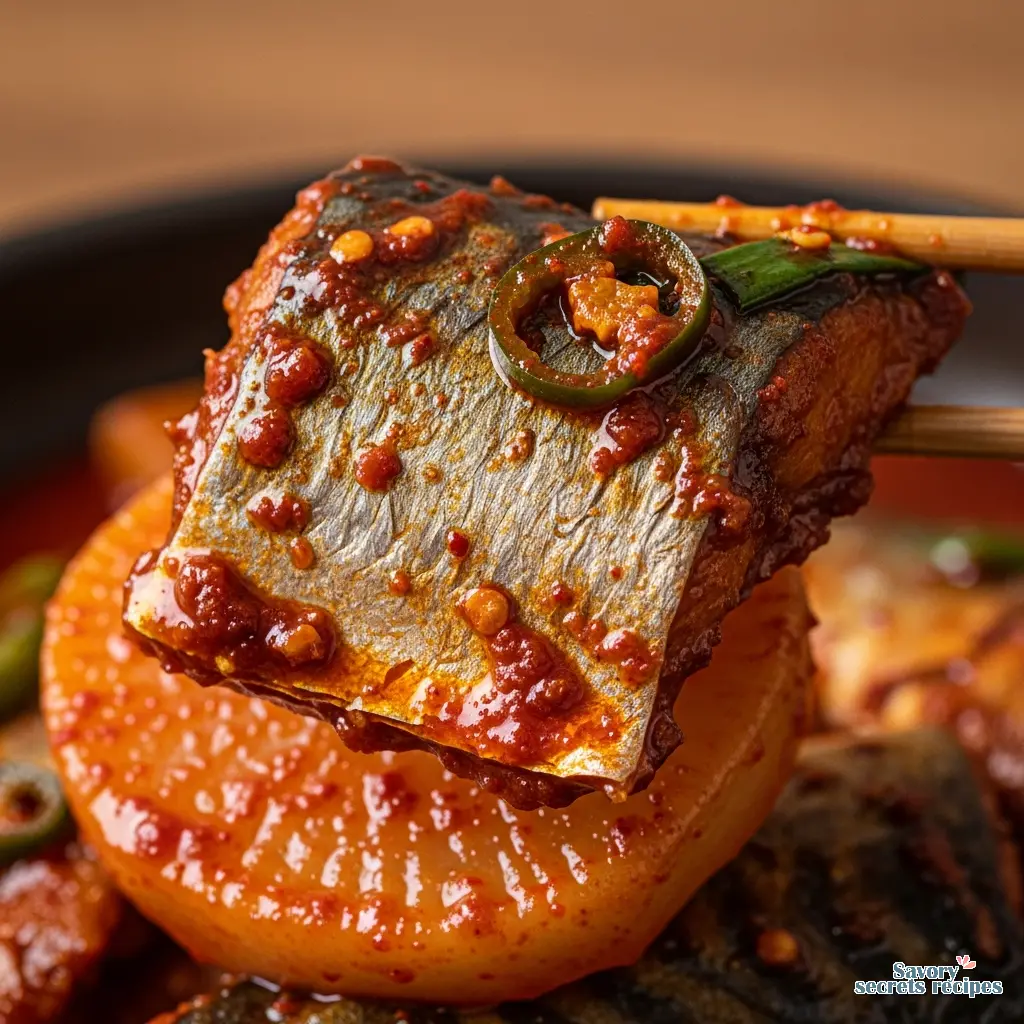
Cooking this stew is an exercise in restraint. You might be tempted to boil it hard to get it done faster. Don’t. High heat will break apart the delicate fish and make the radish mealy. You’re looking for a gentle, rolling simmer.
I tend to think of it in stages. First, you bring it to a boil to wake up the aromatics. Then, you drop it to a simmer and let it ride. The lid plays a crucial role here. Keep the lid on for the first 10-15 minutes to steam the top of the fish. Then, I like to crack the lid or remove it for the final few minutes. This allows the sauce to reduce and thicken into a glaze rather than a soup. You’ll know it’s ready when the sauce coats the back of a spoon and the radish yields completely to a chopstick. While the stew simmers, you have just enough time to whip up a quick bulgogi stir fry to serve as a high-protein side.
Troubleshooting Your Stew
Mistake: The fish tastes rubbery.
Solution: You likely overcooked it or boiled it too aggressively. Mackerel is forgiving, but only to a point. Keep the heat moderate.
Mistake: The sauce is too watery.
Solution: You didn’t let it reduce uncovered at the end. Give it another 5 minutes with the lid off to let that excess moisture evaporate.
Mistake: It’s too bitter.
Solution: Sometimes the ginger or old garlic can turn bitter. Add a teaspoon of brown sugar or corn syrup to balance it out. It rounds off the sharp edges.
Storage and Reheating: The Next Day Magic
I actually prefer this korean mackerel stew on day two. The flavors have had time to meld, and the radish has absorbed even more of the broth. But you have to be careful with storage. Store it in an airtight glass container in the fridge for up to 3 days. I avoid plastic containers because the red pepper oil stains them permanently (I learned that the hard way).
When it comes to reheating, step away from the microwave. Microwaving oily fish is a surefire way to make your kitchen smell terrible and your fish turn into rubber. Instead, place the portion in a small pot, add a splash of water to loosen the sauce, and cover it. Reheat on low heat until it’s just warmed through. It takes five minutes, but it preserves the texture.
Variations for Every Palate
Cooking is personal, so feel free to adapt this. If you can’t find Korean radish (mu), Daikon is a perfect substitute. It’s slightly less crunchy but has a similar flavor profile. If you want to make this for kids or those who can’t handle spice, you can reduce the gochugaru (red pepper flakes) and lean more on the soy sauce and a little sugar for a soy-braised version (Godeungeo Ganjang Jorim).
For a heartier meal, I sometimes toss in slices of potato along with the radish. The potato breaks down a bit and thickens the sauce naturally. It’s not strictly traditional for every region, but it’s delicious. If you are catering to a crowd with mixed preferences, serving this fish stew with a side of beef bulgogi stir fry ensures there is something for everyone.
Frequently Asked Questions
Final Thoughts
When you make this, you’ll love how cozy it feels. It’s one of those dishes that looks impressive on the table that vibrant red sauce against the silver skin but practically cooks itself once you get the pot simmering. Don’t worry if it’s not picture-perfect the first time. The flavor is what counts.
I’d love to hear how it turns out for you. Did you use the rice water trick? Did the radish steal the show? Let me know in the comments or share a photo. For more inspiration on seafood dishes that aren’t intimidating, check out my Pinterest boards where I collect my favorite global recipes.
Reference: Original Source
How do you remove the fishy smell when making an authentic Korean mackerel stew?
The most effective method I’ve found is soaking the cleaned fish in rice water (the water left after rinsing rice) for 15 minutes. The starch binds to the odor-causing amines. If you don’t have rice water, soaking in milk or brushing with cooking wine also works well.
Can I use canned fish instead of fresh for this mackerel soup recipe?
Absolutely. Canned mackerel (tongjorim) is a pantry staple for a reason. It’s already cooked, so you just need to simmer it long enough to heat through and let the flavors meld. It cuts the cooking time in half and is great for quick weeknight dinners.
What is the best way to slice the radish for traditional stewed mackerel?
You want thick, half-moon slices, about half an inch thick. If they’re too thin, they’ll disintegrate during the simmer. Thick slices hold their shape while becoming incredibly tender and absorbing all that savory korean mackerel stew broth.
How long can you safely store leftover Korean mackerel stew in the refrigerator?
It keeps well for up to 3 days in an airtight glass container. I emphasize glass because the red pepper oil will stain plastic forever. To reheat, use the stovetop with a splash of water rather than the microwave to preserve the fish’s texture.
Is it possible to make a non-spicy version of Korean mackerel stew for kids?
Yes, you can make a version called Godeungeo Ganjang Jorim. Simply omit the gochugaru (red pepper flakes) and gochujang, and increase the soy sauce and sugar slightly. It results in a savory, sweet soy-braised dish that’s very kid-friendly.