



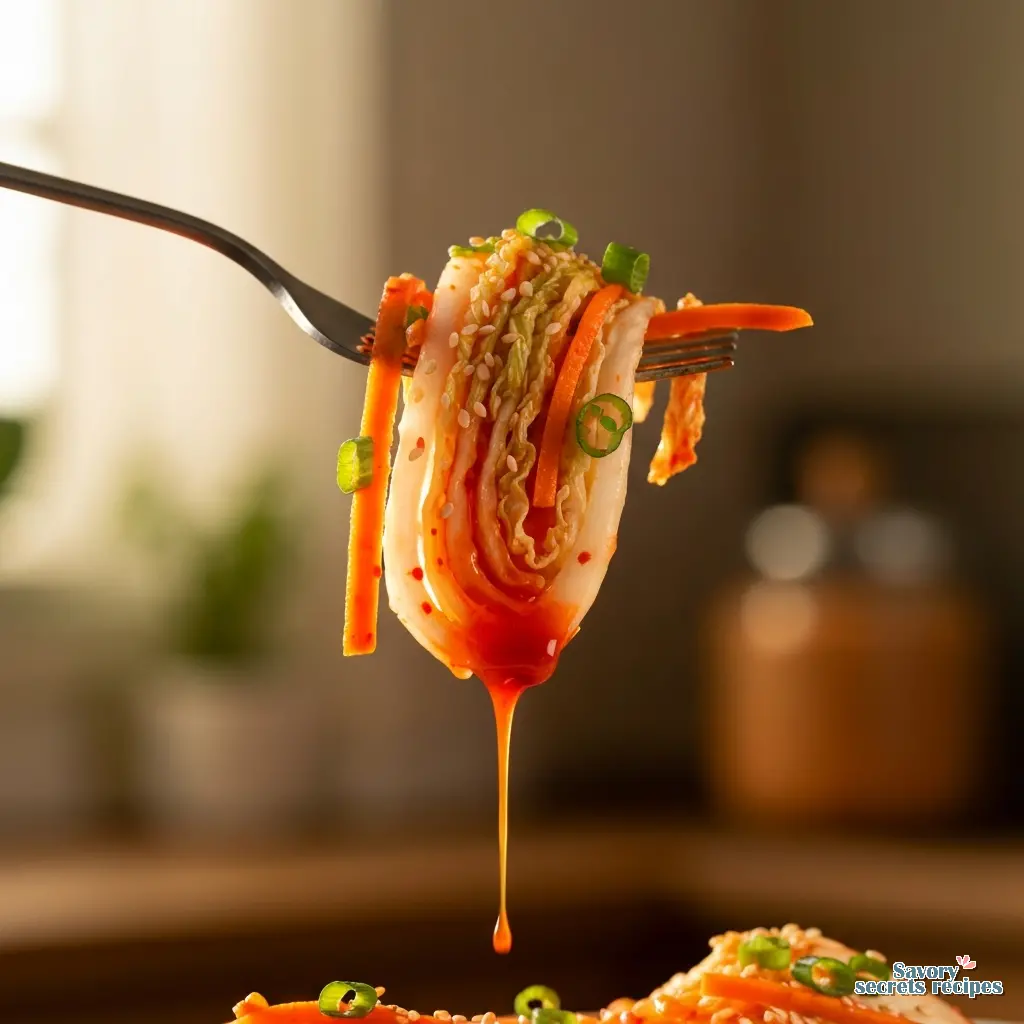
Simple Kimchi Salad Recipe
Ingredients
Method
- Mix cabbage and rock salt in a bowl. Let the mixture sit for 15 minutes, stirring frequently. Rinse lightly and drain.
- Combine cabbage, carrot, vinegar, vegetable oil, sugar, sesame oil, sesame seeds, cayenne pepper, and salt in a bowl. Refrigerate for at least 30 minutes until chilled.
Nutrition
Notes
Freshness First: Why This Kimchi Salad Works
I remember my grandfather bringing home sardines still cold from the morning catch in Essaouira. He taught me that the ocean has a specific smell when it’s fresh clean, saline, sharp. It’s the same principle with a good kimchi salad. You aren’t looking for the deep, fizzy fermentation of a three-month-old jar here. You want that immediate, vibrant crunch that hits the palate with life.
I’ll be honest, I used to think making kimchi required burying clay pots in the backyard for the winter. But this quick version, often called geotjeori in Korean cuisine, is what I make on Tuesday nights in San Diego when I need something bright to cut through a rich dinner. It’s spicy, it’s crisp, and it’s ready before the rice cooker finishes.
This recipe bridges the gap between a traditional salad and a fermented side dish. It keeps the probiotic potential of the ingredients without the long wait. If you’ve been hesitant to try making Korean food at home, this kimchi salad is your entry point. It’s forgiving, it’s flexible, and frankly, it’s delicious.
The Science of Salting (Osmosis is Your Friend)
Let me think that through for a second. The most critical step in this entire process isn’t the spice mix. It’s the salt. When I was learning to cure fish, I learned that salt isn’t just a seasoning; it’s a tool for texture control. In this kimchi salad, we use salt to draw out excess moisture from the napa cabbage and cucumbers through osmosis.
If you skip this, your salad will turn into a watery soup within ten minutes of dressing it. The salt breaks down the cell walls just enough to make the vegetable pliable but still crunchy. It creates that satisfying “snap” rather than a raw, fibrous chew. Generally speaking, you want to salt your cabbage for at least 30 minutes. Trust the texture more than the clock here. When you can bend a piece of cabbage without it snapping in half, it’s ready to be rinsed.
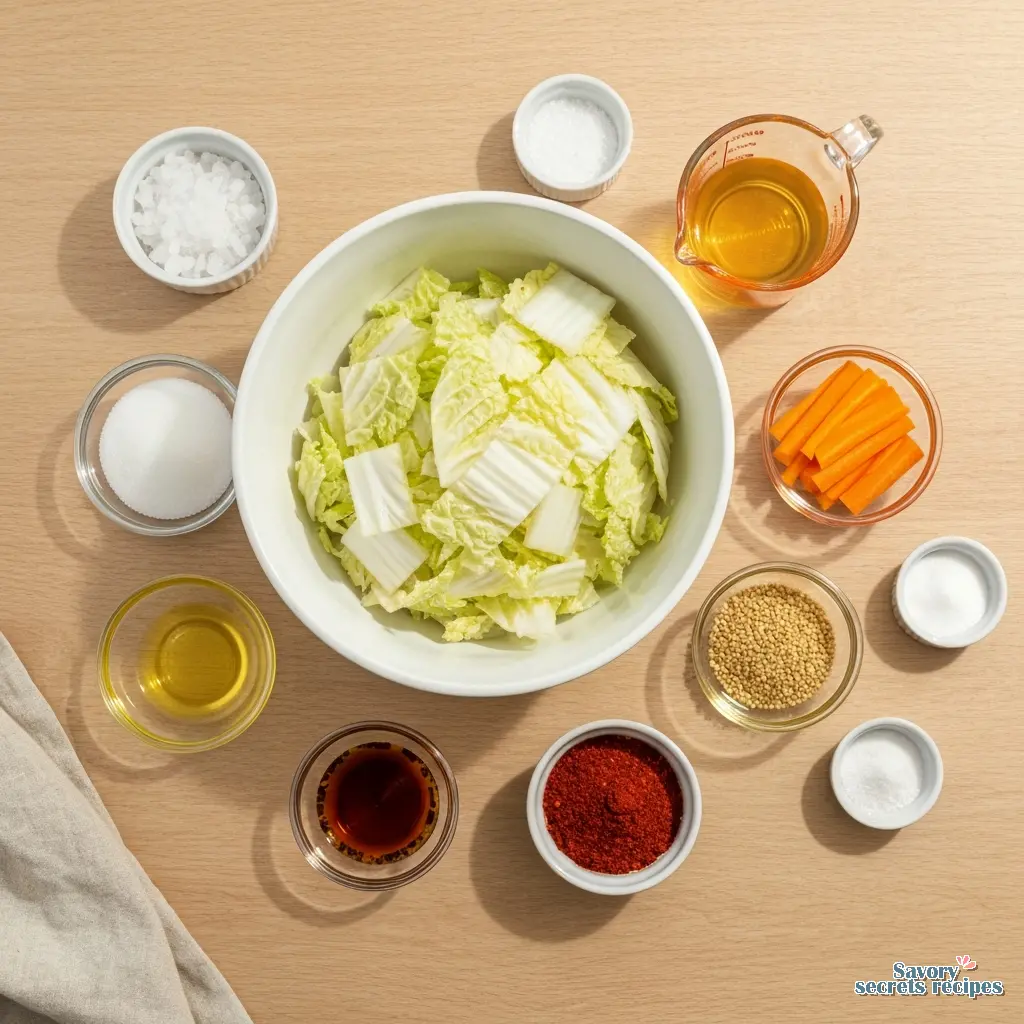
Ingredients & Smart Substitutions
Living in San Diego, I have access to great Asian markets like H Mart or Zion Market. But I know not everyone has a Korean grocer down the street. Here is how I approach the shopping list for this kimchi salad recipe.
The Greens
Napa cabbage is the standard. It has crinkly leaves that hold the dressing beautifully. If you can’t find it, Savoy cabbage is a decent runner-up because of its texture. In a pinch, standard green cabbage works, but slice it very thin to avoid a tough jaw workout. I’ve also used baby bok choy, which adds a nice mineral flavor.
The Heat
This is where it gets good. Traditional kimchi uses gochugaru (Korean red pepper flakes). It has a smoky, sweet heat that is distinct. If you only have standard crushed red pepper flakes from the pizza place, use them with a light hand. They are much hotter and lack the sweet undertone. A mix of paprika (for color) and cayenne (for heat) is a workable substitute, though purists might disagree. Fair enough, but we cook with what we have.
The Funk
Fish sauce provides the backbone of the flavor profile. It’s the umami bomb. If you are vegan or allergic to seafood, soy sauce or tamari is acceptable, though the flavor will be less complex. Coconut aminos work for a gluten-free, soy-free option. For the vegan version, I sometimes add a teaspoon of miso paste to replicate that deep, fermented taste found in traditional kimchi salad.
Balancing the Flavor Profile
Cooking is about adjusting. My mother kept a notebook of recipes, but she never followed them blindly. She tasted. With kimchi salad, the balance between sweet, sour, spicy, and salty is everything. The dressing should taste a little too strong on its own because the water in the vegetables will dilute it slightly.
If your dressing tastes too flat, it usually needs more acid a splash of rice vinegar or lime juice helps. If it’s too spicy, grate in a little Asian pear or add a touch more sugar. The sweetness balances the heat of the gochugaru. If it tastes “muddy,” it might need a hit of fresh garlic or ginger to wake it up. You’re looking for a dressing that makes your mouth water immediately.
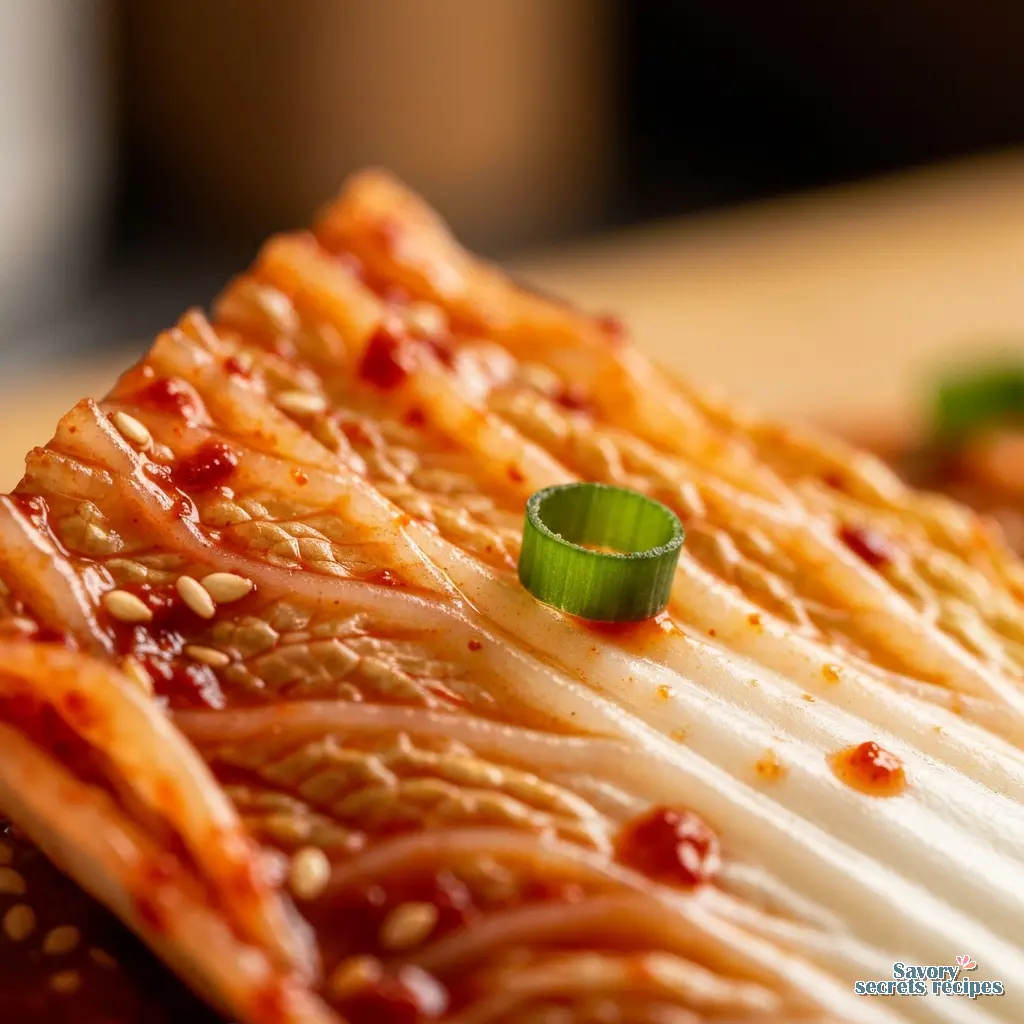
Meal Prep & Layering Strategy
I tend to think that salads are the enemy of meal prep because of the sogginess factor. However, this kimchi salad holds up better than most lettuce-based dishes. That said, if you want it to last three or four days for work lunches, you need a strategy.
Store the salted, rinsed, and dried cabbage in one container. Keep the dressing in a separate jar. Mix them right before you eat. This keeps the crunch factor high. If you must mix it ahead of time, know that the cabbage will soften and release more water, turning it into something closer to traditional fermented kimchi texture. It’s still delicious, just different. If you find you have excess liquid after storage, knowing what to do with kimchi juice can help you enhance other dishes like stews or marinades.
Common Kimchi Salad Mistakes & Fixes
Mistake: The salad is watery and bland.
Solution: You likely didn’t salt the cabbage long enough or rinse and dry it thoroughly. Squeeze that cabbage like you mean it before dressing.
Mistake: It’s way too spicy to eat.
Solution: Add more shredded carrots, radish, or cucumber to dilute the heat. A teaspoon of honey can also help mask the burn.
Mistake: The garlic flavor is overpowering.
Solution: Raw garlic intensifies over time. If you plan to store this, use a little less garlic or roast the garlic cloves briefly before mincing.
Mistake: Using the tough outer leaves.
Solution: Use the tender, yellow inner leaves for kimchi salad. Save the tough dark green outer leaves for soups or stews.
Frequently Asked Questions
Storage & Serving Suggestions
From what I’ve seen, this salad pairs with almost anything. It cuts through the fat of a grilled steak or pork chop beautifully. I love serving it alongside simple steamed rice and a fried egg for a quick lunch. It’s also fantastic inside a taco fusion style adding crunch and heat to soft meats. This versatile salad also makes for a fantastic addition to a spicy kimchi breakfast the next morning.
For storage, glass containers are your best bet. Plastic tends to absorb the red pepper stain and the garlic smell forever. To keep the moisture under control in the fridge, I use the “paper towel trick.” Place a folded paper towel on top of the salad before snapping the lid shut. It absorbs the condensation and keeps your kimchi salad fresher for an extra day or two.
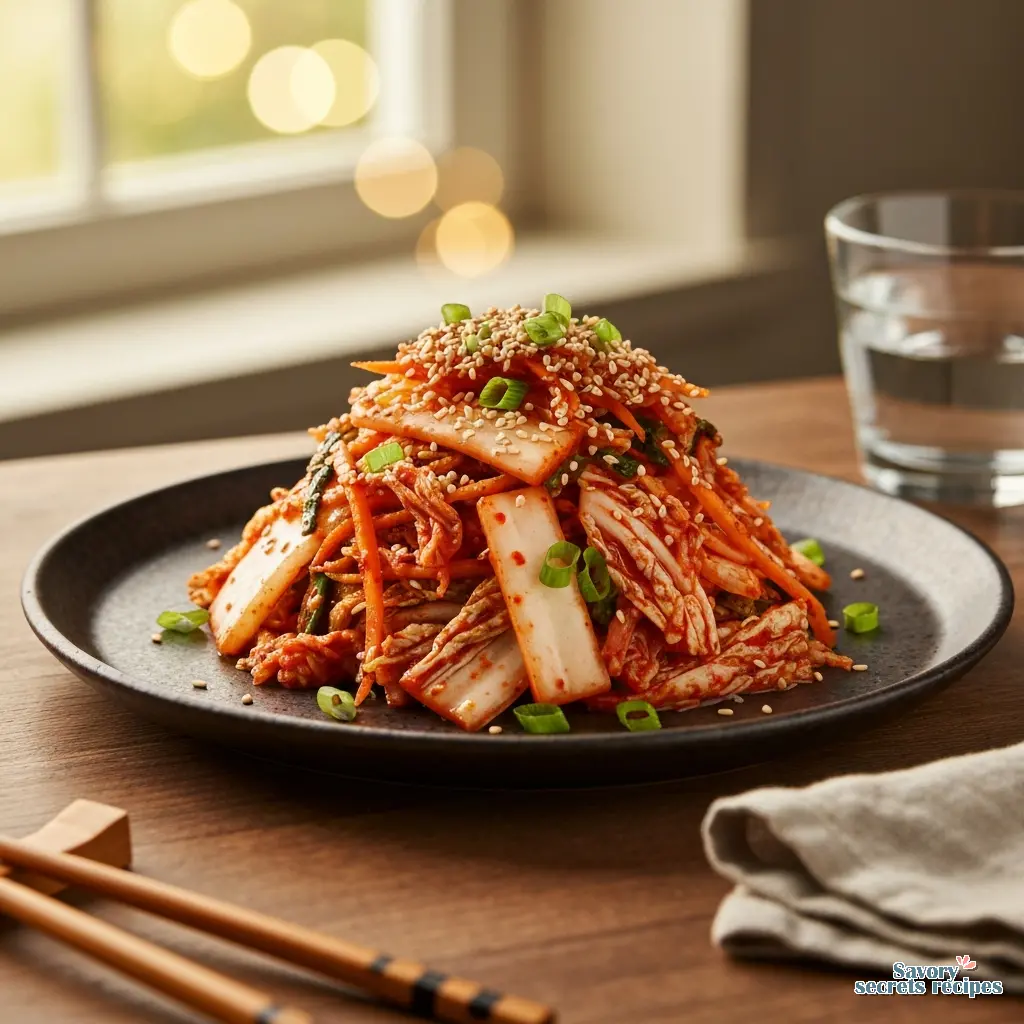
When you sit down to eat this, you’ll get that initial hit of spice followed by the refreshing crunch of the cabbage. It reminds me of those summer evenings in Essaouira, eating simple, fresh food that speaks for itself. It’s not complicated, but it’s right. Go spice up your kitchen today! And if you do make it, I’d love to see how you serve it.
For more inspiration and visual ideas, check out my Pinterest boards where I collect all my favorite spicy side dishes.
Reference: Original Source
Can I make kimchi salad ahead of time?
Yes, but the texture changes. Made fresh, it’s crisp like a salad. After 24 hours, it softens and tastes more like fermented kimchi. Ideally, prep the veggies and dressing separately, then toss them together just before serving to keep that crunch.
How do I prevent the salad from getting watery?
It’s all about the salting step. Salt your cabbage and cucumbers for at least 30 minutes to draw out moisture. Then, rinse and this is the detail that matters squeeze them dry or use a salad spinner. Excess water dilutes your flavor.
What kind of cucumbers should I use?
I’d lean toward Persian or Kirby cucumbers. They have thin skins and fewer seeds, meaning less water content and better crunch. If you only have standard American slicing cucumbers, scoop out the seeds first to avoid a soggy kimchi salad.
How long does the dressing last?
The dressing alone is quite robust. Kept in an airtight jar in the fridge, it stays good for up to two weeks. I actually make a double batch so I can whip up a quick kimchi salad whenever the craving hits.