




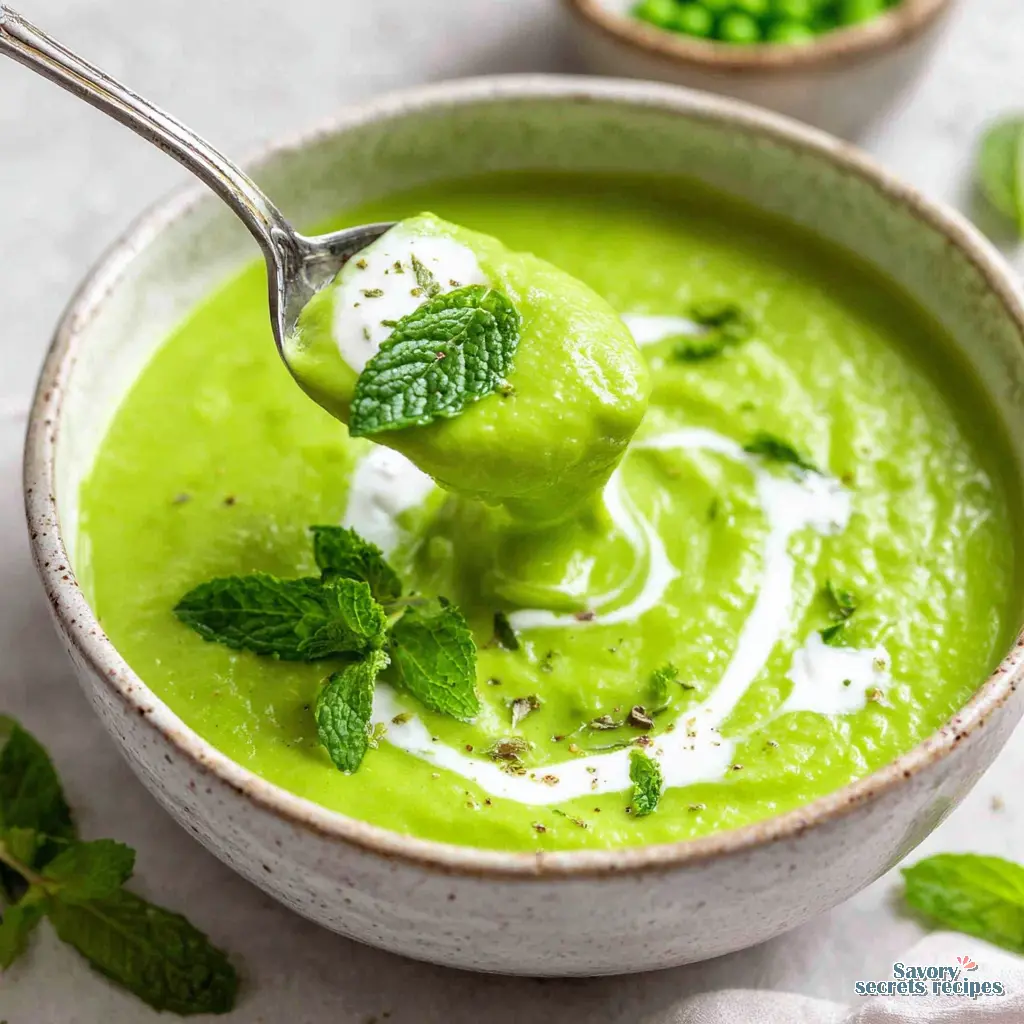
Vibrant Fresh Pea and Mint Soup
Ingredients
Method
- Heat the oil in a medium saucepan over medium heat and sauté the onion for 5 to 8 minutes, stirring frequently to prevent burning.
- Add the garlic and cook for 1 additional minute.
- Stir in the frozen peas and vegetable stock, then increase the heat to medium-high and simmer for 5 to 8 minutes.
- Add the fresh mint and blend the mixture until smooth, referring to Notes 3 and 4.
- Season with salt, pepper, and fresh lemon juice.
- Serve either warm or chilled with your choice of garnish.
Nutrition
Notes
- In Australia, the tablespoon is 20 ml or 4 teaspoons. In many other countries, the tablespoon is 15 ml or 3 teaspoons. You may have to adjust your measurements accordingly.
- Adjust the seasoning to your liking - we recommend using freshly ground black pepper and sea salt flakes for the best flavour.
- If you do use a blender for hot liquids, you must be careful. You will need to remove the central cap in the blender lid and then cover the lid with a folded tea towel to let the steam escape. Hold the lid on securely and blend on a low speed. This will allow steam to escape so that it doesn't build up. Not doing this can pose a risk that soup may overflow out of the blender.
- If you prefer a thinner soup, add an additional ½ cup of vegetable stock.
- Please note, the nutritional information is based on the recipe making approximately 4 cups. One cup is equal to 250ml. This does not include the garnish you serve with the recipe. The nutritional information is an estimate only.
A Spring Reset in a Bowl
It’s mid-March here in Oakland. We just had one of those rare 72-degree California spring days. I was staring at my fridge, completely over the heavy winter stews we’ve been eating for months. I wanted something that tasted like a fresh start. A healthy green soup, basically. My daughter walked in and asked if we were having “the green stuff” again. She meant this pea and mint soup. I count it as a massive win when a seven-year-old actively requests a bowl of green vegetables.
The smell of fresh mint hitting hot broth always reminds me of the spice souk in Casablanca. It’s that overwhelming mix of fresh mint and warm aromatics that hits you the second you walk in. My grandmother Fatima taught me to cook there during childhood summers. She never measured anything. She just tasted and adjusted, which drove me crazy as a kid but makes complete sense now. This soup is exactly like that. It’s an easy soup dinner that looks like you spent hours in the kitchen, but it’s incredibly forgiving. Let me think about that for a second. Actually, it’s foolproof if you follow a few basic rules.
We are going to build a restaurant-quality silky purée in about 20 minutes. You don’t need fancy equipment, though an immersion blender helps. You just need a handful of pantry staples and a bag of peas from the back of your freezer. Yes, frozen peas. We’ll get to that.
Why This Pea and Mint Soup Actually Works
I hear you. You want a vegetarian soup idea that doesn’t taste like lawn clippings. You want something vibrant, sweet, and complex. The secret here is speed. Most people cook their vegetables to death. Low and slow does the work for you with a braise, but with green spring soup recipes, speed is your best friend.
Here’s what I’d do. Skip the fresh peas entirely. I know, I know. The farmers market at Santa Monica is overflowing with them right now. But shelling two pounds of fresh peas on a Tuesday night? No thanks. Frozen petite peas are flash-frozen at their absolute peak sweetness. They cook faster, they retain their color better, and they are always perfectly tender. I always keep a bag in the freezer for emergencies.
We start by sautéing medium brown onions or shallots in extra virgin olive oil. Build the layers, don’t rush the base. Let them get soft and translucent. Toss in some roughly chopped garlic cloves. If the garlic browns too quickly, splash in a little vegetable bouillon or low sodium stock to cool the pan and prevent bitterness. You want sweet aromatics, not roasted ones. Once your base is soft, the whole thing comes together in minutes.
The Science of Green: Keeping Your Pea Soup Bright
Nobody wants a bowl of dull, olive-drab soup. We eat with our eyes first. The trick to keeping your pea and mint soup a vibrant, glowing emerald color comes down to chlorophyll retention. It sounds like high school biology, but it’s just basic kitchen science.
When you boil green vegetables for too long, the heat breaks down the plant cells and releases natural acids. These acids destroy the bright green chlorophyll. To stop this, we essentially use a quick blanching method. You only want to simmer the peas in the hot vegetable stock for about 2 to 4 minutes. Just until they are tender. Give it another minute, you’ll smell when it’s ready. Do not overcook the peas. Keep them bright green for the best color and flavor.
There’s another trick I use. Add a squeeze of fresh lemon juice right at the end. Acid can technically turn greens brown if cooked too long, but adding it off the heat stops oxidation and preserves that neon color. Plus, it wakes up dull flavors way more effectively than salt alone. If it needs more acid, it needs more acid. A little lemon zest doesn’t hurt either.
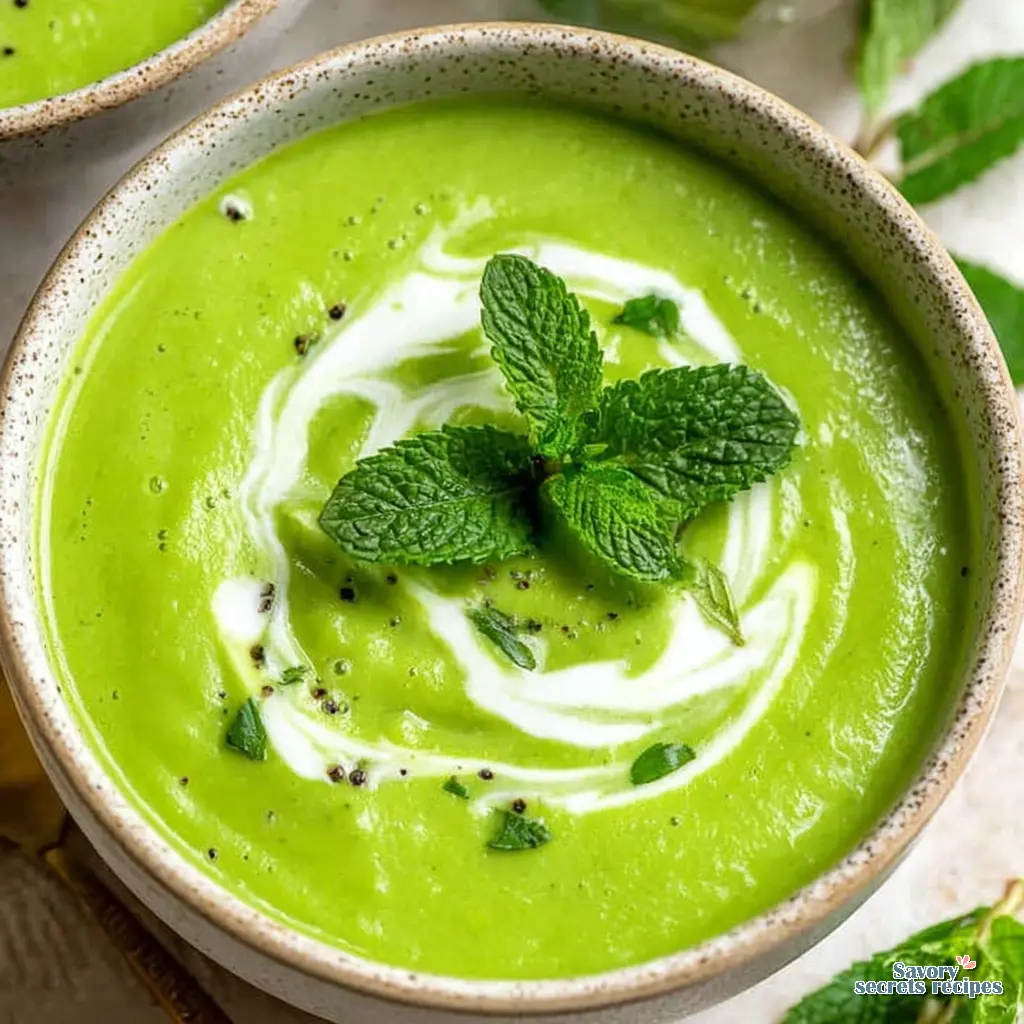
Mint Varieties: Spearmint vs. Peppermint
I learned this the hard way during a dinner party a few years back. I sent my husband to Ralphs for mint, and he brought back peppermint. I tossed a huge handful into the blender. The soup tasted exactly like toothpaste. It was completely inedible. We ended up ordering pizza.
You specifically want fresh spearmint for this recipe. Spearmint is sweet, delicate, and herbaceous. It pairs perfectly with the natural sweetness of the peas. Peppermint has a high menthol content that will completely overpower your delicate aromatics. When you’re at the store, give the leaves a gentle rub and smell them. If it smells like a candy cane, put it back.
Also, please use fresh mint. Dried mint lacks the necessary bright herbal notes we need for a fresh pea soup. It tastes dusty and muted. Toss the fresh mint leaves in right before blending. The residual heat of the soup will release the essential oils without cooking the flavor out of the herbs.
The Sieve Method for a Silky Purée
If you’ve ever wondered why restaurant soups feel so luxurious while home versions feel a bit rustic, it usually comes down to texture. Peas have thin, fibrous skins. Even if you use a high-powered blender on the specific vitamix soup settings, you might still get a slightly grainy texture.
To fix this, blend the soup while hot for the smoothest consistency. But here is a crucial safety warning. Vent the blender lid and use a kitchen towel to cover the hole when blending hot liquids. If you seal it tight, the steam will build up and blow the lid off, painting your ceiling green. I’ve spent an hour scrubbing pea soup off my kitchen cabinets. It’s not fun.
Once blended, push the soup through a fine-mesh sieve into a clean pot. Use the back of a ladle to force the liquid through. It takes an extra three minutes, but it catches all those tough little skins. You’re left with an incredibly smooth, elegant one-pot soup. Worth it. Trust me.
Common Mistakes & Fixes
Mistake: The soup turned a dull, olive-brown color.
Solution: You likely overcooked the peas or boiled the soup too hard when reheating. Keep the initial simmer under 5 minutes and only gently warm it later.
Mistake: The garlic tastes bitter and harsh.
Solution: The garlic browned too quickly in the pan. Next time, splash in a little stock to cool the pan down immediately. Sweet aromatics are the goal.
Mistake: The soup tastes flat, even though I added salt.
Solution: It needs acid, not more salt. A generous squeeze of fresh lemon juice will instantly brighten and wake up the flavors. Taste as you go, adjust at the end.
Make-Ahead Hosting & Storage
I love making this for spring brunches or light dinners because it scales up beautifully. If you are hosting, you can absolutely make this pea and mint soup ahead of time. Just follow the golden rule of green soups. The no-boil rule.
Once you’ve made the soup, cool it down quickly. I sometimes place the pot in an ice bath in the sink to stop the cooking process immediately. Store it in an airtight container in the fridge for up to three days. When it’s time to serve, gently reheat it on the stovetop over medium-low heat. Do not let it boil. Boiling will destroy that beautiful color we worked so hard to protect.
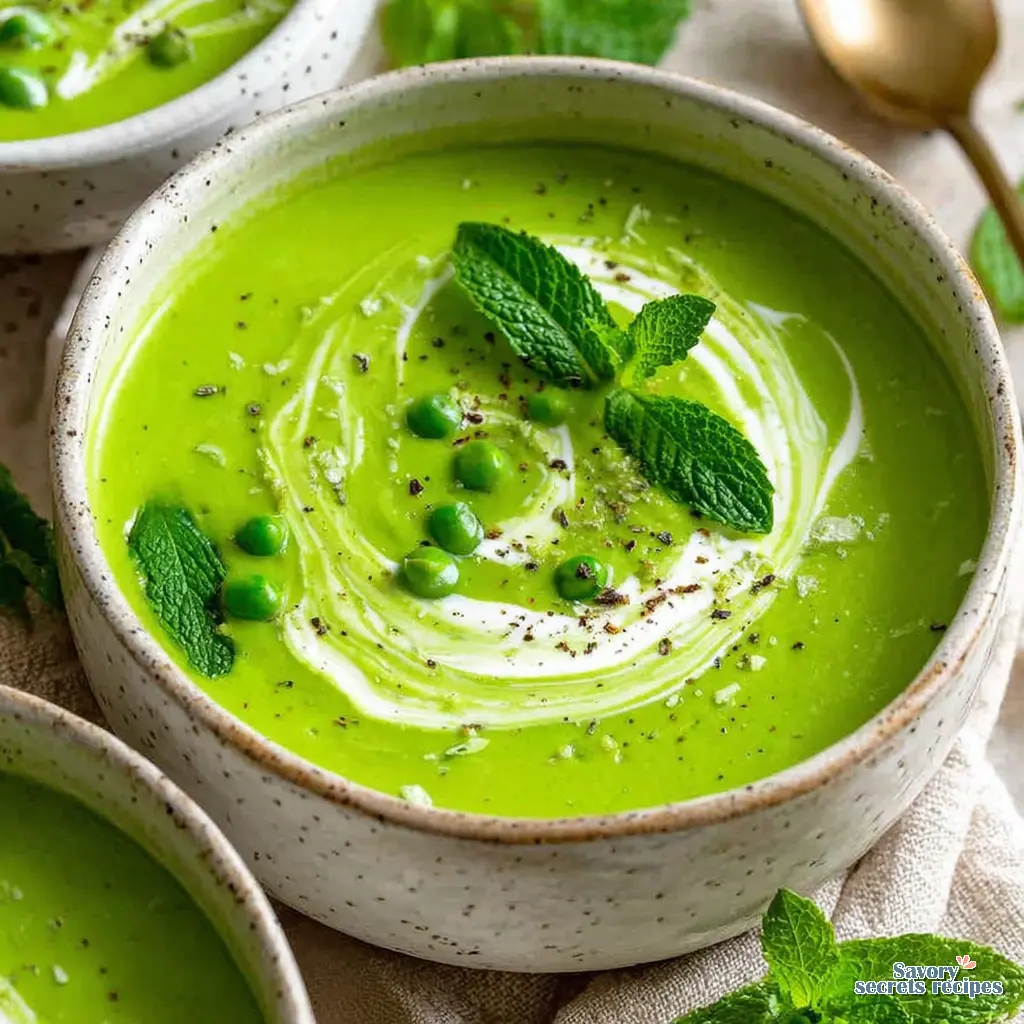
To serve, ladle the warm soup into shallow bowls. Add a heavy cream substitute like a swirl of crème fraîche or even some plain coconut yogurt for a vegan soup option. Top it with a spring onion garnish, some delicate pea shoots, and a crack of fresh black pepper. It’s exactly what you want on a mild spring evening.
Frequently Asked Questions
What can I add to make this healthy green soup more filling?
If you want more body, simmer a diced yellow potato with the stock before adding the peas. The potato starch adds a lovely thickness. You can also serve it with thick slices of toasted sourdough bread rubbed with garlic and olive oil.
Can I use frozen peas instead of fresh peas for this pea and mint soup?
Absolutely. In my experience, frozen petite peas are actually better. They are flash-frozen at peak sweetness right after harvesting. They cook much faster than fresh peas and maintain a much brighter green color. I use them almost exclusively for this recipe.
Is pea and mint soup better served hot or cold?
It’s incredibly versatile. I prefer serving it warm on mild spring evenings, but it makes a fantastic chilled soup for hot summer days. If serving cold, you might need to adjust the seasoning, as cold temperatures tend to mute flavors. Taste as you go.












2 Responses
This worked exactly as written, thanks!
Thank you for sharing this recipe