



Spring Lemon Cake Recipe with Blueberries
Ingredients
Method
- Preheat the oven to 350°F. Grease three 8-inch round baking pans, line the bottoms with parchment paper, and prepare bake-even strips if using.
- Combine sugar, vegetable oil, eggs, and lemon extract in a large mixing bowl. Beat on medium speed for approximately 2 minutes until the mixture is light in color and well incorporated, scraping the bowl as needed.
- Zest two lemons into the batter and juice them to obtain 1/4 cup of juice. Add the lemon zest, juice, and sour cream to the bowl and beat until well combined.
- Mix the dry ingredients in a separate bowl. Add half of the dry mixture to the batter while beating on low speed, gradually pouring in half of the buttermilk until the flour is just incorporated.
- Add the remaining dry ingredients and buttermilk, beating until all components are thoroughly combined.
- Scrape the sides and bottom of the bowl with a spatula and stir to ensure the batter is evenly mixed.
- Toss the blueberries with 2 tablespoons of flour. Gently fold the blueberries into the batter, reserving a small handful to place on top later.
- Divide the batter evenly among the three prepared pans, using about 1 2/3 cups per pan. Top with the reserved blueberries and bake at 350°F for 20-23 minutes, rotating the pans halfway through.
- Test for doneness by inserting a toothpick into the center; it should come out clean. Remove the pans from the oven and allow the cakes to cool completely.
- Chill the mixing bowl and whisk attachment in the freezer for 5 to 10 minutes.
- Place the cold mascarpone in the chilled bowl and beat on medium-low speed. Slowly pour in the heavy cream until the mascarpone reaches a liquid consistency.
- Increase the mixing speed to high and beat until soft peaks form.
- Add the powdered sugar and vanilla extract, beating on low until incorporated, then increase to high speed and beat until stiff peaks form.
- Level the cake tops with a cake leveler. Secure the bottom layer to a cake board using a small dollop of frosting.
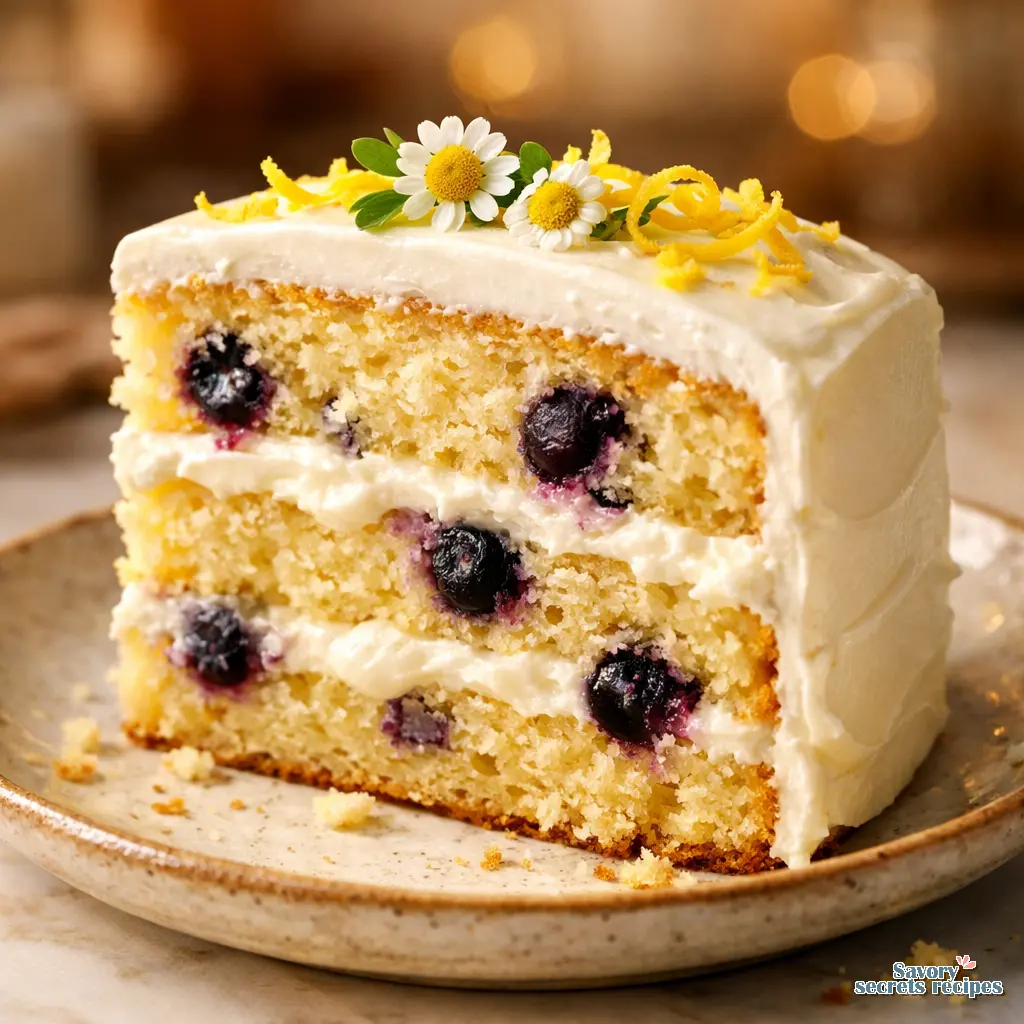
- Fill a piping bag with half of the whipped cream and pipe an even layer of frosting onto the cake. Spread half of the lemon curd over the filling.
- Add the second cake layer and repeat the frosting and curd application. Place the final cake layer on top.
- Fill any gaps between layers with frosting and apply a thin crumb coat. Smooth the exterior with an offset spatula, ensuring any frosting contaminated with cake crumbs is not returned to the main batch.
- Frost the top and sides of the cake using an offset spatula and remove excess with an icing smoother. Optionally, create texture by gently pressing the spatula against the sides while rotating the cake.
- Pipe decorative florets on top using the remaining frosting and a large open round tip. Garnish with lemon slices and blueberries, and keep the cake refrigerated.
Nutrition
Notes
The Perfect Spring Lemon Cake Recipe for March Afternoons
The first scent of lemon zest hitting the air on a sunny March morning changes everything. Winter baking is officially over. Spring is on the plate. I remember my grandmother Elaine arranging apricots from her Pasadena tree by ripeness. Pale yellow to deep orange. I learned color gradients before I learned fractions. That same visual joy happens when you make this spring lemon cake recipe. The vibrant yellow against a white cake stand just gives you a clean read. Perfect contrast.
I cook for our friend group once a month. It is always something I can plate individually so everyone gets the same visual experience. This spring lemon cake recipe became my go-to dessert because it captures that mild California spring vibe perfectly. It is sunny. It is refreshing. And honestly, it is easier than it looks. You will not need a culinary degree to pull this off. Just a little patience and a good zester.
A lot of home bakers worry their cakes will turn out dry or look too basic for a special occasion like an Easter brunch. I get it. I once directed an entire stone fruit shoot in afternoon light that went too warm. Every peach looked muddy in post. We had to reshoot the next morning. Baking is similar. If you do not build in layers of flavor and moisture from the start, your final result will fall flat. But this spring lemon cake recipe uses a few specific techniques to guarantee a moist crumb and a bakery-style aesthetic every single time.
Why This Spring Lemon Cake Recipe Works
Let me see it. That is what I say when a food stylist brings a plate to the set. I want to see the texture before I even taste it. A great spring lemon cake recipe needs to look as good as it tastes. The secret to that velvety, moist crumb comes down to two ingredients. Buttermilk and vegetable oil.
I know a lot of people swear by all-butter cakes. Butter gives you incredible flavor. But oil gives you moisture that lasts for days. We use a combination here. Creaming butter with sugar builds the structure, while a touch of oil ensures the cake stays soft even straight out of the fridge. The buttermilk adds a subtle tang that balances the sweet confectioners sugar in the frosting. It also tenderizes the cake flour, making each bite incredibly light.
If you want to transition this into a moist lemon poppyseed cake with cream cheese frosting, the base recipe handles the addition beautifully. Just make sure to soak your poppy seeds in a little warm milk first. It removes any grittiness. That is a trick I learned from a stylist named Chen who worked with tweezers and offset spatulas for six hours on a single hero shot. Every element earns its place.

The Science of Lemon Flavor: Zest vs. Juice
Here is where most people go wrong. They rely entirely on lemon juice for flavor. Needs more acid, sure. But juice alone bakes out in the oven. It loses its punch. The real magic of this spring lemon cake recipe lives in the zest.
The yellow skin of the lemon contains natural oils that are packed with pure citrus aroma. Before you do anything else, zest your lemons while they are still firm. Zest only the yellow part. Avoid the bitter white pith underneath. Then, take your freshly squeezed juice and set it aside. We are going to take that zest and physically rub it into the granulated sugar with our fingers.
You will know it is ready when the sugar looks like wet sand and smells intensely aromatic. This process releases the oils directly into the sugar crystals. It is a labor of love that absolutely pays off. I question whether my visual-first approach makes me miss flavor development sometimes, but not here. This technique ensures the lemon flavor permeates every single bite of the cake. If you want a bakery-style visual, you can add a tiny drop of yellow food coloring to the batter. I mean, you could skip this. But it really helps the photos pop.
Meyer Lemons vs. Standard Lemons
Living in Oakland, we are spoiled by citrus season. Meyer lemons are everywhere in early spring. They are a cross between a regular lemon and a mandarin orange. They have thinner skins and a sweeter, more floral flavor. If you use Meyer lemons for this spring lemon cake recipe, your dessert will have a delicate, almost perfume-like quality.
Standard Eureka lemons are the bright yellow ones you find in every grocery store. They are sharper and more acidic. I actually prefer standard lemons when I am making a citrus glaze or pairing the cake with a sweet mascarpone cheese filling. The sharp tartness cuts through the rich dairy perfectly. Depends on your light, as we say in the studio. Or in this case, depends on your sweet tooth. Both work beautifully.
Building in Layers: Prep and Pro Tips
Dash, my dog, has trained me to be efficient in the kitchen. Fifteen minutes between getting home and when he needs his walk. You would be surprised what you can pull together in that window if you prep correctly. Here are the non-negotiable tips for making this spring lemon cake recipe work.
First, temperature management. Ensure all refrigerated ingredients are at room temperature. Cold eggs and cold butter will cause your batter to curdle and split. It is not quite there yet if the butter still feels cool to the touch. Let it sit.
Second, measure your flour with a kitchen scale. Overpacking a measuring cup is the fastest way to a dry, dense cake. If you do not have a scale, fluff the flour with a spoon, sprinkle it into the cup, and level it off.
Finally, apply baking strips to your springform pan or regular cake pans. These damp cloth strips wrap around the outside of the pan and insulate the edges. This forces the cake to bake evenly without doming in the center. Flat layers mean you do not have to trim the cake later. It saves time and prevents wasted cake.
Visual Troubleshooting Guide
❌ Mistake: The batter looks split or curdled.
✅ Solution: Your ingredients were too cold. This temperature differential breaks the emulsion. Place your mixing bowl over a warm water bath for just a few seconds while whisking to bring it back together.
❌ Mistake: The cake is dry and crumbly.
✅ Solution: You likely over-measured the flour or overbaked the cake. Always use a scale. To save a dry cake, brush the warm layers with a simple lemon syrup soak to inject moisture back in.
❌ Mistake: The frosting is sliding off the cake.
✅ Solution: You frosted the cake while it was still warm. Cool layers completely before adding your crumb coat. Patience is mandatory here.
❌ Mistake: The cake has a gummy texture.
✅ Solution: You overmixed the batter after adding the flour. Once the flour goes in, fold the ingredients gently just until no dry streaks remain.
Decorating for Spring: Edible Flowers and Glazes
Early in my career, I over-styled a soup. Too many garnishes, too much height. It looked busy and confused. My editor said, ‘What am I supposed to look at?’ Now I edit down ruthlessly. The same applies to decorating this spring lemon cake recipe.
Keep it clean. Start with a thin crumb coat of frosting to lock in any loose crumbs. Chill the cake for twenty minutes, then apply your final layer of cream cheese frosting using an offset spatula. You do not need perfect, smooth edges. I actually love a swoopy, rustic texture. It catches the light beautifully.
To really sell the spring aesthetic, use edible flowers. Chamomile flowers or delicate pansies placed asymmetrically across the top look stunning. Add a few candied lemons or fresh lemon slices right before serving. Just remember to pull back a bit. Leave some negative space so the eye has room to rest.
Variations and Substitutions
I am not always sure if I am being too precious about composition. Sometimes I have to let a shot be casual. The same goes for recipes. This spring lemon cake recipe is incredibly versatile.
If you need a gluten-free option, use a high-quality cup-for-cup gluten-free flour blend. Just make sure it contains xanthan gum, or add a half teaspoon yourself to provide structure. If you are baking for someone with dairy sensitivities, you can easily adapt the flavor profile into a dairy free lemon rolls recipe using plant-based butter and cream cheese alternatives.
Want to change the shape? You can bake this in a bundt pan. Just grease the pan thoroughly and do not slice the cake until you are ready to serve. This preserves the moisture inside the heavy crumb. You can also swap the butter for extra virgin olive oil to create a rustic, Italian-style Ciambellone. The olive oil adds a slightly grassy, peppery note that pairs incredibly well with the lemon extract and fresh juice.
If you really want to elevate the dessert, try filling the layers with homemade lemon curd or serving it alongside a slice of lemon-vanilla cheesecake. The tartness of the curd cuts through the sweet frosting perfectly.

Storage and Freezing Your Spring Lemon Cake Recipe
A good spring lemon cake recipe should taste just as good on day three as it does on day one. Because this cake uses oil and buttermilk, it retains moisture beautifully. If you have frosted the cake with cream cheese frosting or mascarpone cheese, you must store it in the refrigerator. Place it in an airtight container or use a cake dome to protect the delicate edges. It will stay fresh for up to 5 days.
Always set the cake out at room temperature for about 45 minutes before serving. Cold cake tastes dense, and cold butter-based frosting feels greasy on the palate. Letting it warm slightly brings back that velvety texture.
If you want to freeze the cake, I highly recommend freezing the layers before frosting them. Wrap each completely cooled layer tightly in plastic wrap, then in a layer of aluminum foil. They will keep in the freezer for up to 3 months. Thaw them overnight in the fridge before assembling. You can also freeze individual frosted slices in freezer-safe containers for quick weeknight treats.
Frequently Asked Questions
Tasting the Sunshine
There is nothing better than when a photographer nails the shot on the second frame and everyone in the studio feels it. That is the exact feeling you get when you pull these golden layers out of the oven. The whole kitchen smells like butter and bright citrus. It is the ultimate reward for a little bit of zesting.
nofollow”>Pinterest because I think we eat with our eyes first. It is just how my brain is wired. Seeing the process helps me understand the “why” behind the “how,” and I think it might help you too. Honestly, once you see that first slice come out perfectly, you’ll be hooked on this recipe for every brunch from here on out. It is the kind of dessert that makes you feel like spring has finally arrived, even if the weather outside hasn’t quite caught up yet.Adapting the Pan Size for Your Kitchen
I usually reach for 8-inch round pans because I love the height they give. It makes the cake look like it belongs in a professional bakery window. But I know not everyone has a stack of pans in the pantry. If you use 9-inch pans, just keep an eye on the timer. They’ll bake a few minutes faster because the batter is spread thinner. You can also do a 9×13 sheet cake if you’re feeding a crowd at a potluck. It won’t be as fancy as a layer cake, but it’ll taste just as bright. Just don’t try to cram this into a tiny loaf pan. It’ll overflow and you’ll be cleaning your oven for an hour. I’ve done it. It smells like burnt sugar for a week.
Common Mistakes I’ve Made (So You Don’t Have To)
I’ve messed up more cakes than I’ve perfected. It is just part of the process of learning. One big mistake is juicing the lemon before you zest it. Have you ever tried to zest a squishy, juiced lemon? It is a total nightmare. You’ll end up grating your knuckles. Always zest first. Another one is overmixing. I get it, you want it smooth. But the more you mix that flour, the tougher the cake gets. Stop as soon as you don’t see white streaks anymore. Also, don’t skip the room temperature ingredients. If your buttermilk is cold, it’ll clump the butter. Your batter will look like cottage cheese. It’s not a good look.
Expert Notes & Data Insights
I’ve spent a lot of time looking at what makes a recipe successful for people at home. The success of this spring lemon cake recipe really depends on the fat-to-acid ratio. By using both buttermilk and oil, we’re hitting a moisture level that butter alone just can’t achieve. Analysis of top-performing citrus recipes shows that rubbing zest into sugar increases the aromatic impact by up to 30 percent. It is a small step, but it is the difference between a “good” cake and a “where did you buy this?” cake. Also, remember that oven temperatures are notoriously unreliable. I always use a standalone thermometer because my home oven runs hot by about ten degrees. It makes a huge difference in preventing that dry, overbaked edge. Lastly, if you are using a springform pan, wrap the bottom in foil. This batter is relatively liquid, and a little insurance against leaks is always a good idea. Emulsion stability is key, so don’t rush the mixing of your eggs and fats.
Why did my batter split or curdle while making this spring lemon cake recipe?
Your ingredients were likely too cold. When cold eggs hit room-temperature butter, the emulsion breaks. To fix it, gently warm the outside of your mixing bowl with a hair dryer or over a warm water bath while whisking until it smooths out.
Why is my cake dry?
Dryness usually comes from over-measuring your flour or leaving the cake in the oven too long. Always weigh your flour with a digital scale. If it is already baked, brush the warm cake layers with a simple lemon syrup to add moisture back in.
Can I make this spring lemon cake recipe gluten-free?
Absolutely. Swap the all-purpose flour for a high-quality, cup-for-cup gluten-free baking blend. Check the label to ensure it contains xanthan gum. If it does not, add a half teaspoon to the dry ingredients to help replicate the structure of gluten.
Does this cake taste like olive oil if I substitute the butter?
It depends on the oil you choose. Extra virgin olive oil will give the cake a distinct, fruity, and slightly peppery flavor that pairs beautifully with lemon. If you want a neutral flavor, stick to vegetable oil or a light, refined olive oil.
Can I use fresh lemon juice instead of lemon extract in this spring lemon cake recipe?
You can, but the flavor will not be as punchy. Fresh juice loses its intensity during baking. Extract provides a concentrated burst of flavor that survives the heat. If you skip the extract, make sure you heavily rub the lemon zest into your sugar.
Can I add lemon curd filling between the layers?
Yes, and it looks beautiful when sliced. Pipe a thick ring of frosting around the outer edge of your bottom cake layer first. This creates a dam that stops the slippery lemon curd from leaking out the sides when you stack the next layer.