



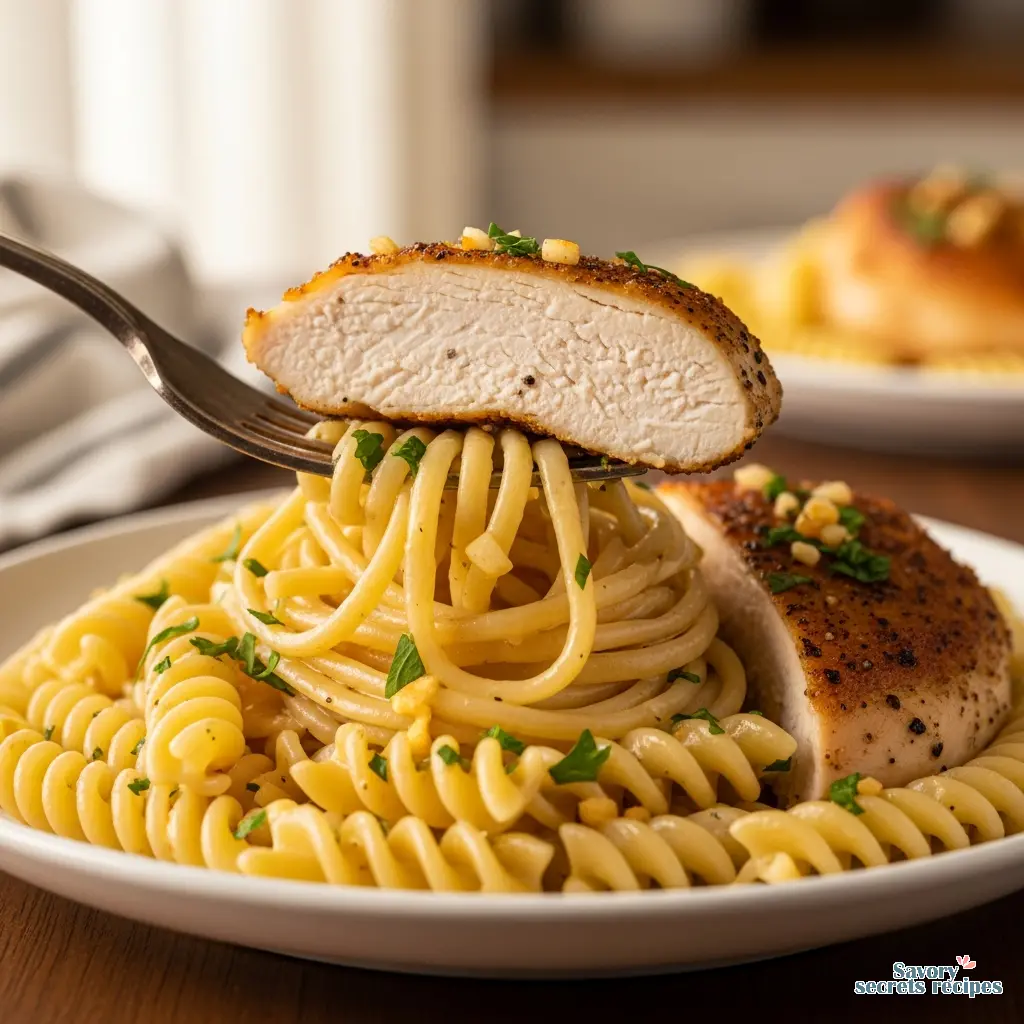
Your Lemon Garlic Chicken Pasta with Spinach
Ingredients
Method
- Bring a large pot of heavily salted water to a boil.
- Toss the chicken in a bowl with olive oil, lemon zest, and spices until thoroughly coated. Heat a large high-sided skillet over medium heat and cook the chicken for 7 to 10 minutes until golden and the internal temperature reaches 165°F. Transfer to a plate and cover to keep warm.
- Cook the pasta until just shy of al dente, reserving 1 cup of cooking water before draining. In the same skillet, sauté the onion in butter over medium heat for 4 to 5 minutes until soft, then add garlic and cook until fragrant. Stir in the heavy cream, broth, salt, and pepper, then simmer uncovered for 5 to 6 minutes until thickened before mixing in the parsley, Parmesan, lemon zest, and juice.
- Add the pasta and 1/2 cup of reserved water to the sauce, tossing vigorously over medium-high heat for 2 minutes until glossy. Incorporate more pasta water if the sauce is too thick, then remove from heat once the sauce is thickened and glossy.
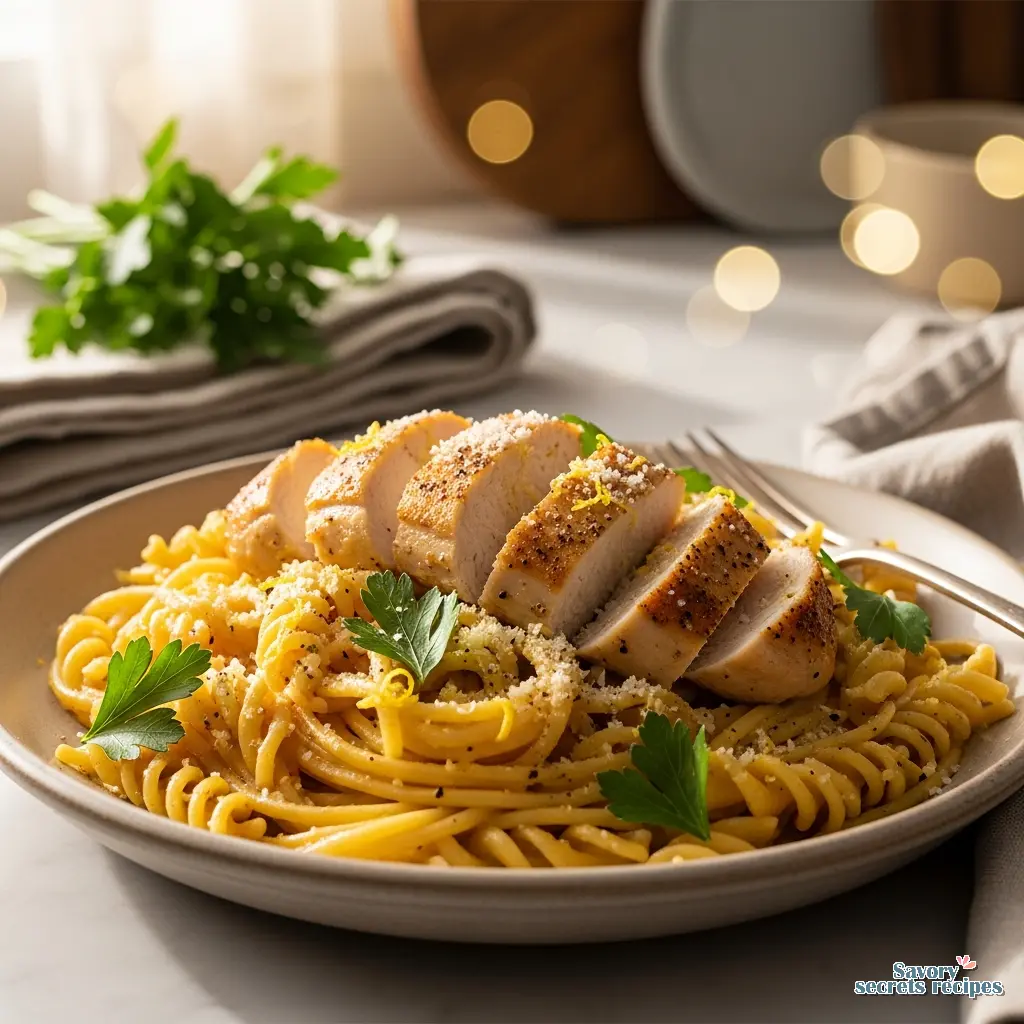
- Thinly slice the chicken and arrange it over the pasta. Garnish with fresh parsley, Parmesan, black pepper, and a squeeze of lemon juice.
Nutrition
Notes
-
- If you plan on adding any veggies, add them to the sauce right after stirring in the parsley, Parmesan, and lemon.
- To Store. Place leftovers in an airtight storage container in the refrigerator for up to 3 days.
-
- To Reheat. Gently rewarm pasta in a large skillet on the stove over medium heat, adding a splash of broth as needed to rehydrate the noodles and thin the sauce. Toss the noodles often and brighten them up with a squeeze of fresh lemon.
The 20-Minute Weeknight Escape
It’s 6 PM on a Wednesday. You’re staring at the open fridge, hoping dinner will magically assemble itself. I know that feeling well. After a long day of editing articles and wrangling my six-year-old daughter, decision fatigue hits hard. The temptation to order takeout is real. But I genuinely love the problem-solving aspect of cooking when time is tight.
You want something vibrant. Something that pulls you out of the mid-week slump. This lemon garlic chicken pasta recipe is exactly what I lean toward when I need a quick escape from kitchen boredom. It’s light, spring-like, and honestly just makes the whole house smell incredible. The scent of fresh garlic hitting melted unsalted butter is a sensory reset button. It reminds me of those summer evenings in Essaouira when the fishing boats came in at sunset. We weren’t eating pasta, but the principle of fresh lemon and garlic hitting hot protein is universal. You’ll feel like a competent cook without the stress.
Quick Wins for This Lemon Garlic Chicken Pasta Recipe
I favor a methodical approach in the kitchen. Before we get into the heavy lifting, I want to give you a few quick wins. These are the small habits that make a massive difference in the final dish.
First, pound your chicken breast strips to an even thickness. I know it seems like an extra step, but it guarantees they cook evenly and fast. Second, let your chicken come to temperature first. Pull it out of the fridge about fifteen minutes before you plan to sear it. Cold meat hitting a hot cast iron skillet drops the pan temperature, and you lose that beautiful golden crust. Third, use freshly grated parmesan cheese. Pre-shredded cheese is coated in anti-caking agents that will make your sauce grainy. That’s the detail that matters.
Finally, prep everything before you turn on the stove. This is a fast-moving one-pot meal (or two pots, if we’re being technical). Once the garlic starts cooking, you don’t have time to go hunting for the red pepper flakes.
The Sizzle and The Boil: Nailing the Timing
The secret to a stress-free dinner is syncing up your prep. I call this the sizzle and the boil. You want your pasta finishing right as your sauce comes together.
Get your salted water boiling first. Use kosher salt, and don’t be shy with it. The water should taste like the ocean. While the fettuccine noodles are doing their thing, get your skillet hot. Add a splash of extra virgin olive oil. When it shimmers, add your chicken. Here is where most people panic and move the meat too early. Don’t touch it. The chicken will tell you when it’s ready to flip because it will release naturally from the pan.
I once ruined an entire test batch of branzino because I didn’t account for carryover cooking. I pulled the fish at what I thought was the right moment, and it cooked through to dry while resting. The same rule applies to chicken. You’re looking for that just-opaque center. Pull it off the heat just a minute before you think it’s completely done. It will finish cooking in the sauce later.
The Importance of Fresh Ingredients
If you’re making a dish with only a handful of ingredients, they need to be good ones. Makes sense to me.
Please, I am begging you, skip the bottled lemon juice. It has a flat, metallic taste that ruins the brightness of a good lemon garlic chicken fettuccine recipe. Grab a real lemon and a zester. The essential oils in the lemon zest provide a floral aroma you simply can’t get from the juice alone.
The same goes for garlic. Minced garlic cloves from a jar taste muted and slightly sour. Mince fresh garlic. Even if your knife skills aren’t perfect and the pieces are uneven, it will still taste infinitely better. And swap out dried herbs for fresh parsley. The vibrant green color and clean flavor cut right through the richness of the butter.
The Science of the Lemon-Cream Emulsion
This is where it gets good. The sauce. A lot of home cooks struggle with sauces breaking or turning greasy. The secret weapon here is starchy pasta water. It’s liquid gold.
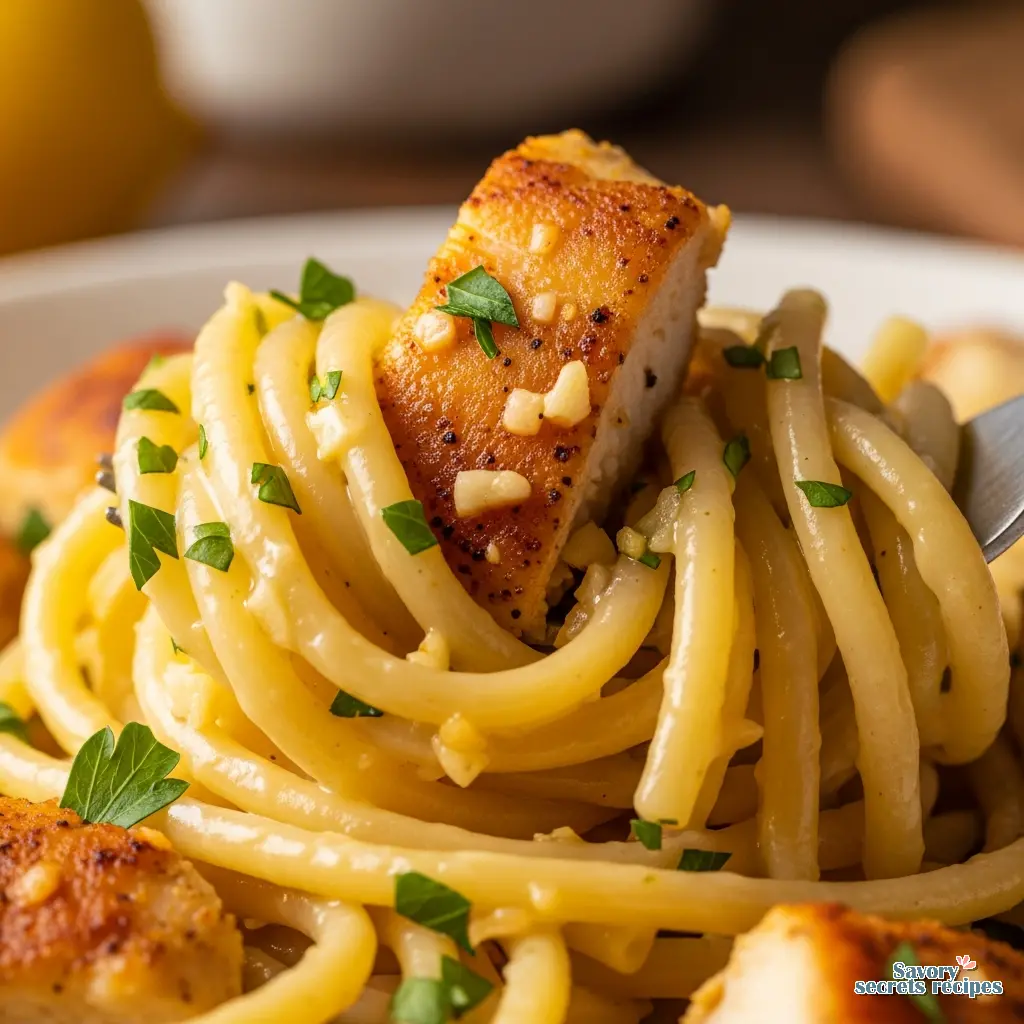
As the pasta boils, it releases starch into the water. When you add a ladle of that cloudy water to your skillet, the starch acts as a binder. It forces the fat from the butter and oil to emulsify with the liquids. This creates a glossy, cohesive sauce that clings to every noodle instead of pooling sadly at the bottom of your bowl.
After you deglaze pan with a splash of white wine vinegar and chicken broth, let it reduce slightly. Then, lower the heat before adding your dairy. If the pan is too hot, the cream will curdle. A light hand here is crucial. And here is the real trick: add your fresh lemon juice off the heat right at the end. Cooking lemon juice over high heat destroys its potency and turns it bitter.
Visual Troubleshooting: Fixing a Broken Sauce
Mistake: Your sauce looks greasy and separated.
Solution: The emulsion broke. Drop the heat to low, add two tablespoons of hot starchy pasta water, and whisk vigorously. The starch will pull it back together.
Mistake: The sauce is too thin and watery.
Solution: You likely didn’t let it reduce enough, or you added too much broth. Let it simmer gently for another minute or two. It should coat the back of a spoon.
Mistake: The cheese clumped up into a giant ball.
Solution: The pan was too hot when you added the parmesan, or you used pre-shredded cheese. Always remove the pan from the heat before stirring in freshly grated cheese.
Pasta Shape Comparison for Lemon Sauce
I generally lean toward long noodles for this type of sauce. Fettuccine or linguine are classic choices. The broad, flat surface area of fettuccine is perfect for catching that velvety lemon-garlic butter.
However, it depends on the situation. If you’re cooking for kids, long noodles can be messy. My daughter prefers shorter shapes. You can absolutely use penne or farfalle. The little crevices hold the garlic bits beautifully.
If you want a heavier, cozier meal, consider making a lemon garlic chicken gnocchi recipe. Store-bought potato gnocchi cooks in about three minutes and acts like tiny sponges, soaking up all that bright, acidic sauce. Just be aware that gnocchi releases a lot of starch, so your sauce will thicken much faster.
Variations: Veggie Add-ins & Dairy-Free Options
I love a recipe that acts as a blank canvas. If you want to make a lemon garlic chicken pasta with spinach, wait until the very end. Toss two handfuls of fresh baby spinach into the hot pasta right before serving. The residual heat will wilt the leaves perfectly without turning them to mush.
During the spring, I’ll chop up some fresh asparagus and throw it in the boiling pasta water for the last two minutes of cooking. It saves washing an extra pan. Roasted broccoli or sautéed mushrooms are also fantastic additions.
If you’re looking for a light lemon garlic chicken pasta no cream, you have options. You can simply omit the heavy cream and rely entirely on the butter, chicken broth, and pasta water emulsion. It creates a lighter, broth-based sauce that feels incredibly fresh. For a dairy-free version, swap the butter for more olive oil and use a splash of unsweetened almond milk or cashew cream.
Storage & Reheating with Liquid
Let’s talk about leftovers. I’ll be honest, cream-based pastas can be tricky to reheat. The sauce tends to absorb into the noodles overnight, leaving you with a dry, oily mess the next day. But there is a very simple fix.
Store your leftover pasta in an airtight container in the fridge for up to three days. When you’re ready to reheat, do not just throw it in the microwave dry. That’s a guaranteed way to ruin the texture.
Instead, place the pasta in a skillet over medium-low heat. Add a generous splash of chicken broth or a tablespoon of milk. As it warms up, gently toss the noodles with tongs. The extra liquid will rehydrate the sauce and bring back that creamy, glossy texture. If you’re using the microwave, add the liquid, cover it with a damp paper towel, and heat in 30-second bursts, stirring in between. A fresh squeeze of lemon juice right before eating will wake all the flavors back up.
Frequently Asked Questions
Bringing It All Together
There’s something deeply satisfying about a perfectly executed pan sauce. We have a rule in my house that my daughter has to try one bite of whatever I’m testing. Last Tuesday, she took a bite of this dish, pointed at the fettuccine, and asked for more of the “shiny ones.” Sometimes six-year-olds nail the description of a perfect glossy sauce.
When you take that first bright, garlicky bite of this lemon garlic chicken pasta recipe tonight, you’ll understand exactly why it’s a staple in my weekly rotation. It’s fast, it’s fresh, and it requires very little mental energy after a long day. You’ve got this. Trust the process, don’t rush the chicken, and remember to save that pasta water.
If you’re looking for more quick weeknight seafood or chicken ideas, I share tons of variations over on my Pinterest boards. Come say hello and let me know how your sauce turned out.
Reference: Original Source
What is the secret to making the best creamy lemon garlic chicken pasta recipe at home?
In my experience, the secret is starchy pasta water and heat control. Emulsifying the butter, garlic, and pasta water creates a naturally creamy base. Always add your heavy cream and parmesan off the heat to prevent the sauce from separating or turning grainy.
How can I make a light lemon garlic chicken pasta no cream that still tastes rich?
You can completely skip the cream. I’d lean toward building a strong emulsion using just extra virgin olive oil, a little unsalted butter, and plenty of starchy pasta water. The starch binds the fats, creating a velvety sauce that feels rich but stays incredibly light.
Can I substitute the noodles with store-bought gnocchi to make a lemon garlic chicken gnocchi recipe?
Absolutely. Store-bought gnocchi is a fantastic, meal prep friendly option. Just remember that gnocchi releases more starch than traditional pasta. You might need to add an extra splash of chicken broth to keep the sauce from becoming too thick and sticky.
What are the best tips for adding fresh spinach to your lemon garlic chicken pasta so it doesn’t get soggy?
Timing is everything. Turn off the stove completely, then fold the baby spinach into the hot pasta right before serving. The residual heat from the noodles and sauce will gently wilt the leaves in about thirty seconds, keeping their vibrant color intact.
How do you store and reheat leftover lemon garlic chicken pasta without the chicken getting dry?
Store it in an airtight container for up to three days. To reheat, warm it in a skillet over low heat and add a splash of chicken broth or milk. This rehydrates the sauce and gently warms the chicken breast strips without overcooking them.