



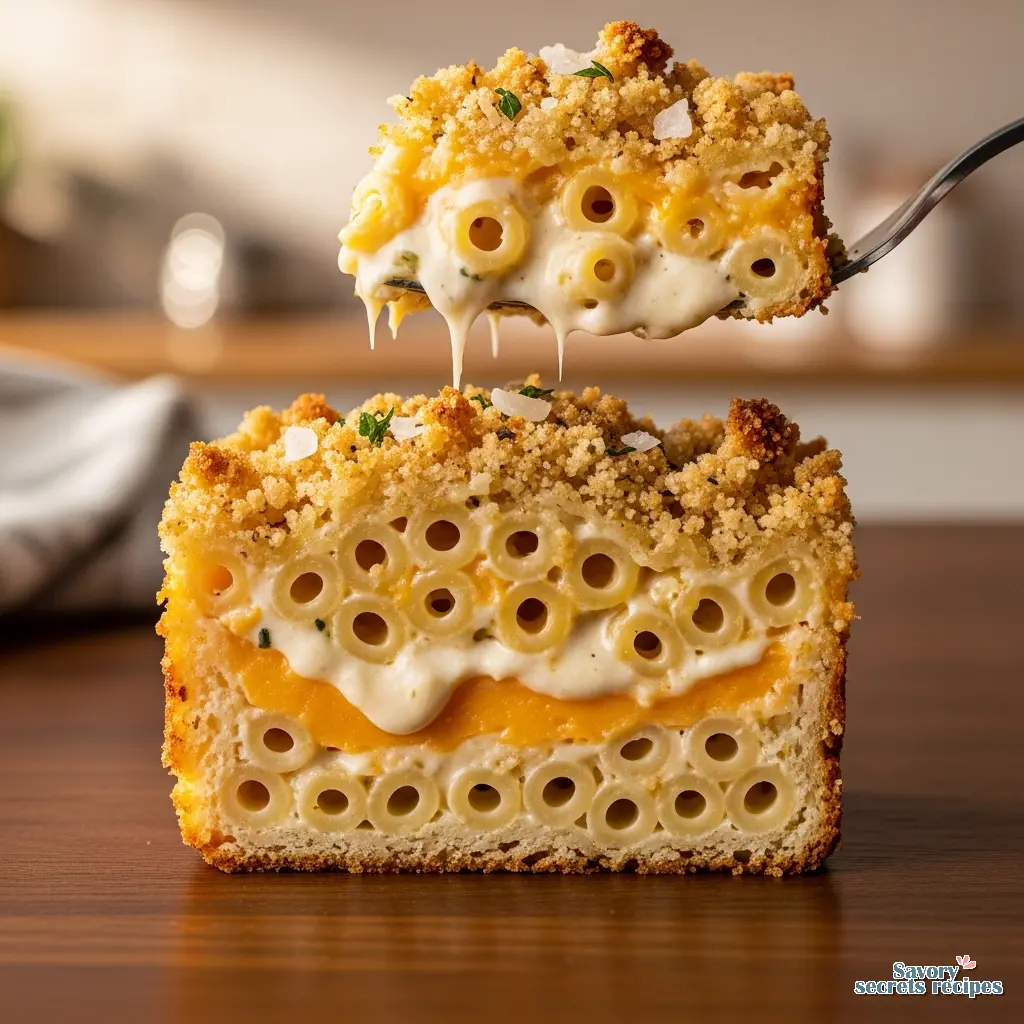
Make your crispy baked mac and cheese with breadcrumbs
Ingredients
Method
- Preheat the oven to 350°F. Lightly grease a large 3- or 4-quart baking dish and set it aside. Combine the shredded cheeses in a large bowl and set aside.
- Cook the pasta until one minute shy of al dente according to the package instructions. Remove from the heat, drain, and transfer to a large bowl.
- Drizzle the pasta with olive oil and stir to coat. Set aside to cool while preparing the cheese sauce.
- Melt the butter in a deep saucepan, Dutch oven, or stockpot.
- Whisk in the flour over medium heat and continue whisking for about 1 minute until the mixture is bubbly and golden.
- Gradually whisk in the milk and heavy cream until smooth. Continue whisking until bubbles appear on the surface, then cook and whisk for another 2 minutes. Whisk in the salt and pepper.
- Add two cups of shredded cheese and whisk until smooth. Add another two cups of shredded cheese and continue whisking until the sauce is creamy, smooth, and thick.
- Stir in the cooled pasta until it is thoroughly combined and fully coated with the cheese sauce.
- Pour half of the macaroni and cheese into the prepared baking dish. Top with the remaining 2 cups of shredded cheese and then the remaining macaroni and cheese.
- Combine the panko crumbs, Parmesan cheese, melted butter, and paprika in a small bowl. Sprinkle the mixture over the top and bake for about 30 minutes until bubbly and golden brown. Serve immediately.
Nutrition
Notes
The Science of the Perfect Crunch
I remember my nani making achaar every summer on the terrace in Chandigarh. She would lay out the mango pieces on a steel thali, and I would watch the oil glisten as the sun hit it. She never measured a single thing. She just tasted and adjusted based on some internal calibration I am still trying to understand. Her kitchen taught me that cooking is about sensory feedback. You have to listen, look, and feel your way through a recipe.
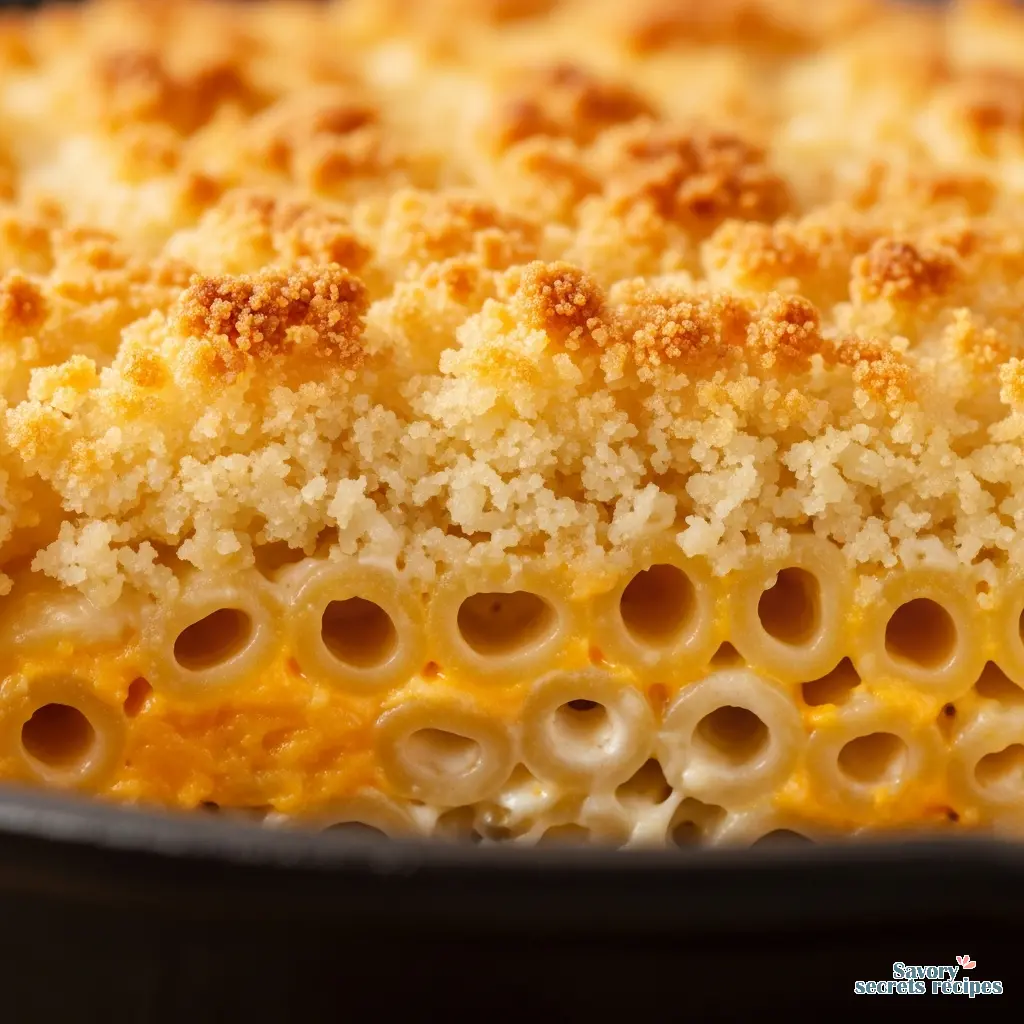
That tracks with what I’ve seen in my own kitchen when making baked mac and cheese with breadcrumbs. Nothing breaks my heart quite like a pale, soggy topping on a casserole. You spend all this time building a beautiful cheese sauce, only to ruin the textural contrast at the very end. We want an audible crunch when the spoon hits the dish. We want a shatteringly crisp top layer that protects a velvety, creamy interior.
My daughter recently decided she doesn’t like “mixed-up food,” which makes casseroles a hard sell. Last week I treated her trying this baked mac and cheese with breadcrumbs like a very small clinical trial with an n of 1. She took one bite of that golden brown crust, heard the crunch, and finished the entire bowl. The data on this is actually quite clear. Texture drives palatability. For those who enjoy a bit of spice with their crunch, a jamaican baked mac and cheese offers a unique flavor profile while maintaining that essential crust.
Quick Wins for Flawless Baked Mac and Cheese
I know a roux-based macaroni and cheese recipe can feel intimidating. The evidence here is mixed on whether beginners should start with a stovetop version or jump straight to baking. I’m firmly in the baking camp, provided you follow a few non-negotiable rules. These are the quick wins that guarantee success. Mastering these basics is the first step toward creating the best baked mac and cheese recipe for your family.
First, always cook your elbow macaroni one full minute less than the package directions for al dente pasta. The pasta will continue absorbing liquid in the oven. If you start with fully cooked noodles, you end up with mush. Second, never rinse your pasta. The residual surface starch is exactly what helps the bechamel sauce cling to the noodles.
Third, shred your block cheese yourself. Pre-shredded cheese from Ralphs or Trader Joe’s is coated in cellulose and potato starch to prevent clumping in the bag. Those same anti-clumping agents prevent a smooth melt in your sauce. Finally, whisk cold milk into your warm roux. I know this sounds counterintuitive, but the temperature contrast actually prevents the all purpose flour from clumping.
The Ultimate Cheese Guide: Block vs. Shredded
Let me pull the actual study on cheese melting properties. In practical terms, high-moisture cheeses melt smoothly, while aged, hard cheeses separate and become greasy. For the best baked mac and cheese with breadcrumbs, you need a balanced blend of flavor and meltability.
My baseline combination is a sharp cheddar cheese for that classic, punchy flavor, paired with Gruyere for unparalleled creamy texture. Gruyere has the perfect moisture-to-fat ratio for emulsification. If Gruyere is too expensive, Jarlsberg Swiss is an excellent substitute. I’m impressed by how well Colby Jack or Fontina holds up if you prefer a milder creaminess. Mozzarella is great if you want that dramatic cheese pull, though it lacks depth of flavor.
This is genuinely interesting from a food science perspective. If you want the absolute smoothest melt possible, the secret is sodium citrate. It is the salt of citric acid and it forces proteins to stay emulsified with fat. You don’t need to buy it as a specialty chemical, though. Adding just a single slice of American cheese or a small cube of Velveeta to your sophisticated cheese blend introduces enough sodium citrate to stabilize the entire pot. This technique is particularly useful when preparing a large baked mac and cheese for a crowd, as it keeps the cheese from separating over long serving periods.
The Science of a Smooth Sauce
Making a proper bechamel sauce is basically a lesson in controlled emulsification. You start by melting unsalted butter and whisking in equal parts all purpose flour. You absolutely must let it develop some fond. Cook this paste over medium-low heat for about two minutes, until the raw smell cooks off and it smells faintly nutty. This step removes the raw flour taste. If you are looking for a lighter alternative, you can apply these same principles to a healthy baked mac and cheese by adjusting the fat content of your dairy.
When you add your whole milk and heavy whipping cream, pour it in slowly while whisking constantly. Once the sauce thickens enough to coat the back of a spoon, turn the heat down to low. This is where it gets complicated for a lot of home cooks. If you dump all your cheese in at once while the sauce is boiling, the sudden temperature drop and intense heat will cause the dairy proteins to seize and separate. You get a grainy, broken sauce.
Instead, remove the pot from the heat entirely. Add your cheese in small handfuls. Stir gently in one direction until it melts before adding the next handful. I learned to make proper kadhi through systematic testing, and I found that constant stirring in one direction prevents proteins from seizing up. The exact same principle applies to this cheese sauce.
Visual Troubleshooting Guide
Mistake: The sauce looks grainy or separated.
Solution: The heat was too high when you added the cheese. Remove from heat immediately and whisk vigorously with a splash of cold milk to try and restore the emulsion.
Mistake: The baked mac and cheese with breadcrumbs is dry inside.
Solution: You likely overbaked it or your pasta was overcooked initially. Next time, bake only until the edges bubble (about 20 minutes) and cook pasta to under-al-dente.
Mistake: The breadcrumb topping is burning before the center is hot.
Solution: Your oven runs hot or the rack is too high. Tent the casserole dish loosely with aluminum foil for the remaining bake time.
The Breadcrumb Topping: Chemistry of the Crunch
I’m not entirely convinced that standard Italian breadcrumbs belong on macaroni and cheese. They tend to turn sandy and absorb too much moisture. Panko breadcrumbs are the real secret here. Panko is made from bread baked by electrical current, which yields a crustless, airy flake that stays crispy far longer than traditional crumbs.
But you can’t just sprinkle dry Panko over your pasta and hope for the best. You must toss the crumbs in fat first. Melted butter or extra virgin olive oil coats the starches, preventing them from absorbing the steam rising from the cheese sauce below. This is what guarantees that beautiful golden brown crust.
Worth noting here is a brilliant trick I picked up from watching Gordon Ramsay’s methods. He elevates a simple crumb topping by grating fresh parmesan cheese directly into the buttered Panko, along with a pinch of smoked paprika and garlic powder. The parmesan melts and acts as a glue, creating these incredible, savory clusters of crunch. It makes good sense when you think about it. You are seasoning at every single step.
Make-Ahead, Storage, and Reheating to “Like New”
If you are prepping this for a spring potluck or an Easter Sunday side dish to pair with a crisp arugula salad, you need a solid make-ahead strategy. You can assemble the entire dish a day in advance. Just let the cheese sauce cool slightly before mixing with the pasta, transfer to your casserole dish, and store the buttered breadcrumbs in a separate bag at room temperature. Cover the pasta tightly and refrigerate. Alternatively, if you prefer a set-it-and-forget-it method, a crockpot baked mac and cheese is an excellent option for busy event days.
When you are ready to bake, let the dish sit on the counter for 30 minutes to take the chill off. Add your breadcrumb topping right before it goes into the oven. You will likely need to add 10 to 15 minutes to the baking time since you are starting from a colder temperature.
I genuinely love the challenge of reheating leftovers. To restore that original creamy texture, place individual portions in a microwave-safe bowl. Stir in one tablespoon of whole milk per cup of pasta. Microwave on 50 percent power, stirring every 60 seconds. The added moisture and gentle heat prevent the emulsion from breaking a second time.
Frequently Asked Questions
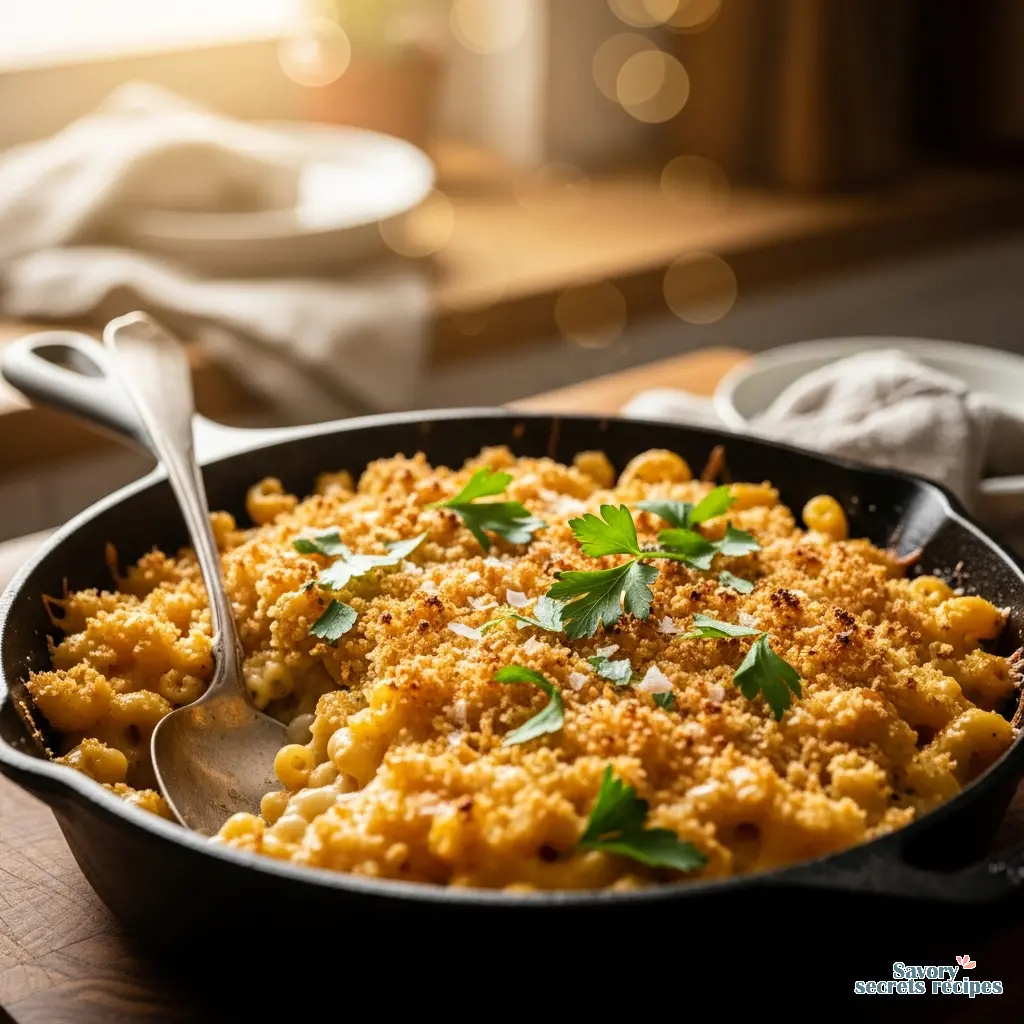
When you pull this out of the oven and hear that first crunch as your serving spoon breaks the surface, you will know you have nailed it. The contrast between the toasted garlic Panko and the rich, creamy interior is exactly what makes this a classic comfort food. Don’t stress if your first roux isn’t completely perfect. Cooking is a practice of repetition and feeling the heat, just like my nani taught me. Taste your cheese sauce, adjust the cayenne pepper or salt as you go, and trust your senses.
I share tons of variations and science-based cooking tips on my Pinterest boards, so come say hi and let me know how your crust turned out!
Reference: Original Source
How to make baked mac and cheese with breadcrumbs that stays creamy inside?
The secret is moisture management. Cook your pasta one minute shy of al dente so it doesn’t absorb all your sauce during baking. Also, ensure your bechamel sauce is slightly thinner than you think it should be before baking. The oven will thicken it significantly.
Why isn’t my baked mac and cheese crispy after it comes out of the oven?
This usually happens if you skip tossing the breadcrumbs in fat. Dry crumbs absorb steam from the cheese sauce and turn soggy. Always toss your Panko breadcrumbs in melted butter or olive oil before topping. Baking uncovered at 350°F is also crucial for that crunch.
What are the best breadcrumbs to use for an easy baked mac and cheese topping?
I highly recommend Panko breadcrumbs over traditional Italian breadcrumbs. Panko flakes are larger, airier, and crisp up beautifully without becoming dense or sandy. For a fun twist, you can also use crushed buttery crackers or blitzed Hawaiian rolls.
Should you cover mac and cheese with foil when baking with breadcrumbs?
To achieve a crispy golden brown crust, you must bake it uncovered. Covering the dish traps steam, which will turn your breadcrumb topping soggy. Only use foil if the top is browning too quickly before the center of the casserole dish is bubbly and hot.
How do you keep baked mac and cheese from drying out while baking?
Do not overbake it. You only need about 20 to 25 minutes in a 350°F oven. You are just looking for the edges to bubble and the topping to toast. The sauce and pasta are already fully cooked on the stovetop, so prolonged baking just evaporates the moisture.
Can I use Velveeta in my baked mac and cheese with breadcrumbs?
Yes, and from a food science perspective, it’s a smart move. Velveeta contains sodium citrate, which acts as a powerful emulsifier. Adding just a small amount (about 2 to 3 ounces) to your sharp cheddar cheese and Gruyere blend guarantees a velvety smooth sauce that won’t break.