



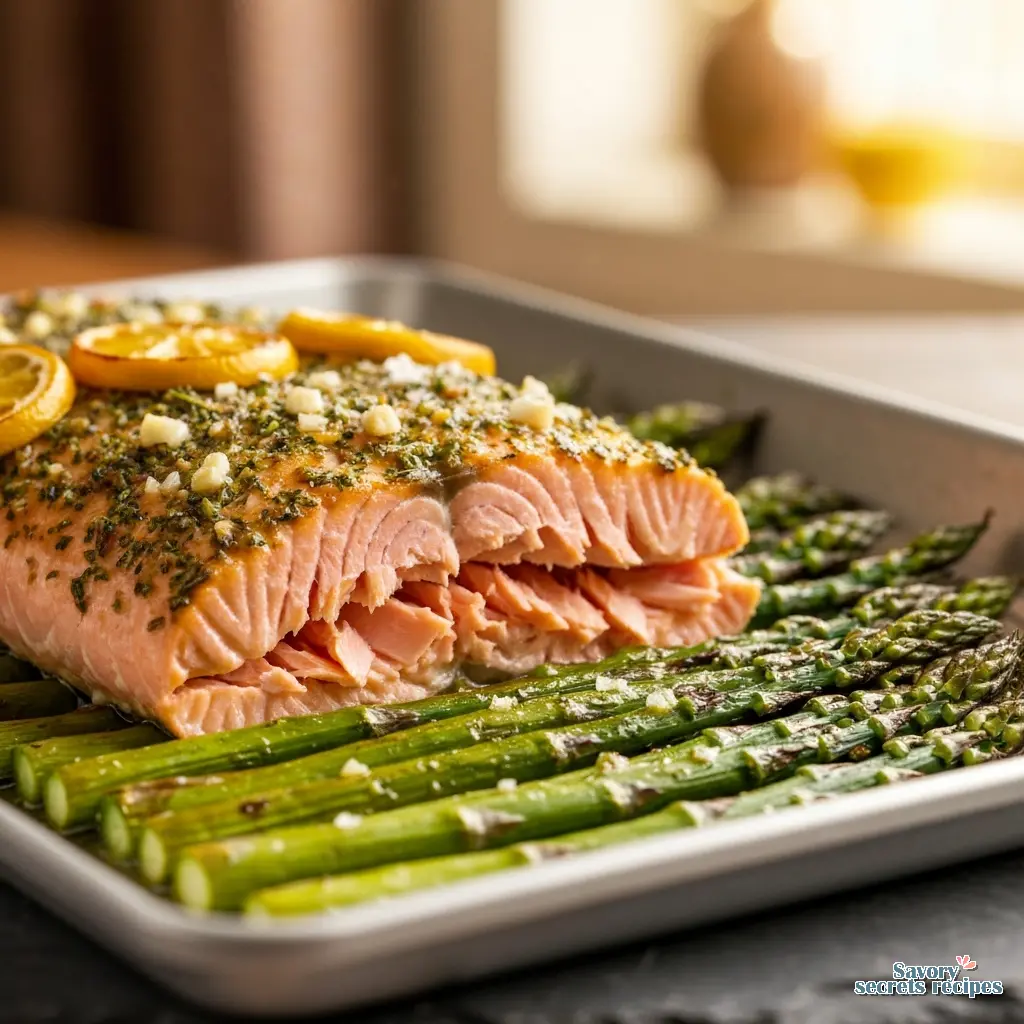
One Pan Salmon and Asparagus with Lemon Butter
Ingredients
Method
- Preheat the oven to 425°F and line a large rimmed baking sheet with parchment paper.
- Place the asparagus on the baking sheet and drizzle with olive oil. Toss to coat, season with salt and pepper, and arrange in a single layer along the sides of the pan.
- Pat the salmon dry and place it in the center of the baking sheet. Halve the lemon, squeeze one half over the salmon, and season with kosher salt and pepper.
- Top each salmon filet with 1/2 tablespoon of butter slices. Slice the remaining lemon half into four rounds and place one on each filet.
- Bake for 8 to 12 minutes until the fish flakes easily with a fork, adjusting for thickness. Store leftovers in an airtight container in the refrigerator.
Nutrition
Notes
- Make sure your salmon is not straight from the fridge because it won't cook evenly. Take it out of the fridge and set on the counter for about 30 minutes to ensure even cooking.
The Tuesday Night Dinner Panic
It is 5:30 PM. The fridge is open. You are staring at a package of Atlantic salmon fillets and wondering how to get dinner on the table without destroying the kitchen. I know that feeling well. My six-year-old daughter is usually demanding a snack right about now, and the decision fatigue is incredibly real. We need something that tastes like a restaurant meal but requires zero mental energy.
That is exactly why sheet pan salmon and asparagus is my ultimate weeknight rescue mission. It requires exactly one baking sheet, very little prep, and delivers a complete dinner in under 30 minutes. You get those beautiful Mediterranean flavors, a healthy dose of omega-3 fatty acids, and a kitchen that does not smell like a fish market for three days.
I remember my grandfather bringing home fresh catch in Essaouira, Morocco. He would grill it whole over charcoal in the courtyard. The smell of that smoke mixed with Atlantic salt air is still the first thing I think of when someone says fresh fish. We are not building a charcoal fire tonight. But we are going to capture that same simple, ingredient-focused magic using just your oven and a sheet pan. If you want to recreate that smoky flavor at home, you can try making grilled asparagus in foil on your BBQ alongside the fish.
Why Sheet Pan Salmon and Asparagus Works
I genuinely love the problem-solving aspect of seafood cooking. Figuring out why something didn’t work and then testing until it does. The beauty of this sheet pan salmon and asparagus recipe is that it solves three massive problems at once. First, it cooks the protein and the side dish simultaneously. Second, the cleanup is practically non-existent. Third, it is incredibly healthy without tasting like diet food.
The combination of rich, buttery fish and earthy, crisp-tender green stalks is a classic for a reason. The healthy fats in the fish pair perfectly with the bright, acidic pop of fresh lemon slices and minced garlic cloves. When you pull this tray out of the oven, the sizzle of the lemon hitting the hot pan is pure music. Plus, it is a fantastic low carb dinner that actually leaves you feeling satisfied.
Let me think that through for a second. I mean, you could cook these elements separately. You could pan-sear the fish and steam the vegetables. But why create extra dishes? One-pan cooking is a gift to your future self. It is meal prep friendly, highly adaptable, and honestly just makes sense to me. If you are short on oven space, you can also achieve a similar texture by making air fryer roasted asparagus while your salmon pan-sears.
The Science of Salmon: Stopping the White Stuff
Look, I will be honest. The biggest complaint I hear about cooking fish at home is that weird white stuff that oozes out of the sides. That white substance is called albumin. It is just a liquid protein in the fish that solidifies as it heats up. It is completely safe to eat, but it does not look great on a beautiful piece of sheet pan salmon and asparagus.
From what I’ve seen, albumin appears when the fish is shocked by high heat or overcooked. If you take an ice-cold fillet straight from the fridge and throw it into a 400°F oven, the muscle fibers contract violently and squeeze that protein right out.
Here is how you fix it. Take your salmon out of the fridge 30 minutes before cooking. Let it come to temperature first. This gentle tempering allows the fish to cook evenly from edge to center. Also, pat the fillets completely dry with a paper towel before adding your extra virgin olive oil. This simple moisture control technique ensures a beautiful roasted exterior rather than a steamed, soggy mess.
Tips for Even Cooking: The Sync Method
Timing is everything here. You are looking for that just-opaque center in the fish, but you also want your vegetables to be perfectly crisp-tender. Getting both to finish at the exact same moment requires a little strategy. I call it the Sync Method.
First, use a large enough sheet pan to ensure even cooking and avoid crowding. A standard 13×18 half-sheet pan is perfect. If you cram everything together, the ingredients will steam instead of roast. Line the pan with parchment paper for the easiest possible cleanup. Foil works too, but parchment paper prevents the delicate fish skin from sticking.
Second, select medium or thin asparagus stalks to match the salmon’s cooking time. Avoid very thick asparagus stalks as they take much longer to become tender. If you only have thick stalks, you will need to give them a five-minute head start in the oven before adding the fish to the pan.
Fillet Thickness vs. Time Chart
I sometimes wonder if I’m too cautious about cooking temperatures. I prefer fish cooked to medium rather than well-done. That slight translucence in the center keeps it moist and flavorful. But I know not everyone agrees. The fish will tell you when it’s ready, but a clock helps.
Generally speaking, you should roast your sheet pan salmon and asparagus at 400°F. This high heat caramelizes the lemon zest and garlic quickly. Here is a quick guide based on the thickness of your fillets at their thickest point:
- 1/2 inch thick: 8 to 10 minutes
- 1 inch thick: 12 to 15 minutes
- 1.5 inches thick: 15 to 18 minutes
Use an instant-read thermometer to prevent overcooking. That’s the difference-maker. You want an internal temperature of 145 degrees Fahrenheit for fully cooked, firm fish. If you prefer a medium, flaky texture, pull it at 130°F and let it rest. The residual heat will carry it up another five degrees.
Visual Troubleshooting Guide
Early in my editing career, I published a recipe with a cooking time that worked for my oven but not for most home ovens. We got dozens of emails about overcooked, dry fish. I learned to test at multiple temperatures and build in visual cues, not just times. Trust the texture more than the clock.
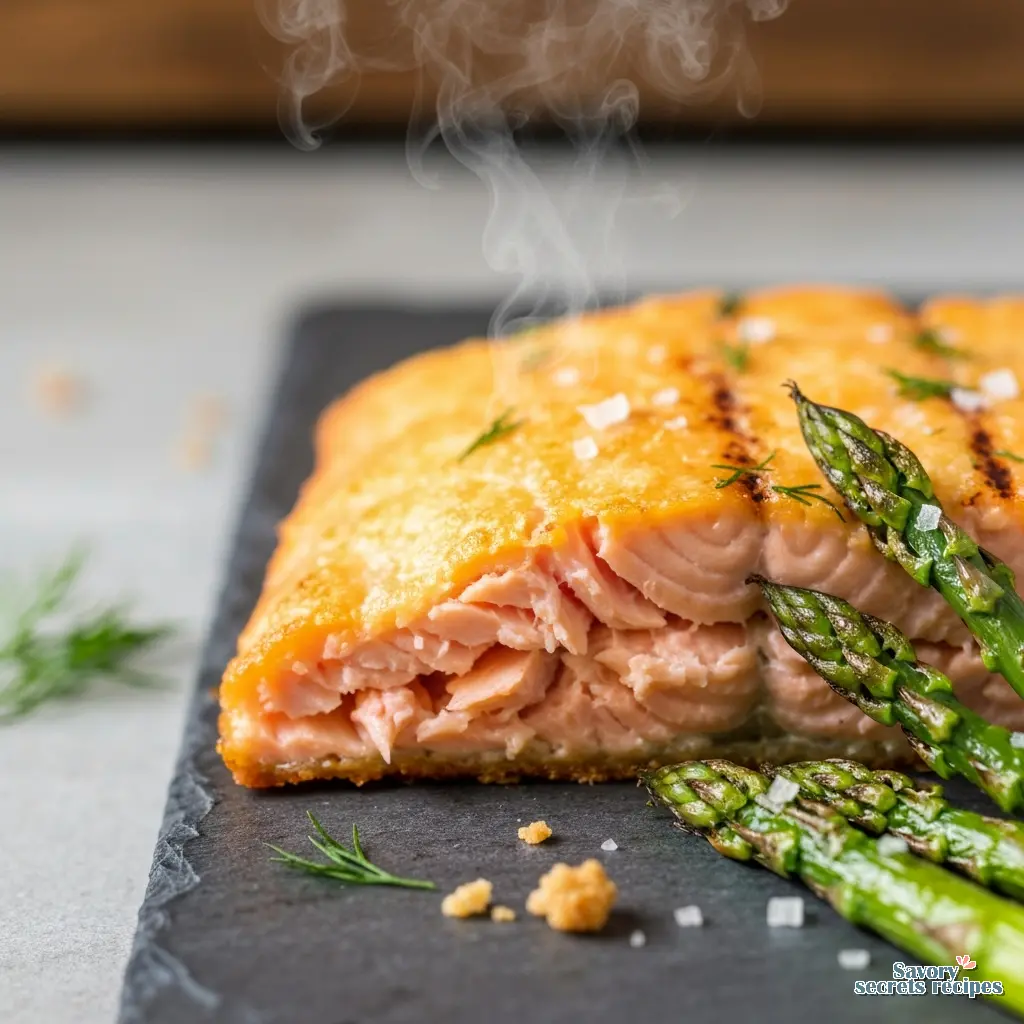
How do you know it is done without a thermometer? Press gently on the thickest part of the fillet with a fork. If the meat separates easily along the white fat lines, it is ready. If it resists and feels rubbery, it needs another minute. You are looking for a beautiful, vibrant pink color that has just turned opaque.
Common Mistakes & Fixes
Mistake: The vegetables are mushy while the fish is raw.
Solution: You likely used very thin asparagus stalks with very thick fillets. In most cases, you should match the thickness. If your fish is thick, add the thin vegetables halfway through the cooking time.
Mistake: The fish is dry and chalky.
Solution: Overbaking. Always check the thickest part of the fillet a few minutes before the recipe timer goes off. Ovens vary wildly. A light hand here saves dinner.
Mistake: Everything is steaming in a pool of liquid.
Solution: Crowding the baking sheet. Give the ingredients space to breathe. If your pan is too small, divide the meal between two pans.
Variations and Vegetable Substitutions
My daughter refuses most fish, but she will eat it if I let her help season it. We have a rule that she has to try one bite of whatever I’m testing. Last Tuesday it was this exact sheet pan salmon and asparagus recipe, but we changed up the flavor profile. Sometimes we pivot to an asian style roasted asparagus by using a ginger and soy glaze instead of the lemon-dill yogurt sauce. She actually became a fan of the vegetable after we recreated the dreamlight valley roasted asparagus recipe together.
If you don’t have a pre-made Italian seasoning, make a DIY Italian herb blend using equal parts dried thyme, fresh parsley, oregano, and basil. Want a bolder flavor? Add a quarter cup of parmesan cheese or a tablespoon of Ranch seasoning over the vegetables before roasting. It adds a beautiful, savory crust. If you love that cheesy finish, you should also try my garlic parmesan roasted asparagus for a stand-alone side dish.
Can you use other vegetables? Absolutely. If asparagus is out of season, swap it for zucchini, broccoli florets, green beans, broccolini, or yellow squash. Just remember that denser vegetables like baby red potatoes need a head start in the oven before you add the delicate fish. When asparagus is in season, I also highly recommend a lemon balsamic roasted asparagus to pair with richer fatty fish.
How to Store and Reheat Leftovers
I once ruined an entire test batch of beautiful branzino because I didn’t account for carryover cooking. Reheating fish is equally tricky. Most people just throw their leftover sheet pan salmon and asparagus into the microwave on high for two minutes and end up with rubber.
To store, place the completely cooled leftovers in an airtight container in the refrigerator for up to three days. When you are ready to eat, skip the microwave if you can. The perfect reheat method is to place the fish and vegetables back on a baking sheet. Spoon any leftover pan juices back over the salmon before serving for extra moisture. Cover it loosely with foil and warm it in a 275°F oven for about 10 to 15 minutes. It stays incredibly tender this way.
If you must use a microwave, use 50% power and heat it in 30-second bursts. It takes a little longer, but your lunch will actually taste good.
Frequently Asked Questions
Bringing It All Together
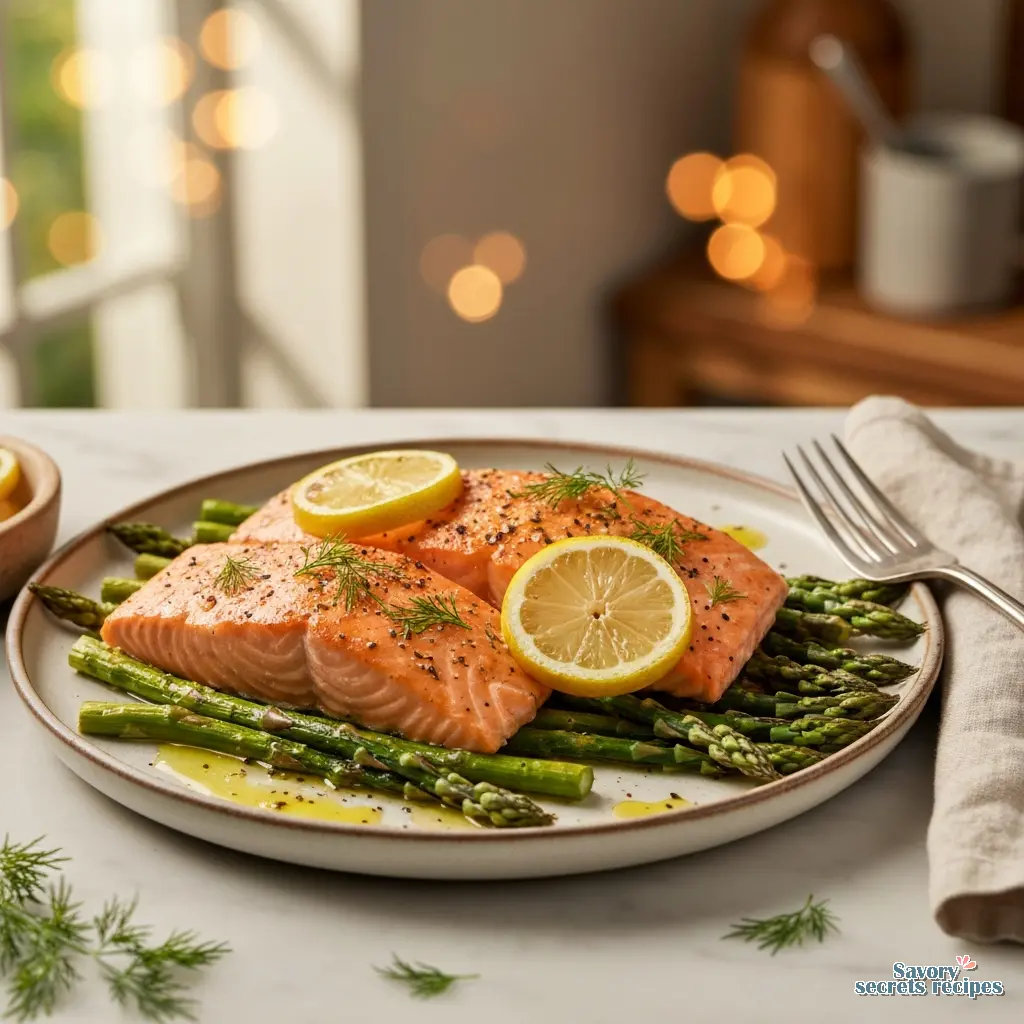
There is something deeply satisfying about pulling a colorful, healthy tray out of the oven after a long day. The bright green stalks, the golden crust on the fish, the aroma of roasted garlic. It is a moment of pure visual pride. You managed to put a wholesome, restaurant-quality meal on the table, and you only have to wash one pan.
When you make this sheet pan salmon and asparagus, trust your instincts. Let the fish come to room temperature, watch for that perfect flaky texture, and do not overthink it. You’ve got this!
I genuinely love seeing how you adapt these meals to fit your family’s tastes. For more inspiration, check out my Pinterest boards where I save all my favorite quick weeknight dinners and seafood variations.
Reference: Original Source
What Is the Best Kind of Salmon to Buy?
I’d lean toward Atlantic salmon fillets for their rich, buttery texture and high fat content, which keeps them moist during roasting. King or Sockeye are fantastic too, but they are leaner and cook much faster. Always look for firm flesh that smells like the clean ocean, never fishy.
Wild Salmon vs Farm Raised Salmon: What is the difference?
Wild-caught has a deeper red color, a more intense flavor, and is leaner. Farm-raised is usually Atlantic salmon, which has a milder flavor, thicker fat lines, and a softer texture. For this sheet pan salmon and asparagus recipe, farm-raised is actually more forgiving in the oven because of that extra fat.
How long should I bake sheet pan salmon and asparagus to ensure the fish stays moist?
At 400°F, an average one-inch thick fillet takes about 12 to 15 minutes. The trick is to pull it from the oven when it reaches an internal temperature of 135°F to 140°F. It will finish cooking as it rests on the hot baking sheet. Don’t let it dry out!
What are some healthy salmon and asparagus dinner ideas for a low-carb diet?
This recipe is naturally low-carb. To mix it up, you can swap the butter for extra virgin olive oil, add a handful of cherry tomatoes to the pan, or serve it over a bed of cauliflower rice. The Mediterranean flavors work beautifully with fresh dill and lemon slices.
Can I substitute the lemon butter sauce for a lemon-dill yogurt sauce in this recipe?
Absolutely. That’s a brilliant variation. Roast the sheet pan salmon and asparagus with just olive oil, salt, and pepper. While it bakes, whisk together plain Greek yogurt, fresh dill, minced garlic cloves, and lemon juice. Drizzle it over the hot fish right before serving. It is incredibly refreshing.