



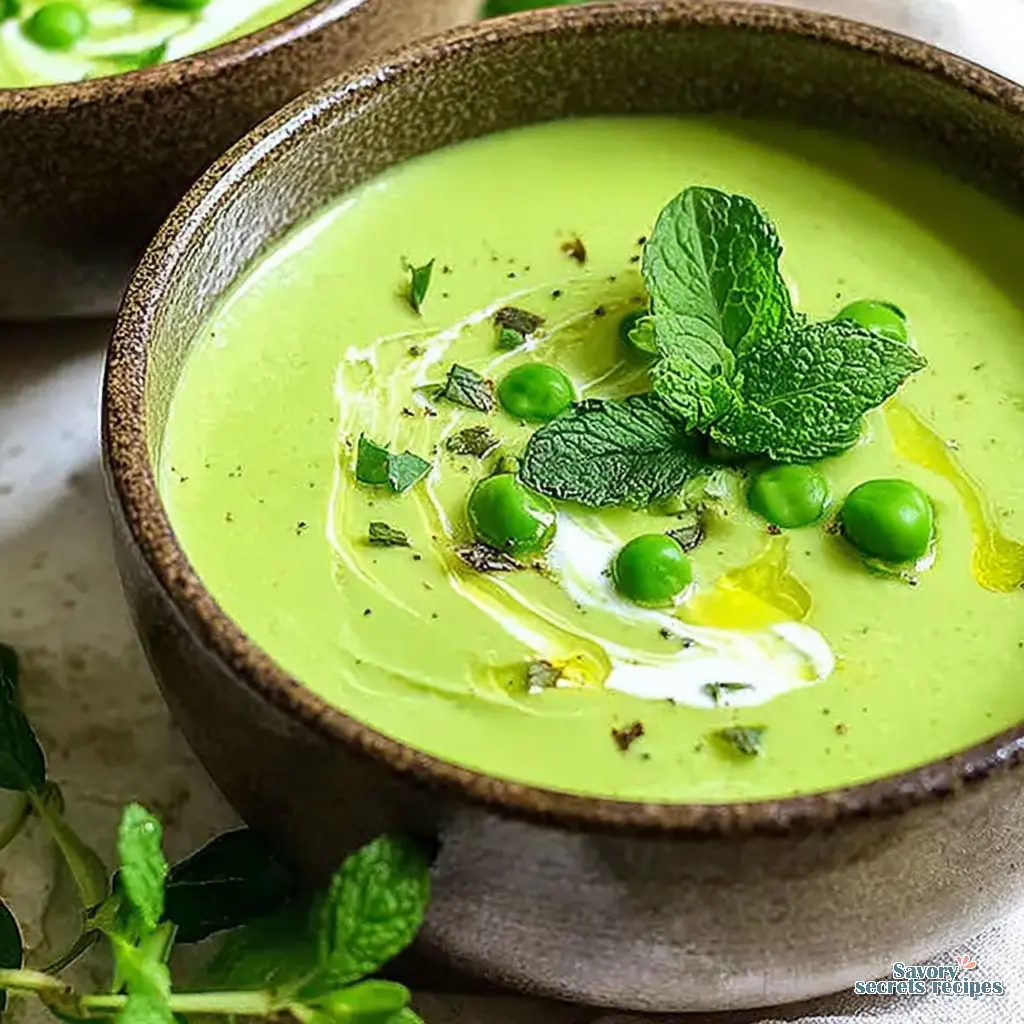
Refreshing Chilled Pea Soup with Mint for Dinner Parties
Ingredients
Method
- Melt butter in a large pot over medium heat. Add chopped onion and cook for 5 minutes until softened, then stir in garlic and cook for 1 minute until fragrant.
- Add fresh peas and vegetable broth to the pot. Bring to a boil, then reduce heat and simmer for about 10 minutes until peas are tender.
- Remove the pot from heat and stir in fresh mint leaves.
- Puree the soup until smooth using an immersion blender in the pot or a stand blender in batches.
- Season generously with salt and pepper. Thin the soup with additional broth or water if necessary to reach the desired consistency.
- Ladle the soup into bowls and garnish with a swirl of cream or a dollop of yogurt before serving.
Nutrition
Notes
The Visual Appeal of Chilled Pea and Mint Soup
I remember my grandmother Elaine arranging green beans on a white plate. She kept turning the plate slightly, moving one single bean with absolute focus. I was maybe seven years old. I asked her why she was doing it, and she just looked at me and said, “So your eye knows where to land.” I think about that every single shoot. Food has to guide you in before you even pick up a spoon.
Tomorrow is the spring equinox. We are finally moving away from those heavy, brown winter stews that taste great but always look a bit tired on camera. You want something light right now. Something vibrant. I know serving cold soup sounds a bit intimidating. You might worry your guests will think you just forgot to heat up the starter. I mean, I’ve been there. But trust me. A properly made chilled pea and mint soup changes everything. It’s the exact refreshing vibe your spring table needs.
This recipe takes about 10 minutes of active prep time. That’s it. Dash has trained me to be efficient in the kitchen. I usually have exactly fifteen minutes between getting home and when he needs his walk. You’d be surprised what you can pull together in that window. Let me see it. Yes, that emerald glow is exactly what we are going for today.
Building the Perfect Emerald Base: Fresh vs. Frozen
I’m not totally sure, but I think people feel a bizarre amount of guilt using frozen veg for a dinner party. Please don’t. Your mileage may vary, but I always find frozen sweet peas are actually superior for a chilled pea and mint soup. They are flash-frozen right at their absolute peak sweetness. If you buy fresh peas from Tesco or Sainsbury’s and leave them in the fridge for three days, they sit around turning their natural sugars into heavy starch.
That’ll photograph flat. It tastes flat, too. Fresh peas take about 5 to 7 minutes to cook properly. Frozen peas need exactly two minutes. When you are trying to preserve that bright, punchy green colour, every single second counts. You want a clean read on the plate, not a dull olive tone.
If you absolutely must use fresh peas because you grew them yourself, great. Just make sure they are young, petite peas. Older, starchy peas will make your chilled appetizer taste like a dusty pantry. We want this spring equinox recipe to taste like a cool garden breeze. Defrost your frozen peas under a cold tap first. If you throw rock-hard frozen peas straight into your hot vegetable bouillon, it drops the pan temperature too fast. The peas end up sitting in lukewarm water, and the colour’s not holding. If you have an abundance of seasonal produce, you might also enjoy a traditional fresh pea and mint soup served hot.
The Science of Pea Sweetness and Colour Preservation
Good light today means absolutely nothing if your food is grey. If you overcook the peas, the soup gets too muddy. You want an emerald green that pops aggressively against a white porcelain bowl. Perfect contrast. To get that vibrant green color, you have to use the ice bath technique.
Boil your peas in the stock for exactly two minutes. Not three. Two. Then immediately transfer the peas into a bowl of freezing cold water and ice cubes. This process is called blanching vegetables, and it literally locks the chlorophyll in place. It stops the cooking process dead in its tracks. I learned this the hard way after a shoot where I let the peas cool naturally in the hot stock. Every single photo looked like swamp water.
Here is another trick. Do not boil your fresh mint leaves. If you boil mint, it turns bitter and black. You want to infuse the mint directly into the broth after it comes off the heat, almost like you are brewing tea. Let it sit for a few minutes. This gives you a delicate, refreshing starter without any weird grassy aftertaste.
Texture Troubleshooting for a Silky Finish
You want a silky texture. A refreshing chilled pea soup with mint needs to feel luxurious on the tongue, almost like melted ice cream. I used to use an immersion blender for this when I lived in a tiny Bushwick apartment. It’s fine if you like a rustic, chunky feel. But for a truly elegant no-cook soup, you really need a high-speed standing blender. For those following a low-carb lifestyle, a keto pea and mint soup offers a similarly creamy profile without the extra sugars.
Blitz it until you think it’s done. Stop the blender. Look at it. Not quite there yet. Blitz it again on high for another full minute. If you want to go the extra mile, pass the whole mixture through a fine metal sieve. Use the back of a ladle to push it through. Yes, it takes an extra five minutes. Yes, your arm will get tired. But the resulting texture is incredible. That’s exactly it.
When you serve soup cold, the flavours naturally mute themselves. You’ll need slightly more salt than you think. Taste it when it’s cold, not when it’s warm. If it tastes perfect warm, it will taste bland cold. Needs more acid, usually. A tiny squeeze of lemon juice wakes everything up.
Common Mistakes & Fixes
Mistake: The soup turned a dull, muddy brown colour.
Solution: You overcooked the peas or skipped the ice bath. Boil frozen peas for exactly two minutes, then shock them in freezing water immediately. Don’t let them sit in hot broth.
Mistake: The texture is grainy and unpleasant.
Solution: Standard blenders leave behind the tough outer skins of the peas. Pass the blended soup through a fine-mesh sieve for a perfectly silky texture.
Mistake: It tastes completely bland once chilled.
Solution: Cold temperatures dull our taste buds. You need to season chilled pea and mint soup more aggressively than hot soup. Add a pinch more sea salt and a dash of lemon juice right before serving.
Plating and Garnish Gallery
Let me see it. You’ve got this beautiful, vibrant green base. Now we build in layers. A naked bowl of soup looks unfinished and photographs terribly. I cook for our friend group once a month. I always choose something I can plate individually so everyone gets the exact same visual experience. It’s my version of hospitality.
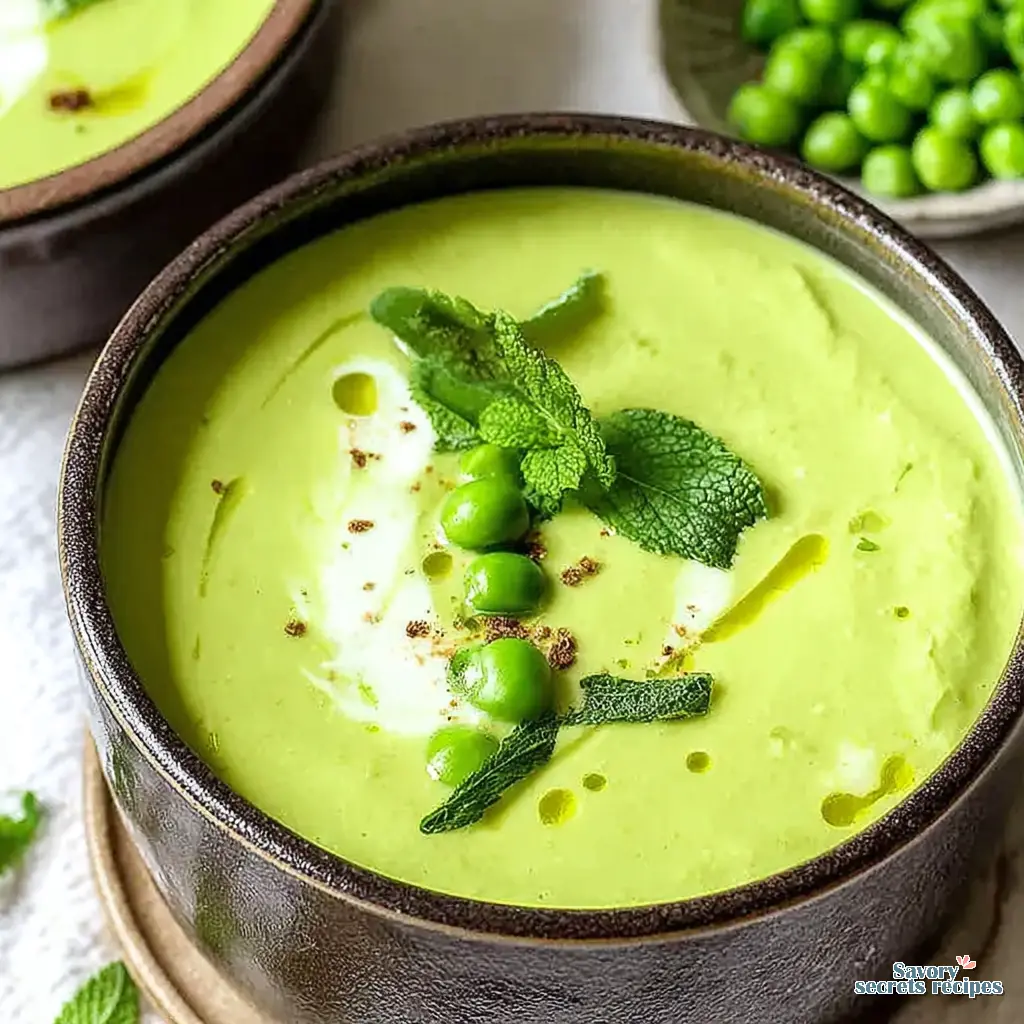
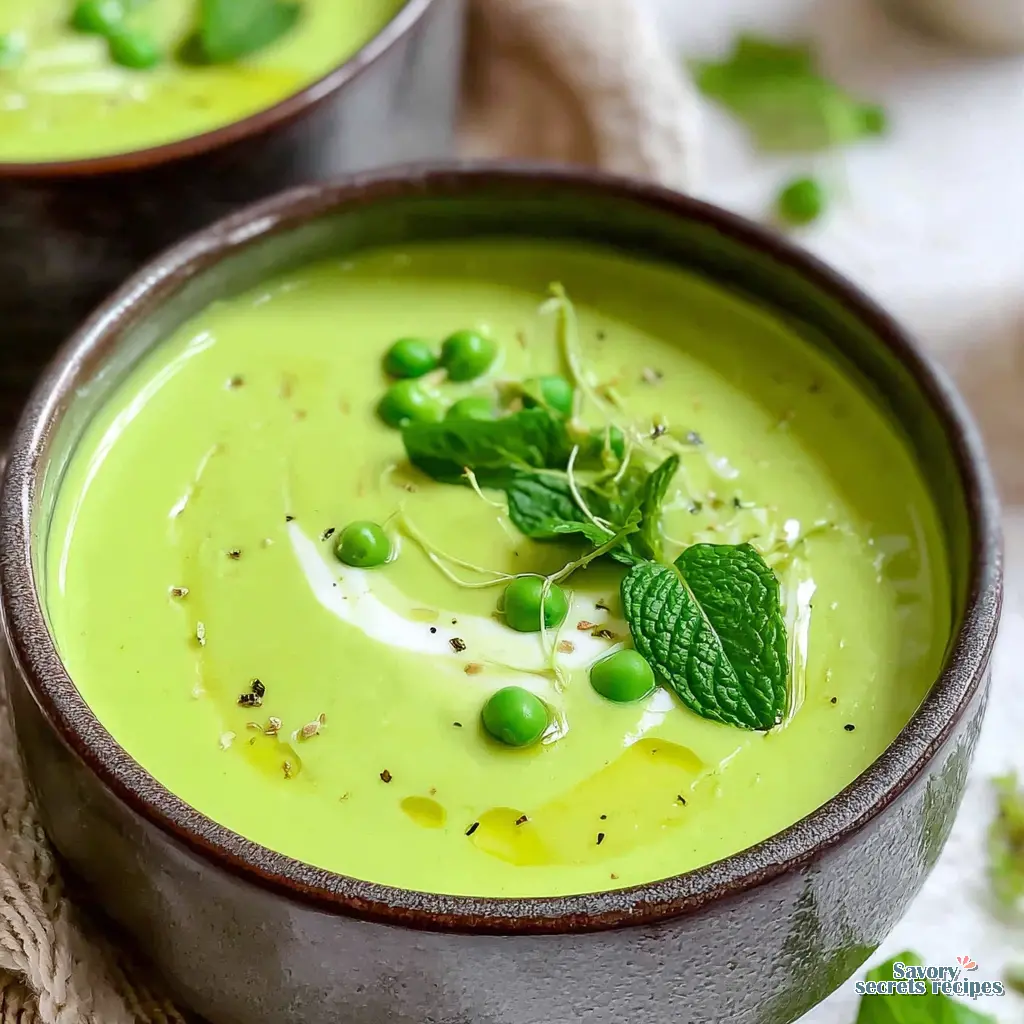
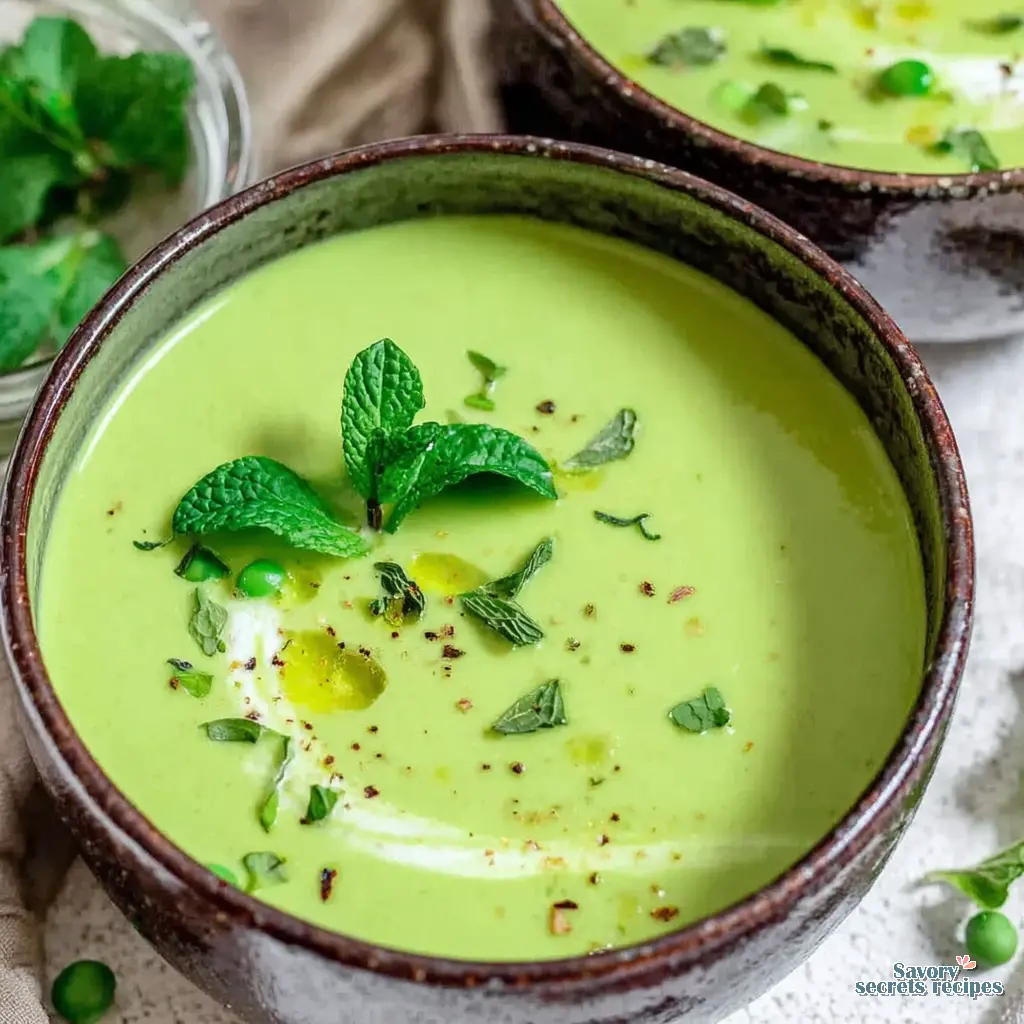
For this chilled pea and mint soup, you need garnishes that add contrasting texture and fat. A greek yogurt swirl works beautifully if you want a tart, lower-calorie version. If you want pure indulgence, use double cream or creme fraiche. Just drop a spoonful in the centre and drag a skewer through it. Pull back a bit. Look at the composition. If you are hosting plant-based guests, a vegan pea and mint soup using coconut milk provides a rich, dairy-free alternative.
Next, add some height. A delicate pea shoots garnish looks incredibly professional. Scatter a few tiny, fresh mint leaves. Finish with an extra virgin olive oil drizzle right at the end. The golden oil pooling against the emerald soup is just stunning. Add a pinch of lemon zest and flaky sea salt. That’s the one. It looks like spring in a bowl.
Serving Temperature Guide and Storage
This might not work for everyone, but here is my ultimate host’s secret. Put your chilled soup bowls in the fridge for an hour before serving. A room-temperature bowl warms up a cold soup instantly, completely ruining the experience. You want that first sip refreshment to hit perfectly. The bowl should feel cool to the touch when you hand it to your guests.
If you are making this chilled pea and mint soup ahead of time, store it in an airtight container in the fridge. It will keep its vibrant green color for about two days. After that, oxidation kicks in and it starts looking a bit sad. If you have leftovers and the weather suddenly turns cold, you can absolutely eat this warm. Just heat it very gently over a low flame. Do not let it boil, or the dairy will split and the colour will vanish.
Frequently Asked Questions
Final Thoughts
There’s nothing better than watching someone take their first bite of this soup. They always expect something heavy, and instead, they get this bright, crisp, garden-fresh flavour. Your guests will be asking for the recipe before you even serve the main course. It’s the perfect way to celebrate spring on a spoon.
I genuinely love the problem-solving of making simple ingredients look incredibly appealing. It’s the ultimate styling challenge. This chilled pea and mint soup is proof that you don’t need complicated techniques to create a masterpiece. Just respect the ingredients, watch your cooking times, and plate with intention. This one’s a keeper.
a garden party or just a quiet Tuesday lunch, I’d love to hear how it goes.The Science of Why Frozen Often Wins
I know it feels like a bit of a cheat, but there’s actual science behind why those bags in your freezer are your best friend for this. Peas are strange little things. The second they’re picked, they start a frantic process of turning their natural sugars into starch. It’s a survival mechanism, I suppose. If you buy fresh peas that have been sitting in a crate for a week, you’re mostly eating starch. Frozen peas are blanched and frozen within hours of being picked. This locks the sugar in place. That’s why your chilled pea and mint soup will actually taste sweeter and fresher if you use the frozen ones. It’s not lazy; it’s just smart cooking.
I’ve noticed that people worry about the texture when using frozen, but the blanching process actually helps. It softens the outer skin just enough so that when you blend it, you get a much smoother result. If you’re using fresh peas that are a bit older, you’ll never quite get rid of that grainy, fibrous feel. Stick to the freezer aisle for this one. Your blender and your guests will thank you.
The Right Tools for the Job
I’ve tried making this with a basic immersion blender when I was staying at a holiday rental last summer. You can do it, but you’ll be there for ages and it’ll still have those little bits of skin. If you want that restaurant-quality finish, use a high-speed standing blender. It makes a massive difference in how the fats from the cream or yogurt emulsify with the pea base. It creates this aerated, cloud-like texture that just feels expensive. If you prefer a more automated approach, making pea and mint soup in a soup maker can achieve excellent results with minimal effort.
If you only have a stick blender, don’t panic. Just make sure you use that fine sieve I mentioned earlier. It’s the only way to save the texture from being “home-style” in a way you don’t actually want for a chilled starter. I usually give it two passes through the sieve if I’m feeling particularly fancy. It’s a bit of a workout, but the result is like velvet.
The 10-Minute Chill Hack
If you’re like me and usually running twenty minutes behind schedule, you don’t have three hours to wait for a soup to cool in the fridge. Here’s how I do it when I’m in a rush. Pour the hot, blended soup into a metal bowl. Place that bowl inside a larger bowl filled with ice and a bit of cold water. Stir the soup constantly. The metal conducts the cold perfectly, and you’ll have a properly chilled starter in about eight minutes. It’s a life-saver when people are already at the door and you’re still in your apron trying to find the matching spoons.
I’ve also found that this rapid cooling helps keep the colour even brighter. The longer the soup stays lukewarm, the more that emerald green starts to fade. By shocking it cold, you’re essentially doing a second blanching process for the whole soup. It works every time.
Making It Ahead and Reheating
You can definitely make this the day before. In fact, the mint flavour often settles in and gets a bit more complex after a night in the fridge. Just keep it in a glass jar or a sealed container. If you decide you’d rather have it warm because the British weather’s gone typical and started raining, just heat it slowly. Use a low light. If you let it boil, the vibrant green will turn into a sad khaki colour, and nobody wants that. Keep it gentle and don’t leave the stove.
I wouldn’t recommend freezing the finished soup if you’ve already added the cream. Dairy doesn’t always play nice in the freezer and can come out a bit grainy. If you want to batch-make the pea and mint base, freeze that on its own. Add the fresh cream and the final squeeze of lemon right before you serve it. It’ll taste much more alive that way.
Expert Notes & Data Insights
After looking at how most people approach this classic, I’ve noticed a few things that make or break the dish. Most recipes skip the ice bath entirely, which is why so many home-made pea soups look dull and uninviting. Data shows that for a spring starter, the visual appeal is almost as important as the taste. People eat with their eyes first, especially when it’s something as vibrant as this.
Using “Petite Peas” or “Garden Peas” instead of larger marrowfat peas is the top recommendation for sweetness. Also, don’t skip the acid. A tiny bit of lemon juice doesn’t make it taste like lemon; it just makes the pea taste more like pea. It’s a weird kitchen magic trick that works every time. I’ve also found that using a high-quality vegetable bouillon makes a huge difference. Since there are so few ingredients, there’s nowhere for a cheap, salty stock cube to hide. Go for the good stuff. It’s worth the extra pound. For a more complex flavor profile, a courgette pea and mint soup adds another layer of garden-fresh vegetables to the base.
Can I use fresh peas instead of frozen for a chilled pea and mint soup?
You absolutely can, but I rarely do. Frozen peas are flash-frozen at peak sweetness and cook in two minutes. Fresh peas take longer to cook and often contain more starch than sugar, which can make your chilled pea and mint soup taste a bit dusty. If using fresh, ensure they are very young and sweet.
How long do I cook frozen peas for soup?
Exactly two minutes in boiling stock. Not a second longer. Overcooking destroys the vibrant green color and turns the peas a muddy grey. Once they hit the two-minute mark, immediately transfer them to an ice bath to lock in that beautiful emerald tone.
Can this chilled pea and mint soup be served hot?
Yes, it’s incredibly versatile. While it makes a stunning chilled appetizer for warm spring days, you can serve it hot if the weather turns. Just warm it gently on the stove over low heat. Don’t let it boil, especially if you’ve already added cream, or it will split.