



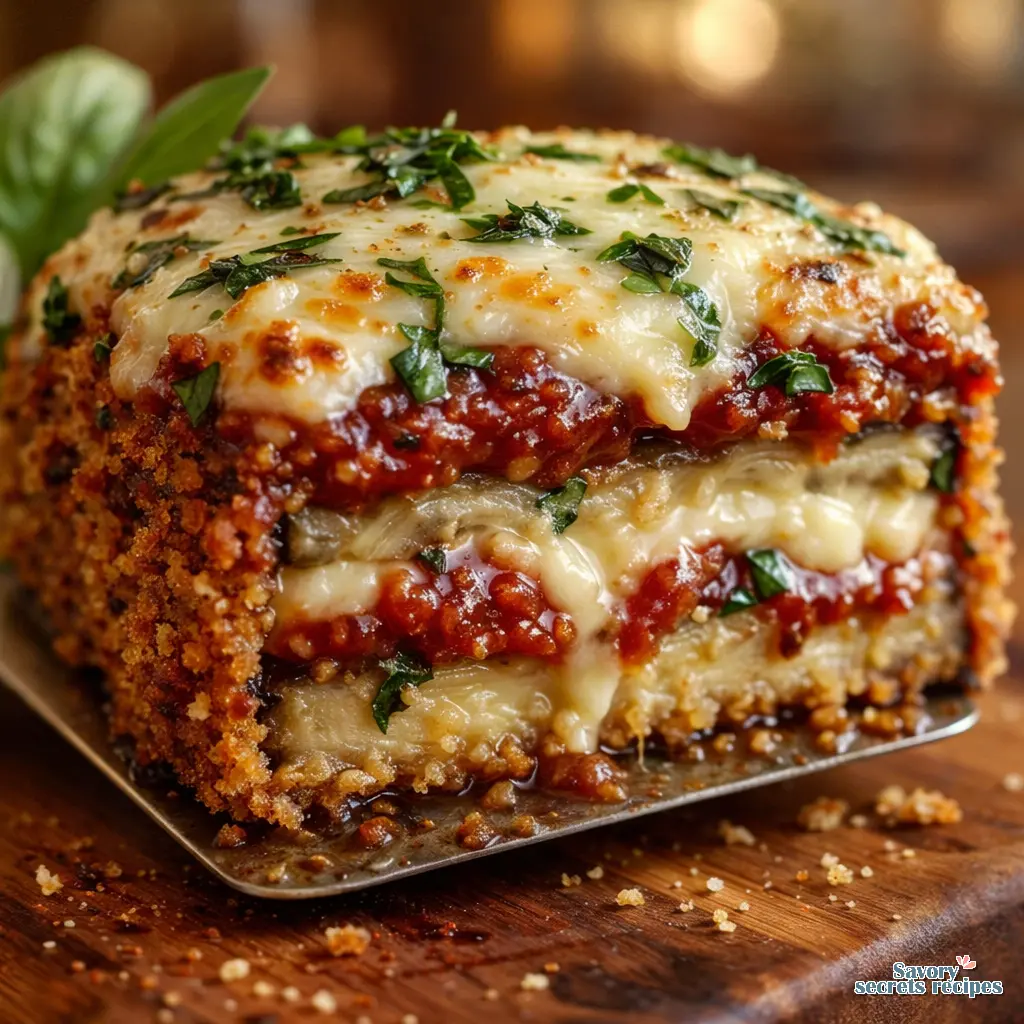
Best Eggplant Parmesan Recipe with Homemade Marinara
Ingredients
Method
- Slice two medium eggplants into half-inch rounds. Arrange them in a single layer on a tray, salt both sides generously, and let sit for 30 minutes before patting dry with paper towels.
- Organize three breading stations: one with flour, one with beaten eggs, and one with a mixture of breadcrumbs, Parmesan cheese, and black pepper.
- Dredge each eggplant slice in flour and shake off the excess. Dip the slices into the eggs, then coat thoroughly with the breadcrumb mixture, pressing gently to ensure the coating adheres.
- Arrange the breaded eggplant on a cooling rack set over a parchment-lined baking sheet and lightly brush the tops with olive oil.
- Bake at 425°F (220°C) for 20 to 25 minutes until golden and crisp, flipping the slices and brushing with more olive oil after the first 12 minutes.
- Spread a half-cup of marinara sauce in a baking dish. Layer half of the eggplant, half of the mozzarella, and more sauce, then repeat the process and top with fresh basil leaves.
- Bake the assembled dish at 375°F (190°C) for about 15 minutes until the cheese is bubbling and browned. Allow the dish to rest for 5 minutes before serving.
Nutrition
Notes
The Science and Soul of Classic Eggplant Parmesan
The smell of garlic cloves and fresh basil simmering on a chilly Los Angeles winter evening is exactly what I need right now. With Easter just around the corner, I’ve been thinking a lot about the ultimate vegetarian main dish for holiday tables. Eggplant Parmesan is a labor of love. I won’t pretend it’s a quick 15-minute meal. But I promise you, the result is infinitely better than anything you’d get from takeout.
I remember standing on a step stool in my grandmother’s kitchen in Milwaukee. Babcia Helena would pack cucumbers into huge ceramic crocks. She always measured salt in her palm first, then checked it with a scale. She taught me that you trust your hands, but you verify with your tools. I still think about that every time I measure out kosher salt for sweating vegetables. Making the best eggplant parmesan recipe with homemade marinara requires that same kind of precision. It’s not just cooking. It’s active biology.
I know a traditional eggplant parmesan sounds intimidating. You’re probably worried about soggy breading or bitter vegetables. Let me walk you through the exact science of making this classic Italian comfort food so it comes out with perfectly crispy edges and velvety, bubbly cheese every single time.
Recipe Science: The Osmosis of Salting Eggplant
Do you have to salt the eggplant before making authentic eggplant parmesan like an Italian grandma? According to the guidelines I follow, yes and no. The data suggests modern globe eggplants are bred to be much less bitter than they used to be. So salting and draining is often unnecessary if you are only worrying about bitterness.
But we salt for a entirely different reason. We salt for structure.
When you sprinkle kosher salt on eggplant slices, you trigger osmosis. The salt draws out excess water. This is crucial because eggplants act like little sponges. If they are full of water, they will steam in the oven instead of roasting. They will also absorb massive amounts of oil if you fry them. By drawing out that moisture beforehand, you condense the flesh. This gives you a dish that actually holds its shape when sliced.
I prefer working with medium-sized globe eggplants or Sicilian varieties. When you are at the farmers market, look for firm vegetables with taut, shiny skin. They should feel heavy for their size. Slice them to a consistent width (about a quarter inch) for even cooking. Uneven slicing is how you end up with some pieces being mushy and others tough.
Baked vs. Fried: Building Your Eggplant Parmesan
Is it better to bake or fry the eggplant slices for a traditional eggplant parmesan? I’ve tested both methods extensively. Frying gives you that classic, decadent crunch. Baking is much more efficient for a weeknight and feels a bit lighter. In my experience, though others might differ, baking breaded slices on a wire rack gets you 90% of the crunch with 10% of the mess. For a full walkthrough of this method, our guide on baked eggplant parmesan provides additional tips for achieving that perfect texture.
If you do fry, check your oil temperature. I rely on my instant-read thermometer for frying oil the same way I trust the pH meter for my ferments. You want the oil at exactly 350°F. When you drop a slice in, listen for that aggressive sizzle. That sound means the oil is hot enough to seal the crust rather than soaking into the vegetable.
For the sauce, you need a thick, rich tomato sauce. Watery sauce is the enemy of crispy breading. If you are making a homemade marinara from scratch, explicitly use vegetable broth instead of cooking wine to deglaze your pan. Let it simmer until it’s thick enough to coat the back of a spoon. Using whole peeled San Marzano tomatoes will give you a sweeter, less acidic base that perfectly balances the savory cheese.
Pro Tips for Crispy Breading (And Air Fryer Instructions)
Setting up a proper breading station prevents a massive kitchen disaster. I learned this the hard way after practically gluing my fingers together with flour and egg wash. Use one hand for the dry ingredients and your other hand for the wet ingredients. Maintaining a clean breading station is key to the success of any cheesy eggplant bake or fried dish.
Here is my foolproof setup for the best texture:
- Station 1: All-purpose flour seasoned heavily with black pepper. (Use a gluten-free flour blend if needed).
- Station 2: Beaten eggs. (Almond milk works perfectly here as a vegan-friendly binder).
- Station 3: Panko breadcrumbs mixed with Italian seasoning and freshly grated Parmesan cheese. Panko is critical here. It provides a coarser, crunchier texture than standard breadcrumbs.
If you want to use an air fryer, I highly recommend it. It’s a fantastic middle ground. Air fry the breaded slices at 375°F for about 10 to 12 minutes, flipping halfway. Just to be safe, spray them lightly with olive oil first so they achieve that beautiful golden-brown color.
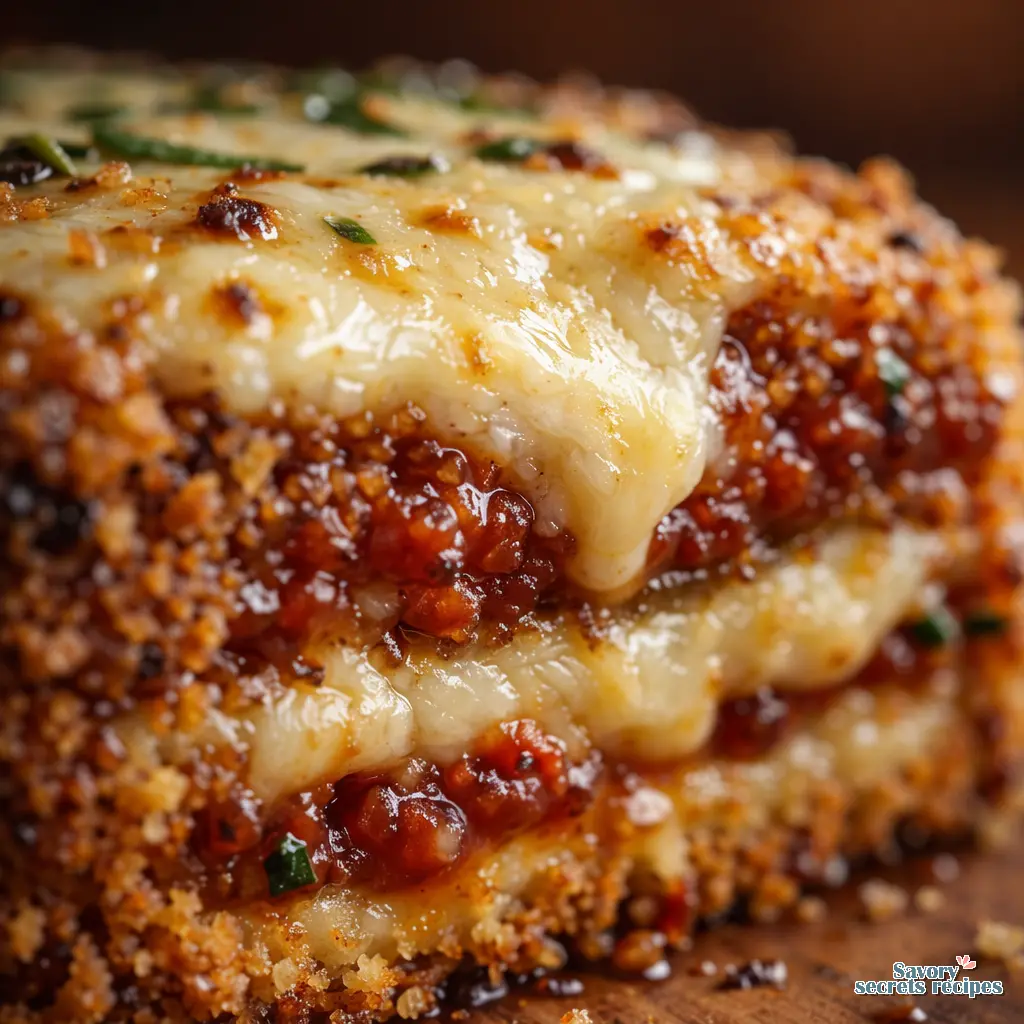
Visual Troubleshooting: Common Mistakes & Fixes
Mistake: The breading falls off in the pan.
Solution: This usually happens if your oil isn’t hot enough or you didn’t press the panko firmly into the egg wash. Let the crust set completely before trying to flip the slice.
Mistake: The entire casserole is a soggy, watery mess.
Solution: You likely used too much marinara sauce or skipped the salting step. You only need a thin layer of sauce between the eggplant slices. The vegetables release their own moisture as they bake.
Mistake: The cheese melts into a greasy, separated puddle.
Solution: You probably used pre-shredded cheese in a bag. Those contain anti-caking agents that ruin the melt. Always use fresh mozzarella slices and freshly grate your Parmigiano Reggiano.
Mistake: The baked slices look pale and dusty.
Solution: Skipping the oil drizzle on baked versions prevents browning. Always drizzle or spray the breaded slices with extra virgin olive oil before they hit the oven.
The Architecture of Flavor: Layering Guide
I genuinely love the moment when you start assembling the casserole dish. It makes me happy in a way that’s hard to explain. It’s like having a small corner of the world operating exactly as planned. Following a structured layering approach is essential when preparing a hearty italian eggplant casserole.
Start with a very thin layer of sauce at the bottom of your baking dish. This prevents sticking. Next, add your largest eggplant slices. Overlap them slightly when layering to ensure structural integrity. If you leave big gaps, the dish will collapse when you cut it.
Top the eggplant with a modest spoonful of sauce, then a layer of fresh mozzarella, and a generous dusting of parmesan. Season with a tiny pinch of kosher salt and black pepper between every single layer. This is exactly the result we want to see. Repeat this until you run out of eggplant, making sure your top layer is heavily crowned with cheese.
When you pull it out of the oven, the cheese should be bubbly and golden. Now, here is the hardest part. You must let the dish rest for 30 minutes after baking. If you cut it immediately, the lava-hot filling will slide everywhere. Better to err on the side of caution and let it set. The wait is entirely worth it.
Serving Pairings & Reheating Guide for Maximum Crunch
What is the secret to making eggplant parmesan a true classic Italian comfort food? It’s all about how you serve it. I usually pair this with a simple Mediterranean side salad tossed in a sharp vinaigrette. The acid cuts right through the richness of the cheese.
You’ll also want some crusty San Francisco-style sourdough or Italian bread for scooping up the leftover sauce. If you want to go traditional, serve it alongside a simple pasta like rigatoni or spaghetti.
For reheating, please step away from the microwave. The microwave turns the beautiful crispy breading into a damp sponge. To restore the crunch, place your leftover slices on a baking sheet and heat them in the oven at 400°F until the cheese is bubbling again. That tracks with what I’ve seen in all my kitchen tests.
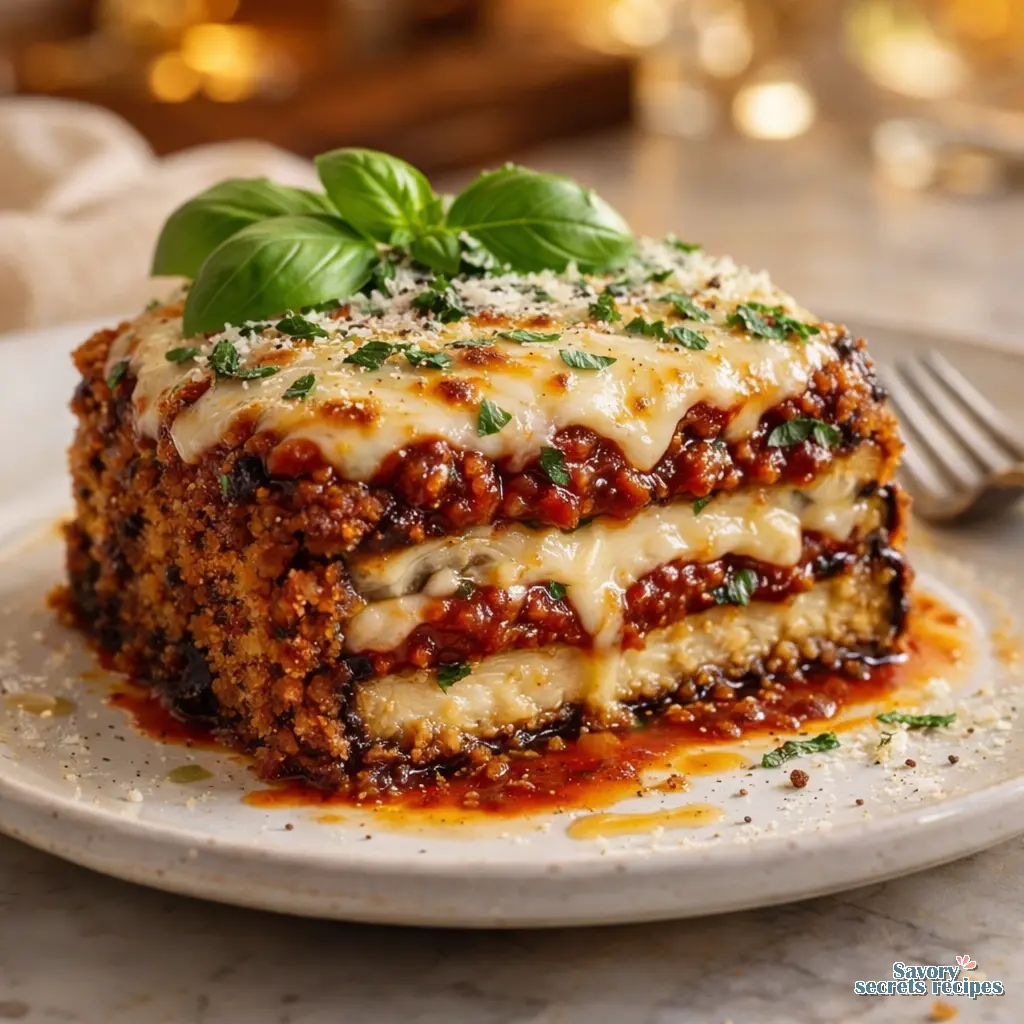
Storage & Freezing (The 3-Way Method)
I’m a big believer in meal prep, especially when you are putting this much effort into a recipe. Eggplant Parmesan stores beautifully in the refrigerator in an airtight container for 3 to 5 days. It honestly tastes even better the next day after the flavors have mingled.
Can I freeze leftover eggplant parmesan or prepare it ahead of time? Absolutely. I use a three-way method depending on how much time I have:
Method 1: Freeze the breaded slices. After breading and baking (or frying) the slices, let them cool completely. Freeze them flat on a baking sheet, then transfer to a freezer bag with parchment paper between them. They last up to a month this way. You can assemble and bake the casserole straight from frozen.
Method 2: Freeze the unbaked assembly. Build the entire casserole in a freezer-safe dish. Wrap it tightly in plastic wrap and foil. It will keep for a month. When you are ready, bake it covered at 350°F, adding about 20-30 minutes to the baking time, then uncover it to brown the cheese.
Method 3: Freeze baked leftovers. Cut the fully baked and cooled dish into individual portions. Wrap each piece tightly. These are great for up to 3 months. I’d want to verify first that your freezer is running at optimal temperature to prevent freezer burn.
Frequently Asked Questions
Bringing It All Together
I know making a traditional Eggplant Parmesan from scratch is an afternoon project. I sometimes wonder if I’m too cautious with all these rules about salting and resting. But then I think about the readers who are trying this for the first time, and I’d rather give you the exact steps for success.
When you pull that bubbling, golden casserole out of the oven, pour yourself a glass of sparkling apple cider and take a moment to appreciate the work you’ve done. I’d love to see how your Sunday dinner turns out, so please tag me in your photos. And remember, hide a slice in the back of the fridge. It’s the ultimate chef’s treat for tomorrow’s lunch.
For more inspiration, check out my Pinterest boards where I save all my favorite seasonal vegetable bakes and preserving techniques.
Reference: Original Source
How do I make the best eggplant parmesan recipe with homemade marinara without it getting soggy?
The trick is controlling moisture. Always salt and sweat your eggplant slices first to draw out water. Use a thick, reduced marinara sauce rather than a watery one. Finally, avoid drowning the layers in sauce; you only need enough to lightly coat the eggplant.
Is the eggplant peel edible in Eggplant Parmesan?
Yes, the peel is completely edible and contains great nutrients. However, on larger, older eggplants, the skin can be tough and difficult to cut through with a fork. I usually peel my eggplants in a striped pattern to get the best of both worlds.
Can I make this ahead of time?
Absolutely. You can assemble the entire Eggplant Parmesan a day in advance, cover it tightly, and keep it in the refrigerator. Just add about 10 to 15 minutes to your baking time since the dish will be cold going into the oven.
What is the best cheese substitute for a vegan version?
I’ve had great success swapping the dairy for high-quality cashew mozzarella and nutritional yeast in place of the parmesan. Just make sure your vegan cheese is specifically formulated for melting, otherwise it will dry out in the hot oven.
Why is my eggplant parmesan bitter?
Bitterness usually comes from using overripe, out-of-season eggplants with large, dark seeds. Always look for firm, heavy eggplants with smooth skin. Salting the slices for 30 minutes before breading also helps draw out any lingering bitter compounds.