



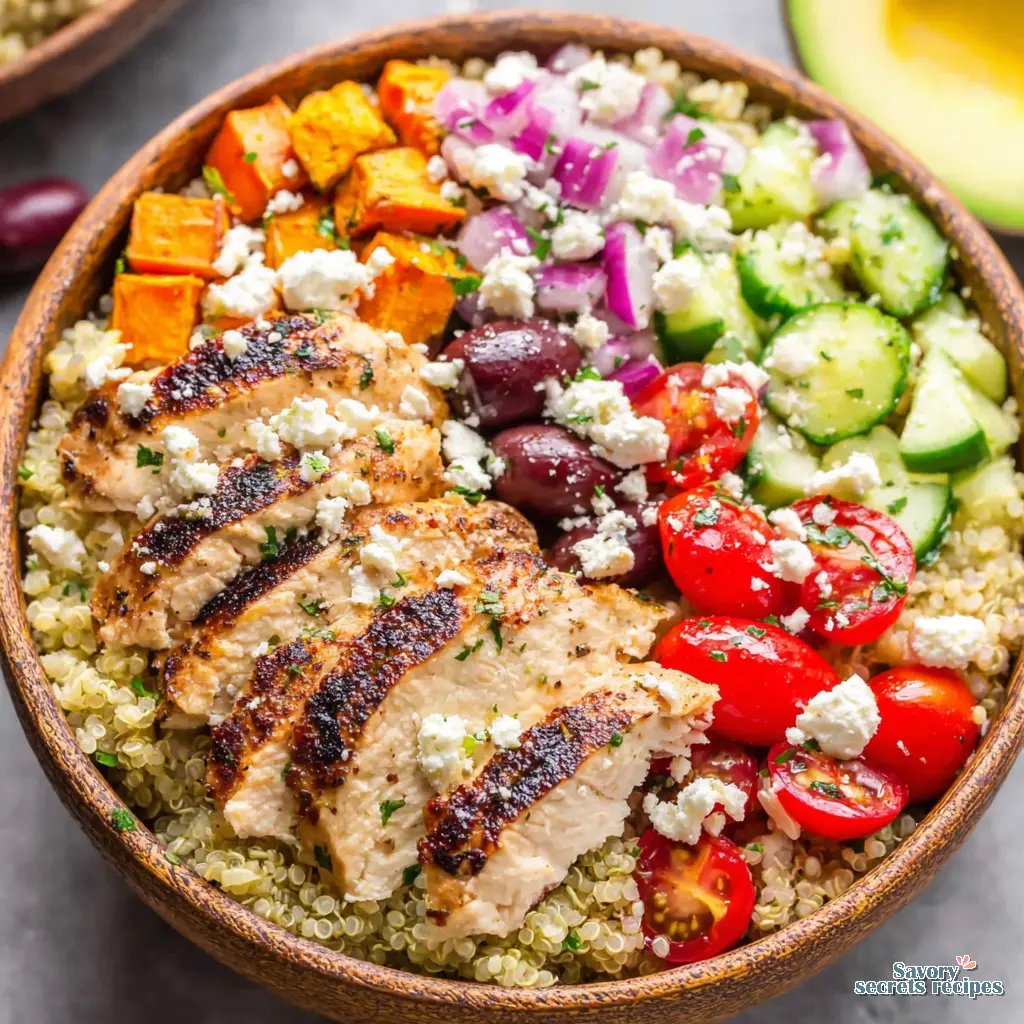
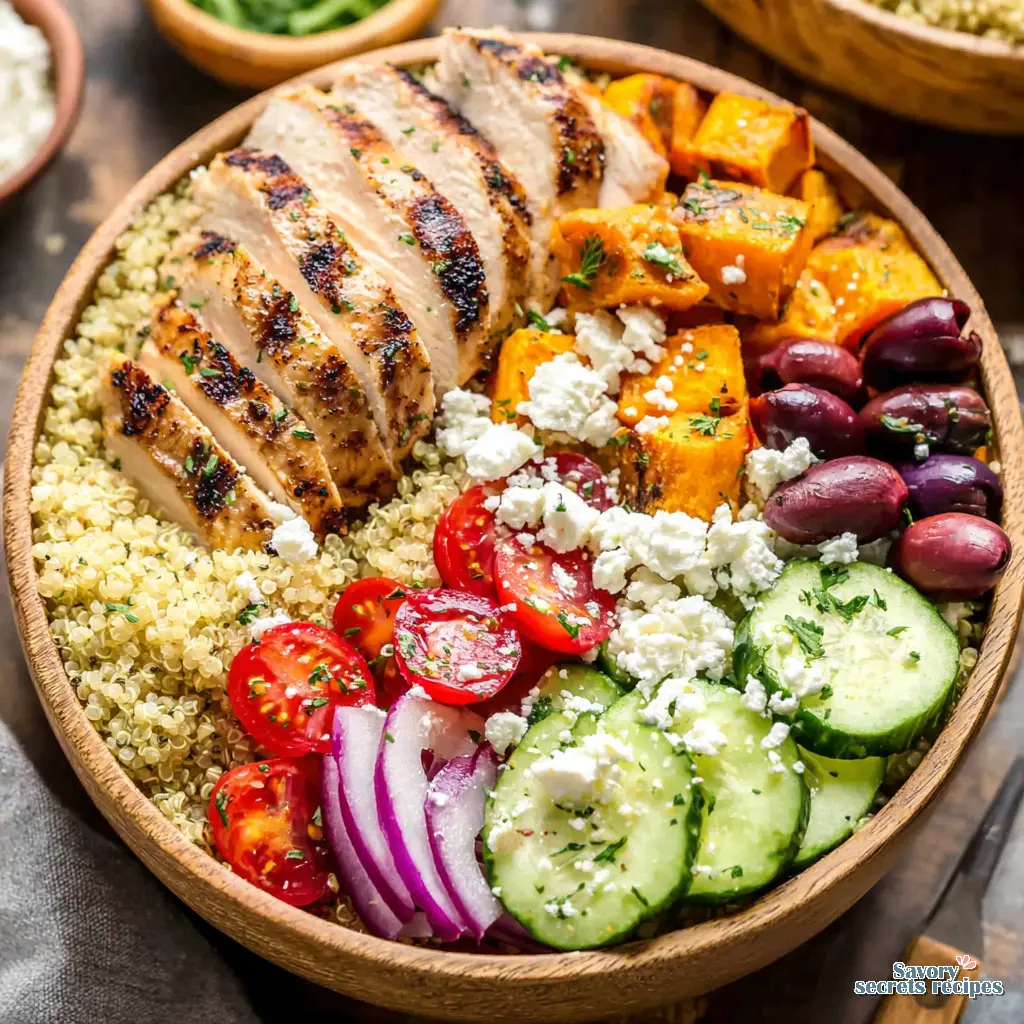
Roasted Vegetable Protein Quinoa Bowl
Ingredients
Method
- Place each chicken breast in a large zip-top storage bag and pound to an even 1/2-inch thickness using a meat mallet or rolling pin.
- Whisk together olive oil, lemon juice, garlic, thyme, oregano, salt, and pepper in a small bowl. Pour the marinade into the bag with the chicken, turn to coat, and refrigerate the bag in a baking dish.
- Rinse the quinoa under cold water in a fine-mesh sieve. Combine the quinoa and 2 1/4 cups water in a medium saucepan, bring to a boil, then reduce to a simmer. Cover and cook for 10 to 15 minutes until tender and the water is absorbed, then set aside to cool.
- Preheat the grill to 400–450°F. Remove the chicken from the marinade, discard the excess liquid, and grill for 5 to 7 minutes per side until the internal temperature reaches 165°F (75°C). Let the chicken rest for 5 minutes before slicing into strips.
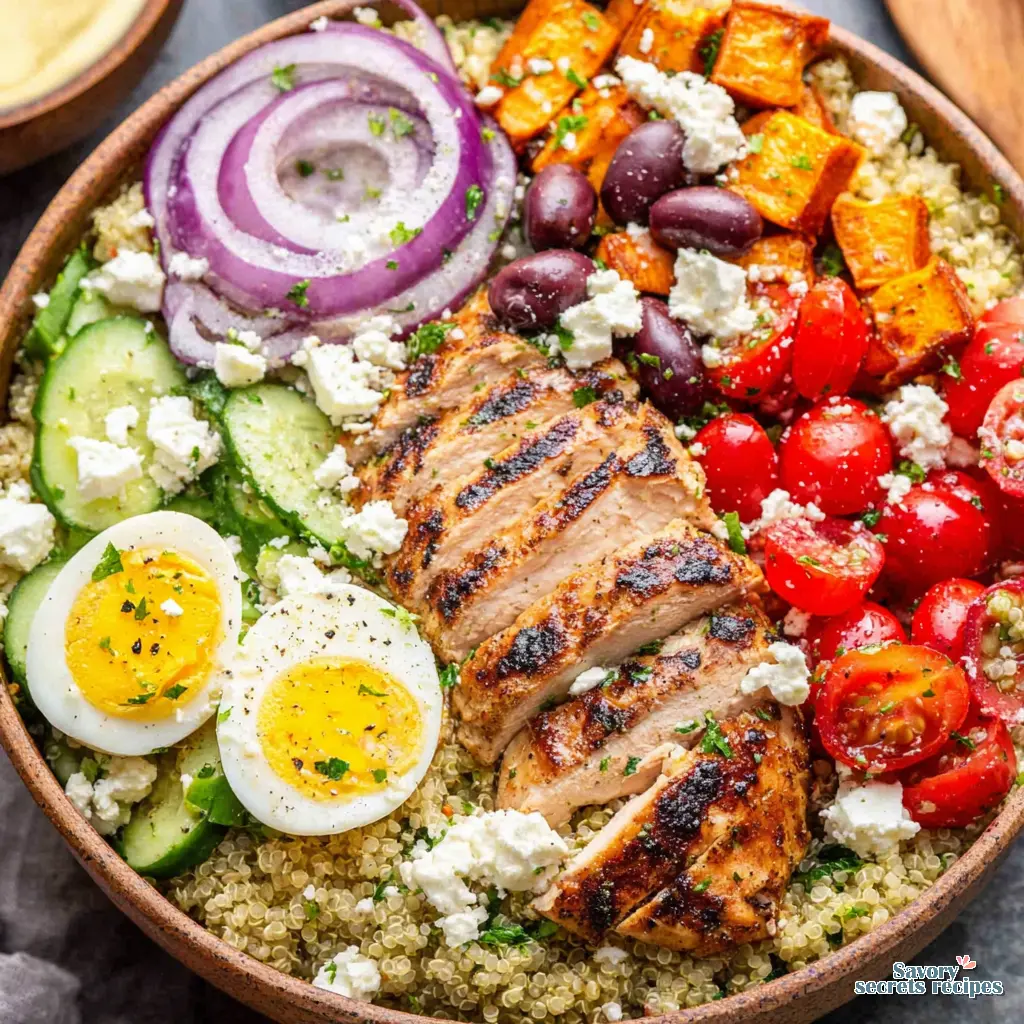
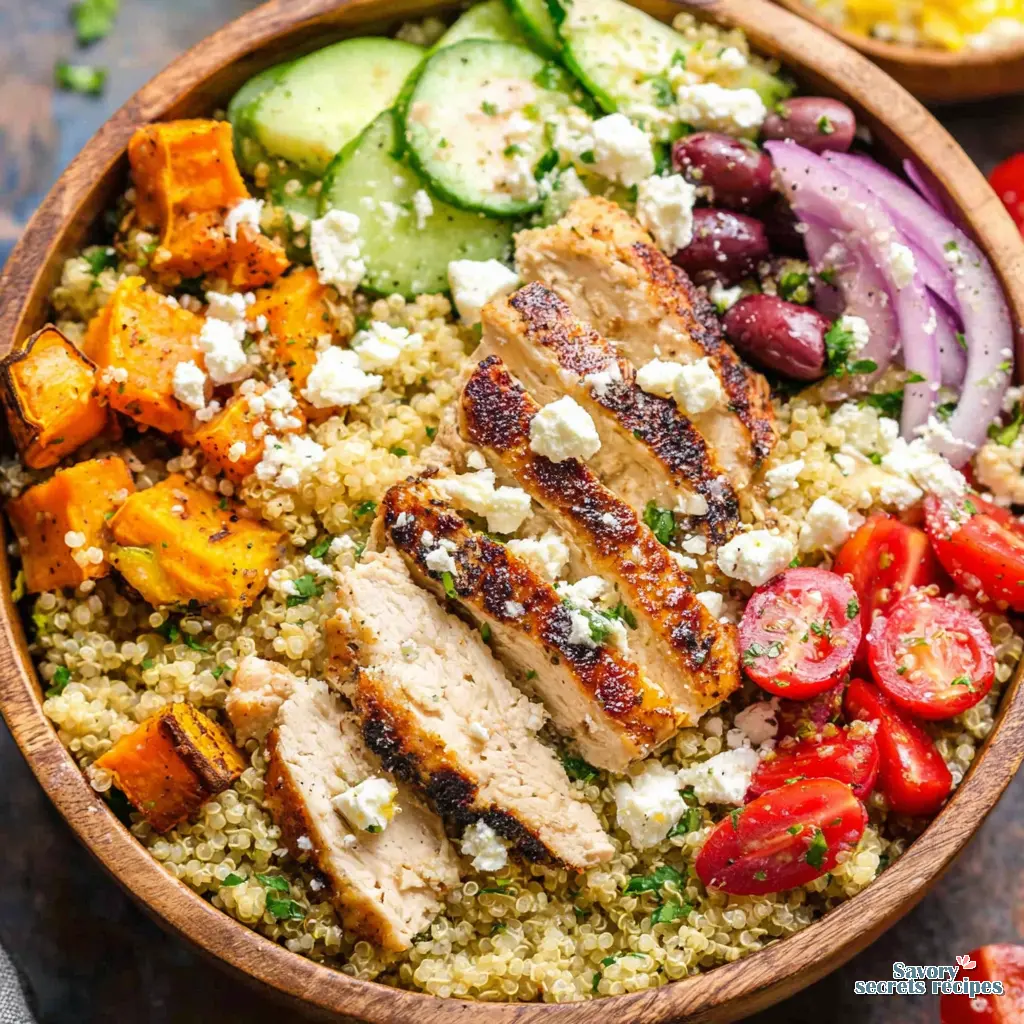
- Divide the quinoa among four serving bowls. Top with the sliced chicken, cucumber, tomatoes, avocado, red onion, feta cheese, and Kalamata olives. Serve as is or with Greek yogurt or Tzatziki sauce.
Nutrition
Notes
The 3 PM Slump Antidote: Building the Perfect Protein Quinoa Bowl
It’s Wednesday afternoon. You’re staring at your laptop screen, your eyes are glazing over, and that dreaded 3 PM energy slump hits hard. Let me think through this. You could grab another iced coffee, or you could eat a lunch that actually fuels you instead of just stuffing you full. I used to struggle heavily with hitting my protein goals on a plant-heavy diet without feeling weighed down. This protein quinoa bowl? It’s the absolute antidote.
My mom used to pack my lunch in a three-tier metal tiffin, and I’d beg her for basic sandwiches instead because I was tired of being the kid with the “weird” food. She’d pack the tiffin anyway. I traded it exactly once for a Lunchable, and I felt so incredibly guilty about the look on her face that evening that I never did it again. Now I pack similar nutrient-dense lunches for myself, and I honestly wonder if my daughter will go through that same phase. I could eat this every week. It’s a power lunch packed with complex carbohydrates and serious plant protein to keep you full until dinner. Learning a simple method for a fresh quinoa lunch makes these busy afternoons much more manageable.
The Science of Saponins (And Why We Actually Rinse)
If you’ve ever made a batch of grains that tasted vaguely like dish soap, you aren’t alone. Quinoa has a natural outer coating called saponins. It’s basically a botanical defense mechanism against insects. To be honest, skipping the rinse is the fastest way to ruin your protein quinoa bowl. I know it sounds like a fussy extra step, but it makes a massive difference.
The research isn’t entirely clear on this, but some folks are much more sensitive to that bitter flavor than others. I’m still working this out, but I firmly believe a thorough rinse under cold water is non-negotiable. Just put the dry seeds in a fine mesh strainer and run them under the tap until the water runs completely clear. Taste as you go. Well, maybe don’t taste raw quinoa, but you know what I mean. If the water looks cloudy, keep rinsing.
Stovetop vs. Instant Pot: The Perfect Quinoa Cooking Guide
I like recipes that give you a framework and then trust you to adjust based on what you’re tasting, rather than insisting on exact, rigid rules. Let’s look at the stovetop versus the Instant Pot for building the base of your quinoa vegetable salad. They both work, but the results are entirely different.
For the stovetop method, here’s what I’m seeing. Sauté some onions and minced garlic in a little California olive oil first. Toast the rinsed grains right in the pan with those aromatics and some fresh lemon zest before you add any liquid. This pilaf method builds incredible, deep flavor. Cook the grains in bone broth instead of water to increase the protein content even more. If you use the stovetop, do not open the lid while it’s simmering to prevent the steam from escaping. Just let it do its thing.
The Instant Pot is undeniably faster, but you miss out on that beautiful toasted flavor. Tradeoffs, you know? Whichever method you choose, let the cooked grains rest for 5 to 10 minutes off the heat. This resting period allows the trapped moisture to evaporate. Skipping this is how you end up with soggy, mushy grains.
Visual Doneness Gallery: How to Tell When It’s Ready
I figured out how to cook grains properly by reading a food science book, of all things. I learned to look for visual cues instead of just staring at a timer. If it smells ready, it probably is. But visually, you’re looking for the little “germ” ring to pop out.
It looks exactly like a tiny white spiral separating from the main seed. The grain itself should become slightly translucent in the center. I prefer my grains to still have some slight resistance when you bite into them. I can’t stand the texture of overcooked mush. Once you see those little spirals pop, pull the pot off the heat.
Sheet Pan Vegetables: Your Meal Prep Sunday Strategy
Meal prep Sunday is where this recipe truly shines. The goal is a roasted vegetable quinoa bowl meal prep for the week that actually still tastes incredible on Thursday afternoon. Drizzle your sweet potato cubes with olive oil and coarse salt before roasting for better flavor. I like to toss in some fresh asparagus since it’s Spring, and maybe some cherry tomatoes.
The trick is to never overcrowd the roasting pan. I mean, if you pack the vegetables too tight, they’ll just steam each other instead of roasting. You want them to caramelize. Trust the browning process here. Sometimes we burn the veggies a little bit, and honestly, that’s okay. We just call them extra crispy in my house. Cook the entire package of quinoa at once to have your base ready. Prep extra vegetables while you’re at it. Slice the entire red onion and the whole English cucumber even if you only need half right now. This bulk-cooking strategy is the foundation of any easy quinoa recipe designed for busy weeks.
How to Add More Protein to Quinoa Salad Without Meat
So, how can I add more protein to quinoa salad without meat? That tracks as one of the most frequent questions I get from clients. You don’t always need chicken breast to make a meal satisfying. Canned lentils are fantastic to keep the recipe fast and easy. Just rinse them and toss them right in. For instance, a mediterranean quinoa salad often relies on chickpeas and feta for a complete protein source.
Roasted chickpeas are another brilliant option. Season them heavily with garlic powder and smoked paprika. Then, build a creamy tahini dressing. The healthy fats in the tahini and some sliced Hass avocado really drive that feeling of satiety. Sprinkle on hemp hearts, pumpkin seeds, and a dusting of nutritional yeast for a savory, cheesy flavor. Toss in a handful of edamame. Suddenly, you’re looking at a serious plant protein powerhouse that’s totally fiber-rich.
Alcohol-Free Variation
This recipe can easily be made without alcohol. Here are the substitutions I recommend:
- Rum → pineapple juice + 1/2 tsp almond extract. For tropical sweetness
These swaps maintain the depth of flavor while keeping the dish completely alcohol-free. Perfect for family-friendly meals or personal preference.
Variations & Substitutions for Your Quinoa Vegetable Salad
I’m not convinced yet that there’s only one “right” way to make a protein quinoa bowl. You can and should adapt this based on your farmers market haul or whatever is wilting in your crisper drawer.
- Southwest style: Add black beans, roasted bell peppers, and a squeeze of lime juice.
- Creamy Tahini Focus: Lean heavily into roasted sweet potatoes and massaged kale. The acid in the dressing breaks down the tough kale leaves perfectly.
- Flexible ratios: Use more or less of any ingredient based on your personal preference. Season in layers.
If you’re adapting for dietary needs, substitute vegetable broth to make a fully vegan pilaf base. Use plant milk in your dressing for dairy-free creaminess. This is just what works for me, but the framework is incredibly forgiving.
Common Mistakes & Fixes
Mistake: Opening the lid while the grains are simmering.
Solution: You’re releasing all the crucial steam. Leave the lid firmly in place until the timer goes off.
Mistake: Skipping the resting period.
Solution: You likely ended up with mushy grains. Let it rest for 10 minutes off the heat to allow excess moisture to evaporate.
Mistake: Cooking only what you need for one single meal.
Solution: You missed a prime meal-prep opportunity! Always bulk cook your base grain for the week.
Mistake: Not toasting the grains first.
Solution: You missed out on major flavor depth. Take three minutes to toast them in oil with aromatics before adding broth.
Storage, Freezing, and Specific Reheating Guide
Storage limits are often super vague online. People will just say “keeps all week,” but I’d want to see more data before leaving leftovers in the fridge for seven days. For optimal freshness and food safety, keep your cooked quinoa in the refrigerator in an airtight container for up to four days. Store any extra tahini dressing entirely separately from the bowl ingredients so nothing gets soggy.
Here’s a trick for the fresh herbs: preserve your cilantro by washing it, rolling it lightly in paper towels, and storing it in a zip-top bag left slightly open for air circulation. If you want to freeze the base, you absolutely can. Cool it completely, portion it into flat silicone bags, and freeze for up to three months.
When you’re ready to eat, reheating matters. To prevent the grains from drying out in the microwave, sprinkle exactly one tablespoon of water over the top, cover it with a damp paper towel, and heat for 60 to 90 seconds. It fluffs right back up. Now we’re talking.
Frequently Asked Questions
Bringing It All Together
You’re officially a meal prep pro. Building a satisfying protein quinoa bowl is exactly what I mean when I say healthy eating should be genuinely enjoyable and not stressful. The process of roasting those vegetables and whisking that dressing matters just as much as the outcome. I genuinely love the moment when you mix all these vibrant, beautiful colors together in one bowl.
Don’t be afraid to experiment with the ingredients you have on hand. I share tons of variations on my Pinterest boards if you want more ideas for your weekly rotation. Take a quick photo of your beautiful bowl art before you dig in, and enjoy that feeling of being properly fueled for the rest of your day.
Reference: Original Source
What are the best ingredients to include in a healthy protein quinoa bowl?
I always start with a solid base cooked in bone broth. Then I layer in roasted sweet potatoes, fresh asparagus, and cherry tomatoes. For healthy fats, I rely on Hass avocado and a rich tahini dressing. Don’t forget crunchy pumpkin seeds and kalamata olives for that perfect salty bite.
How can I add more protein to quinoa salad without meat for a vegetarian version?
It’s easier than you think. I love tossing in a cup of canned lentils or crispy roasted chickpeas. Edamame is another brilliant addition. Top your protein quinoa bowl with hemp hearts, pumpkin seeds, and a generous sprinkle of nutritional yeast. The plant protein adds up incredibly fast.
How long can I store a roasted vegetable quinoa bowl meal prep for the week?
If you store the components properly, they’ll stay fresh in the refrigerator for up to four days. The secret is keeping the wet ingredients, like your dressing and chopped tomatoes, in separate airtight containers from your dry base and roasted vegetables. Mix them right before you eat.
Is it better to serve a quinoa vegetable salad cold or warm?
Fair enough, this is a great question. It’s completely up to your preference! I personally love the contrast of warm roasted vegetables over cold, crisp greens. However, if you’re taking this to the office, it’s absolutely delicious served cold straight from the fridge.