



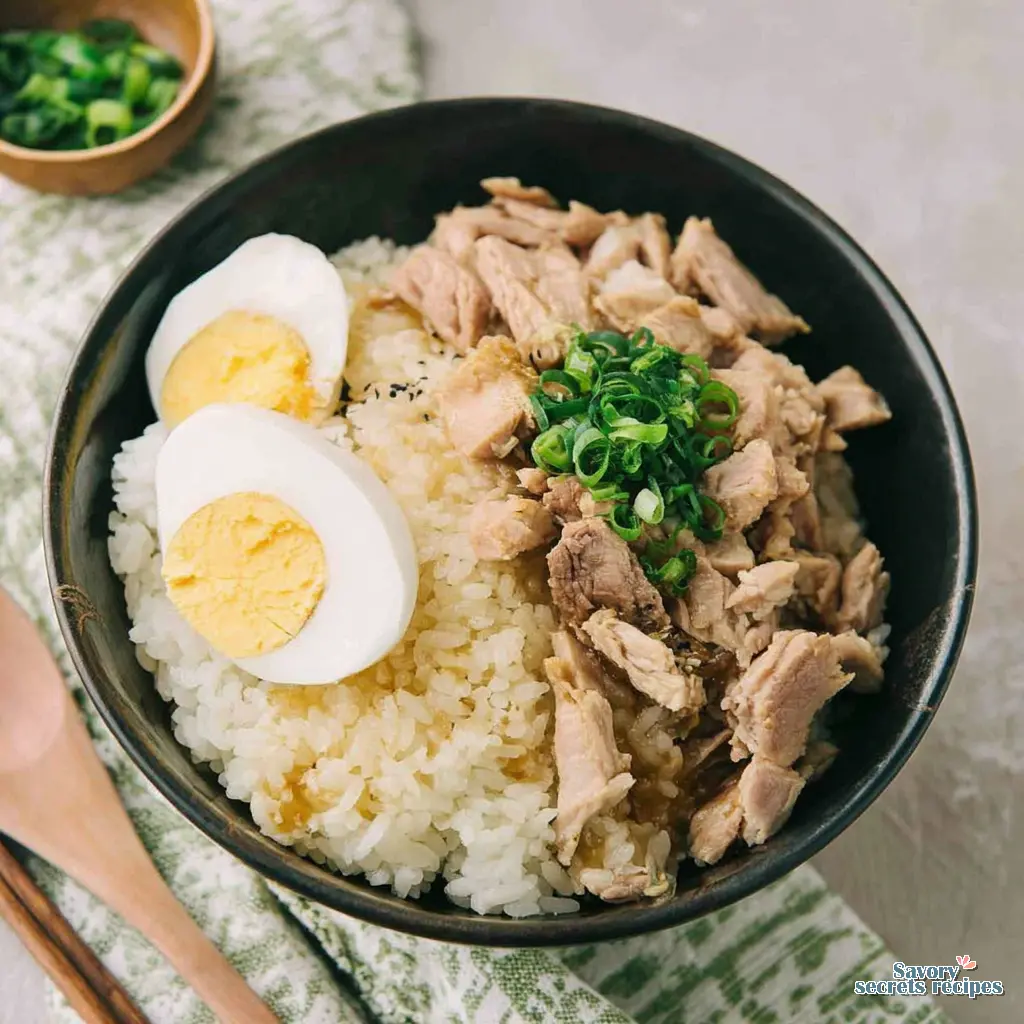
How to Make Authentic Tori Donburi at Home
Ingredients
Method
- Combine dashi stock, soy sauce, mirin, and sugar in a non-stick frying pan or cast iron skillet over medium-high heat and bring the mixture to a boil.
- Add the chicken and simmer in the stock for 10 minutes, then layer the sliced onion over the chicken and cook for an additional 2 minutes.
- Pour the beaten egg over the top and simmer, covered, for 2 to 3 minutes until the egg is set but still slightly runny.
- Serve the mixture over freshly steamed rice and garnish with chopped scallions.
Nutrition
Notes
The Secret to a True Japanese Chicken Rice Bowl
Growing up, I honestly thought a japanese chicken rice bowl was just that overly sweet, sticky stuff you get at the mall food court. You know the kind. It is usually sitting under a heat lamp and served in a styrofoam container. As a technique editor, I spend my days testing recipes and breaking down the science of why things work. Figuring out how to make authentic tori donburi at home completely shifted my perspective on weeknight cooking. While Oyakodon is a classic, learning how to master a homemade teriyaki chicken base will give you even more versatility in the kitchen.
The word “Donburi” simply means rice bowl. It is a humble concept. You take a bowl of perfectly steamed short grain rice and top it with something savory. The most famous version of this is Oyakodon. The name poetically translates to “parent and child” because it uses both chicken and egg. It is a beautiful reflection of japanese cuisine.
I know a lot of people feel intimidated by authentic asian cooking. You might think you need a pantry full of hard-to-find ingredients. But I promise you do not. A traditional japanese chicken rice bowl recipe is actually built on a very simple pan reduction. You can pull this off on a busy Wednesday night after a quick Trader Joe’s run. It is probably one of the most comforting meals you can make during those cool, 60-degree spring evenings we get here in LA.
The Foundation: Rice Washing and Absorption
If you want to build a perfect asian chicken bowl, you have to start with the rice. Short grain rice is absolutely non-negotiable here. I mean, you could try using jasmine or basmati, but they just do not have the right starch content to hold together under the rich sauce. You want that slightly sticky texture.
Here is something I learned the hard way. You must wash your rice thoroughly. Place your rice in a bowl, cover it with cold water, and swirl it briskly with your fingers. The water will look cloudy and milky. Drain it and repeat this three or four times until the water runs mostly clear. This removes the surface starch. If you skip this, your rice will turn into paste.
There is a specific trick for cooking rice destined for a japanese chicken rice bowl. You actually want to cook it with slightly less water than usual. Maybe just a tablespoon or two less per cup. Why? Because the hot, savory broth from the chicken and egg mixture is going to soak into the rice. If your rice is already fully hydrated and soft, adding the topping will make it mushy. You want the grains to be just right so they can absorb all that umami without losing their structure.
Choosing Your Protein: Thighs vs. Breasts
I get asked all the time if you can use chicken breasts instead of thighs. Look, I will be honest. You can, but I really do not recommend it. Skin-on chicken thighs are the secret to that golden brown, incredibly flavorful result you get at a real Tokyo eatery.
Let us compare the two. Chicken breasts are very lean. When you simmer them in the broth, they tend to seize up and dry out quickly. Thighs have enough connective tissue and fat to stay perfectly tender even if you accidentally leave them in the pan a minute too long. Plus, rendering the fat from the chicken skin directly into your cast iron skillet builds a flavor base that a lean breast just cannot provide.
If you want the chicken to cook quickly and evenly, use a technique called the “Sogigiri” cut. This is a slanting cut. You hold your knife at an angle and slice the chicken into thin, uniform 2-cm pieces. This exposes more surface area to the sauce. Before cooking, I love to toss the chicken in a very light layer of cornstarch. This “velveting” technique locks in the juices and gives the chicken a silky texture that feels amazing to eat.
The Halal and Alcohol-Free Broth Solution
A classic japanese chicken rice bowl relies heavily on sake and mirin. These are alcohol-based ingredients that add sweetness and depth. But what if you are cooking for a halal diet, or you just prefer not to use alcohol? I think a lot of recipes fail to offer good alternatives here.
You can easily build a complex, alcohol-free sauce. Instead of mirin, use a mixture of rice vinegar and a little extra sugar or apple juice. The vinegar provides that necessary acidity to cut through the rich chicken fat. For the savory backbone, you need a good dashi substitute. If you cannot find traditional dashi, a high-quality vegetable stock mixed with a splash of vegetarian oyster sauce works wonders. It gives you that deep umami flavor.
You mix this alcohol-free base with soy sauce and a few drops of sesame oil. The smell when this hits the hot pan is so good. It instantly smells like a professional kitchen. You can use this same alcohol-free logic when preparing a teriyaki chicken bowl if you prefer to avoid mirin in the glaze.
The Pan Reduction and Searing Technique
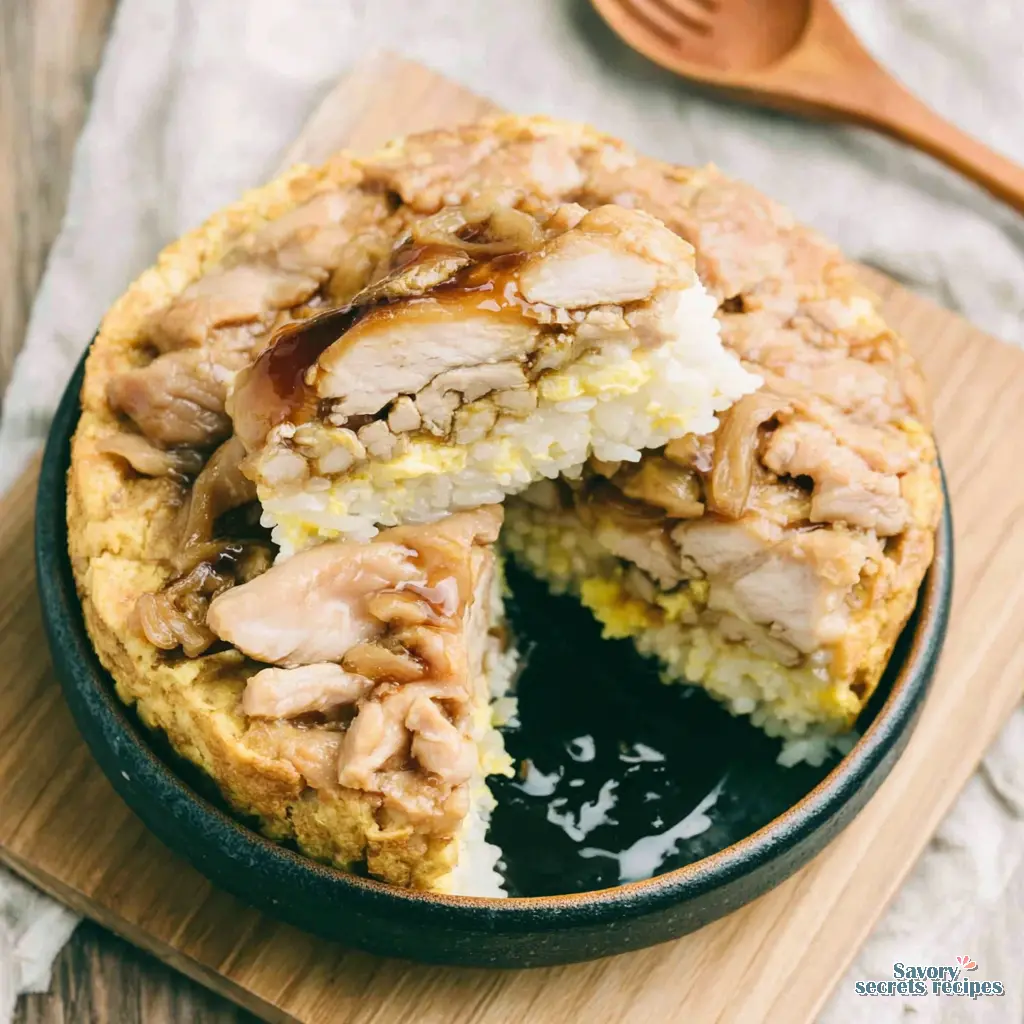
One of the biggest benefits of this dish is that it is a one-pan wonder. You start by placing your chicken skin-side down in a cold pan. Turn the heat to medium. As the pan warms up, the fat slowly renders out of the skin. You will hear that incredible sizzle. Once the skin is golden brown and crispy, you flip the pieces and add your sliced onions.
Here is where the magic happens. You pour your broth mixture into the pan. Do not cover it. You want the liquid to simmer and reduce. The onions will soften and absorb the savory soy broth. The sauce will naturally thicken from the cornstarch on the chicken. You are looking for a visual cue where the bubbles get slightly larger and the sauce looks like a shiny glaze. It is a simple pan reduction, but it concentrates the flavors beautifully.
The “No-Overbeat” Egg Rule
The egg is what turns a basic chicken bowl into a traditional japanese chicken rice bowl recipe. But there is a very specific way to handle the eggs. First, bring your eggs to room temperature before cooking. They will set much faster in the pan.
Now, listen closely. Do not overbeat the eggs. I see people whisking them into a uniform, pale yellow liquid. That is a mistake. You want to lightly break the yolks with chopsticks, aiming for a marble pattern with distinct streaks of yellow and white. This creates different textures and flavors in the final dish.
When the chicken is perfectly tender and the sauce is reduced, you add the eggs in two stages. Pour two-thirds of the egg mixture over the chicken and onions. Let it simmer for about 30 seconds until it just starts to set. Then, turn off the heat and pour the remaining one-third over the top. The residual heat will gently cook the second batch, leaving it incredibly soft and slightly runny. This contrast in textures is exactly what you want.
Common Mistakes & Fixes
Mistake: The sauce turns into a watery soup.
Solution: You probably overcrowded the pan. Cook no more than two servings at a time. If you add too much chicken and liquid at once, the pan temperature drops and the sauce cannot reduce properly.
Mistake: The eggs are tough and rubbery.
Solution: You likely stirred the eggs after pouring them into the pan, or you left the heat on too long. Pour the eggs and step away. Let the gentle heat do the work.
Mistake: The rice is mushy.
Solution: You used too much water when cooking the rice. Remember the rule. Less water in the rice cooker means better absorption in the bowl.
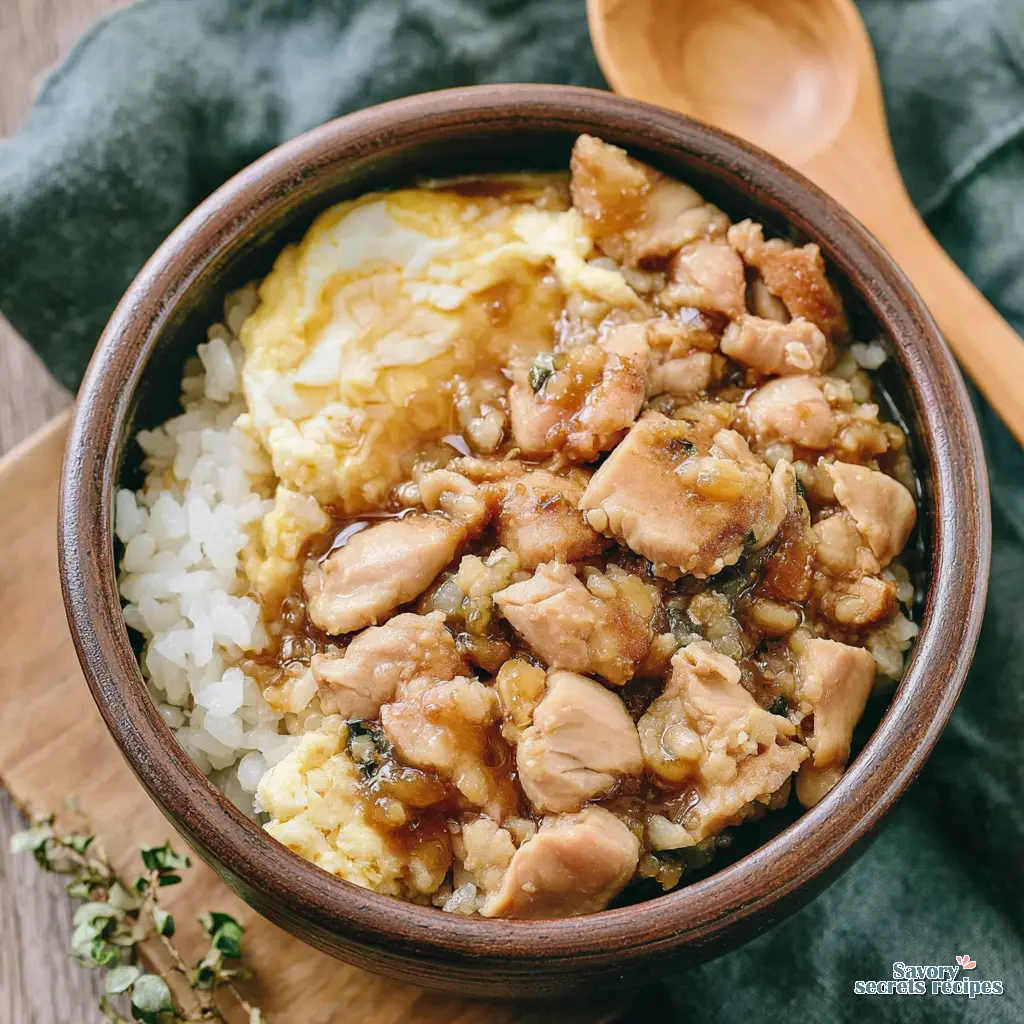
Storage and Reheating Your Japanese Chicken Rice Bowl
Honestly, a japanese chicken rice bowl is best eaten immediately while the rice is hot and the eggs are perfectly soft. But if you are doing some Sunday meal prep with ingredients you grabbed at Ralphs, you can definitely save the leftovers. The trick is to store the chicken and egg mixture in a separate airtight container from the rice.
If you store them together, the rice will absorb every drop of the sauce overnight and turn into a soggy block. When you are ready to eat, microwave the rice with a damp paper towel over it to steam it back to life. Heat the chicken topping separately in short 20-second bursts. If you blast the chicken in the microwave for two minutes straight, those beautiful soft eggs will turn into rubber.
For serving, I love to add a pop of color and freshness. Grab some spring scallions from the Santa Monica Farmers Market, slice them thin, and scatter them on top. A sprinkle of shredded nori or a pinch of togarashi adds that final layer of flavor. It pairs beautifully with a simple miso soup or a spicy cucumber salad.
Frequently Asked Questions
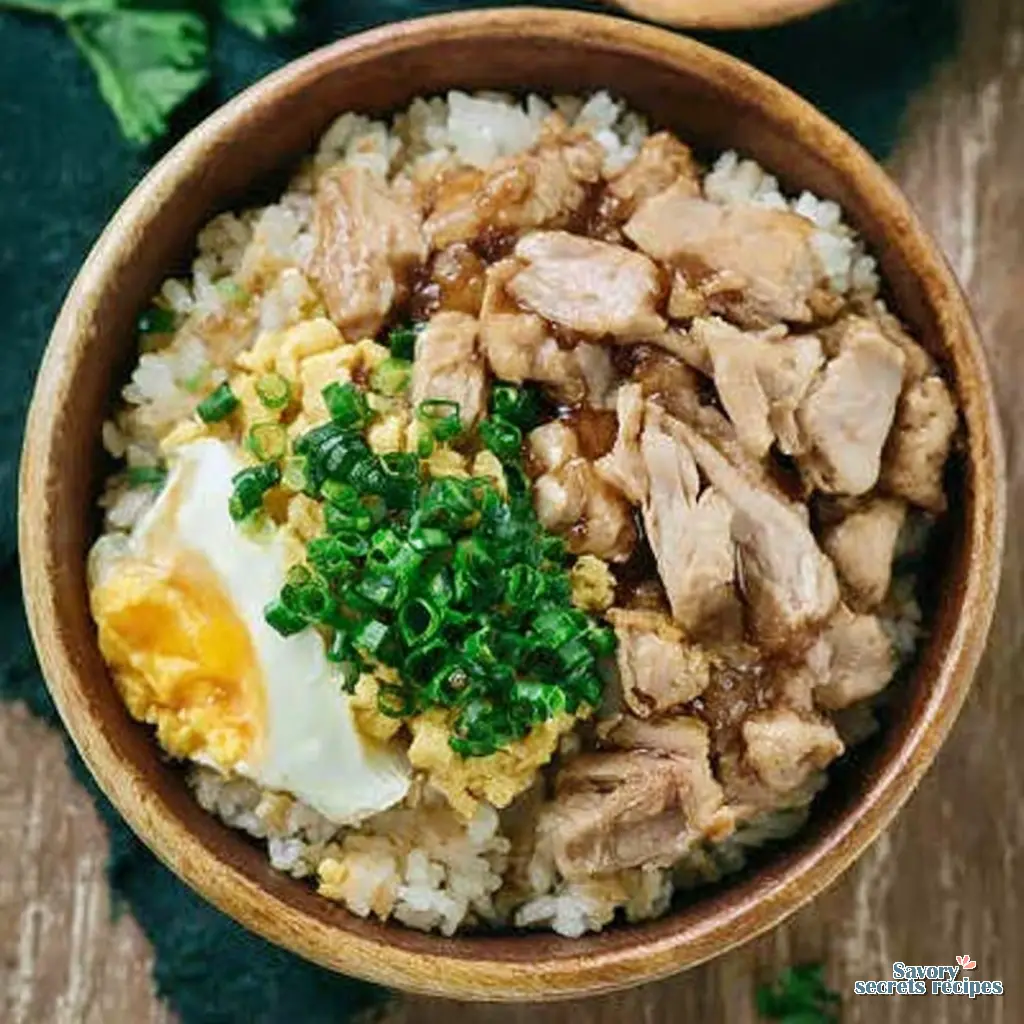
Bringing the Tokyo Eatery to Your Kitchen
Making a japanese chicken rice bowl at home is one of those skills that looks incredibly impressive but is actually quite simple. Once you master the rice washing and the two-stage egg pour, you will never look at takeout the same way again. It is fast, inexpensive, and deeply comforting. I love seeing how readers adapt these techniques in their own kitchens.
For more inspiration, check out my Pinterest boards. I share a lot of variations there, including fun ways to use different vegetables and broths. Grab some fresh ingredients this weekend and give this a try. You’ve got this.
Reference: Original Source
What does Oyakodon mean?
Oyakodon literally translates to “parent and child” rice bowl. It is a poetic name that refers to the two main ingredients used in the dish. The chicken is the parent, and the egg is the child. It is a classic staple of japanese cuisine.
Can I use chicken breast instead of thighs for this japanese chicken rice bowl?
You can, but I really suggest using skin-on chicken thighs. Chicken breasts are lean and tend to dry out quickly when simmered. Thighs have enough fat to stay perfectly tender and they add a rich, savory depth to the sauce that breasts cannot match.
What is the best type of pan for Oyakodon?
A specialized Oyakodon pan is a small, sloped skillet designed specifically for sliding the finished japanese chicken rice bowl topping directly over rice. If you do not have one, a small 8-inch cast iron skillet or any small non-stick frying pan works perfectly fine.
How do I achieve the perfect soft egg texture?
The secret is the two-stage pouring method. Do not overbeat your eggs. Pour two-thirds of the egg mixture into the pan to set the base. Then, turn off the heat and pour the remaining third. The residual heat gently cooks the rest for a soft finish.
Can I make this for a large group in one pan?
I strongly advise against cooking more than two servings at a time in a single pan. Overcrowding lowers the pan’s temperature. Instead of a nice pan reduction, the chicken will boil in its own juices, resulting in a watery sauce and tough meat.