



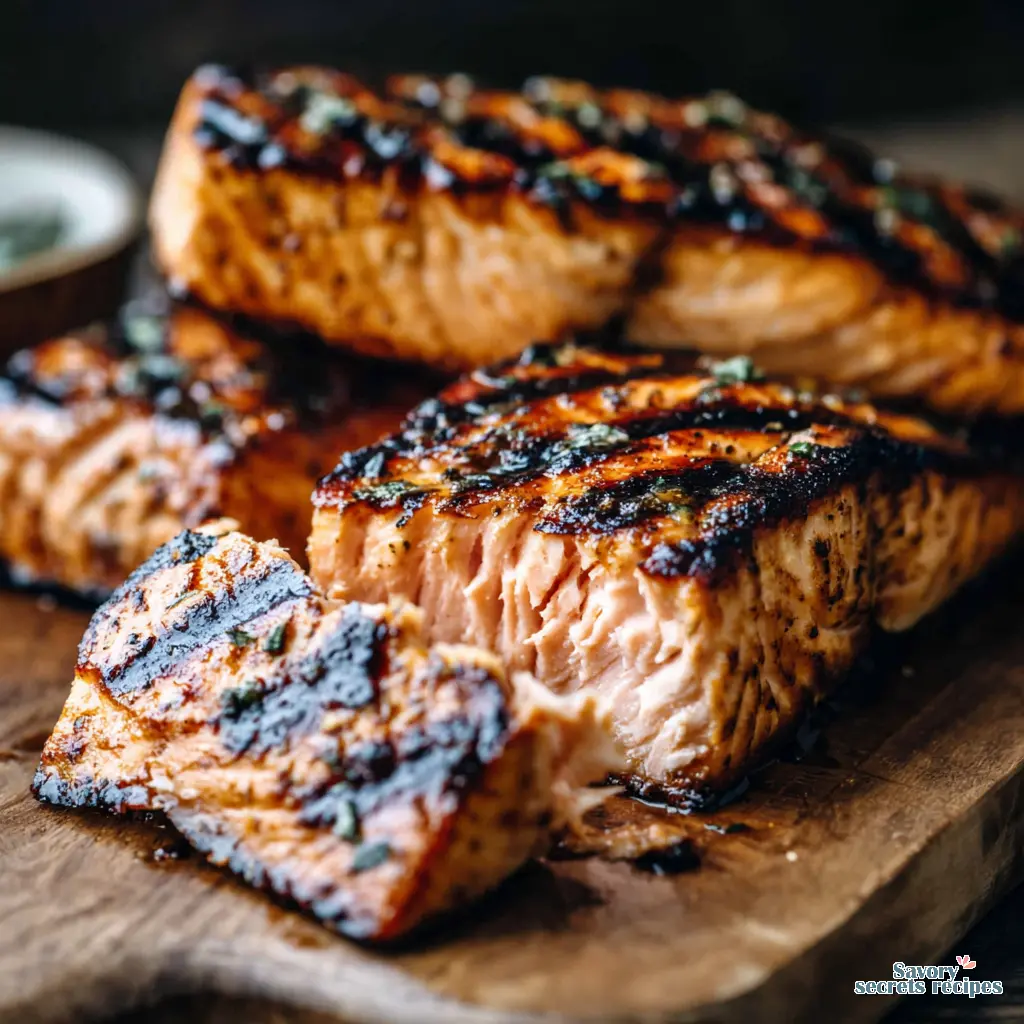
Healthy BBQ Grilled Salmon with Low Calorie Seasoning
Ingredients
Method
- Whisk together the olive oil, lemon juice, garlic powder, dried herbs, and soy sauce in a bowl.
- Arrange the salmon fillets in a shallow dish or resealable bag, coat them with the marinade, and refrigerate for at least 30 minutes.
- Preheat the grill to medium-high heat, aiming for a temperature between 375°F and 400°F.
- Lift the salmon from the marinade, allow the excess to drip off, and grill skin-side down for 6 to 8 minutes per side.
- Verify the doneness by ensuring the salmon flakes easily while remaining slightly translucent in the center.
- Drizzle any remaining marinade over the salmon and serve.
Nutrition
Notes
The Art of Patience and Perfect Fish
I was twelve when Uncle Raymond let me tend his offset smoker at the Goldsboro farmers market. He’d check the firebox every forty minutes, add a split of hickory, and never once opened the cooking chamber until four hours had passed. I learned patience before I learned chemistry. That same restraint is exactly what you need to master healthy grilled salmon. People want to poke, prod, and flip before the fish is ready. But the meat will tell you when it’s ready.
We’re heading into spring here, and with Passover just around the corner, a lot of folks are looking for clean, Kosher-style pareve meals that actually taste good. This recipe is a total reset meal. You get all the flavor without feeling weighed down afterward. I know grilling fish intimidates some folks. They worry about it sticking or drying out. I get it. I’ve ruined my fair share of seafood over the years. But once you understand how the heat interacts with the natural oils, it’s incredibly simple. If you are just starting out, following an easy salmon grill recipe can help you build confidence with temperature control.
A well-executed piece of healthy grilled salmon is the king of proteins. It gives you that clean eating energy boost, fits right into weight loss recipes, and frankly, it just tastes like a warm afternoon on the patio. Let’s get into how to do it right.
The Science of Salmon: Why Fats React to High Heat
Fat is your friend until it isn’t. In the BBQ world, we render pork fat for hours. But salmon is a different beast entirely. The fat in this fish is mostly Omega-3 fatty acids, which are fantastic for your heart. Nutritionist’s note: these healthy fats are highly anti-inflammatory, especially when you pair them with a Mediterranean diet profile. We’re talking extra virgin olive oil, dried oregano, and garlic powder. That tracks perfectly with keeping things macro friendly.
When those delicate fats hit a hot grill grate, they need a barrier. That’s why we use a light coating of oil directly on the fish. If you oil the grates instead, the oil just burns off before the fish even touches down. That’s a mistake I see all the time. By coating the fillet, you protect the Omega-3s and create a beautiful, low calorie grilled salmon seasoning crust that locks in moisture.
I tend to keep my seasoning simple. A little low sodium soy sauce or coconut aminos, some fresh lemon juice, and black pepper. You don’t need heavy, sugar-laden glazes. The natural, rich flavor of the fish is what you’re after.
Species Guide: Grilling Sockeye vs Coho vs King
Not all salmon is created equal, and knowing what you bought changes how you cook it. Generally speaking, you’ve got farmed salmon and wild-caught salmon. Farmed Atlantic salmon is fattier. It’s very forgiving on the grill. If you leave it on an extra minute, it won’t turn into sawdust.
Wild-caught salmon, like Sockeye or Coho, is much leaner. It’s protein-packed and intensely flavorful, but it cooks incredibly fast. If you treat a Sockeye fillet like a farmed Atlantic fillet, you’ll dry it out. King salmon (Chinook) is the best of both worlds, rich in fat but wild-caught, though it’ll cost you a fair bit more at Whole Foods or your local market.
Whichever you choose, this healthy grilled salmon method works. You just have to watch your clock and trust your hands. I prefer wild-caught when I can get it, though your mileage may vary depending on your budget. Fair enough. Regardless of the species, a bright lemon grilled salmon is a fantastic choice for a light summer meal.
The ‘No-Stick’ Secret: Preheat, Oil, and Patience
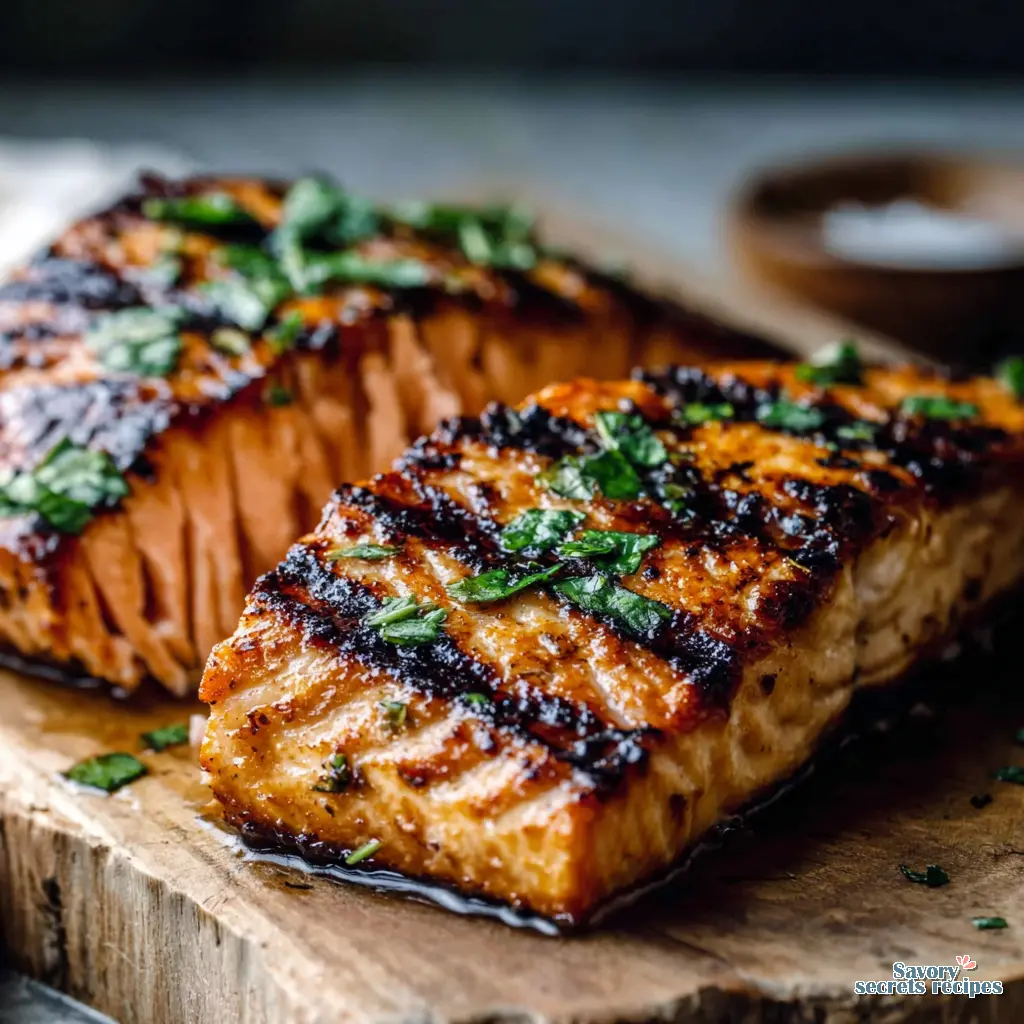
If there’s one thing that ruins a backyard cookout, it’s half your fish stuck to the grill grates. The secret to healthy grilled salmon that releases perfectly is a combination of high heat and absolute stubborn patience. You need to preheat your grill to 450-500°F. Test the heat by holding your hand three to four inches above the grates. If you have to pull it away after three seconds, you’re ready. That’s the 3-second rule.
When you place the oiled fish on the grill, skin-side down, you’re going to hear that sizzle. Now, step back. Do not touch it. In BBQ, we say respect the stall when a brisket stops rising in temperature. Here, you need to respect the sear. The proteins in the fish need time to contract and naturally release from the metal. If you try to force a spatula under there too early, it’ll tear. Nothing for it but to wait.
Keep the grill lid closed. This creates an oven effect that cooks the fish evenly from all sides. If you’re using charcoal, you want thin blue smoke or nothing. Heavy, billowing white smoke will make the fish taste like an ashtray, which completely defeats the purpose of clean eating. This focus on clean techniques ensures your simple salmon dinner remains nutritious and free of unnecessary additives.
Visual Troubleshooting: Is My Fish Stuck or Just Not Ready?
I know the panic that sets in when you try to flip a fillet and it resists. Your first instinct is to scrape harder. Don’t do that. Grab a thin, flexible fish spatula. Slide it gently under the corner of the fillet. If the fish fights back, it’s just not ready. Put the spatula down.
You’ll know it’s ready to flip when the edges turn opaque and you can see crisp, dark grill marks forming underneath. The fish will literally let go of the grate. That’s what you’re after. Solid. If it’s truly stuck because your grill wasn’t hot enough, gently work the spatula at a slight angle, using short, firm pushes. But honestly, if you preheated properly and oiled the fish, this won’t be an issue.
Common Mistakes & Fixes
❌ Mistake: Moving the fish before the sear is set.
✅ Solution: This causes tearing. Let the fish cook undisturbed until it naturally releases from the grates. Patience is mandatory here.
❌ Mistake: Marinating in lemon juice for too long.
✅ Solution: Acid cooks the fish and turns it mushy (like ceviche). Keep your marinade time to exactly 30 minutes. No longer.
❌ Mistake: Oiling the grill grates instead of the fish.
✅ Solution: The oil burns off the hot metal instantly. Always brush your extra virgin olive oil directly onto the salmon fillet.
Temperature Guide and the Skin-On Debate
Let’s settle this right now: leave the skin on. Using skinless fillets on an outdoor grill is asking for trouble. The skin acts as a natural insulator, protecting the delicate flesh from the intense heat. Plus, it holds the whole thing together. You don’t have to eat the skin if you don’t want to, but you absolutely need it for structural integrity while cooking.
As for doneness, temperature is data, texture is truth. The USDA says to cook fish to 145°F. I’ll be honest, at 145°F, salmon is dry and chalky. I pull my healthy grilled salmon off the heat at 130°F to 135°F for a perfect medium. Remember carry-over cooking. The internal temperature will continue to rise about 5 degrees after you take it off the grill.
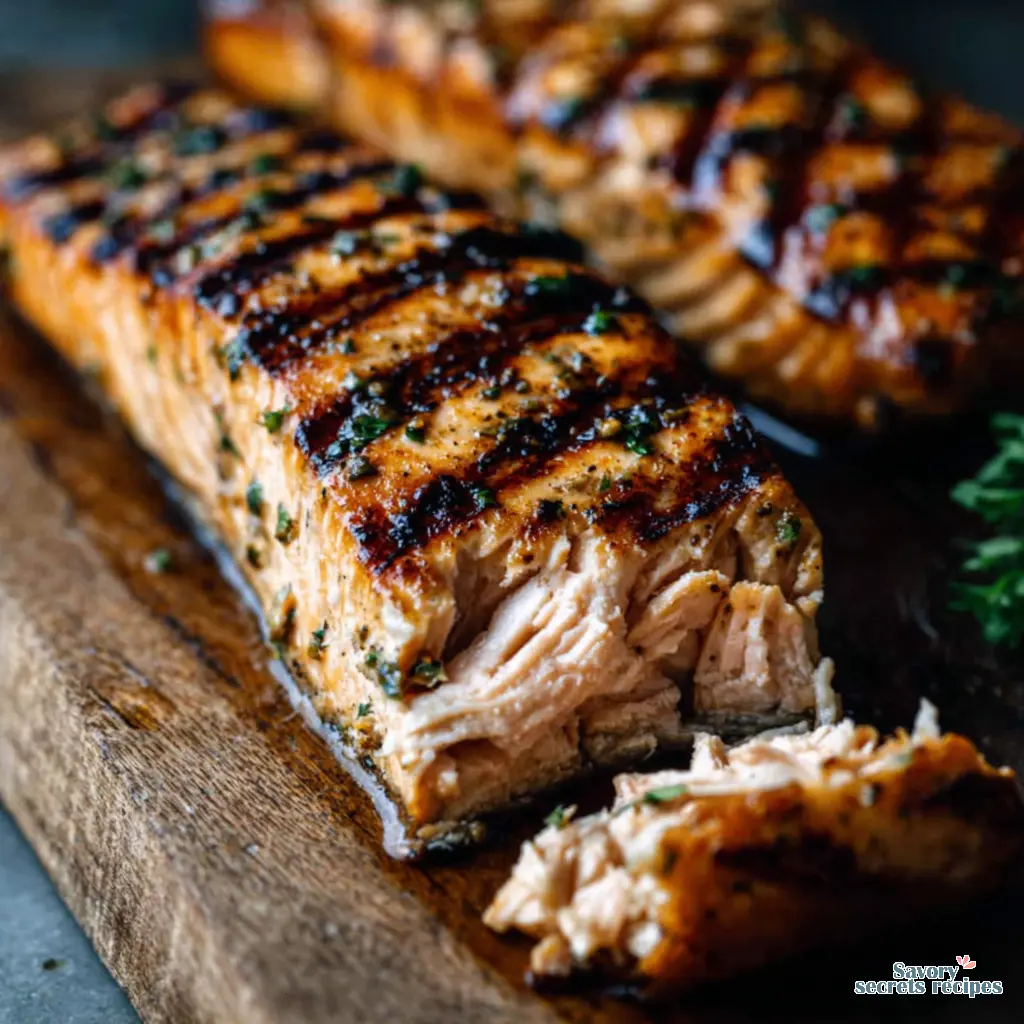
If you don’t have a meat thermometer, use the flake test. Gently press the thickest part of the fillet with a fork. If it separates easily into distinct flakes but still looks incredibly moist in the center, pull it. Exactly right.
Storage and Cold Serving Ideas
If you made extra, you’re in luck. Leftover healthy grilled salmon is fantastic, provided you store and serve it correctly. Keep it in an airtight container in the fridge for 3 to 5 days. You can also freeze it in heavy-duty freezer bags for up to 3 months, though the texture changes slightly.
Here’s what I wish someone had told me years ago: stop reheating fish in the microwave on high. It makes the kitchen smell terrible and turns the fish rubbery. If you must reheat it, use the microwave at 50% power, or put it in a low oven. But honestly? I prefer to eat it cold. Flake that cold salmon over a bed of quinoa, steamed asparagus, or mixed greens. It’s Keto friendly, Paleo approved, and makes the best lunch you’ll eat all week.
Frequently Asked Questions
Wrapping It Up
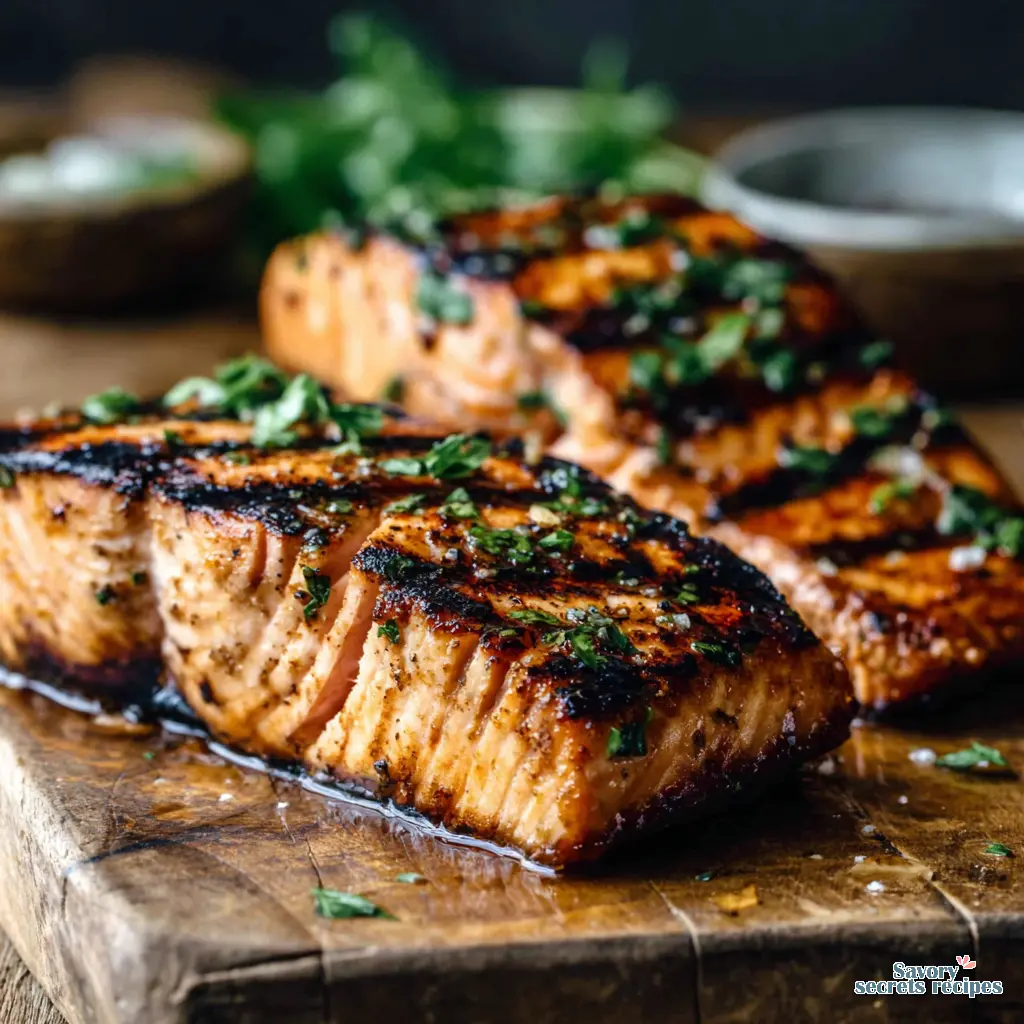
Cooking a great piece of fish doesn’t require a culinary degree. It requires a hot fire, a little bit of oil, and the discipline to leave it alone. When you pull a perfectly cooked, flaky piece of healthy grilled salmon off the grates, you’ll know exactly what I mean. It’s a meal that makes you feel good, fuels your body, and tastes incredible. If you’re looking to build better habits without sacrificing flavor, this is where you start. Worth noting, I share tons of variations on my Pinterest boards if you want ideas for different spice rubs and sides. Fire up that grill, let it ride, and enjoy your dinner.
Reference: Original Source
How do I prevent the healthy grilled salmon from sticking to the grill?
You need high heat and patience. Preheat your grill to 450-500°F. Brush the extra virgin olive oil directly onto the fish, not the grates. Place it skin-side down and don’t touch it until it naturally releases. The meat will tell you when it’s ready.
What is the best internal temperature for grilled salmon?
I pull my salmon at 130°F to 135°F for a perfect medium doneness. The temperature will carry over and rise another 5 degrees while it rests. Going all the way to 145°F on the grill usually results in dry, chalky fish. Temperature is data, texture is truth.
Should I leave the skin on my healthy grilled salmon?
Absolutely. Always grill with the skin on. It acts as an insulator against the intense heat and keeps the delicate fillet from falling apart on the grates. You can easily slide your spatula between the skin and the flesh after cooking if you prefer not to eat it.
Can I use an indoor grill or grill pan?
You certainly can. Just make sure your kitchen is well-ventilated. Preheat the cast iron grill pan until it’s smoking hot. The cooking time might be slightly shorter since the heat is more concentrated, so keep an eye on that internal temperature.
Wild-caught vs farm-raised: which is better for grilling?
Both work, but they cook differently. Farm-raised salmon has more fat, making it very forgiving on the grill. Wild-caught salmon is leaner, packed with flavor, and cooks much faster. I prefer wild-caught, but you have to watch it closely so it doesn’t dry out.
How long do I grill healthy salmon fillets?
Generally speaking, it takes about 10 to 15 minutes total. Grill skin-side down for 70 to 90 percent of the total cooking time to protect the flesh. Then, carefully flip it for just a minute or two to get those nice grill marks on top. Checks out every time.
Can I add fresh herbs to the grill?
I wouldn’t recommend it. Fresh herbs like dill or parsley will instantly char and turn bitter over an open flame. Stick to dried herbs like garlic powder and dried oregano for your rub, and save the fresh herbs for garnishing after the fish comes off the heat.