



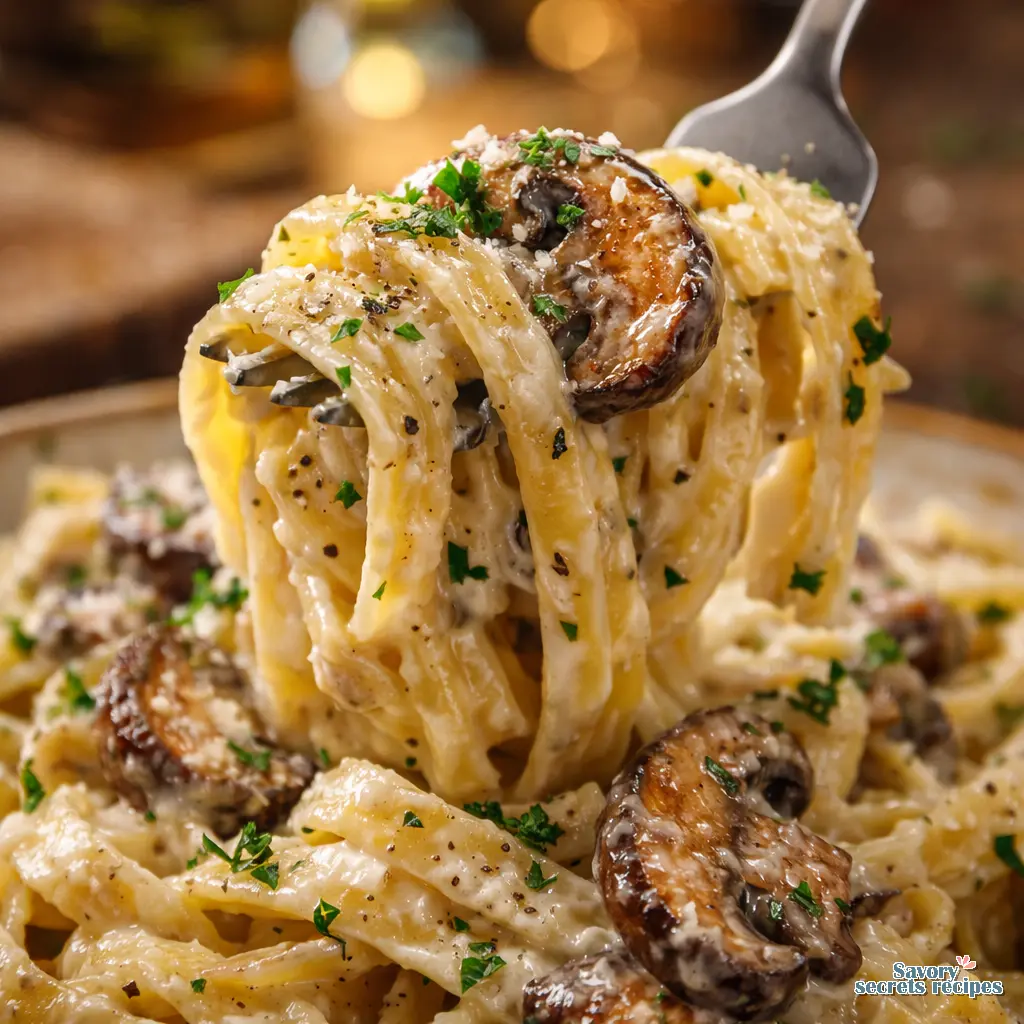
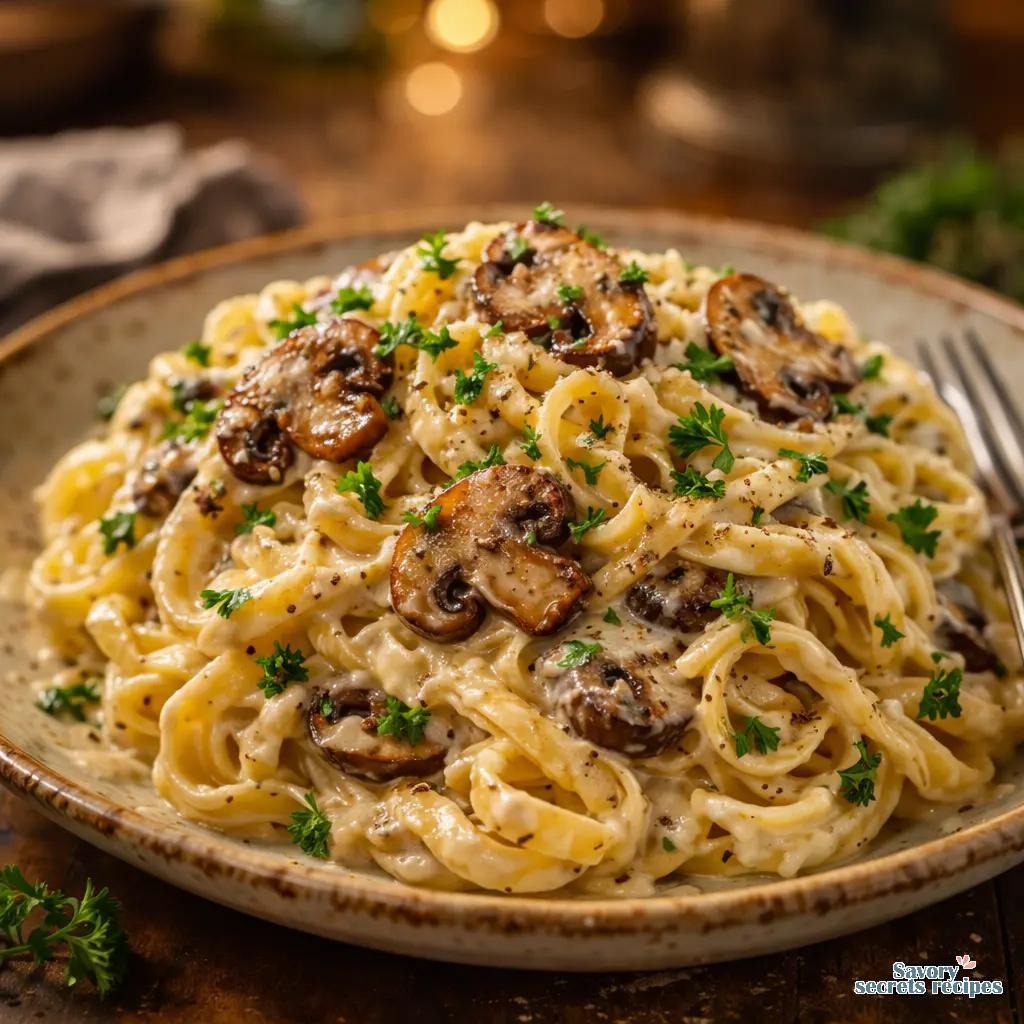
Rich Mushroom Sauce Pasta with Garlic Parmesan
Ingredients
Method
- Cook the pasta until al dente according to package instructions. Reserve 1/2 cup of the starchy cooking water before draining.
- Heat the olive oil and butter in a large skillet over medium-high heat while the pasta cooks.
- Add sliced mushrooms to the skillet. Cook undisturbed for 3 to 4 minutes to brown, then stir and continue cooking until moisture evaporates and mushrooms turn golden brown, about 8 minutes total.
- Stir in the minced garlic and dried thyme. Cook for 1 minute until fragrant.
- Pour in the white wine or broth and scrape up any browned bits from the bottom of the pan. Reduce the liquid by half, approximately 2 minutes.
- Lower the heat to medium-low. Stir in the heavy cream and bring to a gentle simmer. Cook for 2 minutes until the sauce thickens slightly.
- Remove the skillet from the heat. Stir in the grated Parmesan cheese until smooth. Adjust the consistency with splashes of reserved pasta water as needed.
- Add the drained pasta to the skillet. Toss until the pasta is thoroughly coated in the sauce. Season with salt and pepper.
- Serve immediately. Garnish with fresh parsley and additional Parmesan cheese.
Notes
The Secret to Restaurant-Quality Creamy Mushroom Pasta
I remember my grandfather timing his tomato sauce with a wind-up kitchen timer that ticked so loud you could hear it from the stoop. Exactly 47 minutes, every Sunday. When I asked why not 45 or 50, he said 47 is when the tomatoes stop fighting the oil. I didn’t understand until I started developing recipes. He was right about the emulsion point. That same precision applies to making the perfect creamy mushroom pasta.
We’ve all been there. It’s a mild Los Angeles spring evening, the temperature drops just enough to justify turning on the stove, and you’re craving something warm. Maybe you need a spectacular meatless dinner for Good Friday that actually feels like a celebration. You want that ultimate comfort food feeling, but you don’t want a sauce that disappears into the noodles five minutes after plating. For those busy weeknights, having an easy mushroom dinner in your rotation is a lifesaver.
This is exactly right. A glossy sauce that coats the back of a spoon, deeply caramelized mushroom pieces, and a sophisticated flavor profile that easily impresses guests. And the best part? This is a completely wine-free zone. You’ll get all that umami-packed richness without opening a single bottle. Let’s build a mushroom masterpiece.
The Science of Searing: Why Water-First Cooking Works
Most home cooks start by throwing raw mushrooms into a pool of hot oil. Let me walk that back. Here’s what I’m seeing in most home kitchens. The mushrooms act like little sponges, instantly soaking up all your expensive olive oil, and then they just sit there steaming in their own juices. They turn gray. They get rubbery. Not quite there yet.
We’re going to use the water-first cooking method. Cook your cremini mushrooms in a splash of water first. I know this sounds completely backward, but trust me on this. The water gently collapses the cell walls of the mushrooms. Once that water evaporates, you add your mix of butter and olive oil. The mushrooms can’t absorb the fat anymore, so they actually fry in it.
You’ll hear that aggressive sizzle. That earthy aroma hits the pan, and suddenly you’re building a fond that smells like toasted hazelnuts. I prefer weight measurements for anything that matters, so aim for a solid pound of mixed mushrooms. They shrink significantly during cooking, so always double what you think you need.
Visual Troubleshooting: The Mushroom Golden Rule
I once told a junior developer that her pasta dough was close enough. She trusted me. We shot the recipe, it published, and the dough tore during shaping for 60% of our readers. Close enough isn’t a standard. I apologized to her, and we retested. Now I never say close enough.
The same applies to searing mushrooms. The golden rule is simple. Don’t crowd the pan. If your mushrooms are overlapping, they will steam instead of browning. Cook them in batches if you have to. You want them deeply browned, almost mahogany. Color equals flavor.
Season as you go, not at the end. But hold off on the salt until the mushrooms have released their moisture and started to brown. Salt draws out water, which is the enemy of a good sear. Let the process do the work. Give it another minute. If it’s not ready, it’s not ready. When you see those crispy, dark edges, you’ll know you’ve nailed it.
Building a Rich Mushroom Sauce Pasta Without Wine
A lot of classic recipes rely on white wine to deglaze the pan. I’m frequently asked for a creamy mushroom pasta recipe without wine that doesn’t taste flat. Fair enough. You don’t need alcohol to build a complex flavor profile.
Once your mushrooms are perfectly browned, we add the minced garlic cloves and shallots. Don’t add them earlier, or they’ll burn and turn bitter. After they soften, we deglaze with a high-quality vegetable broth and a squeeze of fresh lemon juice. The broth scrapes up all that beautiful brown fond from the bottom of the pan, and the lemon juice brightens the heavy cream we’ll add next.
It’s a simple substitution that keeps this a vegetarian main dish while actually enhancing the earthy umami notes of the mushrooms. Plus, it saves you a trip to the store if you don’t keep wine in the house. Win-win. This method ensures a delicious vegetarian creamy pasta that satisfies even the most dedicated meat-eaters.
Emulsion and the 15-Minute Speed Run Strategy
The emulsion breakthrough came at 2 AM in a test kitchen in 2015. I’d been trying to standardize a cheese sauce for three days. Failed seventeen times. Then I realized I was adding the pasta water too cold. Temperature, not technique. I called my wife to tell her. She was not impressed at 2 AM.
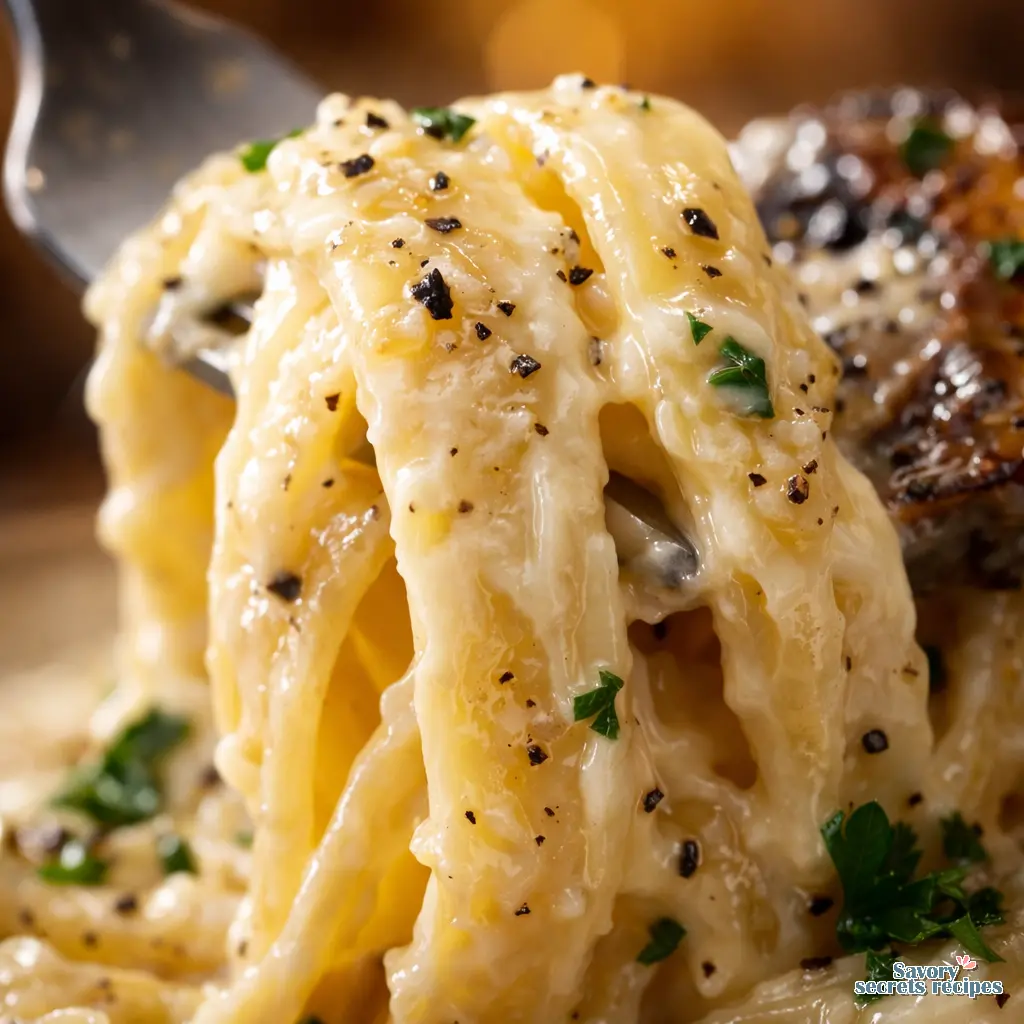
When you’re building a silky sauce, temperature is everything. Lower the heat before adding your heavy cream. If the pan is too hot, the cream will boil and separate. You want a gentle simmer. Heavy cream is superior to milk here because its higher fat content makes it incredibly stable and resistant to breaking.
Always undercook your fettuccine by about one minute. It needs to finish cooking directly in the sauce. And save that starchy pasta water. It’s liquid gold. If your sauce gets too thick, a splash of hot pasta water loosens it up while maintaining that velvety emulsion. Use finely grated parmesan cheese. I highly recommend using a microplane. The canned stuff has anti-caking agents that make your sauce grainy. Mastering this technique is the key to a traditional italian mushroom pasta texture.
Common Creamy Mushroom Pasta Mistakes & Fixes
Mistake: Overcrowding the pan.
Solution: This leads to steaming instead of browning. Your mushrooms will be gray and rubbery. Cook in batches to ensure that beautiful golden browning.
Mistake: Boiling the sauce after adding cream.
Solution: High heat causes dairy to separate and break. Lower the heat to medium-low before pouring in your heavy cream. A gentle simmer is all you need.
Mistake: Rinsing the pasta.
Solution: Never rinse your pasta. You’re washing away the surface starch needed for the sauce to adhere. Transfer the al dente pasta directly from the pot to your skillet.
Storage, Reheating, and Serving
I prefer recipes that acknowledge reality. You’ll probably have leftovers. Store your creamy mushroom pasta in an airtight container in the refrigerator for 3 to 4 days. I don’t recommend freezing it. Dairy-based sauces tend to break and become grainy when thawed.
When reheating, skip the microwave if you can. Reheat gently on the stovetop over low heat, stirring constantly. Add a splash of water or leftover broth to loosen the sauce and bring back that creamy consistency. Serve this alongside a fresh garden salad with a sharp vinaigrette to cut through the richness, and maybe some warm garlic bread to mop up every last drop of sauce.
Frequently Asked Questions
Bringing It All Together
There’s nothing better than watching someone nail a technique they’ve been struggling with. That moment when the emulsion comes together, the sauce turns glossy, and you realize you just created a restaurant-quality creamy mushroom pasta in your own kitchen. That’s why I do this job.
Grab your favorite wide pasta bowl, garnish with a little extra fresh thyme and a heavy dusting of parmesan, and dig in. Taste it, really taste it. You’ve earned this. If you’re looking to explore more weeknight dinners that feel like weekend luxuries, browse my Pinterest boards. I’m always saving new variations and techniques there.
Reference: Original Source
What are the best mushrooms for creamy pasta sauce to achieve the richest flavor?
I strongly recommend cremini mushrooms, also known as baby bellas or Swiss brown mushrooms. They have a deeper, earthier flavor and firmer texture than standard white button mushrooms. For a truly spectacular creamy mushroom pasta, try a mix of cremini, shiitake, and oyster mushrooms.
How to make mushroom pasta sauce thicker without flour while keeping it smooth?
Let the heavy cream reduce naturally over medium-low heat. It thickens beautifully on its own. The real secret is the starchy pasta water. When you toss the al dente pasta in the pan, the starch emulsifies with the fat in the cream, creating a naturally thick, glossy coating.
Can you make a flavorful creamy mushroom pasta recipe without wine?
Absolutely. I prefer it, actually. Instead of white wine, deglaze your pan with a high-quality vegetable broth and a generous squeeze of fresh lemon juice. The broth provides savory depth, while the lemon juice adds the necessary acidity to balance the rich heavy cream.
What is the secret to making the perfect creamy mushroom pasta at home?
There are two non-negotiables. First, do not crowd the mushrooms. Let them deeply caramelize in batches to build fundamental flavor. Second, undercook your pasta by one minute and finish it directly in the sauce with a splash of reserved pasta water. That’s how you build a restaurant-quality emulsion.
How long does leftover rich mushroom sauce pasta stay fresh in the refrigerator?
Store it in an airtight container for up to 4 days. When reheating, the sauce will look thick and clumped. Just add a tablespoon of water or broth and warm it gently on the stove over low heat. It will come right back together.