



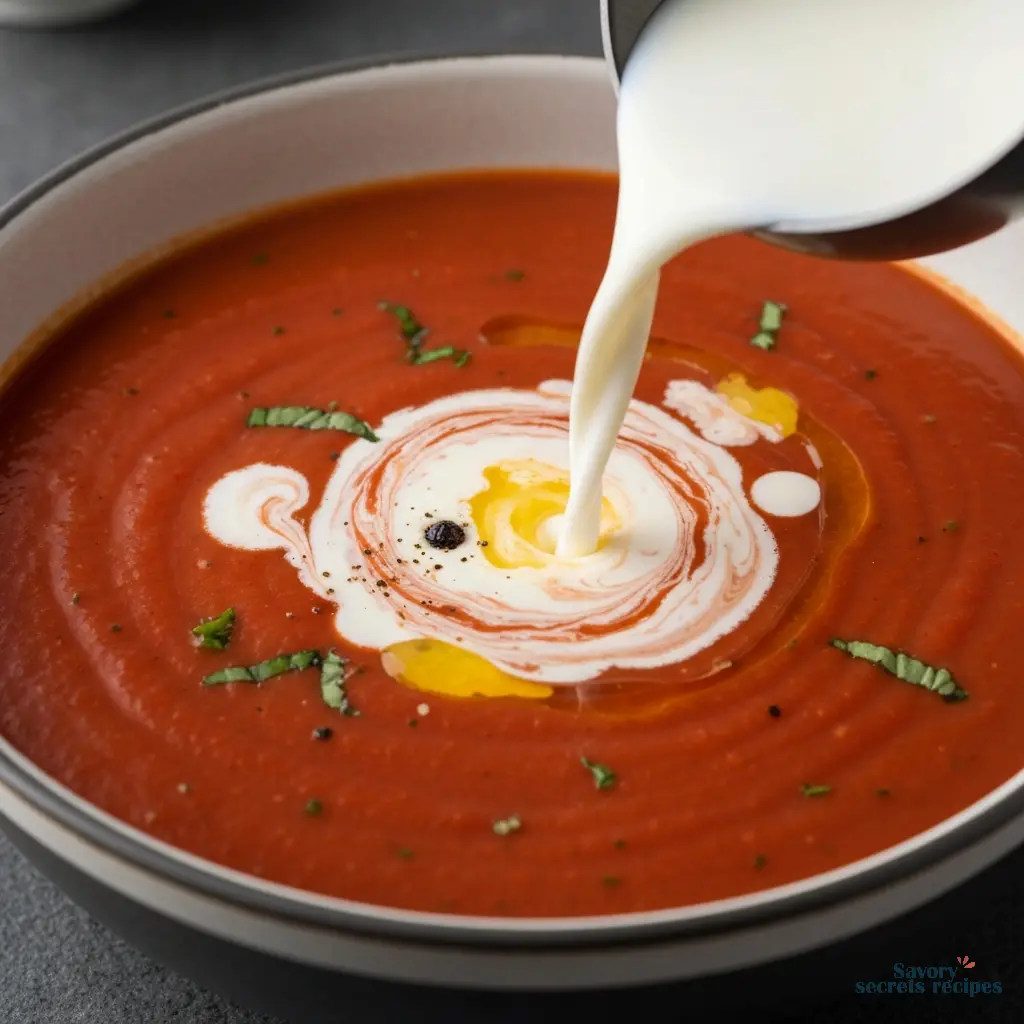
Creamy Tomato Soup with Milk Recipe
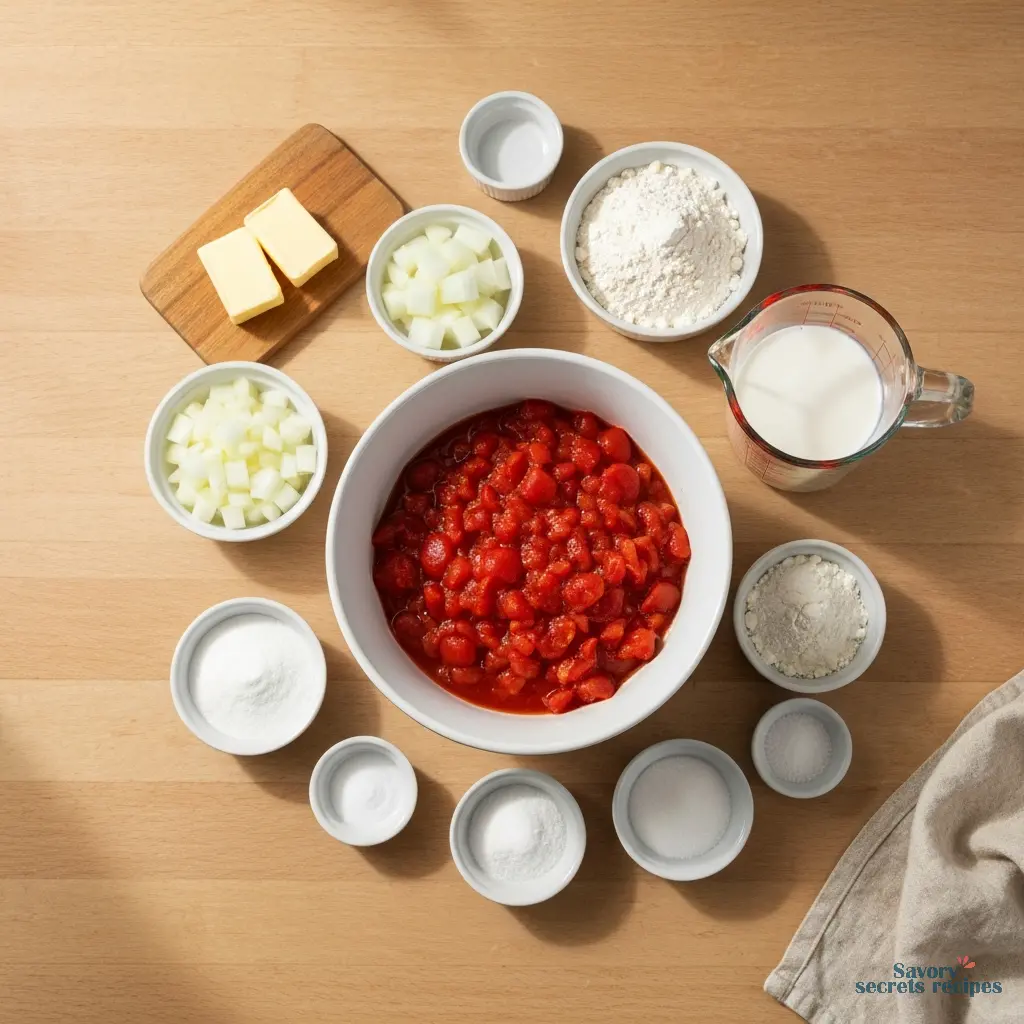
Ingredients
Method
- Melt the butter in a large Dutch oven over medium heat. Stir in the onion and 1/2 teaspoon of kosher salt. Cook until the onion is softened and translucent, about 6 minutes, taking care not to let it brown.
- Stir in the flour and cook for one minute while stirring constantly. Gradually whisk in the milk.
- Add baking soda, tomatoes, sugar, and an additional teaspoon of salt. Simmer for ten minutes, then blend using an immersion or standard blender.
- Season the soup by adding salt a pinch at a time and tasting after each addition until the flavor is vibrant and well-balanced.
Nutrition
Notes
That Time I Ruined Dinner (And What It Taught Me About Milk)
I remember the exact sound. It wasn’t a gentle simmer. It was a frantic, rolling boil, and I was in a hurry. I’d just dumped a cup of cold milk straight into my pot of bubbling tomato soup. You can probably guess what happened next. The milk didn’t blend. It seized up into tiny, grainy curds, floating in a suddenly thin, broken broth. My daughter took one look and asked if it was “sick soup.” That tracks with what I’ve seen in my work—the fear of adding milk to tomato soup is real, and the result of getting it wrong is deeply unappetizing. But here’s the thing I learned that night, after ordering pizza: it’s not hard to do right. In fact, adding milk to tomato soup is one of the simplest ways to transform it from something sharp and acidic into a velvety, comforting bowl of warmth. And with a few basic rules, you’ll never have to face “sick soup” again. Let me pull the actual science behind it, so you can understand why the method matters more than the ingredients.
Why This Method for Adding Milk to Tomato Soup Works
Most recipes just tell you to stir in the milk. That’s where they lose people. The evidence here is mixed if you just follow that vague instruction. This approach is different because it respects the chemistry. You’re dealing with two sensitive things: the proteins in milk and the acidity in tomatoes. When you add cold milk to a very hot, acidic soup, you shock those proteins. They clump together before they can disperse evenly—that’s curdling. The method we use here, what my nani would recognize as a form of “tempering,” gently introduces the milk to the heat and acidity. You warm it first, you add it slowly, and you never let the soup boil again. In practical terms, this means you get a creamy tomato soup without any graininess. It’s the difference between a silky sauce and one that’s broken. Worth noting here is the role of the baking soda—it’s not for leavening. A tiny amount neutralizes just enough acid to give the milk proteins a fighting chance, without making the soup taste soapy. I’m impressed by how well this holds up when you get the sequence right.
The Foolproof Science of Tempering Your Milk
Okay, let’s get into the how. The single most important step in adding milk to tomato soup is something called tempering. It sounds fancy, but it’s just a controlled way of raising the temperature of the milk so it doesn’t panic when it hits the hot soup. Think of it like introducing two friends. You wouldn’t just shove them into a room and slam the door.
Here’s what I do: after the tomato base is cooked and smoothed out (I use an immersion blender right in the pot—fewer dishes), I turn the heat down to the lowest possible setting. You want the soup to be hot, but not bubbling at all. Just steaming gently. Then, I take my milk—whatever kind I’m using that day—and I warm it slightly in the microwave or in a separate saucepan. You don’t want it boiling, just lukewarm to the touch. This is genuinely interesting: when the temperature difference between the soup and the milk is smaller, the proteins integrate smoothly.
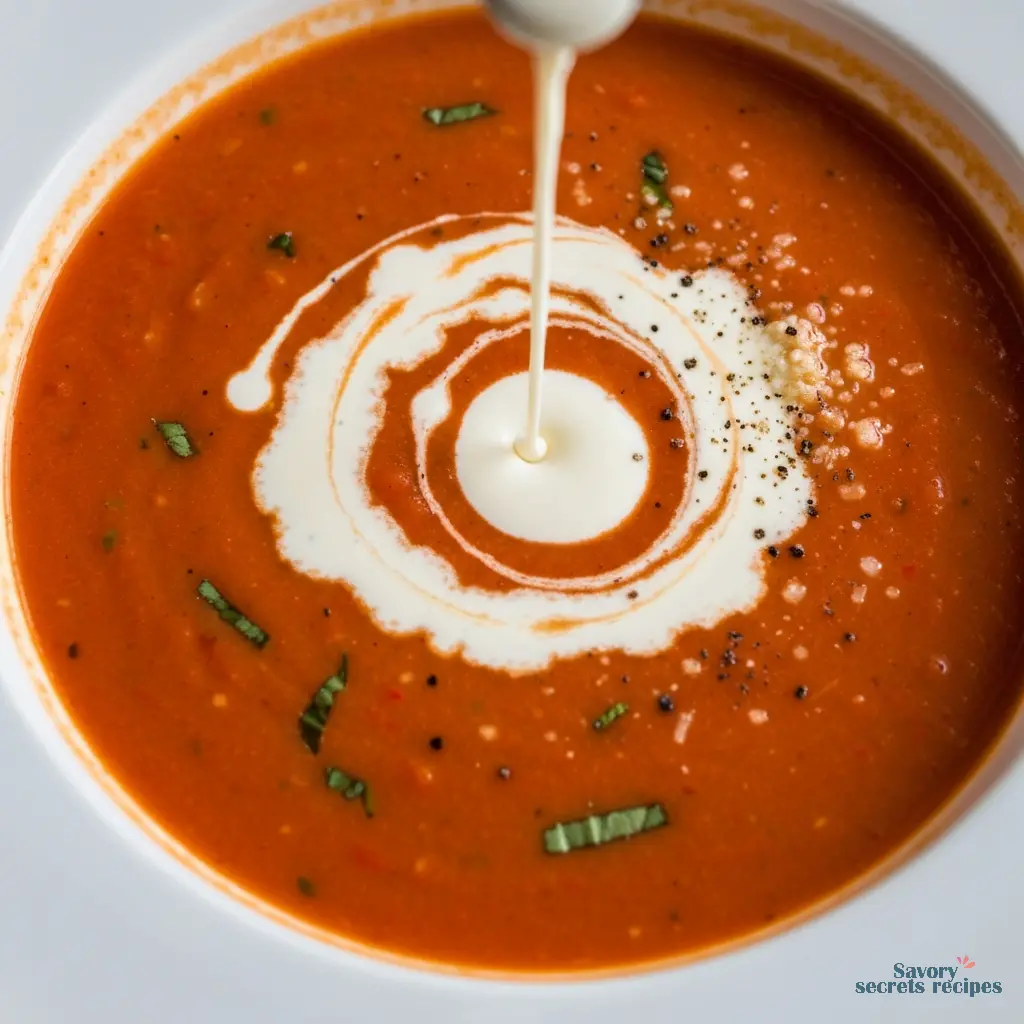
Now, the slow pour. I add the warm milk in a steady, thin stream while stirring the soup constantly with my other hand. Once all the milk is in, I let it all heat through together for a few minutes, but I watch it like a hawk. The second I see even a single bubble trying to form at the edges, I take the pot off the heat. That’s it. The soup is done. This makes good sense when you think about it—you’re coaxing, not forcing, the ingredients to combine.
Your Milk Options, Explained
You’ve probably wondered, “Can I use the milk I already have?” Fair enough. Let’s break it down. The best milk for cooking soup, in terms of pure creaminess and curdle-resistance, is whole milk. The higher fat content coats the proteins, offering them some protection against the tomato’s acidity. That said, you can absolutely use 2% or even skim milk. The process is the same, but the final soup will be a bit less rich. Just be a little more vigilant with the heat.
For plant-based options, the data is actually quite clear. Full-fat canned coconut milk is a champion here. It’s decadently creamy and contains no proteins that will curdle. Just shake the can well and use it as a 1:1 substitute. Other nut milks like almond or cashew milk will work, but they can be a bit thin. If you go that route, you might consider a tiny bit of cornstarch slurry (a teaspoon mixed with a tablespoon of the cold milk) to help with body. Oat milk is a great neutral-tasting option, but check for added sugars which might alter the flavor balance. To be clear, the tempering process is still your best friend, even with non-dairy milks.
Tips for Perfect Adding Milk to Tomato Soup
These aren’t just random hints. Each one addresses a specific point of failure I’ve either tested or seen in my kitchen (and my nani’s before that).
Preparation Tips
Start with a good base. Sauté your onions in butter until they’re truly soft and sweet, not just translucent. That fond (the browned bits at the bottom of the pot) is flavor. When you add the flour, cook it for a full minute while stirring. You want to cook out that raw flour taste—it should smell a bit nutty. This roux is what will help thicken your soup and stabilize the dairy later. And season as you go! A pinch of salt on the onions, another with the tomatoes. It builds layers of flavor so your tomato soup is never bland.
Cooking & Acidity Tips
Tomatoes vary in acidity. That’s where the baking soda and sugar come in. The baking soda is a buffer. A quarter teaspoon for a large can of tomatoes is the sweet spot—it tames the sharpness just enough for the milk to be happy. Don’t be tempted to use more, or you’ll be left with a soapy, odd-tasting soup. The sugar isn’t to make it sweet; it’s to enhance the natural sweetness of the tomatoes. If you’ve accidentally added too much of anything, you can simply add more tomatoes or a bit of water to dilute. And yes, it is perfectly OK and safe to use baking soda as an ingredient in soup.
The Finishing Touch
Once the milk is in and the soup is heated through, that’s your last chance to adjust. Taste it. Does it need another pinch of salt? A crack of black pepper? Maybe a fresh herb like basil or thyme? Stir it in now, off the heat. The fat from the milk will carry those flavors beautifully. I like to finish mine with a small pat of cold butter stirred in at the very end. It adds a lovely gloss and rounds out the flavor even more.
Variations & Substitutions
This recipe is a framework. Once you’re confident with adding milk to tomato soup, you can start playing.
For a completely different take using similar techniques, explore our classic tomato soup recipe as your foundational guide.
Dietary Adaptations
For a gluten-free version, use an all purpose gluten free flour in place of the regular all purpose for the roux. It works just fine. For those who shy away from dairy, coconut milk is my top recommendation and makes it just as decadent. You could also use a plain, unsweetened soy milk for a protein boost.
Flavor Variations
I’m not opposed to adding a few fresh basil leaves at the blending stage if you love a tomato basil soup. For a smoky twist, add a pinch of smoked paprika with the flour. If you want it extra creamy, you could splurge and use half heavy cream in place of a portion of the milk, but I find milk makes it lovely and creamy without being too rich. A roasted garlic clove blended in is never a bad idea.
Common Mistakes to Avoid
I’ve made most of these. Let’s save you the trouble.
❌ Mistake: Dumping cold milk directly into boiling soup.
✅ Solution: Always temper. Warm your milk slightly first, and add it to soup that’s off the boil.
❌ Mistake: Letting the soup boil vigorously after the milk is added.
✅ Solution: Keep the heat low after adding milk to tomato soup. Gentle heat only until warmed through.
❌ Mistake: Using highly acidic tomatoes without any balancing agent.
✅ Solution: A tiny amount of baking soda or a pinch of sugar can neutralize just enough acid to prevent curdling.
❌ Mistake: Not stirring constantly during the milk incorporation.
✅ Solution: Stir in one direction while pouring the milk in a slow stream. This ensures even distribution and temperature.
Frequently Asked Questions
How to Store and Serve Your Creamy Soup
Let the soup cool completely before storing. It’ll keep in the refrigerator in an airtight container for 3 to 5 days. Fair warning: this soup does not freeze well if you’ve added dairy. It will likely separate during thawing, becoming grainy. For reheating, do it gently. Warm it in a saucepan over low heat, stirring often. If you use the microwave, do it in short bursts, stirring between each to prevent hot spots that could curdle the milk.
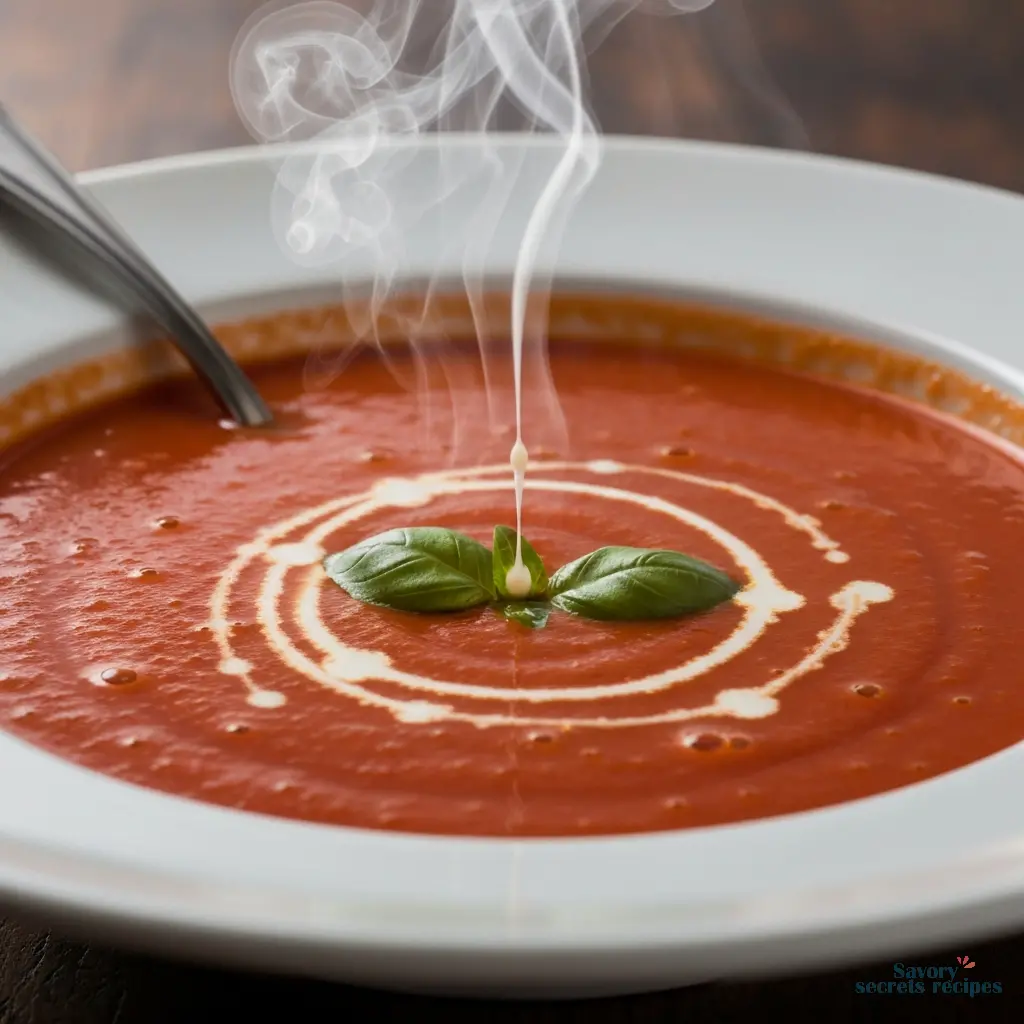
Now, for the fun part. I served mine here with a little spoonful of sour cream and some homemade croutons, but a melty grilled cheese sandwich on the side is my favourite way to go. The creamy soup is perfect for dipping toasty, crusty bites. We used extra sharp cheddar in our sandwich, which complemented the soup’s flavor notes well. Sprinkle with a crack of black pepper, if you like. Pour into bowls and top with a little bit of parmesan cheese and some fresh basil. Ta da! You are no longer eating boring old tomato soup.
You’ve Mastered a Kitchen Basic
When you serve this soup, you’re not just serving dinner. You’re serving a lesson in patience and chemistry that turned out delicious. That fear of curdling? You’ve got the tools to beat it. The process of adding milk to tomato soup is now a reliable skill in your back pocket, one that transforms the simplest ingredients into something special. It reminds me of the way my nani’s kitchen smelled in the morning—warm, nourishing, and utterly secure. So give it a try this week. Let me know how it turned out in the comments below. You’ve just unlocked a new level of comfort food confidence.
Should you put milk in tomato soup?
Absolutely, if you want a creamier, richer texture and a milder flavor. Adding milk to tomato soup softens the tomato’s natural acidity and adds a lovely velvety body. It’s a classic comfort food move. Just follow the tempering method to prevent curdling.
How to add milk to tomato soup without it curdling?
The key is tempering. Warm your milk slightly first. Take your hot tomato soup off the boil, then slowly pour the warm milk in a thin stream while stirring constantly. Never let the soup boil again after adding milk to tomato soup. Gentle heat only.
Does adding milk to tomato soup make it less acidic?
Yes, in two ways. The dairy fat coats your palate, muting the perception of acid. Also, if you use a tiny bit of baking soda (as in this recipe), it chemically neutralizes some acid, giving the milk proteins a safer environment. The result is a smoother, rounder flavor.
What is the best milk for cooking soup?
For dairy, whole milk is best for richness and curdle-resistance. For non-dairy, full-fat canned coconut milk is superb—creamy and curdle-proof. Other milks work but may be thinner. The technique for adding milk to tomato soup matters more than the type, as long as you temper it.
Can you add milk instead of water to canned tomato soup?
You can, and it’s delicious! The same rules apply. Don’t just follow the can’s instructions. Mix the condensed soup with a little cold milk first to form a paste, then gradually whisk in the rest of the warmed milk. Heat it gently to avoid curdling your upgraded soup.
How do I fix tomato soup that is too sour?
A pinch of baking soda is the fastest fix—it reacts with the acid. Start with 1/8 teaspoon, stir, and taste. You can also add a teaspoon of sugar or a drizzle of honey to balance the flavor. Adding milk to tomato soup that’s too sour also helps mellow it out beautifully.
Will milk make my soup thicker?
Not significantly by itself. The main thickening here comes from the flour-and-butter roux cooked at the beginning. The milk adds body and creaminess, but for a thicker soup, ensure your roux is properly cooked or let the soup simmer a few minutes longer before adding milk to tomato soup to reduce it.