



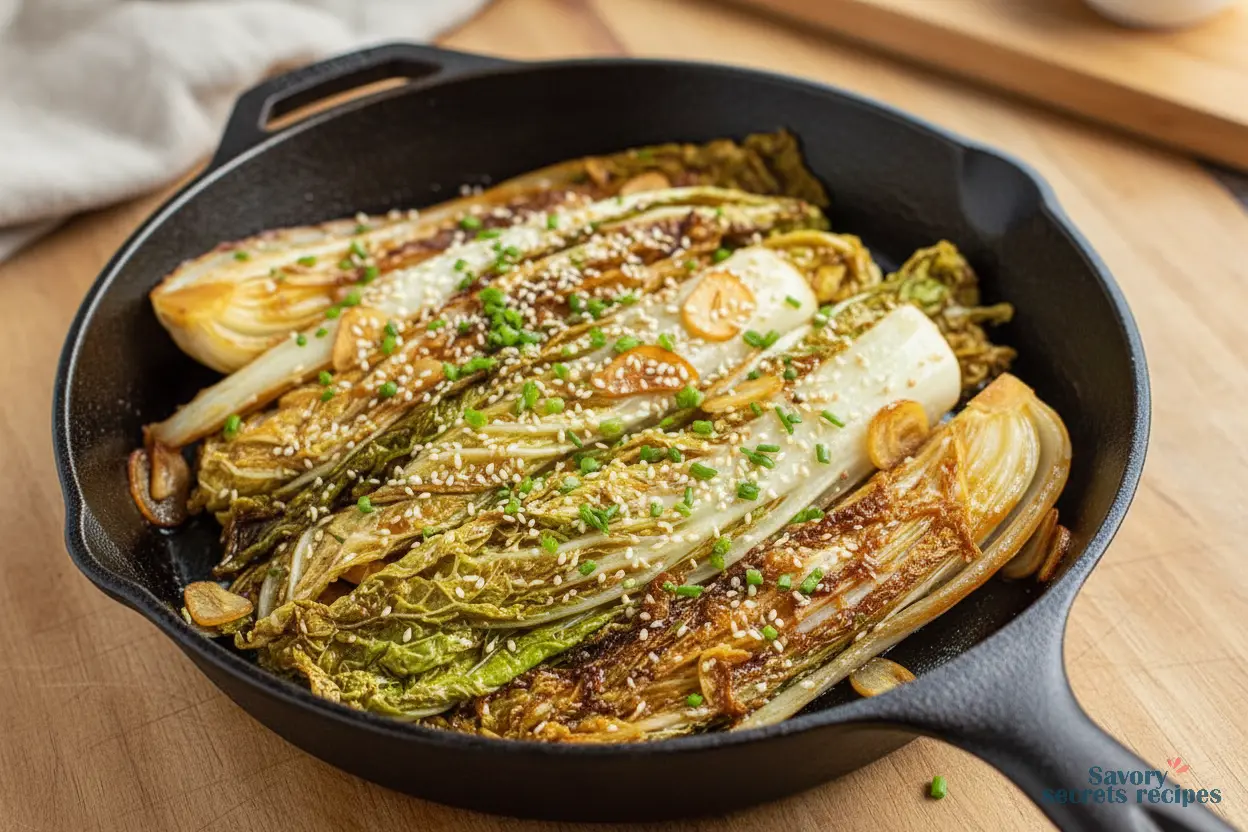
Quick Sauteed Napa Cabbage Recipe
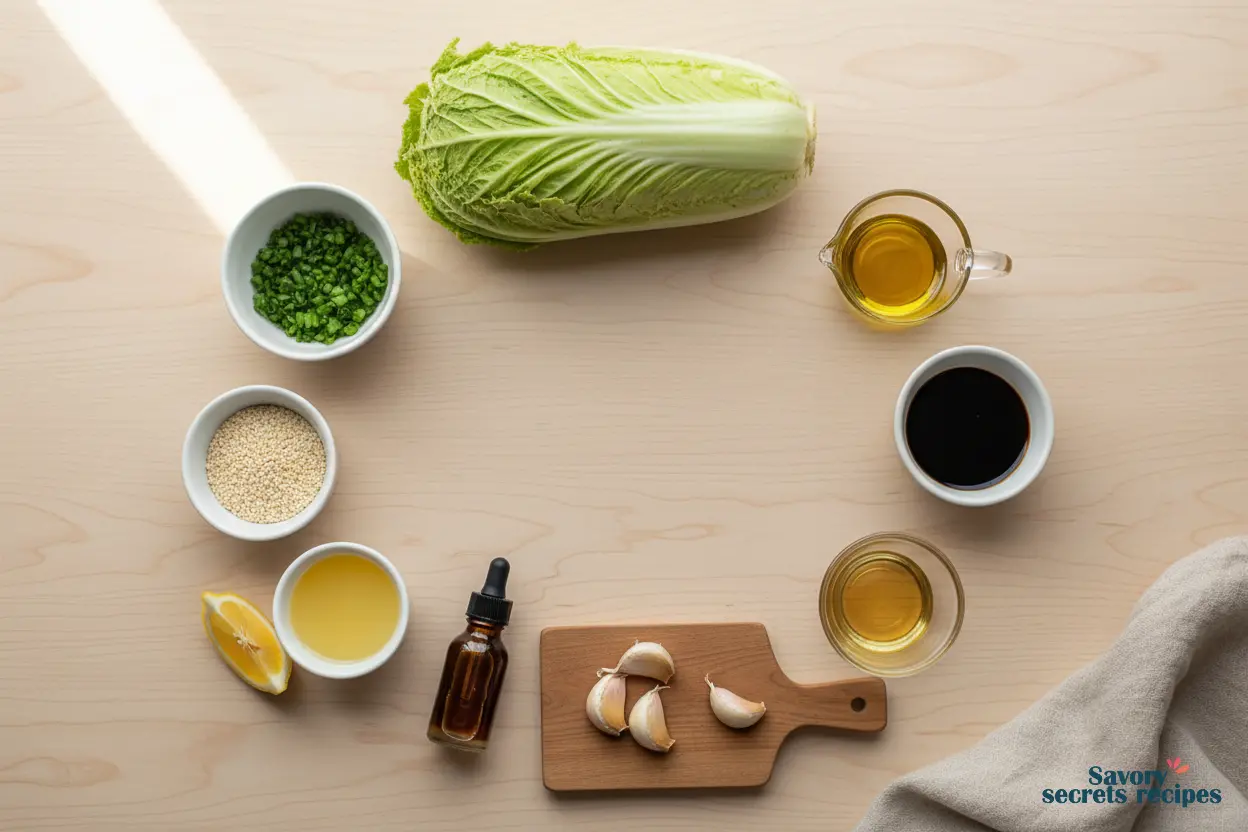
Ingredients
Method
- Combine the sauce ingredients in a small bowl and set aside.
- Heat a large pan with olive oil over medium-high heat.
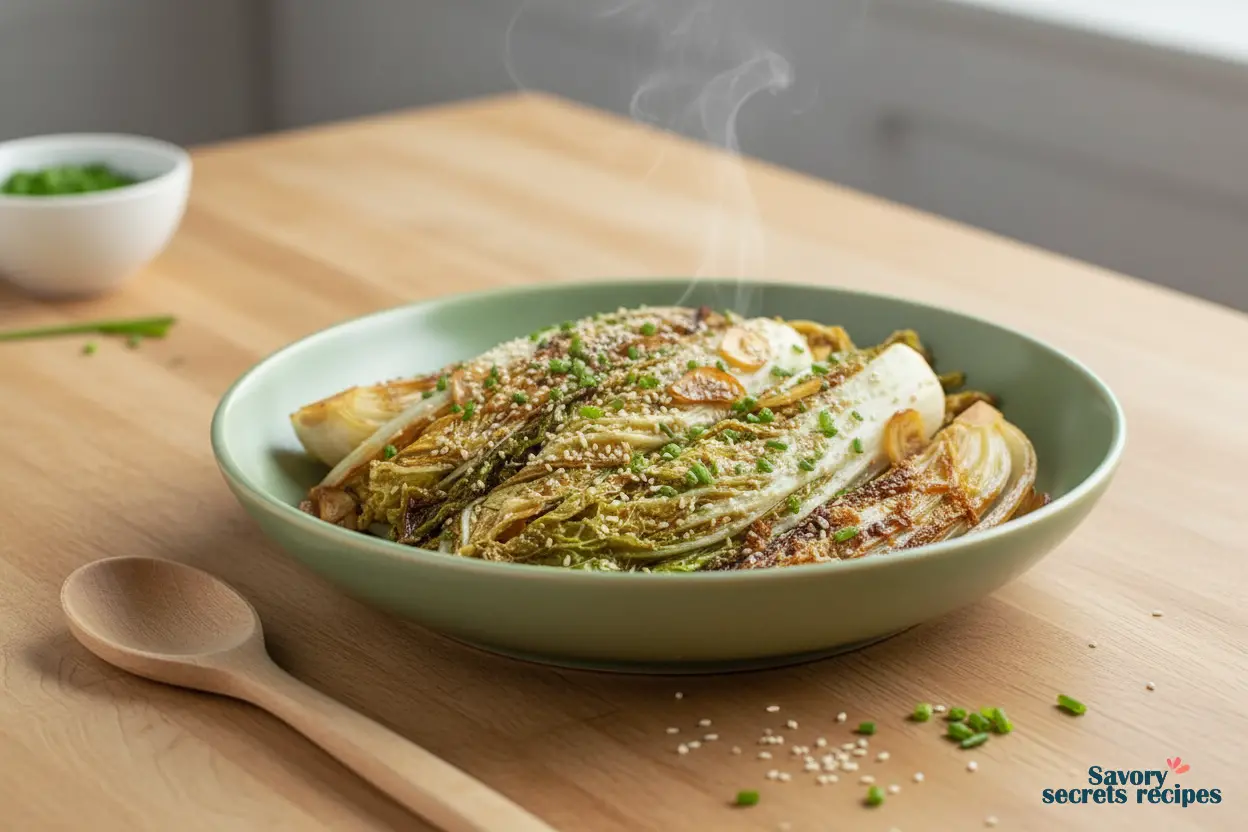
- Add the cabbage quarters to the pan. Pan-fry for two minutes per side, covering with a lid to cook faster.
- Flip each piece inner-side up, drizzle with the sauce, and cook for 30 seconds.
- Flip the cabbage again to caramelize the sauce on the bottom.
- Garnish with sesame seeds and spring onions and serve immediately.
Nutrition
Notes
You Know That Cabbage in the Produce Aisle?
I’ve been there. You’re at Ralphs, staring at that pale green, oblong head of napa cabbage in the Asian vegetables section. It looks interesting, maybe even beautiful with those delicate, crinkly leaves. But then the questions start. What do I actually do with it? Is it just for kimchi? Will my family even eat it? I remember the first time I brought one home, years ago. I was so intimidated I let it wilt in my crisper drawer until it was a sad, slumping thing I had to toss. What a waste.
Here’s what I wish I’d known then: some of the best asian napa cabbage recipes are also the simplest. This isn’t about complicated techniques or hard-to-find ingredients. It’s about a 20-minute stir-fry that turns that humble cabbage into something truly special—savory, slightly sweet, with a texture that’s tender but still has a pleasant crunch. Perfect for a Los Angeles winter evening when you want something warming but fresh. Let me show you the easy way.
Why This Asian Napa Cabbage Recipe Actually Works
To be honest, a lot of cabbage recipes out there are kind of… meh. Soggy, bland, or cooked to death. This one works because it respects the vegetable. Napa cabbage has a higher water content and more delicate cell structure than regular green cabbage. That means it cooks faster and can get mushy if you’re not careful. The trick here is high heat and quick cooking. You’re not boiling it into submission; you’re giving it a quick, hot sear that wilts the leaves while keeping some backbone.
Here’s what I’m seeing from a nutrition standpoint too. Napa cabbage is packed with vitamins C and K, and it’s a great source of folate. But the real win? When you cook it quickly like this, you preserve more of those nutrients compared to long braising or boiling. The sauce is simple—just soy, a touch of mirin for sweetness, sesame oil for that nutty fragrance, and garlic. It’s a flavor bomb that doesn’t need a dozen ingredients. This is exactly what I mean when I talk about building big flavor from a few good things.
Finding and Prepping Your Cabbage: A Quick Guide
Okay, let’s talk about the star of the show. When you’re picking out napa cabbage at the store—whether it’s Whole Foods, Vons, or your local farmers market—look for heads that feel heavy for their size. The leaves should be crisp, not limp, and have a bright, pale green color with white ribs. Avoid any with brown spots or yellowing on the outer leaves. Fair enough? Sometimes they’re labeled as Chinese cabbage or Beijing cabbage. It’s the same thing.
Now, prepping. This is the part that seems daunting but is actually super simple. You’ll want to rinse it well. Napa cabbage grows in tight heads, and soil can get between the layers. I usually cut it in half lengthwise first, then rinse under cold running water, separating the leaves slightly. Shake off the excess water—you don’t want to add extra moisture to the stir-fry. Then, just slice it. I like to cut it into 1-inch wide ribbons, crosswise. Don’t worry if it looks like a mountain of cabbage in your bowl. It cooks down dramatically. I’m not kidding, it’ll shrink to about a third of its volume.
Tips for Perfect Asian Napa Cabbage Recipes Every Time
I’ve made this dish more times than I can count, both for my family and while testing recipes. Here’s what makes the difference between good and great.
Preparation is Everything
Cut your cabbage evenly. Seriously, this matters more than you’d think. If you have huge chunks mixed with tiny shreds, they’ll cook at different rates. You’ll end up with some pieces mushy and others still raw. Aim for uniform 1-inch ribbons. And have all your ingredients—the sauce mixed, garlic sliced, garnishes ready—before you even turn on the stove. Stir-frying happens fast, and you won’t have time to rummage through cabinets.
Master the Wok (or Skillet) Dance
You need high heat. Like, get your pan screaming hot before you add the oil. I use my largest cast iron skillet or a wok if I’m feeling fancy. Add the oil, let it shimmer, then toss in the garlic. It should sizzle immediately and become fragrant in about 30 seconds. That’s your cue. Add the cabbage. It’ll make a loud, satisfying sizzle. Now, stir while you’re cooking. You don’t need to stand there manically stirring, but give it a good toss every 30 seconds or so. This ensures even cooking and prevents burning. The whole process takes maybe 5-7 minutes. You’ll see the cabbage wilt and turn a brighter green.
Trust the Browning Process
This is the good stuff. Don’t be afraid of a little color on the edges of some cabbage ribbons. That slight caramelization adds a ton of flavor. It’s not burnt; it’s flavor development. Just keep things moving. When the cabbage is wilted but still has a bit of crunch, pour in your sauce. It’ll bubble and reduce almost instantly, coating every piece. That’s when you know it’s done. Take it off the heat. The residual heat in the pan will finish the cooking perfectly.
Variations & Substitutions: Make It Your Own
The framework of this recipe is wonderfully flexible. Once you’ve got the basic technique down, you can play.
Ingredient Substitutions
No mirin? Use a teaspoon of honey or maple syrup mixed with the soy sauce. It won’t be identical, but it’ll give that sweet balance. Don’t have fresh garlic? A teaspoon of garlic powder works in a pinch (add it with the sauce, not to the hot oil, or it’ll burn). The best substitute for napa cabbage itself would be bok choy. You can also use regular green cabbage, but it will take longer to cook and has a tougher texture. Adjust the cooking time accordingly.
Flavor Variations
Want some heat? Add a teaspoon of chili crisp or a pinch of crushed red pepper flakes with the garlic. For an extra aromatic twist, include a tablespoon of minced fresh ginger. It smells incredible. I sometimes add a handful of sliced mushrooms for more umami, or toss in some shelled edamame at the end for protein. Have fun with your garnish options too. Toasted sesame seeds are classic, but chopped peanuts or crispy fried shallots are amazing for texture.
Dietary Adaptations
For a gluten-free version of this asian napa cabbage recipe, simply use tamari or a certified gluten-free soy sauce. That’s it. The rest of the ingredients are naturally gluten-free. For a vegan version, you’re already good to go—just double-check your mirin brand doesn’t contain honey if that’s a concern.
Common Mistakes to Avoid (I’ve Made Most of These)
❌ Mistake: Overcrowding the pan. If you dump all that cabbage into a small skillet, it’ll steam instead of stir-fry, and you’ll get soggy, watery cabbage.
✅ Solution: Use the biggest pan you have. If it still seems crowded, cook it in two batches. It’s worth the extra minute.
❌ Mistake: Adding the sauce too early. If you pour it in with the raw cabbage, the liquid will pool and boil the vegetables.
✅ Solution: Let the cabbage wilt and cook down first. Add the sauce at the very end, just to coat and glaze everything.
❌ Mistake: Not washing the cabbage thoroughly. Grit between the leaves is the quickest way to ruin a delicious bite.
✅ Solution: Take the extra minute to rinse it well, especially if you’re using the inner leaves.
❌ Mistake: Overcooking. Napa cabbage turns from crisp-tender to mushy in about 90 seconds.
✅ Solution: Taste as you go. When it’s lost its raw crunch but still has some resistance, it’s done. Remember, it keeps cooking off the heat.
Frequently Asked Questions
How to Store, Reheat, and Serve Your Creation
Got leftovers? Store them in an airtight container in the fridge for up to 3 days. The texture will soften, but the flavor will still be great. To reheat, I strongly recommend a skillet over medium heat. It’ll take just a few minutes to warm through and can help revive a little crispness on the edges. The microwave will work in a pinch, but it tends to make things soggier.
Now, serving. This dish is incredibly versatile. For a simple weeknight meal, I serve it over a big bowl of steamed jasmine rice with a fried egg on top. The runny yolk mixed with the savory cabbage is everything. It’s also a fantastic side dish. Pair it with grilled salmon, teriyaki chicken, or pan-fried tofu. For a full Asian-inspired spread, add some miso soup and vegetable dumplings. It’s that kind of flexible, crowd-pleasing recipe that earns a permanent spot in your rotation.
You’ve Got This
When you take your first bite of this stir-fry, you’ll taste the freshness of the cabbage, the deep umami from the soy, and that hint of sweetness that makes it so moreish. You’ll realize that intimidating vegetable from the produce aisle is actually one of the easiest, most rewarding things you can cook. This asian napa cabbage recipe is your new secret weapon for busy nights. It’s healthy, it’s fast, and it proves that simple cooking is often the best cooking. I’d love to hear how it turns out for you. Tag me if you share a photo, or leave a comment below with your own twist. Now go grab a head of cabbage on your next Trader Joe’s run. You’re ready.
What is the difference between napa cabbage and regular cabbage?
Napa cabbage is oblong, with pale green, crinkly leaves and a much milder, sweeter flavor. It’s more tender and cooks faster than the tough, round green cabbage you’d use for coleslaw. The texture is key for great asian napa cabbage recipes.
Can I use regular cabbage instead of Napa cabbage?
You can, but the result will be different. Green cabbage is tougher and needs a longer cooking time. Slice it very thinly and add a splash of water to the pan to help it soften. The flavor will be stronger and less sweet.
Is napa cabbage edible raw?
Absolutely! It’s fantastic raw. It’s less pungent than green cabbage, making it perfect for delicate salads or slaws. Just slice it thinly. Many asian napa cabbage recipes start with the raw vegetable.
Do you have to wash napa cabbage before cooking?
Yes, please do. Grit loves to hide between those tightly packed leaves. Rinse under cold water after cutting, and give the stem end a good look. It’s a quick step that makes a big difference.
What can I substitute for mirin in these asian napa cabbage recipes?
Use a teaspoon of honey or sugar mixed with a splash of rice vinegar. It mimics mirin’s sweet-tangy profile. Or, if you have sake, use that with a pinch of sugar. It’s not perfect, but it works.
Can I make this spicy?
Of course! Add a diced fresh chili or a teaspoon of chili garlic sauce with the garlic. A drizzle of chili oil at the end is my favorite way. It adds heat and a beautiful red color.
Is this recipe gluten-free?
It is if you use tamari or gluten-free soy sauce. Check your mirin label too, as some brands contain wheat. The rest of the ingredients are naturally gluten-free, making this an easy adapt.
How do you take the bitterness out of napa cabbage?
Napa cabbage is rarely bitter, but if you get an older head, a quick soak in cold water for 10 minutes can help. The quick, high-heat cooking in this method also mellows any harsh flavors beautifully.
Can you overcook napa cabbage?
Oh, easily. It goes from perfect to mushy in minutes. That’s why timing is everything in asian napa cabbage recipes. Cook just until wilted, then get it off the heat. It continues to soften from residual heat.
What’s the best oil for napa cabbage stir-fry?
I use a neutral oil with a high smoke point, like avocado or grapeseed, for the initial stir-fry. Then I finish with a drizzle of toasted sesame oil for flavor. That two-oil method gives you control.
Can I meal-prep this asian napa cabbage recipe?
You can prep the ingredients ahead—wash and chop the cabbage, mix the sauce. But for the best texture, stir-fry it fresh. Leftovers are still tasty, but they’ll be softer. Reheat gently in a skillet.