




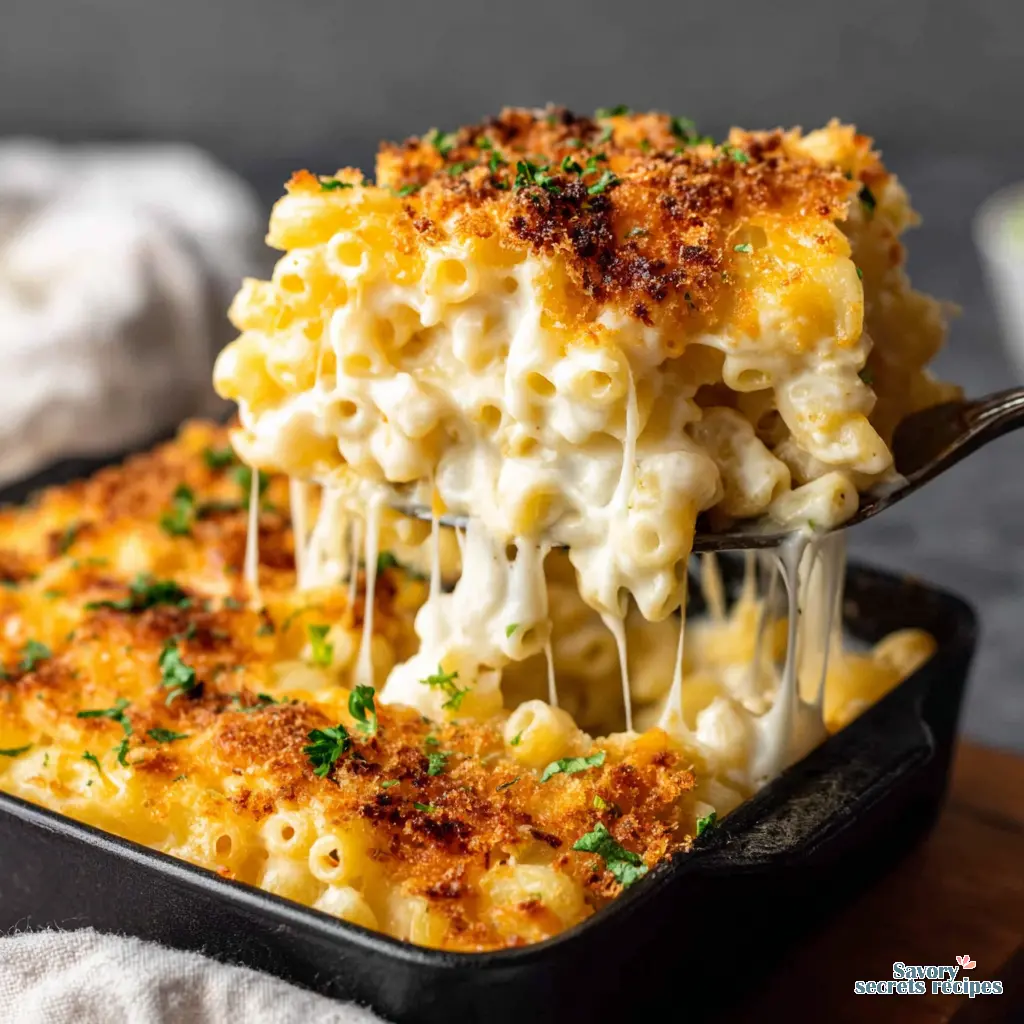
Creamy Baked Macaroni and Cheese with Crispy Crust
Ingredients
Method
- Preheat the oven to 375°F (190°C) and lightly grease a 9x13-inch baking dish.
- Boil the elbow macaroni in salted water for 2 minutes less than the package directions for al dente, then drain well and set aside.
- Melt 1/2 cup of butter in a large saucepan or Dutch oven over medium heat, whisk in the flour, and cook for 1 minute while stirring constantly.
- Gradually whisk in the warmed whole milk and evaporated milk until smooth, then cook over medium heat for 5 to 7 minutes until the sauce thickens, ensuring it does not boil.
- Remove the pan from the heat, stir in the shredded cheddar and Gruyère cheeses one handful at a time until melted, and mix in the mustard powder, smoked paprika, salt, and white pepper.
- Add the cooked macaroni to the cheese sauce and stir gently to combine.
- Transfer the mixture to the prepared baking dish and spread it into an even layer.
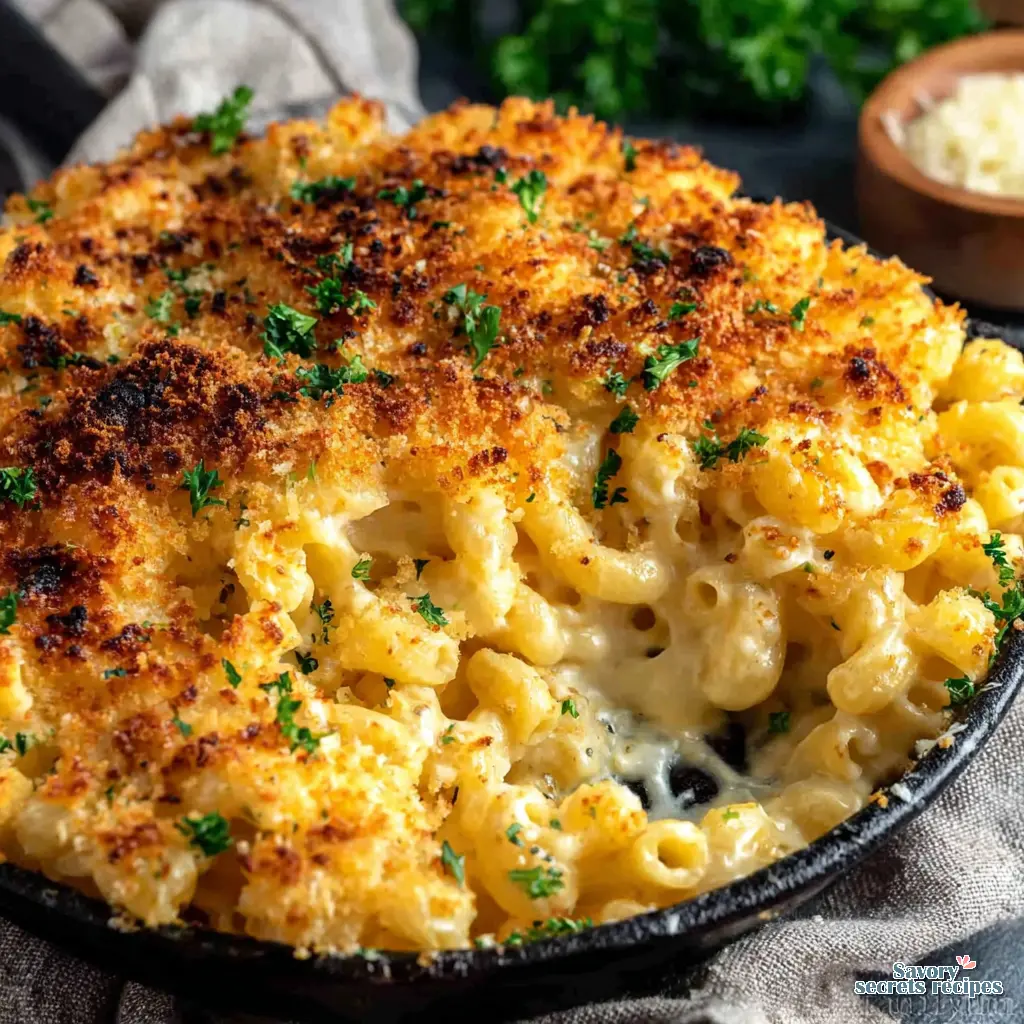
- Combine the Panko breadcrumbs, grated Parmesan, and 3 tablespoons of melted butter in a small bowl, then sprinkle the mixture evenly over the macaroni and cheese.
- Bake for 25 to 30 minutes until the topping is golden brown and the sauce is bubbling, then let the dish rest for 10 minutes before serving.
Nutrition
Notes
The Secret to a Creamy, Never-Dry Pasta Bake
I remember standing at a neighborhood potluck a few years ago, staring at a sad, dry pan of baked mac and cheese. It looked like a solid yellow brick. I took a bite, and it tasted like pure regret. Dry, grainy, and completely devoid of that comforting texture we all crave. We’ve all been there, hoping for molten cheese and getting a mouthful of starch instead.
I’d like to promise you a solution to the dry noodle problem right now. You don’t have to settle for a disappointing casserole. Even with our mild California weather, spring evenings still call for oven-baked warmth. Especially after a long day or a chaotic Trader Joe’s run, you just want a cozy comfort food dinner that feels like a warm hug in a bowl.
This classic mac recipe relies on a few core techniques my grandmother Thérèse taught me. She emigrated from Lyon in 1958 and believed a proper sauce required patience. I still use her wooden spoon for deglazing and stirring my sauces. It’s absorbed years of good cooking, and I swear it makes a difference. Today, we’re going to build a beautiful bechamel sauce from scratch. Don’t worry, it’s easier than you think. You’ll get that golden-brown, audible crunch from the top layer and a perfectly creamy interior.
The “Cheese Block” Rule for a Perfect Cheese Pull
Let me think on that for a second. I tend to think the biggest mistake happens before the stove even turns on. People buy pre-shredded cheese in bags. I get it, we’re all busy parents trying to get an easy family dinner on the table. But as a general rule, pre-shredded cheese is the absolute enemy of a smooth, creamy texture.
Those convenient bags are coated in cellulose and anti-clumping starches to keep the shreds from sticking together in transit. When you melt them, that starch turns your beautiful sauce into a grainy, separated mess. You’re spending good money on ingredients, so don’t sabotage your homemade mac and cheese at the starting line.
In my experience, shredding your own cheese is the secret weapon. Yes, grating a block takes an extra five minutes. Fair enough, it’s a slightly messy kitchen task. But the payoff is immense. For this recipe, I use a blend. Sharp cheddar gives you that nostalgic, punchy flavor, while a good Gruyere cheese provides the supreme melting quality and that impressive cheese pull. Monterey Jack is a great substitute if you want a milder stretch.
The “Al Dente” Warning: Protect Your Pasta
The key checkpoint here is the pasta itself. This is where most people rush it. They boil the elbow macaroni until it’s completely soft, just like they would for a stovetop dinner. But this is a cheesy pasta bake. The noodles are going to spend another 25 minutes in a hot oven, swimming in liquid gold.
If you start with fully cooked pasta, it will absorb all your beautiful sauce and turn into mush. That’s exactly how you end up with a dry casserole. You need to undercook your pasta. Boil it for 1 to 2 minutes less than the package directions for al dente. It should still have a firm, distinct bite to it. It finishes cooking in the oven, soaking up just enough moisture to become tender while leaving plenty of thick sauce to coat every single noodle.
Mastering the Bechamel Sauce
Making a roux-based sauce scares a lot of home cooks. I know it sounds a bit technical, but a roux is literally just melted salted butter and all-purpose flour cooked together. That’s it. It’s the foolproof foundation of our cheese sauce.
Melt your butter in a large cast iron skillet or heavy-bottomed pot. Whisk in the flour. Watch for the moment when the mixture starts to bubble and turns the color of wet sand. It should smell slightly nutty, like toasted pie crust. Cooking the raw flour taste out takes about two minutes. Trust the process on this one.
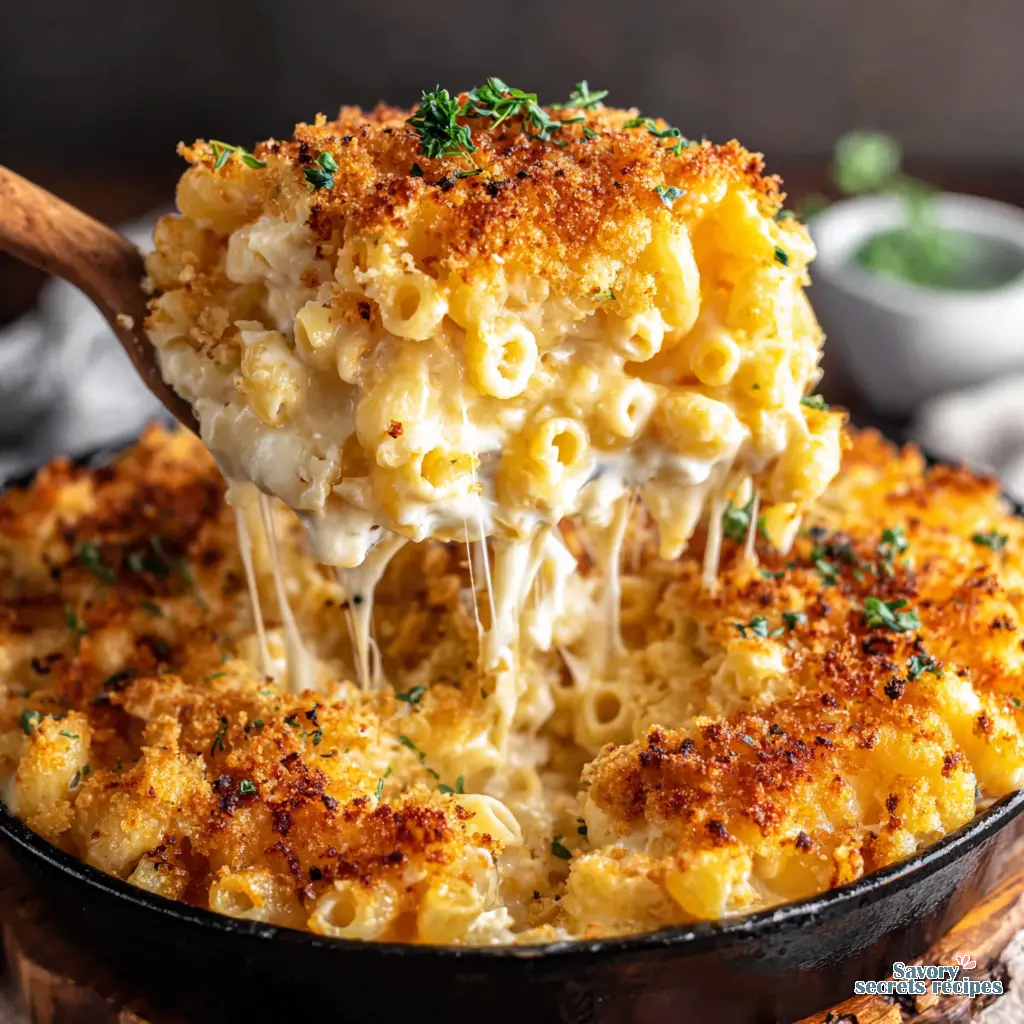
Next, you’ll slowly whisk in your liquids. I use a combination of whole milk and evaporated milk. You might wonder why evaporated milk. That tracks. It adds a concentrated, rich creaminess without adding excess water, which helps stabilize the emulsion. Whisk cold milk into your hot roux to prevent lumps. It might look a little thin at first. Keep whisking over medium heat. You’ll know it’s ready when the sauce coats the back of your spoon and you can draw a clean line through it with your finger. We call this the “nappe” stage.
The Science of the Emulsion (Why Sauces Break)
Early in my career, I broke a hollandaise during a live video shoot. Not just broke it, I completely separated it into a greasy, curdled mess on camera. I wanted the floor to swallow me whole. That failure taught me more about emulsion science than any culinary textbook ever could. A cheese sauce is an emulsion, too. It’s a delicate balance of fat, water, and protein.
Here is the absolute most critical rule: always remove your thickened bechamel from the heat completely before adding your grated cheese. If you dump cheese into boiling liquid, the proteins instantly tighten up and squeeze out all their fat. That’s exactly how you get a grainy texture with pools of orange grease floating on top.
Take the pot off the heat. Let it sit for a minute. Then, add your cheese in handfuls, stirring gently until smooth. I like to add a pinch of mustard powder and cayenne pepper here. They don’t make it spicy; they just cut through the heavy richness and wake up the cheddar flavor. The heat of the sauce is plenty to melt the cheese smoothly.
Visual Troubleshooting Guide
Mistake: The sauce looks grainy or separated.
Solution: You likely added the cheese while the pot was still over an active flame, or you used pre-shredded cheese. To try and rescue it, remove from heat immediately, add a splash of cold milk, and whisk vigorously to help re-emulsify the fats.
Mistake: The baked pasta is dry and absorbed all the sauce.
Solution: You either boiled the pasta too long initially, or you didn’t use enough sauce. Always boil 1-2 minutes under al dente. The mixture should look almost too soupy before it goes into the oven.
Mistake: The flour clumped up in the butter.
Solution: Your heat was too high, or you dumped cold milk in too fast without whisking. Always whisk continuously as you slowly stream the liquids into the hot roux.
Choosing Your Pasta Shape
While elbow macaroni is the traditional choice for baked mac and cheese, you aren’t strictly limited to it. The goal is to choose a shape that catches and holds that glorious sauce.
- Elbow Macaroni: The classic. The curve traps little pockets of cheese perfectly.
- Cavatappi: My personal favorite. These corkscrews have ridges that grip the sauce, and their larger size offers a fantastic chewy texture.
- Shells (Medium): They act like tiny bowls, scooping up maximum sauce in every bite.
- Penne or Ziti: Good in a pinch, but they lack the curves and ridges needed to really hold onto a heavy cheddar sauce.
Make-Ahead Strategy Timeline
If you’re hosting a holiday dinner or just prepping for a busy week, you can absolutely make this ahead of time. Worth noting, pasta continues to absorb liquid as it sits in the fridge. To combat this, I make my sauce slightly thinner if I know I’m baking it the next day.
Assemble the entire dish in your baking dish, but leave the panko breadcrumbs off. Let it cool completely, cover it tightly with foil, and store it in the fridge for up to two days. When you’re ready to bake, let the dish sit on the counter for 30 minutes to take the chill off. Add your buttery panko topping just before it goes into the oven. You’ll need to add about 10 to 15 extra minutes to the baking time since you’re starting from a cold state.
Storage and Reheating for Leftovers
If you have leftovers of this baked mac and cheese, you’ll want to store them properly so they don’t dry out. Transfer any remaining pasta to an airtight container and keep it in the refrigerator for 3 to 5 days.
Reheating is where most people ruin a good pasta bake. Microwaving it on high power for two minutes will cause the fats in the cheese to separate, leaving you with an oily, rubbery mess. To keep it creamy, place your portion in a microwave-safe bowl. Add a splash of whole milk or cream. Cover it loosely with a damp paper towel to trap steam, and microwave on 50% power in 45-second intervals, stirring gently between each one. If you’re reheating a large batch, put it back in a 350°F oven covered with foil until it’s hot and bubbly.
Frequently Asked Questions
How should you reheat leftovers of this classic mac recipe to keep it creamy?
Don’t blast it in the microwave on high. Add a splash of whole milk to your portion, cover it with a damp paper towel, and heat it on 50% power in short bursts. Stir gently to help the sauce re-emulsify without breaking.
What are the best types of cheese to use for a creamy baked mac and cheese?
In my experience, a blend is best. Sharp cheddar provides that classic, robust flavor, while Gruyere cheese melts beautifully and gives you a fantastic cheese pull. You can substitute Monterey Jack or even a little Fontina if you prefer a milder taste.
How do you keep baked macaroni and cheese from drying out in the oven?
The secret is twofold: always undercook your pasta by 1-2 minutes so it doesn’t soak up all the liquid, and make sure your cheese sauce is plentiful. It should look almost soupy before baking. The pasta will absorb just enough moisture in the oven.
Can I prepare this homemade mac and cheese ahead of time for an easy family dinner?
You absolutely can. Assemble the pasta and sauce in your baking dish, let it cool, and refrigerate it tightly covered for up to two days. Wait to add the panko breadcrumbs until right before baking, and add 10-15 minutes to your oven time.
What is the secret to getting a perfectly crispy Panko crust on a cheesy pasta bake?
Tossing your panko breadcrumbs in melted salted butter before sprinkling them over the top is crucial. The fat helps the crumbs toast evenly in the oven, giving you that beautiful golden brown color and an audible crunch in every single bite.
Why is my cheese sauce grainy or oily?
This happens if you use pre-shredded cheese coated in starches, or if you add the cheese while the pot is still over the heat. Always take your bechamel sauce completely off the stove before folding in your freshly grated cheese to maintain a smooth emulsion.










3 Responses
This looks incredible, but I’m fresh out of evaporated milk. Can I substitute it with heavy cream or just more whole milk without losing that velvety texture you mentioned?
You can definitely swap in heavy cream to maintain that velvety texture, though it will be slightly richer than using evaporated milk. I’d avoid using just whole milk, as it lacks the concentration needed to achieve the same smooth, stable finish I look for in this sauce.
The Panko topping provided such a great crunch, though I found the smoked paprika a bit overpowering for my taste. I’ll definitely make it again but might cut the spice in half next time.