



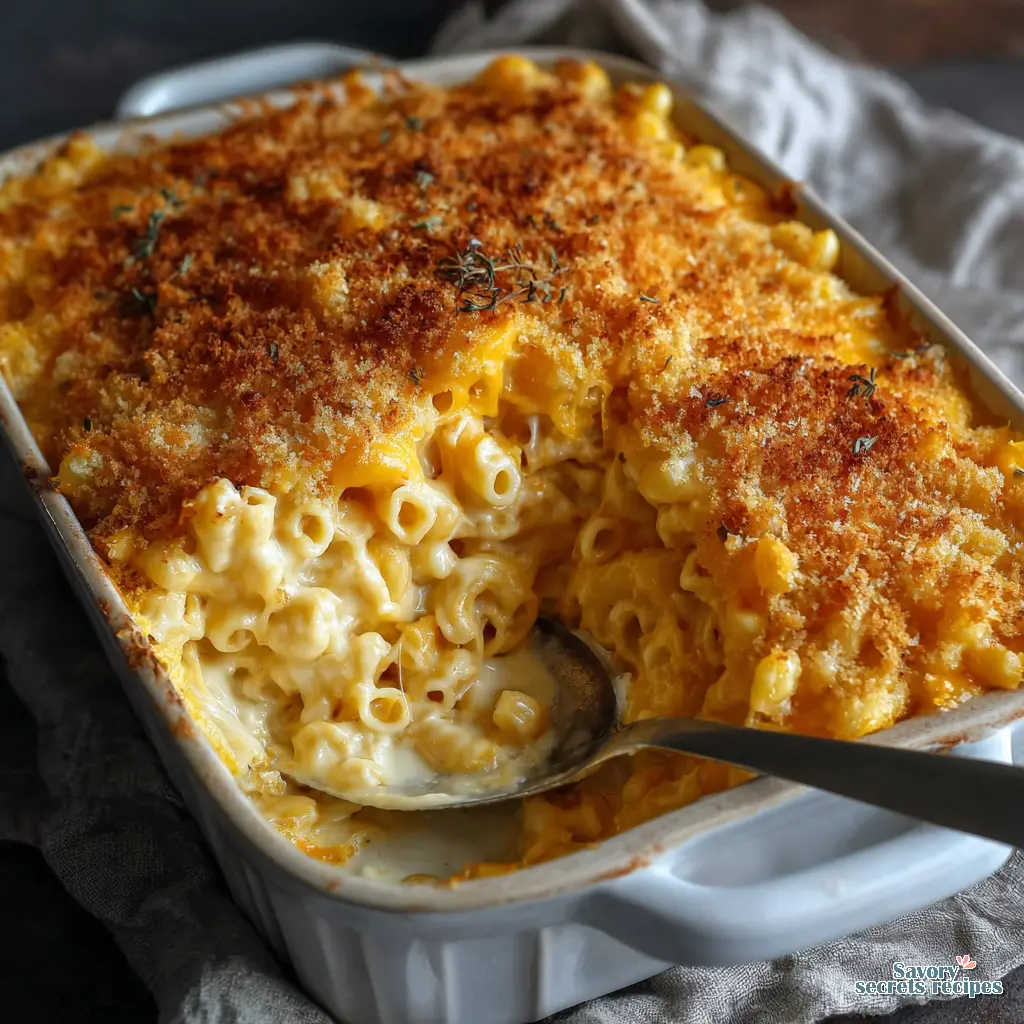
How to Make Baked Mac and Cheese for 20 People
Ingredients
Method
- Cook pasta in salted water until al dente, then drain and set aside.
- Melt butter in a saucepan over medium heat, add flour, and whisk constantly for 2 minutes to remove the raw flour taste.
- Gradually pour in warm milk while whisking to prevent lumps, then stir until the sauce thickens and coats the back of a spoon.
- Reduce heat and stir in cheddar, mozzarella, and parmesan until smooth and creamy, then season with garlic powder, paprika, salt, and pepper.
- Fold the cooked pasta into the cheese sauce until thoroughly coated.
- Transfer the mixture to a baking dish, top with breadcrumbs combined with olive oil or butter, and bake at 375°F (190°C) for 15–20 minutes until golden brown.
Nutrition
Notes
- Make a smooth cheese sauce (butter + flour + milk + cheese) before mixing with pasta for a creamy base.
- Use a blend of cheeses (like sharp cheddar and mozzarella) for richer flavor and better melt.
- Top with buttered breadcrumbs and bake until golden and bubbly for that classic crispy crust.
The Secret to Flawless Baked Mac and Cheese for a Crowd
There’s a very specific moment of panic when you realize twenty people are coming to your house for a spring potluck, and you only have one large stockpot. I know that feeling intimately. You start doing the math in your head, wondering if a standard casserole dish will be enough to feed everyone. I mean, the social pressure is entirely real when you’re hosting. You want that center of the table moment where everyone gasps, and the dish is completely devoured. But making baked mac and cheese for a crowd usually ends in one of two disappointing ways. It’s either a dry, crumbly block of pasta, or a greasy pool of separated dairy. Let me think on that. Actually, there’s a third way. I’m going to share my never-dry secret for feeding a massive group without losing your mind.
I remember hosting Marc’s family for Easter a few years back. His mother always wants to help, and she reached for the cornstarch to thicken the cheese sauce. I gently redirected her to the proper roux I’d already started on the stove. She thought I was being incredibly fussy about it. She wasn’t wrong, but also, we weren’t having gloppy, separated pasta for a holiday dinner. The truth is, mastering a large-scale recipe isn’t about working harder. It’s about respecting a few core techniques. Once you understand the basic chemistry of a cream sauce, you’ll never feel that cheese-induced panic again.
Mac Math: Scaling Your Party Side Dish
Let’s break down the logistics immediately to lower your heart rate. If you’re figuring out how to make baked mac and cheese for 20 people successfully, you can’t just quadruple a standard recipe blindly and hope for the best. That tracks, right? The volumes change how the heat distributes in your oven. For twenty guests, you’ll need two 9 x 13 aluminum foil pans. These are your best friends for catering quantities because they conduct heat well and make cleanup nonexistent.
Generally speaking, you should plan on about 16 ounces of dry elbow macaroni per ten people if it’s a side dish. So, how many 16 oz boxes of pasta are required for a baked mac and cheese for thanksgiving crowd of thirty? You’ll need exactly three boxes. It’s actually quite forgiving once you know the basic ratios. And from a budget standpoint, grabbing your butter, whole milk, and blocks of sharp cheddar cheese at Costco or Ralphs keeps your cost-per-serving incredibly low. You’re looking at maybe a dollar per person for a truly premium, scratch-made dish. Worth it. If you are cooking for a much smaller group, you might prefer a specialized baked mac and cheese for two recipe instead.
The Science of Creaminess: Why a Mornay Sauce Matters
I remember standing on a step stool next to my grandmother Thérèse’s stove when I was a kid. She kept a specific wooden spoon in a separate crock, never with the other utensils. When I asked why, she told me it had absorbed ten years of good stock and butter, and she wasn’t about to waste that seasoning on stirring plain pasta water. I inherited that spoon. I understand now that she was talking about respect for the process. A proper baked mac and cheese for a crowd requires a classic Mornay sauce. That’s just a fancy term for a bechamel base with cheese melted into it.
You start by cooking the butter and flour mixture until it’s bubbly. This removes the raw flour taste. Watch for the moment when it smells slightly nutty, almost like toasted pie crust. Then, whisk warm whole milk into the hot roux. This is where most people rush it. If you pour cold milk into a hot pan, you’ll get instant clumps. By using warm milk, you speed up the thickening process and keep the texture velvety. The pH of the milk and the gentle heat create a stable emulsion. If you just toss shredded cheese on hot noodles, the fat separates and pools. A proper Mornay sauce suspends the fat, keeping your pasta incredibly creamy even as it sits on a buffet line. If you are catering to guests with dietary restrictions, you can follow a similar process using a 1:1 flour replacement for a gluten free baked mac and cheese.
The Golden Rule: Undercook Your Pasta
This is the rule you absolutely cannot break. You must undercook your pasta. I learned this the hard way after serving a mushy, unidentifiable batch of noodles at a neighborhood block party in my twenties. I wanted to disappear into the hedges. Boil the elbow macaroni one to two minutes less than al dente. It should still have a distinct, hard white ring in the center when you bite into a piece.
The pasta finishes cooking in the oven, absorbing the moisture from your evaporated milk and cheese sauce. If you boil it completely soft on the stove, it’ll turn to absolute mush in the oven. Trust the process on this one. I highly recommend using tubular pasta like classic elbows, shells, or cavatappi. Those little hollow centers and ridges are designed perfectly to catch and hold massive amounts of sauce.
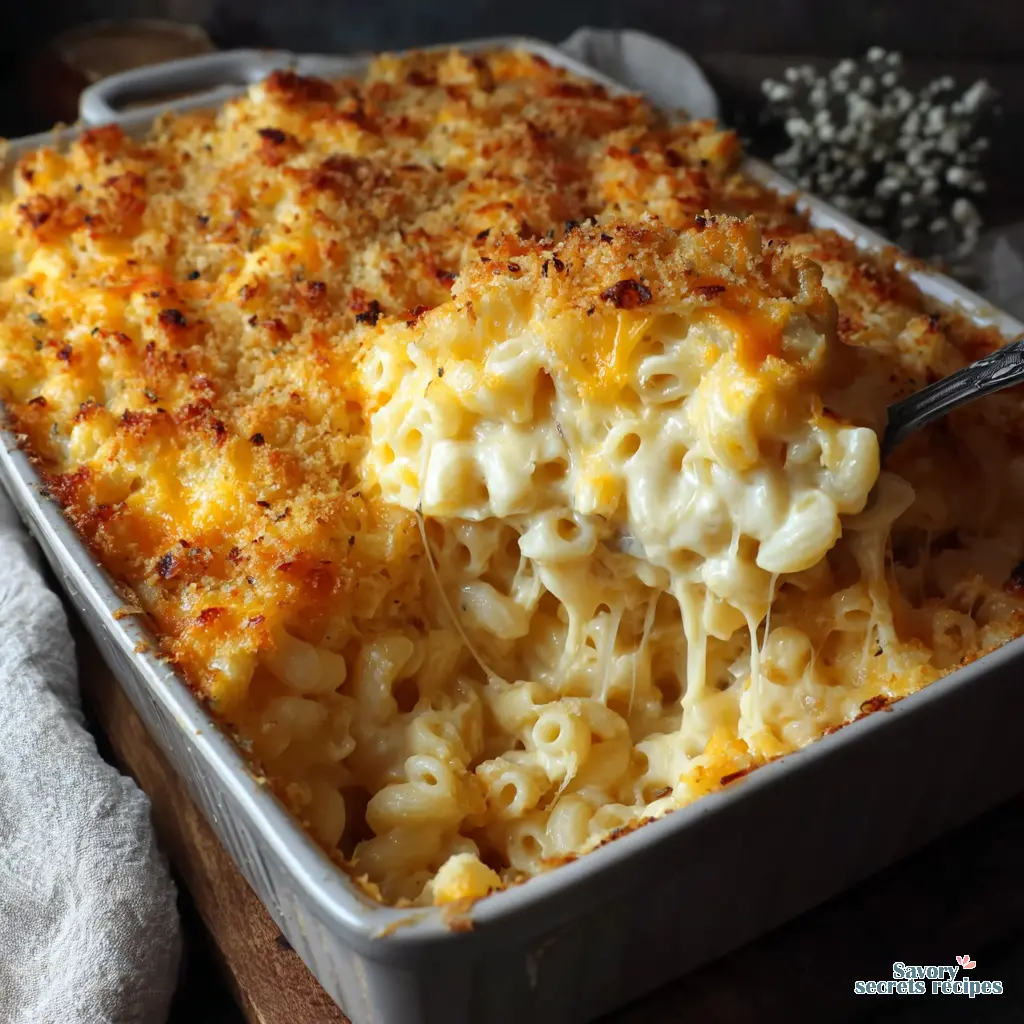
Cheese Selection Guide for Catering Quantities
Look, I’ll be honest. Grating your own cheese for twenty people takes time. Your arm will probably get tired. But you absolutely can’t use pre-shredded cheese out of a bag. Bagged shreds are coated in cellulose and anti-clumping starches. When you try to melt them into a sauce, those starches create a grainy, gritty texture that ruins the entire dish. Grab a box grater and put on a podcast.
In my experience, a specific blend works best for large batches. You want sharp cheddar cheese for that classic, nostalgic flavor base. Then, you need a melting cheese to give it that incredible, stretchy texture. Gruyere is fantastic, though it can get pricey for a crowd. You can easily replace gruyere with Jarlsberg Swiss or monterey jack to keep costs down. A touch of dry mustard powder and a tiny pinch of cayenne pepper mixed into the cheese blend won’t make it spicy, but it’ll amplify the cheddar flavor beautifully.
Common Mistakes & Fixes
Mistake: Overcooking the pasta before it goes in the oven.
Solution: Undercook it significantly. It should still be quite firm and chewy. It absorbs the sauce and softens perfectly while baking.
Mistake: The sauce is too thin and watery.
Solution: Simmer the roux and milk mixture a bit longer before adding cheese. The key checkpoint here is that it should coat the back of a spoon.
Mistake: Using cold liquids in a hot roux.
Solution: This causes instant, stubborn clumping. Always use room temperature or warm milk to speed up thickening and keep the sauce silky smooth.
Mistake: Skipping the resting period after baking.
Solution: Let the finished dish rest for 10 minutes. If you scoop it immediately, the sauce will be too runny. Resting allows the starches to set up.
Make-Ahead Strategy for a Stress-Free Party
Can you prepare and assemble baked mac and cheese the night before a large party? Absolutely. In fact, I highly recommend it if you’re managing multiple dishes. This changes things for your day-of timeline completely. There’s just one crucial adjustment you have to make.
The pasta acts like a sponge while it sits overnight in the fridge. If you use the standard amount of sauce, you’ll wake up to a dry casserole. The trick is to increase the amount of sauce by about fifteen percent if you’re preparing it as a make-ahead dish. Just add a little extra milk and cheese to your base. Assemble the whole thing, let it cool completely, cover it tightly, and refrigerate. When you bake it the next day, that extra moisture prevents it from drying out, leaving you with that perfect squelch when you serve it.
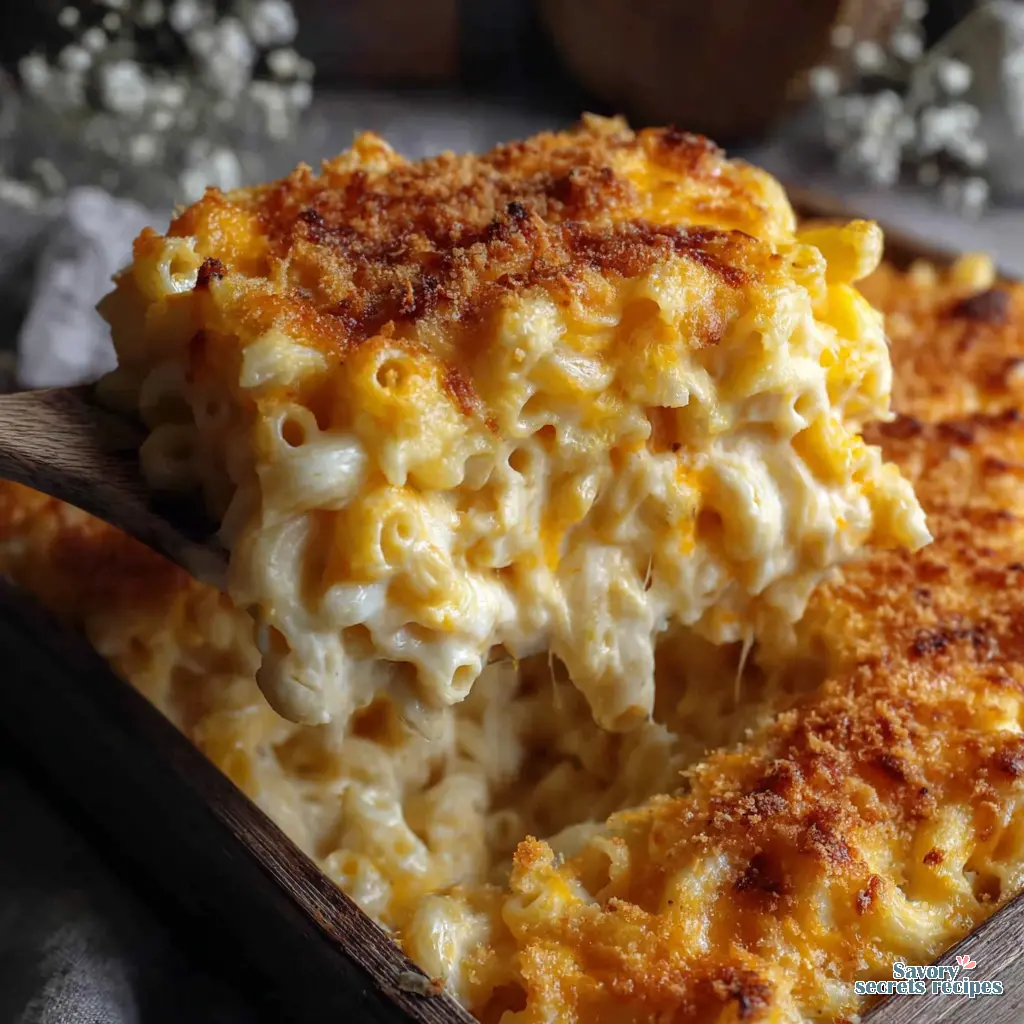
Storage, Reheating, and Buffet Warmers
If you somehow end up with leftovers, you’ll want to store them properly to maintain that creamy texture. Refrigerate the pasta covered tightly with foil or plastic wrap for up to four days. I tend to think freezing isn’t ideal because the dairy can separate when thawed, but you can do it if you use airtight containers. Just expect a slight change in texture.
in a 325 degree oven for about twenty minutes. This low and slow approach prevents the cheese sauce from breaking into an oily mess. If you’re using a microwave for smaller individual portions, just do it in short thirty-second bursts and stir in between. Trust me, your patience here pays off in the texture.
The Potluck Survival Guide: Keeping it Warm
One of the biggest hurdles with a crowd-sized dish is the window of time between your kitchen and the actual serving. I’ve seen perfectly good mac and cheese turn into a cold, gummy brick because it sat on a drafty buffet table for two hours. If you’re heading to a potluck, you need a strategy. I usually wrap my aluminum pans in a layer of parchment paper, then heavy-duty foil, and finally, I wrap the whole thing in a thick, clean bath towel. It sounds ridiculous, I know. But that towel acts as high-grade insulation. It’ll stay piping hot for at least an hour this way.
If you’re hosting and have access to a slow cooker, use it as a holding vessel. You don’t want to cook the mac in there because it’ll get mushy, but it’s perfect for the ‘warm’ setting. Before you transfer the baked mac into the slow cooker, stir in an extra half-cup of warm milk. This keeps the sauce fluid while it sits. I’ve seen people hover over the buffet line for seconds and thirds, and that extra bit of moisture ensures the last person gets a scoop as good as the first.
Topping Variations: Crunch vs. Classic
I’m firmly in the camp that a baked mac and cheese for a crowd needs a topping. It’s not just about the texture, though that’s a huge part of it. The topping actually acts as a thermal blanket, protecting the pasta underneath from drying out in the oven’s heat. You have two main paths here, and people usually have very strong feelings about which one is ‘correct.’
The first is the Panko route. I love it because Panko breadcrumbs stay crunchy longer than traditional crumbs. I mix them with melted butter, a little garlic powder, and a pinch of smoked paprika for color. The second is the nostalgic Ritz cracker topping. You just crush a sleeve of crackers and toss them with butter. It’s saltier, more buttery, and reminds everyone of their childhood. If you’re feeling adventurous, you can even use crushed potato chips. Just avoid anything with a strong artificial flavor that might clash with your cheese blend. For those who prefer a spicier profile, a jamaican baked mac and cheese incorporates warm Caribbean spices that pair beautifully with a crunchy topping.
The Crowd-Size Cheat Sheet
Not sure exactly how much to buy? Here’s my quick reference for scaling your ingredients without the guesswork:
- For 10 People: 1 lb pasta, 1 lb cheese, 4 cups milk.
- For 20 People: 2 lbs pasta, 2 lbs cheese, 8 cups milk.
- For 30 People: 3 lbs pasta, 3 lbs cheese, 12 cups milk (use three 9×13 pans).
I always buy an extra block of cheese just in case. You’ll never regret having too much cheese, but you’ll definitely regret having too little.
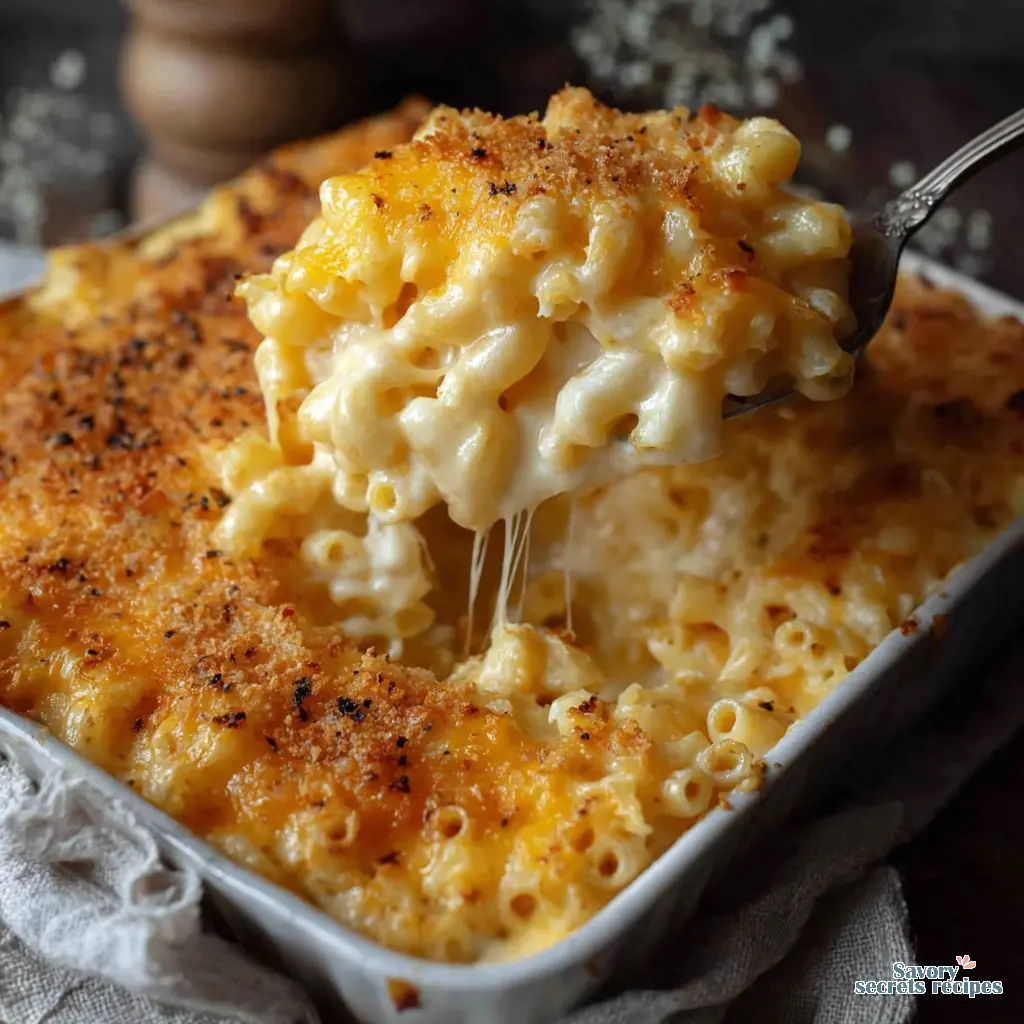
Expert Notes & Data Insights
After years of catering these events and listening to the feedback from literally hundreds of guests, I’ve noticed a few patterns. The most successful dishes aren’t the ones with the most expensive cheese. They’re the ones where the cook didn’t rush the sauce. I’ve found that the ‘sweet spot’ for baking is exactly 25 to 30 minutes at 350 degrees. Any longer and you risk the dairy separating. Any shorter and the flavors don’t quite meld.
Also, don’t be afraid of the salt. Pasta is a blank canvas and cheese loses some of its saltiness when diluted into a large sauce. Taste your Mornay sauce before you mix it with the noodles. It should taste slightly more seasoned than you think it needs to be. Once it hits that pound of unseasoned pasta, the balance will be perfect. I’ve also noticed that using a mix of sharp cheddar and something creamy like Monterey Jack or Muenster provides the best ‘pull’ for those Instagram-worthy scoops that guests love. Now, go forth and be the hero of your next big gathering. You’ve got this.