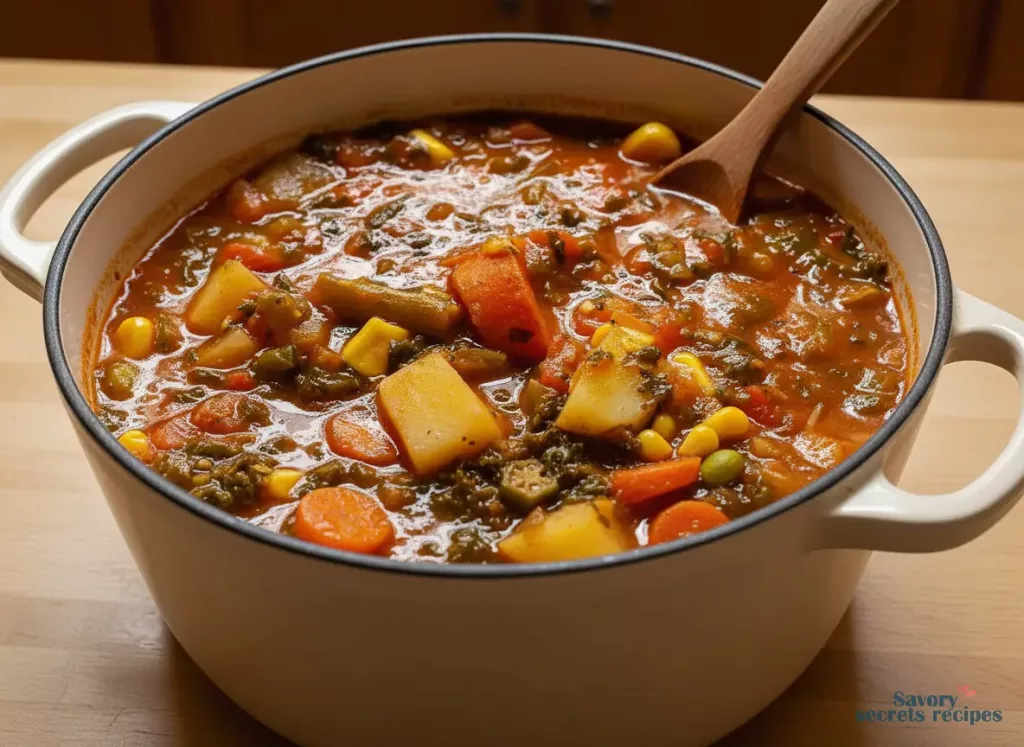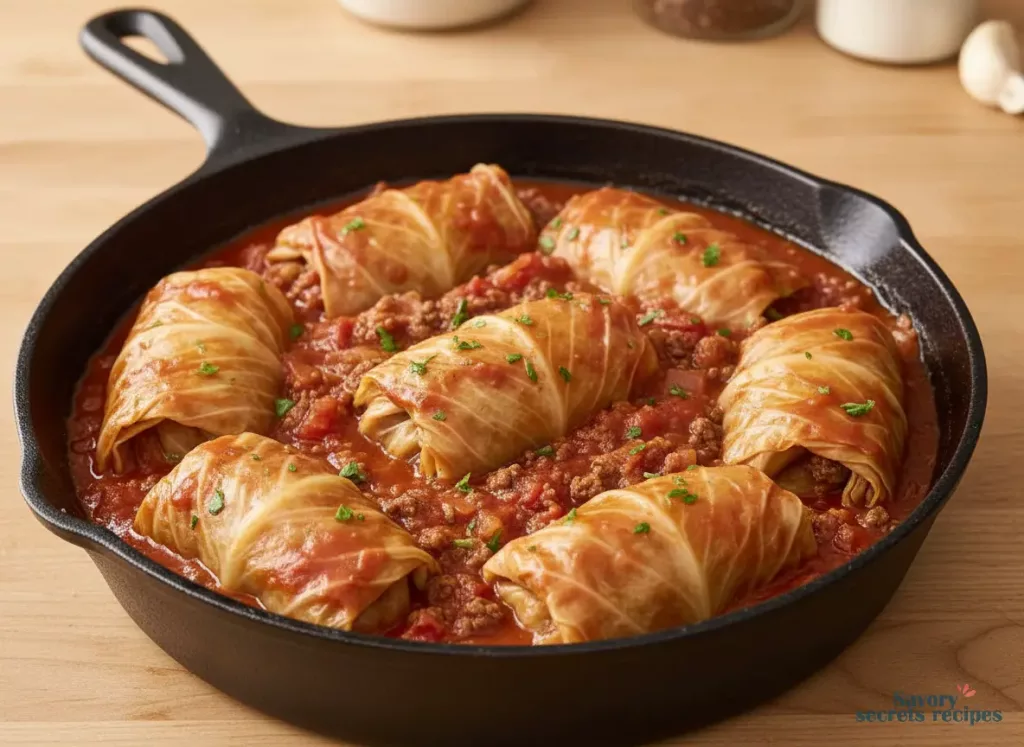




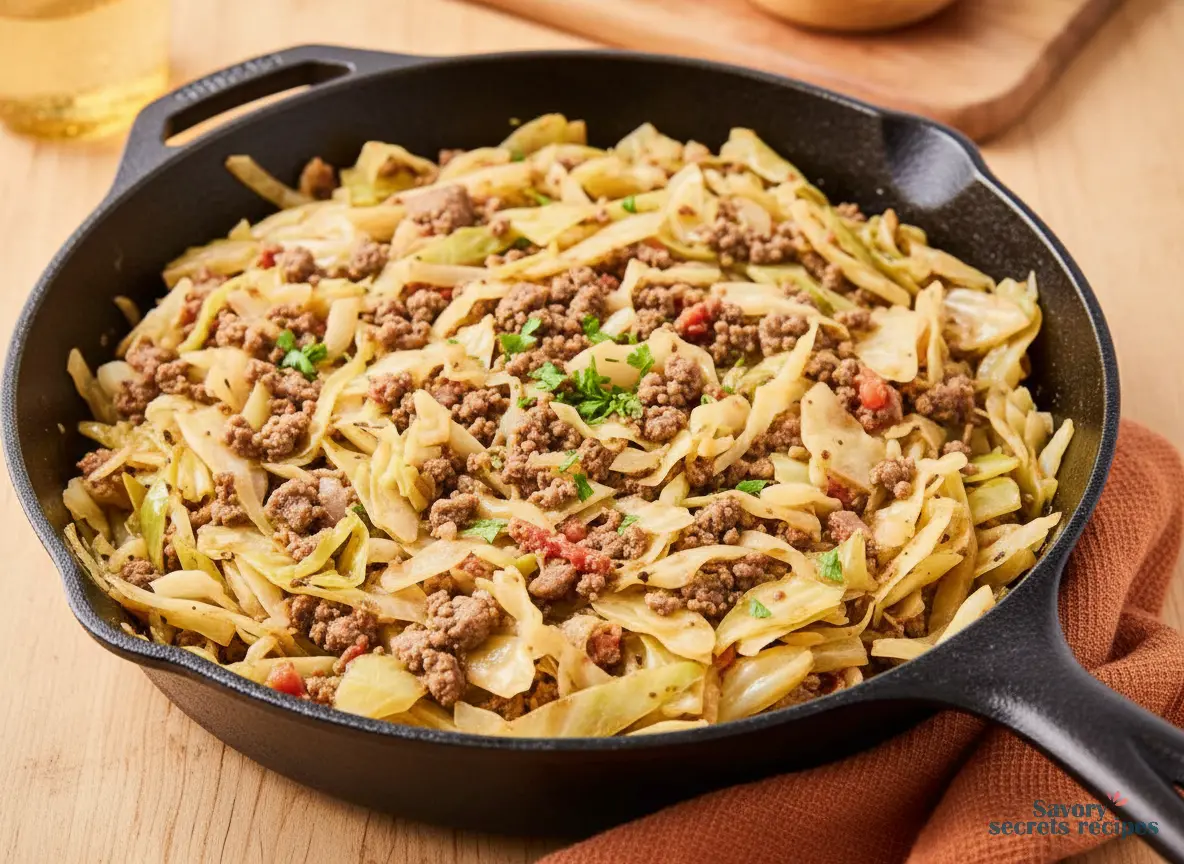
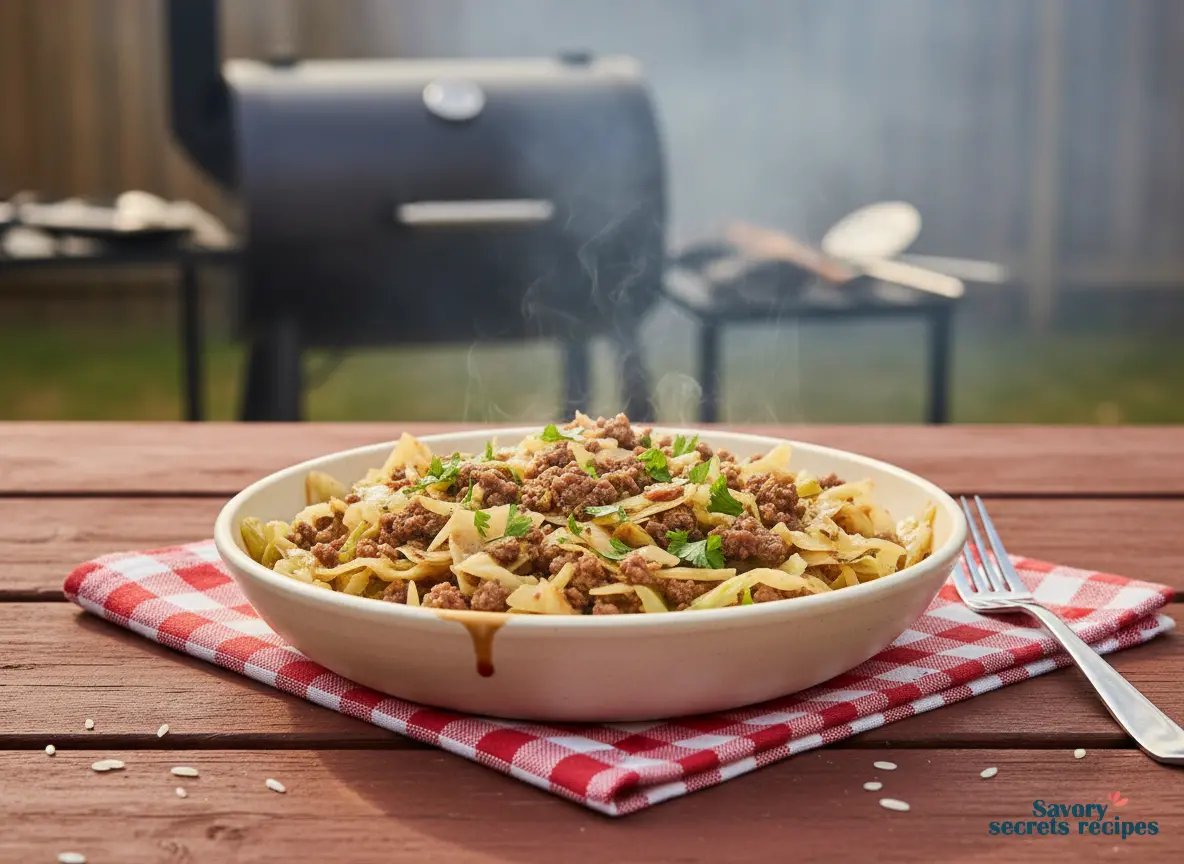
Quick Beef and Cabbage Skillet Dinner
Ingredients
Method
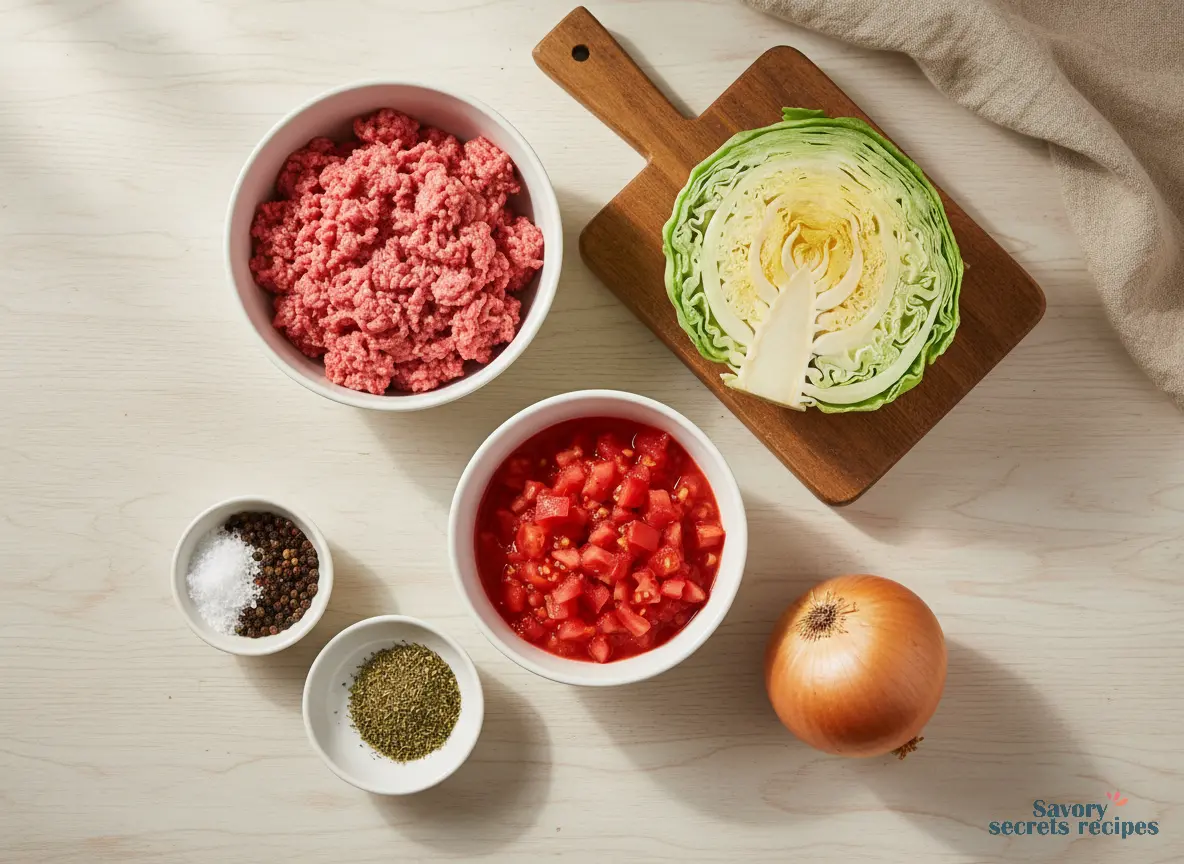
- Collect all ingredients.
- Add cabbage, tomatoes with their juice, onion, Italian seasoning, salt, and pepper to a Dutch oven or large pot over low heat. Cook and stir until the mixture begins to simmer.
- Add the lean ground beef on top, cover, and cook, stirring occasionally, until the cabbage is tender and the beef is cooked through, about 45 minutes.
- Serve and enjoy.
Nutrition
Notes
When Wednesday Night Wins
You know that moment. It’s pushing six o’clock, everyone’s starting to get that hollow look, and the fridge is giving you the side-eye. You’ve got half a cabbage, some ground beef, and about thirty minutes before the mutiny starts. That’s the exact spot where this beef cabbage recipe comes in. Honestly, it’s saved more weeknights than I can count.
I learned about respecting simple ingredients from my Uncle Raymond back in Goldsboro. He’d take a cheap cut and some smoke and turn it into something people would drive across county lines for. The principle’s the same here. You’re not making something fancy. You’re making something solid, something that fills people up and makes the kitchen smell like dinner’s actually happening. This beef cabbage recipe is that. It’s the answer to “what’s for dinner?” when you’re fresh out of clever answers.
During these cooler LA months, when it’s actually pleasant to have the stove on, this skillet meal makes perfect sense. It’s hearty without being heavy, and it comes together in one pan. That tracks with how most of us are cooking these days. You grab your ingredients from Ralphs or Trader Joe’s, you fire up the burner, and in less time than it takes to decide on takeout, you’ve got a real meal. Let’s get into why this particular beef cabbage recipe works so well.
Why This Beef Cabbage Recipe Works
This isn’t a complicated dish. That’s the whole point. But there’s a method to it that makes it better than just throwing stuff in a pan. The magic, if you can call it that, happens in the order of operations and what you choose not to do.
First, you don’t drain the beef. I use 90/10 ground beef for this recipe specifically so I can skip that step. When you pour off that fat, you’re pouring off a huge amount of flavor. That fat is where the beefiness lives. In this beef cabbage recipe, you let that beef cook and brown right in its own juices, and then you use that flavorful foundation to cook everything else. The cabbage wilts down in that savory liquid, soaking it all up. It’s the difference between cabbage that tastes like cabbage and cabbage that tastes like dinner.
The other thing is the texture. You want the cabbage to have some life left in it, not turn into a sad, mushy pile. That means adding it at the right time and knowing when to walk away. The meat will tell you when it’s ready, and the cabbage will too. You’re looking for tender but not limp. It’s a quick cabbage meal, not a long braise. Getting that right turns a simple stir fry into something you’ll actually want to make again.
The Process, Plain and Simple
I tend to keep things straightforward in the kitchen. Too many steps and people get lost. For this beef cabbage recipe, you’re really just doing three things: browning, softening, and combining. But doing them in the right order matters.
Getting Your Foundation Right
Start with your beef in a cold, dry skillet. Medium heat. Let it crumble and brown slowly. Don’t rush this. You want those little bits to get some color, not just turn gray. That browning equals flavor. While that’s happening, you can chop your onion and shred your cabbage. The cabbage should be in thin ribbons, not chunks. This helps it cook quickly and evenly.
When the beef is no longer pink and has some good browned spots, that’s when you add the onion. Let it cook with the beef for a few minutes until it turns translucent. You’ll smell the change. That’s what you’re after.
Bringing It All Together
Now for the cabbage. Pile it all in. It’ll look like a mountain, but don’t worry. Add a pinch of salt to help it wilt. Give it a few good stirs to mix it with the beef and onion. Then, you cover the skillet for just a few minutes. This creates a little steam that starts softening the cabbage without needing to add water.
After about five minutes, uncover it. The cabbage will have shrunk down considerably. Now you stir in the diced tomatoes with their juice and the Italian seasoning. This adds moisture and acidity. Let it all simmer together, uncovered, for another five to seven minutes. You’re waiting for the cabbage to be tender but still have a slight bite, and for the liquid to reduce just a bit. That’s it. You’ve made a beef cabbage skillet meal.
Tips for a Solid Beef Cabbage Recipe
A few things I’ve picked up along the way can make this even easier. Worth noting.
On Preparation
You can totally take a shortcut here and buy a bag of pre-shredded coleslaw mix to replace the cabbage and carrots. Sometimes, that’s a more economical purchase at a place like Costco, and it saves you from having a half head of leftover cabbage. I’ve done it when I’m in a real pinch. The texture is a bit different, but it works in a pinch. Fair enough.
On Cooking and Mindset
Don’t walk away once you add the cabbage. It goes from perfectly tender to overcooked faster than you think. Stay nearby and give it a stir every couple of minutes. And remember, the residual heat will keep cooking it even after you turn off the burner, so pull it when it’s just a touch firmer than you want. Temperature is data, but texture is truth. You want a bit of life in those cabbage ribbons.
Variations & Substitutions
This recipe is a fantastic base. Once you’ve got it down, you can let it ride in different directions based on what you have or what you’re craving.
Adding More Vegetables
The basic beef and cabbage stir fry is great, but it’s also a clean-out-the-fridge kind of dish. Sliced mushrooms added with the onions add an earthy depth. Thinly sliced red bell pepper thrown in with the cabbage adds color and sweetness. For a different crunch, try tossing in some water chestnuts or snow peas right at the end. Broccoli florets or baby corn work too. Just adjust your cooking time a bit for harder veggies.
Changing the Flavor Profile
If you’re tired of Italian seasoning, swap it out. A tablespoon of soy sauce and a teaspoon of grated ginger can pivot this toward an Asian beef cabbage stir fry. A sprinkle of chopped peanuts on top at the end is excellent. For a Tex-Mex twist, use chili powder and cumin instead of Italian herbs, and maybe a can of rinsed black beans added with the tomatoes. The framework is flexible. If you’re looking for more ways to use cabbage with tomatoes, our cabbage and tomatoes recipe collection offers great inspiration.
Common Mistakes to Avoid
I’ve made most of these. Learned from them too.
❌ Mistake: Cooking the beef, then draining all the fat away.
✅ Solution: Use leaner beef (90/10) and don’t drain it. That fat is your flavor. If you use a higher fat content and there’s a lot of grease, you can spoon a little out, but leave most of it in the pan.
❌ Mistake: Adding the cabbage all at once and drowning it in liquid.
✅ Solution: The cabbage will release its own water as it cooks. You don’t need to add broth or water at the beginning. The juice from the tomatoes provides plenty of moisture. Let the natural process work.
❌ Mistake: Overcooking the cabbage into a soggy, gray mess.
✅ Solution: Keep an eye on it. Taste a piece. It should be tender but still have some structural integrity, not completely limp. When in doubt, err on the side of slightly underdone.
How to Store and Serve This Dish
This beef cabbage recipe makes fantastic leftovers. The flavors actually meld and improve overnight in the fridge. Let it cool completely, then store it in an airtight container. It’ll keep for 3-4 days.
Reheating is best done in a skillet over medium-low heat with a splash of water to loosen it up. You can microwave it, but it might get a bit soggy. I don’t recommend freezing it, as the cabbage texture really suffers when thawed.
As for serving, most of the time I just eat this stir fry as is, straight from the skillet. It’s a complete meal. But it’s also delicious served on a bed of white rice to bulk up the servings, or over mashed potatoes for ultimate comfort. For a lighter option, try it with the cauliflower-potato blend. It’s also great with a simple side of corn on the cob or a piece of cornbread. Solid.
Frequently Asked Questions
Wrapping It Up
When you make this beef cabbage recipe, you’ll love how something so simple can shut down the “what’s for dinner” panic so completely. It’s the kind of meal that reminds you cooking doesn’t have to be a production. It’s just good food, made with a few things you probably already have, in one pan. That’s what you’re after on a busy night.
Give it a try this week. Grab that cabbage and that pack of ground beef on your next run to Vons or Trader Joe’s. Follow the steps, trust the process, and don’t overthink it. Then, pull that steaming skillet to the table. That’s the smell of a problem solved. You just made dinner. Now we’re talking.
What meat goes best with cabbage?
For a quick cabbage meal, ground beef is hard to beat for flavor and convenience. It browns quickly and its savory fat perfectly seasons the cabbage. In my experience, though your mileage may vary, lean ground beef (90/10) works best so you don’t have to drain it and lose that flavor.
How long must cabbage cook?
In a stir fry like this beef cabbage recipe, not long. Once you add it to the hot skillet with the beef, it’ll wilt down in 5-7 minutes. You want it tender but not mushy. It continues to soften a bit off the heat, so pull it when it still has a slight bite.
What can I add to cabbage to make it tasty?
The key is cooking it in something flavorful. In this dish, it’s the beef juices, onions, and tomatoes. Fat and umami are your friends. A good pinch of salt while it cooks also makes a world of difference, drawing out its natural sweetness.
Can I make this beef cabbage recipe ahead of time?
Absolutely. It reheats well. Let it cool, store it covered in the fridge for up to 4 days. Reheat gently in a skillet with a splash of water to refresh it. The flavors actually improve after a day. That’s the one.
What are common mistakes to avoid when cooking cabbage?
Overcrowding the pan leads to steaming instead of browning. Not salting it enough while it cooks. And the big one: overcooking it into soggy oblivion. Cook it just until tender-crisp for the best texture in your beef and cabbage skillet meal.