



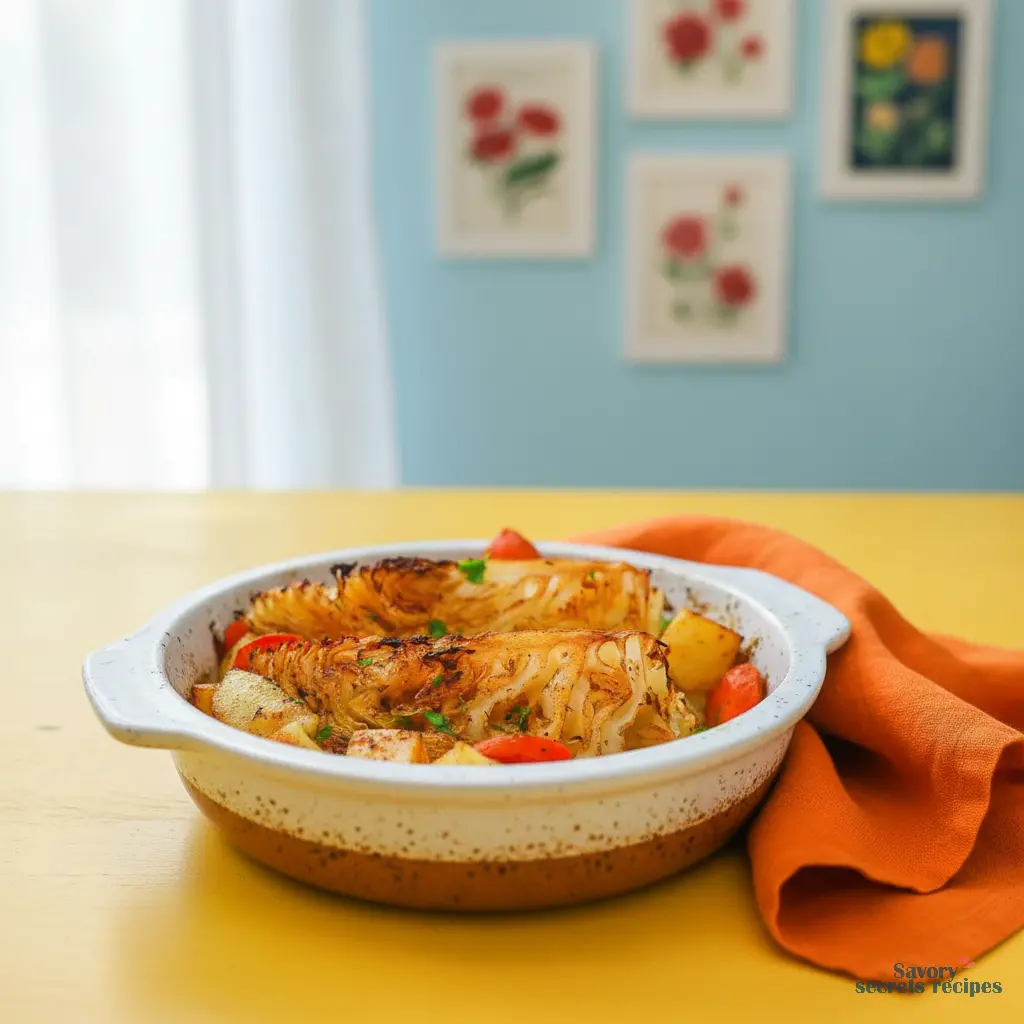
Braised Cabbage and Carrots with Potatoes
Ingredients
Method
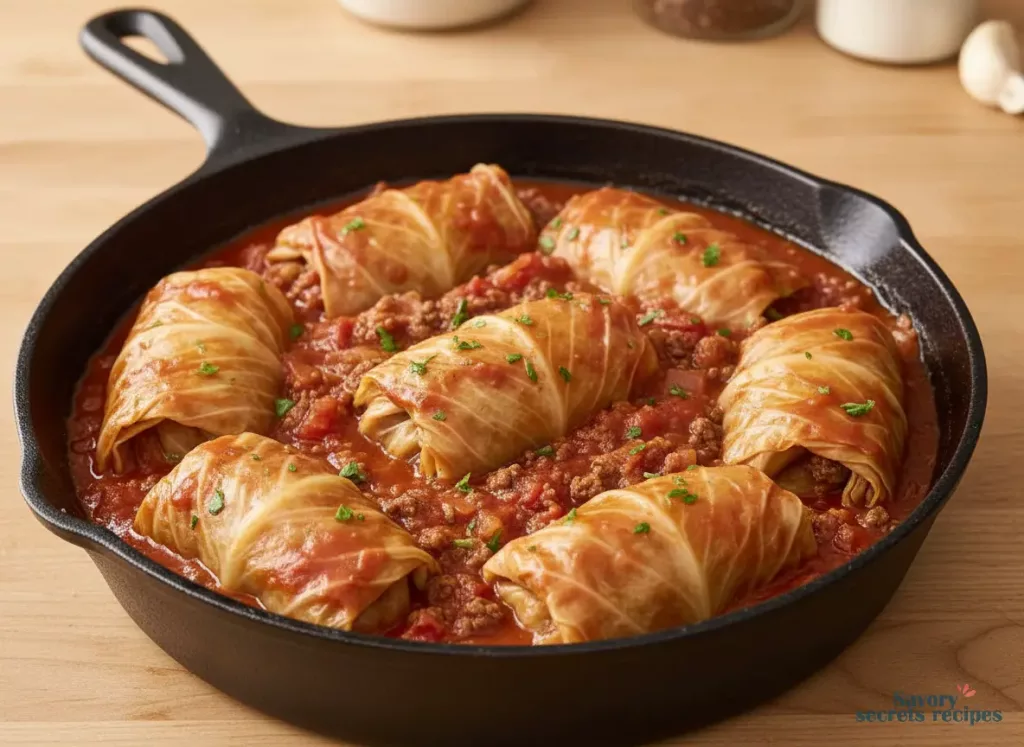
- Cut the cabbage in half, then slice each half into 3-4 wedges.
- Arrange the cabbage wedges in a large baking dish and surround them with the potatoes and carrots.
- Season the vegetables with garlic powder, paprika, oregano, salt, and black pepper.
- Brush the cabbage and vegetables with oil using a pastry brush.
- Pour the vegetable broth over the vegetables and cover the baking dish with aluminum foil.
- Bake at 375°F for one hour. Remove the foil and continue baking for 30 more minutes. Garnish with fresh parsley before serving.
Nutrition
Notes
Add-ins and Substitutes
- Use different cabbage varieties. I used a green cabbage, but you could use red, as well as other varieties. If you use red, add a little bit of vinegar as it will keep the red color from turning blue.
- Add seeds. You might enjoy this Braised Cabbage and Vegetables with cumin, sesame, or caraway seeds added in. These impart a lot of flavor and are a tasty way to tweak this recipe.
- Substitute other vegetables. This dish is very versatile, so you can make it with other vegetables, such as celery, onion, turnips, broccoli, cauliflower, or parsnips.
- Add some heat. If you like your food a little spicy, add some hot sauce or Sriracha to the broth. You can also add red pepper flakes or cayenne pepper to the top of the cabbage.
How to Store
You can store this Braised Cabbage and Vegetables in an airtight container in the refrigerator for up to 5 days. Reheat it either in the oven or in the microwave. You can freeze this dish as well. Just place it in a freezer-safe container or in a ziplock bag and it will last for about 6 months. It should be thawed overnight in the fridge before reheating to serve.When Your Kitchen Needs a Hug
You know that feeling? It’s a Tuesday in December, dark by 4:30, and you’re staring into the fridge hoping for dinner to materialize. I’m not going to lie, I’ve been there more times than I can count. That’s when I reach for this braised cabbage and carrots. Here’s the thing, it’s not fancy. It’s not fast, exactly. But it is the culinary equivalent of putting on your coziest sweater. It fills your whole place with this smell that reminds me of my mom’s kitchen on Sunday nights—that specific hum of something good happening, the promise of a warm plate at the end of a long day. This braised cabbage and carrots recipe is my go-to for turning a bag of humble vegetables into a pot of pure comfort. Totally doable, even on a weeknight.
Real talk, braising sounds like a chef’s technique, but it’s just a gentle simmer in a bit of liquid. It’s how you get vegetables that are tender but not mushy, sweet but still savory. If you’ve ever been disappointed by soggy, overcooked cabbage, this method is your answer. The carrots add a natural sweetness that plays so nicely against the savory broth. It’s a one-pot wonder that basically cooks itself while you tackle the rest of your evening. Future you will thank you for putting this together.
Why This Braised Cabbage and Carrots Works
Okay, let’s talk about why this specific method for braised cabbage and carrots is a weeknight hero. First, it addresses the biggest fear head-on: mushiness. Braising, unlike boiling, uses a controlled amount of liquid and low, steady heat. The cabbage and carrots soften in their own time, absorbing flavor without drowning. The core stays attached, which is a game-changer for weeknights—it keeps the wedges intact so you get beautiful presentation with zero fuss. Second, it’s a flavor bomb waiting to happen. The broth reduces and concentrates, the vegetables release their natural sugars, and everything just…melds. It reheats like a dream, too. I’m a little obsessed with how the leftovers taste even better the next day, the flavors having a chance to really get to know each other in the fridge.
The Simple Science of Braising (It’s Easier Than You Think)
What is braising, anyway? I used to think it was complicated. It’s not. You’re just combining two basic cooking methods: a quick sear in fat (which builds flavor with caramelization) followed by a slow, gentle simmer in liquid (which tenderizes). For vegetables like cabbage and carrots, this is magic. The initial sizzle in the pot starts the sweetness, and the covered simmer does the rest of the work. The liquid—broth, in our case—never fully covers the food. This means the top steams while the bottom simmers, giving you that perfect texture contrast. It’s how you prevent mushy cabbage. The wedges hold their shape but yield to a fork with zero resistance. That said, the braising time for cabbage is key; too short and it’s tough, too long and it falls apart. We’re aiming for that sweet spot right in the middle.
Your Guide to Perfect Braised Cabbage and Carrots
Let’s walk through this. I promise it’s simpler than it sounds. The most important step happens before the pot even gets hot: cutting your cabbage. You want wedges that will hold together. Discard any gnarly outer leaves, give the head a rinse, and pat it dry. Slice a thin piece off the bottom of the core—just enough to remove the dried-out part, but leave the core itself attached. This is your anchor. Cut the cabbage in half through that core, then cut each half into two or three wedges. You want them similar in size so they cook evenly. Don’t stress about perfection. Roughly chopped carrots and potatoes are totally fine. In my experience, anyway, rustic is better here.
Now, for the braise itself. Use a heavy pot with a tight-fitting lid. A Dutch oven is ideal, but a deep skillet with a lid works too. Don’t skimp on the fat—a good glug of olive oil is your flavor foundation. Let the vegetables get a little color in the hot oil before you add the broth. You’ll hear a fantastic sizzle. That’s the sound of flavor developing. Then, pour in your broth. It should come about halfway up the sides of the cabbage wedges. Not a flood. Bring it to a bubble, then immediately reduce the heat to the lowest simmer your stove can manage. Clap on that lid and walk away. This is a Sunday job, even if it’s a Wednesday. Let the magic happen for 30 to 40 minutes.
Tips for Foolproof Texture and Flavor
Here are a few things I’ve learned the hard way, so you don’t have to. Quality of broth matters. It infuses the whole dish, so use a good one. I like the vegetable broth from Trader Joe’s or a better-quality boxed brand from Ralphs. If your braising liquid looks too watery at first, don’t worry. It will reduce as it cooks. And right at the end, that’s when you brighten everything up. A splash of apple cider vinegar or a squeeze of lemon juice just before serving cuts through the richness and makes all the flavors pop. Honestly kind of genius. Also, place the cabbage wedges laying down in the pot, not standing up. This lets them absorb the braising liquid evenly.
Variations & Substitutions: Make It Your Own
This recipe is a fantastic template. Play with it. Savoy cabbage or red cabbage work great instead of green—red cabbage will turn everything a beautiful purple, which is fun. No red onion? Yellow or white onions or even shallots are fine. Just don’t slice them too thinly or they might burn. For a vegan version, you’re already most of the way there—just ensure your broth is vegetable-based. Want to make it a full meal? Stir in a drained can of cannellini beans during the last 10 minutes of cooking. They’ll heat through and add lovely creaminess. I think this works, but your mileage may vary.
Dietary Adaptations
This dish is naturally vegetarian and easily made vegan. Simply use a robust vegetable broth. For a dairy-free version, the olive oil works perfectly—no butter needed. It’s also inherently gluten-free. To add a spicy kick, sprinkle some crushed red pepper flakes over the cabbage before you put the lid on. The steam will carry that heat throughout the pot.
Common Mistakes to Avoid
Let’s troubleshoot before you even start. A little foresight makes this braised cabbage and carrots recipe foolproof.
❌ Mistake: Slicing the onions paper-thin.
✅ Solution: Go for thicker slices or chunks. They’ll soften and sweeten without disappearing or burning.
❌ Mistake: Using a weak, watery broth.
✅ Solution: Your broth is the main flavor vehicle. Spend a little extra on a good-quality box or use homemade if you’ve got it.
❌ Mistake: Cutting the core completely off the cabbage.
✅ Solution: Leave it attached! It’s the only thing holding your beautiful wedges together during the long cook.
❌ Mistake: Boiling the stew instead of simmering.
✅ Solution: After adding the broth, get it bubbling, then immediately reduce the heat to low. You want gentle bubbles, not a rolling boil. This is the key to tender, not mushy, vegetables.
Frequently Asked Questions
How to Store and Serve Your Braised Cabbage and Carrots
This dish is a meal-prep dream. Let it cool completely, then store it in a sealed container in the fridge. It’ll stay good for 3 to 4 days, maybe 5 if your fridge is really cold. I don’t recommend freezing braised cabbage and carrots—the texture of the cabbage becomes limp and watery when thawed. To reheat, I prefer the stovetop. Gently warm it in a covered saucepan over medium-low heat with a tiny splash of water or broth to keep it from drying out. You can also use the microwave, but cover it and stir halfway through. Want to fancy up the leftovers? Reheat them in a hot oven until the tops get a little browned and crispy. Add a fresh sprinkle of herbs and that final splash of acid right before serving again. Dinner’s already halfway done.
Warm and Waiting
When you make this braised cabbage and carrots, your kitchen will smell like patience and comfort. It’s the kind of dish that simmers away while you answer emails or help with homework, a quiet promise of a good meal at the end of the day. It’s humble food, but it’s made with care. That counts for a lot, especially this time of year. I hope this recipe finds its way into your regular rotation, a reliable friend for chilly evenings. Let me know how it goes, or what your favorite twists are. Happy, cozy cooking.
How do you cut a cabbage for braised cabbage and carrots?
Trim a thin slice off the bottom of the core to remove the dried end, but leave the core itself intact. Cut the whole head in half through the core. Then, cut each half into 2 or 3 wedges, always cutting through the core. That core is what keeps your wedges from falling apart during the braise.
What is braising, and why is it good for cabbage and carrots?
Braising is a two-step method: browning in fat, then simmering in a small amount of liquid in a covered pot. It’s perfect for cabbage and carrots because the gentle, moist heat tenderizes them thoroughly without making them waterlogged or mushy. It also concentrates the flavors of the broth and vegetables together.
What do you serve with braised cabbage and carrots?
It’s a incredibly versatile side! I love it with anything simple and meaty—a roasted chicken, pan-seared sausages (beef or chicken), or even a crispy fried egg on top for a vegetarian meal. A side of creamy polenta or some crusty sourdough bread to soak up the juices is never a bad idea.