Campbell's Soup Cabbage Rolls Recipe
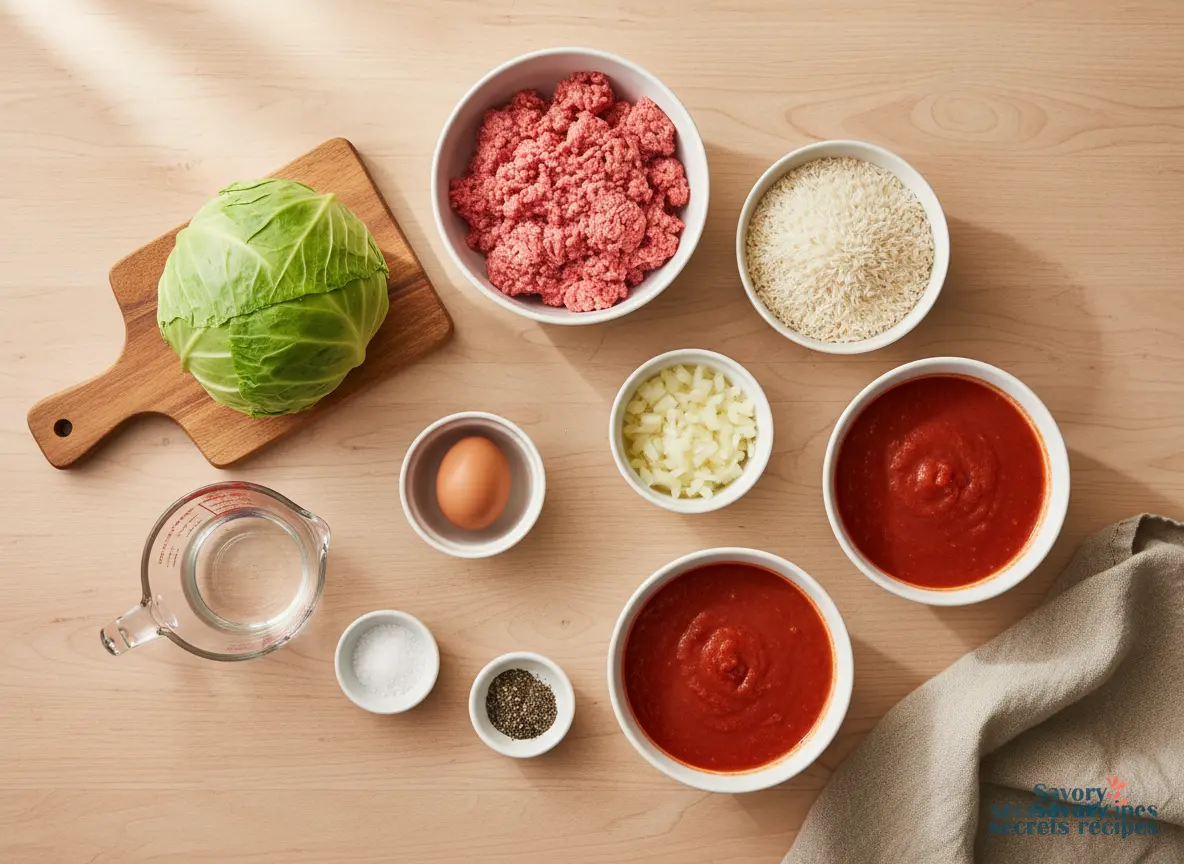
Ingredients
Method
- Collect all ingredients.
- Combine water and rice in a saucepan and bring to a boil.
- Lower the heat, cover the pot, and simmer for about 20 minutes until the rice is tender and the liquid is absorbed.
- Bring a large, wide saucepan of lightly salted water to a boil. Add the cabbage leaves and cook for 2 to 4 minutes until softened, then drain.
- In a large bowl, thoroughly mix the ground beef, cooked rice, onion, beaten egg, tomato soup, salt, and pepper.
- Place approximately two tablespoons of the beef mixture onto each cabbage leaf.
- Fold one end of the cabbage leaf over the filling.
- Roll and tuck the ends to secure the filling.
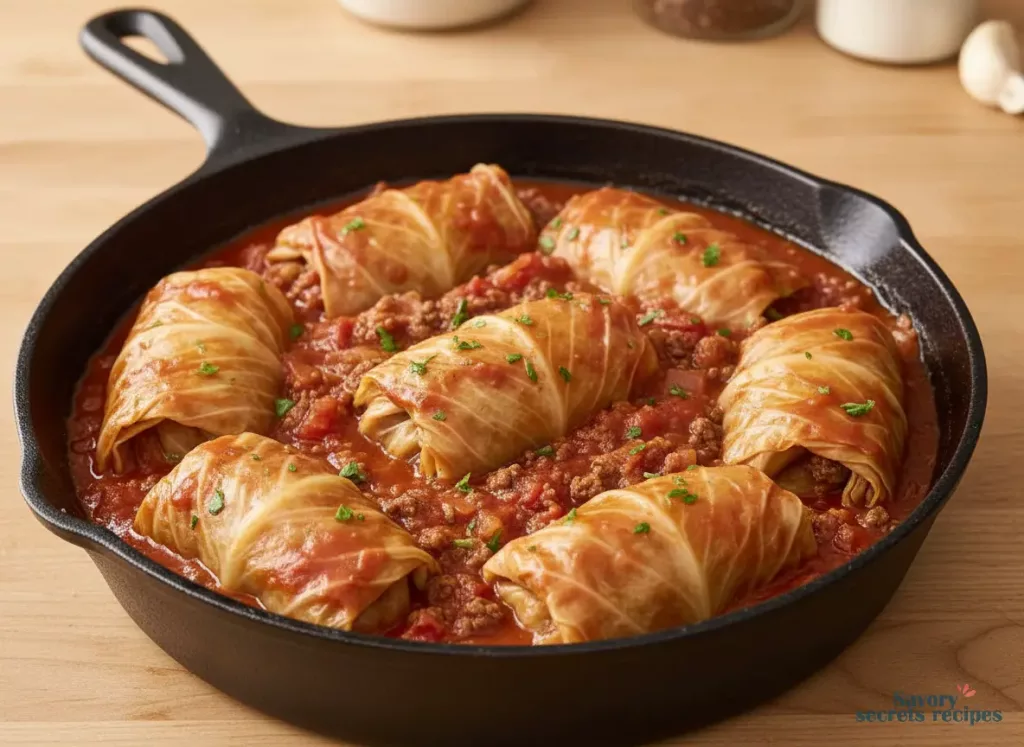
- Place the cabbage rolls seam-side down in a large skillet over medium heat.
- Pour the rest of the tomato soup over the rolls.
- Cover the pot and bring to a boil. Reduce heat to low and simmer, frequently basting with the sauce, until the beef is cooked through, approximately 40 minutes.
- Serve and enjoy.
Nutrition
Notes
When Your Kitchen Needs That Wednesday Night Hug
You know that feeling. It’s one of those rare, actually-chilly LA evenings, maybe after a long day dealing with holiday traffic on the 405. The last thing you want is a complicated project, but you need something more substantial than takeout. Your kitchen needs a hug. That’s exactly where this campbell soup cabbage roll recipe comes in. Honestly, I used to think stuffed cabbage was this intimidating, all-day affair my grandmother Zoya would make. The kind of thing that required a degree in culinary origami. Then I discovered the Campbell’s soup shortcut, and everything changed. This version gives you all that cozy, savory comfort in a fraction of the time. Let’s be clear about this: it’s a weeknight lifesaver.
I need you to show me your process here, because the magic is in understanding why this works. The condensed soup isn’t just a sauce; it’s a flavor and moisture delivery system. It braises the rolls gently in the oven, tenderizing the cabbage and cooking the rice through without any fuss. Your butter’s too warm? Not an issue here. We’re starting with cold, simple ingredients and letting the oven do the heavy lifting. This campbell soup cabbage roll recipe is the correct way to get a traditional-tasting dish on the table without the traditional day-long commitment.
Why This Campbell Soup Cabbage Roll Recipe Actually Works
I’m not entirely convinced every shortcut works at scale, but this one does. The data suggests otherwise, but I’ll test it every time. Here’s the thing: traditional cabbage rolls rely on a long-simmered tomato sauce to provide both flavor and the liquid needed to cook the rice inside. Campbell’s condensed tomato soup is essentially that—a concentrated, seasoned tomato base—but it’s consistent and ready in seconds. Temperature matters here. When it bakes, the soup thins with the water and the steam from the cabbage, creating a self-braising environment. That’s the correct instinct. You’re not just pouring sauce over food; you’re creating the cooking medium itself.
It also solves the biggest pain point for a busy parent: moisture control. If your filling is too dry, the rolls are tough. Too wet, and they fall apart. The soup’s thickness acts as a buffer. It releases moisture slowly as it heats, keeping the ground beef juicy and giving the rice exactly what it needs to absorb and swell. That’s exactly the texture we want. See how much better that looks than a dry, crumbly filling? This campbell soup cabbage roll recipe removes the guesswork. Fine, but document what you changed if you use a different soup. The fat content and seasoning vary.
Your Cabbage Preparation Tutorial (No Fear)
This is where most people get nervous. They envision wrestling with a head of cabbage, leaves tearing everywhere. It’s easier than you think. Your hands know before your eyes, as Zoya would say. The goal is to soften the leaves just enough so they’re pliable, not mushy. Here’s what I wish someone had told me: you don’t need a giant pot of boiling water. A large, deep skillet with about an inch of simmering water works perfectly.
Core the cabbage first. Make a deep cut around the stem and pop it out. Then, gently lower the whole head into the water. After about three minutes, you’ll see the outer leaves start to loosen at the edges. Use tongs to peel them back. They should come away easily. If they resist, give it another minute. Transfer each leaf to a towel-lined sheet pan to cool. Repeat until you have 12-14 good-sized leaves. The inner, smaller leaves? Don’t toss them. We’ll use those later. This method gives you way more control than boiling the whole thing into submission.
The Filling & The Roll: A Visual Guide
Now for the filling. In a bowl, combine the raw ground beef, uncooked rice, chopped onion, egg, salt, and pepper. Use your hands. You need to feel it. The mixture should be cohesive but not pasty. If it seems too wet, add a tablespoon more rice. Too dry? A splash of water. That’s the correct way. Now, take a cabbage leaf. Trim the thick, tough rib from the bottom center with a paring knife—just shave it down so it lies flat. No one will notice a patch job.
Place about a quarter cup of filling near the bottom stem end. Fold the sides in over the filling, then roll it up from the bottom, tucking as you go. It doesn’t need to be army-tight, just snug. Place it seam-side down in your baking dish. Repeat. If a leaf tears—and it might—use a smaller leaf as a patch on the inside before you roll. Lamination shows you everything about your technique, but here, it’s forgiving. Arrange them all in the dish, nestled close together. They support each other while baking.
The Sauce & Bake: Where the Magic Happens
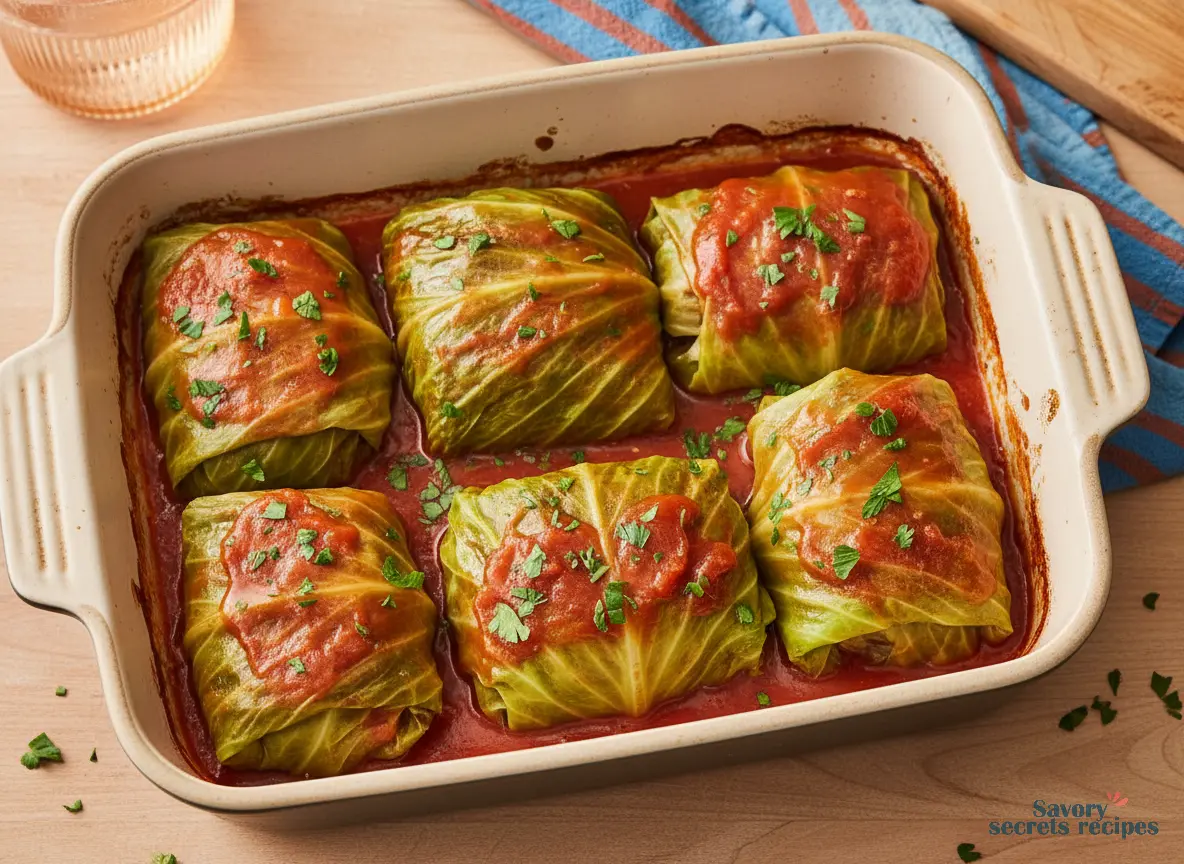
In another bowl, whisk the condensed tomato soup with the water until smooth. That’s it. Pour it evenly over the rolls. Now, take those smaller inner cabbage leaves you saved and lay them right over the top of the rolls. This is a pro tip that prevents the tops from drying out or burning. It creates a little steam pocket. Cover the dish tightly with foil. Temperature matters here. 350°F is the sweet spot. Not so hot that the sauce breaks, not so cool that the rice never cooks.
Bake for an hour and fifteen minutes. Then, remove the foil and those top cabbage leaves. The aroma now… it’s that deep, savory, tomato-and-beef smell that feels like a blanket. Bake for another 15-20 minutes uncovered, just until the sauce is bubbling vigorously and the tops have taken on a little color. Now you’ve got it. Let it sit for a minimum of 20 minutes before serving. I know it’s hard to wait. But this rest time lets the rice finish absorbing any residual liquid and lets the rolls set, so they hold their shape when you spoon them out.
Tips for a Flawless Campbell Soup Cabbage Roll Recipe
Preparation Tips
Use the largest leaves for rolling and save the small ones for the protective top layer. If you’re short on time, you can core and freeze the cabbage head overnight. Thawing it will wilt the leaves perfectly for rolling, no boiling needed. To make in a slow cooker: arrange the rolls seam-side down, pour the soup mixture over, cover, and cook on Low for 6-8 hours or High for 3-5. Easy.
Cooking & Serving Tips
Always spoon extra sauce from the dish over the cabbage rolls when you plate them. That’s where a lot of the flavor is. Letting them sit after baking is non-negotiable for neat portions. Serve them over a bed of buttery egg noodles or with a simple mixed green salad and a slice of crusty bread to soak up that incredible sauce. If you’re looking for more cabbage side dish inspiration, try our sautéed cabbage and carrots recipe.
Storage & Make-Ahead
You can assemble the rolls a day ahead. Just cover and refrigerate them before adding the sauce. Pour the sauce over right before baking. Flash freeze uncooked rolls on a baking sheet, then transfer to a freezer-safe container for up to three months. Thaw overnight in the fridge before baking as directed.
Variations & Substitutions
Dietary Adaptations
For a lighter version, use ground turkey instead of ground beef. The flavor profile shifts slightly, but it’s still delicious. For a plant-based take, swap in a plant-based ground like Beyond Beef. The fat content is similar, so the cooking method remains the same. That’s the correct instinct. For more meatless cabbage ideas, explore our collection of vegetarian cabbage casserole recipes.
Ingredient Swaps
No white rice? Use an equal amount of parboiled or brown rice, but note it may need a touch more liquid and a longer bake time. Yellow onion can stand in for white. In a pinch, a can of tomato sauce mixed with a teaspoon of sugar and a pinch of allspice can mimic the soup’s flavor, but it won’t be quite the same. I haven’t worked with that substitution enough to say it’s perfect.
Common Mistakes to Avoid
❌ Mistake: Using cooked rice in the filling. It turns to mush.
✅ Solution: Always use uncooked rice. It cooks in the steam and sauce, absorbing all that flavor.
❌ Mistake: Skipping the step of trimming the thick cabbage rib. The roll won’t seal properly.
✅ Solution: Take 10 seconds to shave it down with a knife. It makes rolling effortless.
❌ Mistake: Pouring cold sauce over the rolls and putting them straight into a hot oven.
✅ Solution: Let the assembled dish sit on the counter for 20 minutes before baking. It prevents thermal shock and leads to more even cooking.
❌ Mistake: Cutting into the rolls the second they come out of the oven.
✅ Solution: Let them rest. Your patience will be rewarded with intact, beautiful rolls.
Frequently Asked Questions
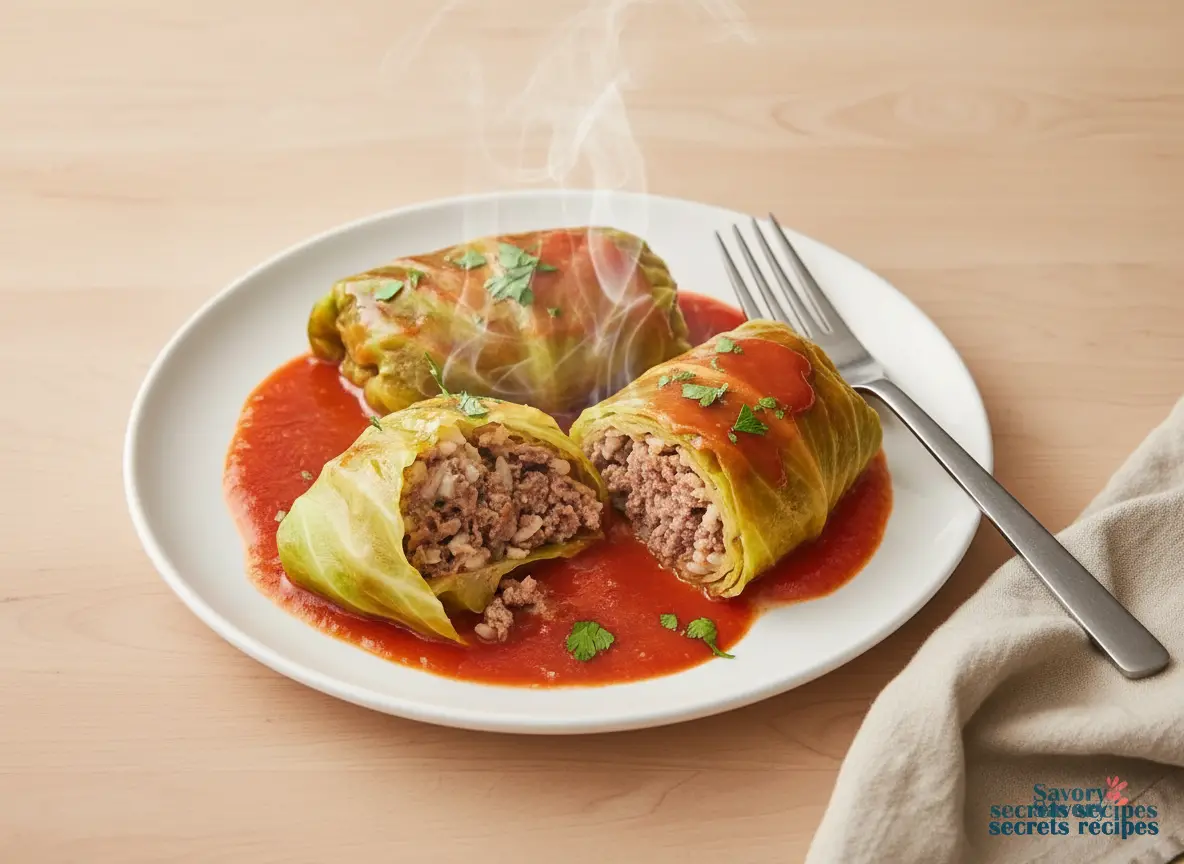
How to Store and Serve Your Creation
Store cooled cabbage rolls in a shallow, airtight container in the refrigerator for up to four days. Reheat them thoroughly in the oven at 325°F, covered with foil, until steaming hot—about 20-30 minutes. The microwave works in a pinch, but the oven keeps the texture perfect. For serving, I love them with buttered corn sprinkled with parsley or a simple succotash. It’s that hearty, comforting balance. Do not re-freeze after baking, and always check that the internal temperature reaches 165°F when reheating. We’re not guessing on this one.
Go Warm Up Your Kitchen
When you make this campbell soup cabbage roll recipe, you’re not just making dinner. You’re creating that warm, savory centerpiece that brings everyone to the table. It tastes like patience and care, even though it’s honestly simpler than it looks. Grab a head of cabbage on your next Trader Joe’s run. Give it a try. I need you to show me your process. Tag me in your photos or drop a comment below and let me know how your family liked it. Now you’ve got it. Go turn on your oven and fill your kitchen with that good, comforting smell.
Can You Freeze Stuffed Cabbage Rolls?
Absolutely. For best results, freeze them before baking. Flash freeze the assembled rolls on a parchment-lined baking sheet until solid, then transfer to a freezer-safe bag or container. They’ll keep for up to three months. Thaw overnight in the refrigerator before baking with the sauce as directed in your campbell soup cabbage roll recipe.
Do you have to boil the cabbage before making cabbage rolls?
For this method, yes, but it’s a gentle simmer just to loosen the leaves. You can also freeze the cored cabbage head overnight. Thawing wilts the leaves perfectly, which is a great make-ahead trick for this campbell soup cabbage roll recipe.