



Easy Homemade Vegetable Soup with Frozen Veggies
Ingredients
Method
- Heat olive oil and garlic in a large pot or Dutch oven.
- Cook the garlic over medium heat, stirring frequently, for 2 to 3 minutes until fragrant.
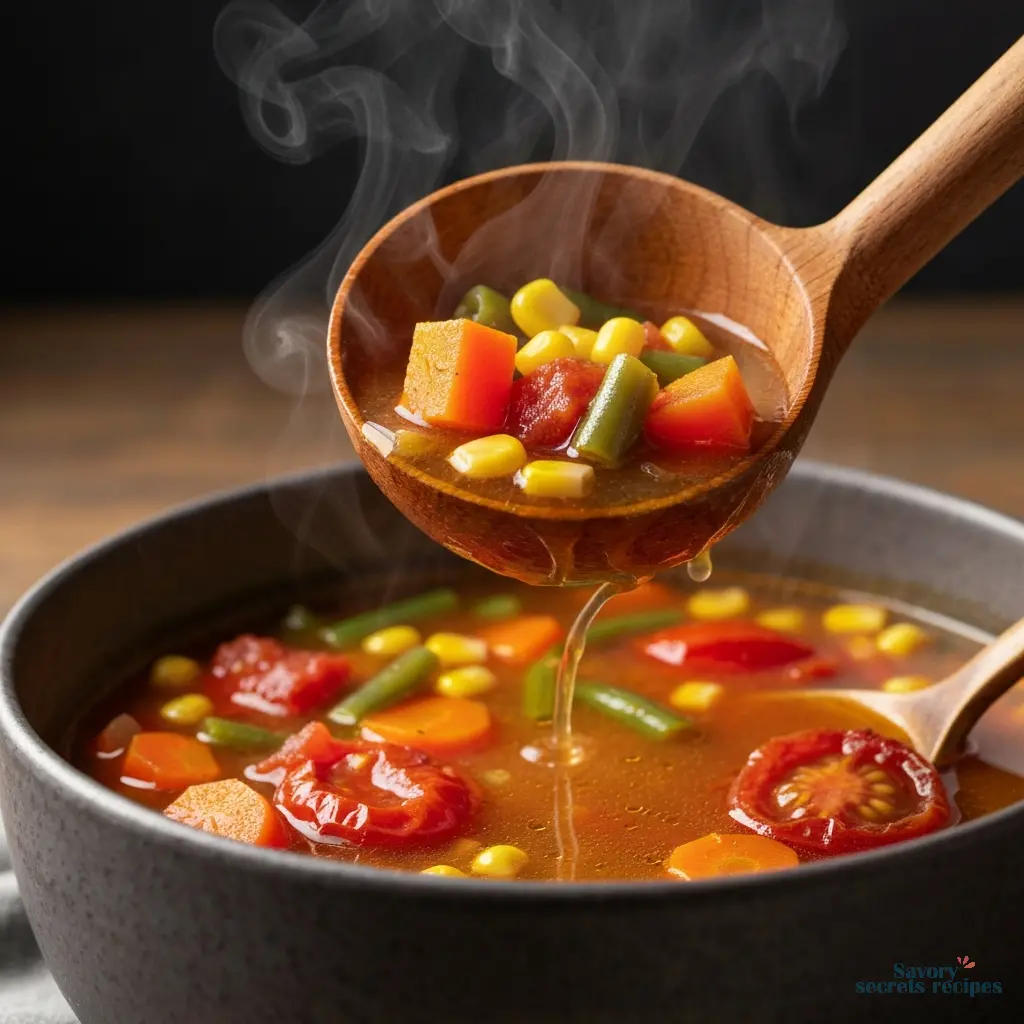
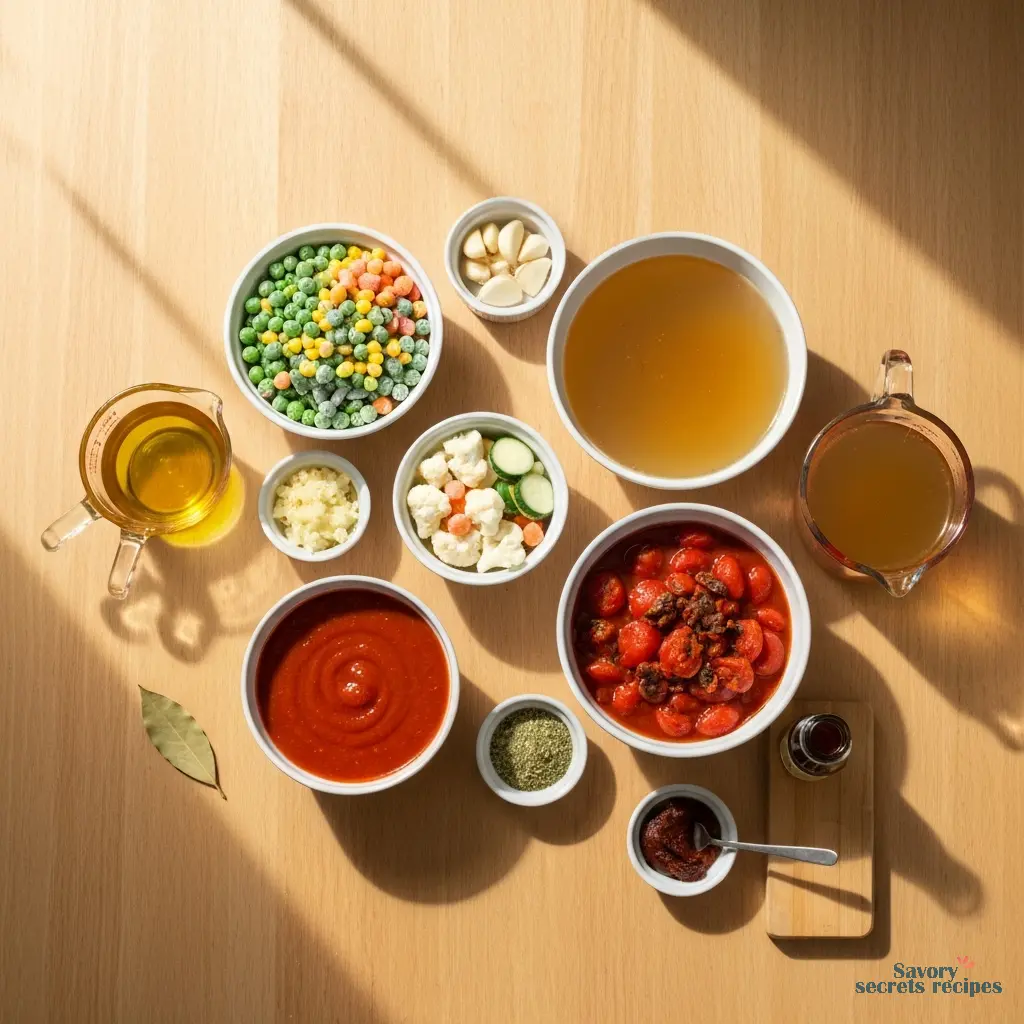
- Add the frozen vegetables, tomatoes, marinara sauce, seasonings, vegetable broth, and vinegar. Stir to combine.
- Bring the mixture to a boil, then reduce the heat to low. Simmer for 20 to 25 minutes, or until the vegetables are tender.
Nutrition
Notes
You Know That Feeling, Right?
It was last Tuesday, I think. Maybe Wednesday. Honestly, the days blur together this time of year. I’d just gotten in from work, the sky was that weird LA winter gray, and my daughter was already asking what was for dinner with that tone that means “I’m starving and also slightly suspicious.” I opened the pantry and just stared. That’s when I saw it: a lonely can of vegetable soup. It looked… sad. Bland. The kind of thing you eat because you have to, not because you want to. But I had 20 minutes, not 2 hours. So I got to work. And you know what? That canned vegetable soup recipe I threw together turned into one of the coziest, most satisfying meals we’d had all week. It tasted like I’d simmered it for hours. That’s the thing, though—it took me 25 minutes, start to finish. No harm in trying, right?
Why This Canned Vegetable Soup Recipe Actually Works
Look, I’ll be honest. Opening a can and calling it dinner is fine. Fair enough. But if you spend just a few extra minutes, you can build something with real flavor. This isn’t about being fancy. It’s about giving that soup some good bones. The base is your canned vegetable soup, but we’re adding a few things that do all the heavy lifting. A bit of garlic sizzled in oil first makes your whole kitchen smell like you’ve been cooking for hours. Using two kinds of frozen veggies—a standard mix and an Italian blend—gives you way more texture and color than any single can ever could. And here’s the real secret I learned from my gran: that splash of vinegar at the end. It sounds weird, but it brightens everything up. Suddenly, your easy vegetable soup with frozen vegetables doesn’t taste like a shortcut. It tastes like a plan.
Building Your Soup: It’s Easier Than You Think
Okay, let’s get into it. You’ll need one big pot. That’s it. I use my Dutch oven, but any heavy-bottomed pot you’ve got will do. Start with the olive oil and garlic over medium heat. You’re not trying to brown it, just wake it up. You’ll know it’s ready when the smell hits you—that’s the signal to pour in your broth. Now, here’s where you add your canned vegetable soup. Don’t drain it. Just glug it right in. Then come the tomatoes, the marinara, and all those frozen veggies. Honestly, this is so easy. Stir it all together, drop in the bay leaf and Italian seasoning, and let it come to a simmer. The frozen vegetables will cool it down at first, but that’s fine. Let it do its work.
The Simmer is Your Friend
Once it’s bubbling gently, that’s when the magic happens. Set a timer for 15 minutes. Go set the table, help with homework, pour yourself a seltzer. The soup just needs to hang out. The veggies will thaw and cook through, but they won’t get mushy. Frozen vegetables are actually perfect for a quick vegetable soup recipe like this because they’re flash-frozen at peak freshness. They hold their shape and color better than some fresh veggies you’d have to cook forever. When the timer goes off, take it off the heat. Fish out the bay leaf (nobody wants to bite into that), and stir in that tablespoon of red wine vinegar. I’m not sure everyone will agree, but trust me on this. It fixes most things.
Tips for the Absolute Best Canned Vegetable Soup Recipe
I want this to work for you, so let’s talk details. These aren’t rules, just what I’ve found actually works after making this more times than I can count.
Preparation Tips
First, use what you’ve got. Don’t have Italian blend veggies? Use two bags of the classic mix. Only have crushed tomatoes? That’ll do it. The goal is a hearty, chunky soup, so any combo that gets you there is fine. If your frozen broccoli florets are huge, just give them a rough chop on the cutting board before they go in. No need to be perfect here.
Cooking & Flavor Tips
Here’s what I wish someone had told me: don’t add the frozen vegetables too early. Wait until the broth is hot. If you dump them in with cold broth, they’ll just sit there and get waterlogged. Let the broth come to a simmer first, *then* add them. For flavor, a Parmesan rind tossed into the pot while it simmers adds this incredible savory depth. If you have one in your cheese drawer, use it. And don’t forget the black pepper. A good few cracks right at the end makes all the difference.
Storage & Make-Ahead Tips
This soup gets better the next day. I’m serious. The flavors settle in and get friendlier. Let it cool to room temperature before you store it, then keep it in the fridge for 4-5 days. It also freezes beautifully for up to 3 months. I use quart-sized containers from the supermarket. Worth every penny.
Alcohol-Free Variation
This recipe can easily be made without alcohol. Here are the substitutions I recommend:
- Red wine → beef broth + 1 tbsp red wine vinegar. For depth of flavor
These swaps maintain the depth of flavor while keeping the dish completely alcohol-free. Perfect for family-friendly meals or personal preference.
Variations & Substitutions: Make It Your Own
Your mileage may vary, depending on what your family likes. That’s the beauty of a vegetable soup recipe using frozen vegetables—it’s a fantastic canvas.
Dietary Adaptations
Need it to be vegan? You’re already most of the way there. Just use a vegan Worcestershire sauce instead of the beef broth concentrate, and double-check your vegetable broth brand. For a gluten-free canned vegetable soup recipe, you’re in luck—this one is naturally gluten-free as written. Just watch your broth labels.
Ingredient Swaps
Out of vegetable broth? Chicken broth works great. No fire-roasted tomatoes? Regular diced tomatoes are totally fine. You can add a cup of small pasta like ditalini or shells in the last 10 minutes of cooking to make it more filling. Just know it’ll soak up some broth, so you might need to add a little extra water when you reheat leftovers.
Flavor Twists
Want a creamy vegetable soup? Stir in a 1/4 cup of heavy cream or full-fat coconut milk right at the end. Craving something with a kick? A pinch of red pepper flakes with the garlic will do it. I’ll admit, it’s not fancy, but a splash of soy sauce instead of the beef concentrate gives an amazing umami boost. No harm in trying.
Common Mistakes (And How to Fix Them)
I’ve made most of these, so learn from me. Let’s be realistic here.
❌ Mistake: Adding leafy greens like spinach or kale at the beginning.
✅ Solution: They turn to slime. Stir them in during the last 2 minutes of cooking instead. They’ll wilt perfectly.
❌ Mistake: Boiling the soup aggressively.
✅ Solution: A gentle simmer is all you need. A rolling boil will break down the veggies too much and make the broth cloudy.
❌ Mistake: Skipping the acid (vinegar or lemon juice).
✅ Solution: Just don’t. It’s the difference between flat and fantastic. If you don’t have red wine vinegar, a squeeze of lemon juice works too.
❌ Mistake: Using a broth with no flavor.
✅ Solution: Taste your broth straight from the carton. If it’s bland, the soup will be bland. I like the ones from Whole Foods or the organic store-brand at Ralphs. Salt fixes most things, but you need a good base.
Frequently Asked Questions
How to Store and Serve Your Soup
Let the soup cool on the counter until it’s no longer steaming. Then, pop it into airtight containers. It’ll be happy in your fridge for 4-5 days. To reheat, just warm it gently on the stovetop over medium-low heat, stirring now and then. If it’s thickened up in the fridge, add a splash of water or broth to loosen it. For a single bowl, a minute or two in the microwave does the trick. Serve it with something for dipping—a crusty piece of sourdough from Trader Joe’s, some simple crackers, or a warm dinner roll. That’s the thing, though: a cozy bowl like this doesn’t need much else.
Go Warm Up Your Week
When you serve this soup, you’ll feel that little spark of pride. It’s warm, it’s comforting, and it didn’t take your whole evening. I genuinely love that feeling. So the next time you’re staring into your pantry on a hectic night, remember this easy canned vegetable soup recipe. You’ve got everything you need to turn a simple can into a real meal. Go warm up your winter, one bowl at a time. I’d love to hear how it turns out for you.
How do you make canned vegetable soup taste good?
You build on it. Sauté fresh garlic first for an aromatic base. Add extra frozen vegetables for more texture and nutrition. A splash of something acidic like red wine vinegar or lemon juice at the very end brightens all the flavors instantly. That’s the key to a great canned vegetable soup recipe.
Do you thaw frozen vegetables before adding to soup?
Nope! Don’t bother. Adding them straight from the freezer is perfect for this easy vegetable soup with frozen vegetables. They’ll cook through in the simmering broth in about 15 minutes and stay nice and crisp-tender.
What can you add to canned vegetable soup?
So much! A Parmesan rind while it simmers, a can of drained beans for protein, a handful of pasta, or a swirl of pesto at the end. My favorite trick for a quick vegetable soup is a dash of soy sauce for savory depth.
Can I freeze this canned vegetable soup recipe?
Absolutely. It freezes beautifully. Cool it completely, then portion it into freezer-safe containers or bags, leaving an inch of space for expansion. It’ll keep for up to 3 months. Thaw in the fridge overnight before reheating.
What vegetables should you not put in soup?
For a quick soup, avoid veggies that get mushy or bitter. I’d skip Brussels sprouts (they can get sulfurous) and riced veggies (they disappear). Delicate greens should go in at the very end. Stick with sturdy, frozen blends for the best texture.
Is canned veggie soup healthy?
It can be, but watch the sodium. The beauty of this vegetable soup recipe using frozen vegetables is you control the salt. Use a low-sodium broth and canned soup, then you can adjust the seasoning to your taste. Loading it with extra veggies boosts the nutrition, too.