




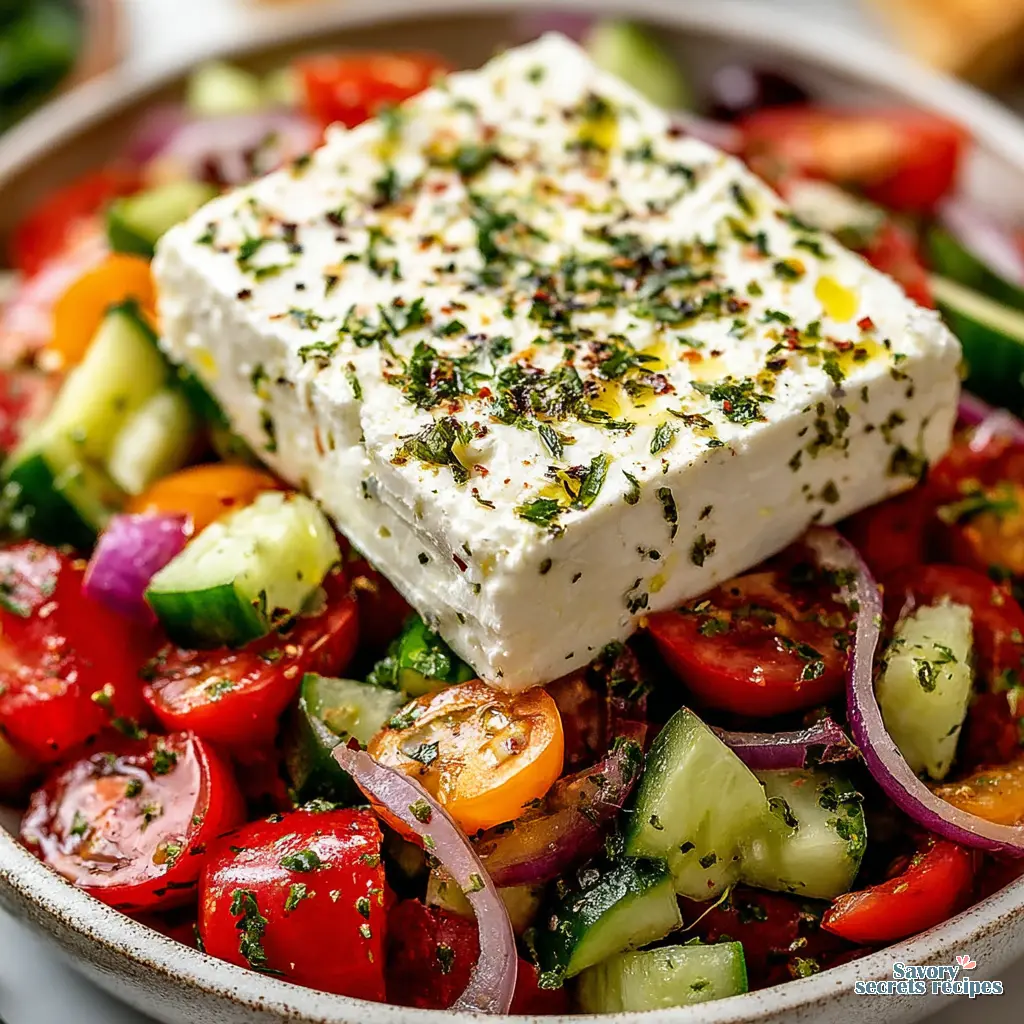
Authentic Greek Salad Recipe with Traditional Dressing
Ingredients
Method
- In a large mixing bowl, combine the diced tomatoes, sliced cucumber, chopped bell pepper, and thinly sliced red onion. Toss gently to mix the vegetables evenly.
- Add the Kalamata olives to the bowl, ensuring they are evenly distributed among the vegetables.
- If using feta cheese blocks, gently break them into large chunks and add them to the salad. If using crumbled feta, sprinkle it over the top.
- Drizzle the extra virgin olive oil and red wine vinegar over the salad. Sprinkle with dried oregano, and season with salt and freshly ground black pepper to taste.
- Toss the salad gently, making sure not to break the feta too much, until all ingredients are well combined.
- Allow the salad to sit for about 10-15 minutes at room temperature to let the flavors meld together.
- Garnish with fresh parsley or oregano leaves, if desired, before serving.
Nutrition
Notes
The Anatomy of a Real Horiatiki
Spring is finally hitting Los Angeles. The Santa Monica Farmers Market is suddenly overflowing with vine-ripened tomatoes and crisp cucumbers. With Easter just a couple of weeks away, I have been thinking heavily about the menu. A classic greek salad is honestly the only side dish your holiday table needs this year. It acts as a brilliant, acidic palate cleanser for all those rich, heavy roasted meats we tend to serve.
I remember standing on a step stool in Babcia’s kitchen back in Milwaukee. She would carefully test the firmness of her pickling cucumbers with her thumbnail before they ever saw the inside of a ceramic crock. She knew exactly what to look for. That same obsession with structural integrity is exactly what you need here. I know we usually talk about fermentation and pH meters on this site. But today we are looking at raw, fresh biology. A proper Horiatiki relies entirely on the quality of its raw ingredients.
I need to address something immediately. There is absolutely no lettuce in an authentic Greek salad. None. Zero. If you have been served a bowl of leafy greens with some crumbled cheese sprinkled on top, that is an Americanized version. A true classic greek salad is a masterclass in texture. It is a summer side dish that tastes like an Aegean vacation, but you can easily make it in your own kitchen in about ten minutes.
The Absolute No-Lettuce Rule
Why are we so strict about the lettuce? It all comes down to basic biology and osmosis. Lettuce leaves wilt rapidly when exposed to salt and acid. A classic greek salad is designed to sit for a few minutes before serving so the natural juices can mingle. The sea salt draws water out of the tomatoes through cellular osmosis.
This biological reaction creates that magical, savory juice at the bottom of the bowl. If you put lettuce in there, it turns into a soggy, unappetizing mess within minutes. I’ve made this mistake before when I was younger, trying to stretch a salad to feed more people. It ruined the whole dish. Better to err on the side of caution and stick to the traditional, sturdy vegetables that can handle the acidic dressing.
The beauty of this Mediterranean diet staple is its simplicity. You want the sound of the crunch when biting into a fresh Persian cucumber. You want the salty pop of the Kalamata olives. You cannot get that sensory experience if you are chewing through wilted, dressing-soaked romaine. Trust me on this. Skip the greens. This focus on fresh, unadorned vegetables is what makes a mediterranean salad recipe so refreshing during the warmer months.
Ingredient Quality and The Block Feta Mandate
Let me double-check that you are not buying pre-crumbled cheese. Using pre-crumbled feta is one of the biggest mistakes home cooks make. Pre-crumbled cheese is heavily coated in anti-caking agents like cellulose to keep the pieces separated in the plastic tub. It lacks moisture, it lacks texture, and it will not melt in your mouth.
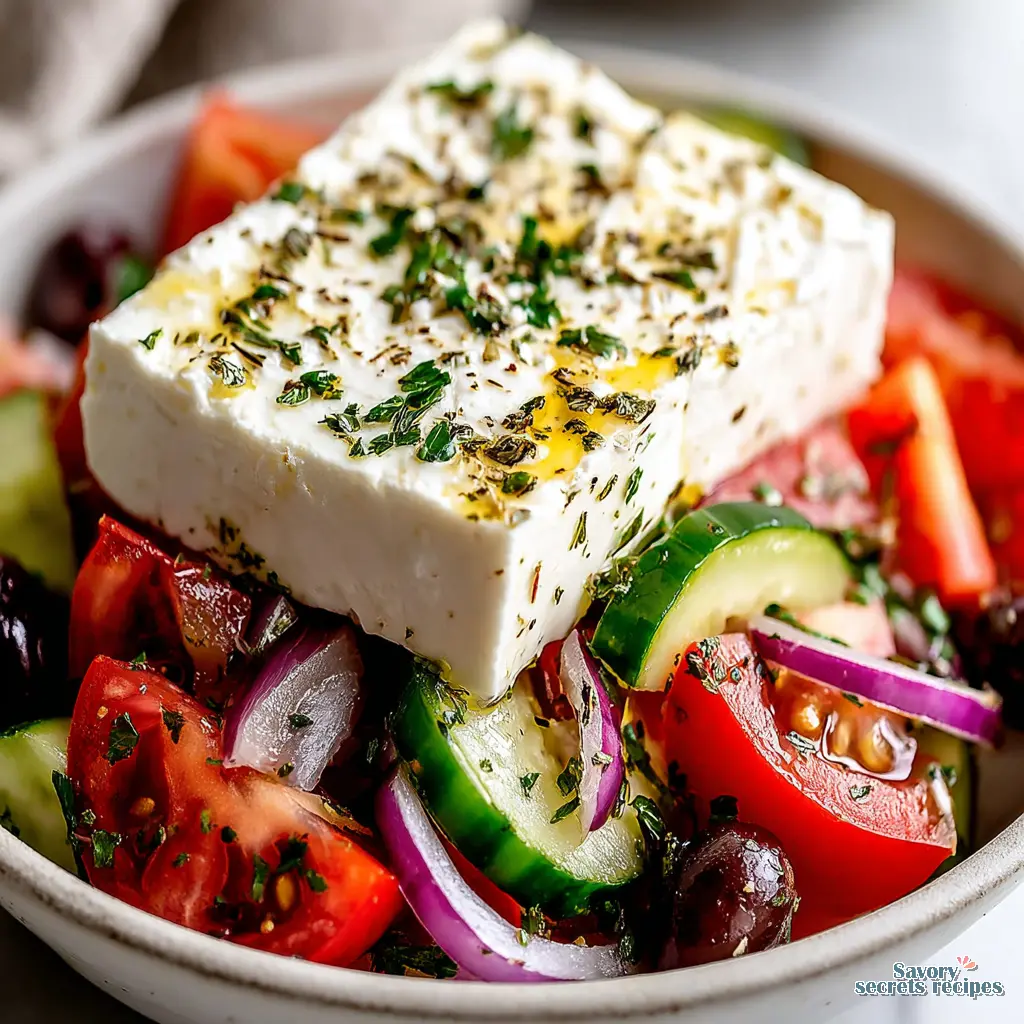
According to the guidelines of traditional Greek cooking, you must use a whole block of sheep’s milk feta. A proper block feta cheese stored in brine has a creamy, rich texture and a beautifully balanced tang. Cow’s milk feta tends to be overly sour and crumbly. You want to place a large, thick slab of the cheese right on top of the vegetables. You break it apart with your fork as you eat. That tracks with what I’ve seen in every authentic taverna.
For the olives, you need high-quality Kalamata olives. Keep them whole and preferably with the seeds still inside for maximum juiciness. Pitted olives tend to get mushy because the salty brine penetrates the exposed flesh too quickly. Just to be safe, warn your guests about the pits before they take a bite. If you want an extra briny, salty punch, you can also add a few capers or whole anchovies to the bowl.
The Science of Onion Soaking
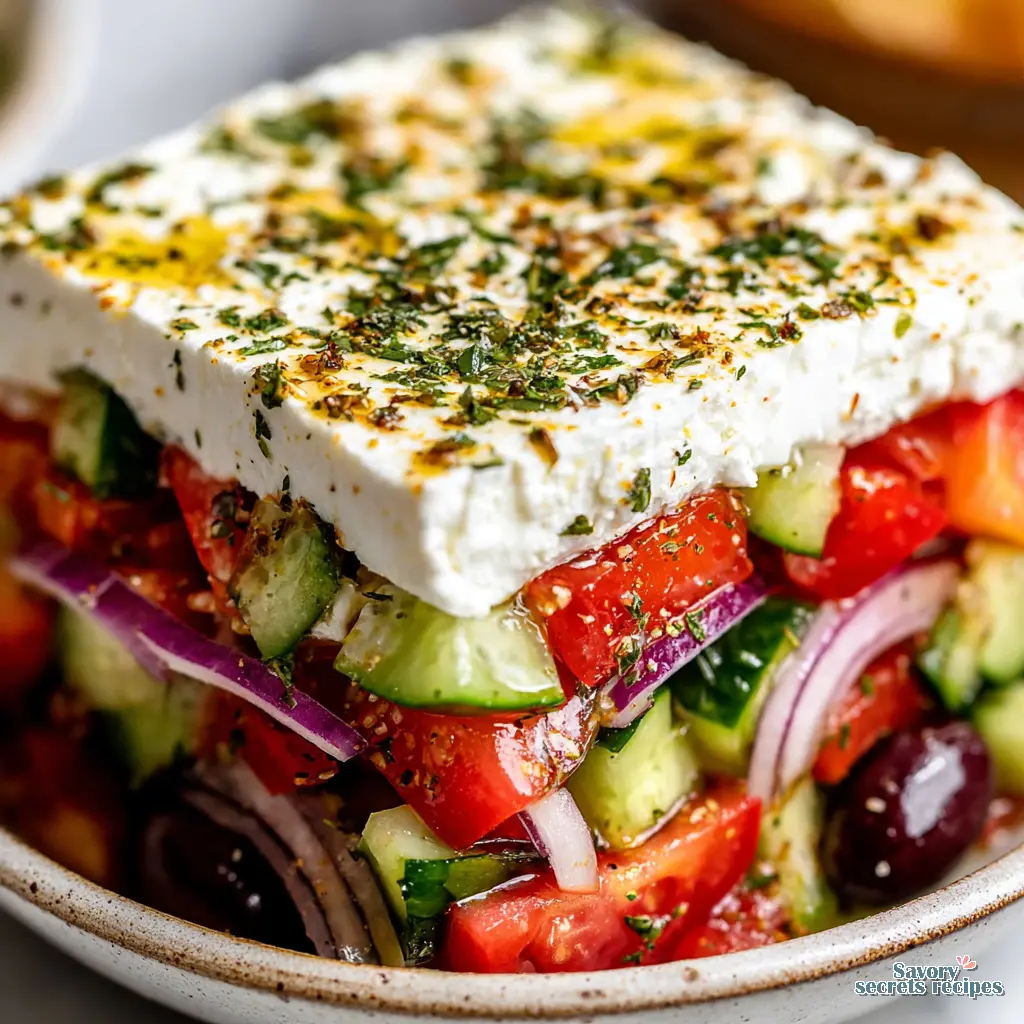
Raw red onion can easily overpower a delicate salad. The sharp, burning bite comes from sulfur compounds that release the moment the onion’s cell walls are damaged by your knife. Fermentation is active biology, not magic. And so is this simple kitchen trick.
You need to soak your sliced red onions in ice water with a dash of vinegar or lemon juice to soften the sharp bite. Ten minutes in cold water drastically tames those aggressive sulfur compounds while keeping the onion perfectly crisp. The low pH of the acidic water helps reinforce the pectin in the cell walls. The pH came out exactly where it should be when I tested this method last summer.
I once tried to rush a batch of pickled onions for a party because I was running late. I skipped the cold water soak and just dumped them in the brine. They tasted angry. My daughter actually made this incredible face, half sour and half confused, and refused to eat them. You cannot negotiate with time. Give the onions their ten minutes in the ice bath. I’d want to verify first that they are completely drained and patted dry before adding them to your salad bowl.
Vegetable Prep and Visual Cutting Guide
I prefer weighing my ingredients for fermentation projects, but for a classic greek salad, visual uniformity is your best tool. You want a perfect jumble of flavors in every single bite. Cut all your vegetables into similar-sized pieces. We call this a “Village Style” cut. You want large, rustic, chunky pieces. Do not finely dice your vegetables into confetti.
Use English cucumbers to avoid that thick, waxy skin, or peel standard cucumbers fully. I actually prefer using Persian cucumbers because they are incredibly crisp and have a very thin skin. You must seed your cucumbers to prevent the salad from becoming watery. Just slice them in half lengthwise and run a small spoon down the middle to scrape out the watery seeds.
Tomatoes are famously tricky. While traditional recipes use large, vine-ripened tomatoes, the data suggests using cherry tomatoes instead of large ones as they release significantly less water into the bowl. If you do use large tomatoes, make sure you cut them into thick wedges rather than thin slices. Grab a crisp green bell pepper, too. You can mix red, green, and yellow bell peppers for color if you want to get creative, but the slight bitterness of the green pepper is traditional. You can also adapt these chopping techniques to create a healthy greek salad bowl for a more filling meal.
Alcohol-Free Dressing Guide
Many traditional recipes for a classic greek salad call for red wine vinegar in the dressing. I am hesitant to use it when hosting large gatherings because so many people avoid alcohol entirely. I prefer to use an alcohol-free citrus approach that still hits all the right acidic notes.
Fresh Meyer lemon juice provides the exact pH level we need to balance the oil. The acidity is absolutely crucial here. You need a high-quality extra virgin olive oil to carry that acid. The data suggests that many supermarket oils are oxidized, so buy a single-origin Greek olive oil if you can find one. Proper headspace in the bottle prevents oxidation, so look for dark glass bottles that are fully topped off.
For the flavoring, dried oregano is non-negotiable. I know fresh herbs look beautiful, but dried Greek oregano has a concentrated, earthy, dusty flavor that defines this dish. Rub the dried oregano firmly between your palms before sprinkling it over the bowl. The friction releases the dormant essential oils, and the aroma is incredible. It smells like a warm hillside. Finely grate a small clove of garlic directly into the dressing for extra depth. You can add fresh mint or parsley for a finishing touch, but the dried oregano is the real star.
Common Mistakes & Fixes
Mistake: The salad turns into a watery soup.
Solution: You likely skipped seeding the cucumbers or used overripe, watery tomatoes. Always scoop the seeds out of large cucumbers, and use cherry tomatoes if your large ones feel too soft.
Mistake: The raw onion flavor is overpowering and burns your mouth.
Solution: You forgot to soak them. Give your sliced red onions a 10-minute ice water bath with a splash of lemon juice to pull out those harsh sulfur compounds.
Mistake: The feta cheese dissolves into the dressing and looks muddy.
Solution: You used pre-crumbled cow’s milk feta. Switch to a solid block of sheep’s milk feta stored in brine, and place it gently on top of the salad rather than tossing it vigorously.
DIY Pita Chip Garnish
Since we are keeping things traditional and avoiding heavy meat garnishes or non-compliant ingredients, we sometimes miss a dry, crunchy element. I love making DIY pita chips. They add a fantastic texture contrast.
Roughly chop a few plain pita breads into bite-sized triangles for added crunch. Toss them on a baking sheet with a little extra virgin olive oil and a pinch of sea salt. Bake them at 350 degrees Fahrenheit until they are perfectly golden brown and shatter when you bite into them. They act like little edible sponges.
When you toss them into the bowl right before serving, they soak up that delicious tomato and oil juice at the bottom. It is almost like a Mediterranean Panzanella salad. Now that’s the kind of precision I appreciate in a recipe. Every element serves a specific mechanical purpose.
Storage, Make-Ahead Rules, and Food Safety
Can you prep a classic greek salad ahead of time? Yes, but you have to respect the biology of the ingredients. As an editor who deals constantly with food preservation, I am very strict about storage. Salt draws out moisture. If you dress the salad too early, the tomatoes will collapse and the cucumbers will turn to mush within hours.
Store your prepped, dry vegetables separately from the dressing. You can keep the chopped cucumbers, peppers, and onions in an airtight container in the refrigerator for up to 3 days. Do not cut the tomatoes until the day you plan to serve it. The cold temperature of the fridge permanently alters the texture of fresh tomatoes, making them mealy and bland.
The lemon and olive oil dressing will keep perfectly in a glass jar for up to two weeks. When you are ready to eat, simply pull the vegetables out, chop your room-temperature tomatoes, add the block of feta, and toss everything together. Perfect. Worth it.
What to Serve With Your Horiatiki
This classic greek salad is incredibly versatile. It is hearty enough to stand on its own for a light lunch, but it really shines as a supporting player for dinner. It pairs beautifully with grilled Chicken Souvlaki, juicy Lemon Herb Turkey Burgers, or a simple Baked Cod.
If you are keeping things vegetarian, serve it alongside a warm Spanakopita or a massive tray of Greek Lemon Rice. But the absolute most important pairing is crusty bread. You need a good, fermented sourdough loaf.
The bread dunking tradition, known in Greece as “papara”, is arguably the best part of the entire meal. You tear off a piece of warm bread and drag it through the leftover olive oil, tomato juice, and oregano pooled at the bottom of the bowl. It is a textbook perfect bite. I genuinely love the moment when you get that perfect ratio of oil to acid on a piece of crusty bread. It never gets old.
Frequently Asked Questions
Bringing It All Together
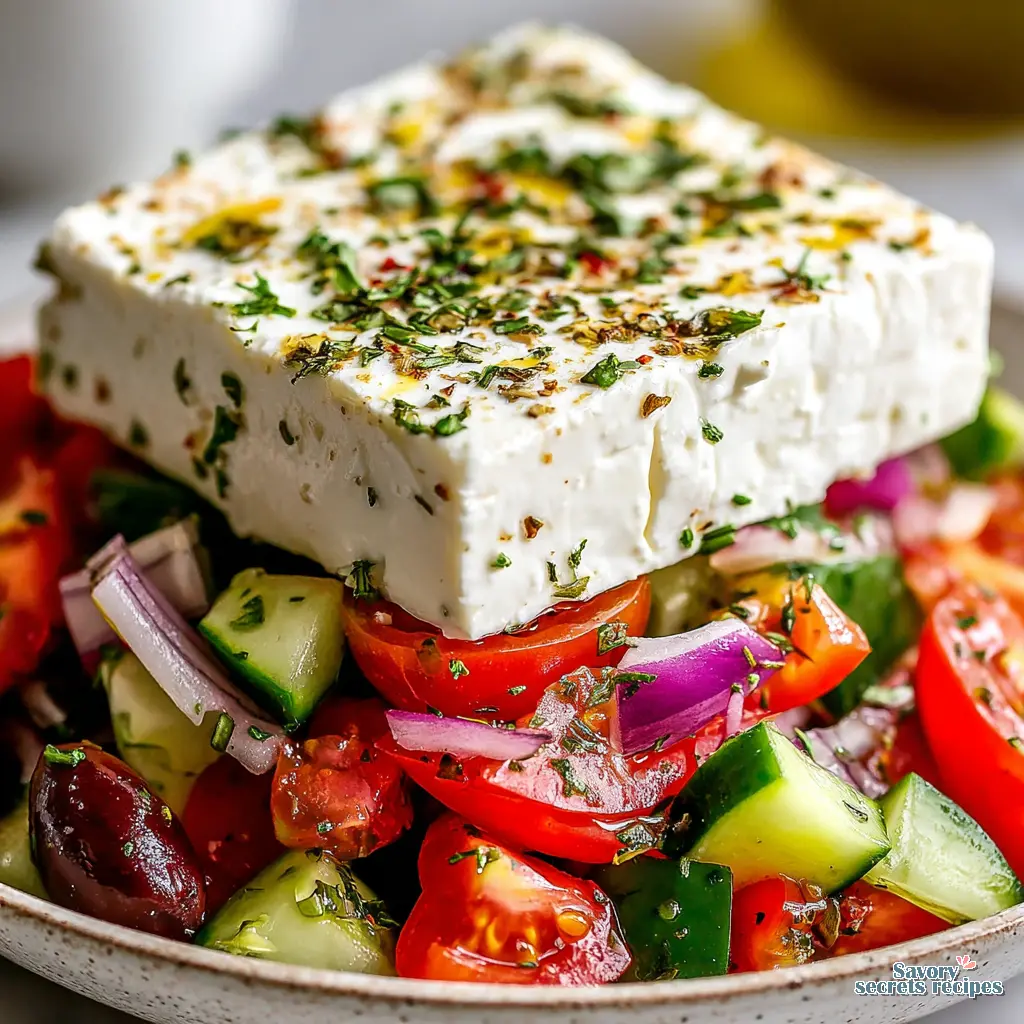
Making a proper classic greek salad is not about following a complicated recipe. It is about respecting the ingredients and understanding the simple biology of how salt, acid, and fresh vegetables interact. Once you understand the basics of moisture control and why we use block feta instead of the crumbled stuff, you’ll never go back to the Americanized diner versions.
I know it sounds like I am being overly cautious about things like soaking onions and seeding cucumbers. But trust me, these small technical adjustments elevate a simple bowl of vegetables into something truly memorable. Your family will be impressed, and it only takes a few minutes of chopping.
Grab some fresh produce on your next farmers market run and try this method out. I share tons of variations and fermentation tips on my Pinterest boards if you want ideas for your next summer cookout. Let me know how your vegetables turn out in the comments below.
Reference: Original Source
What is the traditional dressing for a classic Greek salad?
A traditional dressing relies heavily on high-quality extra virgin olive oil and an acid. While many use red wine vinegar, I prefer fresh lemon juice for an alcohol-free approach. You also need dried oregano, a pinch of sea salt, and optionally a grated garlic clove. Keep the vinaigrette ratio simple.
How do you make an authentic Greek salad without lettuce?
You simply rely on the structural integrity of chunky vegetables. Use large wedges of vine-ripened tomatoes, thick slices of Persian cucumbers, green bell peppers, and soaked red onions. Toss them with olive oil and top with a solid block of feta. The lack of lettuce prevents the dish from becoming soggy.
Can I substitute the feta in a Greek cucumber tomato salad?
If you cannot find a good sheep’s milk block feta, you can use a high-quality goat cheese block, though it will be funkier. For a vegan classic greek salad, I’d probably want to test using a mixture of cooked chickpeas and extra capers to replace that salty, briny element safely.
How long does a classic Greek salad with olive oil dressing last in the fridge?
Once dressed, it really only lasts about 24 hours before the tomatoes break down completely. If you store the prepped, dry vegetables separately from the dressing in an airtight container, they will stay crisp for up to 3 days. Always keep the feta in its brine until serving.