



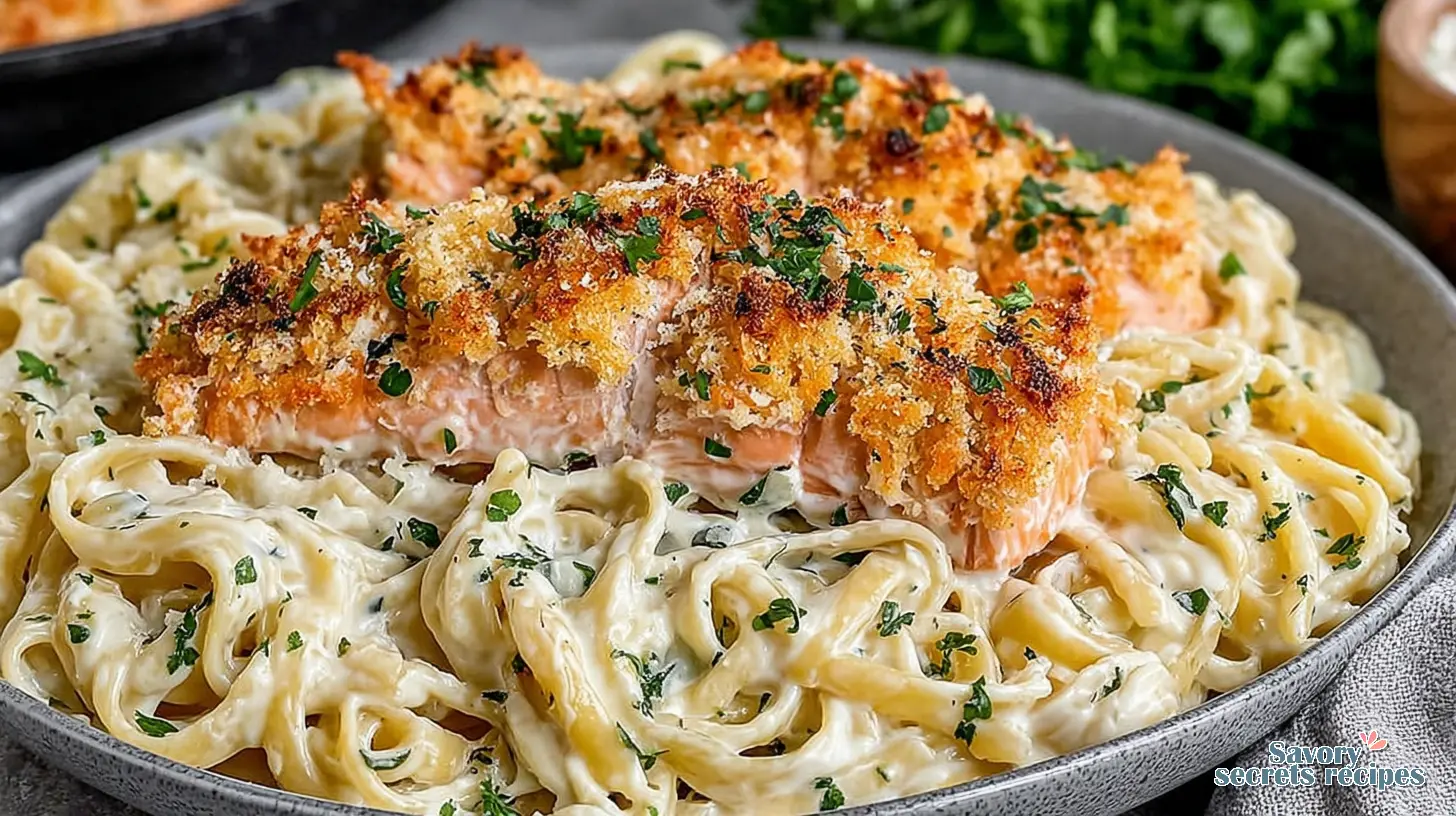
Crispy Parmesan Crusted Salmon Pasta: Your Quick Fix
Ingredients
Method
- Boil water and add pasta. Cook according to package instructions until al dente (8-10 minutes). Drain and set aside.
- Heat olive oil in a large skillet over medium heat. Add minced garlic and sauté for 1 minute, or until fragrant, ensuring it does not brown.
- Gently fold in the salmon pieces. Cook for 2-3 minutes, or until warmed through.
- Stir in the cottage cheese and lemon juice until well combined. Cook for a couple of minutes until heated through and creamy.
- Add the drained pasta to the skillet. Toss gently to coat all pasta strands evenly with the sauce.
- Serve hot, garnished with fresh parsley for color and brightness.
Nutrition
Notes
Why You’ll Love This Crispy Parmesan Crusted Salmon Pasta
You know that feeling, right? You’ve got some gorgeous salmon fillets, maybe even some crispy parmesan crusted salmon leftovers from last night, and you’re thinking, “What now?” I mean, you want something satisfying, something that feels a bit special, but you don’t want to spend all evening in the kitchen. That’s a struggle I know well. My mother, she kept a notebook of fish preparations, and I swear she found a way to transform every single ingredient into something new.
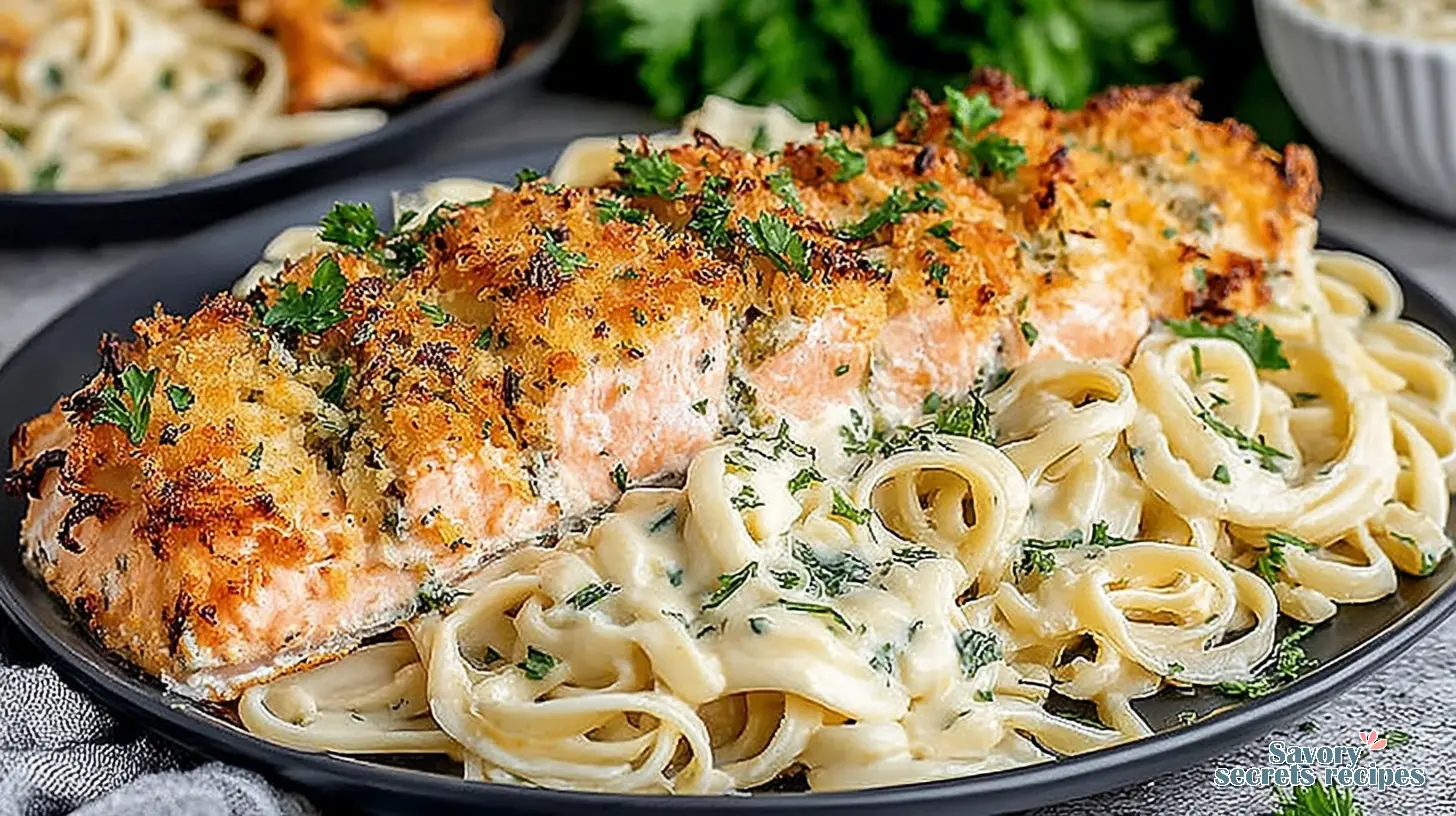
Well, this crispy parmesan crusted salmon pasta recipe? It’s exactly that kind of transformation. It takes those beautiful, flaky salmon pieces with their golden, crunchy crust and pairs them with a silky, flavorful pasta. Makes sense to me. It’s truly a restaurant-worthy dish you can pull off on a weeknight. Especially now, with spring in full swing, it feels lighter than a heavy winter meal but still totally comforting.
I genuinely believe you’ll be surprised how simple it is to bring together such a complex-tasting meal. It’s the kind of dish that makes you feel like a culinary wizard, even if you just used a few clever tricks. That’s the detail that matters.
Gathering What You’ll Need
Before we dive into the cooking, let’s make sure we’ve got our ducks in a row. Having everything prepped and ready to go makes the whole process so much smoother. I tend to think of it as setting yourself up for success, you know?
Key Ingredients for Success
For this crispy parmesan crusted salmon pasta, you’ll want fresh salmon fillets, ideally skin-on, because that skin protects the flesh and crisps beautifully. Look for wild-caught fish when available at your local Ralphs or Whole Foods, or sustainable farm-sourced fish that’s fresh-caught that day. If you’re using frozen, make sure it’s fish that was caught and frozen on the same day. That’s the difference-maker. For detailed tips on preparing salmon from frozen, explore our guide on crispy parmesan crusted salmon from frozen.
You’ll need a good quality pasta, like linguine or fettuccine, which really cradles that creamy sauce. And of course, plenty of freshly grated Parmesan cheese. Trust me, fresh off the block, whether it’s Parmesan, Grana Padano, or Pecorino Romano, makes a huge difference compared to the pre-grated stuff. For the crust, we’re talking panko or plain breadcrumbs. I’d lean toward panko for that extra crunch, but plain works too.
Don’t forget your aromatics: minced garlic, fresh thyme, and fresh chives. These make the parmesan crust pure heaven. And for the sauce, we’re building a creamy base with a touch of lemon and fresh dill. Using unsalted butter is key here; it adds richness without overpowering the other seasonings. A little fresh spinach and some vibrant cherry tomatoes will add color and freshness, perfect for spring.
Equipment You’ll Need
You won’t need anything too fancy for this crispy parmesan crusted salmon linguine. A good sturdy baking sheet, maybe lined with parchment paper for easy cleanup, is essential for the salmon. A non-stick pan or a well-seasoned cast-iron skillet works wonders for getting that initial sear on the salmon, if you choose to pan-fry.
For the pasta, a large pot with a lid, naturally. And a decent-sized skillet or sauté pan for building that dreamy sauce. A whisk will come in handy for emulsifying the sauce, and a pair of tongs helps with gently flaking the salmon. That’s about it. Nothing too crazy, fair enough?
Crafting Your Crispy Parmesan Crusted Salmon
This is where the magic really happens, turning simple ingredients into something extraordinary. From what I’ve seen, people sometimes get a little intimidated by cooking fish, but honestly, it’s easier than you think if you follow a few key steps. My grandfather, he’d always say, “The fish will tell you when it’s ready.”
Prepare the Parmesan Crust
First things first, let’s get that incredible parmesan crust ready. In a shallow dish, you’ll combine your panko breadcrumbs, grated Parmesan, those fresh herbs like thyme and chives, a touch of garlic, and a pinch of salt and pepper. This is your flavor base, so make sure it’s well mixed. Worth considering adding a tiny bit of olive oil or melted unsalted butter to the mix; it helps everything toast up beautifully.
Coat Salmon for Maximum Crisp
Now for the salmon itself. This is critical: pat your salmon fillets *really* dry with paper towels. I can’t stress this enough. Excess moisture is the enemy of crispiness, believe me, I learned this the hard way with a whole batch of branzino once. Let me think that through, it was a disaster. Once dry, you can lightly brush the salmon with a little olive oil or melted butter. Then, gently press each fillet into your breadcrumb mixture, making sure it’s evenly coated on the top and sides. You want a good, thick layer.
Bake Until Golden & Flaky
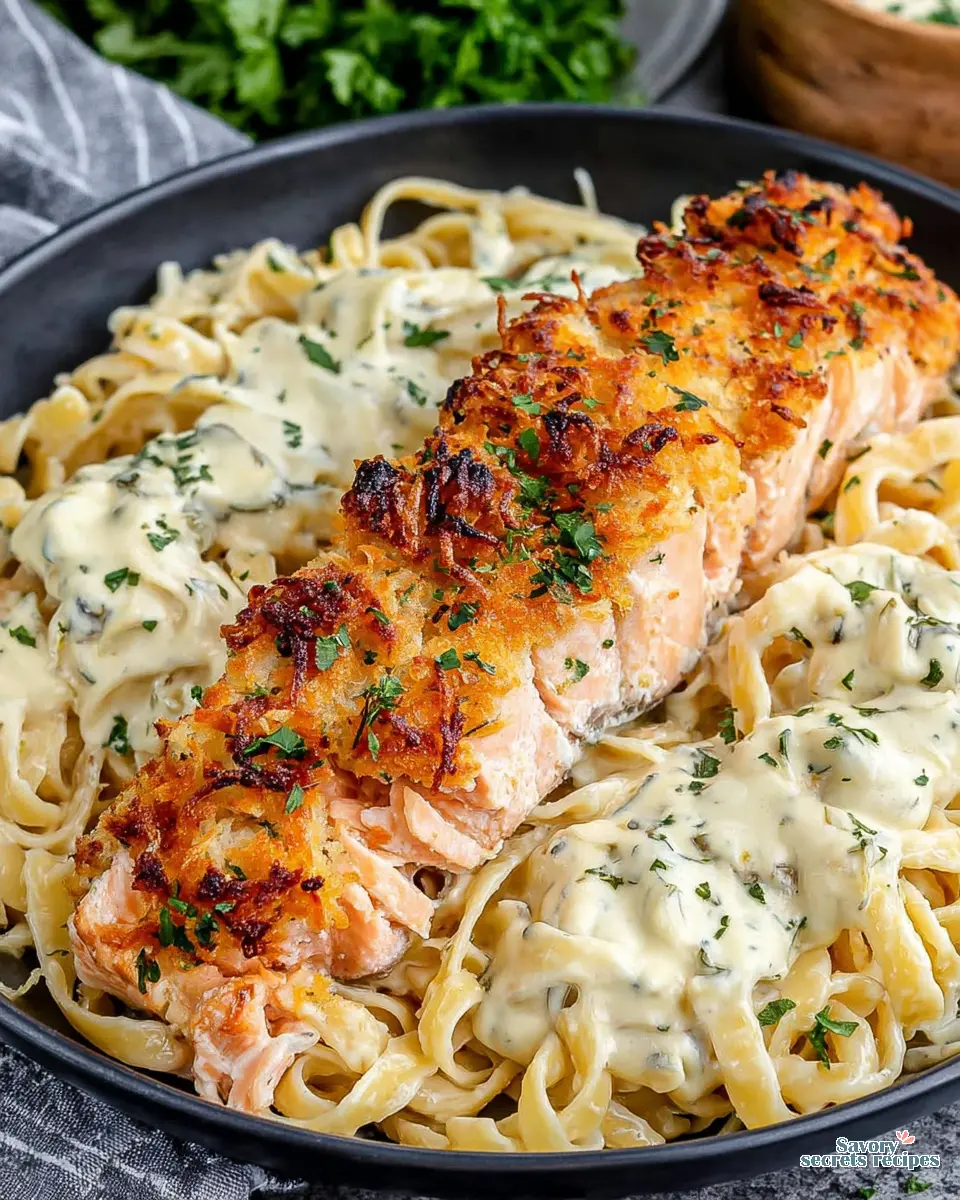
You’ve got a couple of options here, but for that perfect crispy parmesan crusted salmon, baking is usually my preferred method. Place your crusted salmon on a lined baking sheet. Aim for a bake time of 4-6 minutes per ½-inch of thickness at 400°F (200°C). This ensures moist and flaky fish without drying it out. You’re looking for that just-opaque center, where the flesh just begins to flake when you gently nudge it with a fork. It’ll be golden brown, almost the color of peanut butter, and you’ll hear that subtle sizzle as it cooks. If you prefer an alternative cooking method, consider preparing crispy parmesan crusted salmon in an air fryer for a similar crispy result.
Building the Perfect Pasta & Sauce
Okay, the salmon is handled. Now, let’s talk about bringing it all together with the pasta and a sauce that truly complements that gorgeous crispy parmesan crust. This is where your crispy parmesan crusted salmon pasta really comes alive, believe it or not.
Whip Up the Creamy Pasta Sauce
While your salmon bakes, you’ll get your creamy salmon pasta sauce going. In a large skillet, melt a knob of unsalted butter with a glug of olive oil over medium heat. Add some minced garlic and let it get fragrant, but don’t let it brown, just 30 seconds or so. Then, you’ll add a splash of vegetable broth (or even a little non-alcoholic white wine sauce alternative if you prefer, but veggie broth works beautifully). Let that simmer for a minute.
Now, here’s where it gets good: stir in a little heavy cream or a lighter cream alternative. Let it gently bubble. This is your base for a luscious, creamy salmon linguine. Stir in some fresh dill and a squeeze of lemon juice. Taste it. Adjust the seasoning. That’s the difference-maker, truly. You want a sauce that’s bright and rich at the same time.
Cook and Combine the Pasta
For the pasta, I’d lean toward linguine or fettuccine; they really grab onto that sauce beautifully. Cook your pasta according to package directions, but pull it a minute or two before it’s fully al dente. This is crucial. Before you drain it, reserve about a cup of that starchy pasta water. This is a game-changer for your sauce.
Drain the pasta, then immediately add it to your skillet with the creamy sauce. Toss it all together, adding a splash of that reserved pasta water as needed. This helps to create a silky, cohesive sauce that perfectly coats every strand. It’s an emulsion, you see, and that starchy water helps bind everything together. If you’ve got some fresh spinach and halved cherry tomatoes, now’s the time to fold them in. They’ll wilt slightly and add a burst of freshness.
Serve Your Delicious Meal
Once the pasta is perfectly coated and the sauce is just right, it’s time to bring in the star of the show. Gently flake your crispy parmesan crusted salmon over the pasta. You want to preserve as much of that glorious crust as possible, so a light hand here is key. I usually just use a fork to break it into bite-sized pieces, letting some of the crispy bits fall into the pasta. Garnish with a little more fresh dill, maybe some extra grated Parmesan, and a sprinkle of chili flakes if you like a kick. Serve it up immediately, perhaps with some crusty bread and a simple side salad.
My Top Tips for a Flawless Dish
Cooking fish, or anything really, it’s all about those little details that elevate the whole experience. I’ve been doing this for a while, and these are the things I’ve found consistently make a difference when you’re making crispy parmesan crusted salmon pasta.
Firstly, regarding your salmon: make sure you pat it dry. Seriously, dry it. Excess moisture on the surface of the fish means your crust won’t stick well, and it won’t get as crispy. It’s a simple step, but it’s often overlooked. Makes sense to me, you’re creating a barrier for that golden crust.
When it comes to the aromatics, don’t skimp on the fresh stuff. A combo of minced garlic, fresh thyme, and fresh chives makes the parmesan crust pure heaven. You’ll get such a vibrant flavor that dried herbs just can’t quite match. From what I’ve seen, fresh herbs really brighten up the whole dish.
Using unsalted butter is another small but mighty tip. It adds richness to the crust without overpowering the other seasonings. If you only have salted butter, just adjust the amount of salt you add to your breadcrumb mixture. It’s worth considering.
And when you’re baking your salmon, remember to bake based on thickness. Aim for a bake time of 4-6 minutes per ½-inch of thickness. This ensures moist and flaky fish without drying it out. Trust the texture more than the clock, you’re looking for that just-opaque center.
Finally, let the salmon rest. Once it’s out of the oven, let the salmon sit for a few minutes before serving or flaking it into your pasta. This allows the juices to redistribute throughout the fish, resulting in a more moist and flavorful end product. A light hand here, and you’ll be rewarded.
Creative Variations & Smart Substitutions
Part of the fun of cooking is making a recipe your own, right? This crispy parmesan crusted salmon pasta is super adaptable. You’ve got options, which I appreciate, especially for those busy weeknights when you’re just grabbing whatever’s at Trader Joe’s.
For the crust, if you’re feeling adventurous, add finely chopped pecans to the parmesan and panko bread crumb mixture. It adds a lovely nutty depth. If you want a spicy kick, sprinkle some crushed red pepper flakes or cayenne pepper into the breadcrumb mix. That’s the detail that matters for a little zing.
Herbs are easily swapped too. Feel free to change up the flavor profile to your liking. You can use parsley, basil, marjoram, or dill as the fresh herbs in your parmesan herb crust! I eliminated the Italian seasoning in my recipe and in its place used fresh dill, because I think it pairs beautifully with salmon.
If you’re out of fresh lemon and garlic, sometimes I just use lemon pepper and garlic salt. It’s not quite the same, but it works in a pinch. For breadcrumbs, I use plain so I can season them myself, but you can use seasoned Italian breadcrumbs if you’d like. Same goes for cheese; freshly grated Parmesan, Grana Padano, or Pecorino Romano cheese off the block is best, but you can use pre-grated cheese if you’re in a pinch. Fair enough.
If you’re looking for a dairy-free option, you don’t have to use butter in this recipe. Instead, you can brush a little olive oil over the salmon in the pan before crumbing. For gluten-free, simply swap the breadcrumbs with your favorite gluten-free variety, or even crushed rice Chex cereal or very finely chopped almonds for a nutty flavor. And if you can’t find eschalots for the sauce, spring onions, shallots, scallions (the white part), or even normal onion work just fine. I mean, it depends on the situation, but generally speaking, those are good swaps. For those mindful of dietary needs, we also have specific recipes for a healthy crispy parmesan crusted salmon. For specific low-carb preparations, check out our crispy parmesan crusted salmon keto recipe.
Troubleshooting Common Crispy Parmesan Crusted Salmon Pasta Issues
Look, I’ll be honest, even the best cooks run into snags sometimes. I once ruined an entire test batch of branzino because I didn’t account for carryover cooking. It happens. Here are some common issues you might run into with crispy parmesan crusted salmon pasta and how to fix them.
Common Mistakes & Fixes
Mistake: Your parmesan crust isn’t crispy, or it falls off.
Solution: This usually comes down to moisture. Did you pat the salmon dry enough? Did you press the crust on firmly? Also, avoid putting the crumb on the salmon then refrigerating it for too long, as it can get soggy. Make sure your oven is preheated to the correct temperature too. A hot oven helps set that crust quickly.
Mistake: The salmon is dry.
Solution: You probably overcooked it. Salmon cooks quickly. Trust the texture more than the clock; you’re looking for that just-opaque center. Also, make sure to let the salmon rest for a few minutes after cooking so the juices can redistribute. I sometimes wonder if I’m too cautious about cooking temperatures, but from what I’ve seen, it’s better to err on the side of slightly undercooked and let it finish resting.
Mistake: The pasta sauce is too thin or watery.
Solution: This can happen if you add too much liquid or don’t use enough pasta water. The pasta water emulsion is key. If it’s too thin, let it simmer gently for a few more minutes, stirring, to allow it to reduce slightly. Add a little more grated Parmesan; it helps thicken it too. If it’s really struggling, a tiny bit of cornstarch slurry (cornstarch mixed with a tablespoon of cold water) can rescue it, but a light hand here, please!
Mistake: The pasta is soggy.
Solution: You likely overcooked the pasta before adding it to the sauce. Remember to cook it a minute or two *less* than al dente, as it will continue to cook in the hot sauce. Also, don’t let it sit in the sauce for too long before serving. This is a quick salmon dinner, so timing is everything.
Storing & Reheating Your Delicious Leftovers
I get it, sometimes you’ve got leftovers. Or maybe you’re doing a little meal prep. This crispy parmesan crusted salmon pasta holds up pretty well, but there are a few tricks to keeping that salmon crust as crisp as possible, and not letting the pasta get soggy. It’s all about how you store and reheat, fair enough?
How to Store Leftovers
Store leftover crispy parmesan crusted salmon in an airtight container in the refrigerator for up to 3 days. If you can, store the salmon separately from the pasta and sauce. This is my preference because it helps preserve the crispiness of the crust. The cooked pasta and sauce will keep well in an airtight container in the fridge for a day or two. From what I’ve seen, it’s best eaten sooner rather than later to maintain optimal texture.
For longer storage, you can freeze cooked salmon fillets (without the pasta) in an airtight, freezer-safe container for up to 2-3 months. Just make sure they’re completely cooled before freezing to prevent ice crystals. When you’re ready to use them, thaw them in the refrigerator overnight.
Can You Make It Ahead?
You absolutely can make parts of this crispy parmesan crusted salmon pasta ahead. You can prepare the crumb mixture and store it in an airtight container in the fridge for up to 2 days. This is a great time-saver. You can also make the pasta sauce ahead of time and store it in the fridge for a day. When you’re ready to eat, simply cook the salmon and pasta fresh, then combine.
What I wouldn’t recommend is putting the crumb on the salmon then refrigerating it for an extended period before baking. It will become soggy. Trust me on this. You want that crumb to hit the heat as fresh as possible for maximum crispiness. So, assemble the salmon right before it goes into the oven.
Reheating for Best Results
Reheating salmon and pasta can be tricky if you want to keep that crispy texture. For the salmon, reheating it in a 300°F (150°C) oven for 10-15 minutes is a good bet. You could also try broiling it for just 2-3 minutes to re-crisp the crust and warm the meat slightly. The key is low and slow, or very quick and high, to avoid drying it out. You’re looking for that just-opaque center again.
For the pasta and sauce, reheat it gently on the stovetop over low heat, adding a splash of water or broth to loosen the sauce if needed. You can also microwave it in 40-second intervals, stirring in between, until warmed through. The goal is to warm it, not to cook it further. Let it come to temperature first.
Frequently Asked Questions
There’s something deeply satisfying about a perfectly seared piece of fish, that golden crust, the way the flesh just begins to flake, the clean flavor. When you plate this stunning crispy parmesan crusted salmon pasta, with its creamy sauce and vibrant colors, you’ll feel that same pride. It’s a testament to how simple techniques can transform everyday ingredients into something truly special. So, go on, give this a try. I genuinely love the problem-solving aspect of seafood cooking, and few things make me happier than seeing a reader comment that they tried a technique and it finally worked for them. That’s the whole point of what we do. If you’re looking for more inspiration, check out my Pinterest boards for tons of related recipes and ideas. Enjoy!
Source: Nutritional Information
I am allergic to mustard, what can we use instead?
This crispy parmesan crusted salmon pasta recipe doesn’t actually use mustard, so you’re all good! However, if another recipe suggests it as a binder for a crust, you could try coating the fish with a thin layer of whole egg mayonnaise or even a light brushing of olive oil before crumbing. From what I’ve seen, both work well as alternatives.
Do you thaw frozen salmon before baking?
Generally speaking, yes, you should thaw frozen salmon before adding the crispy parmesan crust and baking. You can thaw it slowly in the refrigerator overnight, or for a quicker method, place the sealed fish in a bowl of cold water for about an hour. Baking from frozen can lead to uneven cooking and a soggy crust, and we definitely don’t want that for your crispy parmesan crusted salmon pasta.
What is the internal temperature for cooked fish?
For cooked fish, including your crispy parmesan crusted salmon, the U.S. FDA recommends an internal temperature of 145°F (63°C). You’ll want to check this with a meat thermometer inserted into the thickest part of the fillet. Keep in mind, the fish will continue to cook slightly after you remove it from the oven, so pulling it just before it reaches 145°F is a light hand here.