



Easy Greek Veggie Hummus Bowl
Ingredients
Method
- Spread about ⅓ cup of hummus in the bottom of each serving bowl.
- Cook the quinoa or couscous according to package instructions. Cool slightly before adding to the bowl.
- Divide cherry tomatoes, cucumber, bell pepper, and red onion evenly among the bowls, arranging them on top of the hummus.
- Place your chosen protein (falafel, grilled chicken, or tofu) on top of the vegetables in each bowl.
- Add olives and sprinkle crumbled feta cheese, if using. For extra crunch, add roasted chickpeas.
- In a small bowl, whisk together tahini, lemon juice, water, minced garlic, salt, and pepper. Adjust thickness with water to reach your desired consistency.
- Drizzle olive oil and a squeeze of lemon juice over each bowl. Sprinkle with za’atar or paprika and fresh parsley or mint. Drizzle with the tahini lemon dressing just before serving.
Nutrition
Notes
Why You’ll Love This Greek Veggie Hummus Bowl
You know that feeling, right? It’s a busy Tuesday or Wednesday evening, you’re tired from navigating all the LA traffic, and the idea of cooking anything complicated just feels like too much. You want something healthy, yes, but also something genuinely satisfying. Sound familiar? I’ve been there countless times. I mean, who hasn’t?
That’s exactly why I love this Greek Veggie Hummus Bowl. It’s truly a lifesaver for those moments. It brings together all the vibrant freshness of a Mediterranean plate with the ease of a quick assembly meal. It’s perfect for these milder spring evenings when you don’t want to heat up the kitchen too much but still crave something substantial.
This isn’t just another bowl recipe; it’s a blueprint for effortless, delicious healthy eating. You’ll feel amazing after eating it. Honestly, it ticks all the boxes: quick, nutritious, and incredibly flavorful. It’s the kind of meal that makes you feel like you’ve really got your act together, even when you’re just pulling things from the fridge.
Building Your Perfect Greek Veggie Hummus Bowl: The Foundation
Let’s talk about the core of this Greek Veggie Hummus Bowl: the hummus itself. I’d probably want to test that first before recommending it, but for most people, the quality of your hummus really sets the stage. You can certainly make your own, and I’ll share a quick tip for that in a bit. But there are fantastic store-bought options out there now, especially at places like Trader Joe’s or Whole Foods. Just to be safe, check the ingredient list for anything unexpected.
The next layer is your grain. I prefer quinoa because it adds a lovely texture and a good protein boost, making this a true high protein vegan option if you skip the feta. Cooked quinoa will keep for up to a week in the fridge, so it’s perfect for meal prep. Just make sure it’s light and fluffy, not mushy. I find that removing it from the stove once most water is absorbed, covering it, and letting it steam for 10 minutes does the trick. That tracks with what I’ve seen in my own kitchen and from various guidelines.
For the veggies, we’re aiming for crisp, fresh, and colorful. Think bright red cherry tomatoes, vibrant red bell pepper, and cool, refreshing cucumber. Cutting your salad ingredients into similar-sized pieces isn’t just for aesthetics; it truly makes for easier eating and a better texture experience in every bite. It’s a small detail, but these details add up to a truly satisfying Mediterranean hummus plate.
The Secret to Truly Creamy Hummus and Vibrant Veggies
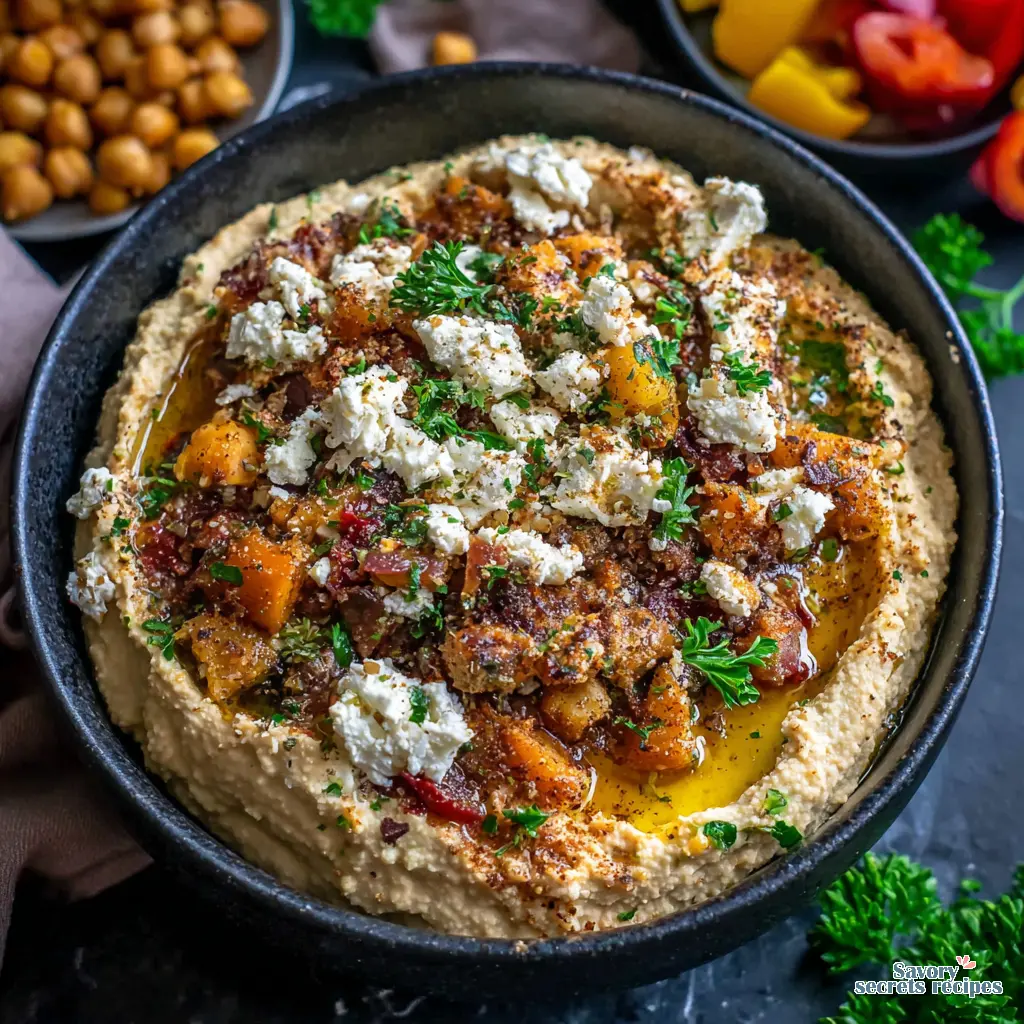
If you’re making your own hummus for this healthy hummus bowl meal, there’s a little trick Babcia would appreciate for its precision: removing the outer skins from the chickpeas. It sounds fussy, I know. But it really does make for an extra creamy hummus. I mean, the texture difference is noticeable. I’d want to verify first that it’s worth your time, but for me, it definitely is.
Another tip for luscious homemade hummus: add a few ice cubes at the end of blending. It helps create an incredibly fluffy hummus. The data suggests this emulsifies the tahini and olive oil better, giving you that dreamy, light texture. That’s the kind of precision I appreciate in my kitchen. You’ll get a beautiful, airy base for your plant based hummus dish.
For the fresh veggie hummus mix, using the freshest ingredients possible is key. Especially for your vegetables and a good quality extra virgin olive oil. You’ll really taste the difference. I’m hesitant to say definitively without more data that one brand is always superior, but a trip to a local farmers market, like the Santa Monica Farmers Market, can make a huge impact on flavor. The crispness of the cucumber salad, the juicy pop of the cherry tomatoes, the briny Kalamata olives, it all sings when the ingredients are top-notch.
Assembling Your Savory Veggie Dip Bowl with Precision
When it comes to putting your Greek Veggie Hummus Bowl together, timing matters. To prevent your hummus from adding too much moisture to the crisp elements and keep everything looking presentable, assemble the bowls just before serving. This isn’t being fussy, it’s the difference between a good bowl and a truly great one.
I often see people ask about extra dressing. My advice? Avoid adding too much. Let the hummus act as your thick, creamy dressing. A good drizzle of olive oil and a squeeze of fresh lemon juice is usually all you need to tie everything together. Perhaps a sprinkle of za’atar or paprika for a little warmth and color. Better to err on the side of caution and add more if needed, rather than starting with a soggy mess.
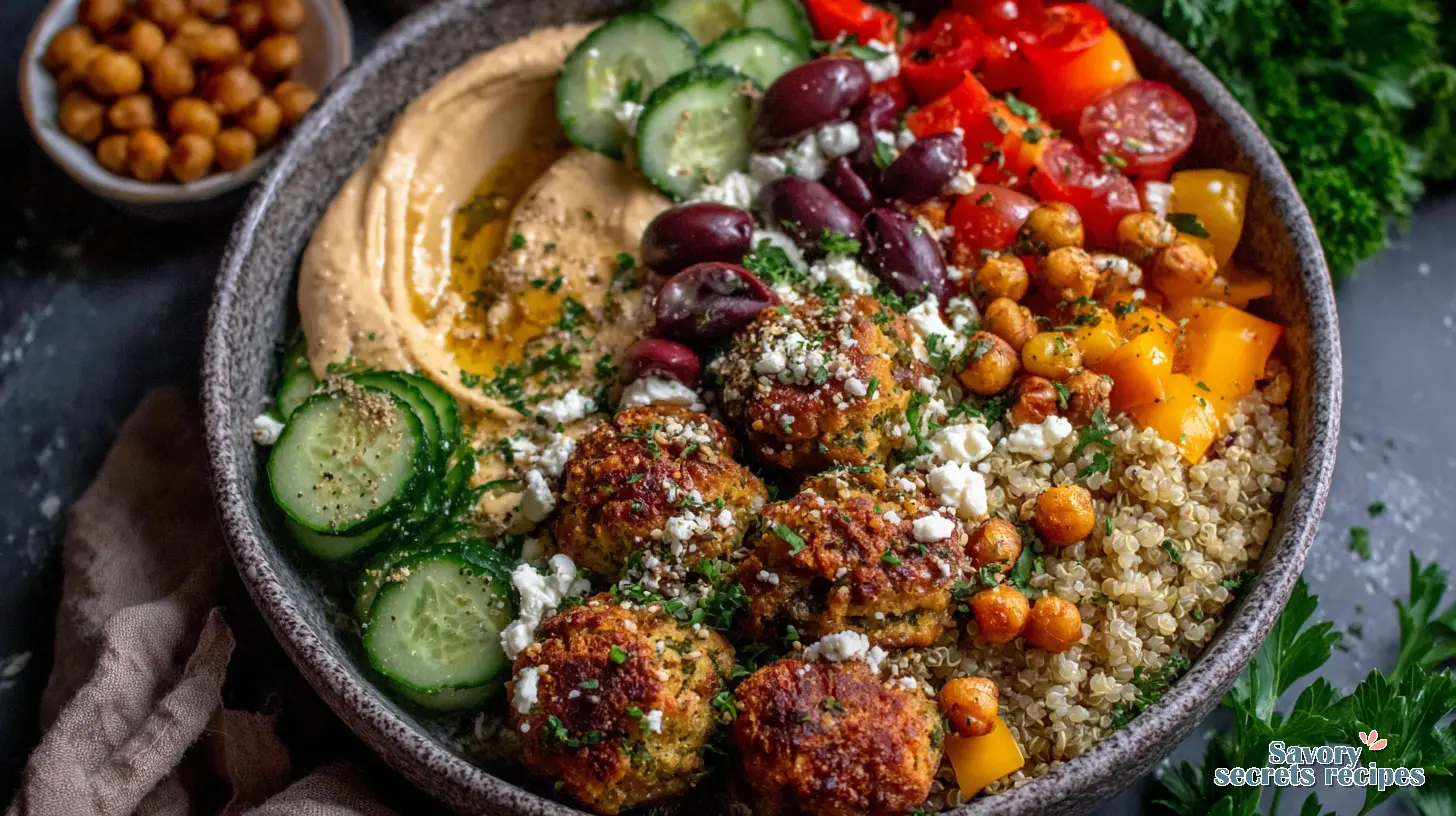
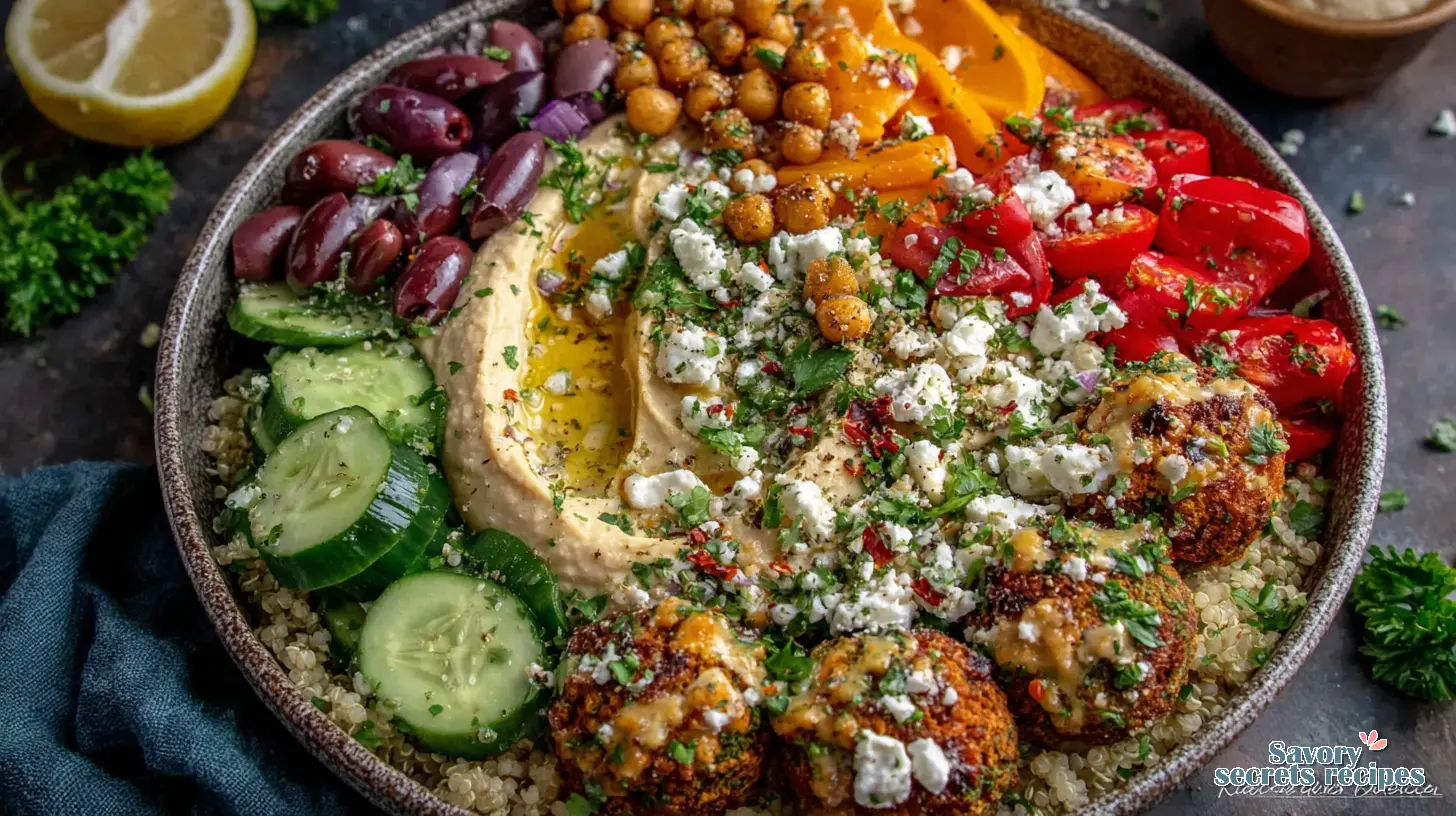
Imagine the vibrant colors now: the creamy, pale hummus spread generously across the bottom. Then, the tender quinoa, a bed of earthy goodness. Next, the explosion of color from the cherry tomatoes, the crisp green cucumber, the sweet red bell pepper, and the sharp purple red onion. The briny Kalamata olives and crumbly feta cheese add that signature Greek flair. The crunchy roasted chickpeas. A sprinkle of fresh parsley or mint. That first bite where the crunch of cucumber meets the creamy hummus and the tangy feta. This is exactly the result we want to see. You’re just moments away from that.
Meal Prep & Storage for Your Hummus Bowl
One of the best things about this Greek Veggie Hummus Bowl is how well it adapts to meal prep. You can absolutely make components ahead of time. I’d probably want to test that first before recommending it, but in my experience, separating everything is key.
Hummus can be made up to a week before and kept covered in the fridge. Cooked quinoa will also keep for up to a week. The pickled red onions, if you opt for those, can be stored in the fridge for up to two weeks. This is the kind of efficiency I appreciate when planning my week.
For meal prep, store ingredients separately in individual airtight containers. That way, your veggies stay crisp, and nothing gets soggy. You assemble them right before you’re ready to eat. Combined bowls taste best within three to four days, but separated components will last up to five days in an airtight container in the refrigerator. Just to be safe, always check for any off smells or textures before eating. According to the guidelines, this separation is crucial for food safety and quality.
Reheating Your Meal-Prepped Greek Veggie Hummus Bowl
Hummus and Veggies: These are best enjoyed cold or at room temperature. Don’t try to reheat the hummus or the fresh vegetables, it just doesn’t work. You’ll end up with a sad, warm mush, and that’s not what we’re going for.
Quinoa: If your quinoa is cold from the fridge, you can gently warm it in the microwave for 30-60 seconds or in a small pan with a splash of water. This is purely optional, though. I often enjoy it cold right out of the fridge.
Roasted Chickpeas: If you want to revive their crunch, pop them back into a hot oven (around 350°F or 175°C) for 5-7 minutes. Watch them carefully so they don’t burn. That slight crispness really makes a difference.
Customizing Your Greek Veggie Hummus Bowl
This Greek Veggie Hummus Bowl is incredibly versatile. You can truly make it your own based on what you have on hand or what you’re craving. I mean, that’s the beauty of bowl recipes, isn’t it?
For grains, if quinoa isn’t your thing, you could use brown rice, farro, bulgur, barley, or even gluten-free couscous. They all offer a great base. As for veggies, feel free to add roasted red peppers, avocado, grilled zucchini, or even shredded carrots. I’ve even seen people add radishes for a peppery kick. This is where your personal preferences really shine.
If you’re looking for more protein, consider adding cooked lentils or tofu for a robust plant based hummus dish. For those who aren’t strictly plant-based, some cooked shredded chicken works beautifully. You can also boost nutrition and crunch with pine nuts, sliced almonds, or sesame seeds. The possibilities for your deconstructed hummus are endless.
For extra flavor, consider adding capers or a bruschetta topping. Different types of olives can also change the profile. And if you’re feeling adventurous, pomegranate seeds add a lovely sweet-tart pop. Just remember to stick to the actual ingredients listed for the base recipe, and treat these as optional additions to your Mediterranean hummus plate.
Common Questions About Your Greek Veggie Hummus Bowl
Serving Your Fresh Veggie Hummus Mix
Serving this Greek Veggie Hummus Bowl is all about presentation and freshness. I mean, it’s an Instagram-worthy plating for your foodie friends, for sure. A shallow, wide bowl works best to show off all those beautiful layers and colors. That vibrant freshness anchor really comes into play here. It makes you feel good just looking at it.
I always recommend serving these bowls with fresh pita bread. Warm pita is even better, if you have a few minutes to toast it lightly. It’s perfect for scooping up all the delicious components. For a gluten-free option, you could use gluten-free crushed pita chips, which add a nice crunch.
This bowl is ideal for a healthy lunch idea, a vegetarian dinner, or even a light easy weeknight meal. It’s also fantastic for a “build-your-own” bar when you’re having friends over. That way, everyone can customize their own Mediterranean hummus plate exactly how they like it. The personal satisfaction of creating something so beautiful and healthy is just wonderful.
Final Thoughts on Your Effortless Healthy Meal
When you make this Greek Veggie Hummus Bowl, you’ll see just how simple it is to create something so incredibly fresh and satisfying. You’ll feel energized and light, without sacrificing an ounce of flavor. It’s that perfect balance we’re all looking for, honestly.
You’ll love how easy it is to adapt, how vibrant it looks, and most importantly, how delicious it tastes. This is the kind of recipe that expands your healthy repertoire without any stress. Let me know your favorite veggie combo in the comments below! I love hearing what variations people come up with. And for more inspiration, check out my Pinterest boards.
You’ve totally got this. Go grab those fresh ingredients on your next Ralphs or Vons run, and enjoy the deliciousness!
Source: Nutritional Information
<!– wp:rank-math/faq-block {"questions":[{"id":"faq-question-1776477038526","title":"Can I prepare a healthy hummus bowl meal ahead of time for meal prep?","content":"Absolutely! Hummus and cooked grains can be made 3-7 days in advance. Veggies are best cut and prepped just before serving to maintain their crispness. Store all components separately in airtight containers and assemble your Greek Veggie Hummus Bowl when you’re ready to eat.”,”visible”:true},{“id”:”faq-question-1776477038527″,”title”:”What else can I add to a Mediterranean hummus plate for extra flavor?”,”content”:”So many options! Consider adding sun-dried tomatoes, roasted red peppers, avocado, or grilled eggplant. Cooked lentils or tofu boost protein. Nuts like pine nuts or sliced almonds add crunch. You can even vary the type of olives used for a different briny note.”,”visible”:true},{“id”:”faq-question-1776477038528″,”title”:”Can you make an easy Greek Veggie Hummus Bowl vegan?”,”content”:”Yes, absolutely! To make this Greek Veggie Hummus Bowl vegan, simply omit the feta cheese. You can add more roasted chickpeas, cooked lentils, or even homemade tofu feta for a similar tangy, salty element. It’s a fantastic plant-based meal prep option.”,”visible”:true},{“id”:”faq-question-1776477038529″,”title”:”How do I store leftover Greek Veggie Hummus Bowl?”,”content”:”For best results, store the components of your Greek Veggie Hummus Bowl separately in airtight containers in the refrigerator. This keeps the vegetables crisp and prevents the hummus from making everything soggy. Enjoy within 3-5 days for optimal freshness. Hummus itself can last up to a week.”,”visible”:true}]} –>