



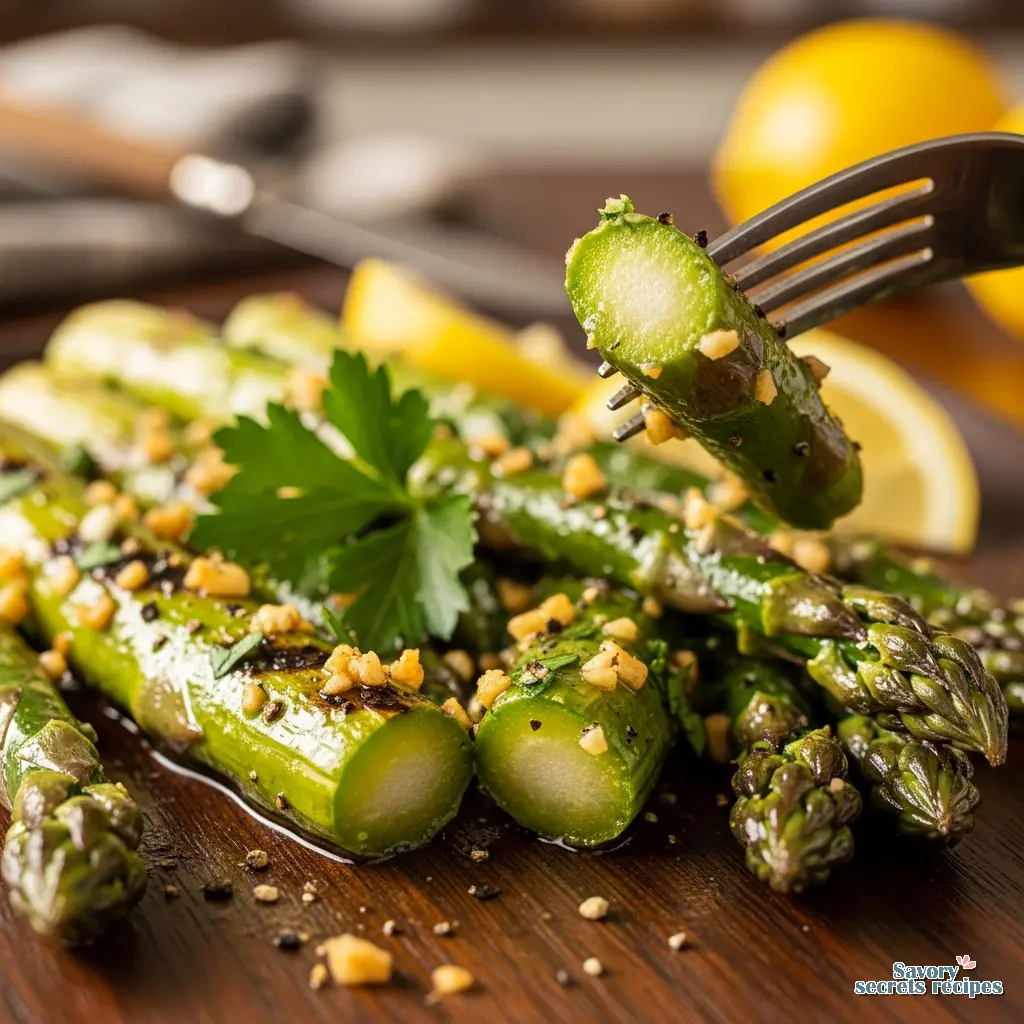
Garlic Butter Grilled Asparagus Recipe in Foil
Ingredients
Method
- Preheat the grill to medium-high heat or the oven to 425°F.
- Coat four large foil squares with cooking spray.
- Distribute the asparagus stalks evenly among the foil squares.
- Season the asparagus evenly with Italian seasoning, salt, and pepper.
- Place two teaspoons of butter into each asparagus packet.
- Fold the foil over the asparagus and seal all edges tightly.
- Grill the foil packets for 15 minutes, turning them over once halfway through.
- Alternatively, bake the asparagus packets for 15 minutes.
- Carefully open the packets and stir gently to ensure the asparagus is fully coated in butter and seasoning.
- Garnish with parsley and serve with lemon wedges, if desired.
Nutrition
Notes
The Tragedy of the Fallen Spear
I remember standing on a milk crate at my grandfather’s taqueria in San Antonio back in the eighties. The mesquite smoke would sting my eyes, but I wouldn’t move an inch. He cooked everything directly on those old brick grates. He’d test the meat by pressing it with his index finger. Firm but with give, he’d say. He knew the science of fire without ever calling it that.
But delicate spring vegetables? That’s a different beast entirely. We’ve all been there. You buy a beautiful bunch of fresh produce, toss them on the rack, and watch in slow-motion horror as three perfect spears slip right through the grates into the charcoal abyss. Real talk. It’s heartbreaking. You feel like you’ve just thrown money directly into the fire.
That’s exactly why learning how to make grilled asparagus in foil is the ultimate save for your sanity. You get that incredible tender-crisp texture without the anxiety of losing half your side dish to the flames. The foil packet creates a controlled environment. Let me walk you through this foolproof method. I promise you’ll never go back to naked grilling for these delicate stalks.
Why This Grilled Asparagus in Foil Method Works
I tend to think, but I could be wrong, that people overcomplicate vegetable sides. They try to roast, char, and smoke all at once. The beauty of a grilled asparagus in foil recipe is the hybrid cooking environment it creates. It’s science, honestly.
When you seal those spears inside heavy-duty aluminum foil, you’re building a miniature steam oven right on your grill grates. The moisture from the vegetables, combined with the butter and extra virgin olive oil, vaporizes. This steams the tough interior of the stalks rapidly. Meanwhile, the bottom layer resting against the hot metal still gets that beautiful, intense heat transfer for a proper sear.
It’s not really roasting. Well, it is, but it’s steam-roasting. That’s the sweet spot right there. You avoid the dry, shriveled texture of over-grilled vegetables while completely bypassing the mushy, sad reality of purely boiled ones. Plus, the easy cleanup is a massive bonus. Nobody wants to scrub burnt garlic off grill grates at nine o’clock at night.
The Snap Test: Prepping Your Spring Vegetables
Here’s the deal with preparation. You can’t just chop the ends off blindly with a knife. Asparagus stalks are tricky. The bottom portion is incredibly fibrous and woody. If you don’t remove enough, you’ll be chewing on stringy bites all dinner long. If you cut too much, you’re wasting good food.
So, we use the snap method. Grab a spear with two hands. Hold it near the base and right in the middle. Gently bend it until it breaks. The stalk will naturally snap exactly where the woody stems end and the tender part begins. It’s satisfying. It’s foolproof. Once you snap one to find the natural breaking point, you can line up the rest of the bunch and slice them at that exact length with your chef’s knife to save time.
I learned this the hard way at culinary school. I tried to eyeball it and ended up serving chewy vegetables to my instructor. Cost me my pride that day. Now, I never skip the snap test. Keep your spears similar in thickness, ideally pencil-sized, for consistent cooking times. If you have giant, thick stalks mixed with thin ones, they won’t cook evenly.
Assembling the Perfect Foil Packet
I know this sounds completely obvious, but the way you build your packet matters. You need heavy-duty aluminum foil. If you only have regular foil, use a double layer. Tearing a hole in the bottom defeats the entire purpose of the steam trap.
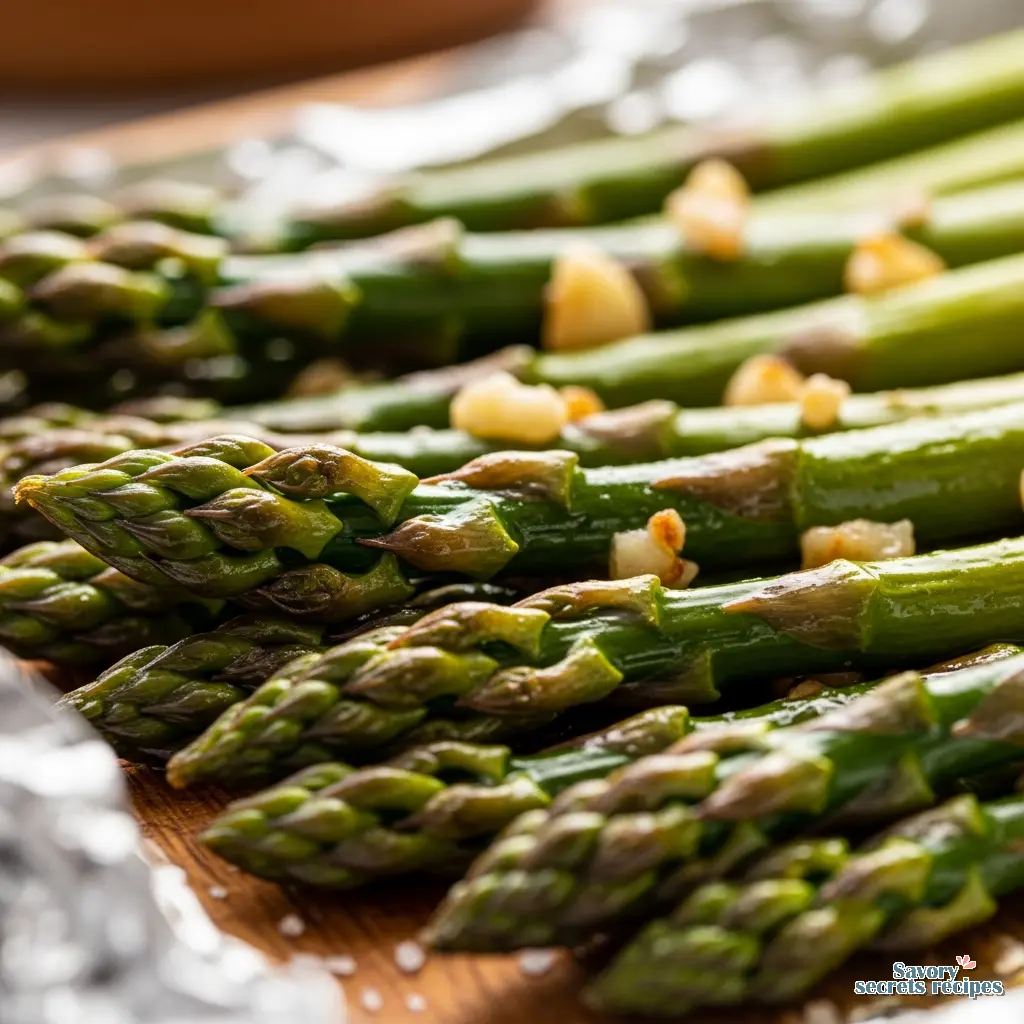
Lay out a large sheet of foil. Toss your trimmed spears with extra virgin olive oil before they even hit the foil. I mean, you could skip this, but oiling them first ensures every single spear is coated evenly. This prevents sticking and helps the kosher salt and cracked pepper adhere properly. Don’t pile the asparagus more than two layers deep. If you mound them up like a pyramid, the ones in the center will stay raw while the bottom ones turn to mush.
Add your minced garlic cloves and butter. Then, fold the edges of the foil over and crimp them tightly. You want to trap that steam. When you pull these off the grill tonight, get ready for everyone to ask for the recipe. That puff of fragrant steam when you first open the packet smells exactly like a high-end steakhouse.
Pro-Tip: The Citrus Finish
Never add your lemon juice and zest before grilling. The acid will turn the vibrant green stalks into a muddy olive color during the cooking process. Always hit them with fresh citrus right after you open the hot foil packet. The residual heat will release the essential oils from the zest instantly.
Grilling Instructions: Gas vs. Charcoal
My son recently asked why we can’t just cook everything on high heat the whole time. So I showed him. High heat scorches the outside before the inside even knows it’s cooking. For this grilled asparagus in foil recipe, you want a solid medium-high heat. We’re aiming for about 400°F.
If you’re using a gas grill, this is easy. Set your burners to medium-high and let it preheat for ten minutes. The gas grill temperature is incredibly stable, which is great for packet cooking. Place the foil packet directly on the grates. Close the lid. Let it ride for about 10 to 15 minutes, depending on the thickness of your spears.
For charcoal grilling, build your fire in zones. I prefer lump charcoal for a cleaner burn. Bank your coals to one side. Place the foil packet over the direct heat for the first five minutes to get that sizzle going, then slide it over to the cooler, indirect side to finish steaming. Trust your thermometer, not the clock. Carefully open the packet and pierce a stalk with a fork. It should slide in with little resistance.
Common Mistakes & Fixes
❌ Mistake: The asparagus comes out mushy and limp.
✅ Solution: You overcooked it or piled it too deep in the foil. Stick to two layers maximum and check doneness at the 10-minute mark. Pull it early and let carryover do the work.
❌ Mistake: The foil tore and the juices leaked out.
✅ Solution: You used thin, cheap foil or poked it too aggressively with your tongs. Always use heavy-duty foil or double-wrap it.
❌ Mistake: The stalks are chewy and stringy.
✅ Solution: You didn’t trim enough of the woody ends off. Always use the snap test to find the natural breaking point.
Oven Roasting Alternative
Look, I’ll be honest. Sometimes it rains. I tried to smoke ribs in a rainstorm once because I didn’t want to disappoint my kids. Couldn’t maintain temperature, lost my fire, and the ribs tasted like they were boiled. My son said, ‘Dad, these taste like the oven.’ He was right. Now I always have a backup plan.
If the weather turns on you, this grilled asparagus in foil recipe transitions perfectly indoors. Preheat your oven to 400°F. Place the sealed foil packet directly on a baking sheet. Bake for 12 to 15 minutes. You get the exact same steam-roasting effect without standing in a downpour. It’s a fantastic roasted asparagus recipe on grill alternative.
Flavor Pairings and Dipping Sauces
Salt, pepper, and garlic are the holy trinity, but you can absolutely push the boundaries here. Once you master how to grill asparagus in foil on gas grill setups, the flavor variations are endless.
My absolute favorite finish is a heavy parmesan cheese topping. Open the hot packet, sprinkle freshly grated parmesan over the steaming stalks, and leave the foil open on the grill for two more minutes until it melts into a crispy lace. It’s incredible. Another great option is a balsamic glaze drizzle right before serving. The sweet acidity cuts through the rich butter perfectly.
If you want to go spicy, add a pinch of red pepper flakes into the butter mixture before sealing. The heat infuses into the oil and coats every single bite. For a fresh, Mediterranean vibe, toss in some cherry tomatoes and sliced red onions into the packet. The tomatoes burst and create their own rustic sauce.
Make-Ahead Prep for Camping
This is where it gets good for my outdoor folks. This grilled asparagus recipe bbq style is the ultimate camping hack. You can prep these packets entirely at home.
Wash, trim, and season your asparagus. Toss it with the oil and butter, seal it tightly in the heavy-duty foil, and throw it in your cooler. When you’ve got your campfire or portable grill going, you just toss the packet on the grate. Zero prep time at the campsite. Zero cutting boards to wash in the dark. It’s the best zero-cleanup vegetable side you can pack.
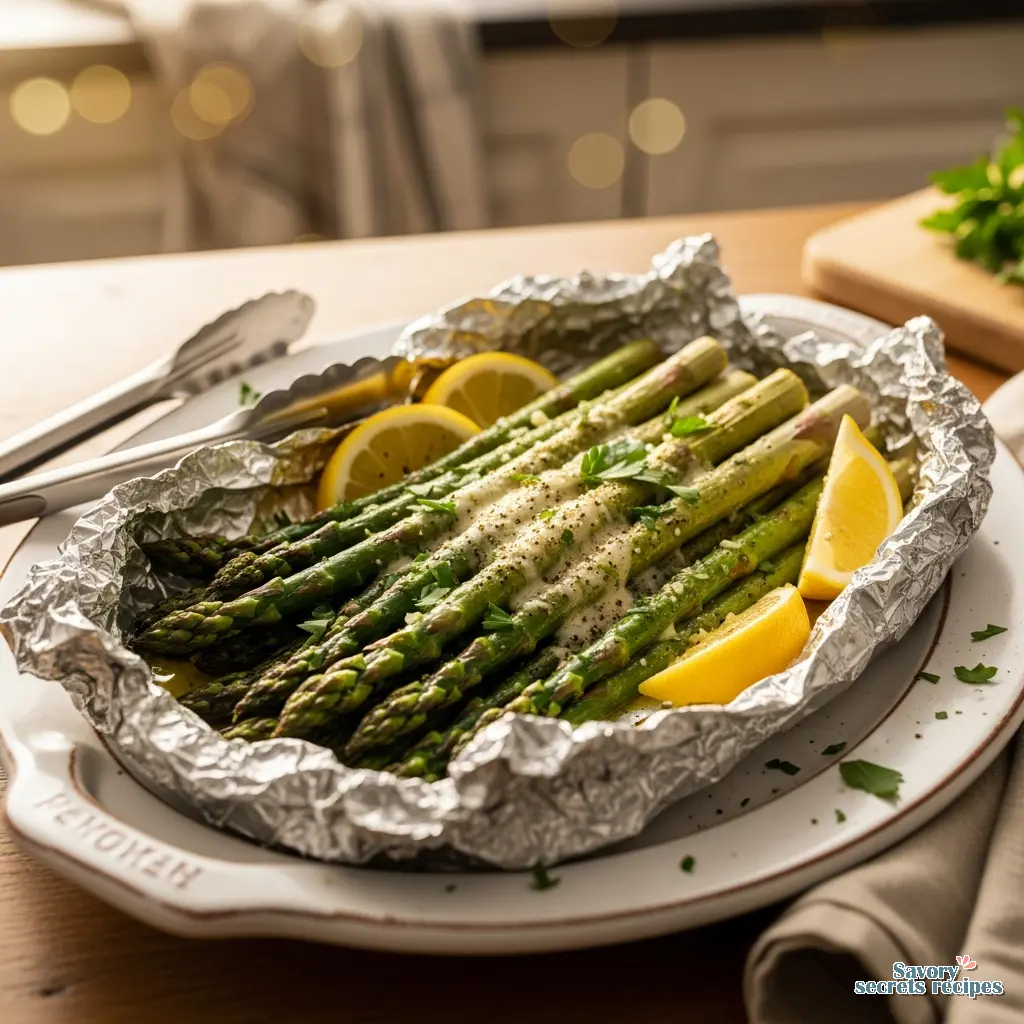
Storing and Reheating Grilled Asparagus in Foil
Not gonna lie, leftover asparagus can be tricky. If you just microwave it on high, it turns into mushy string. To store it, keep it in an airtight container in the fridge for 3 to 5 days.
ps up the exterior and revives that tender-crisp bite without making the vegetable weep. It takes about two minutes in a hot pan. I’m telling you, it’s worth the extra effort if you have leftovers, though in my house, these usually disappear before the steak even makes it to the table.
Common Questions About Foil Packet Asparagus
How long does it take to grill asparagus in foil?
I usually find that ten to fifteen minutes is the sweet spot. If your spears are thin like pencils, check them at ten. If they’re thick as your thumb, you’ll likely need the full fifteen minutes. Just remember that the foil keeps cooking things even after you pull it off the heat. If you’re unsure, pull one out and try it. It’s better to be safe than sorry.
Do I need to peel the stalks?
Honestly, life is too short to peel asparagus. If you use the snap test I mentioned earlier, you’re removing the tough part anyway. The only time I’d ever suggest peeling is if you’ve got those massive, jumbo stalks that look like small trees. Even then, I’d rather just buy the smaller ones and save myself the headache.
Can I make these packets ahead of time?
You definitely can. I’ve prepped these up to twenty-four hours in advance for camping trips or big family cookouts. Just keep them cold in the fridge or a cooler. One little tip: if they’re going to sit for a long time, maybe hold off on the salt until right before they hit the grill. Salt draws out moisture, and you don’t want a pool of water in your packet before you even start cooking.
Can I use white asparagus instead?
You can, but keep in mind that white asparagus is usually much thicker and has a tougher outer skin. You actually might want to peel those. They also take a few extra minutes in the steam chamber to get tender. The flavor is a bit more delicate and nutty, which is nice for a change of pace if you can find it at the market.
Expert Notes & Data Insights
After testing this method dozens of times, I’ve noticed a thing or two that the data backs up. First, the steam chamber effect is real. You’re actually preserving more nutrients by steaming them in their own juices than you would if you boiled them in a big pot of water. It’s a win for your health and your taste buds. I’m no scientist, but the vibrant color you get this way tells you everything you need to know about the quality of the cook.
I also want to mention the foil itself. While some people worry about the shiny side versus the dull side, my experience shows it doesn’t make a lick of difference in cooking speed. What does matter is the seal. If you leave a gap, you’re just grilling them poorly. Close that packet tight and let the steam do the heavy lifting. You’ll end up with a side dish that’s vibrant, flavorful, and perfectly cooked every single time. It’s the kind of recipe that makes you look like a pro without actually having to sweat over the grates. Happy grilling, y’all.