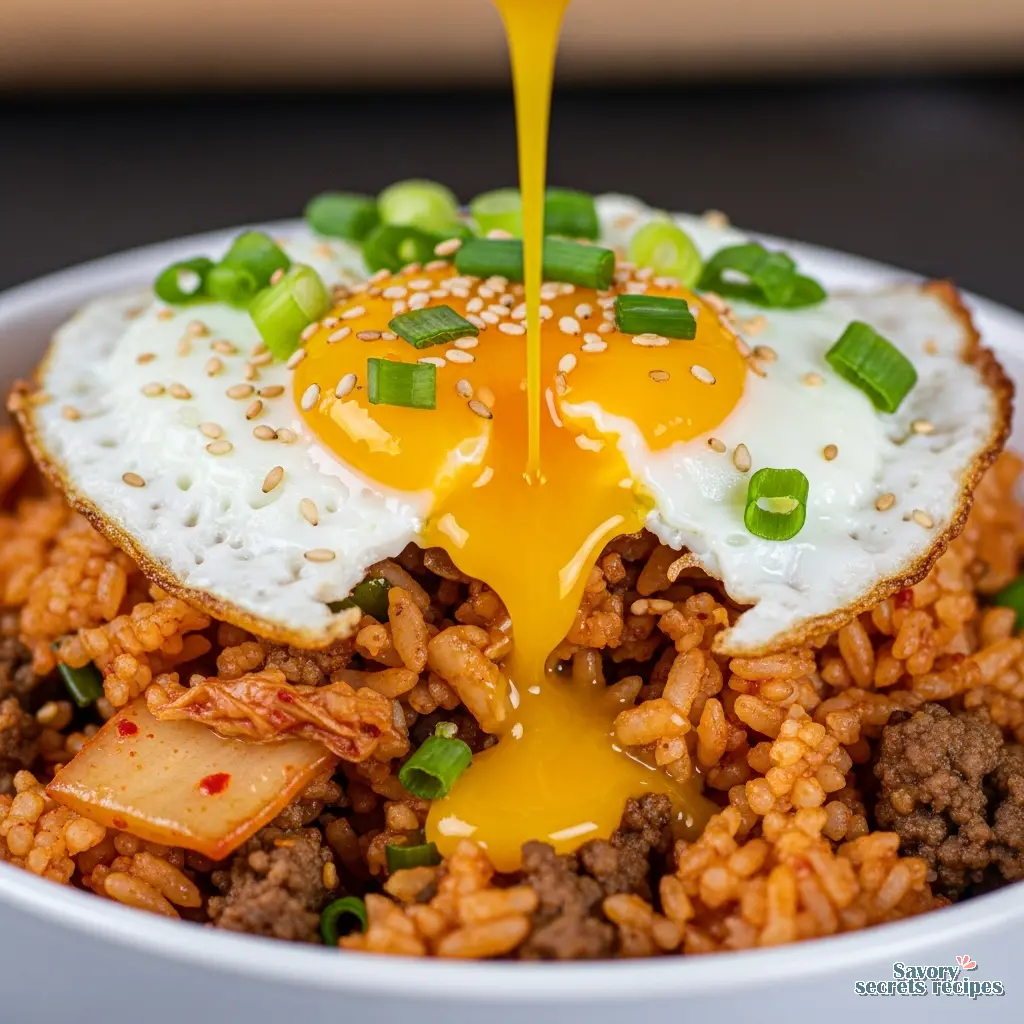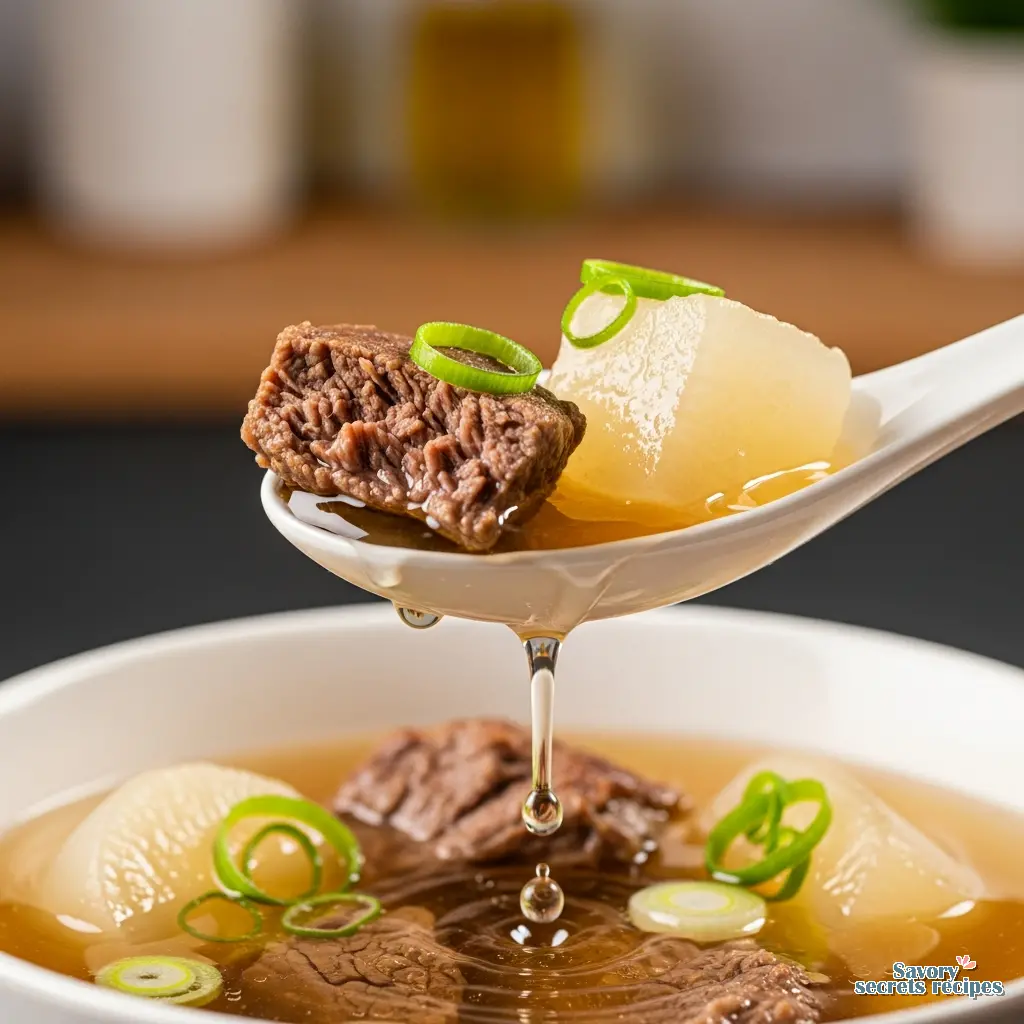




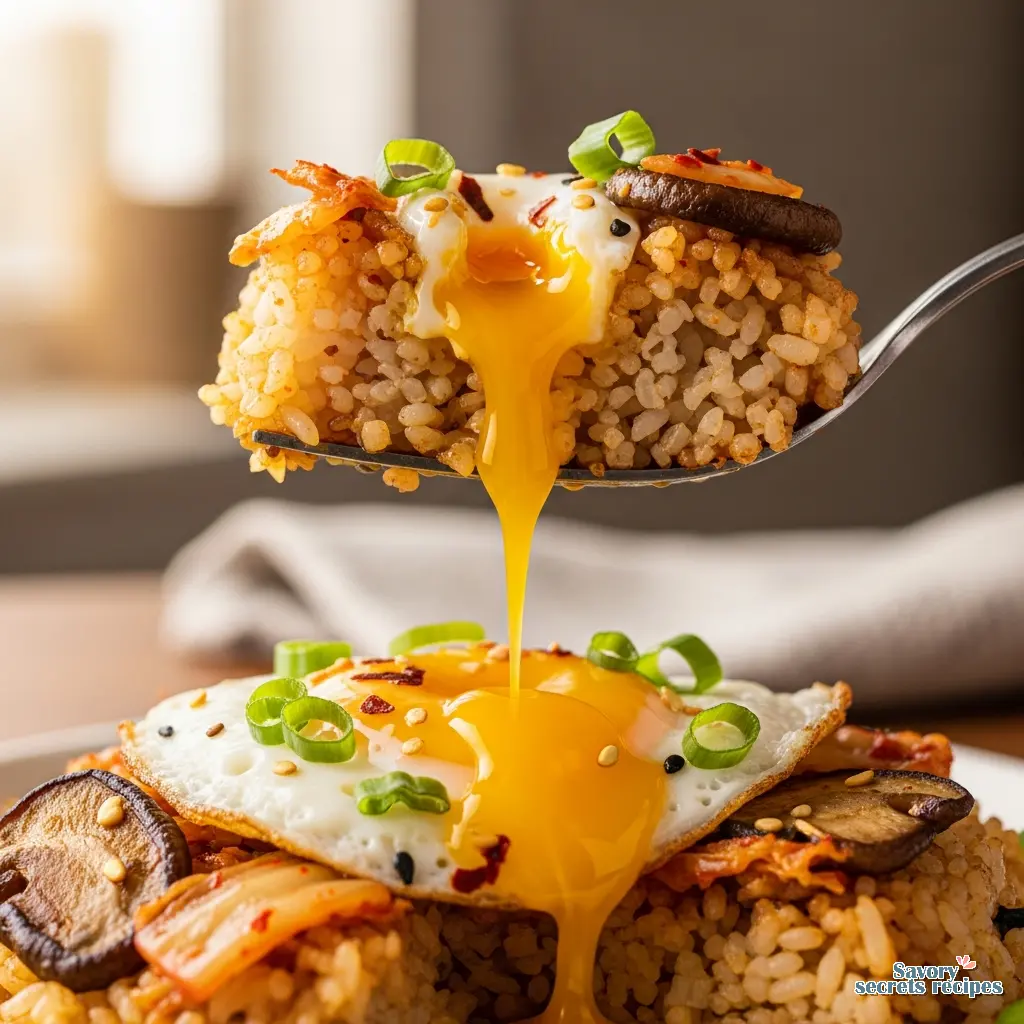
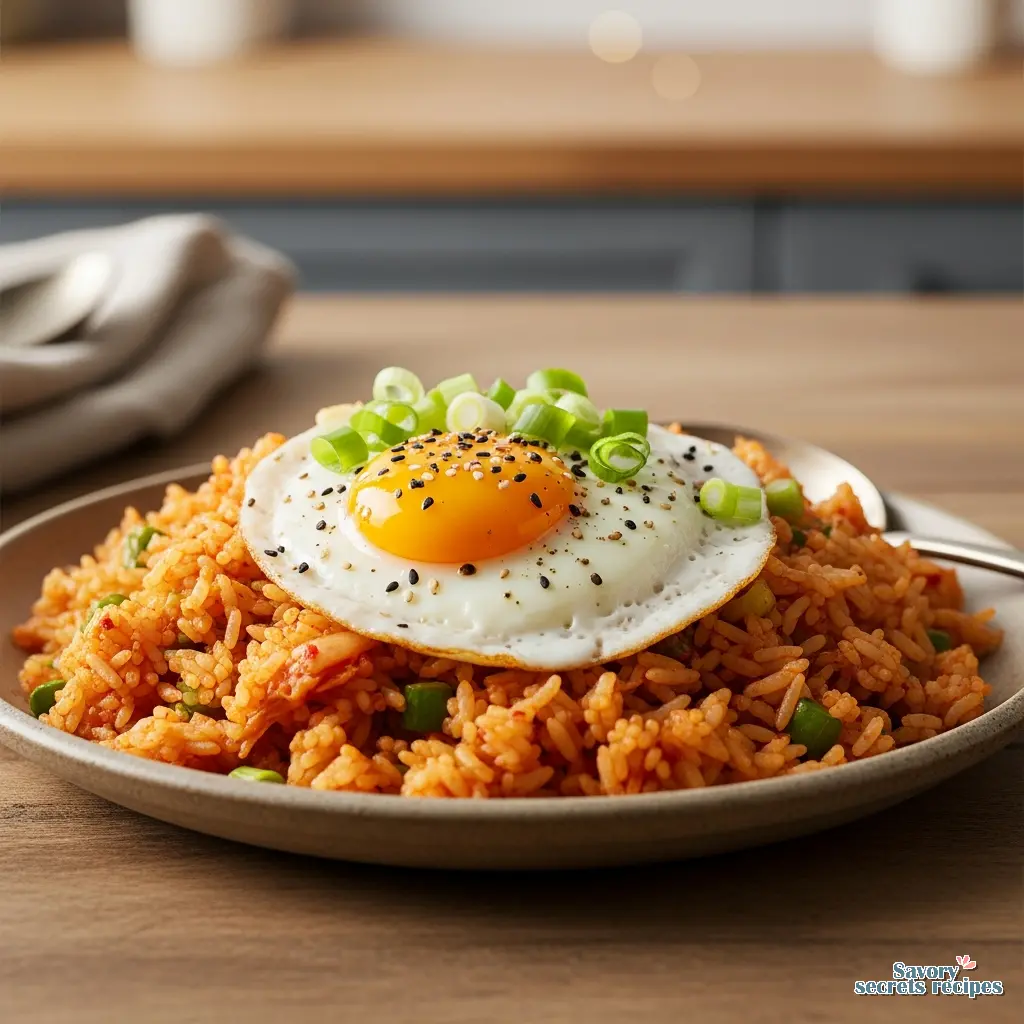
Healthy Recipes With Kimchi: Nutritious Fried Rice
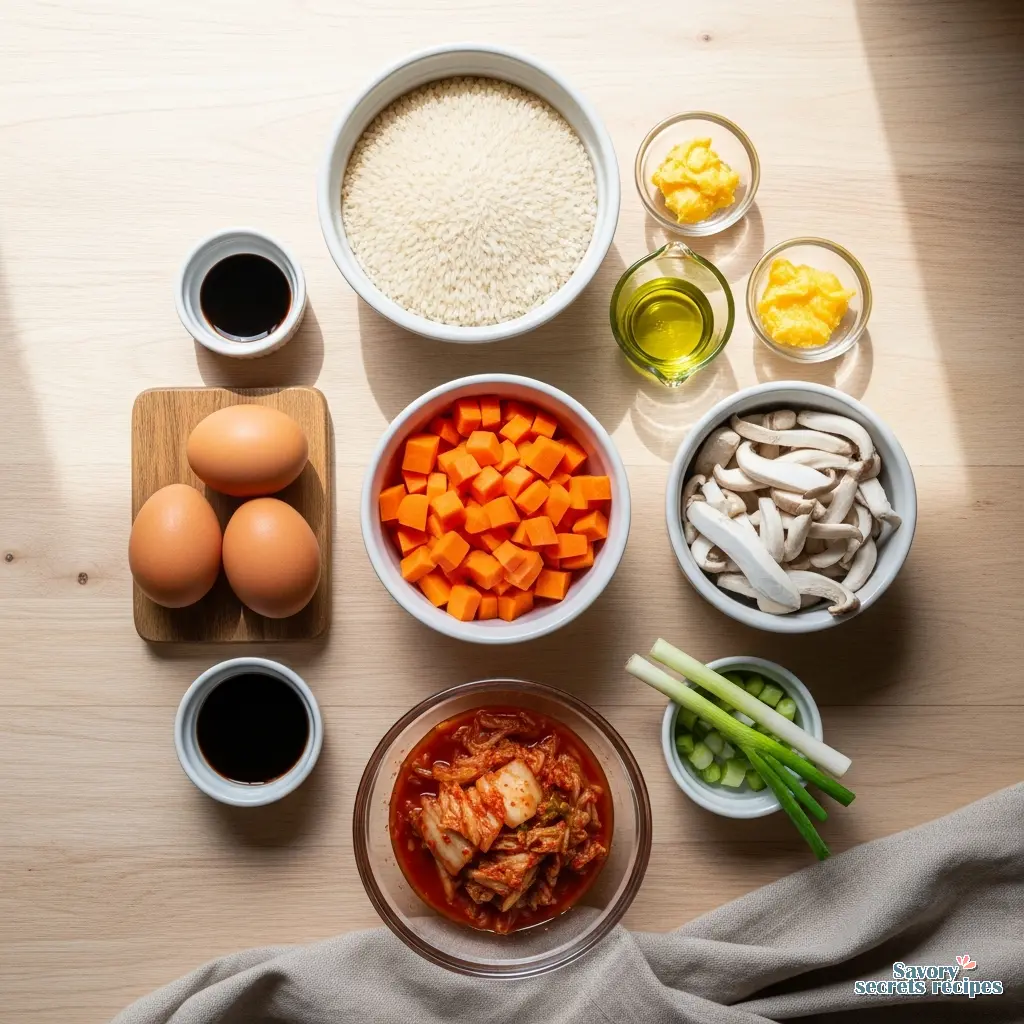
Ingredients
Method
- Cook rice according to package directions.
- Prepare vegetables and set aside while rice cooks.
- Heat ghee and oil in a large pan over medium heat. Add mushrooms once melted and cook undisturbed over medium-high heat for 6 minutes.
- Flip mushrooms and add carrot and kimchi; cook for an additional 4 to 5 minutes.
- Add rice to the pan, toss to combine, and cook for several minutes.
- Push rice mixture to the edges of the pan and crack eggs into the center. Stir to break yolks and cook until eggs are nearly set.
- Add scallions and soy sauce, then mix thoroughly.
Notes
Why This Healthy Kimchi Dish Is Your New Weeknight Savior
Ever stare at a jar of kimchi in your fridge, wondering if it’s actually good for you or just a sodium bomb waiting to happen? I’ve been there. Standing in the light of the open refrigerator door, calculating if the probiotics outweigh the salt content. Spoiler: they usually do, especially if you know how to balance the rest of the meal.
To be honest, healthy kimchi dishes are my secret weapon when I’m tired. I’m talking about that specific “Wednesday evening, 35 minutes before dinner” panic where takeout seems like the only option. But here’s what I’m seeing: most people overcomplicate fermented foods. They think you need an elaborate plan. You don’t.
This recipe isn’t just about tossing cabbage into rice. It’s about building a nutritional profile that makes sense for a modern lifestyle. We’re swapping heavy oils for avocado oil or ghee, loading up on umami-rich mushrooms to cut down on added salt, and using a technique that ensures you get that restaurant-quality crispiness without deep frying. It’s comfort food, but the kind that makes your gut microbiome high-five you.
The Science: Probiotics vs. The Pan
Let me think through this common concern I hear all the time: “Doesn’t cooking kill the probiotics?”
That tracks. Heat does kill live bacteria. However, the story doesn’t end there. Even when the live cultures in kimchi are deactivated by high heat, the benefits of the fermentation process remain. You are still getting the “postbiotics” and the pre-digested nutrients that are incredibly easy for your body to absorb. Plus, the fiber content in the cabbage acts as a prebiotic, feeding the good bacteria already in your system.
That said, if you want the maximum probiotic punch, I like to stir in a fresh spoonful of raw kimchi right at the very end, off the heat. It gives you the best of both worlds: the deep, caramelized flavor of the cooked kimchi and the active cultures of the raw stuff. It’s a small tweak, but nutritionally, it makes a difference.
The “Cold Rice” Rule (Do Not Skip This)
I remember standing on a step stool next to my grandmother in her tiny Taipei kitchen. She didn’t use measuring cups. She used feelings. But there was one rule she was militant about: never, ever use hot rice for frying.
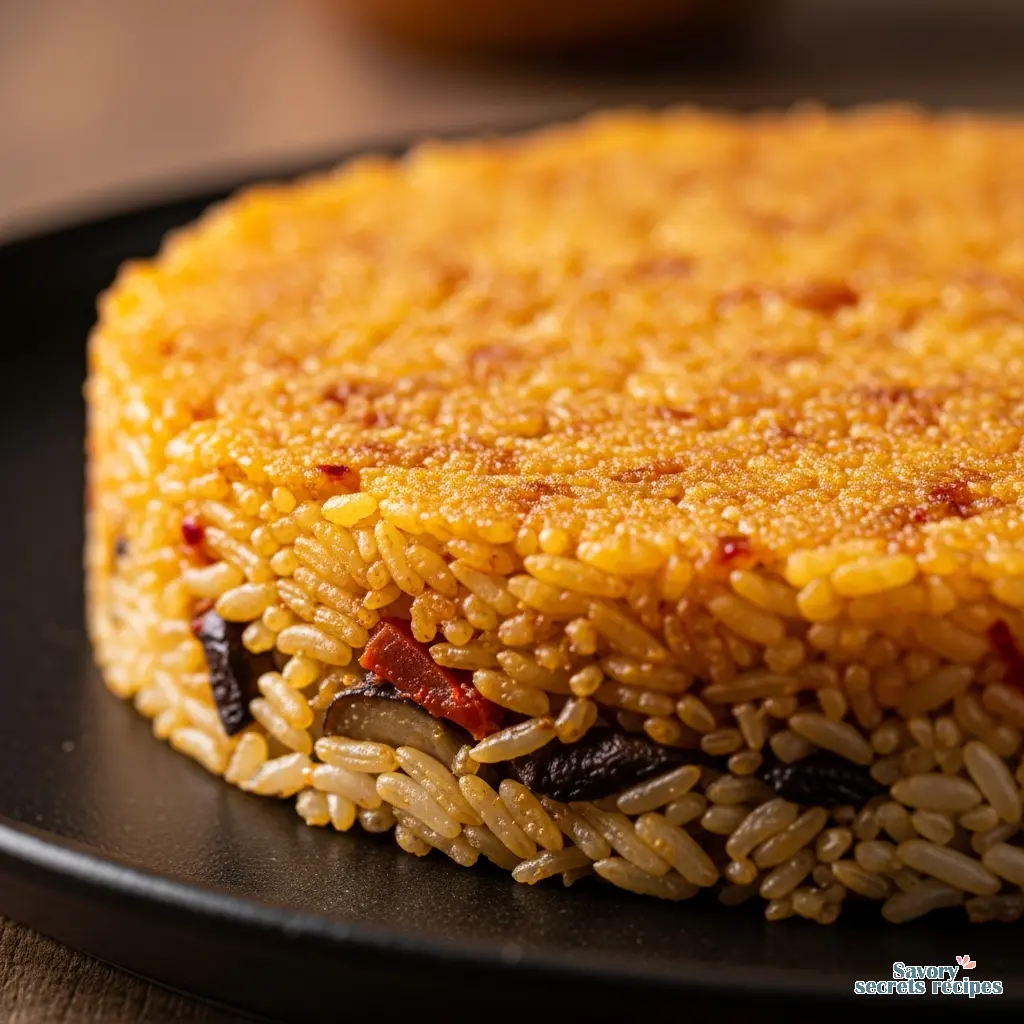
If you use fresh, warm rice, your healthy kimchi dishes will turn into a gummy, sad mash. The moisture content is just too high. You need rice that has been dehydrated slightly in the refrigerator. This allows the grains to separate and get that distinct chewy texture we love.
A Taiwanese colleague taught me that the secret to restaurant-quality fried rice is cooking the rice a day ahead and letting it dry out in the fridge, uncovered. I’d always made fried rice with fresh rice and wondered why it turned out gummy. Now I make extra rice on purpose, spread it on a sheet pan, and leave it in the fridge overnight. The texture difference is unbelievable. It’s one of those things that seems obvious in retrospect.
Pro Tip: If you are desperate and need to make this tonight but don’t have cold rice, cook a fresh batch, spread it on a baking sheet, and freeze it for 20 minutes. It’s not perfect, but it works in a pinch.
Choosing the Right Kimchi for Health and Flavor
Not all jars are created equal. When you’re shopping at Whole Foods or Ralphs, you need to look at the labels closely. Many commercial brands are loaded with sugar to speed up fermentation or appeal to sweeter palettes.
I’m not convinced yet by the “quick kimchi” varieties. You want the stuff that has been fermented properly. Look for bubbles in the jar. That’s a sign of life. For cooking, “old” kimchi is better. I mean the stuff that’s been sitting in the back of your fridge for a month and tastes too sour to eat raw. That sourness mellows out into a rich, savory depth when it hits the hot pan.
Also, check the sodium. Kimchi is naturally salty, it has to be for preservation. To keep this dish heart-healthy, we aren’t adding much extra salt. The kimchi provides the seasoning. If you are watching your intake, simply drain the kimchi juice before chopping (though I admit, it hurts my soul a little to toss that flavor).
Making It Plant-Based (The Fish Sauce Trap)
Here’s what I’m seeing a lot lately: people assuming all kimchi is vegan. It’s usually not. Traditional recipes use shrimp paste or fish sauce to kickstart fermentation. If you are vegan or cooking for someone with a shellfish allergy, you have to check the ingredients list.
There are some fantastic vegan brands out there now that use seaweed or miso for that umami depth. Or, if you’re making your own, soy sauce or tamari works as a substitute. For this recipe, if you want to keep it fully plant-based, skip the egg and use a vegan kimchi. I like to sub in crumbled firm tofu or even chickpeas for protein. Trust me, the kimchi flavor is strong enough to carry it.
Nutrition Upgrade: The “Confetti” Technique
My daughter went through a phase where she’d only eat “white and brown foods,” which really limited our options. I started grating carrots into fried rice and calling it “confetti rice,” and she was so delighted by the name that she didn’t notice she was eating vegetables. I felt like a culinary spy. Now she asks for confetti rice specifically, and I’ve slowly increased the carrot ratio. Small victories.
This recipe uses that same principle. By dicing the carrots and mushrooms very small about the same size as a corn kernel they blend seamlessly with the rice. You end up eating 50% vegetables by volume, but it feels like you’re eating a bowl of indulgent carbs. The oyster mushrooms are particularly great here because they have a meaty texture that mimics the pork you’d find in traditional versions, but with zero cholesterol and a dose of beta-glucans for immune support.
Common Mistakes & Troubleshooting
Even with simple healthy kimchi dishes, things can go sideways. Here is how to save your dinner if it does.
Mistake → Solution
Mistake: The rice is mushy and clumpy.
Solution: You likely overcrowded the pan or used warm rice. Spread the rice out in the pan and stop touching it. Let the bottom crisp up. This creates a barrier. If it’s really wet, turn the heat up high for a minute to drive off moisture.
Mistake: It tastes bland.
Solution: You probably used “young” kimchi. Add a splash of the kimchi juice from the jar, or a teaspoon of fish sauce (if not vegan) or soy sauce. Acid wakes up flavor, so a squeeze of lime can also work wonders.
Mistake: The garlic burned.
Solution: Kimchi has sugar in it, and garlic burns fast. Add your aromatics after the vegetables have softened, or keep the heat moderate until the rice goes in.
Storage & Leftovers
This dish meal preps beautifully. In fact, I think it tastes better the next day after the flavors have had a slumber party in the container. Store it in an airtight glass container in the fridge for up to 4 days.
When reheating, don’t just zap it. The microwave tends to steam it, making it soft again. I prefer to reheat it in a pan with a tiny drop of oil to bring back the crispiness. If you must microwave, sprinkle a few drops of water over the top and cover it with a damp paper towel to keep the rice grains fluffy.
Frequently Asked Questions
Final Thoughts
When you serve this, watch those smiles. There is something incredibly satisfying about putting a bowl of bright, red-flecked rice on the table that took less time to make than an episode of your favorite show. It’s proof that “healthy” doesn’t have to mean “boring” or “bland.”
I’m always looking for new ways to use up that jar of kimchi, so if you try this with different veggies or proteins, let me know. Snap a pic and tag me I love seeing your creations! Go grab that kimchi jar; your new favorite healthy habit starts now.
For more inspiration, check out my Pinterest boards where I collect all my favorite fermentation experiments.
Reference: Original Source
Is kimchi fried rice actually healthy?
It absolutely can be. Traditional versions can be greasy, but this healthy kimchi dishes recipe uses minimal heart-healthy fats like avocado oil, loads up on fiber-rich vegetables, and relies on fermentation for flavor rather than excessive salt. It’s a balanced meal with protein, carbs, and probiotics.
Can I make healthy kimchi dishes ahead of time?
Yes, and you should! The flavors meld together beautifully overnight. Just store the fried rice separately from the egg. Fry a fresh egg when you are ready to serve it to keep that yolk runny and luxurious. It keeps for 4 days in the fridge.
What is the best rice for healthy kimchi dishes?
Jasmine rice is my go-to. It has a lovely fragrance that complements the fermented tang. Brown rice works for a nutritious boost, but it’s nuttier and chewier. If using brown rice, add a splash more water or kimchi juice as it tends to be drier.
Is this recipe gluten-free?
The base ingredients are, but the sauces are the tricky part. Soy sauce contains wheat. To make safe gluten-free kimchi dishes, swap the soy sauce for Tamari or coconut aminos, and double-check your gochujang (chili paste) and kimchi brands, as hidden wheat is common there.