





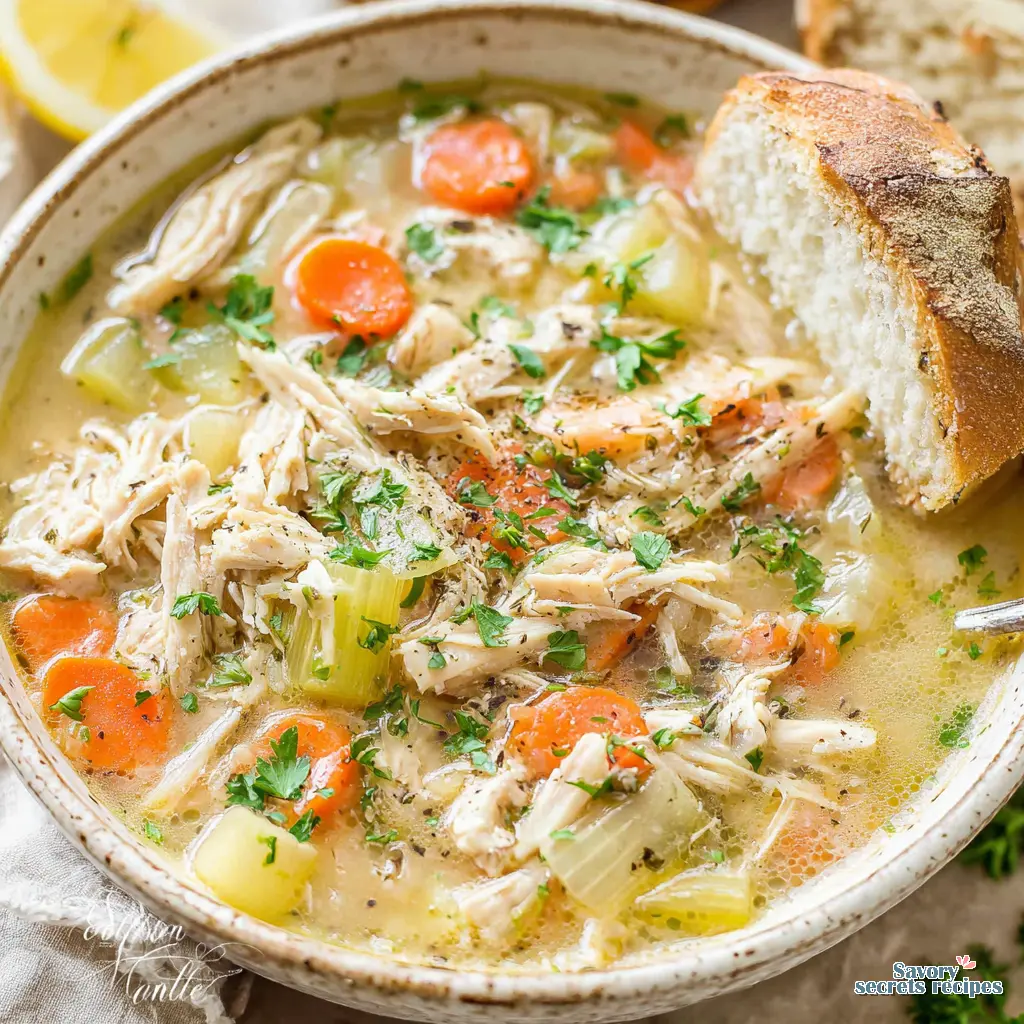
Traditional Grandmother Style Chicken Noodle Soup Recipe
Ingredients
Method
- Heat a Dutch oven or soup pot over medium-high heat and melt 6 tablespoons of butter. Add the chopped onion, celery, and carrots, then sauté for 5 to 7 minutes, stirring occasionally, until softened and lightly golden.
- Add the sliced mushrooms and garlic and sauté for another 5 minutes, stirring occasionally, until softened.
- Stir in 1/3 cup of flour and cook constantly for 1 minute until golden.
- Add 6 cups of chicken stock, the sliced potatoes, 3 1/2 teaspoons of salt, and 1/2 teaspoon of black pepper. Bring to a boil, then reduce the heat to a simmer, partially cover, and cook for 12 to 15 minutes until the potatoes are tender.
- Add the shredded chicken, frozen peas, frozen corn, 1/2 cup of heavy whipping cream, and 1/4 cup of parsley. Return the mixture to a simmer and cook for 5 more minutes until the peas and corn are tender. Season to taste with salt and pepper, then remove from the heat.
Nutrition
Notes
The Healing Power of Homemade Chicken Soup
There’s a specific moment when the smell of yellow onion, celery, and carrots sweating in butter hits the air. It reminds me of every Sunday afternoon at my grandmother’s house. That specific combination of allium sweetness and dairy fat meant something incredibly good was coming. With Passover approaching, getting your homemade chicken soup right is crucial. It’s the perfect base for your Passover matzo balls, and we’re keeping it strictly Kosher-style here by avoiding any dairy mixes if you choose to use oil instead of butter.
Before we get into the deep technique, let me give you the quick wins I always rely on. First, pat your chicken dry before browning to ensure a good sear. Moisture is the enemy of a golden crust. Second, don’t crowd the pan when browning chicken to avoid steaming the meat. Third, if you have the time, roast your veggies and chicken with olive oil before putting them in the pot. It builds an incredible flavor base. Fourth, cook your pasta or orzo separately to prevent it from absorbing all the broth. And finally, season with salt at the end to help distinguish different flavors. I know this sounds like a lot of rules. Trust the process on this one.
I tend to think people overcomplicate comfort food. We’re looking for that soul-warming feeling, the kind that provides true cold and flu relief. You want to see those golden bubbles of fat on the surface of the broth. You want to hear the sound of the gentle simmer against the lid. That’s how you know you’re on the right track.
The Secret to Rich Broth: Bones and Collagen
In my experience, a proper homemade chicken soup requires bone-in meat. This isn’t just a preference. It’s basic culinary science. When you simmer bone-in chicken thighs or a whole chicken, the collagen in the bones and connective tissues slowly breaks down into gelatin. That gelatin is exactly what gives a traditional grandmother style chicken noodle soup its rich, velvety mouthfeel.
My grandmother Thérèse kept her wooden spoon for deglazing in a separate crock, never with the other utensils. She told me it had absorbed ten years of good stock and she wasn’t about to waste that on stirring pasta water. I thought she was being superstitious until I inherited that spoon. Now I use it to scrape up the browned bits (the fond) from the bottom of the stock pot to incorporate into the broth. You need that fond. That’s where the flavor lives.
If you’re looking for a quick homemade stock, use a rotisserie chicken carcass. Just toss the leftover bones into the pot. It extracts extra minerals and creates a beautiful body for the soup. I genuinely love the smell of roasting bones for stock. I know that sounds strange, but that deep, caramelized aroma that fills the kitchen smells like pure potential.
The Fortified Stock Shortcut
Look, I’ll be honest. I go back and forth on whether home cooks really need to make their own stock from absolute scratch on a Tuesday night. Professionally, yes, absolutely. But for a quick weeknight dinner? I’m honestly not sure the time investment makes sense for everyone. Sometimes you need a 30-minute flavor hack.
Here’s where it gets interesting. You can use store-bought fortified stock instead of doing a whole chicken water-simmer. Start with a high-quality, low-sodium chicken stock. Add your mirepoix (that’s your diced onion, carrots, and celery) along with some fresh thyme and a bay leaf. If you’re skipping the browning step entirely, add raw chicken directly to the boiling broth. It poaches gently and stays incredibly tender. This changes things for busy families trying to get dinner on the table after a Trader Joe’s run. This shortcut is the key to an easy chicken noodle soup that still tastes homemade.
Tips for the Perfect Simmer
The key checkpoint here is the temperature of your liquid. You want to simmer over low heat to avoid overcooking the chicken and vegetables. Boiling the soup too hard turns the broth cloudy and makes the meat stringy. Watch for the moment when the liquid just barely bubbles at the edges. That’s your sweet spot.
I once over-reduced a stock I’d spent two days making. I fell asleep on the couch, woke up to a smell that was almost burnt, and found my beautiful broth reduced to a bitter sludge. I actually cried. Now I set multiple timers. As the soup gently simmers, you’ll need to spend some time skimming the surface. Removing that foam and excess fat is what gives you a crystal clear broth.
Visual Troubleshooting
Color: Pale and watery.
Fix: You likely rushed the browning step or used too much water. Let it reduce slightly, and next time, don’t disturb the chicken while browning to develop a rich fond.
Color: Cloudy and grey.
Fix: The soup boiled too vigorously. Keep it at a bare simmer. You can’t undo the cloudiness, but the flavor is usually still fine.
Taste: Flat or muddy.
Fix: Check dried herbs for freshness and expiration dates. Old herbs taste like dust. Also, remember to season with kosher salt at the very end to make the flavors pop.
Noodle Timing and Variations
This is where most people rush it. They throw the noodles directly into the stock pot. Please don’t do this. The pasta releases starch, thickens your beautiful clear broth, and eventually turns into mush.
As a general rule, cook your egg noodles separately in salted water. Keep them in a separate bowl and add them to individual serving bowls right before ladling the hot soup over them. If you’re doing a low-carb version, zucchini noodles or spaghetti squash work beautifully. Just drop them in during the last two minutes of cooking.
For a Tuscan-inspired twist, you can stir in a splash of whipping cream and some frozen peas or corn right at the end. Or try a Chicken Tortilla variation by adding black beans, corn, and warming spices. The base homemade chicken soup recipe is incredibly forgiving once you master the foundational techniques. If you are looking for something more filling, a hearty chicken soup with added root vegetables is a great alternative for cold winter nights.

Storage and Freezing Guide
I prefer to make a massive batch of this homemade chicken soup on Sundays. It stores beautifully. Keep it in an airtight container in the refrigerator for 3 to 5 days. The flavors actually deepen overnight.
If you’re wondering if this is freezer friendly, the answer is absolutely yes. Cool the soup completely before transferring it to freezer-safe bags or containers. It will keep for 2 to 6 months. A great freezing tip is to squeeze out excess air and freeze the bags flat on a baking sheet. They stack perfectly in the freezer that way. Just remember, never freeze the soup with the noodles in it. They will disintegrate when reheated. Always make fresh noodles when serving.
When reheating on the stove, use medium-low heat until warmed through. You might need to add a splash of extra broth or water, as the vegetables can absorb liquid during storage.
Frequently Asked Questions

Bringing It All Together
There’s nothing quite like ladling that first scoop of steaming, golden broth into a bowl. The house smells incredible, the chicken is falling off the bone, and you know you’ve created something deeply nourishing. I always serve this with a piece of crusty sourdough bread and a light sprinkle of Parmesan cheese on top for a salty finish. It’s a small touch, but it elevates the whole bowl.
I know making homemade chicken soup from scratch takes a bit of patience, but the reward is worth every minute. You’ll be the person who makes “the best” soup in your family. Whether you’re making it for meal prep or delivering it to a sick friend, it’s an act of care. For more inspiration and variations on classic stocks, check out my Pinterest boards where I save all my favorite comfort food techniques.
Reference: Original Source
Can You Freeze Chicken Soup?
Yes, homemade chicken soup freezes beautifully for up to 6 months. Let it cool completely, use freezer bags, leave a little room for expansion, and freeze them flat. Always freeze the broth and chicken without the noodles, or they will turn to mush when reheated.
What fresh herbs would work well in this soup?
In my experience, fresh thyme, a bay leaf, and parsley are essential for a traditional grandmother style chicken noodle soup. Fresh dill is also incredible, especially if you’re making this for cold and flu relief. Add hearty herbs early, and soft herbs like parsley right at the end.
Why chop vegetables after they are cooked?
Some traditional methods have you simmer whole vegetables to flavor the homemade chicken soup broth, then remove and chop them later so they don’t turn into mush. If you do this, let them cool on a cutting board for ten minutes before dicing to avoid burning your hands.
Can I add store bought chicken broth to the stock?
Absolutely. I do this often when I need a shortcut. Using a high-quality store-bought broth as your base liquid instead of water creates a fortified stock. It cuts hours off your simmering time while still giving you a deeply flavored homemade chicken soup.
Is chicken noodle soup healthy?
Yes, it really is. A proper homemade chicken soup is packed with vitamins from the parsnips and carrots, and minerals from the bone broth. It’s much lower in sodium than canned versions, and the collagen from the bones is fantastic for joint health and recovery.
What type of noodles should I use?
Wide egg noodles are the classic choice for a traditional homemade chicken soup. However, you can easily substitute farfalle, rotini, or macaroni. If you need a gluten-free adaptation, use gluten-free egg noodles or even rice noodles. Just remember to cook them separately!