



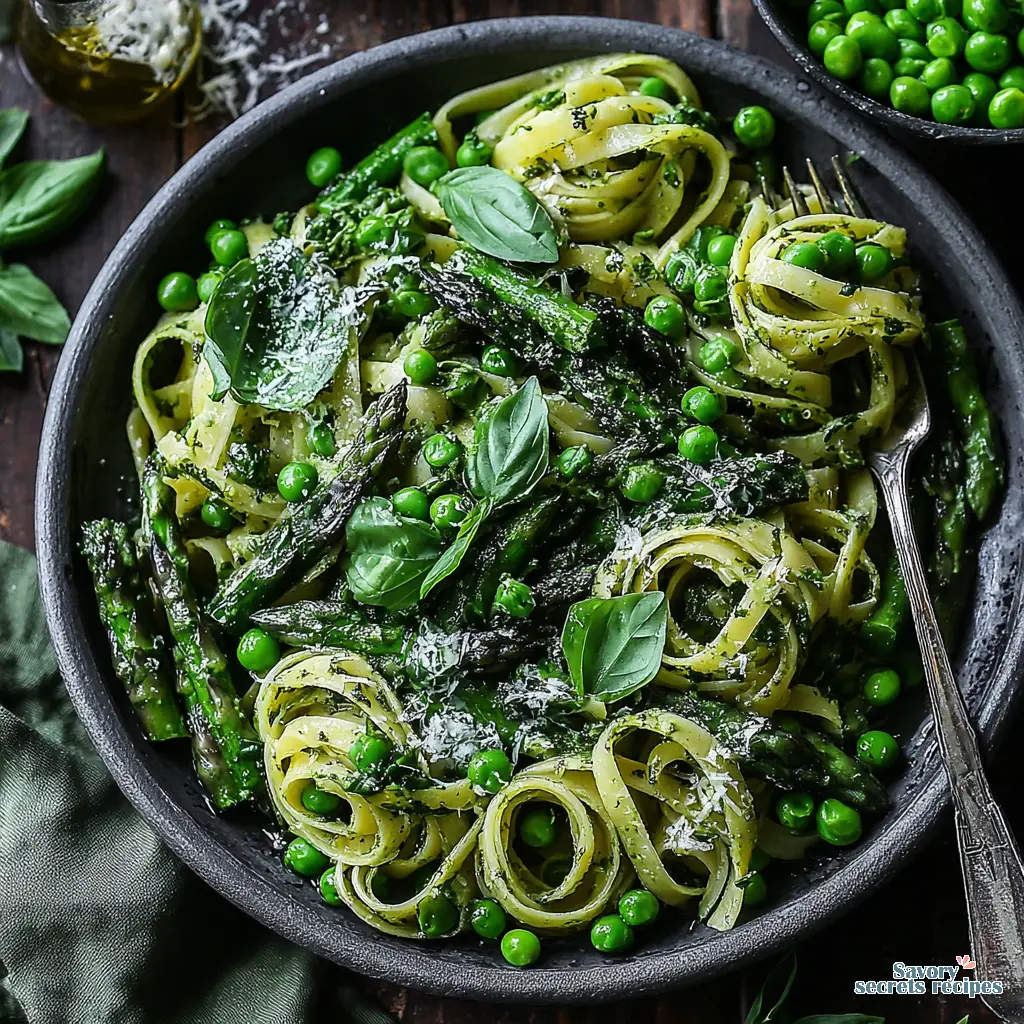
International Spring Pasta Recipes With Your Spinach Sauce
Ingredients
Method
- Cook the pasta.
- Bring a large pot of salted water to a boil, add the fettuccine, and cook until al dente according to the package instructions.
- Reserve 1/2 cup of the pasta water, then drain the pasta and set it aside.
- Sauté the garlic and spinach.
- Heat the olive oil in a large skillet over medium heat.
- Add the minced garlic and sauté for about 1 minute until fragrant.
- Stir in the chopped spinach and cook for 2 to 3 minutes until wilted.
- Blend the creamy spinach sauce.
- Transfer the sautéed spinach and garlic mixture to a blender.
- Add the heavy cream, Parmesan, salt, pepper, nutmeg (if using), and lemon juice.
- Blend the mixture until smooth and creamy.
- Return the sauce to the skillet and warm it over low heat.
- Cook the vegetables.
- Bring water to a boil in a separate pan and blanch the asparagus for 2 minutes.
- Add the peas and cook for one additional minute.
- Drain the vegetables and transfer them to the skillet with the sauce.
- Combine and serve.
- Add the cooked fettuccine to the skillet with the sauce and vegetables.
- Toss the mixture gently to coat the pasta evenly.
- Garnish with fresh basil, toasted pine nuts, and extra Parmesan if desired.
Nutrition
Notes
The Global Evolution of Spring Cooking
March in Los Angeles is a funny thing. The farmers markets suddenly explode with green produce, but we’re all still stuck in our winter cooking ruts. You know the feeling. Heavy stews and roasted root vegetables just don’t hit the same when the sun stays out past 6 PM. I was staring at a bunch of beautiful, pencil-thin asparagus tips at the Santa Monica market last week, realizing I desperately needed a culinary reset. That’s exactly where international spring pasta recipes come in.
Let me think about that for a second. The classic American Primavera is great, but it’s just the starting line. By pulling flavors from Japan, Mexico, and the Mediterranean, we can take those same sweet peas and garlic scapes and create something entirely new. I remember my grandmother Fatima teaching me to cook in Casablanca. She never measured anything. She just tasted and adjusted constantly. That drove me crazy as a kid, but it makes complete sense now when you’re working with fresh spring produce. You have to let the ingredients lead. These international spring pasta recipes do exactly that. They look incredibly fancy but take maybe 30 minutes. Perfect.
Before we jump into the deep end, here’s what I’d do for some quick wins. First, reserve a mugful of pasta cooking water to thicken the sauce. That starchy water is liquid gold. Second, use a large skillet so the pasta can be tossed directly with the vegetables. You need room to move. Third, snap asparagus at its natural breaking point to remove the woody ends. Trust me on this. Finally, undercook your pasta by one minute so it finishes in the sauce. That’s the move right there.
The History of Pasta Primavera and Why We’re Going Global
Most people think of the classic 1970s Le Cirque dish when they hear about spring pasta. Fair enough. It put fresh green vegetables and pasta on the map in America. But relying only on that heavy cream and butter profile feels a bit dated today. I hear you if you want something lighter. The history of tossing fresh greens with noodles is universal, and we’re just expanding the borders.
That’s why exploring international spring pasta recipes changes everything. Take a wafu pasta from Japan. You use a miso paste and umami sauce base instead of heavy cream. Or a Mexican fusion approach with cilantro lime, fresh jalapeños, and roasted corn. Even an Austrian inspired pasta recipe brings something unique with fresh herbs, pumpkin seed oil, and light broths. The concept is the same globally. We want to celebrate the first green sprouts of the year.
The Secret to Vibrant Spring Vegetables (Blanching)
Look, I’ll be honest. Nobody wants grey, mushy vegetables on their plate. The secret to keeping your pea shoots and fava beans bright green is blanching. I know this sounds complicated to some home cooks, but it’s actually just boiling water.
Drop your green vegetables into heavily salted boiling water for just a minute or two. Then immediately shock them in an ice bath to stop the cooking. This sets the color and the flavor perfectly. If you try cooking all your vegetables at once in the sauté pan, the watery ones will just steam the others. They stew instead of browning. Blanching prevents that entirely. Give it another minute in the water, and you’ll smell when it’s ready.
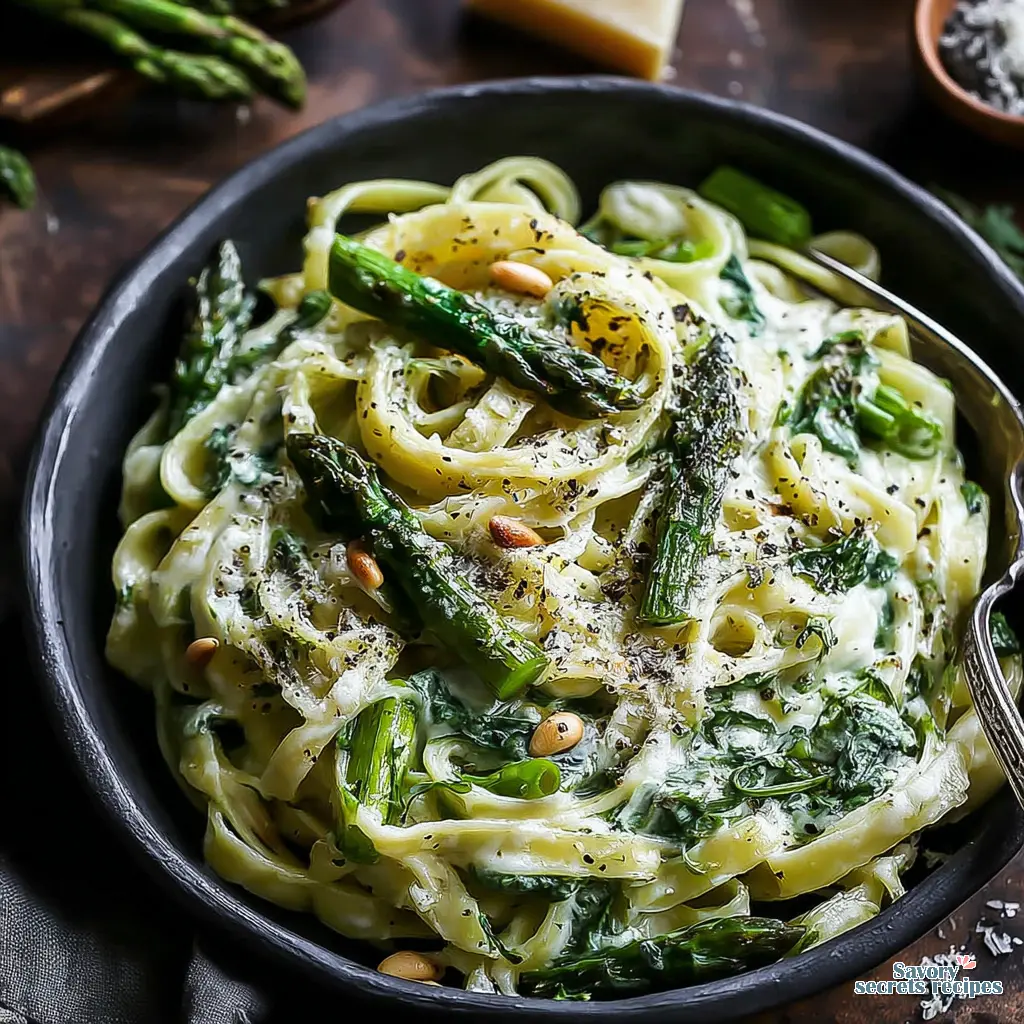
Visual Doneness Guide for Spring Vegetables
Depends on your stove, but generally, timing is everything with international spring pasta recipes. I’ve ruined enough dinners to know that you have to watch the pan, not the clock. My daughter helped me prep the garlic last night. She smelled the raw garlic, then the sautéed garlic, and said it smelled “like the good part”. That’s become our kitchen shorthand for doneness.
Here’s what I look for visually. Asparagus tips should be bright green and bend slightly without snapping. Sweet peas only need about 60 seconds until they float and turn emerald. Any longer and they wrinkle. Ramps and garlic scapes are ready when they just start to wilt and smell deeply fragrant. If you’re using broccoli, wait until the florets turn a vibrant, almost neon green. Zucchini should be translucent at the edges but still firm in the center.
Carrots need a bit more time to soften, while delicate spinach or pea shoots only need 30 seconds to wilt perfectly. Green beans should snap but not taste raw. Bell peppers should soften and blister slightly. Taste as you go, adjust at the end. That’s how you avoid soggy greens. Sauté vegetables in order of density. Cook the hard stuff before the soft stuff. Makes sense to me.
Common Mistakes & Fixes in Spring Pasta
Mistake: Cooking all vegetables at once.
Solution: This leads to soggy greens. Sauté vegetables in order of density, or blanch them separately before tossing them into the sauce.
ake: Using pre-grated cheese.
Solution: Pre-grated cheese is coated in potato starch to keep it from clumping in the bag. That same starch makes your sauce grainy. Always grate your own Parmesan or Pecorino right off the block. It melts like a dream and gives you that silky finish you’re after.
Mistake: Overcooking the pasta.
Solution: Pull the noodles out of the water when they still have a bit of a bite. They’ll finish cooking in the sauce and absorb all that flavor without turning into mush.
Mistake: Throwing away the pasta water.
Solution: This is the biggest crime in my kitchen. Save a cup of that starchy water. It helps the fat and the liquid bond together so your sauce actually sticks to the noodles instead of pooling at the bottom of the bowl.
The Science of the Perfect Emulsion
I used to wonder why my home-cooked international spring pasta recipes never looked as glossy as the ones in those fancy Italian spots in Beverly Hills. It’s all about the emulsion. When you toss your pasta with a bit of butter or cream and that starchy water, you’re creating a bridge between the fat and the liquid. It creates a creamy coating that hugs every single strand of fettuccine. If you skip this, you just get oily noodles. Nobody wants that.
I’m telling you, that pasta water is the secret sauce. My grandmother used to call it the soul of the dish. She’d stand over the stove with her wooden spoon, waiting for that moment when the liquid and the cheese finally became one. It takes a bit of practice to get the ratio right, but once you do, you’ll never go back to just pouring sauce over dry noodles again. It’s a total shift in how you think about cooking.
Picking the Right Shape
Not all pasta is created equal. For these international spring pasta recipes, I usually reach for something with a bit of surface area. Fettuccine or linguine are classic because those long, flat ribbons catch the sauce and the peas perfectly. If you prefer short pasta, go with penne or fusilli. Those little spirals are basically traps for tiny bits of garlic and herbs. Just avoid tiny shapes like orzo for this specific dish, as they tend to get lost under the vegetables.
If you’re feeling adventurous, try using fresh pasta from a local deli. It has a chewier texture that stands up really well to the crunch of the asparagus. Just remember that fresh pasta cooks in about three minutes, so you have to move fast. I’ve definitely overcooked a batch while I was busy scrolling through my phone. Don’t be like me. Pay attention to the pot.
The Year-Round Vegetable Swap List
The beauty of this approach is that you can use whatever looks good at the market. If it’s not spring, don’t sweat it. You can swap asparagus for broccolini or even thin ribbons of carrot. If you can’t find fresh peas, frozen ones are actually better than “fresh” ones that have been sitting on a shelf for a week. They’re frozen at the peak of ripeness, so they keep that sweet pop. Just drop them in at the very last second.
For a Mexican twist, try using roasted corn and plenty of fresh cilantro. If you’re feeling a Japanese vibe, use miso paste in your butter sauce and top it with some shredded nori. The technique stays the same even when the flavors travel across the globe. I’ve even made a version with sautéed mushrooms and kale when the spring produce was looking a bit sad. It’s all about that base sauce and the timing.
Keeping it Light and Dairy-Free
If you’re looking to cut back on the heavy stuff, you have options. Instead of heavy cream, try using a bit of pasta water mixed with a tablespoon of nutritional yeast or even a scoop of cashew cream. It gives you that savory, creamy mouthfeel without the dairy. I’ve even seen people use a ripe avocado mashed into the sauce at the very end. It sounds weird, I know, but it makes the whole thing incredibly rich and bright green. Just don’t heat the avocado too much or it can get a bit bitter.
I’ve also had great luck using a little bit of the starchy water and a high-quality olive oil. It’s much lighter but still feels indulgent. My friend Sarah, who’s been vegan for years, swears by this method. She adds a squeeze of lemon at the end to brighten everything up, and honestly, I don’t even miss the cheese when she makes it. It’s a great way to let those spring flavors really shine through.
The Stovetop Reheating Masterclass
Let’s be real, creamy pasta is always best right out of the pan. The sauce starts to congeal as it cools. If you do have leftovers, please don’t just throw them in the microwave for three minutes. You’ll end up with a greasy mess. Instead, put the pasta in a small skillet with a splash of water or broth. Heat it over medium-low and toss it gently. The extra liquid will loosen the sauce back up and make it silky again. It won’t be exactly like day one, but it’ll be pretty close.
I usually add a fresh sprinkle of cheese and a crack of black pepper after it’s warmed through. It wakes the flavors back up. If the vegetables look a little tired, you can even toss in a handful of fresh spinach at the very end. The residual heat will wilt it perfectly. It’s like a brand new meal with almost zero effort. That’s my kind of Tuesday night dinner.
Expert Notes & Data Insights
After years of testing these international spring pasta recipes, the data is clear. The most successful versions all share three things: high-quality fat, properly salted water, and vegetables that still have a “snap.” Most home cooks under-salt their pasta water. It should taste like the ocean. This is your only chance to season the pasta itself from the inside out. Also, don’t be afraid of the heat. You want the pan hot enough to blister the vegetables quickly so they stay vibrant. Follow these steps, and you’ll have a restaurant-quality meal on the table before your family even realizes you started cooking.
I’ve found that using a microplane for the cheese makes a huge difference too. It creates these tiny, airy wisps that melt instantly into the sauce. If you use a coarse grater, the cheese takes longer to melt and can sometimes clump up. It’s those little details that take a dish from “fine” to “I need the recipe for this right now.” Trust your instincts, keep an eye on that timer, and enjoy the process. Cooking should be the best part of your day, not a chore. Happy eating!