



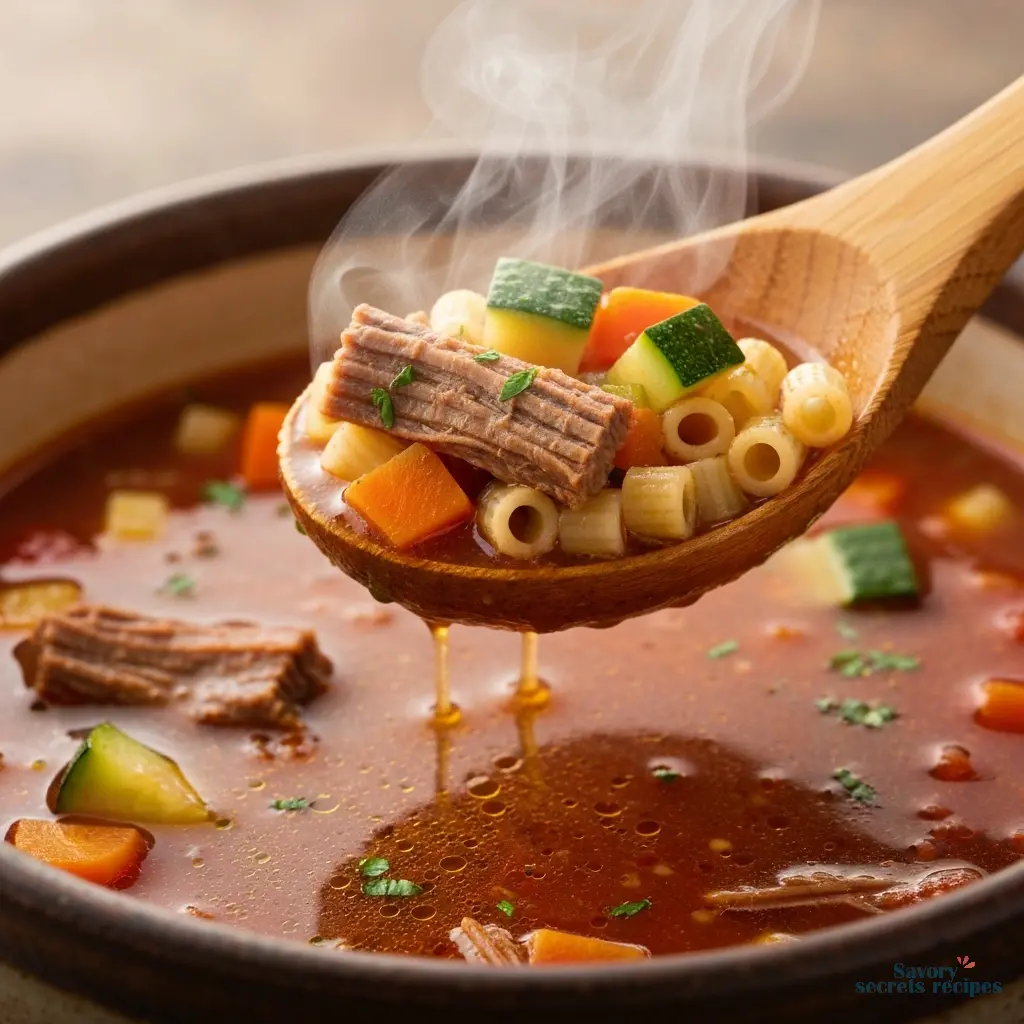
Italian Beef Soup for Weight Loss
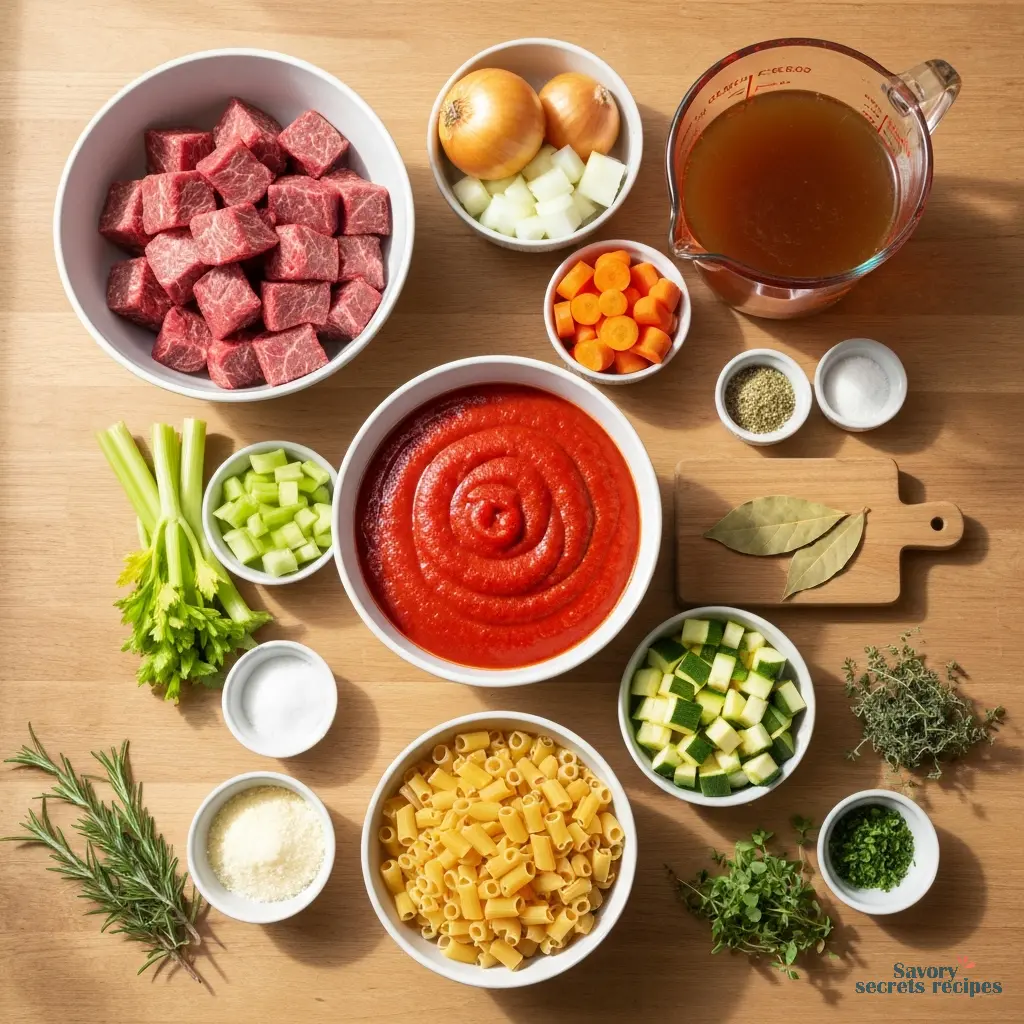
Ingredients
Method
- In a large stock pot or cast iron pot, brown and crumble the ground beef. Drain any excess grease if necessary.
- Add the onion, carrots, celery, and garlic, stirring to combine. Pour in the broth and crushed tomatoes. Stir in the Italian seasoning, salt, pepper, and bay leaf. Bring the mixture to a low boil, then reduce the heat to a simmer. Cover the pot and simmer for 30 minutes.
- Add the zucchini and pasta, stirring to combine. Cover and cook for 10 minutes, or until the pasta is tender. Discard the bay leaves. Stir in fresh herbs if using. Taste and season with additional salt as needed.
- Sprinkle grated parmesan over each serving.
Notes
- Other pasta options: mini shells, orzo, mini farfalle
- Add one can of rinsed kidney beans for more heartiness (might need to add more broth or water)
When Comfort Food and Goals Collide
You know that feeling. It’s a Tuesday in January, dark by 5 PM, and you’re staring into your fridge with two competing thoughts. One: you want something that feels like a hug in a bowl. Two: you remember that salad you had for lunch and the promise you made to yourself. I’ve been there, standing in my own kitchen in Cambridge, the winter chill seeping through the old windows. That’s exactly why this Italian beef soup exists. It’s the weeknight answer I’ve been looking for—a hearty, soul-warming Italian beef soup that doesn’t derail your intentions. Honestly, it’s the kind of recipe that actually delivers on both fronts.
I remember my avó’s kitchen in Somerville always smelled like olive oil and garlic. She’d start her sofrito at 4 PM for dinner at 6, and the whole triple-decker would smell like home. She never counted calories, but her food was always balanced. This Italian beef soup captures that spirit—deep, savory comfort built on lean protein and a garden’s worth of vegetables. It’s a one pot meal that simmers away while you do other things, filling your place with an aroma that smells like a cozy Italian kitchen. And the best part? It’s designed to be a healthy recipe that supports your weight loss goals without making you feel deprived. Not gonna lie, that’s a win in my book.
Why This Italian Beef Soup Works
Here’s the thing, though. A lot of “healthy” soups can taste like… well, seasoned water. This one doesn’t. The magic is in building flavor through technique, not just piling in ingredients. We start by properly browning the beef. That’s not just for color—it creates fond, those delicious browned bits at the bottom of the pot that become the flavor foundation for your entire Italian beef soup. Then we build layers: the sweetness from slowly cooked onions and carrots, the savory punch from garlic and tomatoes, the herbal notes that tie it all together. It’s a hypothesis I’ve tested more than three times, and it works. This approach means you get a low calorie, high protein meal that satisfies on a deep, comfort food level. Makes sense to me.
For weight loss, the structure matters. The lean chuck roast provides staying power, the vegetables add volume and nutrients without many calories, and the broth keeps you hydrated. It’s a nutritious powerhouse that feels indulgent. I prefer recipes like this because they teach you how to cook, not just follow steps. When you understand why we sear the beef or why we add the zucchini last, you’re building skills for life. That tracks with what I’ve seen in my practice—confidence in the kitchen leads to better, more sustainable choices.
The Simple Science of a Great Soup
Let me think about that for a second. Why does this method work so well for a healthy Italian beef soup? It’s all about control. When you make it from scratch, you control the sodium, the fat, the quality of every ingredient. Using a good beef broth—I often grab the organic one from Whole Foods or make my own—gives you a clean, savory base. The slow simmer is what transforms tough chuck roast into tender beef that practically shreds itself with a fork. That long, gentle cook time allows the collagen in the meat to break down into gelatin, which gives the broth body and a luxurious mouthfeel without adding any thickeners or cream.
And the vegetables? They’re not just floating around. They’re cut evenly—those uniform carrot and celery chunks—so they cook at the same rate and give you perfect texture in every spoonful. If the vegetables aren’t appealing, the recipe isn’t working. That’s one of my cooking expressions for a reason. In this Italian beef soup, each vegetable plays a role: sweetness from carrots, earthy depth from celery, freshness from zucchini added at the end. It’s a balanced, hearty soup that proves healthy doesn’t mean boring.
Your Guide to the Perfect Pot
I promise this is simpler than it looks. Start with your chopped vegetables. The onion, carrots, celery—this is your soffritto, the flavor base of so many great dishes. While you’re doing that, pat your beef cubes very dry with paper towels. This is crucial. If the beef is wet, it’ll steam instead of sear, and you’ll miss out on all that flavor. I learned this the hard way early on. Heat a little olive oil in your heaviest pot or Dutch oven over medium-high heat. You want it nice and hot. Then, in batches, don’t crowd them, brown the beef. You’re not cooking it through, just getting a good crust on a couple sides. That sizzle is the sound of flavor being made.
Once the beef is browned and set aside, you’ll probably see those browned bits stuck to the pot. That’s your fond. Don’t scrub it off! This is where deglazing comes in. Add your onions, carrots, and celery right into that pot. The moisture from the veggies will help loosen the fond as you stir. Let them cook for a good 5-7 minutes until they start to soften and smell amazing. Then add the garlic—just for 30 seconds until fragrant. Pour in a splash of your beef broth and use your spoon to scrape up every last bit of fond. This step? Non-negotiable. It unlocks the deep, savory notes that make this Italian beef soup taste like it simmered all day.
Tips for a Foolproof Italian Beef Soup
Over the years, I’ve made this Italian beef soup more times than I can count. Here’s what I wish someone had told me when I started.
Preparation is Everything
Take the time to cut your veggies evenly. Uniform chunks mean even cooking, so you don’t end up with some carrots mushy and others crunchy. I’d probably want to see more research on that before I’d feel comfortable saying it’s the most important step, but in my experience, it makes a huge difference. Also, don’t buy pre-packaged “stew meat.” Those cubes can come from different cuts that cook at different rates. You want chuck roast—it’s the preferred cut for tenderness and flavor, and it’s often called the “poor man’s cut” because it’s affordable. Look for bright red meat with good marbling at your local Ralphs or Vons.
The Simmer is Sacred
After you’ve added your broth, tomatoes, and seasonings, bring everything to a boil, then immediately reduce to the gentlest simmer. You should see just a few small bubbles breaking the surface. This low and slow approach is what makes the beef tender. How do you know when it’s done? The beef should shred easily with a fork. If it’s still tough, give it more time. Taste as you go—your palate is data. About 15 minutes before serving, stir in the chopped zucchini so it keeps some texture. And always, always cook your pasta separately. Adding ditalini directly to the pot guarantees mushiness, especially with leftovers.
Building and Balancing Flavor
Season in layers, not all at once. A little salt when browning the beef, a pinch when cooking the veggies, then adjust at the end. If your Italian beef soup tastes a bit flat, don’t just add more salt. Try a squeeze of fresh lemon juice or a dash of red wine vinegar. When in doubt, add acid. It wakes up all the other flavors. Using homemade stock is my trusted secret for big flavor, but a good store-bought bone broth works wonders too. The parmesan rind trick? My avó taught me that. Toss a rind into the pot while it simmers. It adds a subtle, savory richness that’s just… more.
Variations & Substitutions
This Italian beef soup recipe is wonderfully adaptable. Think of it as a template.
For Different Diets
Need it gluten-free? Swap the ditalini for your favorite gluten-free pasta, like brown rice elbows, or use cooked quinoa. For a lower-carb version, skip the pasta altogether and add extra zucchini or some chopped kale. You could even add a can of drained white beans for creaminess and fiber. Dairy-free? Simply omit the parmesan garnish or use a nutritional yeast sprinkle.
Ingredient Swaps
No chuck roast? Boneless short ribs or a shoulder roast work beautifully. I don’t recommend ground beef for the long simmer—it’ll overcook. Different vegetables? This is perfect for cleaning out the fridge. Chopped bell peppers, green beans, or even some sliced mushrooms would be great. Switch up the pasta too. Small shells (conchigliette), orzo, or even broken whole wheat spaghetti are all solid options. The key is using a small shape that fits on a spoon. For another hearty, slow-cooked option that uses a different grain, try our classic beef barley soup crock pot recipe.
Changing the Vibe
Want it even heartier? Stir in a handful of pearl barley with the broth—it’ll thicken the soup nicely. For a stew-like texture, mash some of the cooked potatoes and carrots against the side of the pot before serving. In the summer, I might use fresh tomatoes from the farmers’ market instead of canned. A recipe is a hypothesis until you’ve tested it three times, so make it your own.
Common Mistakes to Avoid
❌ Mistake: Using pre-packaged “stew meat” from the grocery store.
✅ Solution: Buy a whole chuck roast and cube it yourself. The pre-cut stuff is often a mystery mix of cuts that cook unevenly, leading to some tough, some mushy pieces in your Italian beef soup.
❌ Mistake: Adding all the salt at the beginning.
✅ Solution: Season in layers. Broths reduce as they simmer, which concentrates salt. Season lightly at the start, then do a final taste and adjust at the very end.
❌ Mistake: Cooking the pasta directly in the soup.
✅ Solution: Always cook pasta separately. Store it in a container with a drizzle of olive oil to prevent sticking, and add it to individual bowls when serving. This keeps your leftovers from turning into a starchy, bloated mess.
❌ Mistake: Boiling the soup vigorously after adding the beef back in.
✅ Solution: Keep it at a gentle simmer. A rolling boil can make the beef tough and cause the vegetables to disintegrate. You want a few lazy bubbles, not a raging pot.
❌ Mistake: Not skimming the fat.
✅ Solution: After browning the beef and before adding the broth, you might see some excess fat in the pot. Tilt it and spoon a little out. Or, for a clearer broth, let the finished soup cool slightly and skim the fat layer that rises to the top. It’s an easy way to cut calories without cutting flavor.
Frequently Asked Questions
How to Store, Reheat, and Serve
Let’s talk leftovers, because this Italian beef soup makes fantastic ones. Cool the soup completely before storing. I transfer it to glass containers—the ones from Costco are perfect. It’ll keep in the fridge for up to 4 days. For freezing, leave some headspace in the container and freeze for up to 3 months. Thaw in the fridge overnight.
Reheating is simple but important. Do it gently on the stovetop over medium-low heat, stirring occasionally. If you use the microwave, do it in 30-second increments, stirring in between, to avoid scorching. Always reheat to 165°F throughout. If the soup seems too thick after storage, just stir in a splash of broth or water when reheating.
Serve this Italian beef soup in deep bowls. Ladle the broth, vegetables, and tender beef over a small scoop of the reserved pasta. The finishing touches make it special: a generous sprinkle of grated parmesan, a few cracks of black pepper, and a fresh parsley leaf. For a complete meal, pair it with a simple green salad and a slice of crusty sourdough for dipping. It’s the kind of dinner that feels like a treat, even on a Wednesday.
Wrapping It All Up
When you make this Italian beef soup, you’ll feel that warm satisfaction that comes from creating something truly nourishing. You’ll have a pot of healthy, high-protein comfort food ready for the week, and you’ll know exactly what’s in it. That’s a powerful feeling. This recipe is my weeknight answer, the one I keep coming back to when the days are short and the goals are clear.
So grab a chuck roast on your next Trader Joe’s run, chop those winter vegetables, and let your kitchen fill with that incredible, savory aroma. I’d love to hear how it goes for you. Let me know in the comments what variations you try. Here’s to hearty, healthy bowls that make January a little cozier.
What is the best cut of beef for Italian beef soup?
Chuck roast is my go-to. It has great marbling and connective tissue that breaks down during the long simmer, making it incredibly tender and flavorful. Boneless short ribs are a fantastic (if pricier) alternative. I’d avoid pre-cut “stew meat” as it’s inconsistent.
Can you freeze Italian beef soup?
Absolutely, it freezes beautifully. Cool it completely, then transfer to airtight containers or freezer bags, leaving an inch for expansion. Freeze for up to 3 months. Thaw in the fridge overnight. Pro tip: freeze the soup and pasta separately for best texture.
How do I know when the beef in my soup is tender?
Take a piece out and try to shred it with two forks. If it pulls apart easily, it’s done. If it’s still tough and chewy, it needs more simmering. It usually takes 1.5 to 2 hours. Don’t rush it—the wait is worth it for that fall-apart texture.
What should I do if my Italian beef soup reduces too much?
Just add more broth or even some water, a half-cup at a time, until it reaches your preferred consistency. Heat it through after adding. This happens if your simmer is too aggressive. A gentle simmer is key for both tenderness and proper liquid level.
How do you thicken Italian beef soup without flour?
For a naturally thicker soup, you can mash some of the cooked potatoes and carrots against the pot wall and stir them in. Letting the soup simmer uncovered for the last 15-20 minutes will also reduce and concentrate the broth beautifully.
Is this Italian beef soup good for weight loss?
Yes, when made as written. It’s high in protein and vegetables, which are filling, and relatively low in calories for a hearty meal. Using lean chuck, skimming excess fat, and controlling the pasta portion are all smart strategies. It’s comfort food that fits your goals.