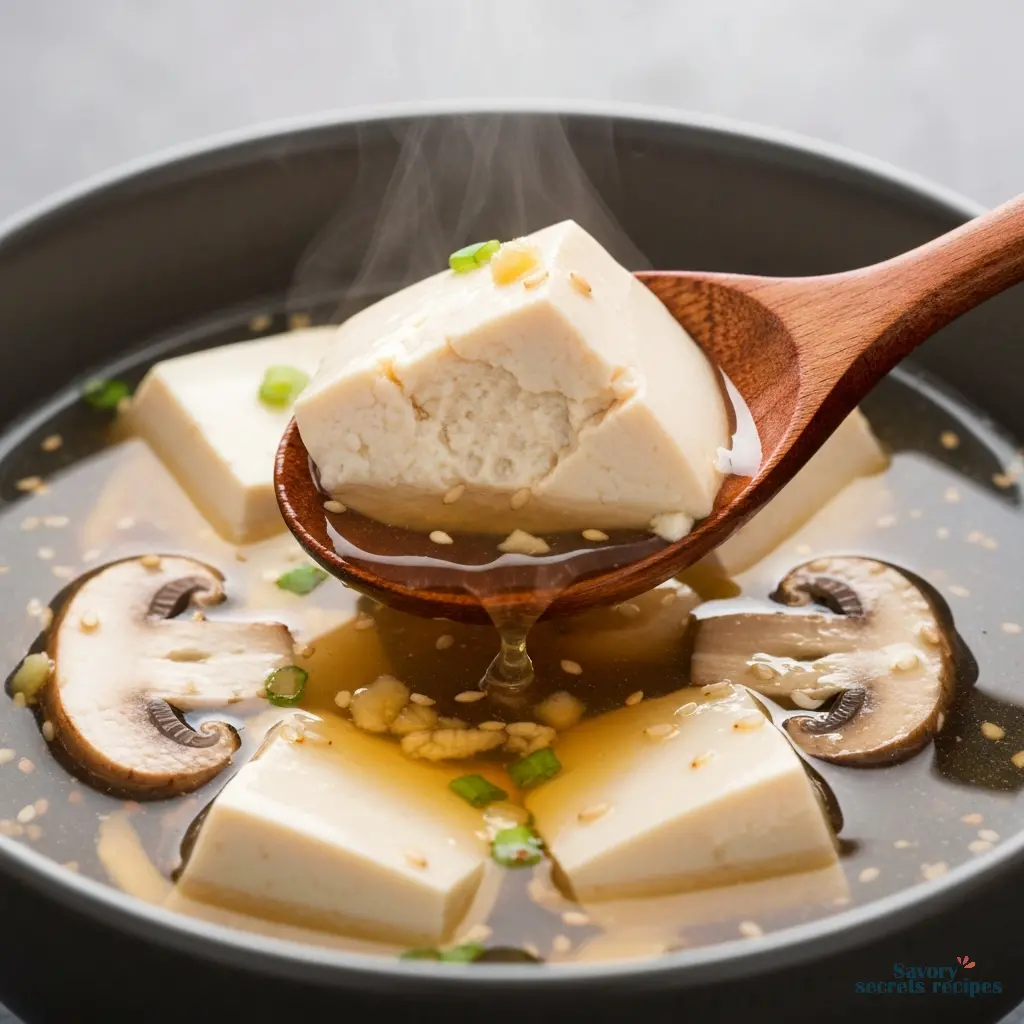




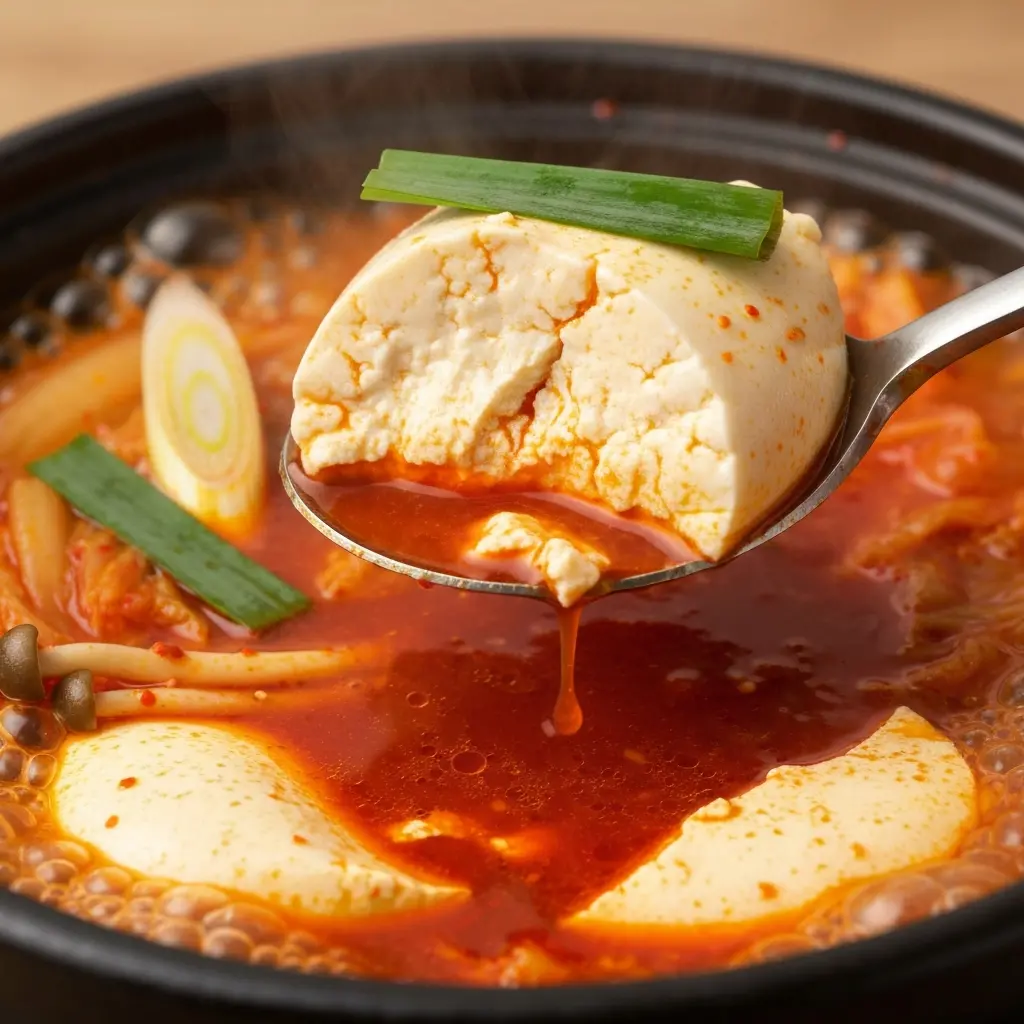
Kimchi Tofu Soup Recipe for One
Ingredients
Method
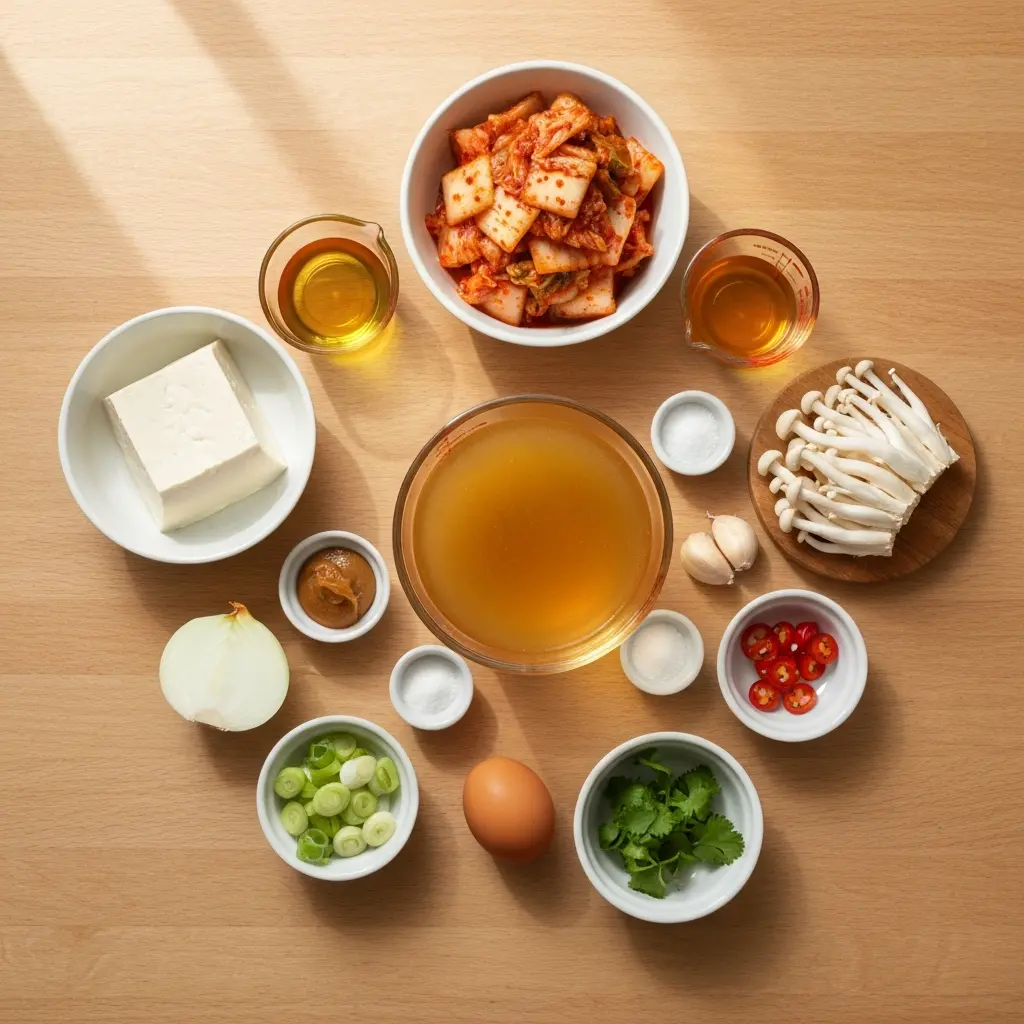
- Cut 150g of kimchi into bite-size pieces using scissors or a knife and set aside.
- Cube 200g soft tofu into 2-inch pieces. Slice a small onion wedge. Trim and discard the seafood mushroom roots. Peel and slice a garlic clove. Chop the green onions, fresh peppers, and cilantro, then set aside.
- Heat the sesame oil in a small stone bowl or saucepan over medium-high heat for 1 minute.
- Stir in the onion and garlic using chopsticks for about one minute until fragrant. Add the kimchi and stir for one minute until heated through.
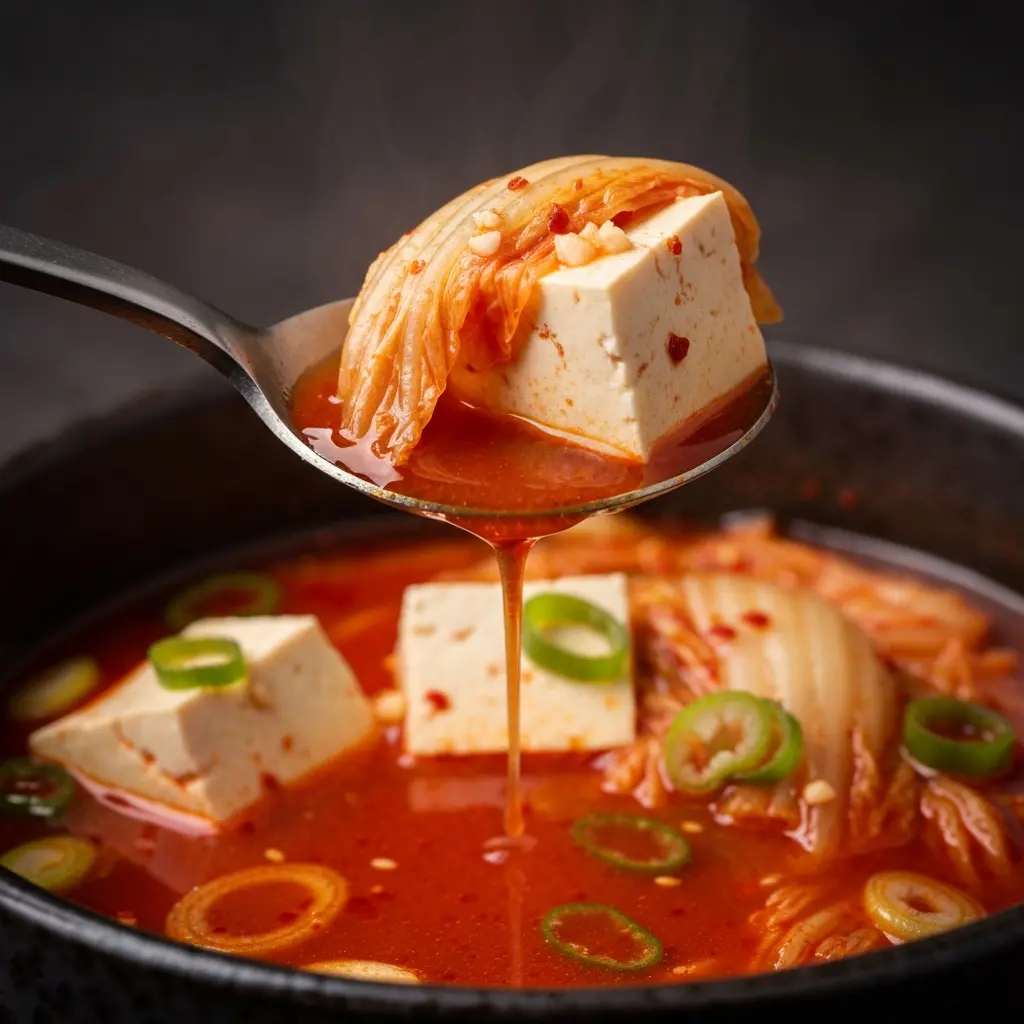
- Lower the heat to medium-low and stir in the soybean paste until well combined. Add the tofu and mushrooms, then pour in enough chicken stock or water to submerge the tofu.
- Sprinkle the Korean chili powder into the soup and stir gently until the color is uniform. Increase the heat to medium-high and bring the liquid to a boil.
- Bring the soup to a boil over medium-high heat. Reduce the heat to medium-low and simmer for 5 minutes. Add the egg and simmer for about 3 minutes until the white is set and the yolk is runny.
- Top the kimchi tofu stew with chopped scallions, fresh cilantro, and sliced peppers.
- Serve while hot alongside steamed rice.
Nutrition
Notes
- Take a cup of uncooked white rice, rinse thoroughly.
- Add rice to a bowl with 3 cups of cold water.
- Leave to soak for 30 minutes
- Strain the rice water into a clean bowl.
The Cold Weather Cure You Didn’t Know You Needed
There’s this specific kind of cold that hits Dearborn in February. It’s not just the snow, it’s that damp, gray chill that settles into your bones and stays there until May. On nights like that, my teta’s lentil soup was usually the move, but lately, I’ve been turning to something with a bit more of a kick. Not gonna lie, the first time I tried a kimchi soondubu recipe at a small spot in Ann Arbor, I thought I’d never be able to recreate that depth of flavor at home. It felt too layered, too professional. But here’s the thing, it’s actually one of the most forgiving one-pot meals you can make once you understand how the ingredients play together. Straight up, it’s the culinary equivalent of a weighted blanket.
I remember trying to explain the appeal of soft tofu to my daughter last week. She’s at that age where texture is everything, and “slimy” is usually a deal-breaker. But when she saw the vibrant red broth bubbling in the pot, she was hooked. I’ve learned that if you get the ratio of spice to silkiness right, even the most skeptical eaters will come around. This kimchi soondubu recipe isn’t about fancy knife skills or expensive equipment. It’s about timing and letting the ingredients do their thing. If you’ve got twenty minutes and a craving for something that clears your sinuses and warms your soul, you’re in the right place. Trust the process, and you’ll have a restaurant-quality stew on the table before the delivery driver could even find your house.
The Secret to a Broth That Actually Tastes Authentic
Most people think the heat comes entirely from the chili, but the real soul of a kimchi soondubu recipe is the stock. If you use plain water, the flavor is going to feel thin and shallow. That tracks, right? You need a base that can stand up to the fermented funk of the kimchi. Traditionally, an anchovy stock made with dried anchovies and dashima (dried kelp) is the standard. It provides this incredible umami backbone that makes the soup feel complete. I’m not totally sure why some recipes skip this, but in my experience, anyway, it’s the difference between a “good” soup and one you’ll dream about. If you don’t have dried anchovies on hand, a solid chicken stock or even a mushroom-based vegetable broth works in a pinch.
Here’s the move: when you’re simmering your stock, don’t rush it. You want those savory notes to really develop. If you’re using the soybean paste (doenjang) mentioned in this kimchi soondubu recipe, you’re adding another layer of fermented goodness. It’s like building a house. The stock is the foundation, the kimchi is the frame, and the tofu is the soft interior. I’ve found that adding a splash of the liquid from the kimchi jar itself is a pro tip most people miss. It adds acidity and a concentrated punch of flavor that ties everything together. Just be careful with the salt levels, since kimchi and soybean paste are already quite salty. I’d rather under-season and add more at the table than over-salt something that can’t be fixed.
Tofu Guide: Why Soondubu Matters
If you head to a store like Whole Foods or your local Asian market, you’ll see a dozen types of tofu. For a kimchi soondubu recipe, you specifically need “extra soft” or “silken” tofu. In Korean, “soon” means soft, and that’s exactly what we’re going for. This isn’t the firm stuff you cube up for stir-fry. This tofu should have the consistency of a delicate custard. It’s meant to be scooped, not chewed. I’ve tried using firm tofu before when I was in a rush, and honestly, the ratio’s off. It doesn’t absorb the broth the same way, and you lose that satisfying contrast between the spicy liquid and the cooling, creamy tofu. While this recipe focuses on the silken variety, exploring other asian tofu soup recipes can help you master different textures.
Handling this stuff can be a bit of a trip. It often comes in a plastic tube. I used to struggle with getting it out without it turning into a pile of mush. Here’s the trick: cut the tube in half with a sharp knife and squeeze the tofu out in two large logs directly into the pot. Don’t worry about making perfect shapes. Part of the charm of an authentic kimchi soondubu recipe is those irregular, jagged pieces of tofu that catch the broth in their nooks and crannies. Let it do its thing in the pot for a few minutes to heat through, but don’t over-stir. You want it to stay in relatively large chunks so you can experience that silky texture in every bite.
Visual Troubleshooting: How to Fix Your Stew
Not every pot of soup comes out perfect on the first try, and that’s fine. I’ve had my share of “oops” moments in the kitchen. If your kimchi soondubu recipe tastes a bit too sour, it’s probably because your kimchi was very ripe. Fair enough, that happens. The fix is simple: add a half-teaspoon of sugar. It balances the acidity perfectly. On the flip side, if it feels a little bland, you might need more umami. A teaspoon of fish sauce or a bit more soybean paste usually does the trick. Straight up, don’t be afraid to taste as you go. Your palate is the best tool you have.
❌ Too Spicy → ✅ Stir in an extra egg or add a splash more stock to dilute the heat. ❌ Too Salty → ✅ Add a few more pieces of tofu or a couple of potato slices to absorb the excess salt. ❌ Too Thin → ✅ Let it simmer uncovered for a few more minutes to reduce the liquid and concentrate the flavors. ❌ Too Sour → ✅ Add a pinch of sugar to neutralize the fermented tang of old kimchi.
The Science of Umami in Korean Stews
We talk about umami a lot, but what does it actually mean for your kimchi soondubu recipe? It’s that savory “fifth taste” that makes your mouth water. In this dish, you’re getting umami from three main sources: the fermented kimchi, the soybean paste, and the stock. When these ingredients simmer together, they create a complex flavor profile that hits every part of your tongue. I’ve noticed that the longer the kimchi sits in the fridge, the better the stew becomes. That’s because the fermentation process continues, breaking down the sugars and creating more of those savory compounds. I always keep a jar of “old” kimchi in the back of my Ralphs fridge just for this purpose.
Another key player is the gochugaru (Korean chili powder). It’s not just about heat; it has a smoky, slightly sweet edge that you won’t get from standard chili flakes. If you swap it for cayenne, the flavor will be totally different, and probably way too spicy. Trust me on this, it’s worth a trip to the specialty aisle to get the real deal. When you bloom the gochugaru in the sesame oil with the garlic and onions, you’re releasing fat-soluble flavor compounds that wouldn’t come out if you just tossed the powder into the water. That’s the one step you shouldn’t skip if you want that deep, restaurant-style red color. For those who enjoy a thicker, sweeter base, experimenting with a gochujang broth can offer a different take on these spicy Korean flavors.
Serving Etiquette and the Raw Egg
When you’re ready to eat, the presentation is part of the experience. In Korea, this is often served in a ddukbaegi, which is a glazed earthenware pot that holds heat incredibly well. If you don’t have one, any small heavy-bottomed pot will work, but you want it to be bubbling when it hits the table. Now, here’s the move that everyone loves: crack a raw egg into the center of the boiling stew right before you serve it. The residual heat will poach the egg perfectly. You can either break the yolk to make the broth richer and creamier, or leave it whole to enjoy later. My daughter loves watching the egg white turn opaque in seconds. It’s like a little science experiment at the dinner table.
Always serve your kimchi soondubu recipe with a side of warm, fluffy white rice. The contrast between the spicy, liquid stew and the neutral, chewy rice is essential. Traditionally, you might also have some banchan (side dishes) like pickled radish or seasoned seaweed. I’m a big fan of serving this in individual bowls rather than one big communal pot. It’s cleaner, and it ensures everyone gets their own egg and a fair share of the tofu. Plus, there’s something very cozy about having your own steaming bowl of soup on a cold night. It makes the meal feel personal and intentional. Despite its rich flavor, the kimchi soup calories are relatively low, making it a healthy choice for a light dinner.
Frequently Asked Questions
Storage and Reheating Tips
If you have leftovers, you’re in luck. Like most stews, this one tastes even better the next day as the flavors continue to meld. You can store it in an airtight container in the fridge for up to three days. I wouldn’t recommend freezing it, though. Tofu has a high water content, and when it freezes and thaws, the texture changes from silky to spongy. It’s not the end of the world, but it’s definitely not the same experience. If you’re meal prepping, you can make the broth and kimchi base ahead of time and just add the fresh tofu and egg when you’re ready to eat.
When it comes to reheating, the microwave is fine, but the stovetop is better. Put the stew back into a small pot and bring it to a gentle simmer. Don’t let it boil violently, or the tofu will break down too much. If the broth has thickened up too much in the fridge, just add a splash of water or stock to loosen it. I’ve found that adding a fresh sprinkle of green onions after reheating brings back that “just cooked” brightness. It’s a quick way to make a Tuesday lunch feel like a special occasion. Not gonna lie, I’ve eaten this for breakfast more than once when I needed a serious wake-up call.
When you serve this, your family will love the warmth and the bold flavors. It’s the kind of meal that makes you feel like a kitchen hero without requiring hours of labor. I hope this becomes a staple in your house like it has in mine. If you’re looking for more ways to use that jar of kimchi, check out my Pinterest boards for some serious inspiration. Let me know how your version turns out in the comments below, or tag me if you share a photo. Warm up your winter with this cozy bowl, and remember to trust the process. You’ve got this!
Reference: Original Source
What’s the difference between kimchi soup and kimchi stew?
It’s mostly about the water-to-ingredient ratio. A kimchi soondubu recipe is technically a jjigae, or stew, meaning it’s thicker and more concentrated than a soup (guk). Stews are usually the main event of the meal, while soups are often served as a side. That’s why the flavors here are so bold and intense.
Can I make this kimchi soondubu recipe vegan?
You absolutely can. Just make sure your kimchi doesn’t contain fish sauce or salted shrimp, as many traditional brands do. Use a mushroom or kelp-based stock instead of chicken or anchovy broth. The tofu itself is already vegan, so you’ll still get that amazing creamy texture without any animal products. Solid move.
Do I have to add a raw egg?
Not at all, but it’s highly recommended. The egg adds a richness that balances the sharp acidity of the kimchi. If the idea of a raw egg sketches you out, you can whisk it into the boiling broth to create “egg ribbons” similar to egg drop soup. It still adds that great velvety mouthfeel.
Can I use old kimchi for this recipe?
Actually, old kimchi is better! As kimchi ages, it gets sourer and more flavorful, which is perfect for a kimchi soondubu recipe. Fresh kimchi doesn’t have enough tang to carry the soup. If your kimchi has been in the fridge for a month or two, it’s at its prime for stewing.