



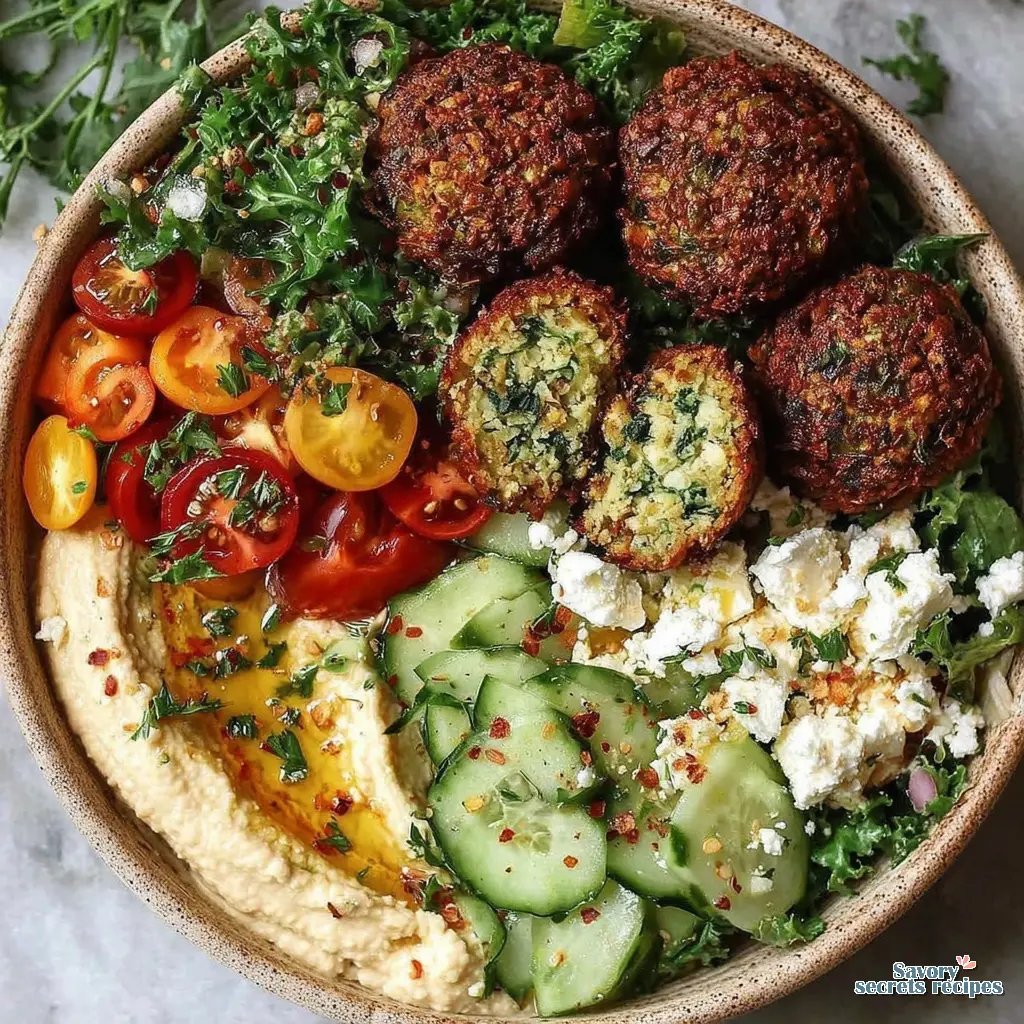
Fresh Falafel Bowl with Hummus and Feta
Ingredients
Method
- Combine chickpeas, parsley, cilantro, garlic, onion, cumin, coriander, baking soda, flour, salt, and pepper in a food processor. Pulse until the mixture is coarse and holds together when pressed.
- Form the mixture into small patties, approximately 1.5 inches in diameter.
- Heat olive oil in a skillet over medium heat. Cook falafel patties for 3-4 minutes per side, until golden brown and crispy.
- Assemble bowls by dividing mixed greens, cucumber, cherry tomatoes, and red onion among four bowls.
- Top each bowl with falafel, a dollop of hummus, and crumbled feta cheese.
- Serve immediately with lemon wedges on the side.
Notes
Why This Mediterranean Falafel Bowl Feels Like a Win
You know that feeling? It’s a Wednesday, you’re staring at your phone, scrolling through takeout apps, and nothing feels quite right. You want something that tastes like a treat but doesn’t leave you feeling heavy. That’s the exact moment I started making these Mediterranean falafel bowls. Honestly, they’re easier than waiting for a delivery driver to find your apartment.
I remember the first time I tried to make falafel from a recipe I found online. It was a disaster. The mixture was a paste, and when I dropped it in the oil, it just… dissolved. I ended up with chickpea soup and a serious dent in my confidence. I called my grandmother, and she laughed that warm, knowing laugh. “You’re trying to make it perfect,” she said. “Food doesn’t need to be perfect. It needs to be good.” That stuck with me. This bowl is about good, simple food that comes together without the stress.
So if you’ve ever been intimidated by the idea of homemade falafel, or if you just want a healthy lunch idea that actually excites you, you’re in the right place. This Mediterranean falafel bowl is your answer. It’s a complete meal with plant-based protein, fresh veggies, and flavors that genuinely pop. Let’s get into it.
The Heart of the Bowl: Understanding Your Falafel
Here’s what I’ve found works. The magic of a great falafel isn’t a secret ingredient. It’s texture. You want a coarse, sticky crumble when you pulse everything in the food processor. Not a smooth hummus, not a dry powder. Think of the texture of coarse sand that just holds together when you squeeze it. That’s your target.
Why does this matter? That little bit of texture gives the falafel structure. It creates tiny pockets for steam, which helps the inside stay tender while the outside gets beautifully crisp. If your mix is too wet or pasty, it’ll soak up oil and fall apart. If it’s too dry, it’ll be crumbly. The sweet spot is surprisingly forgiving once you know what to look for.
Trust your nose on this one. When you add the cumin and coriander to the chickpeas and herbs, the smell should be bright and earthy. That’s your signal that the flavors are starting to bloom right in the mix. Don’t be afraid to taste a tiny pinch of the raw mixture to check the seasoning. It’s just chickpeas and herbs, and it’ll tell you exactly what it needs.
Frying vs. Baking: A Practical Choice
This is just based on my own testing, but I want to lay out both options. Your mileage may vary depending on what you’re going for.
For frying, you need hot oil. Not smoking, but shimmering. A little piece of onion should sizzle energetically when you drop it in. The falafel patties should sizzle immediately too. That initial shock of heat seals the exterior, creating that classic crispy shell. Flip them when the edges look dark golden and the bottom releases easily from the pan.
Baking is a fantastic, less hands-on method. The key is to not crowd them on the sheet. Give each patty some personal space. I like to bake them on a lightly oiled rack set over a baking sheet. It lets the hot air circulate all around, mimicking a fryer’s effect. Flip them halfway through for even color. They won’t get *quite* as shatteringly crisp as fried, but they’re still delicious and a bit lighter.
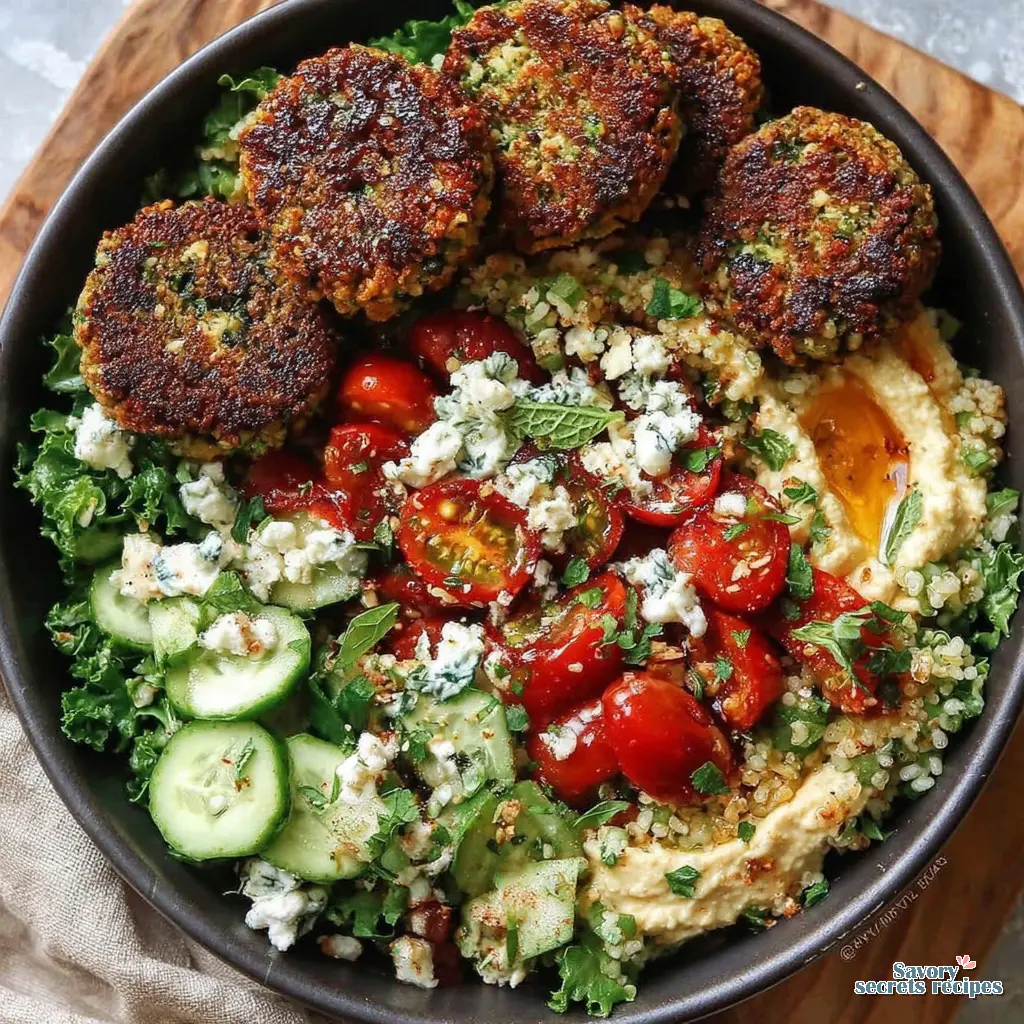
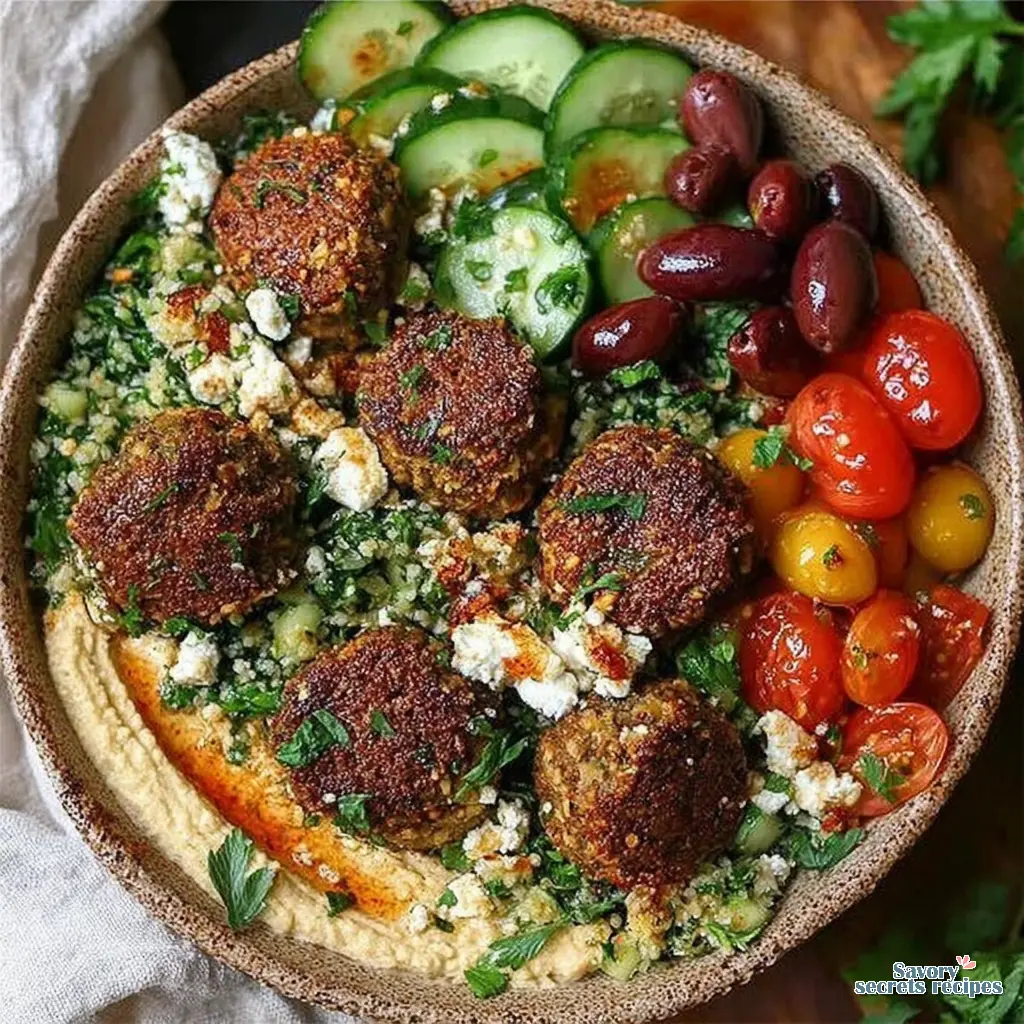
Your Turn to Build the Bowl
When you make this Mediterranean falafel bowl, you’ll love the contrast of the warm, crispy falafel with the cool, fresh veggies. You’ll love the way the creamy tahini sauce brings every bite together. Most of all, you’ll love that you made something this good for yourself.
It’s the kind of meal that changes how you think about weeknight cooking. It’s not a chore. It’s a quick, healthy dinner recipe that feels like a celebration. So go ahead, treat yourself to a homemade Mediterranean feast. And let me know in the comments how your bowl turned out. I’d love to hear what variations you tried.
For more inspiration on plant-based protein bowls and healthy lunch ideas, check out my Pinterest boards. I’m always adding new ways to mix and match flavors.
Source: Health & Nutrition Research
What do you put in a Mediterranean falafel bowl?
Start with a grain or greens base, add crispy herb falafel, then fresh veggies like cucumber, tomato, and red onion. Creamy hummus, tangy feta, and a lemon tahini dressing tie everything together. It’s a customizable, fresh veggie meal.
My falafel fell apart what went wrong?
Usually, the mixture was too wet or blended too smooth. Pulse to a coarse crumble, not a paste. Chilling the mix before shaping helps a ton. If it’s still loose, a tiny bit more flour can bind it.
How can I get baked falafel crispier?
Use a lightly oiled wire rack on your baking sheet for maximum air flow. Don’t crowd them. Brush the patties with oil before baking and flip halfway through. A quick broil at the end can add great color.
Can I make this Mediterranean falafel bowl dairy-free or vegan?
Absolutely. Just omit the feta cheese to make it vegan. The bowl is packed with flavor from the chickpea falafel, herbs, and tahini sauce, so you won’t miss it. All other core ingredients are plant-based.
What is in falafel?
Authentic falafel is made from soaked (not canned) chickpeas or fava beans, blended with fresh herbs like parsley and cilantro, onion, garlic, and spices like cumin and coriander. Baking soda helps it puff up when cooked.
What pairs well with falafel?
Falafel is traditionally served in a pita with veggies and sauce, but it shines in a grain bowl. It pairs perfectly with creamy dips like hummus, fresh salads, pickled vegetables, and tangy sauces like the lemon tahini in this recipe.
What’s a good dressing for a Mediterranean bowl?
A simple lemon tahini dressing is classic. Whisk tahini with lemon juice, then thin with cold water until pourable. Season with salt. A lemon-garlic dressing or a herby yogurt sauce also work beautifully.
Can you meal prep a Mediterranean falafel bowl?
Yes, it’s ideal for meal prep. Store the falafel (cooked or shaped raw), quinoa salad, chopped veggies, and sauce separately. Assemble just before eating to keep everything fresh. The components will last 3-4 days in the fridge.