



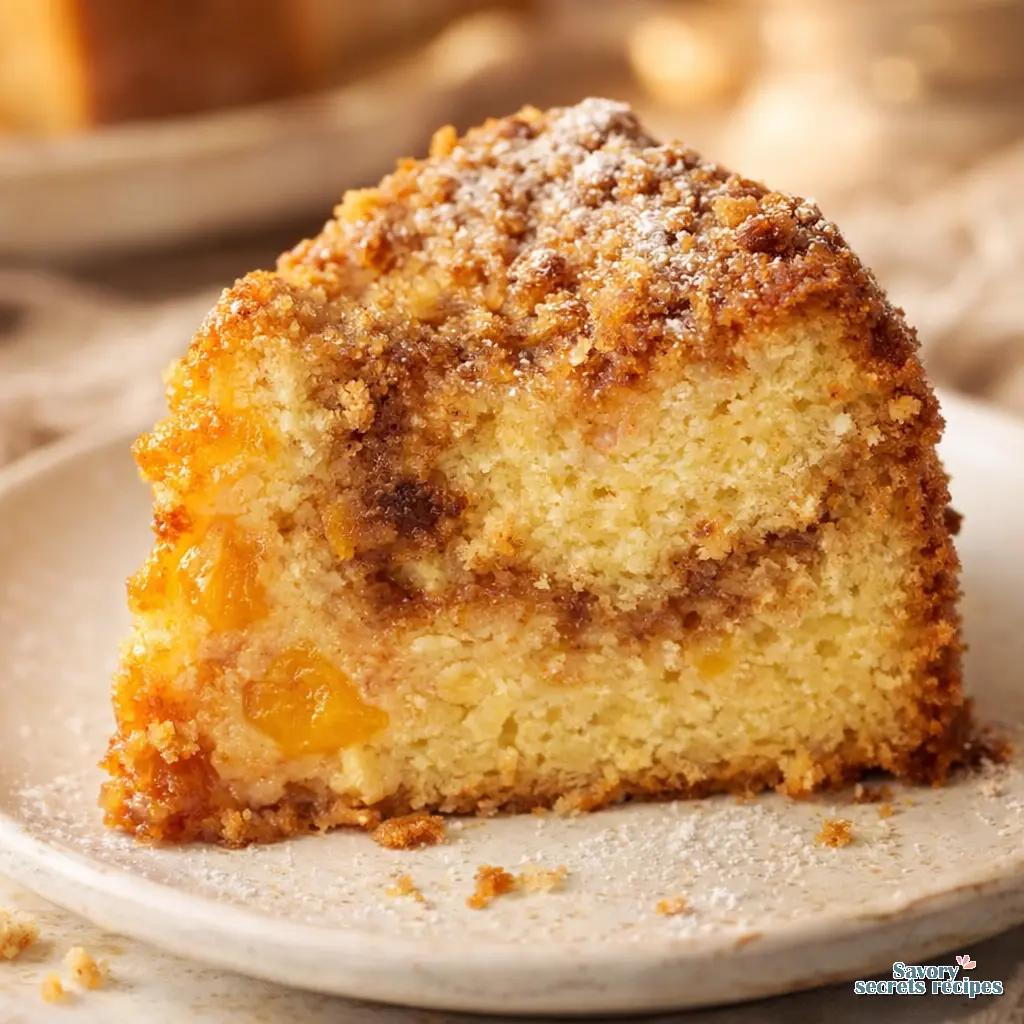
Southern Peach Cobbler Pound Cake Recipe
Ingredients
Method
- Preheat oven to 350°F. Coat a 12-cup Bundt pan with non-stick baking spray. Combine melted butter, brown sugar, cinnamon, cardamom, bourbon, and peaches in a medium bowl. Spoon the peach topping into the bottom of the prepared pan and spread it evenly.
- Mix flour, sugar, cinnamon, cardamom, and salt in a medium bowl. Pour in melted butter and stir until the mixture is crumbly and resembles the texture of wet sand.
- Whisk flour, baking powder, baking soda, and salt together in a medium bowl.
- Beat butter, oil, and sugar in an electric mixer bowl for 3 to 4 minutes until light and fluffy. Add eggs one at a time, beating after each addition. Mix in sour cream, peach preserves, and vanilla. On low speed, add the flour mixture in three additions, beating until just combined.
- Spread half of the cake batter in an even layer over the peach topping in the Bundt pan. Sprinkle the streusel filling over the batter, then cover with the remaining batter and smooth the surface.
- Bake the cake for 55 to 65 minutes until puffed and golden, or until a tester inserted into the center comes out clean. Cool the cake in the pan for 20 minutes, then carefully invert it onto a cake plate or wire rack.
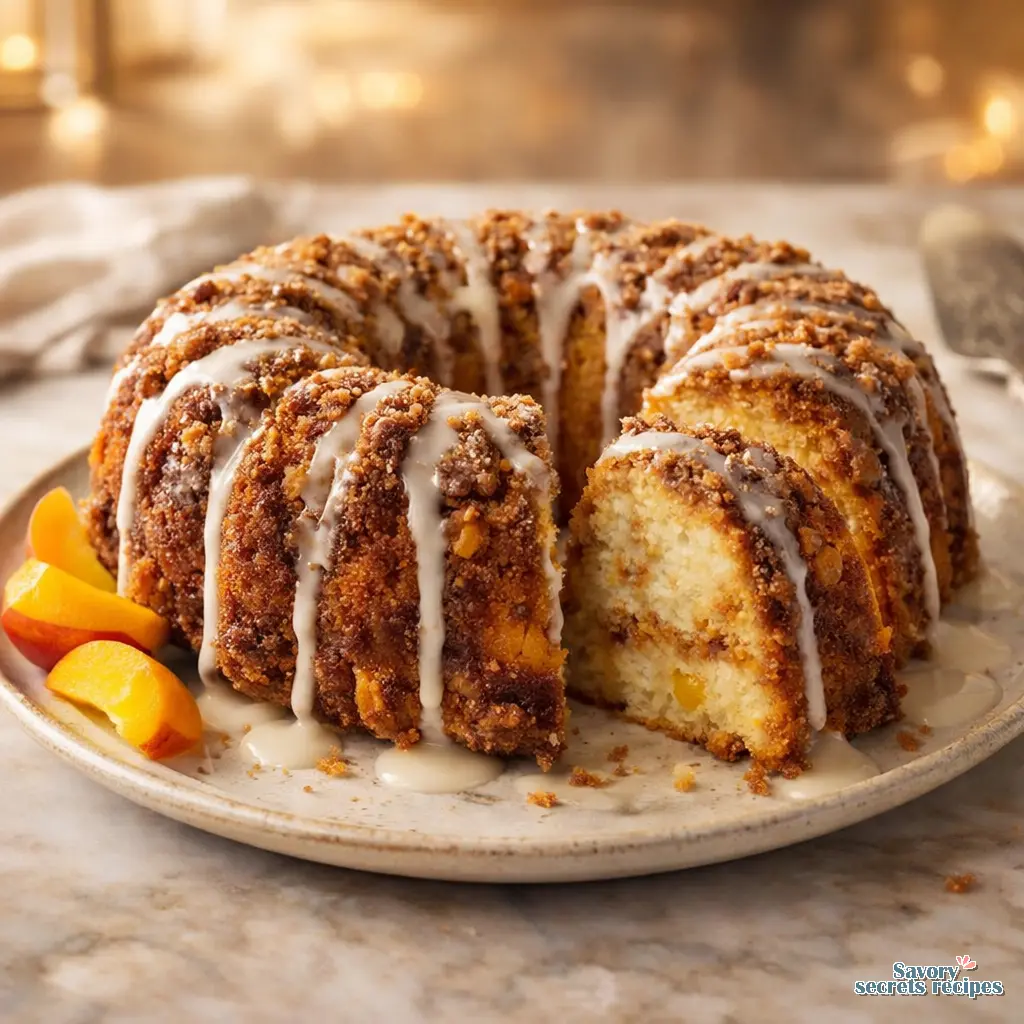
- Whisk confectioners' sugar, butter, 1 tablespoon of milk, and vanilla in a small bowl. Add more milk as needed until the glaze is thick but reaches a drizzling consistency. Drizzle the glaze over the warm cake and serve warm or at room temperature with a scoop of vanilla ice cream.
Nutrition
Notes
- Thawed peaches can be used in place of fresh peaches if they are hard to find or out of season. Simply thaw the peaches and then coarsely chop them, as you would the fresh ones.
- I think that this cake is best served warm, but it is also great at room temperature. To rewarm a slice, you can heat it in the microwave for 15-20 seconds or heat it in a 300F oven, covered with foil so that it doesn't dry out, for 15 minutes.
- Leftover cake will keep, covered and refrigerated, for up to 4 days.
The Ultimate Southern Fusion Dessert
I remember standing on a step stool in my grandmother’s kitchen in Casablanca, watching her heat honey and sugar. She’d test the syrup by dropping a tiny bit into cold water, showing me how it should form a soft ball. I burned myself twice trying to test it before I learned patience. That is still how I think about baking. Temperature is doing the heavy lifting here, and the crystals will tell you everything you need to know.
When I first moved to New York, I was constantly chasing flavors that felt like home. But as I started exploring American desserts, I fell completely in love with the classic southern dessert tradition. A spiced cake mixed with a fruit cobbler? I didn’t know I needed this combination until now. This peach cobbler pound cake recipe is the absolute best of both worlds. It takes the dense, buttery comfort of a classic southern peach pound cake and marries it with the jammy, crunchy topping of a traditional cobbler.
It is early spring here in California. We are just starting to see the weather warm up, and a trip to the Santa Monica Farmers Market reminds me that stone fruit season is right around the corner. But you don’t have to wait for summer to make this. Let me walk you through this process. It is easier than you think, and the smell of cinnamon and peaches baking will make your whole kitchen feel incredible.
Why This peach cobbler pound cake recipe Works
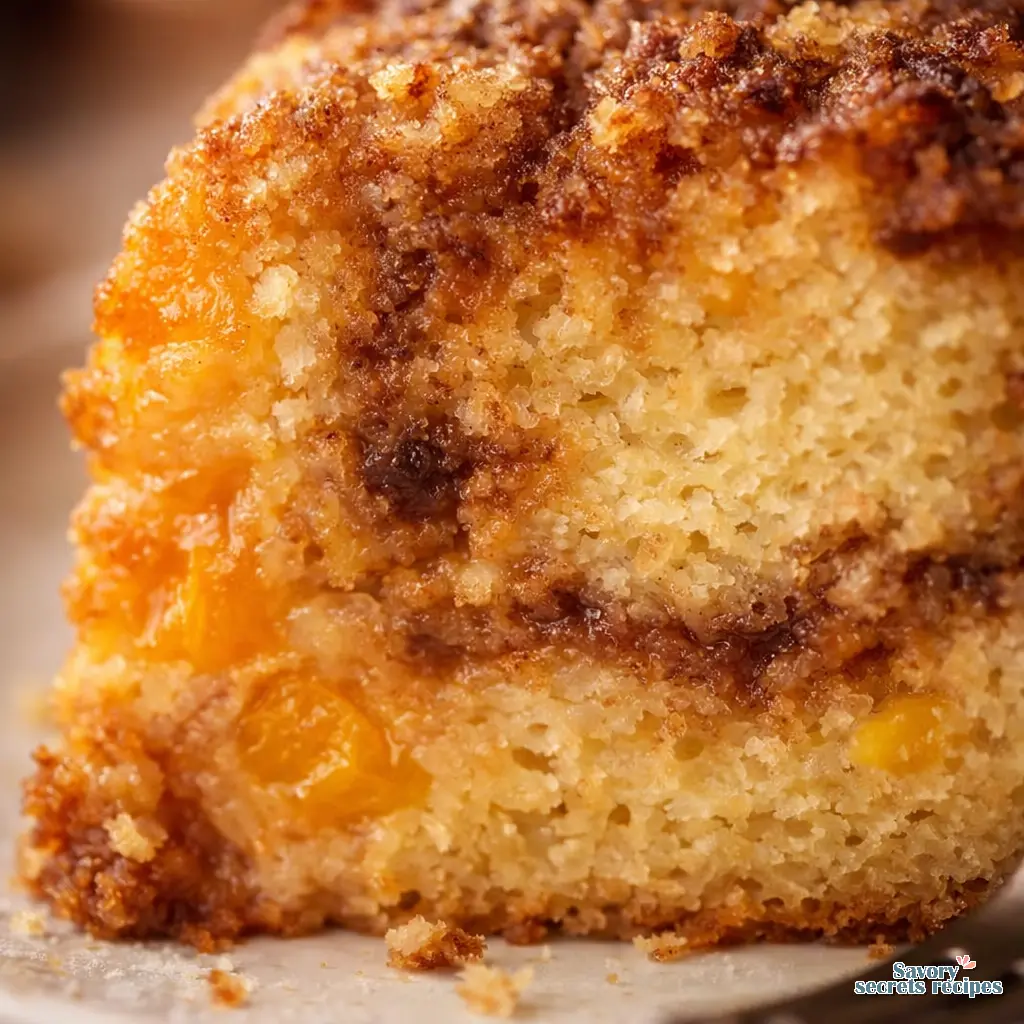
The texture should read smooth when you drag a spoon through the batter. That is your first clue that this cake is going to be spectacular. We are building a fusion recipe that relies on stark contrasts. You have the incredibly soft, velvety crumb of the cake itself, interrupted by jammy peach pockets that burst with sweetness. Then, right at the top, you get that crunchy crumble topping.
I’ve tested so many variations of a cinnamon peach pound cake. I tend to find, but test it yourself, that layering the peaches rather than just blindly folding them gives you much better structural integrity. If you just dump all the sliced peaches into the mixer, the batter breaks. The fruit sinks. It is a mess. By carefully swirling the fruit and the spiced brown sugar, you create these beautiful distinct pockets of flavor. That texture is exactly what we are after.
Fresh, Frozen, or Canned: The Peach Guide
Look, I’ll be honest. Fresh, peak-season peaches are a dream. If you are shopping at Ralphs or Trader Joe’s in late July, grab fresh freestone peaches. Freestone varieties pull away from the pit easily, making them a breeze to chop. Clingstone peaches will just frustrate you and turn into mush on your cutting board.
But what if it is March? Figuring out how to use canned peaches in pound cake is a necessary skill. You absolutely can use them. The trick is moisture control. You must drain them thoroughly. I actually pat them dry with a paper towel. If you introduce too much liquid into a pound cake batter, it gets gummy. This needs time to hydrate properly, and excess peach juice throws off the flour ratio.
If you are using frozen peaches, thaw them completely in a colander in the sink. Then pat them dry. Your mileage may vary depending on your freezer, but frozen peaches hold a shocking amount of water. Give it a minute to settle, drain the liquid, and toss the fruit lightly in a tablespoon of flour before adding it to your batter. This little flour barrier stops the fruit from sinking straight to the bottom of your bundt pan.
Pro-Tips for Your peach cobbler pound cake recipe
I know this sounds fussy, but please trust me on the temperature of your ingredients. Room temperature ingredients are non-negotiable for a smooth batter. Cold eggs or cold butter will cause the batter to break and curdle. Pull your butter, eggs, cream cheese, and any dairy out of the fridge at least two hours before you start.
Measuring your dry ingredients correctly is the difference between a tender crumb and a dry brick. Measure flour by weight using a kitchen scale for total accuracy. If you don’t have a scale, you need to spoon and level the flour into your measuring cup. Never scoop directly from the bag. Scooping packs the flour down, and you’ll end up adding way too much.
When it is time to mix, cream the butter and sugar for a full 3 to 5 minutes until it is incredibly light and airy. It should look almost white. But once you add your dry ingredients, stop. Avoid overmixing the batter once the flour is in. Overmixing develops the gluten and makes the cake tough. Just fold it until the white streaks of flour disappear. Perfect.
Visual Pan-Release Troubleshooting
Let’s troubleshoot together. There is nothing more heartbreaking than baking a gorgeous cake for an hour and a half, only to have half of it stick to the inside of the bundt pan. I learned this the hard way during my first year developing recipes in Queens.
Do not use oil-based non-stick baking spray for this specific cake. The caramel and brown sugar in the topping need a physical barrier to release cleanly. You must grease the Bundt pan generously with softened butter, getting into every single crevice, and then dust it evenly with flour. Tap out the excess.
Timing the release is also crucial. Let the cake rest in the pan for exactly 10 to 15 minutes. If you are doing an upside-down version with a heavy caramel glaze right in the pan, you might need to wait up to an hour so the caramel can set. But for a standard bake, 15 minutes is the sweet spot. It allows the cake structure to firm up without the sugars cementing to the metal walls.
The 210°F Rule and High-Altitude Adjustments
How do you know when a dense cake is actually done? The toothpick test is standard. You want to stop baking once a toothpick comes out clean or with just a few moist crumbs attached. But if you want to be completely foolproof, use an instant-read thermometer. The internal temperature should hit exactly 210°F. Right in that window, the crumb is fully set but still incredibly moist.
Also, avoid opening the oven door during the first half of baking. The sudden drop in temperature will cause the heavy batter to sink in the middle. Give it time.
If you live in a high-altitude area, or even up in the mountains outside LA, you’ll need to make a few tweaks. Water boils at a lower temperature up high, meaning your liquids evaporate faster. I recommend increasing your oven temperature by 15 degrees, adding an extra two tablespoons of flour, and slightly reducing your baking powder. This keeps the cake from rising too fast and collapsing.
Common Mistakes & Fixes
Mistake: Using cold eggs or butter.
Solution: The batter will look curdled and broken. Always use room temperature ingredients to ensure a smooth, emulsified batter.
Mistake: The cake is tough and dense.
Solution: You likely overmixed the batter after adding the dry ingredients. Mix just until the flour disappears to prevent gluten development.
Mistake: The peaches all sank to the bottom.
Solution: The fruit was too wet, or you didn’t coat it. Toss your chopped peaches in a tablespoon of flour before folding them in gently.
Mistake: The cake is gummy in the center.
Solution: It is underbaked. Use a thermometer to verify it has reached 210°F internally before pulling it from the oven.
Storing Your peach cobbler pound cake recipe
If you have leftovers, which is rare in my house, you need to protect that delicate crumb from drying out. Store the cake in an airtight container at room temperature. It will stay perfectly moist for about two days. If you want to push it to four or five days, move that airtight container into the refrigerator. The butter will firm up in the fridge, so you must bring individual slices back to room temperature before serving.
You can absolutely freeze this. Wrap the completely cooled cake, or individual slices, tightly in plastic wrap. Then add a layer of aluminum foil. It will keep in the freezer for up to three months. When you are ready for a slice, let it thaw on the counter. A quick 15-second blast in the microwave will make it taste like it just came out of the oven.
Frequently Asked Questions
Bringing It All Together
It is so satisfying when it all comes together. When you pull this out of the oven, the house smells like toasted butter, brown sugar, and warm fruit. This peach cobbler pound cake recipe really does give you the best crumble topping for pound cake while maintaining that classic, dense, buttery crumb we all love. I highly recommend serving a warm slice with a massive scoop of vanilla bean ice cream right on top. The way the cold ice cream melts into the warm, spiced peach pockets is just incredible. Worth every minute of effort.
I share tons of variations and behind-the-scenes testing on my Pinterest boards, so come say hello over there and show me how yours turned out. Happy baking.
Reference: Original Source
How can I tell if my peach cobbler pound cake recipe is baked?
The most reliable method is using an instant-read thermometer. The center should hit exactly 210°F. Alternatively, insert a long wooden skewer into the thickest part of the cake. It should come out clean or with just a few moist crumbs attached. Never wet batter.
Can I use frozen peaches?
Yes, you can. You must thaw them completely first and drain away all the excess liquid. I recommend patting them very dry with a paper towel. Too much extra moisture will make the batter gummy and cause the cake to sink in the middle.
Can I use canned peaches?
Absolutely. Just like with frozen fruit, drain the canned peaches thoroughly. Discard the heavy syrup or juice, and pat the fruit dry. Toss the chopped pieces lightly in a tablespoon of flour before folding them into your batter to prevent them from sinking.
My pound cake came out dry. What happened?
This usually comes down to flour measurement or overbaking. If you scooped your flour directly from the bag with a measuring cup, you likely packed in too much. Always weigh your flour. Also, keep an eye on your oven temperature, as many run hotter than the dial says.
Why is my pound cake gummy in the middle?
A gummy center means the cake is underbaked or there was too much liquid in the batter. If you didn’t dry your peaches properly, that excess water ruins the crumb structure. Always bake until the internal temperature reaches 210°F to ensure it is fully set.
Can you overmix a peach cobbler pound cake recipe?
Yes, and it is a very common mistake. You want to beat the butter and sugar aggressively, but once you add the flour, you must be gentle. Overmixing dry ingredients develops gluten, which transforms a tender, velvety cake into a tough, chewy loaf.
What is the best flour to use?
For this specific recipe, standard all-purpose flour works beautifully and gives the cake the sturdy structure it needs to hold the heavy fruit. If you want an even lighter crumb, you can substitute cake flour, or use a homemade blend of AP flour and cornstarch.
How long do you let it cool before removing from the pan?
Let the cake rest in the bundt pan for exactly 10 to 15 minutes. This gives the structure time to firm up. If you try to invert it immediately, it will fall apart. If you wait too long, the sugars will cool and cement the cake to the pan.
Do you need a Bundt pan?
A Bundt pan is ideal because the center tube conducts heat into the middle of this very dense batter. If you don’t have one, you can use two 9×5 inch loaf pans, but you will need to reduce the baking time significantly. Keep a close eye on it.
How many slices are in a Bundt cake?
A standard 10-inch or 12-cup Bundt pan typically yields between 12 and 16 slices, depending on how generously you cut them. Because this cake is so rich and dense, especially with the cobbler topping, slightly thinner slices are usually perfect for most people.
How do I make my peach cobbler pound cake recipe more moist?
Moisture comes from fat and proper baking technique. Ensure you are using full-fat dairy like sour cream or cream cheese in the batter. Do not overbake the cake. Some people love adding a simple peach juice glaze over the warm cake to lock in extra moisture.