




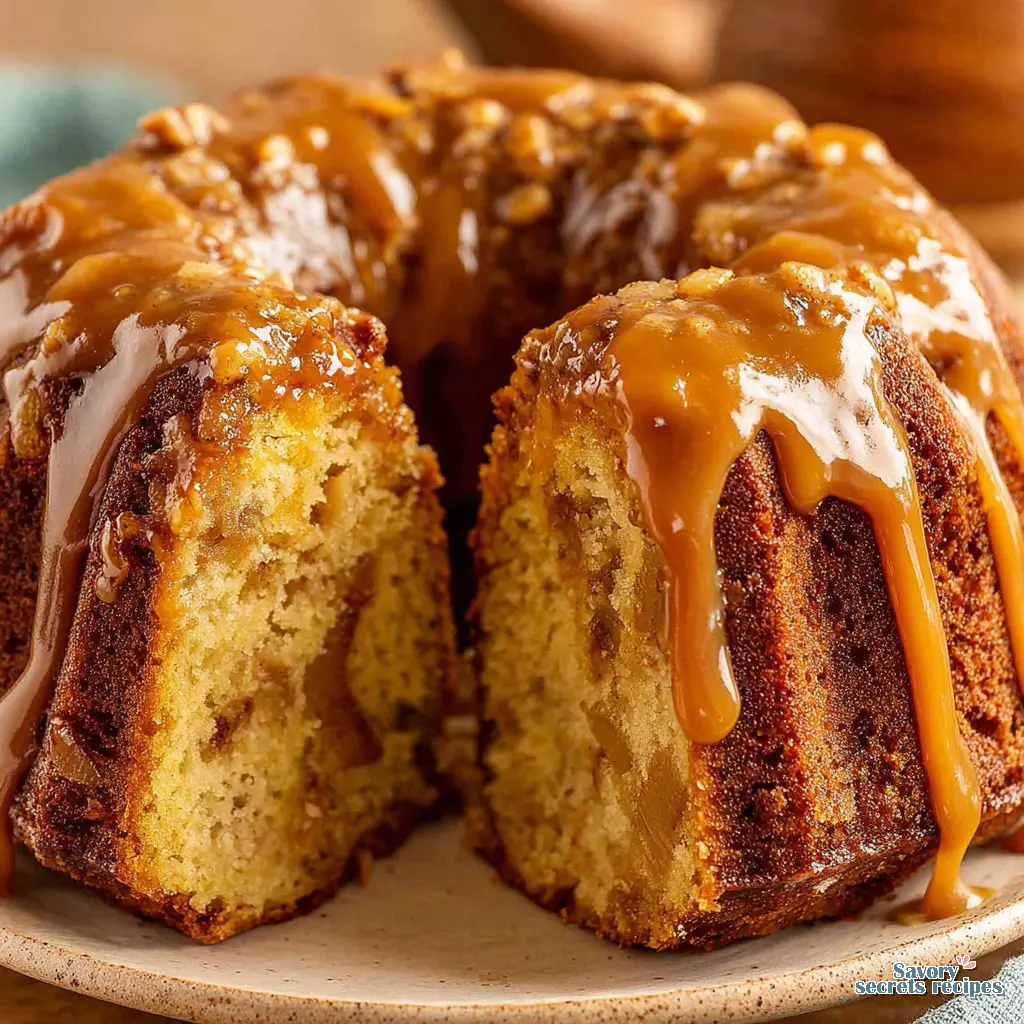
Moist Apple Bundt Cake with Salted Caramel Glaze
Ingredients
Method
- Preheat the oven to 350°F (175°C). Grease and flour a 10-cup bundt pan, ensuring all corners are thoroughly coated to prevent sticking.
- Combine sugar, vegetable oil, vanilla extract, and eggs in a large bowl. Whisk the mixture until it is smooth and fully blended.
- Stir flour, baking soda, cinnamon, and salt together in a separate bowl. Gradually add these dry ingredients to the wet mixture and mix gently until just combined.
- Fold in the diced Granny Smith apples gently until evenly distributed. Pour the batter into the prepared bundt pan and spread it out evenly.
- Bake for 55-65 minutes or until a toothpick inserted into the center comes out clean. Cool the cake in the pan for 15 minutes, then transfer it to a wire rack to cool completely.
- Prepare the caramel glaze by melting butter in a medium saucepan over medium heat. Stir in heavy cream, brown sugar, and salt. Bring to a gentle boil, then reduce heat and simmer for 3-4 minutes while stirring constantly. Remove from heat and stir in vanilla extract.
- Pour the warm caramel glaze over the cooled cake and allow it to drip down the sides.
- Slice and serve the cake at room temperature or slightly warm.
Nutrition
Notes
Why This Salted Caramel Apple Bundt Cake Makes Sense
It is Tuesday evening in Los Angeles. The temperature just dropped to a crisp 60 degrees. Perfect baking weather. I wanted a centerpiece dessert that actually delivers on its promises. A salted caramel apple bundt cake is exactly what you want to see on your table. The contrast of tart apples against a rich, velvety caramel drip just works.
My Opa Klaus used to say that good baking is just precise engineering. That tracks. I remember standing on a stepstool in his kitchen in Whitefish Bay. He taught me that if you measure correctly, the tool does the work for you. This caramel apple cake recipe is built on that exact philosophy.
I know bundt cakes intimidate a lot of home cooks. The fear of the cake sticking to the pan is real. I’ve ruined my fair share of desserts during equipment testing. But once you understand the mechanics of pan preparation and batter hydration, this becomes the most reliable cake in your repertoire. It looks incredibly fancy but requires surprisingly basic techniques.
The Science of the Bundt: Why the 1-2-3-4 Ratio Works
Let’s talk about the batter. In my testing, the classic 1-2-3-4 cake ratio provides the most solid performance across the board. That means one part butter, two parts sugar, three parts flour, and four eggs. It is a formula that has survived generations for a reason.
We tweak it slightly here for maximum moisture. We use both granulated sugar and light brown sugar. The brown sugar adds molasses. That gives you a moist crumb that holds up to the heavy apple chunks without collapsing. It is exactly the kind of structural integrity you need in a heavy fruit cake.
Room temperature eggs are completely non-negotiable. Cold eggs will immediately seize the softened butter. You want a smooth, homogenous emulsion. If the batter breaks, the cake bakes up dense and greasy. Take the eggs out of the fridge an hour before you start. Trust me on this.
Best Apples for Baking: Structure vs. Water Content
What are the best apples for a salted caramel apple bundt cake to ensure the best flavor? You absolutely need structure. Watery apples turn to mush in the oven and create soggy pockets in your cake. Granny Smith apples are the gold standard here. They hold their shape perfectly under high heat.
Honeycrisp or Cortland work well too if you prefer a sweeter profile. In practice, I like to grate half the apples and chop the rest into quarter-inch chunks. The grated apple melts into the batter for pure moisture. The chunks give you distinct apple pieces in every single bite.
Here is a crucial testing observation. Store your diced apples in acidified water with a splash of lemon juice or vinegar to prevent browning. But you must dry them thoroughly with paper towels before adding them to the batter. Excess water throws off the baking chemistry entirely.
Equipment Test: Choosing the Best Bundt Pan
The tool should disappear in your hand. A good bundt pan is heavy, cast aluminum with a light-colored non-stick coating. I prefer tools that feel substantial without being heavy. Dark pans absorb too much heat. They will burn the intricate edges of your cake before the center even finishes baking.
I see a lot of incredibly detailed, geometric pan designs on the market right now. They look gorgeous on a shelf. In my testing, those sharp corners are a nightmare to grease properly. A classic fluted design offers the best balance of aesthetics and reliable release.
Avoid using metal utensils or abrasive scouring pads on your non-stick pans. I learned this the hard way after ruining a fifty-dollar pan. Once you scratch that coating, the pan will permanently grab onto your cakes. Treat the surface gently and it will last decades.
Pan Preparation Masterclass (Visual Troubleshooting Guide)
Let’s get into pan preparation. This is where 90 percent of baking failures happen. Never use an oil-only cooking spray. Over time, the lecithin in regular cooking spray bakes into a sticky, gummy residue that ruins the pan’s release properties.
You need a baking spray that specifically contains flour. Alternatively, do it the old-fashioned way. Use a silicone pastry brush to push solid shortening or softened butter into every single crevice of the pan. Then dust it lightly with flour, tapping out the excess.
Clean as you go or regret it later. If you leave a pool of butter at the bottom of the pan, the top of your cake will essentially fry in the oven. You want a thin, perfectly even coating. Take your time here. Good preparation prevents a lot of frustration later.
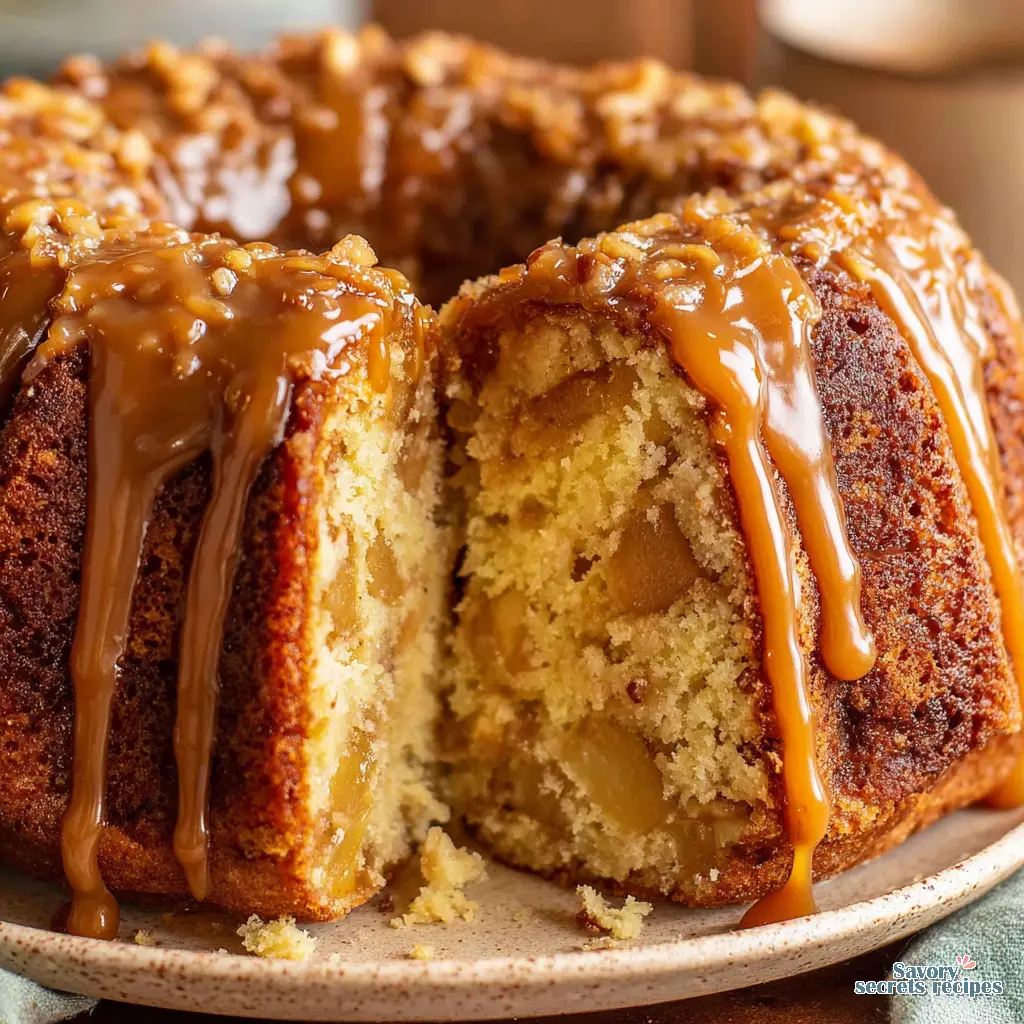
How to Make the Salted Caramel Glaze
How do you make a perfect caramel drip for a bundt cake that doesn’t run off the sides? It comes down to temperature control and patience. You are melting unsalted butter, light brown sugar, and heavy cream together. Let it do its work.
Good browning takes patience. Let the mixture simmer gently for about two minutes. Don’t crank the heat to rush it, or the butter will separate. Once it thickens slightly, remove it from the heat. It will look too thin at first. Just let it cool. It thickens to the consistency of warm honey as the temperature drops.
Flaky Salt vs. Kosher Salt Comparison
The type of salt you use changes everything. I strictly use Kosher salt inside the caramel sauce itself. It dissolves quickly and provides a clean, even salinity that balances the intense sweetness. If you substitute standard table salt, you must cut the amount in half. Table salt tastes metallic in large quantities.
Flaky sea salt is entirely different. It is a finishing salt. You sprinkle it on top of the glaze right before serving. It provides a satisfying crunch and sudden bursts of flavor. Don’t mix flaky salt into the hot caramel. It will just melt and you lose the texture entirely.
The 10-Minute Unmolding Rule
Baking is a science. Unmolding is pure timing. You must wait exactly 10 minutes before inverting the cake onto a wire rack. I set a timer the second the pan comes out of the oven. This is not a suggestion.
If you try to flip a boiling hot cake, the delicate crumb will simply tear apart. The structure hasn’t set yet. If you let it cool completely in the pan, the melted sugars solidify and cement the cake to the metal. Ten minutes is the exact sweet spot where the cake shrinks slightly from the walls but remains pliable.
What happens if it gets stuck? Don’t panic. Take a hair dryer and run it around the outside of the metal pan for a few minutes. The heat gently remelts the butter and sugar inside. Give the pan a firm but gentle tap on the counter. You will hear a specific hollow thud when it releases. It is the best sound in the kitchen.
Tips for a Perfectly Moist Bundt Cake
Achieving a moist apple bundt cake with salted caramel glaze requires a few specific techniques. First, always toss your chopped apples in a tablespoon of flour before folding them into the batter. This creates friction and prevents all the heavy fruit from sinking to the bottom of the pan during baking.
Second, manage your mixing. Once the dry ingredients hit the wet ingredients, slow down. Over-stirring develops the gluten in the flour. That leads to a tough, dense cake. Fold the batter with a rubber spatula until the flour streaks just disappear. Stop immediately.
When checking for doneness, poke a long wooden skewer into the thickest part of the cake. Make sure you hit actual cake batter, not a wet apple chunk. The skewer should come out mostly clean with a few moist crumbs attached. Pour the caramel glaze over the cake while it is still slightly warm. The cake will absorb some of that rich flavor right into the crumb.
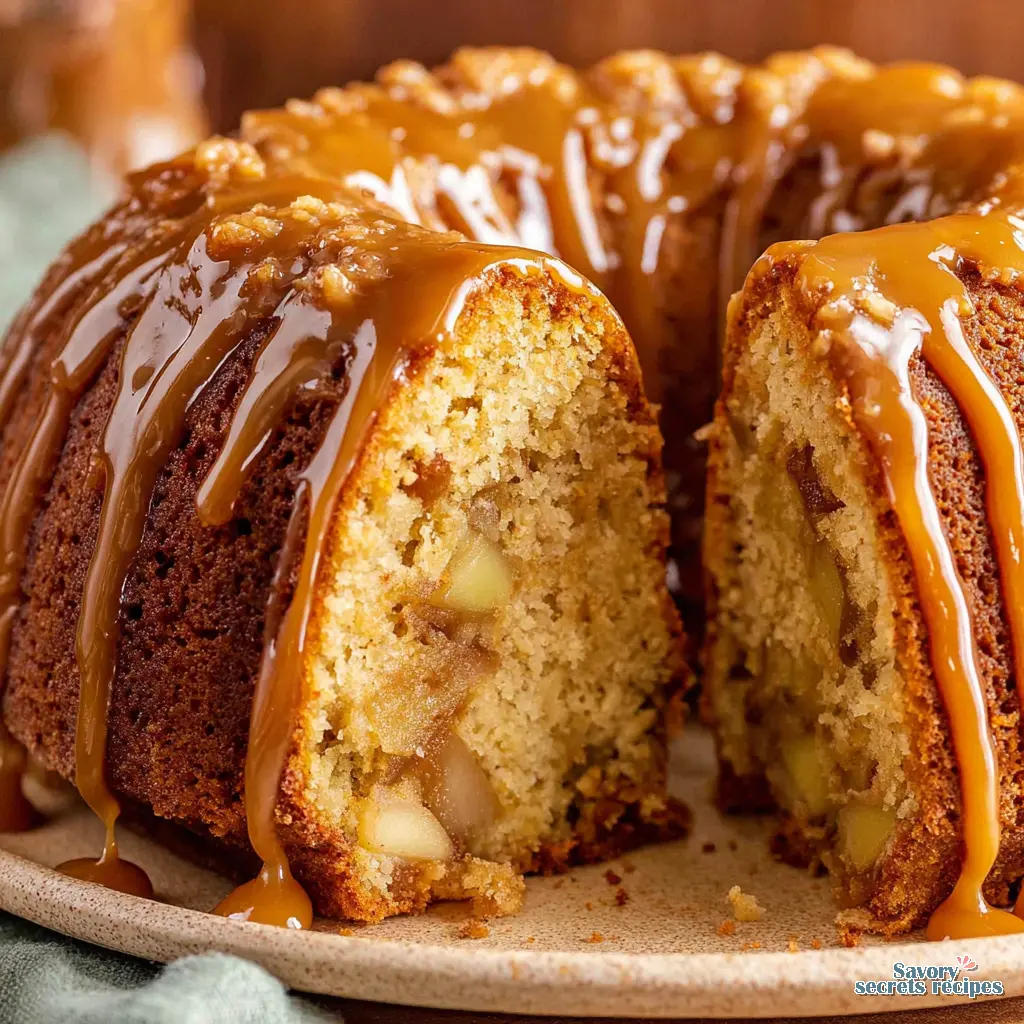
Storage and Freezing Instructions
Air is the enemy of a moist crumb. To keep your cake fresh, store it in an airtight container at room temperature. It will stay perfectly soft for up to three days. If you need more time, move it to the refrigerator where it lasts for four to five days. Just note that the fridge hardens the caramel.
If you want to freeze it, hold off on the glaze. Wrap the completely cooled, unglazed cake twice in plastic wrap. Follow that with a tight layer of heavy-duty aluminum foil. It freezes beautifully for up to three months. This is exactly what you want to see for holiday meal prep.
To defrost a frozen cake, leave it wrapped on the counter at room temperature for six to eight hours. Make the salted caramel glaze fresh on the day you plan to serve it. If you have leftover glazed slices, microwave them for about ten seconds. The cake gets soft and the caramel gets wonderfully gooey again.
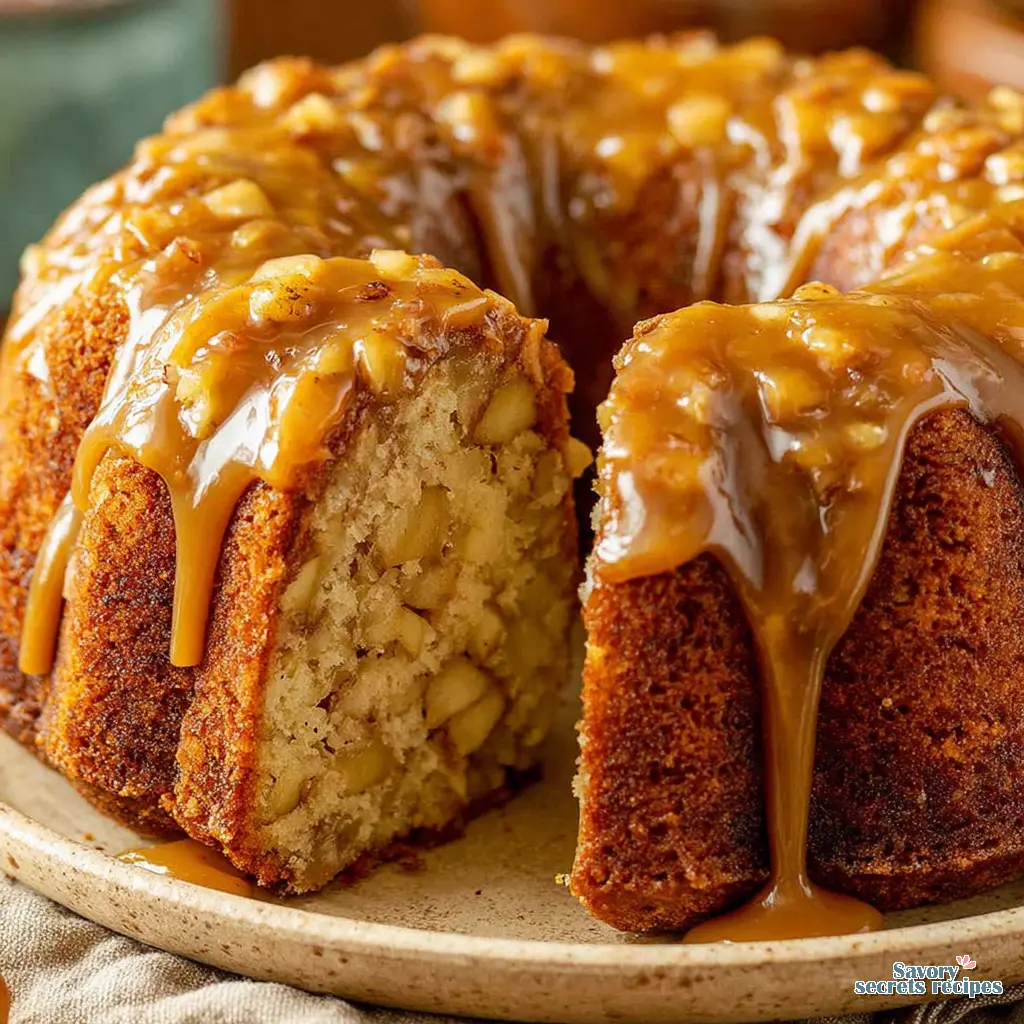
Frequently Asked Questions
Baking a large, intricate cake doesn’t have to be a source of anxiety. Once you respect the temperatures and prep your equipment properly, the process is actually highly predictable. A salted caramel apple bundt cake is a classic for a reason. It delivers massive flavor with minimal active decoration. Let the pan do the heavy lifting for the presentation.
If you try this method and get that perfect, clean release from the pan, I want to hear about it. There is genuine satisfaction in mastering a technique that used to intimidate you. For more inspiration and practical equipment testing results, check out my Pinterest boards. Good luck in the kitchen this week.
Source: Nutritional Information
How do I prevent my salted caramel apple bundt cake from breaking when I take it out of the pan?
Timing is everything here. You must wait exactly 10 minutes before inverting the pan. If you flip it immediately, the hot crumb is too fragile and will tear. Set a timer. Also, ensure you greased the pan thoroughly with a flour-based baking spray.
What do I do if my bundt cake is stuck to the pan because it cooled too long?
Don’t force it. Take a standard hair dryer and run it around the outside of the metal pan for a few minutes. The gentle heat remelts the solidified sugars and butter inside. Give it a firm tap, and it should slide right out.
Why is my salted caramel glaze sliding off my bundt cake?
Your cake is likely too hot, or your glaze is too thin. Let the cake cool until it is just barely warm to the touch. The caramel needs to cool in the saucepan for about 15 minutes until it reaches a thick, honey-like consistency before pouring.
Can I freeze this caramel apple cake recipe?
Yes, it freezes incredibly well. I recommend freezing it without the glaze. Wrap the completely cooled cake tightly in two layers of plastic wrap, then one layer of aluminum foil. Freeze for up to three months. Thaw overnight at room temperature before glazing.
Can I make this cake without a bundt pan?
You can bake this batter in a standard 9×13 inch baking dish. You will need to reduce the baking time significantly. Start checking for doneness at the 35-minute mark. The texture will be slightly different, but the fall flavors remain exactly the same.
How do I store leftover salted caramel apple bundt cake?
Keep it in an airtight container to protect the moist crumb. It stays fresh at room temperature for about three days. For longer storage, keep it in the refrigerator for up to five days. Let cold slices sit at room temperature for 20 minutes before eating.
What should I do if my caramel glaze is too thick to pour?
Caramel thickens rapidly as it cools down. If it becomes too stiff to drizzle over your cake, simply place the saucepan back over low heat on the stove for 15 to 30 seconds. Stir constantly until it loosens up to the right consistency.
How many servings do you get from a standard bundt cake?
A standard 10-cup or 12-cup bundt pan yields a substantial cake. Depending on how generously you slice it, you can comfortably serve 10 to 12 people. It is a very rich, heavy cake, so slightly thinner slices are usually preferred by most guests.
Can this recipe be used for mini bundt cakes?
Yes, the batter adapts perfectly to mini bundt pans. Make sure to chop your apple chunks much smaller so they fit the molds. Reduce your baking time drastically. Start checking them with a skewer at the 20 to 25-minute mark to prevent overbaking.