



Lemon Shrimp Orzo Salad for Spring
Ingredients
Method
- Whisk together extra virgin olive oil, red wine vinegar, parsley, oregano, salt, and pepper in a large mixing bowl. Add the tomatoes, feta, olives, onion, and garlic, then stir to combine. Marinate for at least one hour at room temperature or overnight in the refrigerator if covered, stirring occasionally.
- Cook the orzo in salted boiling water until al dente, then drain and rinse with cold water until completely cool. Shake off excess water and add the orzo to the bowl. Stir in the pepper and cucumber.
- Stir in the juice of half a lemon, or to taste. Taste and adjust the seasoning with additional lemon, salt, and pepper as needed.
Nutrition
Notes
The Spring Orzo Pasta Salad Recipe That Cures The Winter Funk
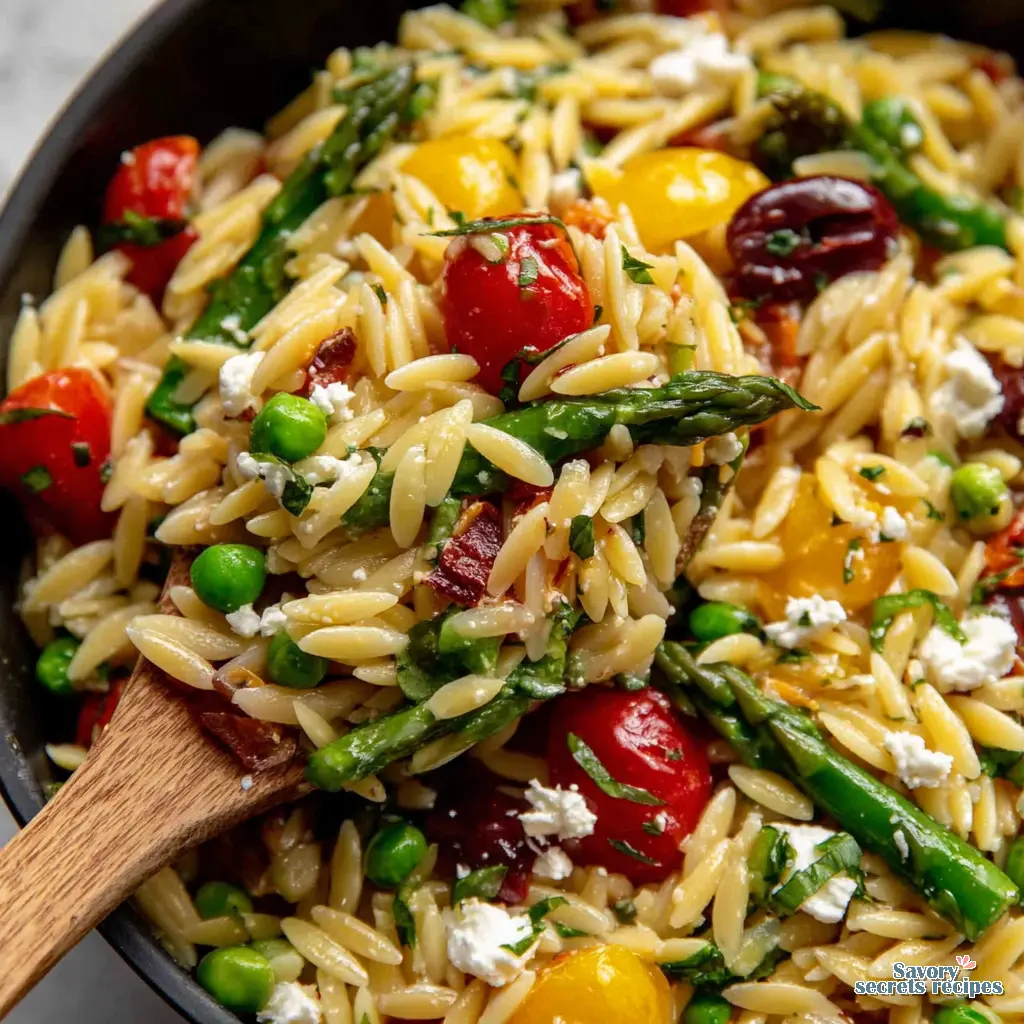
I clearly remember the literal first day it felt like spring here in Los Angeles this year. The weather finally hit that perfect 72 degrees. I was walking through the Santa Monica Farmers Market, completely exhausted by heavy winter stews and soups. I saw these gorgeous, bright green asparagus spears and vibrant lemons, and I knew exactly what I needed to make. Honestly, a good spring orzo pasta salad recipe is the ultimate cure for the winter funk.
You know that feeling when you just want something fresh? Something that smells like lemon zest and sunshine? That is exactly what this dish delivers. It is a brilliant mix of crisp-tender vegetables, perfectly cooked al dente pasta, and that zesty tang of feta cheese crumbles. I mean, the visual alone of bright yellow lemon against green herbs is enough to make your mouth water.
If you have been struggling to find a satisfying, light lunch option that actually keeps you full, this spring orzo pasta salad recipe is your answer. It works beautifully as a meal prep staple or as the star side dish at an Easter gathering. You’ll feel the season change with that very first bite. Trust me on this one.
4 Quick Wins for the Best Spring Orzo Pasta Salad Recipe
Before we get into the details, I want to share my foolproof foundation. Here is what I wish someone had told me when I first started making cold pasta salad.
First, always rinse your cooked orzo in cold water. I know this breaks all the traditional Italian hot pasta rules. But for a cold spring orzo pasta salad recipe, rinsing stops the cooking process and removes excess starch. This prevents that dreaded gummy, sticky texture. It is actually quite forgiving once you know this trick.
Second, choose thin-stemmed asparagus. Look for the pencils, not the markers. They offer a much more buttery, perfectly tender texture and char beautifully in a pan. Thick, woody stems will just ruin the vibe.
Third, toss the hot orzo with a little bit of your citrus vinaigrette immediately after draining. The warm pasta absorbs the flavors so much better than cold pasta does. It just drinks up that extra virgin olive oil and lemon juice.
Finally, toast your pine nuts. It takes maybe 5 minutes in a dry skillet, but it significantly enhances the nutty flavor profile. Don’t skip this. Worth it.
The Science of Blanching & Shocking Spring Produce
I know the terms “blanching” and “shocking” sound a bit intimidating. I think probably a lot of home cooks skip this step because it sounds like restaurant fussiness. It’s not. It is actually incredibly simple and totally changes your spring produce.
Blanching simply means giving your vegetables a quick dip in boiling, salted water. You want the water to taste like the sea. Drop your English peas and asparagus in for just a couple of minutes. Then, immediately transfer them to a bowl of ice water. That is the “shocking” part.
This process locks in that vibrant, bright green color and keeps the vegetables crisp-tender. If you just boil them and let them cool on the counter, they continue cooking from their own residual heat. They turn a sad, mushy olive green. We want our spring orzo pasta salad recipe to look like a bright spring morning, not a swamp.
Visual Troubleshooting Guide for Asparagus
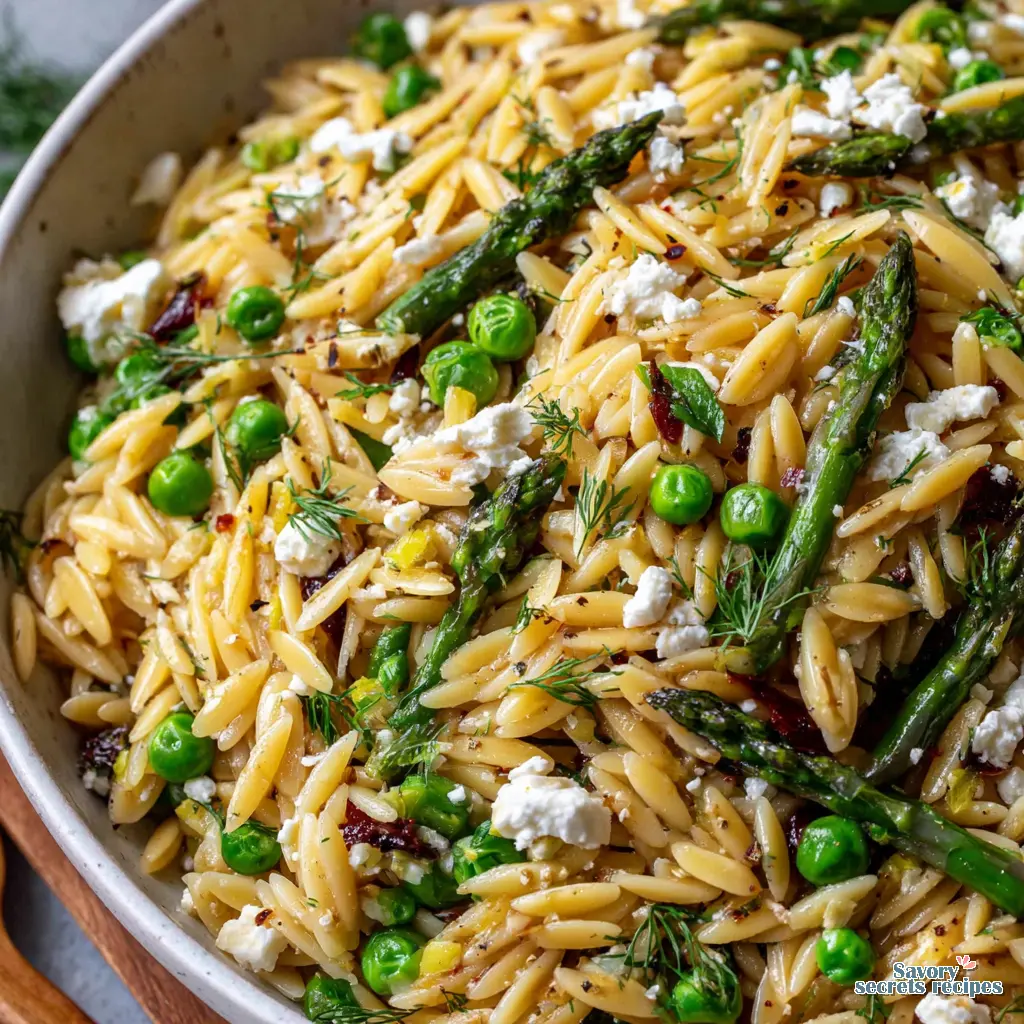
Let’s talk about prepping that asparagus. I learned this the hard way after ruining a few batches. You don’t need a knife to find where the woody part of the stem ends. Just hold the spear near the base and gently bend it. It will naturally snap exactly where the tender part begins.
When you cook them, you are looking for a very specific visual cue. You want them to turn a brilliant, almost neon green. If you are pan-searing them instead of blanching, look for tiny blistered spots of golden brown char. That char adds an amazing depth to your mediterranean spring orzo recipe.
Don’t worry if it’s not perfect the first time. Even if they get a tiny bit soft, they’re still pretty great tossed in that dressing.
Vinaigrette Emulsification Tips & Zero-Waste Hacks
The dressing is where the magic really happens. A great citrus vinaigrette needs the right balance. I usually go for a classic ratio of three parts extra virgin olive oil to one part acid. Here, we use a mix of fresh lemon juice and a splash of white wine vinegar for complexity.
Here’s the real secret to a creamy dressing without adding dairy. Put your oil, lemon juice, vinegar, minced garlic cloves, a touch of honey, kosher salt, and black pepper into a mason jar. Put the lid on tight and shake it violently for about 15 seconds. This emulsifies the dressing perfectly, making it thick and glossy so it clings to the pasta instead of pooling at the bottom of the bowl.
Also, please don’t throw away those lemon rinds! After you get that lovely lemon zest and squeeze the juice, toss the rinds down your garbage disposal to freshen it up. You can also save your snapped asparagus ends in a freezer bag to make vegetable broth later. I love this little zero-waste approach.
Variations for Your Spring Orzo Pasta Recipe
This spring orzo pasta salad recipe is incredibly versatile. I mean, it’s basically a blank canvas for whatever you have in the fridge.
If you want to bump up the protein and keep it vegetarian, add canned butter beans. Specifically, look for fagioli bianchi di Spagna if you can find them at a specialty store, or just use standard cannellini beans. They add superior taste and creaminess. Chickpeas are another fantastic option.
For a meatier version, this makes an incredible spring shrimp orzo pasta recipe. Just toss some shrimp skewers on the grill or sear them in a pan with garlic and olive oil, then lay them right on top. The lemon shrimp orzo salad for spring combination is honestly mind-blowing.
Need it to be vegan? Simply swap the honey for maple syrup and omit the feta cheese. You can add extra toasted pine nuts or walnuts to make up for that missing creamy fat. If you are following a strict mediterranean diet, toss in some extra baby spinach and kalamata olives.
Common Mistakes & Fixes
❌ Mistake: Overcooking the orzo until it’s mushy.
✅ Solution: Check the pasta a minute before the package directions say it’s done. It should be al dente pasta. Rinsing it in cold water immediately will stop the cooking.
❌ Mistake: Dressing the entire salad too far in advance, causing the greens to wilt.
✅ Solution: If making ahead, only use half the dressing on the pasta. Keep the delicate greens and the rest of the dressing separate until right before serving.
❌ Mistake: Adding nuts too early, causing them to lose their crunch.
✅ Solution: Keep your toasted pine nuts in a little baggie and sprinkle them over the top right as you set the bowl on the table.
Make-Ahead & Storage Guide
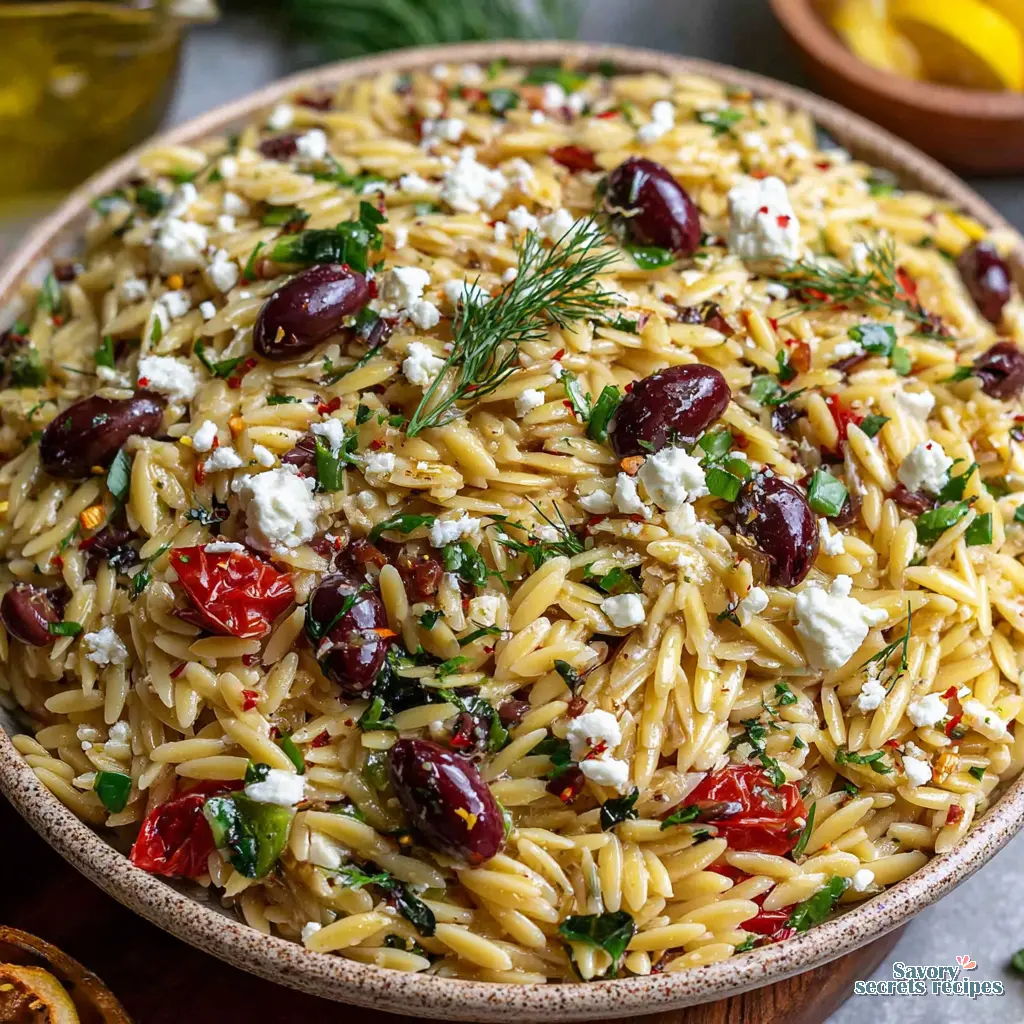
If you are meal prepping this spring pasta recipe lunch for the week, you’ll want to follow a few simple rules. Nobody likes a soggy salad.
Store the components separately if possible. I like to keep the dressed pasta and sturdy veggies in my main meal prep containers. Then, I keep the fresh dill, baby spinach, and remaining dressing in separate little containers. When you are ready to eat, just toss it all together. It stays incredibly fresh this way.
Stored properly in an airtight container in the refrigerator, this salad will easily last 3-5 days. If you notice the pasta has soaked up all the moisture and looks a bit dry on day three, just give it a quick revival. A splash of extra virgin olive oil and a squeeze of fresh lemon juice will wake those flavors right back up.
Serve this dish cold or at room temperature. Reheating is generally not recommended because it will wilt the fresh herbs and make the feta go weirdly rubbery. Room temperature is actually where the herbaceous flavors shine the brightest.
Frequently Asked Questions
Ready for Spring?
When you take that first bite of this spring orzo pasta salad recipe, you’ll feel the season change. It really is that good. Whether you are packing it up for a weekday lunch or bringing it to a sunny weekend potluck, your family and friends will be asking for the recipe. Grab some fresh produce on your next grocery run and give this a try. You’ve got this!
I share tons of fresh, seasonal variations on my Pinterest boards if you want more ideas. Happy Spring cooking!
Reference: Original Source
What is the best way to prepare a spring orzo pasta salad recipe ahead of time?
The trick is keeping the delicate ingredients separate. Toss the hot orzo with half the dressing, then store it. Keep your fresh herbs, spinach, and the remaining dressing in separate containers. Mix everything together just before serving to prevent any sogginess.
Can I use frozen shrimp for this spring shrimp orzo pasta recipe?
Absolutely! Just make sure to thaw them completely and pat them very dry with paper towels before cooking. Getting a good sear requires dry shrimp. Sauté them with a little garlic and olive oil, let them cool slightly, and toss them in.
How long can you store lemon shrimp orzo salad for spring in the refrigerator?
If you’ve added shrimp, I recommend keeping it for no more than 3 days in an airtight container for optimal freshness and food safety. The vegetarian version of this spring orzo pasta salad recipe will last up to 5 days.
What are some good vegetable substitutions for a mediterranean spring orzo recipe?
You can easily swap the asparagus for blanched sugar snap peas or green beans. If cherry tomatoes aren’t looking great at the store, try roasted red peppers or artichoke hearts. Just stick to vegetables that offer a good crisp-tender crunch.
Do you serve this spring pasta recipe lunch warm or cold?
It is best served cold or at room temperature. Room temperature is actually my favorite because the olive oil loosens up and the flavors really pop. I definitely don’t recommend microwaving it, as the fresh herbs will wilt and turn bitter.