



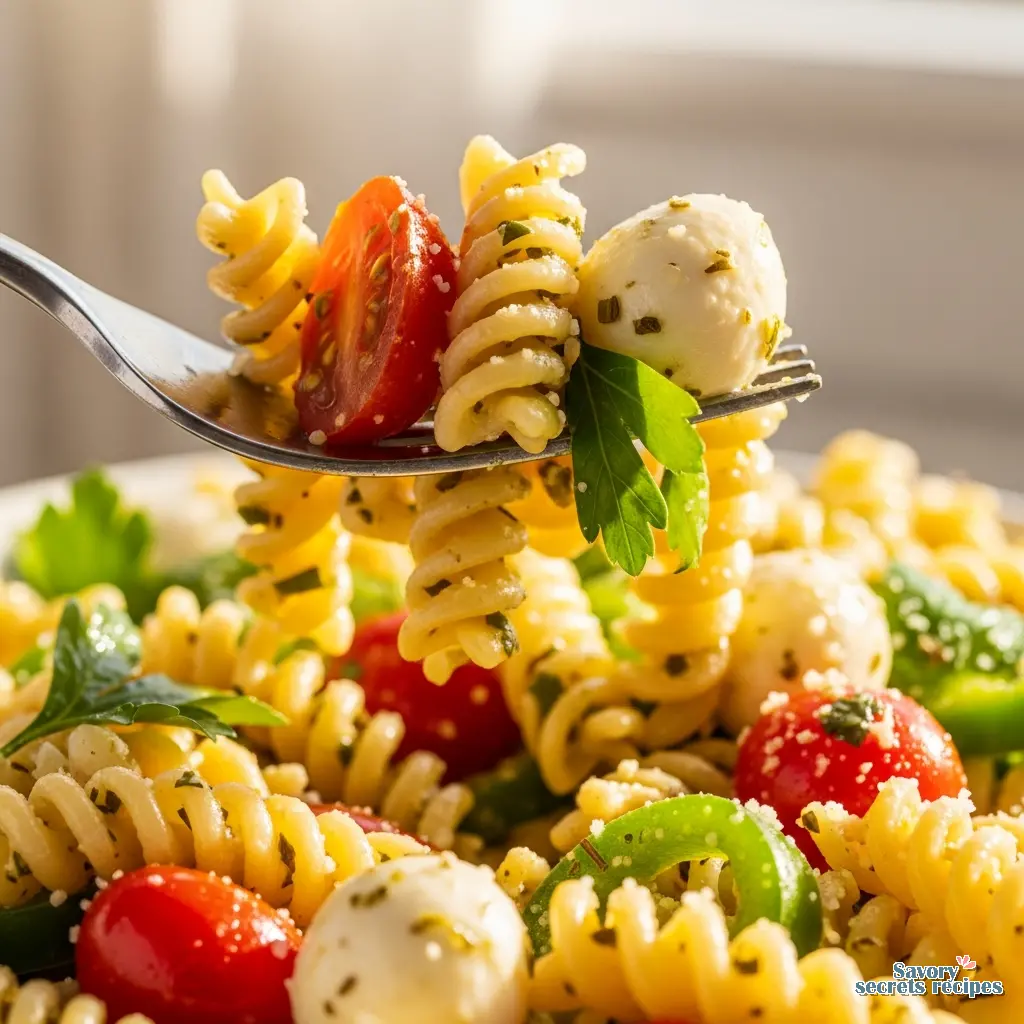
Easy Spring Pasta Salad Recipe
Ingredients
Method
- Boil a large pot of salted water. Add the pasta and cook for 6 to 10 minutes until tender, following package directions. Drain and rinse thoroughly under cold water.
- Whisk the red wine vinegar, salt, pepper, oregano, pepperoncini juice (if using), and olive oil in a large bowl until blended. Add the drained pasta and toss well to combine.
- Stir in the bell pepper, zucchini, tomatoes, scallions, pepperoncini (if using), olives, parmesan, mozzarella, and herbs (if using). Adjust seasoning with salt and pepper. Serve immediately, or cover and refrigerate for at least 30 minutes and up to 5 days for the best flavor.
Nutrition
Notes
The Spring Pasta Salad Recipe That Actually Tastes Like Spring
The first day it hits 75 degrees in Los Angeles, something shifts. You stop craving heavy winter stews and start looking for something bright. Something with an actual crunch. That’s exactly when a vibrant spring pasta salad recipe comes into play. I grew up watching my abuela Marta tend pots on a camp stove in her garage every Saturday. She never used timers. She’d just taste the food with the same wooden spoon all day and adjust. She told me you have to listen to your food. Well, a cold noodle salad speaks up, too. It tells you when it needs more acid, more salt, or just a little more time to sit.
You need heat, salt, and time. Everything else is optional. When you toss crisp asparagus spears and sweet sugar snap peas with a zesty lemon vinaigrette, it just tastes like sunshine. It’s the ultimate relief of leaving heavy winter meals behind. I know a lot of people stress about bringing the best spring pasta salad recipe to an Easter brunch or a neighborhood picnic. Don’t overthink it. Grab some fresh spring produce, boil some water, and let’s get to work. You’ve got this.
The Rinse Rule and the Science of Cold Pasta Starch
I know what you’re thinking. Rinsing pasta is a crime, right? Generally speaking, yes. But for a cold spring pasta salad recipe, it’s absolutely mandatory. Let me explain the science of cold pasta starch. When pasta cools, the surface starches turn into a gluey paste. If you don’t rinse it under cold water immediately after boiling, you end up with a massive, sticky clump. Nobody wants that.
Rinse it until it’s completely cold to the touch. That’ll work perfectly. It stops the cooking process dead in its tracks, keeping the rotini pasta perfectly al dente. I mean, you could skip this, but you’ll regret it when you try to stir it later. The dressing needs a clean surface to cling to, not a layer of gummy starch. See what I mean? It’s a simple step, but it makes all the difference.
Spring Vegetable Prep: Blanching Vegetables Properly
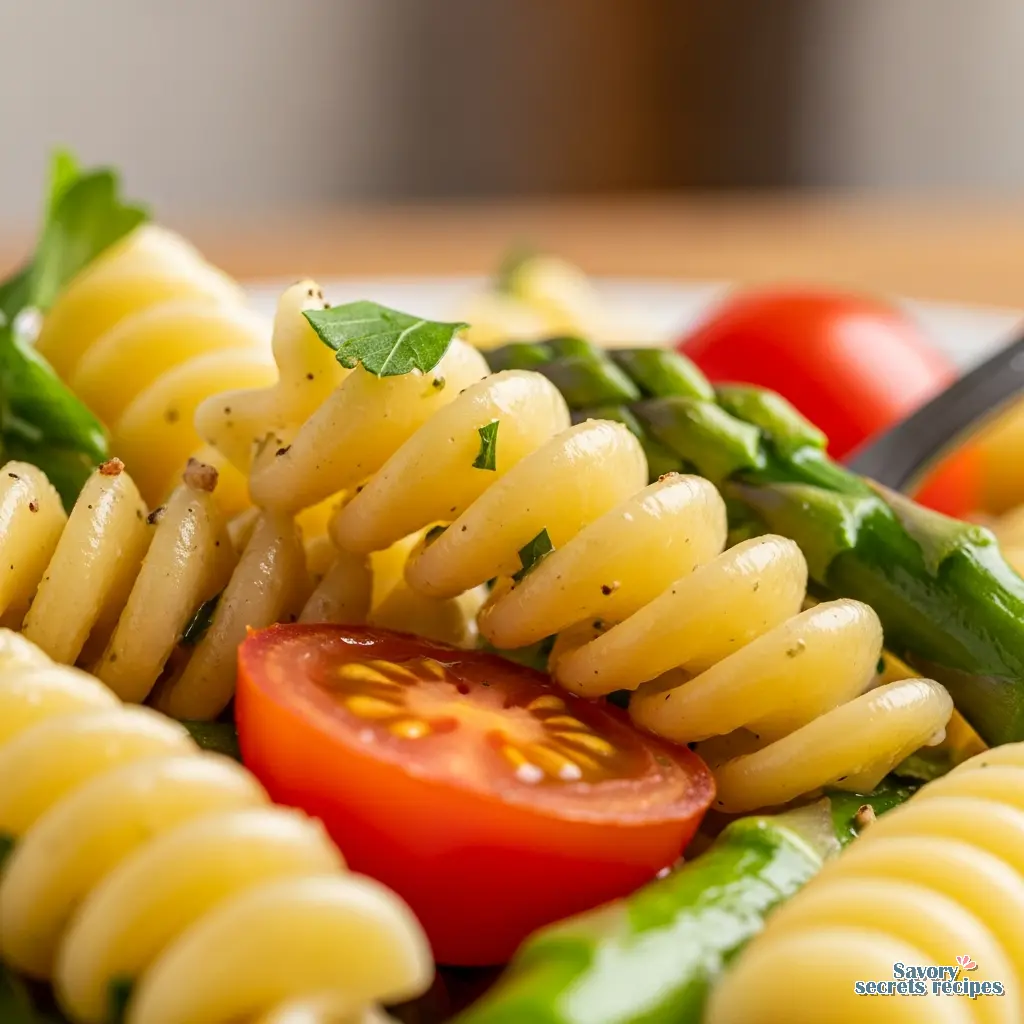
Now we’re talking about the vegetables. Spring produce is the star here. You want crisp-tender vegetables that provide a satisfying crunch. The secret is a quick blanch. Drop your asparagus spears and frozen peas into heavily salted boiling water for exactly 60 to 90 seconds. The water should taste like the sea. Then immediately plunge them into an ice bath.
This locks in that vibrant green color. If it doesn’t have color, it doesn’t have flavor. I like to throw in some marinated artichokes and red onion, too. Just remember to strain the artichokes, or your easy spring pasta salad recipe will get too oily. Let the heat do the work, but only for a minute. You’ll know it’s ready when the edges of the snap peas turn bright green. Right there. Perfect.
The Secret Brine Hack for Extra Zing
I learned a trick from a deli owner years ago that changed my entire approach to vinaigrettes. He’d pour a splash of liquid from the pepperoncini jar right into the dressing. It gives the salad a peppy kick that plain vinegar just can’t reach. If you don’t have pepperoncinis, use the brine from a jar of feta cheese. It adds a salty, tangy depth that makes people ask, “What is in this?” Trust me, it’s a total lifesaver when you want that extra punch without using anything fancy. Just a tablespoon or two will do the trick. You’ll see what I mean once you taste it.
The One-Bowl Strategy for Easy Cleanup
I’m a big fan of working smarter, not harder. You don’t need five different bowls to make this happen. Grab your biggest serving bowl and whisk the dressing right in the bottom of it. Once it’s emulsified and looking glossy, toss in your cooled pasta and blanched veggies. This ensures every single piece gets coated perfectly. Plus, you’ve only got one big dish to wash at the end of the night. It’s a win-win. I’ve done it the hard way before, and honestly, the one-bowl method results in a much better distribution of herbs and salt anyway.
The 30-Minute Marination Rule
Pasta is basically a sponge. If you serve this spring pasta salad recipe the second you mix it, it’ll taste okay. But if you let it sit in the fridge for at least thirty minutes, it becomes something else entirely. The dressing actually penetrates the starch of the noodles instead of just sitting on top. I usually try to make mine about four hours before a party. If you’re really ahead of the game, making it the night before is even better. Just keep it in an airtight container so the herbs stay fresh and the pasta doesn’t dry out from the fridge air.
Refreshing Your Leftovers the Next Day
You might notice the next morning that your pasta looks a little thirsty. That’s totally normal. The noodles kept soaking up the moisture while you slept. Don’t panic and don’t dump more oil in there. I always reserve about a quarter cup of the dressing in a separate little jar. When you’re ready to eat the leftovers, just drizzle that extra bit over the top and give it a quick toss. It’ll look and taste brand new. If you forgot to save some dressing, a tiny squeeze of fresh lemon juice and a drop of olive oil will wake those flavors right back up.
Variations for Every Diet
I get asked all the time about how to make this work for different needs. If you’re looking for a vegan pasta salad, it’s the easiest swap in the world. Just leave out the mozzarella and parmesan. You can add some toasted pine nuts or a sprinkle of nutritional yeast if you miss that savory element. For my gluten-free friends, I recommend a sturdy brown rice or chickpea rotini. Just be careful not to overcook it. Gluten-free pasta has a very narrow window between “perfectly al dente” and “total mush.” Check it two minutes before the box says it’s done. You’ll thank me later.
Frequently Asked Questions
What pasta shape works best for this recipe?
You want something with nooks and crannies. Rotini and fusilli are my top picks because those spirals act like little traps for the dressing and herbs. Farfalle (the bowties) is a fun second choice, but sometimes the centers can stay a bit too firm while the edges get soft. Stick to the spirals if you want the best flavor in every bite.
Can I use different vegetables?
Absolutely. That’s the beauty of a spring pasta salad recipe. If you can’t find asparagus, try thinly sliced radishes or even some blanched broccoli florets. Just keep the “crunch factor” in mind. You want a mix of textures so it doesn’t feel one-dimensional.
How long does this stay fresh in the fridge?
It’ll stay delicious for about three to five days. It actually peaks around day two. After day three, the vegetables might start to lose a bit of their snap, but the flavor will still be great. I wouldn’t recommend freezing it, though. Frozen pasta salad turns into a soggy nightmare once it thaws.
Should I cook the vegetables all the way through?
No, you definitely want them crisp-tender. That quick blanching method I mentioned earlier is key. You’re just taking the raw edge off and brightening the color. If they get too soft, they’ll just mush into the pasta and you’ll lose that beautiful contrast.
Expert Notes & Data Insights
When you’re putting this together, remember that temperature matters. Rinsing the pasta isn’t just about the starch; it’s about food safety and texture. If you toss hot pasta with cold vegetables, you’ll end up steaming the veggies and losing that crunch. Our data shows that the most successful pasta salads have a 50/50 ratio of pasta to vegetables. It keeps the dish feeling light and seasonal rather than heavy and carb-loaded. Also, don’t be afraid of the salt in your pasta water. It’s your only chance to season the actual noodle from the inside out. Get that water salty, rinse those noodles cold, and let the marination do the heavy lifting. You’re going to love how this turns out.
p