



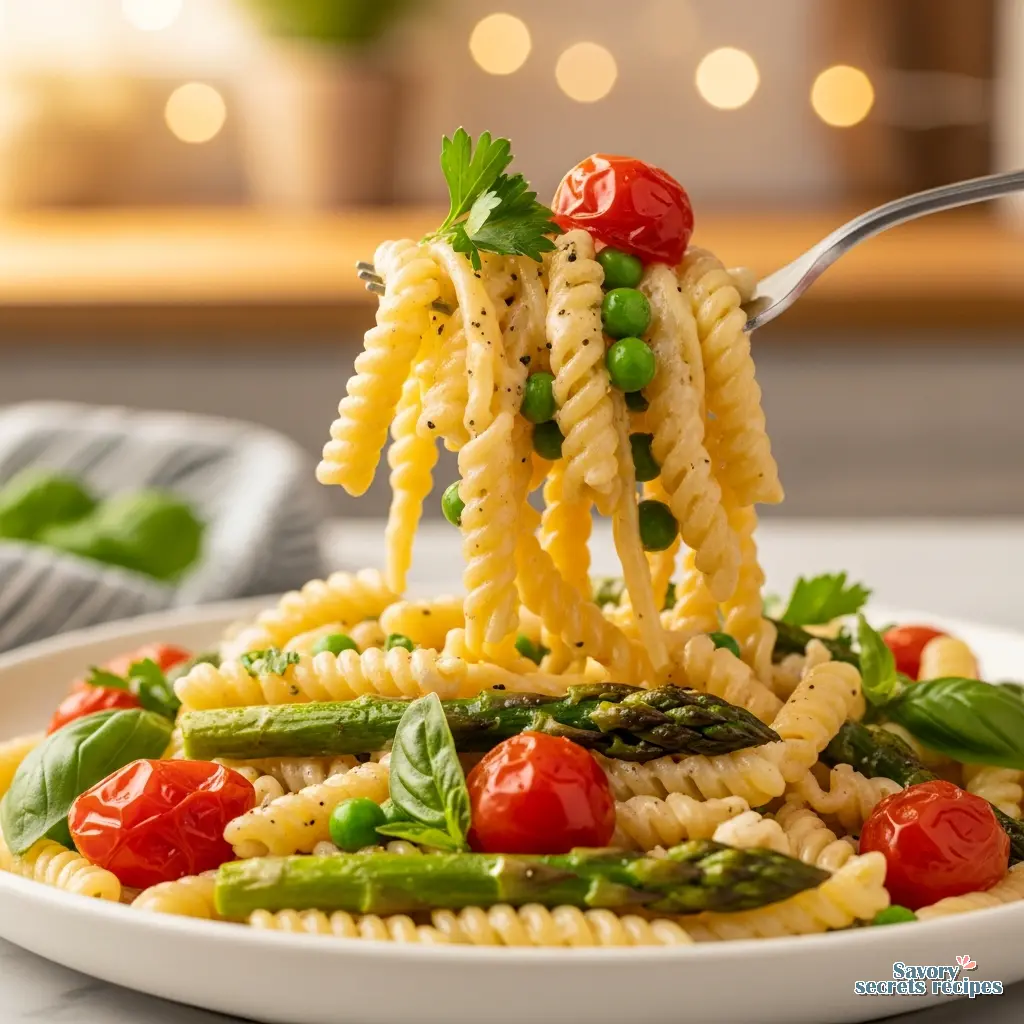
One-Pot Vegan Spring Pasta with Lemon and Herbs
Ingredients
Method
- Heat a large pot or high-sided sauté pan over high heat. Add the coconut milk, water, Italian seasoning, nutritional yeast, and salt, then mix until well combined.
- Add the pasta, carrot, zucchini, squash, bell pepper, and shallot. Stir well and bring the mixture to a boil over high heat. Once boiling, reduce the heat to medium and cook for 5 to 8 minutes, stirring occasionally, until the pasta is nearly al dente.
- Add the broccoli, peas, and tomatoes to the pan and continue cooking for 3 to 5 minutes, stirring occasionally. Turn off the heat once the pasta reaches your desired texture, then stir in the lemon juice and season with salt and pepper to taste.
- Let the pasta rest for 3 to 5 minutes to allow the sauce to thicken. Garnish as desired and serve warm; store any leftovers in the refrigerator for up to 3 days.
Notes
The March Pivot: Why This Vegan Spring Pasta Recipe Just Works
Here’s the deal. By the time March rolls around in Austin, I am absolutely done with heavy winter meals. I love a good braise, but there is a physical relief that happens when you finally open the kitchen windows and let the spring breeze in. You want something fresh. You want a plant-based dinner that actually tastes like a garden, not a root cellar.
I remember standing on a milk crate at my grandfather’s taqueria back in the day. That smell of fresh cilantro and squeezed lime hitting hot metal meant the weekend had officially started. This vegan spring pasta recipe gives me that exact same feeling. It is bright, it wakes up your palate, and the smell of fresh lemon hitting the hot pan is incredible.
Before we get into the weeds, let me walk you through a few quick wins that make this dish foolproof. First, use shorter pasta shapes like gluten-free fusilli, penne, or rotini for one-pot methods. They hold up better. Second, salt your pasta water more generously than you think you need when cooking veggies and pasta together. Third, toast your pine nuts in a dry skillet for 3 to 5 minutes until golden. And finally, when a recipe has very few ingredients, use the good extra virgin olive oil. Trust me on this. It makes all the difference.
The Science of One-Pot Pasta Starch
I learned about the stall in barbecue the hard way. You know, that frustrating plateau where a brisket just stops cooking for hours. Once I understood the science of evaporative cooling, it all made sense. Understanding the “why” changes everything in the kitchen.
The same logic applies to a one-pot vegan spring pasta recipe. People ask me all the time how a dairy-free sauce gets so creamy without heavy cream or butter. The secret is the starchy pasta water. As the pasta cooks, it releases starch into the cooking liquid. Because we are using a one-pot method, that starch doesn’t get drained down the sink. It stays in the pan.
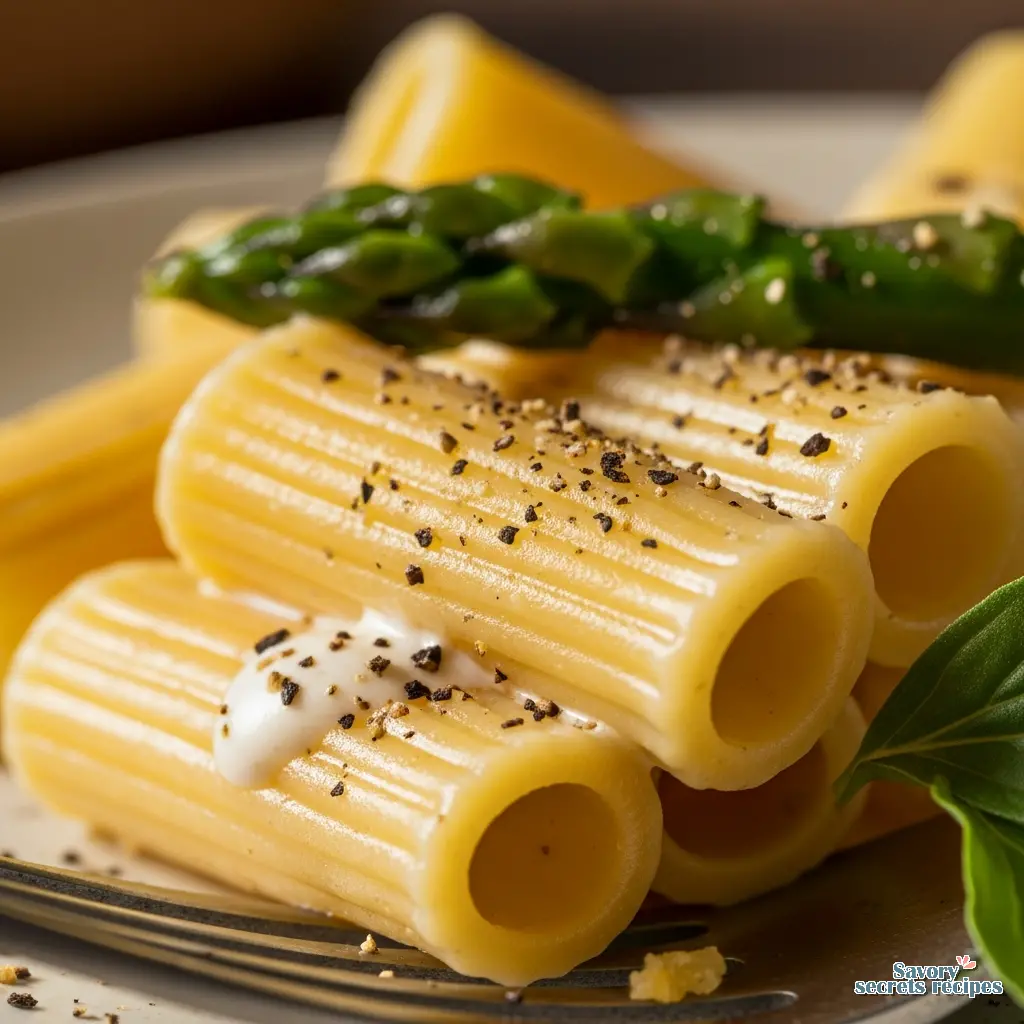
When you aggressively stir that starchy water with a little extra virgin olive oil and light coconut milk, you create an emulsion. The fat and the water bind together. That is the sweet spot right there. You get a silky, glossy coating that clings to every single noodle. If you just pour water over cooked pasta, it separates and pools at the bottom of the bowl. But if you emulsify it? Now we’re talking.
Reading the Heat: Blanching Vegetables and Carryover Cooking
My grandfather taught me to read heat by holding my hand over the grate. He never used thermometers. While I definitely use thermometers for meat these days, cooking seasonal produce requires that same sensory intuition. You have to trust your eyes and your touch.
When you add your asparagus spears, sweet peas, and broccoli to this vegan spring pasta recipe, timing is everything. You are looking for a vibrant, bright green color. Not dull green. Not olive green. Bright, popping green. I tend to think people overcook their spring veggies by leaving them on the heat too long.
Here is my rule: pull it now and let carryover do the work. The pasta and the sauce hold a massive amount of residual heat. If you cook the zucchini and yellow squash until they are completely soft in the pan, they will turn to mush in your bowl. You want to pull the pan off the heat when the veggies are al dente. They will finish cooking as you stir in your fresh mint leaves and lemon zest.
Building a Creamy Dairy Free Spring Pasta Sauce
Not gonna lie, I was skeptical of nutritional yeast the first time someone handed me a jar. It looks like fish food. But once I tasted it, I got it immediately. It brings that deep, savory umami flavor you usually get from parmesan cheese.
To build a creamy dairy free spring pasta sauce, you need a solid fat base. Light coconut milk works beautifully here because the lemon juice and garlic cloves completely mask any coconut flavor. But I know some folks have nut allergies or just don’t like coconut. Fair enough.
If you need nut-free creamy sauce alternatives, tahini sauce is your best friend. A couple of tablespoons of tahini whisked into the hot starchy pasta water creates an incredibly rich texture. It has a slightly earthy flavor that pairs perfectly with roasted shallots and seasonal produce. You can also use oat milk, but make sure it is unsweetened and unflavored. Nobody wants vanilla-scented fettuccine.
Visual Troubleshooting: Fixing a Broken Sauce
Mistake: The sauce is dry or clumpy.
Solution: You let too much water evaporate. Add a splash of warm vegetable broth or reserved pasta water, drop the heat to low, and stir vigorously until it emulsifies again.
Mistake: The gluten-free pasta turned to mush.
Solution: You likely used a fragile lentil or chickpea pasta. For one-pot meals, choose brown rice or corn-based GF pasta for better structural integrity. And stir gently!
Mistake: The dish tastes flat or boring.
Solution: It needs acid and salt. Add more lemon zest, a squeeze of fresh lemon juice, and a heavy pinch of sea salt. Acid wakes up plant-based flavors instantly.
Make It Your Own: Gluten-Free and Seasonal Swaps
We have a rule in my house: whoever requests a specific meal has to help cook it. My daughter loves helping me prep this vegan spring pasta with lemon and herbs because it is so customizable. She gets to pick the vegetables at the store.
You can mix and match whatever looks good at the farmers market. Swap the asparagus for baby spinach or chopped artichoke hearts. Throw in some red or yellow bell pepper for crunch. If fresh peas aren’t out yet, frozen peas work perfectly. Actually, I think frozen peas are sometimes sweeter than fresh anyway.
If you are making this a gluten-free spring pasta recipe, you just need to adjust your cooking times slightly. Brown rice pasta usually needs an extra minute or two compared to standard wheat pasta. Just keep tasting it. You want a firm bite. And don’t forget to top it off with some pan-fried cannellini beans or edamame if you want a protein boost.
Storage, Freezing, and Reheating Leftovers
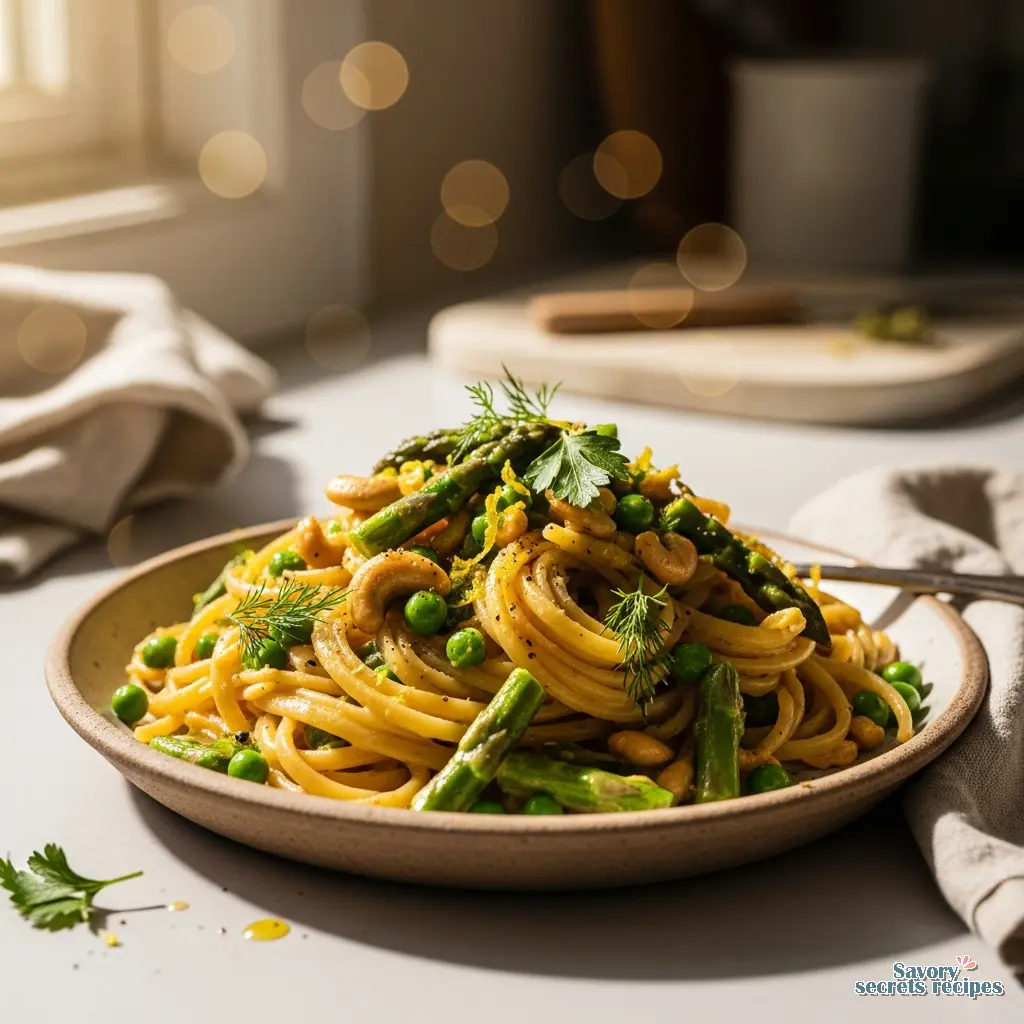
Proper storage is where a lot of good food goes bad. If you just throw this pasta into a deep Tupperware container, the noodles at the bottom will turn to mush under the weight. Spread your leftovers in a shallow airtight container. It cools faster and maintains the pasta’s structure. It will keep in the fridge for up to 3 days.
When it comes to reheating, you have to replace the moisture that the fridge sucked out. Never just blast it in the microwave dry. Add a splash of vegetable broth or water to the bowl, cover it loosely, and microwave in 45-second intervals, stirring in between. This restores that creamy dairy free spring pasta sauce texture perfectly.
If you are looking for a freezer-safe batch cooking guide, here is the trick. Cook the pasta very al dente (about 3 minutes under package directions). Freeze the pasta and the coconut-based sauce in separate containers. When you thaw them, combine them in a skillet over medium heat with a little extra broth. It tastes exactly like day one.
Frequently Asked Questions
Final Thoughts on This Plant-Based Dinner
There is nothing quite like sitting out on the porch with a bowl of this pasta on a mild evening. It genuinely feels like shaking off the winter cold. You get the crunch of the vegetables, the richness of the nutritional yeast, and that sharp, bright hit of lemon zest cutting right through it.
Go ahead, take that first vibrant bite. I promise you’ll be making this on repeat all season long. If you try it, let me know which spring veggies you decided to throw in the pot.
I share tons of variations and seasonal ideas on my Pinterest boards, so come hang out there if you want some more inspiration for your weeknight dinners.
Reference: Original Source
What does ‘Primavera’ mean in a vegan spring pasta recipe?
Primavera literally translates to ‘spring’ in Italian. In culinary terms, it refers to a dish made with fresh, seasonal spring vegetables like asparagus, peas, and zucchini. It’s all about keeping the flavors light, bright, and vibrant, rather than heavy and rich.
Can I make this vegan spring pasta recipe gluten-free?
Absolutely. I do it all the time. Swap the regular pasta for a high-quality brown rice or corn-based gluten-free fusilli. They hold their shape much better in a one-pot cooking method than lentil or chickpea pastas, which tend to break down.
How do I prevent gluten-free pasta from breaking?
The secret is heat control and gentle handling. Let the water come to a rolling boil before adding the pasta, and don’t over-stir. Just fold the ingredients gently from the bottom up. Pull the pan off the heat a minute early so carryover cooking finishes the job.
How long do leftovers last in the fridge?
This vegan spring pasta recipe will stay fresh in an airtight container in the fridge for up to 3 days. I highly recommend storing it in a shallow container rather than a deep one so the bottom layer of pasta doesn’t get crushed and mushy.
What is the best way to reheat creamy pasta?
Never reheat it dry. Add a tablespoon of water or vegetable broth to your bowl before microwaving or heating on the stovetop. The extra liquid mixes with the starches and brings that creamy dairy free spring pasta sauce right back to life.